How Do You Get a Plumbing License in Texas?
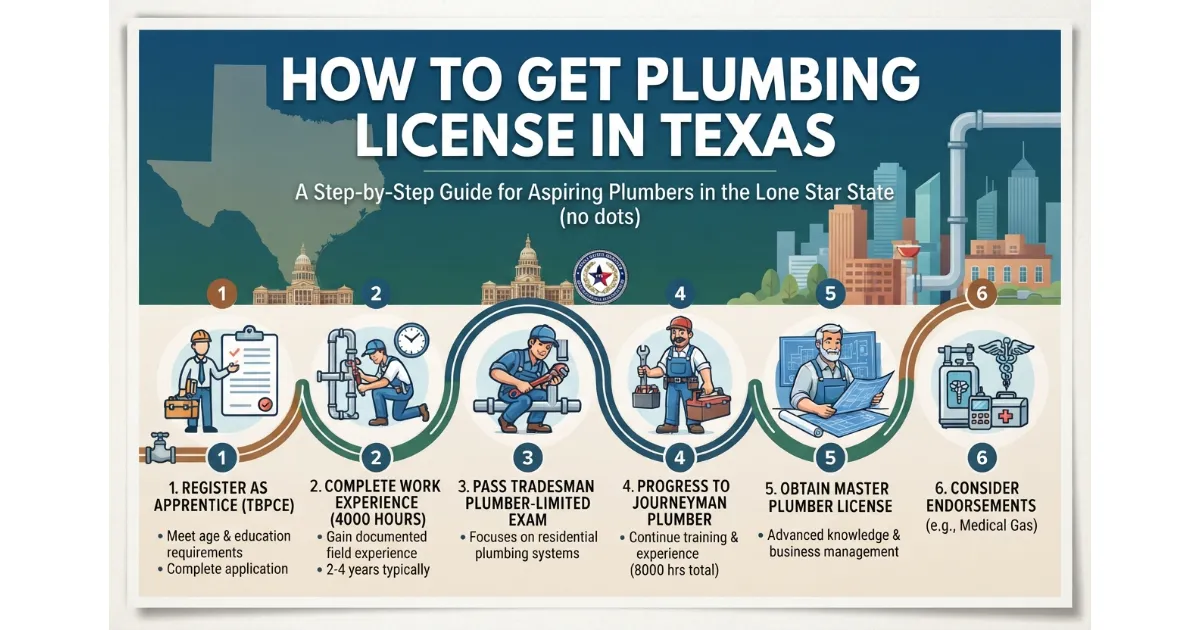 Securing a plumbing license in Texas requires navigating the official certification pathway regulated by the state board. Whether you are starting fresh or transferring professional experience, understanding the sequence of requirements ensures compliance with state plumbing codes.
The Four-Step Texas Plumbing License Roadmap
Beginning your career as a licensed plumbing professional in Texas starts with official registration through the state regulatory agency. Aspiring professionals must log structured work hours, complete required technical training courses, and pass rigorous state examinations before receiving full certification.
- Register with the TSBPE: Submit your application to the Texas State Board of Plumbing Examiners to register as a plumber’s apprentice.
- Complete Hours and Training: Accumulate the mandated field experience hours while fulfilling approved board-recognized classroom training components.
- Pass the State Exam: Schedule and successfully pass the comprehensive written and practical licensing examinations for your target classification.
- Receive Your License: Pay final licensing fees and obtain your official credential to legally perform professional plumbing work across Texas.
Texas Plumbing License Roadmap at a Glance
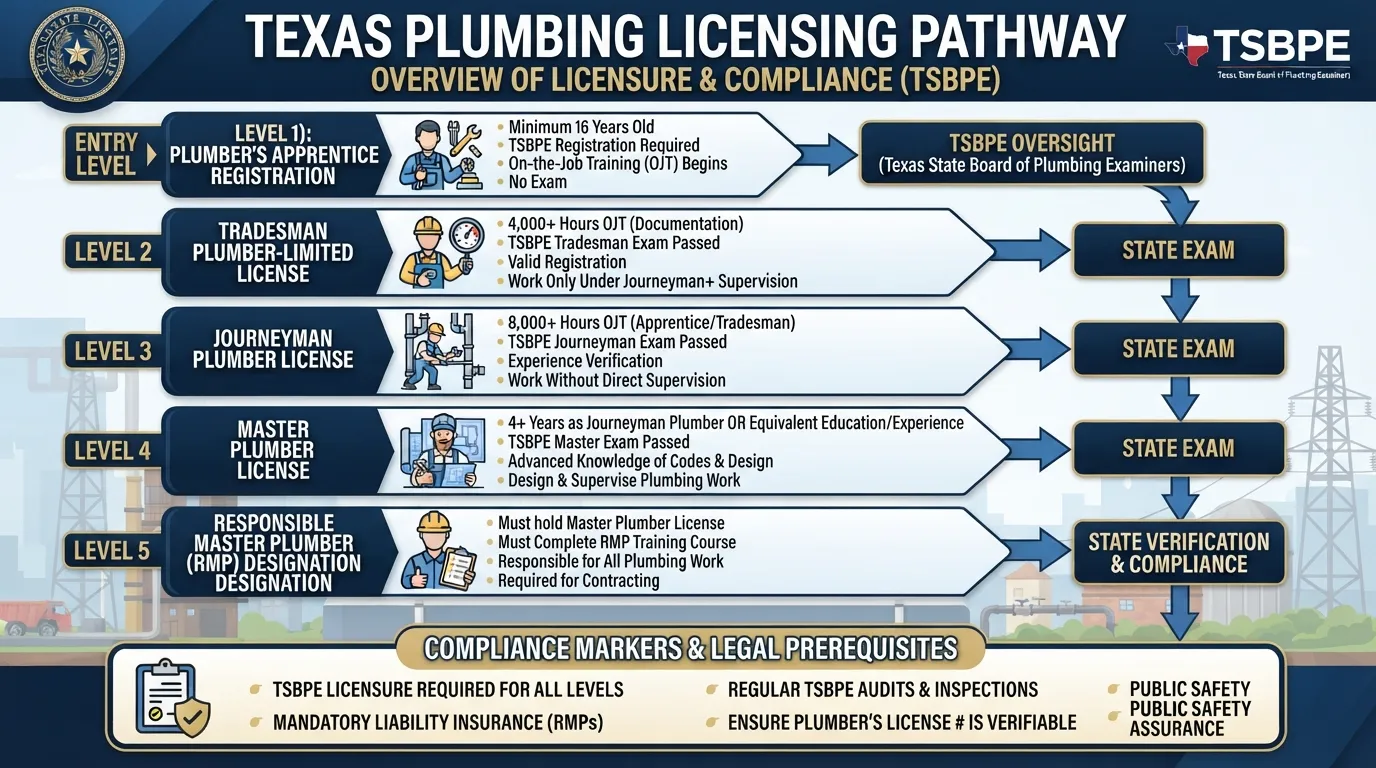
The state credentialing structure scales progressively from entry-level registration to advanced master-level certifications and contractor designations. Reviewing the hierarchy helps map out your long-term career progression in the plumbing industry.
- Apprentice Plumber: The foundational entry point required to legally work and log experience hours under supervision.
- Tradesman Plumber-Limited / Journeyman: Mid-tier licenses allowing increased independence and execution of residential or general plumbing services.
- Master Plumber: Advanced classification demonstrating high-level technical proficiency, comprehensive code knowledge, and leadership capabilities.
- Responsible Master Plumber (RMP): The mandatory designation required to operate an independent plumbing contracting business in Texas.
Who This Guide Is For
This comprehensive roadmap serves multiple professionals aiming to build, transition, or expand their plumbing careers within the Lone Star State. Navigating the regulatory landscape accurately saves time and prevents licensing delays.
- Beginners: Individuals entering the trades with zero prior experience who need an initial entry roadmap.
- Apprentices: Active trainees seeking clarity on how to transition their accumulated work hours into advanced credentials.
- Out-of-State Plumbers: Experienced professionals looking to transfer or reciprocate their credentials to practice legally in Texas.
- Business Owners: Contractors needing clarity on master-level requirements and Responsible Master Plumber designations.
Do You Need a License to Do Plumbing in Texas?
 Under the Texas Plumbing License Law, anyone offering or performing plumbing services in the state must hold an active, valid license. Engaging in regulated plumbing work without proper credentials issued by the state board carries severe administrative penalties, fines, and potential legal liabilities.
Is a Plumbing License Required in Texas?
Yes, a state-issued plumbing license is legally required for almost all installation, alteration, and repair work concerning water supply, drainage, and waste systems. The Texas State Board of Plumbing Examiners regulates these mandates strictly to protect public health, safety, and water infrastructure integrity. Performing unexempted plumbing tasks without a license is illegal and exposes property owners to failed building inspections and denied insurance claims.
Can a Handyman Do Plumbing Work in Texas?
While general handymen operate legally in Texas without a state-level handyman license, their capacity to perform plumbing tasks is severely restricted. Handymen are legally prohibited from altering piping, fixing internal leaks, installing water heaters, or touching gas lines.
- Allowed Minor Tasks: Basic non-invasive actions like replacing a faucet aerator, plunging a toilet, or clearing surface-level sink clogs.
- Strictly Prohibited Tasks: Opening walls, soldering pipes, repairing sewer lines, or modifying pressurized water systems.
- Legal Consequences: Hiring an uncredentialed handyman for regulated plumbing breaches state code, risking municipal fines and voided homeowner insurance coverage.
Can You Run a Plumbing Company Without a License?
No individual or corporate entity can legally offer plumbing contracting services to the public without complying with specific state master-level designations. Operating a plumbing business requires a qualified Responsible Master Plumber (RMP) associated with the enterprise to pull municipal permits and supervise operations.
TSBPE vs TDLR: Who Actually Issues Plumbing Licenses?
A common point of confusion among consumers and out-of-state arrivals is whether the Texas Department of Licensing and Regulation (TDLR) handles plumbing credentials. In Texas, plumbing trades are exclusively governed by the Texas State Board of Plumbing Examiners (TSBPE), not the TDLR.
- TSBPE Authority: Manages all apprentice registrations, Journeyman, Master, Inspector licenses, and plumbing enforcement actions.
- TDLR Role: Oversees separate contractor fields like electricians, HVAC technicians, and cosmetologists, but holds zero jurisdiction over plumbers.
- Verification Check: Always verify contractor credentials directly through the official TSBPE database rather than searching state boards incorrectly.
Texas Plumbing License Types Compared
Choosing the correct credential in the Texas plumbing sector depends on your current experience level, training hours, and professional career goals. The Texas State Board of Plumbing Examiners (TSBPE) administers multiple distinct licensing tiers to match every stage of a tradesperson’s development.
License Types Comparison Table
Plumber’s Apprentice
The Plumber’s Apprentice registration is the mandatory starting point for anyone entering the trade in Texas. This credential enables novices to legally perform plumbing work while earning livelihood experience under direct oversight.
- Prerequisites: Background check clearance and active registration with the TSBPE.
- Supervision Mandate: Requires continuous, direct on-site supervision by a licensed Journeyman, Tradesman, or Master Plumber.
- Purpose: Serves as the tracking mechanism for accumulating verified field hours toward higher certifications.
Tradesman Plumber-Limited
The Tradesman Plumber-Limited (TPL) license is an intermediate step tailored for professionals focusing heavily on residential housing installation and repair tasks.
- Experience Benchmark: Requires accumulating at least 4,000 hours of documented practical experience alongside completion of a board-approved 24-hour training course.
- Operational Scope: Limited legally to work performed on one- and two-family residential dwellings.
- Career Milestone: Permits independent handling of basic residential service calls without constant on-site monitoring.
Journeyman Plumber
The Journeyman Plumber license represents a major professional milestone, lifting the strict residential caps imposed on tradesman-level license holders.
- Experience Benchmark: Requires completing 8,000 hours of registered experience and a board-mandated 48-hour advanced training course.
- Operational Scope: Authorized to perform plumbing installations across all structures, including complex commercial and industrial properties.
- Mentorship Role: Empowers holders to supervise multiple apprentices on active job sites.
Master Plumber
The Master Plumber certification stands as the pinnacle of individual technical achievement and regulatory mastery within the Texas plumbing trade.
- Experience Benchmark: Requires an established history of working as a licensed Journeyman and passing an advanced, comprehensive examination.
- Focus Areas: Emphasizes systemic architectural layout, advanced blueprint reading, complex code compliance, and team leadership.
- Foundation for Business: Serves as the prerequisite stepping stone for individuals seeking to transition into independent contracting as a Responsible Master Plumber.
Plumbing Inspector
Plumbing Inspectors enforce public safety by verifying that newly installed systems strictly adhere to state and municipal building regulations.
- Experience Benchmark: Typically requires a structured path including 500 hours of practical inspection experience or extensive trade backgrounds.
- Key Responsibilities: Reviewing structural schematics, conducting on-site municipal inspections, and issuing regulatory code enforcement sign-offs.
- Employment Sector: Commonly employed by municipal building departments, engineering firms, or private code compliance agencies.
Which License Should You Aim For?
Selecting your immediate career target streamlines your path through the TSBPE framework without wasting time on redundant qualifications.
- New Entrants: Secure an Apprentice registration immediately to start logging billable hours legally.
- Residential Specialists: Target the Tradesman Plumber-Limited license once your initial 4,000 hours are met.
- Commercial and Enterprise Aspirants: Push directly toward the 8,000-hour requirement to qualify for the Journeyman and Master tiers.
How to Get Your Texas Plumbing License
Securing an official plumbing credential in Texas requires following a structured progression defined by state regulations. Successfully completing each phase ensures that you meet legal practice requirements and build strong professional capabilities.
Step 1: Register as a Plumber’s Apprentice
The initial phase of your plumbing career begins by obtaining legal authorization to work on job sites. Before logging any professional hours, every newcomer must clear a state background check and official registration.
- Eligibility Criteria: Must meet minimum age guidelines and submit identification details through the TSBPE online portal.
- Fees & Background Check: Pay the standard application processing fee and complete the mandatory fingerprinting background check.
- Sponsorship Requirement: Secure employment or sponsorship under a licensed Texas plumbing contractor or master plumber.
Step 2: Log Your Work Hours Under Supervision
Accumulating verifiable field experience forms the backbone of your professional development. Every hour worked must be tracked accurately to qualify for higher-level examinations.
- Direct Supervision: Ensure all on-site activities are overseen directly by a qualified Journeyman, Tradesman, or Master Plumber.
- Documentation Standards: Maintain precise logs of your daily tasks, job site locations, and supervising plumber license numbers.
- Hour Benchmarks: Track progress toward your specific target tier, such as 4,000 hours for a tradesman or 8,000 hours for a journeyman credential.
Step 3: Complete the Required Training Course
Alongside practical fieldwork, candidates must complete formal classroom instruction tailored to their licensing level. These courses reinforce safety protocols, blueprint reading, and state plumbing codes.
- Tradesman Requirement: Complete an approved board-mandated 24-hour training course prior to testing.
- Journeyman Requirement: Fulfill the required 48-hour advanced training program administered by certified educators.
- Course Verification: Ensure your education provider is officially recognized by the state board so completion certificates transfer seamlessly.
Step 4: Submit Your Application and Employer Certification
Once your hours and educational components are finalized, you must compile your verification files for board review. Submitting accurate documentation prevents administrative processing delays.
- Employer Sign-Off: Obtain official signatures and certification forms from your supervising master plumbers confirming your logged hours.
- Application Filing: Submit your examination application package through the TSBPE online portal with all required attachments.
- Authorization to Test: Wait for board review approval, which grants you the official clearance to schedule your state exam.
Step 5: Pass the Licensing Exam
Passing the state examination validates your technical proficiency and comprehensive understanding of Texas plumbing codes. Adequate preparation ensures high first-time pass rates.
- Exam Format: Includes both a comprehensive written theory section and a practical hands-on evaluation.
- Content Focus: Tests knowledge of sizing principles, fixture installations, venting, and safety regulations.
- Retest Options: Review score reports closely if remediation is needed to schedule subsequent exam attempts.
Step 6: Receive and Maintain Your License
Upon passing your examination and clearing final administrative reviews, your official license is issued. Protecting this credential requires ongoing adherence to state renewal schedules.
- Credential Issuance: Pay final licensing fees to receive your active pocket card and wall certificate.
- Active Status: Keep your credentials visible or accessible as required on active job sites.
- Ongoing Compliance: Prepare for regular license renewals and mandatory continuing education credits to keep your license valid.
Hours Training and Exam Requirements Explained
Mastering the structural requirements mandated by the Texas State Board of Plumbing Examiners (TSBPE) is essential for career progression. Meeting designated hour benchmarks, completing accredited coursework, and passing computer-based testing certify that every licensed professional possesses safe, code-compliant trade competencies.
Experience Hours by License Level
Required Training Courses: 24-Hour vs 48-Hour
Classroom training bridges theoretical engineering with practical plumbing execution. These board-approved education programs cover vital technical standards, blueprint fundamentals, and workplace safety.
- 24-Hour Course: Tailored for apprentice candidates transitioning to a Tradesman Plumber-Limited license, focusing heavily on residential codes and safety protocols.
- 48-Hour Course: Designed for candidates aiming for the Journeyman level, covering advanced commercial systems, complex drainage designs, and regulatory compliance.
- OSHA Alignment: Many comprehensive programs incorporate foundational safety components such as OSHA 10-hour construction guidelines to ensure absolute job-site safety awareness.
What the Texas Plumbing Exam Covers
Texas licensing evaluations are split into comprehensive theoretical exams and hands-on operational assessments. The state partners with Pearson VUE for computer-based testing, offering widespread test center availability across major metropolitan zones.
- Written Computer-Based Testing (CBT): Evaluates knowledge of the Texas Plumbing License Law, state-adopted plumbing codes, pipe sizing equations, and safety standards.
- Practical Hands-On Assessment: Administered directly at TSBPE evaluation facilities, requiring candidates to build and pressure-test specific piping configurations under observation.
- Core Subject Matter: Focuses heavily on fixture placement, cross-connection control, venting requirements, and water supply protection principles.
How to Prepare for the Exam
First-time pass rates depend heavily on structured study habits and familiarity with exam parameters. Utilizing official candidate handbooks and sample questions maximizes preparation efficiency.
- Master the Code Book: Spend extensive time studying the state-adopted plumbing code and indexing key chapters for rapid reference.
- Take Practice Tests: Complete online practice exams to build pacing skills and adapt to computer-based testing formats.
- Review Calculation Formulas: Memorize pipe sizing, fall percentages, and hydrostatic pressure formulas rather than relying on guesswork.
What Happens If You Fail?
Failing an examination attempt does not end your licensing journey, though it requires following strict board remediation guidelines before retesting.
- Mandatory Waiting Periods: Candidates must observe mandatory waiting periods (ranging typically from 30 to 90 days depending on the attempt count) following a failed test.
- Reapplication Process: You must submit a formal retest application along with the required processing fees to generate a fresh Authorization to Test.
- Targeted Remediation: Review score reports carefully to identify weak performance domains before scheduling subsequent exam attempts.
How Much Does a Texas Plumbing License Cost?
Budgeting for a plumbing career in Texas requires understanding state regulatory fees, testing charges, and educational course expenses. While initial entry costs are exceptionally affordable, advanced classifications involve higher examination and licensing fees as professionals progress through their careers.
Texas Plumbing License Fees Table
You can review complete regulatory breakdowns and up-to-date figures directly on the TSBPE official fee and license information portal.
Training Course and Study Material Costs
Beyond direct state fees, candidates must account for board-approved educational programs and code reference manuals required for testing preparation.
- Training Program Tuition: Board-mandated 24-hour and 48-hour training courses typically range from $250 to $600 depending on the provider and delivery format.
- Code Books and Materials: Purchasing current state-adopted plumbing code books and study guides generally adds $100 to $200 in upfront out-of-pocket costs.
- Continuing Education: Annual license renewals require small continuing education course fees, usually averaging $50 to $100 per year.
Total Estimated Cost from Apprentice to Master
Mapping out financial requirements across an entire career trajectory highlights how investment scales alongside professional growth and earning potential.
- Apprentice Entry: Minimal upfront expenditure consisting of the $15 registration fee and a one-time fingerprint background check cost.
- Mid-Tier Advancement: Moving through Tradesman and Journeyman tiers accumulates roughly $200 to $500 combined in testing, application, and course tuition fees.
- Master & Contractor Level: Advanced master certifications require higher testing fees and business licensing investments exceeding $500 in total administrative expenses.
Are There Hidden Costs?
Anticipating peripheral expenses prevents unexpected financial surprises during the application and testing process.
- Fingerprinting Fees: Initial background check fingerprinting requires a third-party vendor fee (typically around $40) separate from board payments.
- Retake Penalties: Failing an exam forces candidates to pay retest application fees for subsequent attempts.
- Late Renewal Penalties: Failing to renew credentials on time triggers late fees ranging from $7.50 to $75 depending on the delay duration.
How Long Does It Take to Become a Licensed Plumber in Texas?
The time required to earn a fully licensed plumbing credential in Texas depends heavily on whether you work full-time or part-time, as state licensing is driven strictly by documented working hours. Navigating the regulatory progression effectively allows aspiring professionals to forecast their career development accurately.
Timeline by License Level
Part-Time vs Full-Time Hours
Because hour accumulation dictates eligibility, working part-time or experiencing seasonal slowdowns will directly extend your overall timeline to licensure.
- Full-Time Pacing: Working a standard 40-hour weekly schedule accumulates roughly 2,000 billable hours per year, reaching Journeyman eligibility in four years.
- Part-Time Pacing: Working 20 hours per week cuts annual hour accumulation in half, stretching the timeline to reach the 8,000-hour mark to approximately eight years.
- Hour Tracking Discipline: Maintaining meticulous records of every work week ensures that no logged hours are lost or rejected during board audits.
How to Reach Master Faster
Accelerating your progression through the Texas plumbing framework requires strategic alignment with recognized training institutions and structured employment.
- DOL-Approved Apprenticeship Programs: Enrolling in a Department of Labor-approved apprenticeship program combines structured classroom education with steady, guaranteed work hours.
- Consistent Employment: Maintaining steady employment with busy commercial or residential contractors prevents gaps in hour accrual.
- Early Education Completion: Fulfilling mandatory 24-hour and 48-hour training courses ahead of schedule ensures you are ready to test the moment your experience hours are verified.
Can You Get a Texas Plumbing License Online?
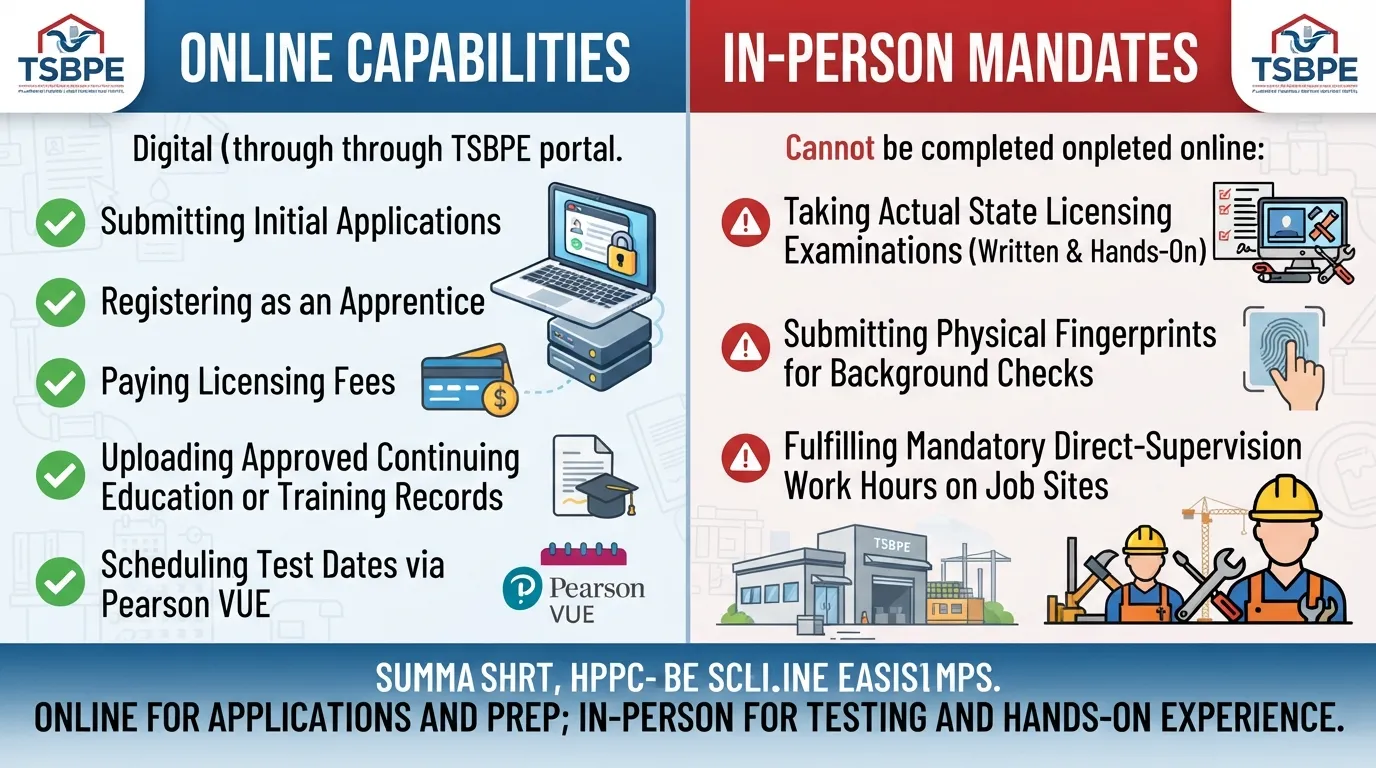 While digital tools streamline much of the administrative process, obtaining a plumbing license in Texas cannot be completed entirely online. Understanding which tasks require digital portals versus in-person attendance helps candidates navigate the system efficiently.
What You Can Do Online
The Texas State Board of Plumbing Examiners (TSBPE) provides a secure online portal that handles a wide array of administrative functions, applications, and verification requests.
- Submitting Applications: New apprentice registrations, exam applications, and annual license renewals can be processed through the online system.
- Completing Continuing Education: Certain board-approved continuing education (CE) courses can be taken through certified online distance-learning providers.
- Verifying Active Credentials: Using the public license lookup portal lets employers and consumers instantly verify active plumber registrations.
What You Cannot Do Online
Certain core components of the Texas licensing pipeline strictly require physical presence or hands-on evaluation to maintain rigorous industry standards.
- Logging On-Site Hours: Practical field experience hours must be earned on physical job sites under direct supervision.
- Taking Licensing Exams: Computer-based written exams must be completed at official Pearson VUE test centers, and practical hands-on exams require testing at designated board facilities.
- Electronic Fingerprinting: Background check fingerprinting must be done in person through authorized third-party biometric collection centers.
How to Use the TSBPE License Search
Verifying a plumber’s credentials or checking your own registration status takes only a few seconds using the official state database.
- Access the Portal: Navigate to the official TSBPE license verification webpage.
- Enter Search Criteria: Input the plumber’s full name, license number, or company name into the search fields.
- Review Status Details: Confirm the license classification, expiration date, and active standing before hiring or contracting work.
How to Start as a Beginner With No Experience
Entering the Texas plumbing trade with zero background experience is entirely possible through structured state pathways. Because the industry relies heavily on a “earn-while-you-learn” model, newcomers can secure entry-level employment, get paid during training, and build lifelong technical skills without accumulating college debt.
Do You Need Experience to Become an Apprentice?
No, you do not need any prior plumbing experience to register as an apprentice in Texas. The Plumber’s Apprentice registration serves as the official starting line for absolute beginners, requiring only a clean background check, minimum age compliance, and the nominal state registration fee.
How to Find a Sponsoring Plumber or Apprenticeship
Securing a sponsoring employer or formal apprenticeship program is your first vital step toward logging billable field hours. Multiple established avenues connect beginners with hiring contractors across the state.
- Local Plumbing Contractors: Reach out directly to independent residential and commercial service companies offering entry-level helper or apprentice positions.
- Plumbers Union Programs: Apply to United Association (UA) local union apprenticeship programs (such as UA Local 100 or Local 142) which offer structured, competitive wage progressions and health benefits.
- PHCC-Texas Programs: Connect with chapters of the Associated Plumbing, Heating-Cooling Contractors of Texas (PHCC-TX) to access Department of Labor-approved training pipelines.
Trade School vs Direct Apprenticeship
Real-World Advice From Working Plumbers
Veterans in the Texas plumbing sector emphasize that attitude, reliability, and punctuality matter just as much as technical aptitude during your early apprenticeship months.
- Show Up Early: Being punctual and eager to assist on the job site earns the trust of supervising journeymen faster than anything else.
- Protect Your Hours: Always verify that your employer correctly reports your verified hours to the TSBPE so your career progression never stalls.
- Ask Questions: Master the underlying code principles behind why pipes are pitched or vented a certain way rather than just memorizing physical steps.
Getting a Texas Plumbing License From Another State
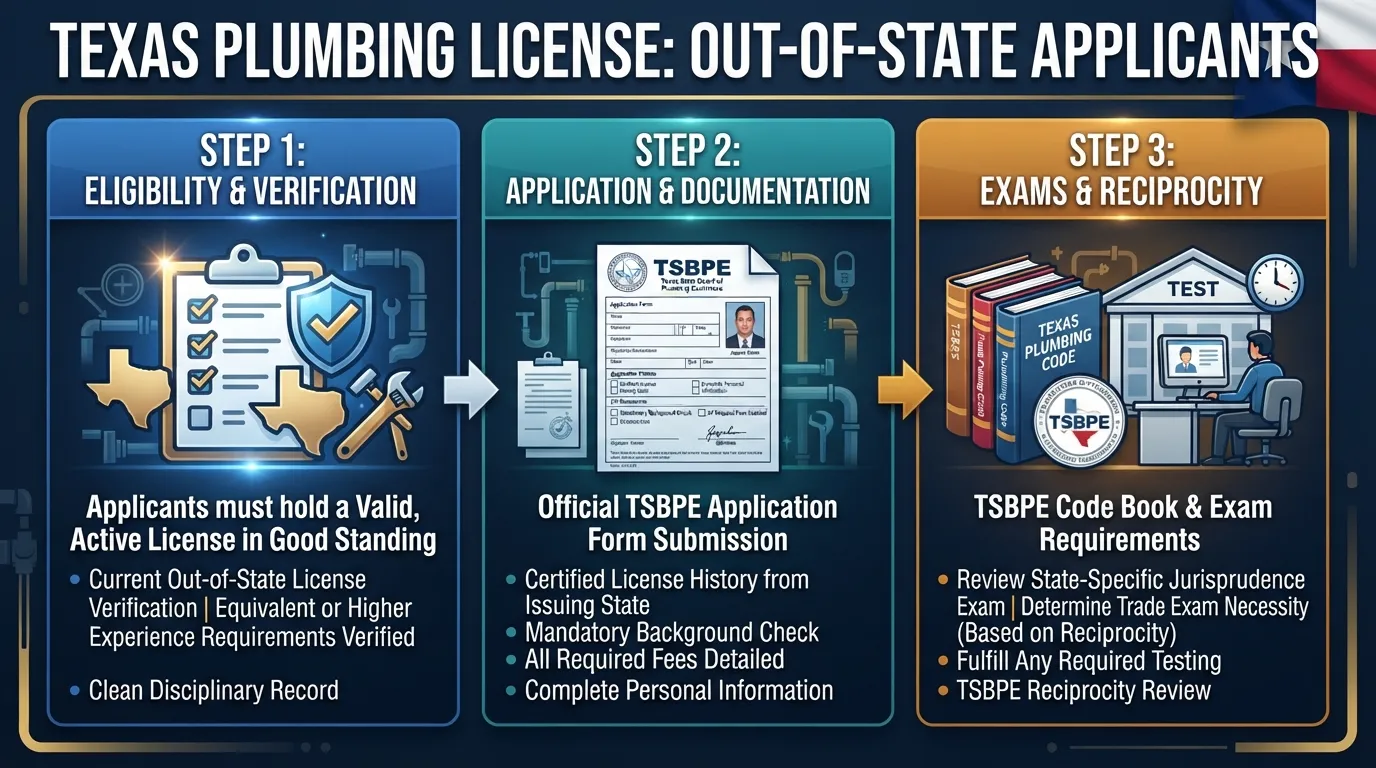 Relocating to Texas as an experienced plumber from another state requires navigating specific regulatory pathways. Because Texas maintains some of the most rigorous plumbing standards in the country, understanding how out-of-state credentials transfer prevents unnecessary delays.
Does Texas Accept Out-of-State Plumbing Licenses?
Texas does not offer universal, blanket reciprocity for plumbing licenses issued by every state. Direct reciprocal licensing agreements are typically restricted to select neighboring jurisdictions, such as Louisiana and Arkansas, provided applicants meet strict qualifying criteria.
- Direct Reciprocity States: Plumbers holding active credentials from states with active agreements (like Louisiana or Arkansas) can apply for equivalent Texas licensure under expedited verification guidelines.
- Non-Reciprocal States: Professionals coming from states without formal reciprocity agreements cannot automatically swap their license. Instead, they must apply via the out-of-state examination pathway.
- Training Exemptions: Out-of-state Journeyman or Master license holders applying for a Texas Journeyman exam are often exempted from completing the standard 48-hour training course, provided their home state’s experience requirements are deemed equivalent by the board.
How Reciprocity Requests Are Reviewed
The Texas State Board of Plumbing Examiners (TSBPE) evaluates each out-of-state application individually to ensure public safety and code competency.
- Home State Standing: Applicants must provide official verification proving their home-state license is currently active and in good standing.
- Substantial Equivalence: The board reviews the candidate’s documented experience hours and past examination types to confirm they match Texas benchmarks.
- Official Documentation: Submissions must include official letters or certification forms issued directly on the licensing authority’s official letterhead.
Step by Step Process for Out-of-State Plumbers
Transferring your professional trade background into the Texas system follows a structured sequence of application and verification steps.
- Submit the Out-of-State Application: File the appropriate reciprocal or out-of-state examination application package through the TSBPE portal.
- Provide License Verification: Include certified documentation or a letter from your previous state board detailing your licensing history and exam scores.
- Clear Background Checks: Fulfill Texas fingerprinting and criminal history background requirements mandated for all credential seekers.
- Schedule and Test (If Required): If direct reciprocity does not apply, complete the required Texas computer-based or practical examinations to earn your active state license.
How to Open Your Own Plumbing Business
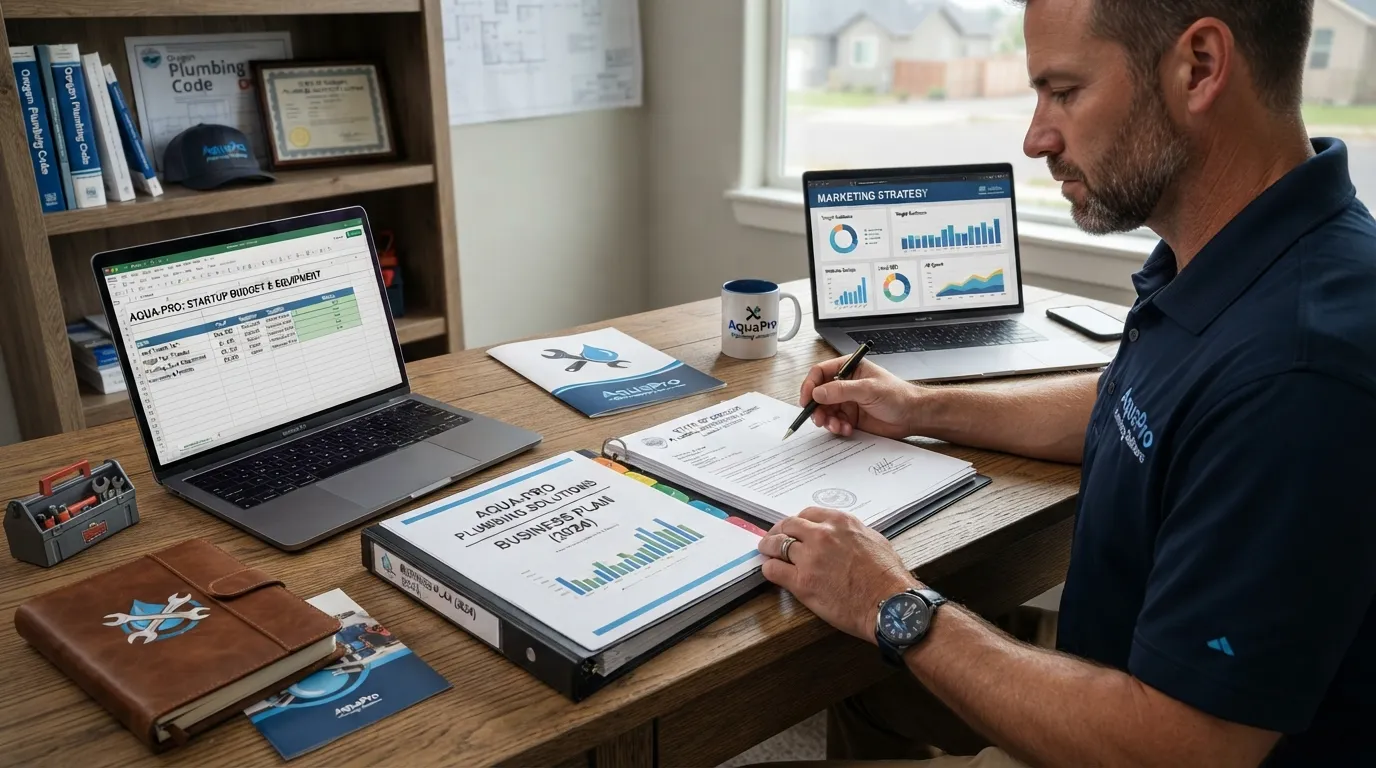 Transitioning from an independent trade worker to a business owner in Texas requires obtaining a specialized designation known as a Responsible Master Plumber (RMP). Operating a contracting enterprise or offering plumbing services directly to the public without this credential violates state law.
Master Plumber vs RMP: What’s the Difference?
While both titles reflect the highest individual technical tier, they carry distinct operational permissions under Texas regulations.
- Master Plumber: Demonstrates advanced technical proficiency, mastery of plumbing blueprints, and complex code compliance, but does not automatically grant the legal right to contract independently with the public.
- Responsible Master Plumber (RMP): An active Master Plumber who has completed specialized business training, secured mandatory insurance coverage, and registered with the state board to operate a contracting business.
- Contracting Authority: Only an RMP can pull municipal plumbing permits, hire subordinate apprentices or journeymen, and offer commercial or residential plumbing services under a company banner.
RMP Requirements
To upgrade from a standard Master Plumber license to an RMP designation, candidates must fulfill specific administrative, educational, and financial mandates set by the Texas State Board of Plumbing Examiners (TSBPE).
- Active Master Status: Must hold a valid, unencumbered Texas Master Plumber license in good standing with the board.
- RMP Training Course: Complete a board-approved 24-hour RMP training program focused on business management, contracting laws, and liability responsibilities.
- Financial Proof: Submit verifiable documentation showing compliance with state commercial liability insurance minimums.
Insurance Requirement Explained
Protecting consumers and property owners from catastrophic installation errors requires every RMP to maintain active commercial liability coverage.
- Minimum Coverage Limit: Texas mandates a minimum of $300,000 in commercial general liability insurance coverage for all active RMPs.
- Certificate of Insurance: An official Certificate of Insurance (COI) must be filed directly with the TSBPE, naming the board as a certificate holder to verify continuous active policy status.
- Higher Commercial Limits: Many general contractors or commercial developers require policy limits exceeding $1,000,000 before awarding large-scale project contracts.
Steps to Register Your Plumbing Business
Launching your enterprise successfully requires executing a structured sequence of administrative steps to establish full legal compliance.
- Complete the RMP Course: Finish the required training hours and secure your official course completion certificate.
- Secure Commercial Insurance: Purchase the required liability policy meeting or exceeding the $300,000 state threshold through an authorized insurance provider.
- File with the TSBPE: Submit your RMP application, proof of insurance, and the designated application fees through the state board portal.
- Establish Your Business Entity: Register your company name (such as an LLC or Corporation) with the Texas Secretary of State and local county clerk offices before taking on clients.
License Renewal and Continuing Education
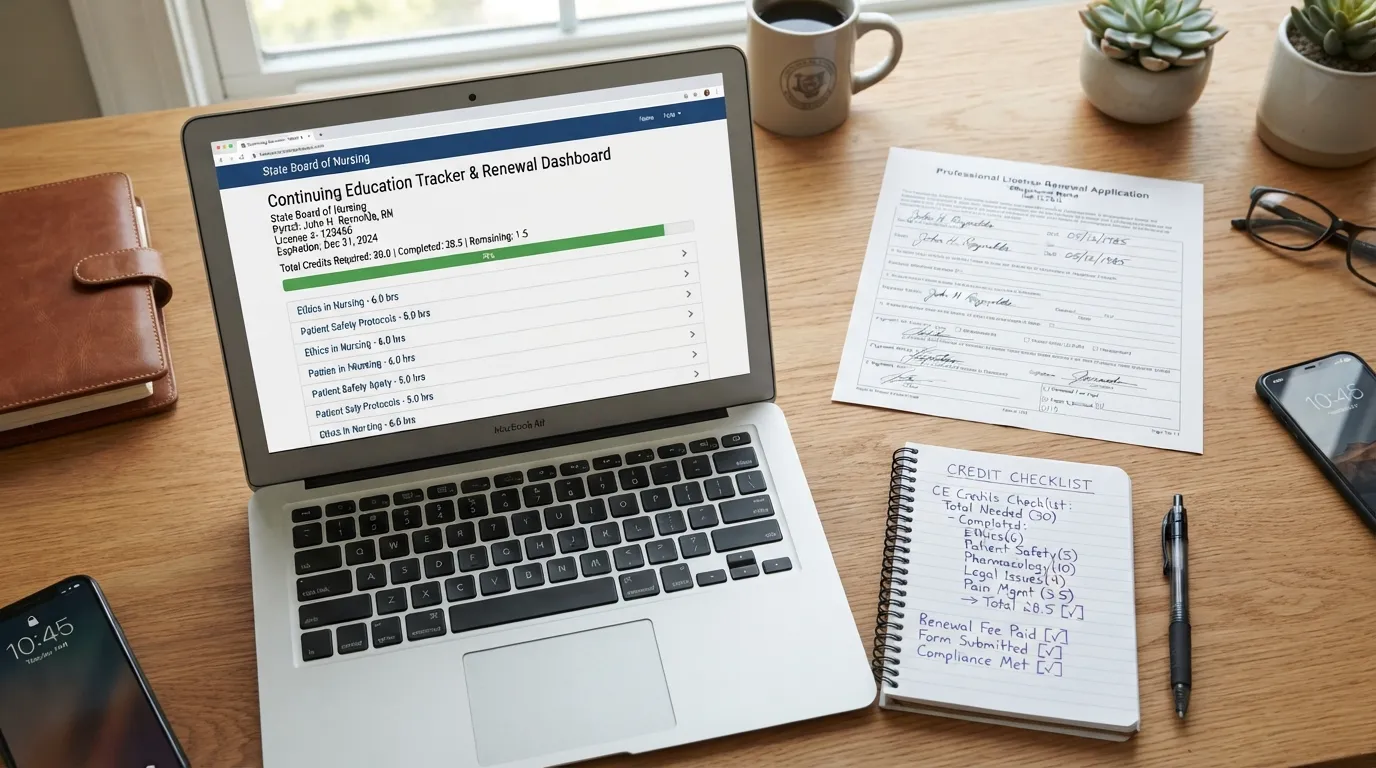 Maintaining active legal standing as a plumbing professional in Texas requires strict adherence to annual renewal schedules and continuing professional education mandates. Staying current prevents costly lapses, administrative penalties, and unauthorized work citations.
How Often Do You Renew?
All plumbing licenses, registrations, and specialty endorsements issued by the Texas State Board of Plumbing Examiners (TSBPE) must be renewed on an annual basis.
- Renewal Window: Licensees should submit their renewal paperwork and continuing education certificates prior to their specific annual expiration date to prevent coverage gaps.
- Endorsement Alignment: Specialty credentials—such as Medical Gas or Backflow prevention endorsements—synchronize with your primary license renewal timeline upon completing required specialized CE modules.
- Proactive Processing: Utilizing the state online system weeks ahead of expiration guarantees your active pocket card arrives without disruption.
Continuing Professional Education CPE Hours by License Type
Fulfilling mandatory continuing education ensures every active tradesperson stays up-to-date with updated safety standards, code amendments, and state law modifications.
- Standard CPE Requirement: Master Plumbers, Journeymen, Tradesman Plumbers-Limited, and Plumbing Inspectors must complete 6 hours of TSBPE-approved CPE annually before renewing.
- Specialized Endorsements: Medical Gas piping installers must complete a specialized 2-hour CPE course every three years in addition to their yearly general hours.
- Approved Providers: Courses must be delivered through board-certified educational providers or trade associations like PHCC-Texas to qualify for automated state reporting.
How to Renew Online
The TSBPE digital portal offers a fast, secure mechanism to process annual renewals without dealing with physical paperwork.
- Complete Your CPE First: Finish your required 6-hour continuing education course so the provider can transmit completion records to the board database.
- Log Into the TSBPE Portal: Access your account profile using your secure credentials and select the annual renewal option.
- Pay Renewal Fees: Submit payment for your specific tier using a credit or debit card to finalize processing instantly.
What Happens if Your License Expires?
Failing to renew your credential before the expiration deadline triggers immediate restrictions on your ability to work legally in the state.
- Work Prohibitions: Performing regulated plumbing tasks with an expired credential is strictly illegal and subject to severe municipal and state fines.
- Late Penalties: Delays in renewal accrue progressive late fees ranging from minor surcharges to substantial penalties depending on how long the license remains lapsed.
- Reinstatement Hurdles: If a license lapses for an extended duration, the board may require special reapplication reviews or additional testing before granting active status restoration.
Is Plumbing a Good Career in Texas?
Pursuing a career in the Texas plumbing sector offers exceptional long-term stability, competitive financial returns, and freedom from student debt. Because the state’s population growth continuously drives residential and commercial construction, skilled trades professionals remain in high demand.
How Much Do Plumbers Make in Texas?
According to data published by the U.S. Bureau of Labor Statistics, the median annual wage for plumbers in Texas is $59,840, translating to an hourly rate of roughly $28.77. Experienced journeymen, master plumbers, and those operating independent contracting businesses frequently earn significantly higher figures, particularly in major metropolitan hubs like Austin, Houston, and Dallas-Fort Worth.
Is 25 or 30 Too Late to Become a Plumber?
No, starting your plumbing career in your mid-twenties, thirties, or beyond is entirely practical and common. Many individuals transition into the trades later in life seeking stable, hands-on careers with clear, merit-based advancement schedules. Your prior professional maturity, work ethic, and communication skills often accelerate your progression through apprentice and journeyman tiers.
How Hard Is Plumbing?
Plumbing is undeniably demanding, combining rigorous physical exertion with complex intellectual problem-solving.
- Physical Demands: The trade frequently requires working in tight crawl spaces, lifting heavy cast iron or copper piping, and enduring outdoor weather conditions.
- Technical Complexity: Beyond physical labor, plumbers must master intricate math, blueprint layouts, hydrostatic testing, and state building codes.
- Rewarding Problem Solving: Diagnosing elusive infrastructure failures and engineering code-compliant solutions provides a deep sense of professional accomplishment.
Plumber vs HVAC Technician
Common Mistakes That Delay Your License
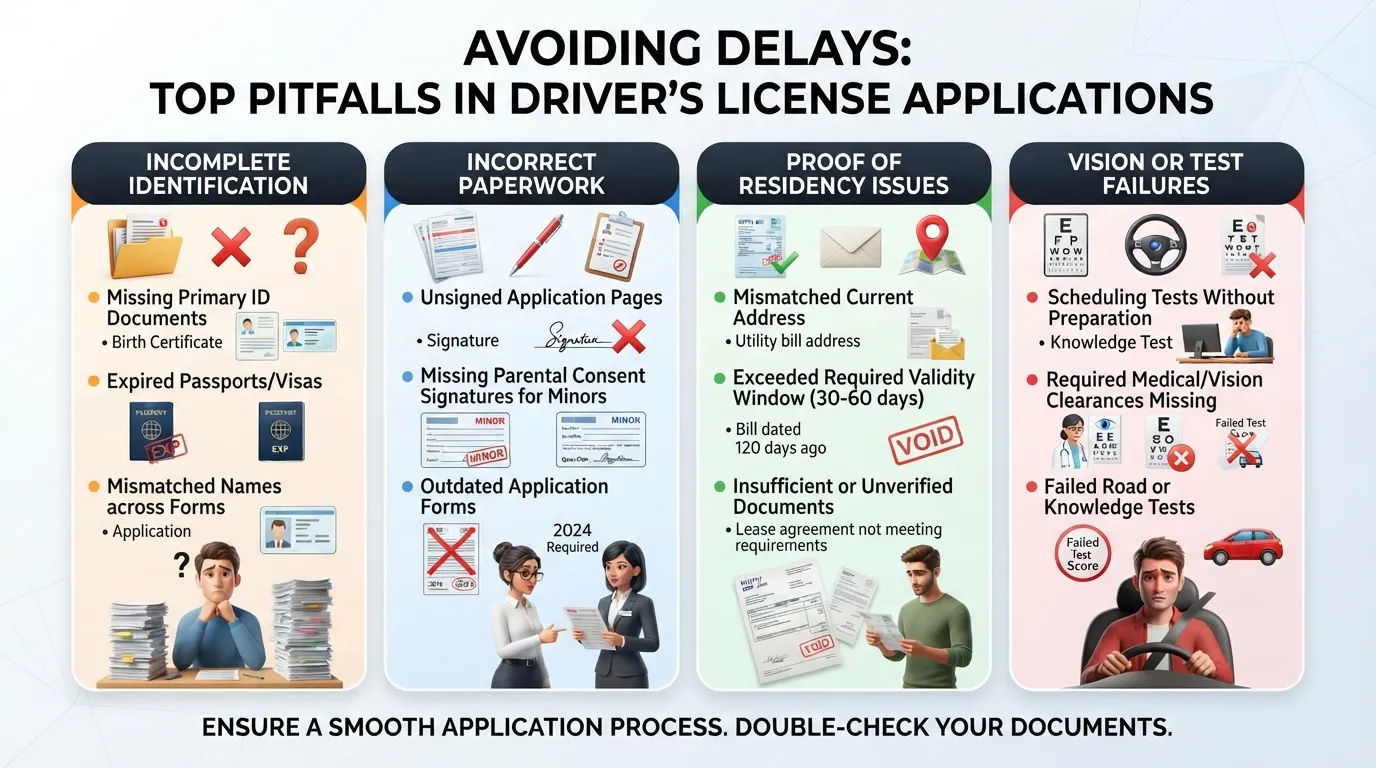 Navigating the Texas plumbing licensing process requires meticulous attention to detail. Simple administrative oversights, incorrect hour tracking, or missing documentation can stall your application for weeks or months, delaying your professional advancement.
Hour-Logging Errors and Missing Employer Signatures
Because eligibility for tradesman and journeyman exams depends entirely on verified field hours, any discrepancy in your record keeping can cause immediate rejection by the Texas State Board of Plumbing Examiners (TSBPE).
- Unverified Work Logs: Failing to maintain a continuous, detailed log of daily tasks and job locations makes it difficult to substantiate your experience during board audits.
- Missing Master Signatures: Submitting employer certification forms without the required physical or digital signatures from your supervising master plumber invalidates those logged hours.
- Contractor Changes: Failing to secure sign-off documentation when leaving an employer often leads to permanently lost hours if the previous contractor becomes unreachable.
Taking the Wrong Training Course
Enrolling in unapproved educational programs wastes both time and money. Board requirements are strictly regulated, and non-compliant coursework will not satisfy licensing prerequisites.
- Non-Approved Providers: Taking continuing education or mandatory training courses through schools not officially certified by the TSBPE results in rejected credits.
- Level Mismatch: Registering for a 24-hour tradesman course when aiming for a journeyman pathway (which requires the 48-hour program) forces you to retake the correct curriculum.
- Certificate Lapses: Delaying exam registration long after completing your training course can occasionally require retesting or refresher credits.
Working Unregistered
Performing plumbing work in Texas without an active apprentice registration is a serious regulatory violation that carries severe consequences.
- Uncredited Hours: Any hours worked prior to your official apprentice registration date are legally invalid and cannot be counted toward your 4,000 or 8,000-hour benchmarks.
- Fines and Citations: Unregistered work exposes both the individual and the employing contractor to state disciplinary action, administrative fines, and job-site shutdowns.
- Background Check Delays: Waiting until the last minute to submit fingerprinting and background check forms pushes back your official active registration date.
Application Mistakes That Cause Rejection
Clerical errors during the application filing stage are among the most common causes of processing bottlenecks within the state board portal.
- Incorrect Personal Details: Mismatches between your legal identification, social security number, and application profile trigger manual security reviews.
- Unpaid or Partial Fees: Submitting application packages without correct payment for exams, processing, or background checks stops review procedures immediately.
- Incomplete Documentation: Forgetting to attach required course completion certificates or employer verification forms leads to administrative deferrals.
Pro Tips From Licensed Plumbers
Experienced professionals who have successfully navigated the system offer practical advice to help newcomers avoid costly missteps.
- Keep Personal Copies: Always retain personal, physical copies of every time log, employer certification form, and course completion certificate you submit.
- File Early: Submit your exam applications the moment you hit your required hour milestones rather than waiting until the end of the year.
- Verify Provider Status: Double-check the TSBPE directory before paying for any training course to confirm the school maintains active board approval.
Frequently Asked Questions
Reviewing answers to common questions helps clear up final uncertainties regarding plumbing regulations, verification processes, and legal exemptions across Texas.
What plumbing code does Texas use?
Texas enforces state-adopted plumbing standards based heavily on the International Plumbing Code (IPC) alongside localized state amendments. These regulations govern minimum technical requirements for water supply, sanitary drainage, venting systems, and fixture installations to protect public health and safety.
How do I check if a plumber is licensed in Texas?
You can instantly verify a plumber’s credentials by visiting the official Texas State Board of Plumbing Examiners (TSBPE) public license search portal. Simply input the individual’s name or license number to confirm their active standing, classification tier, and expiration date.
Can I use a plumbing license to earn money if I stop working in the field?
Yes, holding an active Master Plumber or Journeyman credential allows you to leverage your expertise in non-field roles without performing physical labor. Many experienced professionals transition smoothly into lucrative positions as municipal plumbing inspectors, technical code consultants, or board-approved trade instructors.
What is the difference between a Journeyman and a Tradesman?
A Tradesman Plumber-Limited license requires 4,000 experience hours and restricts work primarily to one- and two-family residential dwellings. In contrast, a Journeyman Plumber requires 8,000 hours of experience and lifts residential caps, authorizing work across all commercial, industrial, and residential structures.
Do I need a license to do plumbing on my own home?
Under specific Texas homeowner exemptions, property owners can perform certain plumbing repairs or installations on their primary homestead without a license. However, you must still pull mandatory municipal building permits and pass all local code inspections to ensure structural compliance.
Conclusion and Next Steps
Embarking on a plumbing career in Texas offers incredible professional stability, competitive earning potential, and a clear path toward independent business ownership. By following the regulatory frameworks established by the state board, you can build a rewarding, lifelong career in the trades.
Your Next Step Based on Where You Are Today
Determining your immediate action item depends entirely on your current professional stage within the Texas plumbing sector.
- Absolute Beginners: Submit your apprentice registration application through the TSBPE portal and secure an entry-level position with a licensed contractor.
- Active Apprentices & Tradesmen: Meticulously track your daily field hours and enroll in your required board-approved training course ahead of your testing milestone.
- Journeymen Ready to Advance: Review code study materials, complete your master-level preparation, and schedule your computer-based examination with Pearson VUE.
- Experienced Masters: Complete your RMP training and secure commercial liability insurance if you are ready to launch your own independent plumbing company.
Final Checklist
Review this quick action checklist to ensure you stay fully compliant and organized throughout your licensing journey.
- Verify that your active license or apprentice registration is current and properly displayed or accessible.
- Maintain a secure personal file containing copies of all work hour logs, employer sign-offs, and training certificates.
- Complete your annual Continuing Professional Education (CPE) hours well before your renewal deadline.
- Check the official TSBPE database regularly to stay informed on updated state plumbing codes and fee schedules.

Oscar Vance | Master Plumber & Drainage Expert
Meet Oscar Vance, a licensed master plumber sharing practical solutions on residential repairs, preventive maintenance, and thoughtful home upkeep.