 What Does RPZ Stand for in Plumbing?
In professional plumbing systems, RPZ stands for Reduced Pressure Zone. This acronym refers to a highly sophisticated backflow prevention assembly engineered to protect the public water infrastructure from severe biological and chemical contamination risks.
Whenever pressure fluctuations occur in municipal networks, this specialized valve instantly isolates your property’s internal network. It ensures that stagnant or hazardous water never breaches the clean city lines.
The Direct Meaning of RPZ in Plumbing
The term defines both the mechanical apparatus and the specific zone of reduced pressure maintained within the valve body. It serves as the ultimate line of defense for safeguarding the municipal potable water supply against hazardous cross-connections.
- Represents a Reduced Pressure Zone mechanical valve configuration.
- Functions as a mandatory regulatory requirement for high-hazard commercial and residential hookups.
- Blocks back-flow events triggered by sudden pressure drops in public water mains.
A Quick Snapshot of Backflow Prevention
Backflow happens when reverse water flow pulls contaminants back into clean supply pipes. Understanding this phenomenon highlights why plumbing codes mandate these specialized assemblies across complex water networks.
- Back-siphonage: Occurs during a main line break or high-demand fire suppression use, creating a vacuum that pulls water backward.
- Back-pressure: Happens when downstream equipment generates higher pressure than the incoming supply, forcing water against normal flow direction.
- Cross-connection: Any physical connection linking safe drinking lines directly to potential pollutants like fertilizers, boilers, or sewage systems.
What Does an RPZ Valve Look Like?
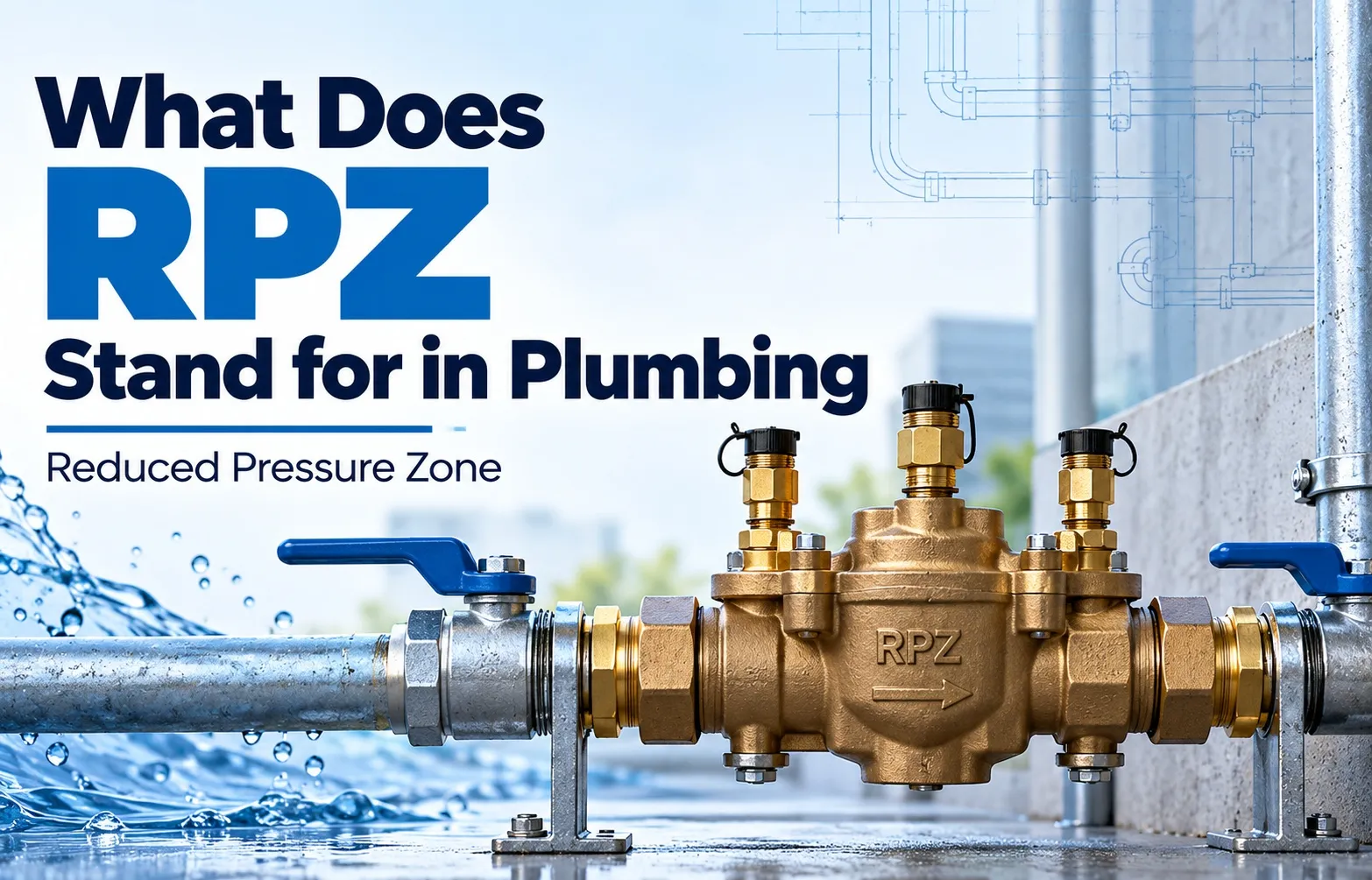
Visually, a Reduced Pressure Zone valve presents as a robust, industrial-grade metallic unit integrated directly into a property’s main water supply line. It features a heavy brass body, multiple small test ports, and an open bottom funnel or vent designed to discharge water safely during pressure fluctuations.
Property owners can easily spot these assemblies near commercial meters, lawn irrigation backflow boxes, or mechanical rooms where municipal water enters a building.
Key Physical Components of an RPZ Assembly
The exterior structure is engineered for durability and precise maintenance control. It incorporates several distinct mechanical segments working in tandem to regulate water flow safely.
- Upstream and Downstream Shut-off Valves: Heavy-duty ball valves located at the entry and exit points to completely isolate the assembly for servicing.
- Central Chamber: The inner housing that contains two independent check valves and separates the supply lines.
- Brass Body: The rugged external metal casting that provides structural integrity against continuous water pressure and environmental wear.
Identifying Test Cocks and the Central Relief Vent
A defining characteristic of an RPZ assembly is the presence of specialized testing ports and a relief opening. These elements allow technicians to verify proper operation without dismantling the entire plumbing setup.
- Test Cocks: Four small petcock-style valves protruding along the upper and middle body used by certified inspectors to attach pressure gauges.
- Differential Relief Valve Assembly: A spring-loaded mechanical unit located right below the central chamber that automatically opens to vent water downward whenever pressure drops occur.
How an RPZ Backflow Preventer Works
An RPZ assembly operates through a fail-safe mechanical system designed to block reverse flow before it reaches the municipal water network. It utilizes internal pressure differentials and redundant check mechanisms to isolate the clean potable water cross-connection instantly.
Whether facing sudden vacuum drops or elevated downstream pressures, the assembly dynamically balances water forces to eliminate contamination threats.
Gain a complete visual walkthrough of mechanical operations by viewing the RPZ Working Guide Video.
The Two Independent Check Valves Explained
The core backbone of the assembly consists of two spring-loaded check valves operating in series. Each valve acts as a one-way gate that permits forward water movement while firmly blocking any backward travel.
- First Check Valve: Located at the inlet side, it absorbs the primary pressure load and stops immediate reverse flow.
- Second Check Valve: Positioned downstream as a redundant safety layer, ensuring total protection even if the first valve collects minor debris.
The Role of the Central Pressure Differential Relief Valve
Sandwiched between the two check valves is a specialized differential pressure relief valve. This valve maintains a distinct pressure gap between the upper and lower chambers to keep the system balanced during normal operations.
- Continuously monitors internal zone pressures to detect abnormal fluctuations.
- Remains tightly closed when system pressure is stable and forward flow is active.
- Responds instantly to external pressure shifts or valve seal wear.
How Automatic Discharge Prevents Contamination
When minor leaks or pressure drops occur, the central relief chamber opens automatically to vent water safely. This unique action neutralizes both back-siphonage and back-pressure risks.
- Combating Back-siphonage: Stops vacuums created by broken water mains or heavy fire hydrant usage from pulling dirty water backward.
- Combating Back-pressure: Prevents industrial boilers or pumps from pushing high-pressure chemical solutions into municipal lines.
- Safe Venting: Discharges questionable water downward through an air gap, ensuring zero contact with clean supply sources.
RPZ vs. Double Check Valve (DCV): What’s the Difference?
The primary difference between an RPZ and a Double Check Valve (DCV) lies in their level of protection against aesthetic pollution versus severe contamination. While a DCV manages non-toxic risks, an RPZ is legally required for severe health hazards involving toxic chemicals.
Understanding these distinctions ensures proper code compliance and prevents hazardous substances from entering public drinking lines.
Low-Hazard vs. High-Hazard Applications
Plumbing regulations categorize water system connections based on the severity of potential health impacts. Selecting the correct mechanical assembly depends entirely on the substances present in the downstream environment.
- Low-Hazard (Double Check Valve): Deployed where backflow affects only taste, odor, or appearance (such as standard residential lawn sprinklers without fertilizer injectors) without posing systemic health threats.
- High-Hazard (Reduced Pressure Zone): Mandated wherever cross-connections risk exposing potable water to biological pathogens, heavy metals, or toxic chemicals.
When a Standard Double Check Valve Isn’t Enough
Municipal water authorities strictly enforce cross-connection control rules that prohibit standard DCVs in dangerous environments. If a component failure could introduce lethal toxins into the drinking supply, an RPZ is mandatory.
- Lack of Venting: Standard DCVs lack an atmospheric relief vent, meaning minor internal seal leaks can permit undetectable reverse flow over time.
- Fail-Safe Discharge: RPZ assemblies instantly dump water externally if internal check seals degrade, offering immediate visual warning of failure.
- Program Audits: Local municipal authorities audit facilities annually to ensure high-hazard lines utilize certified RPZ assemblies rather than basic dual-check units.
Where Are RPZ Valves Required by Plumbing Codes?
Municipal plumbing codes mandate Reduced Pressure Zone assemblies wherever commercial or high-risk properties link auxiliary water networks to public drinking supplies. These strict legal requirements safeguard public health by mitigating potential contamination from chemical, industrial, and biological cross-connections.
Understanding where these assemblies are mandated ensures compliance with local health authorities and protects community drinking infrastructure.
Commercial Irrigation and Sprinkler Systems
Large-scale commercial properties utilizing automated fertilizer injectors, chemical weed killers, or wastewater recycling in landscape setups require certified backflow isolation. Without adequate protection, lawn treatments can siphon directly back into indoor tap systems during pressure drops.
Boiler, Heating, and Fire Suppression Systems
Closed-loop heating setups and commercial fire sprinkler systems frequently mix rust inhibitors, antifreeze compounds, and stagnant water within piping networks. Plumbing codes enforce strict backflow protection to isolate these toxic fluids from potable drinking lines.
Compliance with Industry Standards
Local cross-connection control programs enforce strict installation mandates based on recognized national specifications. Governing bodies rely on rigorous testing protocols established to certify reliable backflow performance across all high-risk installations.
Troubleshooting: Why Is My RPZ Valve Leaking or Discharging Water?
Witnessing water discharge from an RPZ valve often causes property owner anxiety, but minor weeping is frequently a normal response to municipal pressure shifts. Constant water dumping, however, indicates internal mechanical failure requiring immediate attention and maintenance.
Diagnosing the root cause helps determine whether a simple pressure fluctuation is at play or if internal seal components require professional servicing.
Review visual repair techniques using the Backflow Preventer Repair Guide Video.
Normal Weeping vs. Constant Water Dumping
Recognizing the pattern of water loss helps distinguish between harmless environmental reactions and severe internal component breakdown. Evaluating flow volume points directly to the source of trouble.
- When discharge is normal (sudden city water pressure spikes).
- When discharge signals failure (torn seals, mineral buildup, or worn springs).
Pressure Fluctuations in the Main Supply Line
Municipal water networks experience constant pressure variations throughout the day due to high public demand or nearby fire hydrant usage. When incoming supply pressure drops suddenly, the central relief valve reacts dynamically.
Debris Trapped in Internal Check Valves
Mineral scale, rust flakes, or sand particles traveling through city mains can lodge under internal check valve seals. When debris prevents a check valve from closing fully, continuous water leaking occurs.
Costs, Installation, and Annual Testing Requirements
Installing and maintaining a Reduced Pressure Zone assembly involves hardware expenses, professional labor, and recurring legal testing mandates. Understanding these practical requirements helps property owners budget accurately while ensuring full municipal code compliance.
Average Cost of an RPZ Valve and Professional Installation
Purchasing and installing a commercial-grade RPZ valve typically ranges from several hundred to over a thousand dollars, depending on pipe size and labor complexity. Because of high-hazard code mandates, property owners must hire a licensed professional to ensure proper setup and prevent legal liabilities.
- Valve Price: Hardware costs vary by pipe diameter, generally starting around $200 for standard applications and exceeding $1,000 for heavy commercial lines.
- Professional Plumber Labor: Expert installation accounts for precise alignment, pipe cutting, and secure mounting brackets.
- Total Project Budget: Comprehensive expenses incorporate municipal permit requirements and initial inspection fees.
Why Air Gaps and Proper Drainage Are Mandatory
Plumbing regulations strictly require an appropriate air gap and direct connection to a floor drain beneath every RPZ assembly. This physical separation ensures that any discharged wastewater safely exits the property without risking cross-contamination or interior flooding.
- Air Gap Clearance: Maintains an absolute vertical space between the relief vent and the drainage pipe rim to block backflow paths.
- Floor Drain Capacity: Essential for safely catching and removing water surges or continuous weeping without damaging property interiors.
- Code Compliance: Improper drainage configurations fail municipal inspections and create severe legal vulnerabilities.
Annual Certification and Mandatory Backflow Testing
Local water authorities legally mandate annual certification for all installed backflow assemblies to guarantee ongoing safety. Property owners must schedule testing through a certified backflow tester who verifies internal valve integrity using specialized pressure gauges.
- Certified Backflow Tester: Licensed specialists attach testing kits directly to the built-in test cocks to analyze operational pressure margins.
- Annual Certification: Official inspection documents must be filed with municipal water departments to maintain active service standing.
- Ongoing Reliability: Routine annual checks catch worn seals and spring fatigue early before catastrophic failures occur.
Frequently Asked Questions About RPZ Valves
Navigating the installation, maintenance, and code requirements of Reduced Pressure Zone assemblies raises several practical questions for property managers and homeowners.
Can I install an RPZ valve myself?
Property owners should avoid attempting a DIY installation because incorrect setup, improper sizing, or lack of municipal permits violates strict plumbing codes and risks severe drinking water contamination. Professional installation guarantees correct calibration and legal compliance.
- Requires specialized plumbing expertise and strict adherence to municipal code requirements.
- Improperly mounted assemblies fail mandatory health inspections and void equipment warranties.
- Licensed professionals ensure proper alignment, backflow certification, and permit documentation.
What is the typical life expectancy of a backflow preventer?
A well-maintained backflow preventer typically has a lifespan of 5 to 15 years, depending heavily on incoming water quality, pressure fluctuations, and annual testing frequency. While the heavy brass body lasts decades, internal rubber seals and spring mechanisms require periodic servicing.
- Hard water and mineral scale accumulation can shorten internal component lifespans significantly.
- Routine annual inspections by certified technicians help maximize the overall backflow valve lifespan.
- Internal rebuild kits can often restore older assemblies without requiring a complete unit replacement.
Does an RPZ valve always need a floor drain?
An RPZ valve almost always requires a dedicated floor drain or an approved gravity discharge line equipped with an adequate air gap to handle normal weeping and emergency pressure relief safely. Without proper drainage, relief water can cause significant interior property damage.
- Prevents accidental interior flooding during sudden pressure-relief discharge events.
- Maintains the mandatory vertical air gap clearance required by local plumbing code requirements.
- Indoor mechanical rooms must incorporate proper gravity drainage before official assembly approval.

Oscar Vance | Master Plumber & Drainage Expert
Meet Oscar Vance, a licensed master plumber sharing practical solutions on residential repairs, preventive maintenance, and thoughtful home upkeep.