How Does an HVAC Heat Kit Work?
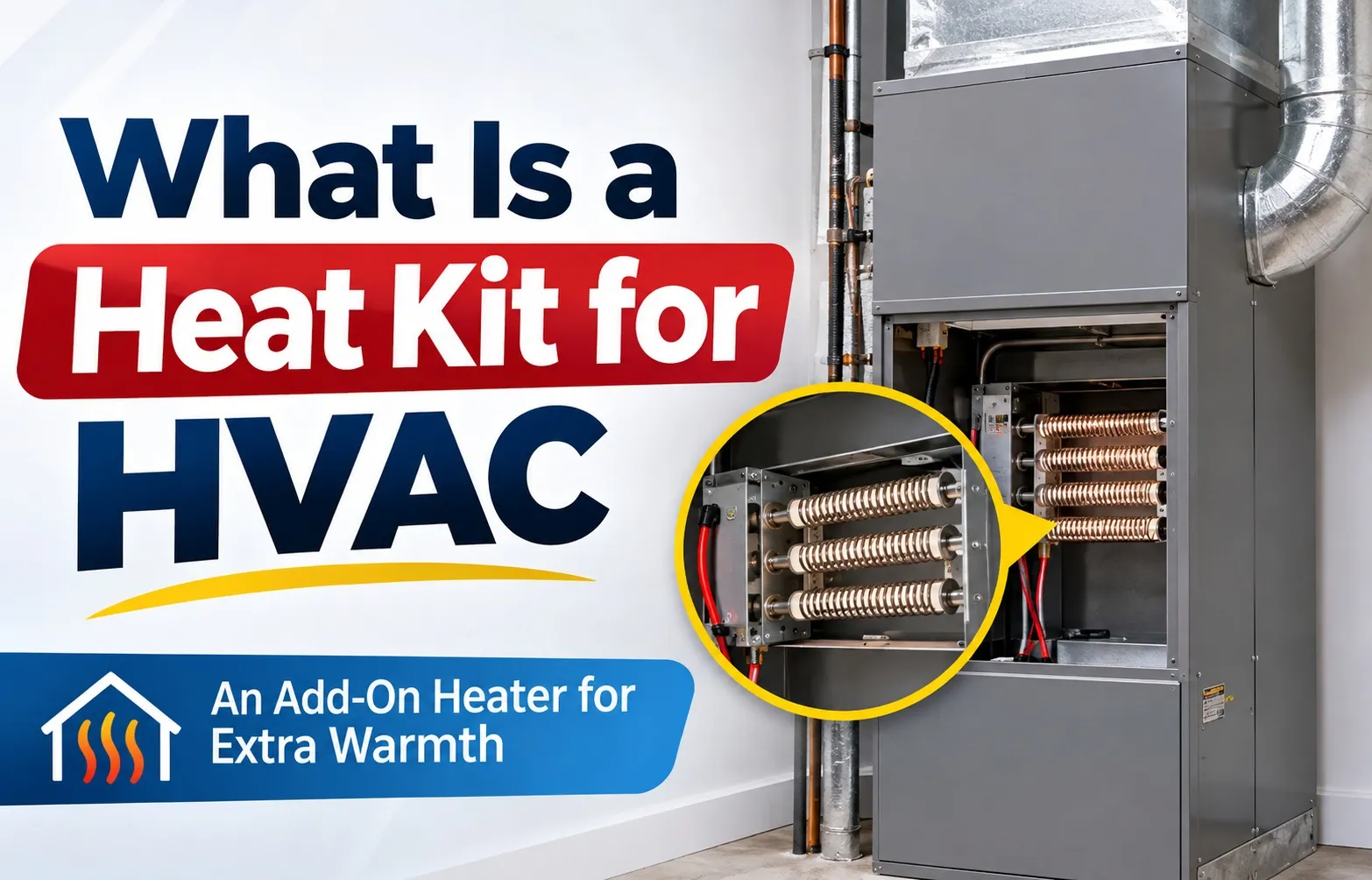 An HVAC heat kit generates warmth by passing high-voltage electricity through resistive wire coils while the system’s blower motor forces air across them. It operates seamlessly behind the scenes through automatic thermostat staging or manual overrides to maintain indoor comfort.
The Heating Mechanism (Electric Resistance Coils)
At its core, a heat kit functions similarly to an electric toaster or a hair dryer. When power is applied, electric resistance coils made of durable nichrome alloy glow red-hot, instantly transferring thermal energy to the surrounding air.
- Electric Current: High-voltage 240V power flows directly into the heat strips when energized.
- Blower Motor Interaction: The indoor air handler’s blower fan forces return air directly across the glowing coils.
- Heated Airflow: The warmed air is pressurized and pushed through your home’s ductwork into every room.
Supplemental (Auxiliary) Heat Mode
During cold winter days, your heat pump’s heating capacity drops as ambient outdoor temperatures decline. The thermostat automatically triggers auxiliary heating when outdoor conditions fall below your home’s thermal balance point, typically resting between 35°F and 40°F.
This automated thermostat staging ensures the heat kit activates only when necessary to bridge the gap between what the heat pump can extract and what your home requires. It prevents indoor temperatures from dropping during sudden cold snaps.
Defrost Cycle Support
When outdoor temperatures hover near freezing with high humidity, frost and ice accumulate on your outdoor heat pump coil. To clear this frost, the system temporarily reverses into cooling mode, which would normally blast freezing air into your living spaces.
The heat kit activates automatically during this defrost cycle to temper the airflow. By warming the air before it exits your vents, it ensures your indoor temperature remains stable and comfortable while the outdoor unit melts away ice.
Emergency Heat Mode (Manual Override)
Emergency heat mode is a manual setting on your thermostat that completely locks out the outdoor heat pump compressor and runs solely on the indoor heat kit. Homeowners typically switch to emergency heat if the outdoor compressor malfunctions, freezes solid, or suffers mechanical failure.
While emergency heat guarantees continuous indoor warmth during a system breakdown, it relies entirely on electric resistance heating. Because electric resistance coils consume significantly more electricity than a heat pump, running emergency heat for extended periods will cause a sharp spike in your monthly utility bill.
Key Components Inside an HVAC Heat Kit
An HVAC heat kit is a self-contained assembly featuring specialized electrical components, staging controls, and thermal safety switches engineered to handle high-amperage loads safely inside your air handler.
Heating Elements (Heat Strips)
The heating elements are thick, coiled resistance wires strung across a metal frame and supported by heat-resistant ceramic insulators. These insulators prevent the live, glowing coils from contacting the grounded metal chassis and causing a dead short.
- Staged Banks: Larger heat kits divide these coils into individual 5 kW banks so the system can modulate heat output based on indoor demand.
- Thermal Durability: Manufactured from nickel-chromium alloy, these coils withstand thousands of extreme heating and cooling cycles without oxidizing or snapping.
Sequencers and Relays
Energizing 10 kW to 20 kW of electric heat strips simultaneously would create an immediate, massive inrush current capable of dimming house lights and tripping main breakers. Sequencers and heavy-duty relays prevent this electrical surge by staggering power delivery.
- Delayed Staging: When the thermostat calls for auxiliary heat, a sequencer uses a small internal heater and bimetal disc to close contacts one by one at 30-to-60-second intervals.
- Blower Synchronization: The first sequencer stage also energizes the indoor blower motor, ensuring air is moving across the coils before the remaining heat strips reach peak temperature.
Thermal Limit Switches & Fusible Links
Because electric resistance coils reach extreme temperatures within seconds, every heat kit incorporates redundant safety devices to prevent cabinet overheating or fire hazards during an airflow restriction.
- Automatic Reset Thermal Limit Switch: If a clogged air filter or failing blower motor restricts airflow, this temperature-sensitive switch trips open to cut power to the coils, automatically resetting once the cabinet cools down.
- One-Time Fusible Links: Acting as a final fail-safe, a fusible link permanently melts and breaks the circuit if the primary limit switch fails, requiring professional replacement before the heat kit can operate again.
Dedicated Circuit Breakers & Heavy-Gauge Wiring
Unlike a standard gas furnace that runs on a low-amperage 120-volt circuit, electric heat kits draw substantial continuous current and require dedicated 240-volt circuits wired directly from your home’s main electrical panel.
- High Amp Draw: Depending on kilowatt capacity, heat kits require dedicated 30-amp to 60-amp double-pole circuit breakers—and larger 15 kW or 20 kW units often require two separate 240-volt circuits.
- Heavy-Gauge Conductors: Technicians must install thick copper wiring (typically 10 AWG, 8 AWG, or 6 AWG) matched to the exact amp draw to prevent wire insulation from overheating inside your walls.
Heat Kit Sizing Guide: Choosing the Right kW Rating (With Regional Context)
Selecting the correct HVAC heat kit size requires matching the unit’s kilowatt (kW) rating to your home’s square footage, local climate zone, and main electrical panel capacity. Installing an undersized kit leaves your home chilly during freezes, while an oversized kit risks tripping breakers and overheating coils.
Standard HVAC Heat Kit Sizes (5 kW to 20 kW Breakdown)
Every kilowatt of electric resistance heat generates roughly 3,412 BTUs of thermal energy per hour. Most residential air handlers accommodate heat kits ranging from 5 kW up to 20 kW depending on cabinet dimensions and blower airflow capacity.
Regional Climate Needs: Southern States (e.g., Texas) vs. Northern Winters
Your geographic climate zone dictates whether your heat kit acts as an occasional defrost buffer or a heavy-duty winter backup. A 2,000-square-foot home in Houston requires a vastly different kilowatt setup than an identical home in Ohio or Minnesota.
- Southern & Mild Climates (e.g., Texas, Florida, Georgia): Homeowners searching for a heat kit for HVAC in Texas typically only need a 5 kW heat kit or 10 kW heat kit. Because temperatures rarely dip below freezing for prolonged stretches, smaller kits provide ample warmth during brief cold snaps and prevent chilly drafts during heat pump defrost cycles without requiring expensive electrical panel upgrades.
- Northern & Cold Climate Zones: Homes facing extended sub-freezing winters rely on a 15 kW heat kit or 20 kW heat kit paired with a cold-climate heat pump. When outdoor temperatures plunge into single digits, high-capacity heat strips ensure your home maintains indoor temperatures even if the outdoor compressor struggles or locks out.
Electrical Panel & Ductwork Limitations
Never choose a heat kit based solely on square footage without verifying your home’s electrical panel capacity and ductwork airflow. Upgrading to a larger heat strip without checking these physical constraints creates immediate mechanical and safety hazards.
- Main Service Panel Limits: A 20 kW heat kit pulls over 83 amps at full load. Homes with older 100-amp or 150-amp main electrical panels often lack the spare amperage needed to run a 15 kW or 20 kW unit alongside major household appliances without tripping the main service breaker.
- Air Handler Static Pressure & CFM: Each kilowatt rating requires a minimum cubic feet per minute (CFM) of airflow across the coils. If restrictive ductwork causes high static pressure and low airflow, a high-output heat strip will rapidly overheat, trip thermal limit switches, or prematurely burn out the heating elements.
Heat Kit vs. Heat Pump vs. Electric Furnace (Key Differences)
An HVAC heat kit is not the same thing as a heat pump or a standalone electric furnace, even though all three rely on electricity to warm your home. While a heat pump transfers existing thermal energy from outside, a heat kit is an internal auxiliary heating module installed inside an air handler to generate supplemental warmth.
Heat Kit vs. Heat Pump
Comparing a heat pump vs heat kit comes down to heat transfer versus direct heat generation. A heat pump absorbs ambient warmth from the outdoor air and moves it indoors using refrigerant, achieving 200% to 300% energy efficiency because it moves heat rather than creating it.
- Coefficient of Performance (COP): A standard heat pump delivers a COP of 2.5 to 3.5, producing roughly three units of heat for every unit of electricity consumed.
- Electric Resistance Efficiency: A heat kit operates at a fixed 100% thermal efficiency (a COP of 1.0), converting every kilowatt-hour (kWh) of electricity directly into heat—making it two to three times more expensive to run than your heat pump.
- Operational Role: Your heat pump acts as your primary daily heater, whereas the heat kit steps in strictly as backup support during freezing weather or defrost cycles.
Heat Kit vs. Standalone Electric Furnace
Although both rely on electric resistance coils, a heat kit and a standalone electric furnace differ in system design, wiring configuration, and primary function.
- Add-On Module vs. Primary Appliance: A heat kit is an optional, slide-in accessory designed specifically to supplement a heat pump inside a standard air handler. Conversely, an electric furnace is a self-contained central heating unit engineered to serve as a home’s sole heat source without an outdoor compressor.
- Heating Bank Capacity: Standalone electric furnaces typically come pre-equipped with larger, multi-stage banks of heating elements (often 15 kW to 30 kW) and heavy-duty multi-speed blowers built to handle 100% of a building’s winter heating load from day one.
Troubleshooting: Why Is My House Cold With a Heat Pump & Heat Kit?
If your home struggles to hold its set temperature during freezing weather, your outdoor heat pump has likely reached its thermal limit while your indoor electric heat kit is failing to engage. Diagnosing whether the issue stems from normal heat pump airflow characteristics or a broken heat strip saves you from freezing nights and unnecessary service calls.
Why Your House Feels Cold at 20°F (The Heat Pump Drop-Off)
Many homeowners panic when their house feels cold at 20 degrees because heat pumps naturally deliver supply air between 85°F and 95°F, which feels noticeably cooler against your skin than the 120°F+ blast from a gas furnace. Because 85°F air is lower than your 98.6°F body temperature, drafts from ceiling or floor registers can feel chilly even while steadily warming the room.
- Outdoor Heat Extraction Limits: Once outdoor temperatures fall toward 20°F, standard heat pumps lose up to 40% to 50% of their heating capacity because there is far less ambient heat energy available in the outside air.
- Missing Auxiliary Boost: At 20°F, your indoor heat kit must cycle on to raise supply air temperatures above 100°F; if the heat strips fail to energize, your thermostat temperature will steadily drop despite the system running non-stop.
4 Signs Your HVAC Heat Kit Has Failed
When your heat pump runs continuously during a cold snap without warming your home, check for these four common heat kit failure symptoms:
- Tripped Double-Pole Breaker: Check both your main electrical panel and the dedicated circuit breakers mounted directly on the front of the indoor air handler; a tripped 30-amp or 60-amp breaker completely cuts 240-volt power to the heat strips.
- Aux Heat Light On With Lukewarm Air From Vents: If the aux heat light on your thermostat illuminates but you still feel lukewarm air from vents, the thermostat is sending the 24-volt call signal, meaning a heating element or fusible link inside the cabinet has burned out.
- Burned-Out Sequencer Contacts: A faulty sequencer may energize the first 5 kW bank of coils while failing to close the contacts for the second or third stage, leaving your system with only half its backup heating capacity during extreme cold.
- Open Thermal Limit Switch From a Clogged Filter: A severely dirty air filter restricts airflow across the coils, causing the internal thermal limit switch to trip open and shut down the heat strips to prevent cabinet overheating.
When to Turn Off Your Heat Pump and Use Secondary Heating
Whether you should manually switch off your heat pump at a specific outdoor temperature depends entirely on whether you own an all-electric heat pump system or a hybrid dual-fuel system.
- All-Electric Systems (Heat Pump + Heat Kit): Never manually switch your thermostat to Emergency Heat just because it drops below 30°F. Even at 20°F, a functioning heat pump still operates at roughly 150% efficiency—more efficient than running electric heat strips alone—so let your thermostat automatically stage the heat kit alongside the heat pump unless the outdoor unit is broken or iced over.
- Dual-Fuel Systems (Heat Pump + Gas/Propane Furnace): If your secondary heating is a fossil-fuel furnace rather than electric heat strips, set your thermostat lockout temperature (economic balance point) between 30°F and 35°F so the system automatically shuts down the outdoor heat pump and switches exclusively to cheaper gas heat.
Average Cost to Install or Replace an HVAC Heat Kit (Plus Key HVAC Rules)
Replacing or installing an HVAC heat kit typically ranges from $450 to $1,200+ for total professional service, combining standalone hardware costs with high-voltage electrical labor. Understanding these expenses, installation timelines, and industry decision frameworks ensures you make a safe, cost-effective investment when your backup heating fails.
Parts & Labor Cost Breakdown
The total cost to replace a heat kit depends primarily on the kilowatt capacity, brand compatibility, and whether your existing electrical wiring requires an upgrade. Standalone electric heat strip modules generally retail between $100 and $350 for parts alone.
- Parts Only ($100 – $350): Raw component costs vary by kW size, with smaller 5 kW units sitting at the lower end and multi-stage 15 kW to 20 kW assemblies costing more.
- Total Professional Replacement ($450 – $1,200+): Professional contractor labor accounts for the bulk of the final invoice, factoring in diagnostic time, mechanical installation inside the air handler, and testing of electrical limits.
- Additional Electrical Upgrades: If your home requires new heavy-gauge wiring or a dedicated sub-panel breaker to support a higher-capacity heat strip, labor costs can scale toward the higher end of the spectrum.
Installation Time & Safety Warning (Why DIY Is Risky)
An experienced technician can complete a standard heat kit installation time in approximately 1 to 2 hours when an air handler is pre-wired and fully compatible. However, attempting a do-it-yourself replacement introduces severe, life-threatening hazards that make professional hiring essential.
- Lethal 240V High-Voltage Risks: Heat kits operate on high-amperage 240-volt circuits capable of delivering fatal electrical shock or triggering massive electrical fires if wires are improperly torqued or shorted.
- Strict Building Code Compliance: A licensed HVAC technician ensures installations comply with local electrical codes, proper wire gauge sizing, and manufacturer safety listings.
- Redundant Safety Verifications: Professionals test thermal limit switches and sequencer staging under load to confirm the unit will shut down safely during an airflow blockage.
- You can review broader electrical efficiency guidelines and efficiency measures through the U.S. Department of Energy to better understand home heating performance standards.
Should You Repair or Replace? (Applying the HVAC $5,000 Rule)
When a heat kit fails in an aging heating system, homeowners often grapple with whether to invest in repairs or replace the entire unit. Applying the HVAC $5000 rule provides a clear, mathematical formula to make this decision objectively.
- The Rule Calculation: Multiply the estimated age of your HVAC air handler or heat pump system in years by the cost of the proposed repair.
- Evaluating the Threshold: If the resulting dollar figure exceeds $5,000, investing in a major electrical overhaul or component replacement on an aging chassis is generally uneconomical.
- Long-Term Value: For systems past their prime with failing heat kits, putting those repair dollars toward a complete, high-efficiency system replacement yields better long-term reliability and lower monthly utility bills.
Frequently Asked Questions
Does running an HVAC heat kit increase my electric bill?
Yes, running a heat kit causes a noticeable electric bill spike because electric resistance strips consume massive energy. A 10 kW heat kit draws 10 kWh usage per hour of continuous runtime. Avoid large thermostat setback adjustments; never raise your thermostat more than 2°F at a time to prevent triggering expensive auxiliary heat strips.
What is the 30-minute heating rule and 4 PM rule on heating?
The 30-minute heating rule advises allowing your heat pump at least 30 minutes to stabilize temperature recovery without prematurely activating auxiliary electric strips. The 4 PM heating rule recommends pre-warming your home before 4 PM peak utility hours to avoid high evening rates and costly heat kit usage as temperatures drop.
Do all air handlers come with a heat kit pre-installed?
No, standard residential air handlers typically ship from the factory without a heat kit pre-installed. Verifying air handler compatibility allows your licensed HVAC technician to select, size, and wire the exact kilowatt heat strip module required for your specific regional climate zone and main electrical panel capacity.

Oscar Vance | Master Plumber & Drainage Expert
Meet Oscar Vance, a licensed master plumber sharing practical solutions on residential repairs, preventive maintenance, and thoughtful home upkeep.