What Is Metal Roofing That Looks Like Spanish Tile?
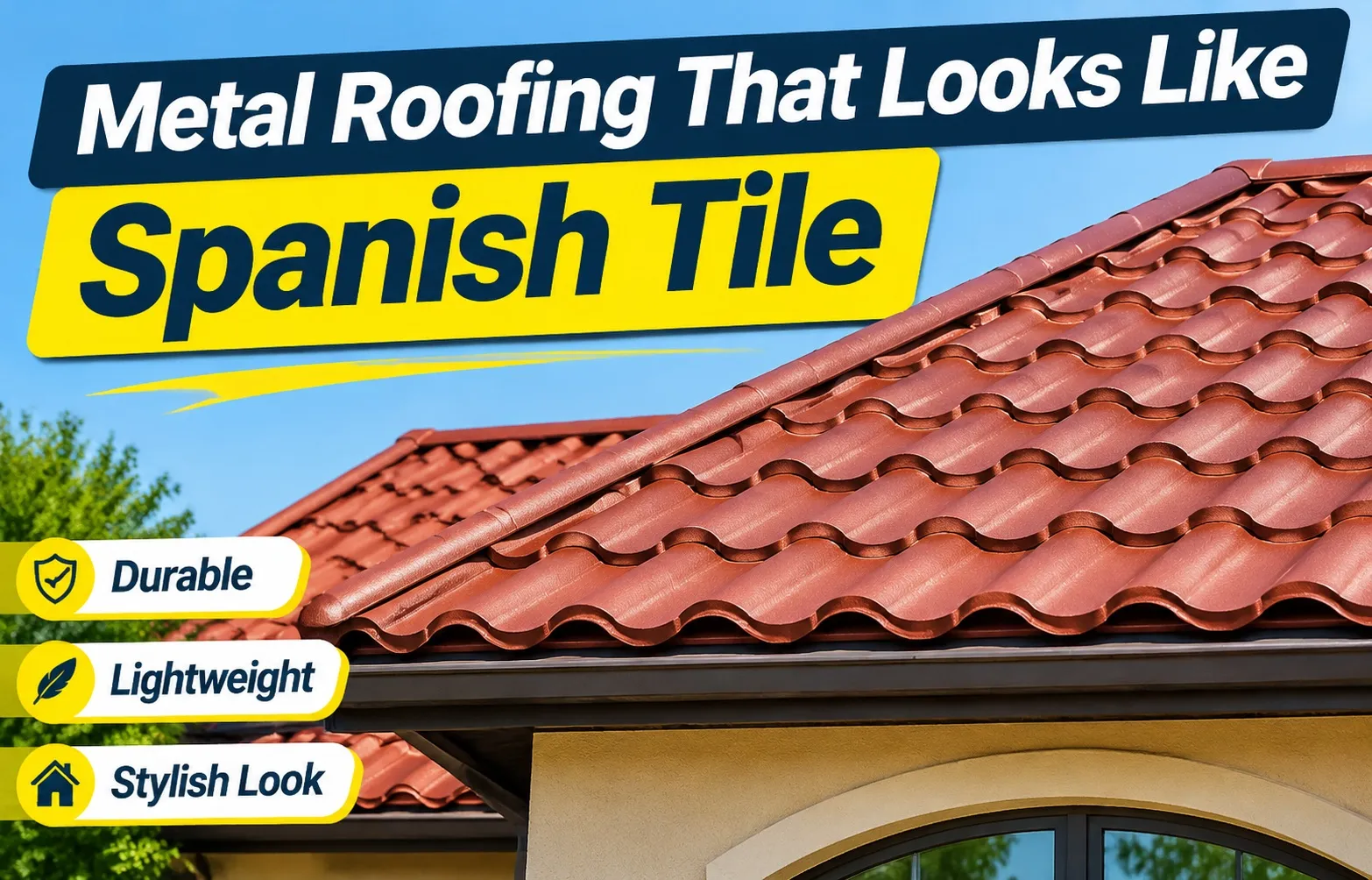 Spanish tile metal roofing is a specialized architectural roofing system made from steel or aluminum panels stamped into high-profile curved barrel shapes to replicate traditional clay or concrete tiles. It delivers the iconic Mediterranean curb appeal homeowners want while weighing up to 85% less than real masonry tile and eliminating cracking, rot, and structural framing upgrades.
Traditional clay barrel roofs routinely weigh 800 to 1,100 pounds per roofing square (100 square feet), requiring expensive structural truss reinforcement on standard wood-framed homes. By contrast, metal Spanish tile systems weigh roughly 90 to 160 pounds per square, allowing direct installation on standard residential roof decks without costly engineering retrofits.
How Simulated Barrel Tile Profiles Are Engineered
Manufacturers create realistic Mediterranean barrel contours by pressing 24-gauge to 26-gauge galvanized or Galvalume steel—or marine-grade aluminum sheets—through heavy-duty hydraulic stamping dies. These precision dies form deep curved crowns and water-channeling valleys that cast authentic shadow lines indistinguishable from kiln-fired clay from street level.
- Interlocking Panels and Concealed Fasteners: Modern metal Spanish tiles feature multi-point horizontal and vertical interlocking edges that lock adjacent panels together into a unified weather shield, hiding screws from UV exposure and wind-driven rain.
- Stone-Coated Steel Construction: High-end barrel panels bond crushed natural basalt or granite stone granules onto an acrylic-primed steel core, creating a matte, earthen texture that dampens rain noise and resists hail denting.
- Stamped Painted Metal Panels: Custom-cut aluminum barrel tile and stamped steel panels use baked-on Kynar 500 (PVDF) resin coatings to achieve smooth terracotta finishes with high solar reflectance and 30-to-40-year fade protection.
- G90 Galvanized and Galvalume Substrates: Beneath the decorative surface, zinc-aluminum alloy coatings protect the metal core against rust, salt-air corrosion, and thermal degradation across extreme climate zones.
Key Architectural Styles Covered
Because metal stamping dies can replicate exact historical molds, homeowners and HOAs can match virtually any regional tile architecture without sacrificing modern wind or fire ratings. Most manufacturers offer three primary Mediterranean barrel profiles:
- Spanish Mission (Two-Piece Barrel Look): Features high, semi-cylindrical arches alternating with flat or gently curved pans, mimicking classic hand-molded mission tiles found on Spanish Colonial and California Revival homes.
- S-Tile (One-Piece Ripple Profile): Combines the concave water pan and convex barrel crown into a continuous S-shaped wave, delivering bold shadow depth and fast water shedding on medium-to-steep roof pitches.
- Terracotta and Multi-Tone Heritage Profiles: Pairs scalloped or tapered barrel curves with blended variegated finishes—such as burnt sienna, weathered clay, and Tuscan brown—to replicate aged European clay roofs.
Stone-Coated Steel vs. Smooth Painted Metal Spanish Tiles
Choosing the right aesthetic profile for a metal Spanish tile roof comes down to comparing stone-coated systems and smooth painted metal finishes. While both options eliminate the crushing weight and fragility of traditional clay, they differ significantly in surface texture, acoustic performance, solar reflectivity, and long-term weathering characteristics.
Understanding these mechanical and visual differences ensures homeowners select the optimal system for their local climate, architectural style, and budget without compromising on structural integrity.
Stone-Coated Steel Spanish Tiles (Authentic Texture & Noise Dampening)
Stone-coated steel tile systems bond crushed natural basalt or granite stone granules to a galvanized steel core using an advanced acrylic resin binder. This manufacturing technique creates a tactile, matte earthen surface that visually replicates the porous texture and variegated color blends of kiln-fired clay tiles while providing exceptional impact resistance.
- Enhanced Acoustic Absorption: The thick layer of stone granules acts as an acoustic barrier, absorbing rain impact energy and eliminating the hollow drum sound commonly associated with metal roofs.
- Industry-Leading Brand Benchmarks: Market-leading systems like DECRA Villa Tile and Tilcor Antica utilize interlocking stone-coated panels that achieve Class 4 impact ratings and withstand hurricane-force winds.
- Superior UV and Fade Resistance: Ceramic-fired stone granules are naturally inert against ultraviolet radiation, ensuring the roof color remains vibrant for decades without chalking or peeling.
- Enhanced Slip Resistance: The rough texture of stone granules provides better traction for roofing contractors walking on steep Mediterranean roof slopes during maintenance.
Painted Stamped & Architectural Metal Tiles (Sleek PVDF/Kynar 500 Finishes)
Painted metal Spanish tiles—such as Stile Spanish Tile by Best Buy Metals and ATAS Techo Tile—utilize high-gauge steel or aluminum sheets stamped with deep barrel profiles and finished with high-performance polymer paint systems. These roofs deliver crisp, clean shadow lines favored in contemporary Mediterranean and Spanish Colonial architecture.
- Kynar 500 and PVDF Resin Technology: Baked-on fluoropolymer coatings provide unmatched resistance to chemical pollutants, salt spray, and extreme thermal expansion.
- High Solar Reflectance (Cool Roof Performance): Smooth painted tiles can be formulated with specialized reflective pigments that bounce infrared radiation away from the structure, lowering attic cooling loads.
- Sleek Architectural Aesthetics: Offers a cleaner, semi-gloss or satin terracotta appearance that highlights sharp geometric curves and precise architectural detailing.
- Streamlined Maintenance: The smooth, non-porous paint surface allows rainwater to wash away dust, debris, and organic growth more efficiently than textured granules.
Side-by-Side Comparison: Stone-Coated vs. Painted Metal Tile
Metal Spanish Tile Roof Cost Breakdown (2026 Pricing Guide)
Installing a metal Spanish tile roof in 2026 costs between $9.50 and $17.50 per square foot fully installed, bringing the average project total for a 2,000-square-foot home (20 roofing squares) to $19,000–$35,000. While a $30,000 quote exceeds standard asphalt shingles, metal barrel tile costs substantially less than authentic terracotta clay once structural framing upgrades and 50-year replacement cycles are factored into the return on investment (ROI).
Understanding how contractors calculate materials, specialized trim accessories, and skilled labor prevents unexpected change orders during installation.
Material vs. Labor Costs Per Square Foot
Roofing contractors price metal Spanish tile systems by the roofing square (100 square feet), separating the stamped steel or aluminum panels from structural accessories and certified installation labor. Complex roof geometry with multiple valleys, dormers, and steep pitches pushes labor rates toward the upper end of the range.
- Metal Spanish Tile Panels ($4.50–$8.50 per sq. ft.): Smooth Kynar 500 painted barrel panels sit at the lower end ($4.50–$6.00/sq. ft.), while heavy-gauge stone-coated steel profiles like DECRA Villa Tile or Tilcor Antica cost $6.50–$8.50/sq. ft.
- Specialized Trim, Ridge Caps, and Battens ($1.50–$2.50 per sq. ft.): Barrel-specific ridge caps, hip starters, eave closures, and wood or steel batten grids add 15% to 25% to raw panel material totals.
- High-Temperature Synthetic Underlayment ($0.75–$1.25 per sq. ft.): Peel-and-stick self-healing ice and water shields prevent moisture intrusion and dampen rain acoustics beneath curved metal crowns.
- Skilled Installation Labor ($5.00–$9.00 per sq. ft.): Interlocking barrel tiles require precision batten alignment, specialized cutting shears, and custom valley flashing fabrication that command higher labor rates than standard shingle crews.
Total Cost Estimate for a 2,000 Sq. Ft. Home (Metal Tile vs. Real Clay & Concrete)
Comparing total out-of-pocket expenses on a standard 2,000-square-foot roof reveals why metal Spanish tile delivers superior long-term value over traditional masonry alternatives. The figures below include complete tear-off of one existing shingle layer, synthetic underlayment, materials, and professional installation.
Hidden Savings: Eliminating Structural Roof Reinforcement
The largest financial advantage of choosing simulated metal barrel tiles over real clay or concrete is avoiding structural engineering retrofits. Traditional kiln-fired clay tiles weigh between 800 and 1,100 pounds per roofing square, placing 16,000 to 22,000 pounds of dead load onto a 2,000-square-foot roof structure.
- Zero Truss Reinforcement Required: Standard residential roof trusses built for asphalt shingles cannot safely carry masonry tile without sistering rafters, adding collar ties, and upgrading load-bearing headers—structural work that routinely adds $5,000 to $15,000 plus architectural permit fees.
- Lightweight Dead-Load Profile: Metal Spanish tile panels weigh only 120 to 160 pounds per square (roughly 2,400 to 3,200 pounds total for a 20-square roof), allowing immediate installation over existing roof framing without structural modifications.
- Lower Lifetime Replacement Costs: Unlike brittle clay tiles that crack under foot traffic and require ongoing individual tile replacements costing $500–$1,500 per service call, interlocking steel panels maintain weather-tight integrity for 50+ years with minimal maintenance.
Performance & Durability: How Metal Spanish Tile Holds Up in Extreme Weather
Metal Spanish tile roofing routinely earns the highest residential building code certifications available—including a Class A Fire Rating, a Class 4 Impact Resistance rating, and wind uplift approvals up to 160+ mph. Unlike brittle terracotta or concrete tiles that shatter during severe hailstorms or dislodge under hurricane gusts, interlocking steel panels flex upon impact and remain mechanically locked to the roof deck.
These verified structural ratings protect homes in coastal hurricane corridors, hail-prone plains, and high-risk wildfire zones while frequently qualifying homeowners for substantial property insurance discounts.
Hail & Impact Resistance (Class 4 UL 2218 Rating)
Most premium stone-coated and heavy-gauge stamped metal Spanish tiles achieve a Class 4 UL 2218 impact rating—the highest possible score in the roofing industry. During UL 2218 laboratory testing, a two-inch steel ball is dropped from 20 feet onto the exact same spot twice without cracking, splitting, or rupturing the panel substrate.
- Zero Shattering or Fracture Risk: Traditional terracotta clay tiles crack easily when struck by golf-ball-sized hail, leaving exposed underlayment and hidden water leaks that require costly individual tile replacements.
- Energy-Absorbing Barrel Geometry: The curved arch profile of stamped metal barrel tiles acts like a structural spring, dissipating kinetic hail impact across the entire panel rather than concentrating stress at a single brittle point.
- Cosmetic Dent Concealment: On stone-coated steel systems, textured basalt stone granules and multi-tone color blends visually mask minor surface dimples from extreme hailstones, preserving street-level curb appeal.
Hurricane-Force Wind Uplift & Seismic Safety
Traditional clay and concrete tiles rely largely on gravity and single-point nails or mortar beds, allowing high winds to catch the open front lip of curved tiles and peel them off like dominoes. Metal Spanish tile systems eliminate wind-uplift vulnerabilities through multi-directional mechanical fastening.
- Interlocking Horizontal and Vertical Weatherlocks: Each panel overlaps and locks into adjacent tiles on all four sides, creating a continuous, wind-tight steel diaphragm across the entire roof plane.
- 120 to 160+ MPH Wind Warranties: Leading systems carry strict Miami-Dade wind rating approvals and High-Velocity Hurricane Zone (HVHZ) certifications, withstanding sustained Category 4 and Category 5 hurricane winds when installed over a batten grid.
- Superior Seismic Resistance: Because metal Spanish tile weighs roughly 85% less than clay masonry, it dramatically reduces top-heavy inertial roof loads during earthquakes, preventing structural shear failure and falling tile hazards in seismic zones like California.
Class A Fire Resistance & Homeowner Insurance Discounts
In wildfire-prone regions, windblown embers account for the majority of residential structure ignitions when embers lodge beneath gaps in wood shakes or cracked tiles. Non-combustible steel and aluminum Spanish tile assemblies carry a Class A Fire Rating (ASTM E108 / UL 790), preventing flame spread and ember penetration into the attic cavity.
- Wildfire Zone Roofing Compliance: Metal barrel systems meet strict Wildland-Urban Interface (WUI) building codes when paired with non-combustible eave closures and fire-rated synthetic underlayment.
- Homeowner Insurance Discounts (10% to 35%): Insurance carriers in hail and hurricane states routinely lower annual dwelling premiums for homes upgraded with Class 4 impact-resistant and high-wind-rated roofing assemblies.
- FORTIFIED Roof Eligibility: Installing interlocking metal Spanish tiles with sealed roof decks and enhanced ring-shank fastening aligns with the IBHS FORTIFIED Roof standards, helping homeowners qualify for state mitigation grants and mandated insurance rate reductions.
Top Metal Spanish Tile Brands & Systems Compared
Selecting the right manufacturer determines how closely your finished roof replicates authentic clay barrel tile, how easily contractors can install the panels, and what level of weather warranty protects your home. The top metal Spanish tile brands fall into two distinct engineering categories: modular stone-coated steel panels (led by DECRA and Tilcor) and full-length custom-cut stamped sheets (led by Best Buy Metals, McElroy Metal, ATAS International, and ProVia).
Comparing core substrates, fastening mechanics, and warranty coverage helps homeowners match the ideal product line to their regional climate and architectural budget.
DECRA Villa Tile (Best Overall Stone-Coated Barrel Profile)
DECRA Villa Tile is the benchmark stone-coated steel barrel system in North America, engineered to replicate the classic Old World Italian and Spanish clay tile aesthetic at just 1.5 pounds per square foot. Its modular panels interlock horizontally and vertically to create a rigid, walkable roof deck capable of withstanding severe hail and hurricane uplift.
- Core Substrate & Finish: 26-gauge aluminum-zinc alloy-coated steel (Galvalume) topped with UV-resistant natural ceramic-coated stone granules.
- Installation Flexibility: Can be installed direct-to-deck over solid sheathing or over a batten grid, making it versatile for both new construction and reroofing projects.
- Weather & Warranty Coverage: Backed by a 50-year transferable limited lifetime warranty covering 120 mph winds, Class 4 hail impact (UL 2218), and Class A fire resistance.
Tilcor Antica (Best for Concealed Fasteners & Coastal Weather)
Tilcor Antica delivers deep, authentic Mediterranean S-tile curves engineered in New Zealand using high-grade Zincalume-protected steel. Unlike traditional stone-coated panels that rely on exposed horizontal nose-fasteners, Tilcor Antica utilizes an innovative concealed-fastener lip that shields every screw from salt spray and wind-driven rain.
- Core Substrate & Finish: Corrosion-resistant Zincalume (aluminum-zinc) steel coated with natural New Zealand basalt stone chips bonded in an acrylic resin basecoat.
- Concealed Fastening System: Panels lock downward onto horizontal battens with fasteners hidden completely beneath the overlapping tile course above, eliminating potential leak paths.
- Weather & Warranty Coverage: Carries a 50-year weatherproof warranty certified for extreme coastal corrosion, seismic zones, Class 4 hail impact, and hurricane-force winds.
Best Buy Metals Stile & McElroy Metal (Best Custom-Cut Stamped Sheets)
For homeowners who prefer a sleek, smooth painted terracotta look over textured stone granules, Best Buy Metals Stile Spanish Tile and McElroy Metal simulated Spanish tile systems offer full-length vertical panels stamped with horizontal barrel steps. Because these sheets are custom-cut to your exact eave-to-ridge roof length, they eliminate horizontal lap seams along the slope.
- Core Substrate & Finish: Heavy-duty 24-gauge to 26-gauge G90 galvanized steel or Galvalume finished with baked-on Kynar 500 (PVDF) high-reflectivity paint coatings.
- Fast Installation & Coverage: Full-length 36-inch-wide panels cover large roof areas quickly, reducing labor hours on simple gable and hip rooflines compared to small modular tiles.
- Weather & Warranty Coverage: Protected by 30-to-40-year PVDF paint warranties against chalking and fading, alongside Class A fire and Class 4 impact certifications.
ATAS Techo Tile & ProVia Barrel Tile (Best Architectural & High-Gauge Options)
ATAS Techo Tile and ProVia Barrel Tile cater to homeowners and commercial architects seeking thicker metal gauges, custom color matching, and crisp structural shadow lines. ATAS specializes in architectural standing-and-exposed S-tile panels available in both steel and marine-grade aluminum, while ProVia offers a heavy-gauge stamped steel barrel system engineered for maximum dent resistance.
- ATAS Techo Tile Highlights: Available in 24-gauge Galvalume steel or 0.032-inch aluminum (ideal for saltwater beachfront homes where steel edges could eventually oxidize), featuring a deep 2.25-inch S-curve profile.
- ProVia Barrel Tile Highlights: Manufactured from thick 26-gauge G90 galvanized steel with a proprietary 4-stage Kynar paint finish, precision-stamped ridges, and matching accessory trim packages.
- Architectural Versatility: Both systems accommodate steep-slope residential roofs, mansards, and commercial facades requiring strict HOA or historic district color compliance.
Brand Comparison Matrix
Real-World Pros, Cons & Installation Realities (Contractor Insights)
While manufacturer brochures highlight 50-year warranties and Mediterranean curb appeal, roofing contractors emphasize that metal Spanish tile requires specialized valley flashing, strict thermal expansion tolerances, and experienced installers to perform reliably. Understanding real-world trade-offs—from batten-grid ventilation to acoustic underlayment assembly—prevents costly installation mistakes and ensures your roof lives up to its longevity claims.
Evaluating both the structural benefits and practical limitations gives homeowners realistic expectations before signing a roofing contract.
The Real Pros & Cons of Metal Spanish Tile
Metal Spanish tile solves the weight and fragility problems of clay masonry, yet it introduces unique installation requirements that differ sharply from standard asphalt shingles or flat standing seam panels.
Batten-Grid vs. Direct-to-Deck Installation
Installers mount metal Spanish tile panels using either a raised wood/steel batten grid or a direct-to-deck fastening method. While select low-profile panels allow direct-to-deck attachment over solid plywood sheathing, most high-barrel Spanish profiles require horizontal battens—or a counter-batten grid—to support the deep tile nose and accommodate thermal expansion.
- Superior Above-Sheathing Ventilation: A batten grid creates a continuous air channel beneath the steel panels, allowing trapped solar heat to rise and exit through ridge vents—cutting attic heat transfer by up to 30% in hot climates.
- Structural Rigidity & Walkability: Horizontal battens sit directly beneath the panel overlaps, creating solid load-bearing support points that prevent barrel profiles from crushing under foot traffic.
- Correction of Uneven Roof Decks: On older homes with wavy rafters, shimming a batten grid creates a laser-flat plane so interlocking barrel courses align cleanly from eave to ridge.
- Pest & Ember Sealing Requirements: Because battens create open air cavities at the eaves, installers must fit perforated metal bird-stops and foam closures along all perimeter edges to block rodents, wasps, and windblown wildfire embers.
The Drum Noise Myth & Proper Acoustic Underlayment
The misconception that metal roofs sound like a tin barn during rainstorms stems from open-frame agricultural sheds where thin metal sheets are screwed directly over exposed rafters with zero attic insulation. On a residential home, metal Spanish tile is installed over solid plywood or OSB decking, high-density synthetic underlayment, and insulated attic cavities—making it virtually indistinguishable in sound level from asphalt shingles or clay tile.
- Solid Decking & Attic Insulation: Half-inch or thicker plywood sheathing combined with R-30 to R-60 attic fiberglass or spray-foam insulation absorbs airborne sound waves before they reach living spaces.
- Acoustic Synthetic Underlayment: High-grade rubberized peel-and-stick membranes and thick fleece-backed synthetic underlayments act as vibration-damping gaskets between the steel panels and wood deck.
- Stone-Coated Granule Dampening: Textured stone-coated steel barrel tiles disperse raindrops upon impact, breaking up water droplets and further muting surface acoustic resonance during heavy downpours.
Metal Spanish Tile vs. Standing Seam: Which Should You Choose?
Choose stone-coated steel tile or stamped metal barrel panels if you want classic Mediterranean curb appeal, strict Homeowners Association (HOA) approval, and superior hail-dent concealment on roof slopes of 3:12 or steeper. Choose a standing seam metal roof if you own a modern home, have low-slope roof sections below 3:12, or want continuous vertical panels with zero horizontal lap joints.
Both systems deliver 50+ years of weather protection and Class A fire ratings, so the right decision depends on architectural rules, roof pitch requirements, and long-term repairability.
Aesthetics & HOA Compliance
Architectural review boards in historic districts and Mediterranean-style communities frequently prohibit exposed flat metal sheets because vertical raised seams alter neighborhood character. Simulated barrel tiles solve this regulatory hurdle by matching traditional terracotta profiles and multi-tone earth shades from street level.
- HOA Architectural Guidelines: Stone-coated steel tile systems pass strict covenant reviews in Spanish Colonial, Tuscan, and Southwestern neighborhoods where vertical standing seam ribs are rejected as too industrial or contemporary.
- Visual Profile & Curb Appeal: Standing seam features clean, linear vertical ribs (typically 1.5 to 2 inches high) suited to modern farmhouses and coastal contemporary homes, whereas barrel tiles create deep, curved horizontal shadow lines.
- Hail Dent Visibility: Flat standing seam pans can show cosmetic dimples from severe hail under low-angle sunlight, while textured stone-coated granules and curved barrel crowns camouflage minor impacts.
Lifespan, Maintenance & Cost Differences
While both roofs cost roughly $10 to $18 per square foot installed and last 50 to 70 years, their mechanical fastening systems and minimum slope tolerances differ significantly. Standing seam uses continuous eave-to-ridge panels attached via a concealed clip system, whereas metal Spanish tile relies on interlocking horizontal tile panels secured to battens or solid decking.
- Roof Pitch Requirements: Double-lock standing seam roofs operate safely on low-slope roofs down to 1:12 (or 0.5:12 with sealant), while interlocking metal Spanish tiles require a minimum 3:12 pitch so water sheds cleanly over horizontal tile overlaps.
- Fastening & Thermal Movement: Standing seam concealed clips allow long vertical sheets to float during extreme temperature swings without stressing fasteners, whereas modular metal tiles distribute thermal expansion across smaller individual panel overlaps.
- Repairability & Maintenance: Replacing a damaged section of metal Spanish tile involves unfastening and swapping individual modular panels, whereas repairing a dented standing seam panel often requires removing and re-seaming an entire continuous vertical run.
- Solar Panel Mounting: Standing seam roofs allow non-penetrating S-5! clamps to attach directly to vertical seams without drilling holes, whereas solar arrays on barrel tiles require specialized tile-hook brackets flashed into the roof deck.
Frequently Asked Questions
Can you walk on a metal Spanish tile roof?
Yes, you can walk on a walkable metal roof safely without cracking tiles by stepping squarely inside the flat valley pan rather than on the raised barrel crown. Wearing soft-soled rubber shoes and stepping over supported batten lines distributes body weight evenly and prevents cosmetic denting.
- Step in the Valley Pan: Place feet flat in the lower water channels where panels sit closest to the roof deck or batten supports.
- Avoid the Barrel Crown: Never step directly onto the hollow curved arch, which can crush or crease under concentrated heel pressure.
What is Spanish-style roofing called?
Spanish-style roofing is commonly called barrel tile, Mission tile, S-tile, or terracotta tile roofing. Traditional Mission roofs pair separate concave pans with semi-cylindrical cover tiles, while modern S-tiles combine both shapes into a single interlocking wave profile replicated in stamped steel and stone-coated metal panels.
- Mission & Barrel Tile: Classic two-piece semi-cylindrical arches used on Spanish Colonial and Mediterranean homes.
- S-Tile & Terracotta Profiles: One-piece undulating wave panels finished in warm, earthy red-orange clay tones.
How long do metal Spanish tile roofs last?
Quality metal Spanish tile roofs last between 40 and 70 years—more than double the lifespan of standard asphalt shingles. Leading manufacturers back their Galvalume and stone-coated steel panels with a non-prorated 50-year transferable warranty covering hail impact, high winds, and substrate corrosion.
- Substrate Longevity: Zinc-aluminum alloy coatings prevent rust-through for five decades or longer.
- Finish Protection: Ceramic-coated stone granules and PVDF paint finishes resist UV fading for 30 to 40+ years.
Do metal Spanish tile roofs leak?
Properly installed metal Spanish tile roofs do not leak because four-way interlocking weatherlocks and concealed fasteners block wind-driven rain from reaching the roof deck. When roof leak prevention fails on a metal tile system, the cause is almost always improper flashing around valleys, chimneys, or plumbing penetrations rather than panel failure.
- Interlocking Side Laps: Overlapping panel edges create capillary breaks that stop water from wicking sideways.
- Flashing Integrity: High-temperature synthetic underlayment and custom hemmed valley flashing seal vulnerable transitions.
What is the biggest problem with metal tile roofs?
The biggest drawback of metal Spanish tile roofing is its higher upfront installation cost—typically $19,000 to $35,000 for an average home—combined with a shortage of experienced installers. Because barrel panels require precise batten alignment and custom trim bending, hiring an uncertified shingle crew risks voiding the manufacturer warranty.
- Upfront Investment: Initial material and labor expenses run two to three times higher than architectural asphalt shingles.
- Specialty Roofing Contractor Requirement: Homeowners must vet factory-certified metal tile installers equipped with cold-cutting shears and specialized flashing tools.

Oscar Vance | Master Plumber & Drainage Expert
Meet Oscar Vance, a licensed master plumber sharing practical solutions on residential repairs, preventive maintenance, and thoughtful home upkeep.