How to Pronounce Baño Like a Native Speaker
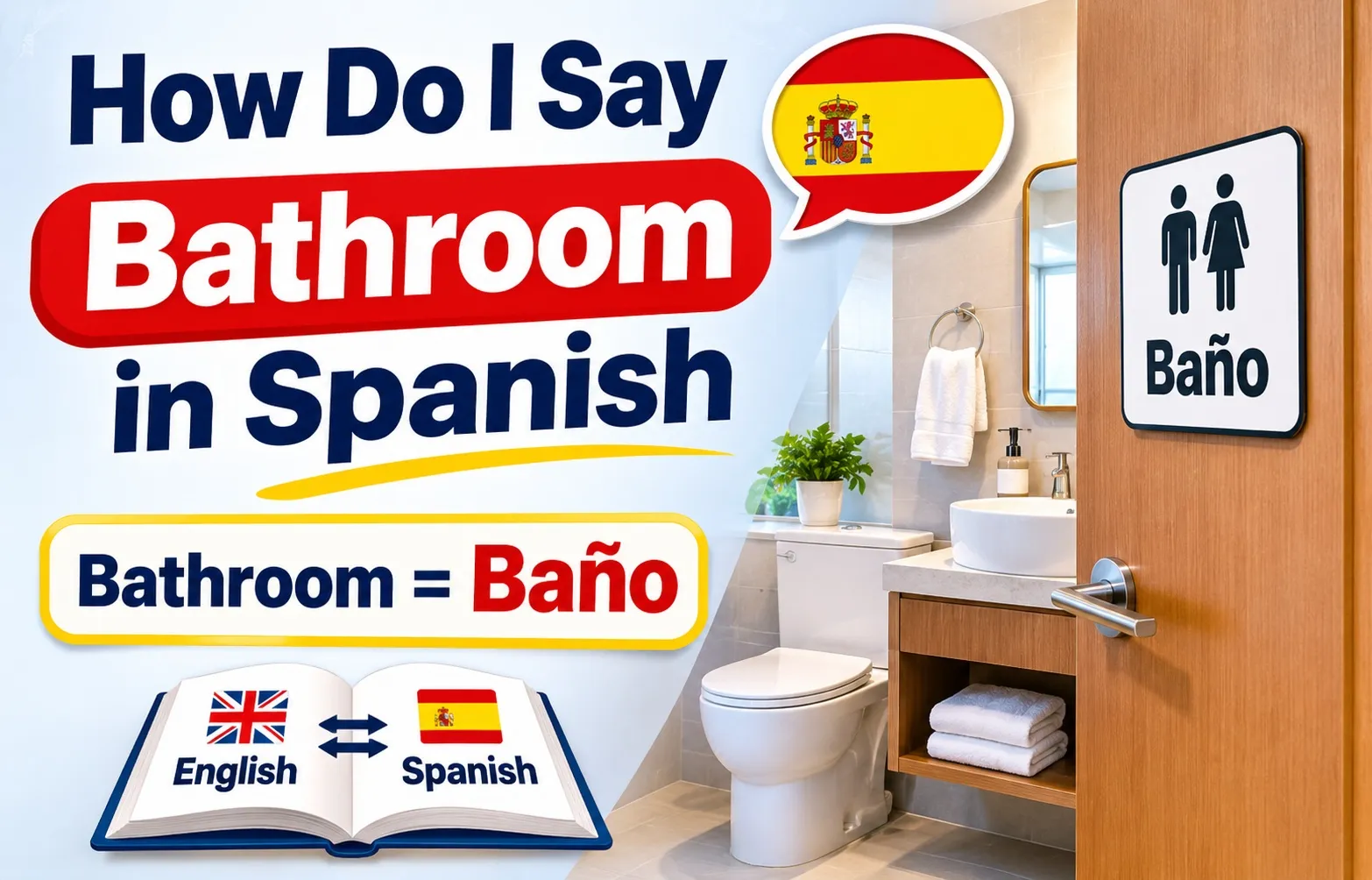 To pronounce baño accurately, aim for el BAH-nyoh with a crisp, two-syllable rhythm and a clear palatal glide before the final vowel. Mastering this sound helps native speakers understand you immediately in busy cafes, stations, and homes.
- Phonetic spelling: el BAH-nyoh, stressing the first syllable BAH and ending with a clean, rounded nyoh.
- Preposition contraction: When saying “to the bathroom,” Spanish merges a + el into al baño (ahl BAH-nyoh).
Breaking Down the Ñ Sound (No, It’s Not Just an N)
The Spanish tilde ñ represents a palatal nasal consonant that blends an “n” with a “y” glide, similar to the “ny” in canyon. Press the middle of your tongue against the hard palate just behind your alveolar ridge while releasing nasal airflow into -nyoh.
- Avoid flat “n”: Pronouncing it like BAH-noh changes the word’s sound and makes your Spanish sound hesitant.
- Practice pairing: Say canyon out loud, isolate the -nyon transition, and shift the ending vowel to an open Spanish -oh.
Listen and Practice: Native Pronunciation Video Guide
Watch the video walkthrough below to hear the natural stress and mouth movement when speakers pronounce baño in everyday phrases. Repeating the phrase out loud right after the speaker helps lock in muscle memory.
Essential Spanish Bathroom Phrases for Every Situation
Knowing a single noun is rarely enough when you are out in public, visiting someone’s home, or traveling with family. Matching your phrasing to the social setting ensures you sound polite and natural in every Spanish-speaking environment.
Asking Where the Bathroom Is (Restaurants, Stores & Travel)
In public spaces like cafes, museums, and airports, lead with a polite greeting such as disculpe (excuse me) before asking for directions. Spanish speakers commonly use both estar and quedar when asking where facilities are located.
- “¿Dónde está el baño?” — Where is the bathroom? The standard, universally understood question for any everyday setting.
- “Disculpe, ¿dónde quedan los baños?” — Excuse me, where are the restrooms located? Ideal in shopping malls, theaters, and larger restaurants with multiple stalls.
- “¿Me podría indicar dónde está el baño?” — Could you point me to where the bathroom is? A refined, formal option when speaking to hotel staff or elders.
Asking Permission to Use the Bathroom (Polite & Guest Etiquette)
When visiting a private home, a small family-run shop, or a cafe where restrooms are reserved for customers, asking permission shows good manners. Pairing your request with con permiso (excuse me / pardon me) is the standard way to excuse yourself from a dinner table.
- “¿Puedo usar el baño?” — Can I use the bathroom? Direct, polite, and appropriate in both casual and semi-formal situations.
- “¿Me presta su baño?” — May I use your bathroom? Literally translating to “Will you lend me your bathroom?”, this warm, idiomatic expression is widely used in Mexico and across Latin America.
- “Con permiso, voy al baño.” — Excuse me, I am going to the bathroom. The go-to phrase for stepping away from a group conversation or meal politely.
Expressing Urgency & Asking Others
When you need to excuse yourself quickly or check in on children and travel companions, switch to direct action verbs like necesitar (to need) or tener que (to have to). Keep these short expressions ready for fast-paced travel moments.
- “Necesito ir al baño.” — I need to go to the bathroom. Clear and slightly urgent without sounding overly blunt.
- “Tengo que ir al baño.” — I have to go to the bathroom. Very common in everyday conversation among friends and family.
- “¿Tienes que ir al baño?” — Do you have to go to the bathroom? Essential for parents checking in with kids or travelers before boarding a bus or plane.
Different Ways to Say Bathroom in Spanish (Regional & Context Guide)
Different Spanish-speaking countries and public venues favor distinct words depending on whether you mean a home room, a public restroom sign, or a specific fixture. In Mexico and much of Latin America, you will frequently hear baño, sanitarios, or tocador, while Spain commonly uses aseos or servicios on public signs.
- Everyday & Travel Default: Baño works across almost all Spanish-speaking regions when asking for a bathroom or restroom.
- Regional & Venue Nuance: Paying attention to signs and local terms prevents confusion in airports, malls, restaurants, and private homes.
Regional & Situational Comparison Table (Spain vs. Mexico vs. Latin America)
The table below compares common Spanish terms across regions, literal meanings, and realistic examples so you can pick the right word on the spot. For additional regional dictionary entries and audio examples, see SpanishDict’s bathroom translation guide.
Restroom vs. Bathroom in Spanish: Which Word Should You Use?
In English, people often draw a line between a home bathroom (with a tub or shower) and a public restroom, yet Spanish speakers rarely split them that way. In everyday speech, baño covers both a private bathroom at home and a public restroom in a cafe or airport.
When comparing restroom vs bathroom in Spanish for real-world travel, stick to el baño first because it is natural, polite, and universally understood. Only switch to words like aseos or sanitarios when reading a sign or matching how locals describe a specific public venue.
Bathroom vs. Toilet Fixture: Avoiding Awkward Translations
Learners sometimes mix up the whole room with the plumbing fixture inside it, which can sound overly blunt or mechanical in daily conversation. Keep room words distinct from fixture terms when speaking.
- Room terms first: Use baño or cuarto de baño when asking where to go or washing up.
- Fixture words for repairs or specifics: Words like inodoro, retrete (toilet/commode, common in Spain and some countries), and excusado refer to the toilet itself rather than the polite way to ask for a restroom.
- Practical travel tip: If you are unsure whether a spot calls it a tocador or baño, asking for el baño works cleanly without risking an awkward phrasing.
See how these practical bathroom and travel expressions sound in real conversation in the video guide below.
Reading Spanish Bathroom Signs (Men’s, Women’s & Neutral)
Walking up to two unmarked doors in a restaurant or bus station becomes stressful when the labels use formal titles instead of simple icons. Knowing the standard terms for ladies’ and men’s restrooms ensures you enter the right facility every time.
Ladies’ and Men’s Bathroom Terms on Signs
To say ladies bathroom in Spanish, use baño de mujeres or baño de damas. Across Spain and Latin America, public doors typically display formal courtesy titles or clear gender labels rather than relying solely on symbols.
- Women’s / Ladies’ Restroom: Look for Damas (Ladies), Mujeres (Women), Señoras (Madams/Ladies), or Baño de mujeres.
- Men’s Restroom: Look for Caballeros (Gentlemen), Hombres (Men), Señores (Sirs/Gentlemen), or Baño de hombres.
- Gender-Neutral / All-Gender Restroom: Look for Baño mixto or Baño unisex, increasingly common in modern cafes, coworking spaces, and boutique hotels.
Door Lock & Status Signs You Need to Know
Once you reach the correct door, small indicator plaques and entry labels tell you whether a stall is free or how the door opens. Checking these signs prevents accidental interruptions or pushing on a pull-only door.
- Ocupado: Occupied (the stall or single-occupancy restroom is currently in use).
- Libre / Disponible: Vacant / Available (the restroom is empty and ready to use).
- Fuera de servicio: Out of order (the facility is temporarily closed for maintenance or plumbing issues).
- Empuje / Jale (or Tire): Push / Pull (used on heavy main restroom doors; jale is standard in Mexico and Central America, while tire is common in Spain and South America).
Spanish Bathroom Grammar Gender & Slang Rules
Understanding how baño behaves grammatically—alongside which casual expressions are socially acceptable—keeps your Spanish accurate and natural. Even a small article mistake or overly blunt slang term stands out immediately to native speakers.
Is Bathroom Masculine or Feminine in Spanish?
In Spanish, bathroom (baño) is a masculine noun, so it always takes the masculine articles el (singular) and los (plural). Like most Spanish nouns ending in -o, it never pairs with feminine articles such as la or las.
- Singular & Plural Articles: Say el baño for a single bathroom and los baños when referring to public restrooms with multiple facilities.
- Mandatory “Al” Contraction: When saying “to go to the bathroom,” Spanish contracts a + el into ir al baño—never say or write ir a el baño.
- Adjective Agreement: Any descriptive adjective must also match the masculine gender, such as el baño limpio (the clean bathroom) or el baño ocupado (the occupied bathroom).
Common Spanish Bathroom Slang (And When Not to Use It)
Spanish has plenty of informal, humorous, and regional bathroom expressions, though most belong strictly among close friends or family. Knowing these terms helps you understand native conversations while avoiding awkward moments in polite settings.
- Ir a hacer pis / hacer pipí: Casual, child-friendly ways to say “to go pee” (hacer pis is common in Spain and parts of South America, while hacer pipí is widely understood across Latin America).
- El trono: Literally “the throne,” used jokingly among friends and family in the same humorous way English speakers refer to the toilet.
- El wáter: Derived from the English “water closet” (WC), this everyday colloquialism is widely used in Spain, Chile, and Argentina to refer to the toilet or restroom.
- Etiquette Warning: Reserve slang and terms like el excusado or el wáter for casual company; in restaurants, offices, or someone’s home, stick to el baño so you never sound overly graphic or rude.
Frequently Asked Questions
How do you politely ask to use the bathroom in Spanish?
To politely ask to use the bathroom in Spanish, say “Disculpe, ¿puedo usar el baño?” (Excuse me, can I use the bathroom?). In Mexico and across Latin America, “¿Me presta su baño?” (May I use your bathroom?) is another warm, courteous option when visiting a home or small shop.
- Public spaces: Start with disculpe or perdone to sound respectful.
- Dinner table etiquette: Say “Con permiso, voy al baño” when excusing yourself from a group.
What is the difference between baño and aseo in Spanish?
Baño is the universal everyday word for a home bathroom or public restroom across all Spanish-speaking countries, whereas aseo (usually plural, aseos) is used primarily in Spain on public restroom signs in cafes, airports, and train stations. Asking for el baño works naturally everywhere.
- Baño: Covers both private home bathrooms and public facilities globally.
- Aseo / Aseos: Refers specifically to public washrooms and hygiene facilities in Spain.
How do you say I have to go to the bathroom in Spanish?
You say “Tengo que ir al baño” (TEHN-goh keh eer ahl BAH-nyoh) or “Necesito ir al baño” (I need to go to the bathroom). Both expressions use the mandatory contraction al (a + el) and sound completely natural in everyday conversation.
- Conversational urgency: Use “Tengo que ir al baño” with friends, family, or travel companions.
- Polite statement: Use “Necesito ir al baño” when speaking with hosts or staff.
How do you say ladies’ restroom in Spanish?
The standard ways to say ladies’ restroom in Spanish are baño de mujeres and baño de damas. On public restroom doors across Spain and Latin America, women’s facilities are most commonly labeled Damas (Ladies), Mujeres (Women), or Señoras (Ladies/Madams).
- Spoken phrasing: Ask for el baño de mujeres or el baño de damas.
- Door signage: Look for Damas or Mujeres rather than Caballeros or Hombres (Men).

Oscar Vance | Master Plumber & Drainage Expert
Meet Oscar Vance, a licensed master plumber sharing practical solutions on residential repairs, preventive maintenance, and thoughtful home upkeep.