7 Critical Signs It Is Time to Replace Your Electrical Panel
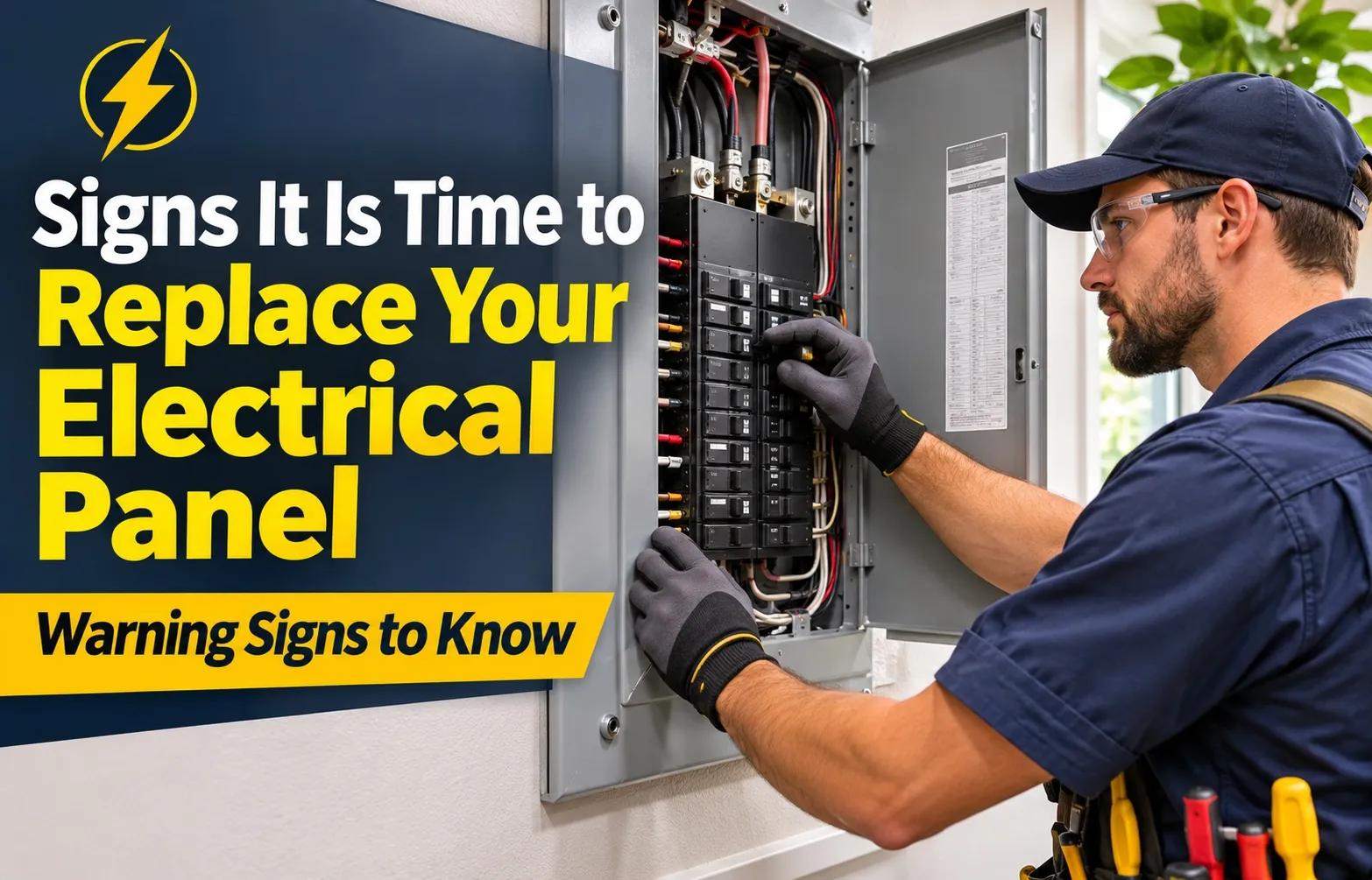 Your electrical panel acts as the central brain of your home’s entire power network. Recognizing early warning signs of system failure prevents catastrophic property loss, severe electrical fires, and sudden equipment outages.
Is Your Breaker Box a Ticking Time Bomb?
An aging or overloaded main breaker box gives subtle physical and operational warnings before complete failure. Knowing how to triage these symptoms immediately separates routine maintenance needs from urgent fire hazards.
Immediate danger signals like hot panel enclosures, active crackling sounds, or scorch marks require an urgent power shutdown and immediate professional evaluation. Conversely, occasional single-circuit overloads or minor expansion limitations usually indicate a planned upgrade is necessary.
Immediate Action Triage Guide:
- Emergency Hazard (Act Immediately): Faint burning odors, visible scorch marks, hot-to-the-touch panel doors, or active buzzing and crackling noises from the main breaker switch.
- Planned System Upgrade (Schedule Inspection): Frequent breaker resets when running high-draw appliances, flickering lights across multiple circuits, lack of open breaker slots for renovation, or panels older than 25 to 40 years.
Key Warning Signs at a Glance (Summary List)
If your home exhibits any of the following primary indicators, your electrical system is operating beyond its intended capacity or safety threshold and requires professional evaluation.
- Frequent Circuit Breaker Tripping: Individual breakers shut off repeatedly under standard daily power usage, signaling severe electrical load congestion.
- Flickering or Dimming Lights: Overhead illumination dims significantly whenever major motorized appliances like air conditioners or refrigerators cycle on.
- Outdated System Amperage: Operating on an obsolete 60-amp or 100-amp service line that cannot safely handle modern residential power requirements.
- Panel Age Beyond 25 to 40 Years: Physical components, internal bus bars, and spring-tensioned breaker switches have deteriorated past their operational design lifespan.
- Hazardous or Recalled Panel Brands: Outdated panels from manufacturers such as Federal Pacific Electric (Stab-Lok), Zinsco, or Challenger known for dangerous trip failure rates.
- Physical Wear, Rust, and Moisture: Visible oxidation, water staining, or physical corrosion on the metallic panel door, chassis, or grounding points.
- Unusual Sounds or Burning Odors: Sharp metallic or burning plastic smells near the panel casing, accompanied by persistent humming or sizzling noises inside the breaker box.
The Top 7 Warning Signs Your Panel Needs an Upgrade
Identifying specific physical and operational symptoms helps homeowners catch breaker box failures before they turn dangerous. Reviewing these seven key indicators ensures your home’s electrical distribution system remains safe, up to code, and capable of handling modern power demands.
1. Frequent Circuit Breaker Tripping (Overloaded Circuits)
When individual circuit breakers shut off repeatedly under standard daily usage, your electrical system is experiencing severe electrical overload. This means appliances are drawing more current than the circuit or panel can safely handle.
- Root Cause: High-draw appliances running simultaneously exceed the amp rating of the individual breaker.
- Safety Risk: Overheated wires inside the wall can degrade insulation over time, increasing fire risks.
2. Flickering or Dimming Lights When Heavy Appliances Kick On
Overhead lights that dim or flicker significantly whenever motorized appliances like refrigerators or HVAC systems start up point to insufficient service capacity. This voltage sag reveals that your panel is struggling to supply sudden surge currents.
- Diagnostic Indicator: Lights should remain stable; major dimming indicates voltage drop across undersized main feeds.
- Modern Impact: Modern HVAC units and heat pumps require steady power delivery that older panels cannot sustain.
3. Burning Smells, Scorching, or Unusual Buzzing/Crackling Sounds
A faint burning plastic odor or discoloration around your breaker box indicates active thermal damage and melting wire insulation. You must also distinguish between normal transformer hums and hazardous arc-fault crackling noises.
- Professional Diagnostic Tip: Place your hand safely a few inches near (never touching) the metal panel cover to check for abnormal radiant heat building up inside.
- Arc-Fault Dangers: Sizzling or buzzing sounds indicate loose wiring or arcing currents leaping across damaged bus bars.
4. Physical Wear: Rust, Corrosion, or Water Damage
Visible oxidation, white powdery residue, or rust on internal components and bus bars compromises the electrical integrity of your panel. Moisture intrusion from roof leaks or damp basements destroys circuit connections rapidly.
- Corrosion Hazards: Rust creates high-resistance connections that generate excessive heat under electrical loads.
- Immediate Replacement Trigger: Any standing water or active moisture inside the panel enclosure is an immediate emergency.
5. Outdated Amperage (60-Amp or 100-Amp Panels in Modern Homes)
Operating your household on an obsolete 60-amp panel or 100-amp panel creates a severe bottleneck for contemporary electronic devices and high-draw appliances. Modern homes require minimum 200-amp service to prevent constant system strain.
- Capacity Deficit: Older amperages cannot support simultaneous use of multiple large appliances and electronics.
- Upgrades Required: Adding EV chargers or tankless water heaters makes 100-amp service entirely obsolete.
6. Panel Age Exceeding 25 to 40 Years or Use of Old Fuse Boxes
Electrical panels have a maximum operational lifespan of 25 to 40 years before internal spring mechanisms wear out and fail to trip. Older fuse boxes or legacy breaker boxes lack modern safety features completely.
- Mechanical Fatigue: Internal circuit breaker springs lose tension over decades of thermal expansion and contraction.
- Safety Standard Evolution: Older boxes completely lack arc-fault (AFCI) and ground-fault (GFCI) protection mechanisms.
7. Full Capacity & Hazardous Double-Tapped Breakers
When a panel runs completely out of physical breaker slots, homeowners often resort to double-tapped breakers where two separate wires are jammed into a single terminal. Code inspectors flag this as a critical hazard.
- Code Violation: Most standard circuit breakers are engineered and certified to hold strictly one wire per terminal slot.
- Failure Risk: Overcrowded terminals loosen over time, causing loose connections, arcing, and severe thermal damage.
Dangerous & Recalled Panel Brands You Must Replace Immediately
Certain obsolete breaker box brands possess severe mechanical defects that prevent them from operating safely. Installing or keeping these recalled panels exposes your home to catastrophic fire hazards because their internal components fail to cut off power during dangerous overloads.
Federal Pacific Electric (FPE / Stab-Lok): The Silent Fire Hazard
Federal Pacific Electric (FPE) Stab-Lok panels are widely recognized by fire safety inspectors as an extreme electrical hazard. Independent testing demonstrates that FPE Stab-Lok breakers fail to trip up to 60% of the time during heavy electrical overloads, allowing currents to heat internal wiring red-hot.
- Failure Mechanism: The internal trip mechanism jams during continuous overcurrent conditions, resulting in severe thermal breakdown instead of cutting power.
- Visual Identification Cues: Look for the “Stab-Lok” name stamped on the inside panel door label or signature bright red or orange handles on individual circuit switches.
Zinsco & Sylvania Panels: Melting Bus Bars and Breaker Failures
Zinsco electrical panels (and branded variants labeled Zinsco-Sylvania) feature a fundamental design flaw in their internal power bus bars. Over time, the copper-clad aluminum bus bars degrade and corrode, causing high electrical resistance under routine household loads.
- Bus Bar Melting: Extreme heat buildup causes the breakers to literally melt and fuse directly onto the panel rail, rendering the breaker impossible to shut off manually or automatically.
- Visual Identification Cues: Identify Zinsco units by distinct vertical, multi-colored breaker handles (bright red, blue, green, and yellow) sliding along a central track.
Challenger & Pushmatic Breaker Boxes: Known Safety Defects
Challenger electrical panels manufactured in the 1980s and 1990s present high risks of overheating at the breaker-to-bus-bar connection point. Similarly, vintage Pushmatic panels use mechanical push-buttons instead of toggles that corrode and lock up over time.
- Challenger Defect: Specific 15-amp and 20-amp single-pole breakers generate excessive heat, expanding the plastic casing and damaging the main bus bar assembly.
- Pushmatic Defect: The internal push-button springs lose mechanical tension with age, causing breaker contacts to stay fused together even after being pushed off.
- Identification Markers: Challenger panels show yellow label details with the brand name stamped on the main door. Pushmatic boxes feature prominent rectangular push-buttons instead of standard flip toggles.
The 80% Electrical Capacity Rule: Is Your Panel Overloaded?
A major reason homes require an electrical panel replacement is exceeding safe load limits. Many homeowners assume that a 100-amp panel can continuously draw 100 amps of power, but electrical codes strictly forbid operating panels at full rated capacity continuously.
What Is the 80% Rule in Residential Electrical Systems?
The 80% rule for electrical panels stems from continuous load safety standards established by the National Electrical Code (NEC). Under these rules, any continuous electrical load—defined as a power draw sustained for three hours or longer—must not exceed 80% of the breaker or panel’s total amp rating.
- 100-Amp Panel Threshold: Maximum continuous load limit is strictly 80 amps.
- 200-Amp Panel Threshold: Maximum continuous load limit expands to 160 amps.
- Safety Margin: The remaining 20% capacity acts as a vital buffer to prevent excessive heat buildup, insulation degradation, and nuisance breaker tripping.
Calculating Your Home’s Amperage Needs for Modern Living
Modern households consume significantly more electricity than homes built decades ago. Performing a basic load calculation compares legacy household power demands against modern electrical requirements.
Consider the math when comparing a traditional mid-century home with a fully electrified modern residence operating on a standard 100-amp main panel:
- Legacy 1970s Household Load: Basic lighting, refrigerator, television, and small kitchen appliances typically drew 30 to 45 amps continuously. This left plenty of safety buffer under a 100-amp panel’s 80-amp limit.
- Modern Electrified Household Load: Central air conditioning (20A–30A), clothes dryer (24A continuous), kitchen appliances (15A), and home office setups running simultaneously easily push continuous draw to 70–75 amps—perched right at the safety limit.
High-Demand Appliances Driving Panel Upgrades (EV Chargers, Heat Pumps, Induction Cooktops)
Adopting high-efficiency clean energy technologies instantly pushes older 100-amp panels past their NEC continuous safety limits. Planning home electrification requires assessing how much amperage these large loads demand:
- Level 2 EV Charger: Draws 32 to 48 amps continuously while charging overnight. Adding a 40-amp continuous EV load to an existing 70-amp household baseline totals 110 amps—immediately overloading a 100-amp panel.
- Whole-Home Heat Pump System: Dedicated heating and cooling air handlers require 30 to 50 amps depending on climate zone sizing.
- Induction Cooktop & Electric Range: Requires a dedicated 40 to 50-amp circuit for peak multi-burner operation.
- Tankless Electric Water Heater: Demands multiple dedicated breakers often pulling 80 to 120 total amps during hot water draw.
Before installing high-demand appliances, homeowners should use tools like the Rewiring America Electrification Planner to calculate projected electrical loads accurately and evaluate whether a 200-amp service upgrade is necessary.
Home Insurance & Real Estate Impact of an Outdated Panel
An obsolete or overloaded electrical panel extends far beyond everyday inconvenience—it creates severe obstacles for property transactions and home insurance coverage. Underwriting guidelines have tightened significantly, making breaker box safety a critical factor during home sales and policy renewals.
Will Homeowners Insurance Cover an Electrical Panel Replacement?
Homeowners insurance policies generally do not cover routine electrical panel replacements or capacity upgrades. Insurance carriers view breaker box replacement as standard home maintenance rather than a covered property peril.
- Maintenance Exclusion: Upgrading an aging 100-amp panel to 200 amps to support modern appliances is considered an out-of-pocket home improvement expense.
- Covered Perils Exception: Insurance may cover replacement costs only if the panel suffers direct, sudden physical damage caused by a covered event, such as a lightning strike or a localized structural fire.
Can Obsolete Panels Cause Insurance Policy Cancellation or Denial?
Failing to replace a hazardous or recalled electrical panel can directly lead to insurance policy cancellation, non-renewal, or complete denial of coverage. Property insurance underwriters maintain strict guidelines regarding high-risk electrical components.
- 4-Point Inspection Flag: During routine underwriting inspections for older homes, inspectors evaluate electrical panels. High-risk brands like Federal Pacific Electric (FPE), Zinsco, Challenger, or fuse boxes are routinely flagged as uninsurable property risks.
- Outright Coverage Denial: Many insurance carriers refuse to issue new policies or force policyholders to execute an emergency panel replacement within 30 days to avoid policy cancellation.
- Surcharged Premiums: Homes allowed to retain aging or questionable service panels often face significantly elevated premium rates and higher deductibles due to fire risk exposure.
How Old Electrical Panels Affect Home Inspections and Real Estate Deals
An outdated breaker box frequently surfaces as a major sticking point during real estate negotiations. When a licensed home inspector flags an undersized, double-tapped, or obsolete panel, it instantly creates financing and closing hurdles.
- Buyer Mortgage & Coverage Delays: Lenders often refuse to fund home loans if the buyer cannot secure home insurance due to an uninsurable panel, bringing real estate closings to a sudden halt.
- Seller Concessions & Price Drop Demands: Buyers routinely demand direct price reductions or full seller concessions to cover the cost of a panel upgrade before closing escrow.
- Escrow Holdback Strategy: If a seller cannot replace the panel prior to the closing date, real estate attorneys can set up an escrow holdback—reserving 150% of the electrician’s estimate from the seller’s proceeds to complete the upgrade immediately after closing.
Electrical Panel Replacement Cost & Upgrade Roadmap
Budgeting for an electrical panel upgrade requires understanding material expenses, specialized labor rates, and potential utility infrastructure changes. Prices fluctuate based on whether you are executing a direct like-for-like panel swap or a complete electrical service upgrade.
Average Cost to Replace an Electrical Panel (100A vs. 200A vs. 400A)
Standard electrical panel replacement costs typically range between $2,000 and $4,000 for a direct swap or a standard 200-amp service upgrade, while complex 400-amp heavy-ups range from $4,000 to $8,000+. Total pricing breaks down across specialized hardware materials and professional labor.
- 100-Amp to 100-Amp Swap ($1,500 – $2,500): Replacing an aging or damaged panel with identical amperage when no capacity expansion is needed.
- 200-Amp Service Upgrade ($2,000 – $4,000): The modern residential standard, which involves replacing the main panel, breakers, and the service entrance cable.
- 400-Amp Heavy-Up ($4,000 – $8,000+): Utilizes dual 200-amp panels or heavy commercial-grade equipment for large multi-zone homes with extreme electrical demands.
- Labor vs. Materials Breakdown: Hardware components (enclosures, breakers, bus bars) account for roughly 30% to 40% of project costs, while licensed electrician rates account for 60% to 70% of professional labor.
Hidden Cost Factors: Utility Heavy-Ups, Permits, and Subpanels
Unexpected expenses during an electrical upgrade usually stem from external utility requirements, municipal compliance fees, and infrastructure upgrades. Homeowners must account for local permitting costs and utility coordination before scheduling work.
- Utility Company Heavy-Up Fees: If upgrading from 100A to 200A, the local power utility may charge fees to upgrade overhead or underground lines and the service transformer.
- City Electrical Permits ($100 – $500): Mandatory municipal permit and inspection fees required to ensure the installation meets current electrical safety codes.
- Subpanel and Rewiring Additions ($500 – $1,500): Extra costs incurred if your home requires a secondary subpanel or extensive wire-lengthening to reach the new main service panel location.
Step-by-Step Replacement Timeline: What to Expect on Installation Day
An electrical panel replacement is an intense, structured project that typically requires a total utility power shutoff lasting four to eight hours. Licensed electricians work systematically to disconnect power, strip out old hardware, and install the new main service panel safely.
- Phase 1 – Disconnection & Removal (Hours 1–2): The local utility cuts power at the pole, and electricians remove the meter, old breaker housing, and obsolete wiring.
- Phase 2 – Installation & Wiring (Hours 3–6): The new main service panel is securely mounted, new breakers are snapped into place, and branch circuits are meticulously re-routed and labeled.
- Phase 3 – Inspection & Power Restoration (Hours 7–8): A municipal inspector verifies code compliance, after which the utility restores live current to the home.
Frequently Asked Questions
Should a 50-year-old electrical panel be replaced?
Yes, a 50-year-old electrical panel should be replaced. Most breaker panels have a design lifespan of 25 to 40 years. Older panels often lack modern arc-fault (AFCI) safety features, suffer from spring tension failure, and cannot handle current household electrical loads safely.
Can I upgrade my electrical panel without rewiring my whole house?
Yes, you can upgrade your electrical panel without rewiring your whole house in most cases. An electrician simply connects your existing branch circuit wiring to the new panel. Whole-home rewiring is only necessary if your house contains dangerous knob-and-tube wiring or ungrounded aluminum branch circuits.
How can you tell if a breaker is blown vs. a failing panel?
A single blown breaker affects only one circuit and resets easily with a click. A failing panel exhibits system-wide symptoms like buzzing noises, burning smells, multiple simultaneous tripping breakers, hot panel doors, or lights dimming across several rooms when heavy appliances turn on.
How long does it take an electrician to replace a breaker panel?
A professional electrical panel replacement typically takes between 4 and 8 hours of total labor. The job requires shutting off main utility power, mounting the new panel enclosure, rewiring individual branch circuits, running a new service entrance line, and completing safety inspections before restoring grid power.
What is the difference between a main panel replacement and adding a subpanel?
A main panel replacement upgrades your primary electrical enclosure and total home amperage from the utility provider. Adding a subpanel creates a secondary circuit distribution box powered by your existing main panel, adding physical breaker slots without increasing your home’s total incoming service capacity.

Oscar Vance | Master Plumber & Drainage Expert
Meet Oscar Vance, a licensed master plumber sharing practical solutions on residential repairs, preventive maintenance, and thoughtful home upkeep.