What Are the Switches on an Electrical Panel?
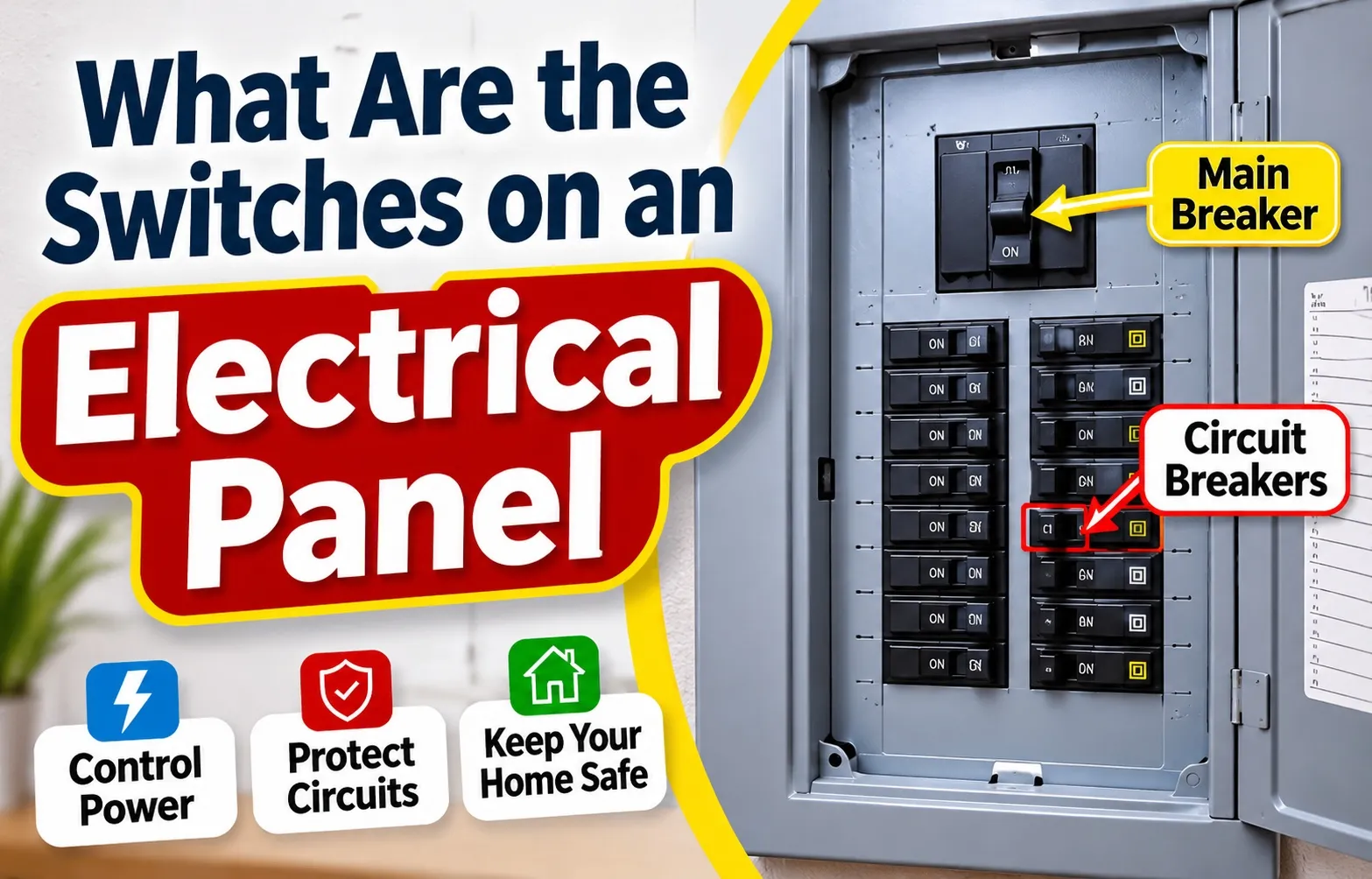 The switches on an electrical panel are safety devices called circuit breakers. Their primary job is to automatically shut off the flow of electricity when a circuit draws too much current, preventing electrical fires, melted wiring, and damage to household electronics.
What Are the Switches on Your Electrical Panel Called?
The switches inside your main service panel are known individually as circuit breakers. While many homeowners refer to the entire enclosure as a breaker box, electrical panel, or fuse box, modern residential systems use mechanical switches (breakers) rather than old-fashioned screw-in glass fuses that burn out once and require full replacement.
These switches serve distinct functions within your home’s electrical distribution system:
- Circuit Breakers: Individual toggle switches designed to trip (shut off) during an electrical overload or short circuit, protecting specific wiring loops.
- Main Service Panel: The central metal enclosure—often located in a basement, garage, or utility room—that receives incoming utility power and distributes it through internal bus bars to individual breakers.
- Overload Protection: A built-in mechanical safety trigger that opens the switch when current exceeds the breaker’s rated amp rating (such as 15A, 20A, or 50A).
- Fuse Box vs. Breaker Box: Older homes built before 1960 often featured fuse boxes with disposable fuses, whereas modern systems built under the National Electrical Code (NEC) exclusively utilize resettable circuit breakers.
Safety First: Basic Precautions Before You Open the Panel Door
Opening the outer door of your main service panel is safe for basic inspection and resetting tripped breakers, but handling high-voltage equipment requires absolute caution. Always follow basic safety protocol before interacting with your electrical box, and review the National Fire Protection Association safety guidelines when dealing with household electrical infrastructure.
Follow these essential precautions every time you approach your electrical panel:
- Keep Hands and Flooring Dry: Never touch an electrical panel while standing in water or on damp concrete. Ensure your hands are completely dry before operating any switch.
- Wear Rubber-Soled Footwear: Stand on a clean, dry surface wearing shoes with non-conductive rubber soles to insulate yourself against potential electrical shock.
- Operate Only the Outer Door: Open only the hinged outer panel cover. Never unscrew or remove the inner metal faceplate (dead-front panel) that shields live electrical wires and internal bus bars.
- Stand to the Side: Stand slightly off to the side of the panel when flipping switches so your body is clear of the door opening.
- Use One Hand: Keep one hand in your pocket or at your side while resetting a breaker switch to prevent creating a current path across your chest.
The Main Switch vs. Branch Switches
An electrical panel operates on a strict power distribution hierarchy, dividing total utility electricity into a master shut-off and dedicated local circuits. Understanding how the main breaker interacts with individual branch breakers helps homeowners diagnose power failures and safely manage household electricity.
The Main Breaker: The Master Shut-Off Switch
The main circuit breaker—often called the master switch or service disconnect—is the largest switch in the panel, typically located right at the very top or bottom of the enclosure. Rated between 100 amps and 200 amps in modern residential homes, this heavy-duty switch controls 100% of the electrical power flowing into your home from the utility lines.
Key characteristics and functions of the main breaker include:
- Total Power Disconnect: Flipping this single switch to the “OFF” position instantly cuts off electricity to the entire house, shutting down all lights, outlets, and major appliances simultaneously.
- Amperage Capacity: It dictates the total electrical load your home can safely handle at one time, matching your home’s utility meter rating (commonly 100A, 150A, or 200A).
- Emergency Shut-Off: Designed for rapid response during emergencies, fires, or major electrical maintenance where total power isolation is required.
Branch Circuit Breakers: Individual Room Controllers
Branch circuit breakers are the smaller toggle switches arranged in rows below or beside the main breaker. These switches control specific rooms, zones, or dedicated heavy-duty appliances throughout your home by drawing electrical current directly from the panel’s internal bus bars.
How branch circuit distribution works in your home:
- Bus Bar Connection: Each branch breaker snaps securely onto energized metal bus bars inside the panel, which feed live electricity continuously from the main service disconnect.
- Zone Isolation: Unlike the master switch, a single branch circuit breaker only cuts power to a specific localized loop—such as kitchen countertop outlets, bedroom lights, or a bathroom GFCI circuit.
- Standard Amperages: Most branch switches are rated for 15 amperes or 20 amperes to protect standard 120-volt household wiring against overheating from high electrical loads.
Anatomy of Electrical Panel Switches: 5 Primary Types
Every electrical panel uses specific types of circuit breakers tailored to handle different voltages, equipment loads, and safety hazards. Understanding these five primary switch configurations allows you to identify which household devices each breaker serves and recognize built-in safety mechanisms like test buttons and physical handle ties.
Single-Pole Breakers (120V Standard Circuits)
Single-pole breakers are the most common switches in any residential panel, occupying a single slot on the breaker rack. Rated for 120-volt circuits at 15 amperes or 20 amperes, these switches protect standard household wiring supplying everyday outlets and overhead lighting.
- Physical Profile: Narrow, single toggle switch measuring approximately 3/4 inch to 1 inch in width.
- Typical Load: 15-amp single-pole breakers power living room lighting and bedroom outlets; 20-amp single-pole breakers serve kitchen countertop receptacles, dining areas, and garage outlets using thicker 12-gauge wire.
- Bus Connection: Connects to a single energized bus bar inside the panel to supply standard 120-volt power.
Double-Pole Breakers (240V Heavy Appliances)
Double-pole breakers supply 240-volt power to high-draw appliances by spanning across two adjacent panel slots. These switches consist of two single-pole breakers physically linked together by a rigid handle tie to ensure both hot legs trip simultaneously if an overload occurs.
- Physical Profile: Takes up two vertical panel slots with a shared toggle linked by a metal or plastic handle tie.
- Amperage Range: Typically rated between 30 amperes and 50 amperes (or higher for large home equipment).
- Typical Load: Electric water heaters, central air conditioning units, electric clothes dryers, electric ranges, and EV chargers.
AFCI Breakers (Arc-Fault Circuit Interrupters for Fire Protection)
AFCI breakers feature sophisticated electronic microprocessors that detect dangerous electrical arcing—unintended sparking caused by damaged wiring, loose terminal screws, or pierced appliance cords—that standard breakers miss.
- Physical Identification: Easily recognized by a distinct, brightly colored “TEST” button (often blue, green, or yellow) on the face of the switch.
- Wiring Difference: Connects directly to the circuit’s neutral wire via a coiled neutral pigtail wire (or plug-on neutral strip) attached to the back of the breaker.
- Safety Function: Cuts power instantly upon sensing high-frequency arcing patterns to prevent electrical fires inside wall cavities before heat can ignite surrounding wood or insulation.
GFCI Breakers (Ground-Fault Interrupters for Shock Prevention)
GFCI breakers protect human life against deadly electrical shocks caused by ground faults, where electricity strays from its intended path into water or grounded conductive surfaces.
- Physical Identification: Features a physical “TEST” button (typically white, purple, or yellow) alongside a reset mechanism directly on the switch body.
- Required Locations: Protects entire circuits serving damp or wet environments like bathrooms, kitchens, outdoor receptacles, basements, and laundry rooms.
- Protection Mechanism: Continuously monitors current balance between hot and neutral conductors, instantly tripping within milliseconds if a current imbalance as small as 4 to 6 milliamperes is detected.
Commercial & Specialty Switches (Fusible Disconnects & Tandem Breakers)
Beyond standard single- and double-pole switches, certain panels utilize space-saving or industrial switch configurations to meet specific electrical design requirements.
- Tandem Breakers (Cheater Switches): A single-slot breaker housing two independent toggles side-by-side or stacked vertically, allowing two 120-volt circuits to fit into one panel space when a board has reached capacity.
- Fusible Disconnect Switches: Heavy-duty industrial or commercial panel switches integrating physical fuses alongside a manual toggle for high short-circuit interrupting capacity.
- Quad Breakers: Double-pole tandem switches that fit two 240-volt double-pole circuits into just two panel slots, frequently used in tight sub-panels.
Decoding the 3 Switch Positions (On, Off, & Tripped)
Understanding the physical state of your electrical panel switches is essential for diagnosing power loss safely. Circuit breaker toggles communicate their operational status through three distinct physical positions—On, Off, and a neutral Tripped state that signals an overload or safety intervention.
How to Spot a Tripped Breaker (The “Middle” Position)
When a circuit overloads or experiences a short circuit, internal spring-loaded mechanisms force the breaker switch into a unique middle position between “ON” and “OFF.” Recognizing this position is the key to identifying why a specific room or appliance lost power.
Key indicators of a tripped circuit breaker include:
- The Center Stance: The toggle switch does not rest firmly at the top (“ON”) or bottom (“OFF”); instead, it hangs loosely in a neutral middle position.
- Trip Indicator Windows: Many modern breakers feature a small colored mechanical flag window (orange, red, or white) that becomes visible next to the toggle when a trip occurs.
- Resistance and Feel: If you try to push the middle-positioned switch directly upward toward “ON,” it will offer spring resistance or bounce right back without engaging power.
How to Safely Reset a Tripped Switch
Resetting a tripped circuit breaker requires following a strict mechanical sequence. The #1 mistake homeowners make is trying to force the switch directly back to the “ON” position from the middle trip state, which fails to reset the internal latch.
Execute these precise steps to reset your breaker safely:
- Step 1 – Switch to Full OFF: Firmly push the tripped toggle all the way down until you feel and hear a distinct mechanical click into the “OFF” position. This resets the internal tripping mechanism.
- Step 2 – Pause Briefly: Wait 2 to 3 seconds to let the thermal metal strip inside the breaker cool down, especially if the trip was caused by an overload or heavy appliance draw.
- Step 3 – Flip to ON: Push the toggle firmly upward into the “ON” position until it locks securely in place and power is restored to the circuit loop.
- Step 4 – Evaluate the Result: If the switch immediately trips back to the middle position or sparks, turn it back to “OFF” and unplug appliances on that circuit before attempting another reset.
Why Do Electrical Switches Trip? Common Causes
A circuit breaker trips to prevent electrical fires and equipment damage when current exceeds safe operating limits. Understanding the specific electrical event behind a trip helps you diagnose whether the issue stems from an overused outlet, a faulty appliance, or damaged house wiring.
Circuit Overloads (Too Many Appliances)
A circuit overload occurs when connected devices draw more total amperage than the breaker is rated to handle—such as running a 1,500-watt space heater, a hairdryer, and vacuum cleaner on the same 15-amp branch circuit simultaneously.
- Thermal Strip Tripping: Overloads trigger a bimetallic thermal strip inside the breaker, which gradually bends as continuous high current creates heat.
- Delayed Trip Timing: Because thermal trips rely on heat accumulation, an overloaded switch often trips gradually (e.g., after 3 to 10 minutes of running a hot plate or toaster oven) rather than instantaneously.
- Diagnostic Solution: Unplug non-essential high-draw appliances and redistribute electrical loads across different room circuits before resetting the switch.
Short Circuits (Hot Wire to Neutral)
A short circuit is a severe electrical fault where an energized hot wire comes into direct physical contact with a neutral wire, creating an unintended path of virtually zero resistance.
- Electromagnetic Tripping: The sudden surge of extreme amperage activates an internal magnetic solenoid within milliseconds, causing an immediate, violent trip.
- Visual and Physical Signs: Often accompanied by a sudden popping sound, a visible spark inside an outlet box, or faint scorch marks around wall receptacles and appliance plugs.
- Diagnostic Solution: Turn off wall switches and unplug all electronics along the circuit path; if the breaker trips instantly upon resetting with nothing plugged in, call a licensed electrician immediately to trace damaged wire insulation.
Ground Faults (Current Leakage)
A ground fault occurs when an energized hot wire makes contact with a bare ground wire, a grounded metal box, or a conductive damp surface like a wet countertop or plumbing fixture.
- Current Leakage Hazard: Electricity attempts to flow directly into the ground rather than completing its circuit path through the neutral wire, posing a severe shock hazard to anyone touching the equipment.
- Specialized Protection: Standard breakers trip if amperage spikes, but GFCI breakers specifically sense current imbalances as small as 4 to 6 milliamperes between hot and neutral wires to cut power instantly.
- Diagnostic Solution: Common in outdoor outlets, kitchens, and bathrooms; check for moisture ingress, water inside electrical boxes, or damaged cord insulation on wet-use appliances.
Failing or Aged Breaker Switches
Like any mechanical device, circuit breakers degrade over time. Internal springs lose tension, bimetallic thermal strips weaken, and contacts corrode after decades of service or repeated trip cycles.
- Premature Tripping: A worn-out breaker may trip under normal, light electrical loads well below its rated amperage capacity.
- Physical Warning Signs: The breaker body feels hot to the touch, emits a faint burning plastic smell, or buzzes continuously while under electrical load.
- Diagnostic Solution: If a circuit trips consistently despite having no active appliances or short circuits present, the breaker itself has reached the end of its functional lifespan and requires replacement by a qualified electrician.
Reading Breaker Panel Labels & Matching Replacement Parts
Interpreting your electrical panel schedule and identifying the correct replacement hardware are critical skills for home maintenance. Without proper panel labeling and brand-compatible breakers, troubleshooting electrical issues or performing upgrades becomes dangerously uncertain.
How to Read Your Panel Directory Schedule
The panel directory schedule is typically a handwritten or printed card attached to the inside of the panel door, mapping each numbered breaker switch to a specific room or appliance in your home.
How to navigate and update your panel schedule:
- Odd and Even Slot Numbering: Breakers are numbered sequentially, with odd numbers typically on the left column and even numbers on the right column.
- Mapping Unlabeled Switches: If your panel lacks labels, use a digital electronic circuit tracer plugged into a wall outlet while scanning the panel, or use a two-person radio/phone method to test individual light switches and receptacles.
- Keeping Records Updated: Whenever remodeling or adding new hardwired appliances, immediately update the directory card in pencil to ensure emergency shut-offs remain accurate.
Matching Breaker Brands (Square D, Siemens, Eaton, Cutler-Hammer)
When replacing a faulty switch, you must never mix breaker brands indiscriminately. Installing an unapproved or mismatched replacement breaker creates severe safety hazards regarding bus bar compatibility and UL listing integrity.
Essential guidelines for matching replacement parts:
- Brand Specificity: Your electrical panel is engineered and tested as a complete listed assembly. Replacement breakers from manufacturers like Square D, Siemens, Eaton, or Cutler-Hammer must match your exact panel brand and series.
- Bus Bar Fit and Arc Safety: Mismatched breakers can fit loosely onto the metal bus bars, creating micro-arcing, loose electrical contact, excessive heat, and melted panel housings.
- UL Listing Certification: Always verify that any replacement breaker is strictly UL Listed for use inside your specific manufacturer’s panel enclosure to maintain compliance with the National Electrical Code.
Frequently Asked Questions
Homeowners often have specific questions regarding electrical panel operations, switch temperatures, and proper safety limits. Review these direct answers to common inquiries about circuit breakers and electrical box maintenance.
Should all switches on a breaker box be turned on?
No, not all switches on a breaker box should necessarily be turned on. Unused breakers or switches assigned to dedicated circuits for appliances you do not currently own (such as a spare sub-panel space or a detached garage) should remain safely in the off position until needed.
What is the difference between a breaker switch and a wall light switch?
A wall light switch is a manual control designed to regularly open and close low-amperage lighting circuits for daily convenience. In contrast, an electrical panel breaker switch is a heavy-duty mechanical safety device engineered to automatically trip and interrupt massive current overloads to prevent electrical fires.
Why is my electrical panel switch hot to the touch?
A breaker switch that feels hot or warm to the touch indicates an underlying electrical hazard, such as an overloaded circuit drawing continuous high amperage, loose terminal wire connections, or a failing internal switch mechanism. If a switch feels unusually warm, immediately reduce the electrical load on that circuit and contact a licensed electrician to inspect the panel.
What do the numbers (15, 20, 30, 50) on breaker switches mean?
The numbers stamped onto the toggle handle of a circuit breaker represent its maximum ampere (amp) rating. A 15-amp breaker trips if current exceeds 15 amps, while higher ratings like 30-amp or 50-amp switches protect heavy-duty 240-volt appliances like air conditioners and electric ranges that require higher electrical capacity.
Conclusion & When to Call a Licensed Electrician
Mastering the layout and function of your electrical panel empowers you to manage routine power maintenance, safely reset tripped switches, and recognize the boundaries where DIY troubleshooting ends and professional intervention begins.
Understanding Your Panel at a Glance
Your electrical panel acts as the nerve center of your home’s power distribution, utilizing a hierarchy of specialized switches to manage electricity safely. Reviewing the core switch types helps you maintain proper circuit organization throughout your property:
- Main Circuit Breaker: The master service disconnect that controls 100% of the electrical power entering your home from utility lines.
- Single-Pole Breakers: Standard 120-volt switches (15A or 20A) protecting everyday lighting and room outlet circuits.
- Double-Pole Breakers: Linked 240-volt switches powering heavy-duty appliances like central air conditioners and electric dryers.
- AFCI & GFCI Breakers: Advanced safety switches equipped with test buttons to prevent arc-induced fires and ground-fault shocks.
Red Flags That Require a Professional Electrician
While homeowners can safely reset standard tripped breakers or inspect panel directories, certain electrical symptoms indicate severe underlying hazards that demand immediate attention from a certified electrician.
Never attempt DIY repairs if you encounter any of these critical warning signs:
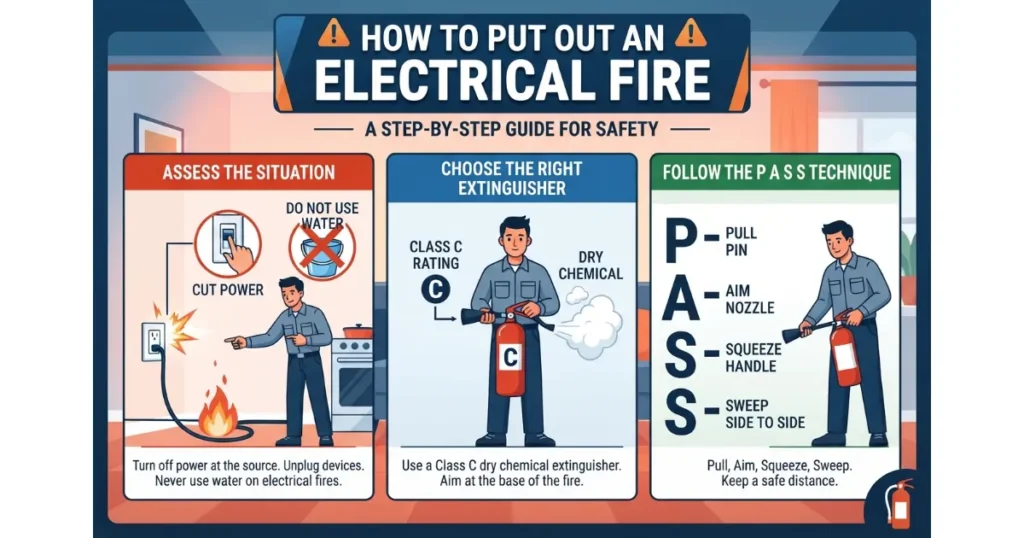
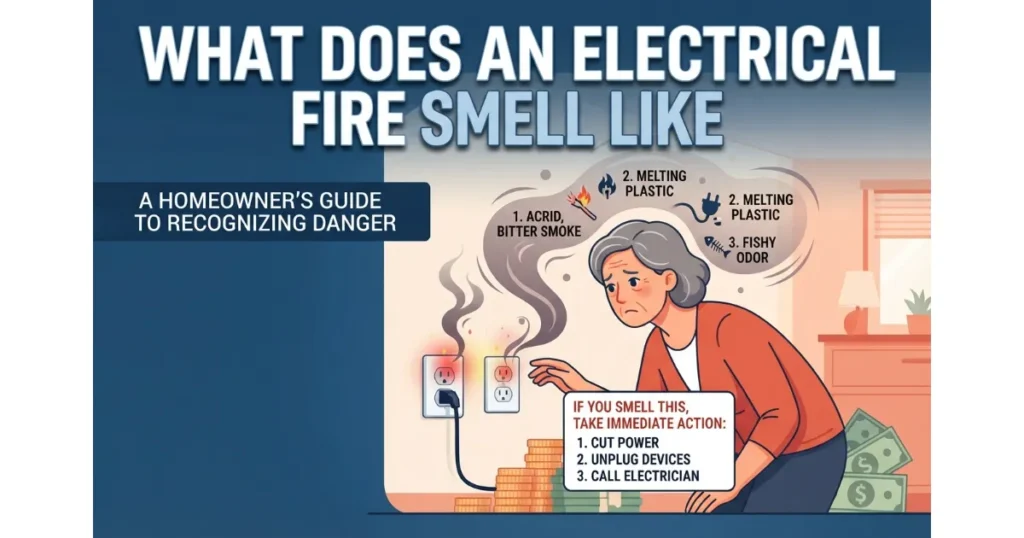
- Burning Smell: A distinct odor of melting plastic or burning insulation near the panel indicates dangerous overheating and potential electrical fire risk.
- Buzzing Breaker: A continuous buzzing, humming, or crackling sound from the panel means electrical arcing or a failing switch mechanism is present.
- Instant Re-Trip: If a circuit breaker trips immediately after being reset, it signals an active short circuit or a severe ground fault requiring diagnostic testing.
- Hot Panel or Switches: Circuit breakers or service panels that feel physically hot to the touch require an urgent professional electrical inspection.
- Code Compliance & Upgrades: Outdated fuse boxes, ungrounded wiring, or overloaded systems requiring a full panel upgrade must be evaluated to ensure adherence to current electrical code compliance.

Oscar Vance | Master Plumber & Drainage Expert
Meet Oscar Vance, a licensed master plumber sharing practical solutions on residential repairs, preventive maintenance, and thoughtful home upkeep.