When Are Putty Pads Required for Electrical Boxes?
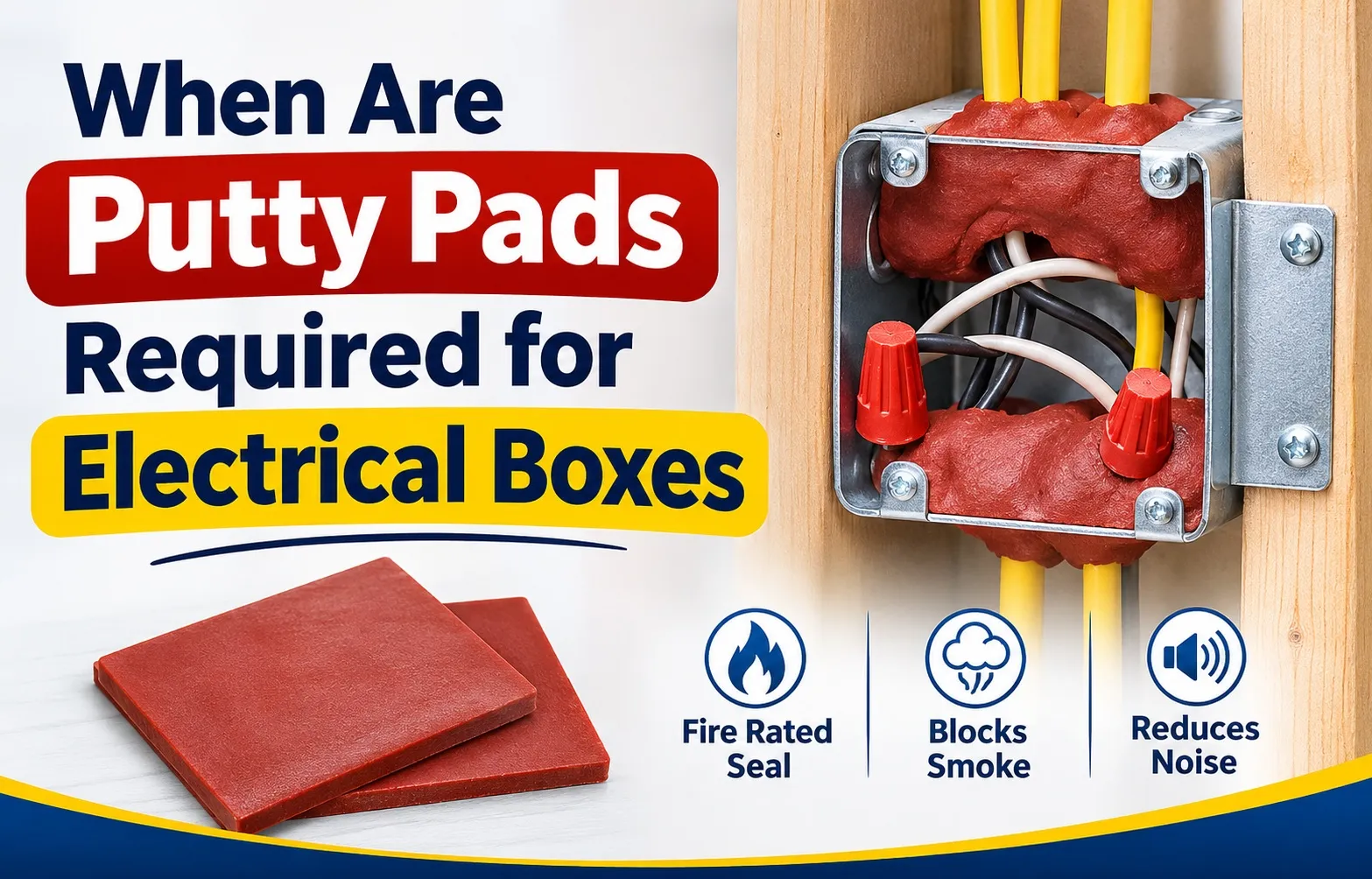 Putty pads are required for electrical boxes whenever an outlet, switch, or junction box breaches a fire-resistance-rated wall or assembly and fails to meet specific size, spacing, or aggregate opening exceptions outlined in modern building codes. These pliable, intumescent barriers seal membrane penetrations to prevent fire, smoke, and toxic gases from bypassing the protective rating of the wall partition.
The Core Trigger Rule (Breaching Rated Assemblies)
Anytime an electrical box penetrates a rated partition—such as a 1-hour or 2-hour fire-rated drywall assembly—the structural integrity of the fire barrier is compromised. Without protective measures, flames and superheated gases can rapidly travel through the hollow interior cavities of the wall.
- Membrane Penetrations: Cutting a hole for an electrical box creates an opening directly through the gypsum board layer.
- Intumescent Expansion: Putty pads expand exponentially when exposed to high heat, quickly filling the electrical box and sealing the aperture during a fire event.
- Compliance Triggers: Protection becomes mandatory whenever standard code exceptions regarding box sizing, box material, or wall spacing are exceeded in rated assemblies.
Summary of Building Code Mandates (IBC & IRC)
Building regulations govern these installations tightly through standardized model codes that dictate how contractors and electricians must handle electrical box penetrations in shared or rated walls.
- IBC Section 714.4.2: Governs membrane penetrations in commercial and multi-family construction, outlining strict firestopping standards for electrical enclosures.
- IRC Section R302.4.2: Focuses on residential building standards, detailing the fire-resistance requirements for walls separating dwelling units or attached structures like garages.
- Code Enforcement: Local building inspectors enforce these guidelines rigorously to ensure that all electrical installations preserve the minimum hourly fire rating of the partition.
Electrical Box Putty Pad Requirements
Contractors and project managers on job sites can instantly evaluate whether an electrical box requires protection by analyzing the wall’s fire rating, box material, surface area in square inches, and horizontal separation distance. This field decision matrix streamlines code compliance before rough-in inspections.
Instant Reference Table: When Do You Need a Pad?
Review this field reference matrix to quickly determine compliance triggers based on standard box specifications and partition ratings during construction planning.
Understanding Box Sizing and Spacing Thresholds
Navigating physical dimensions and layout spacing prevents costly job-site rework. The Authority Having Jurisdiction (AHJ) relies heavily on these precise parameters during framing and electrical audits.
- The 16 Square Inch Threshold: Metallic boxes measuring 16 square inches or less enjoy code exceptions only if the aggregate area of all membrane openings stays under 100 square inches per 100 square feet of wall surface.
- Horizontal Separation Distances: Enclosures installed on opposite sides of a rated partition must maintain a clean horizontal offset (typically 24 inches) to prevent intersecting fire paths in noncommunicating cavities.
- Authority Having Jurisdiction (AHJ) Rules: Local code officials maintain ultimate authority and can mandate protective pads on every box in a commercial partition regardless of standard sizing loopholes.
When Building Codes Mandate Fire Putty Pads (Detailed Scenarios)
Building regulations enforced by the International Building Code (IBC) and International Residential Code (IRC) establish exact physical scenarios where firestop putty pads become mandatory. Understanding these strict code clauses prevents failed framing inspections and ensures total safety compliance across commercial and residential projects.
Large Metallic Boxes Exceeding 16 Square Inches
Metallic electrical boxes with a face area greater than 16 square inches automatically trigger mandatory firestop protection under modern building codes. Because these oversized enclosures create a massive breach in the gypsum board membrane, their specific UL classification requires intumescent putty pads to maintain the wall’s hourly fire rating.
- UL Listing Compliance: Manufacturers design large junction boxes with specific test criteria that dictate exterior fireproofing wraps.
- Membrane Defiance: Exceeding the 16 square inches threshold invalidates standard multi-box spacing exceptions.
Failed Horizontal Spacing Rules (The 24-Inch / 100 Sq. In. Aggregate Rule)
When electrical boxes installed on opposite sides of a rated partition fail to maintain the required 24-inch horizontal separation, intumescent putty pads are immediately required. This rule prevents fire from bridging the wall cavity when cumulative opening areas exceed code limitations.
- The 100 Sq. In. Rule: Aggregate opening sizes cannot exceed 100 square inches per 100 square feet of wall surface area.
- Opposing Cavities: Closely aligned boxes create thermal short-circuits, making fire putty pads mandatory to satisfy guidelines outlined in the Hilti Engineering Guide on Putty Pads.
Staggered-Stud and Double-Stud Wall Cavities
Staggered-stud and double-stud wall assemblies bypass standard linear distance rules because internal air paths allow smoke and fire to travel freely. Consequently, building officials regularly mandate protective putty pads on all electrical penetrations within these specialized partitions.
- Unobstructed Air Paths: Shared internal framing cavities eliminate the natural fire-blocking benefits of standard single-stud spacing.
- Universal Protection: Commercial projects often apply putty pads to every single box in these assemblies to guarantee absolute compliance.
Non-Compliant Annular Space Gaps (Exceeding 1/8 Inch)
An oversized drywall cut-out that leaves an annular space gap greater than 1/8 inch around the electrical box violates standard UL assembly listings. Sealing these rogue gaps with intumescent putty pads restores the barrier’s structural integrity against smoke and flame migration.
- Precision Drywall Cuts: Installers must carefully trace box outlines to prevent loose, oversized wall openings during installation.
- Inspection Failure: Unsealed gaps wider than 1/8 inch represent one of the most common causes of failed electrical rough-in inspections.
Steel vs. Plastic Electrical Boxes: How Material Changes Putty Pad Rules
The choice between steel and non-metallic electrical boxes fundamentally alters firestop requirements and thermal performance inside rated wall assemblies. Understanding material composition ensures contractors deploy intumescent solutions where building regulations and Underwriters Laboratories (UL) standards demand complete protection.
Why Non-Metallic (PVC/Plastic) Boxes Melt Faster
Non-metallic PVC enclosures present a significantly higher risk during a fire because thermoplastics have a low melting point and degrade rapidly under intense heat. Unlike metal, plastic boxes disintegrate quickly, leaving a wide-open gap for flames and toxic gases to breach the wall partition unchecked.
- Low Thermal Resistance: Polyvinyl chloride (PVC) and composite boxes soften and melt within minutes when exposed to elevated temperatures.
- Rapid Failure Mechanism: Once the plastic wall box melts away, internal wiring and surrounding insulation become fully exposed to fire propagation.
- Mandatory Intumescent Protection: Because plastic enclosures offer zero inherent fire barrier once melted, building codes and UL listings frequently mandate intumescent pads to choke off the opening.
UL Listing Differences Between Steel and Plastic Enclosures
Underwriters Laboratories (UL) evaluates steel and plastic enclosures under entirely different classification protocols due to their distinct physical reactions to heat. Steel boxes retain their structural shape much longer, whereas plastic boxes rely entirely on external or internal intumescent systems to pass rigorous fire tests.
- Structural Integrity of Steel: Steel electrical boxes maintain their physical boundary during standard fire endurance tests, allowing smaller boxes to qualify for spacing exemptions under strict conditions.
- Strict Plastic Certification: Non-metallic boxes almost universally require certified firestop protection or specialized box inserts because they cannot independently resist burn-through during standardized fire evaluations.
- Thermal Protection Engineering: Intumescent pads compensate for plastic degradation by expanding rapidly to form a dense, insulating char plug that blocks heat transfer and flame spread.
Sound Attenuation: Why Putty Pads Are Required in STC-Rated Walls
Putty pads are heavily mandated in modern multi-family and commercial construction to provide essential sound attenuation in Sound Transmission Class (STC)-rated partition walls. Even when fire resistance is not the primary architectural requirement, sealing electrical box penetrations prevents airborne sound waves and disruptive noise bleeding between adjacent living spaces.
Preventing Sound Leaks and Air Infiltration in Multi-Family Units
Electrical box cutouts create tiny gaps in drywall membranes that act as direct conduits for airborne noise and air infiltration in multi-family residential buildings. Without proper acoustic sealing, sound waves bypass insulated wall cavities entirely, severely degrading the sound isolation performance of the assembly.
- Airborne Noise Transfer: Sound travels easily through hollow electrical boxes and unsealed drywall gaps, causing major privacy issues between apartments, condos, or hotel rooms.
- Maintaining STC Performance: Installing dense putty pads adds mass and elasticity to the electrical penetration, blocking sound transmission and preserving the wall’s certified STC rating.
- Draft and Odor Prevention: Beyond sound attenuation, sealing these membrane gaps stops unwanted air movement, dust, and cooking odors from migrating between separate rental units.
Acoustic Putty vs. Intumescent Firestop Putty: What’s the Difference?
While both materials look similar during installation, acoustic putty and intumescent firestop putty serve fundamentally different engineering purposes in building construction. Choosing the correct product depends entirely on whether the partition wall requires strict fire ratings, acoustic sound control, or a dual-compliance solution.
- Acoustic Putty: A non-hardening, pliable compound designed exclusively for sound damping and air sealing in STC-rated walls without active intumescent expansion properties.
- Intumescent Firestop Putty: An advanced chemical formulation that expands exponentially when exposed to extreme heat, providing both fire suppression and high-density acoustic mass.
- Dual-Compliance Products: Many modern commercial projects utilize UL-listed intumescent putty pads that satisfy both fire rating mandates and acoustic sound transmission standards simultaneously.
5 Reasons Inspectors Fail Putty Pad Installations (And How to Pass)
Building inspectors frequently reject electrical rough-in inspections due to preventable installation errors involving firestop putty pads. Contractors can easily avoid costly project delays by understanding the exact technical criteria and field application pitfalls that trigger code violations.
Insufficient Thickness or Coverage Area
Installing putty pads that are stretched too thin or fail to cover the entire exterior surface of the electrical box will result in an immediate inspection failure. Building inspectors verify that the intumescent material meets the exact thickness specified in the manufacturer’s UL listing.
- Minimum Thickness Standards: Most manufacturers require a uniform thickness of at least 1/8 inch across the back and sides of the electrical box.
- Complete Enclosure: Leaving exposed metal corners, open cable clamps, or gaps around wire connectors invalidates the fire rating protection entirely.
Violating Back-to-Back Box Placement Limits
Installing electrical boxes directly back-to-back in a shared wall stud cavity violates standard UL classifications unless specifically certified. Building inspectors check for proper horizontal staggering or certified fire barriers to prevent premature wall burn-through during a fire event.
- The Spacing Rule: Boxes placed on opposite sides of a stud must maintain a mandatory horizontal offset unless approved by a specific assembly test.
- Thermal Short Circuits: Back-to-back unsealed gaps allow flames to transfer instantly between adjacent rooms, resulting in failed fire safety audits.
Using Non-Intumescent Regular Caulk
Relying on standard household or non-intumescent silicone caulk instead of code-approved firestop putty will cause an instant inspection rejection. Building inspectors examine product labels and manufacturer data sheets to ensure the material swells and chars under high heat.
- Active Expansion Properties: Firestop putty contains intumescent compounds that expand exponentially when exposed to flames, whereas regular caulk simply burns away.
- Approved Listings: Always verify that the sealing material matches the specific UL system number required for the project’s exact wall assembly.
Poor Adhesion on Dusty or Greasy Job-Site Boxes
Applying putty pads to dusty, wet, or grease-coated metal boxes causes poor job-site adhesion and product detachment. Inspectors frequently flag pads that peel away or sag from the enclosure before the drywall is even installed over the framing.
- Surface Preparation: Wipe down metallic and PVC boxes thoroughly to remove construction dust, oil, and moisture before molding the putty.
- Firm Pressing: Mold the pliable material firmly against the box surfaces to ensure a permanent, secure bond that withstands rough framing traffic.
Ignoring Local Municipal Amendments
Assuming standard national building codes apply without checking local municipal amendments can lead to unexpected inspection failures. City or regional building departments often enforce stricter requirements that mandate fire putty pads on every single box regardless of size exceptions.
- Local Code Overrides: Municipalities can adopt stricter local ordinances that supersede standard international building code sizing exceptions.
- Consulting the AHJ: Always verify local requirements with the Authority Having Jurisdiction before beginning rough-in electrical work.
Frequently Asked Questions
Explore answers to common technical questions regarding building regulations, code compliance, and proper installation practices for electrical box protection.
Do single-family residential homes require putty pads?
In most standard single-family detached homes, building regulations do not require putty pads for electrical boxes because interior partition walls lack required fire-resistance ratings. However, local amendments or attached garages sharing a common wall with a dwelling unit may trigger mandatory firestopping rules under the International Residential Code.
- Detached Residences: Standard interior walls between bedrooms or living spaces are typically non-rated, exempting electrical boxes from fire putty rules.
- Attached Garages: Walls separating a garage from the main house often require 1-hour fire ratings, making putty pads mandatory for electrical penetrations.
Can you put putty pads inside the electrical box instead of outside?
Putty pads must be applied strictly according to the manufacturer’s specific Underwriters Laboratories (UL) listing instructions, which almost universally require exterior application wrapping the box. Placing pads inside the enclosure reduces wiring fill capacity and violates certified firestop testing parameters.
- External Wrapping: Pads are engineered to envelop the outer back and sides of the enclosure to expand outward and block fire from entering the wall cavity.
- Box Capacity Violations: Inserting thick intumescent putty inside the box reduces available wire fill space, violating National Electrical Code volume limits.
Do smoke partitions require firestop putty pads?
Smoke partitions do not automatically require intumescent firestop putty pads unless they also carry a dual fire-resistance rating under building codes. Instead, smoke-rated assemblies often permit standard acoustic or smoke sealants to prevent air leakage, depending on local municipal requirements.
- Smoke vs. Fire Ratings: Pure smoke partitions focus on air movement restriction rather than full hourly structural fire endurance.
- Local Code Variance: Always verify whether the Authority Having Jurisdiction permits smoke sealants or strictly demands certified firestop putty.
Can you use regular acoustic sealant instead of fire-rated putty?
Regular acoustic sealant cannot replace fire-rated putty pads in walls that require a certified hourly fire-resistance rating. While acoustic sealants effectively block sound and air gaps in STC-rated partitions, they lack active intumescent properties and will burn away rapidly during a fire.
- Lack of Intumescence: Standard acoustic caulks do not expand under heat, leaving electrical box penetrations completely unprotected against flame spread.
- Dual-Purpose Alternatives: Contractors needing both sound control and fire protection should use UL-listed intumescent acoustic putty pads.

Oscar Vance | Master Plumber & Drainage Expert
Meet Oscar Vance, a licensed master plumber sharing practical solutions on residential repairs, preventive maintenance, and thoughtful home upkeep.