Does a New HVAC System Increase Home Value?
 A new HVAC system directly increases home value by boosting overall property equity and appealing to modern buyers. Industry appraisals show that a modern heating and cooling upgrade typically delivers an average return on investment ranging from 60% to 70% at resale.
Short Answer: Yes But Here’s the Real Number
Upgrading your climate control infrastructure immediately enhances home equity during a real estate appraisal. While a new HVAC installation cost represents a significant upfront investment, the tangible increase in market value and buyer confidence often bridges the financial gap.
- Average ROI: Expect to recoup roughly 60% to 70% of the total project cost directly through increased home resale value.
- Appraisal Impact: Appraisers view a brand-new, high-efficiency unit as a major functional asset, reducing deferred maintenance deductions.
- Marketability: Homes featuring updated climate systems sell faster because buyers want to avoid immediate replacement expenses.
Energy-efficient models further safeguard your property value by attracting cost-conscious buyers looking for lower utility bills. Modernizing this core infrastructure transforms an invisible mechanical asset into a powerful selling point.
How Much ROI Does a New HVAC System Really Give?
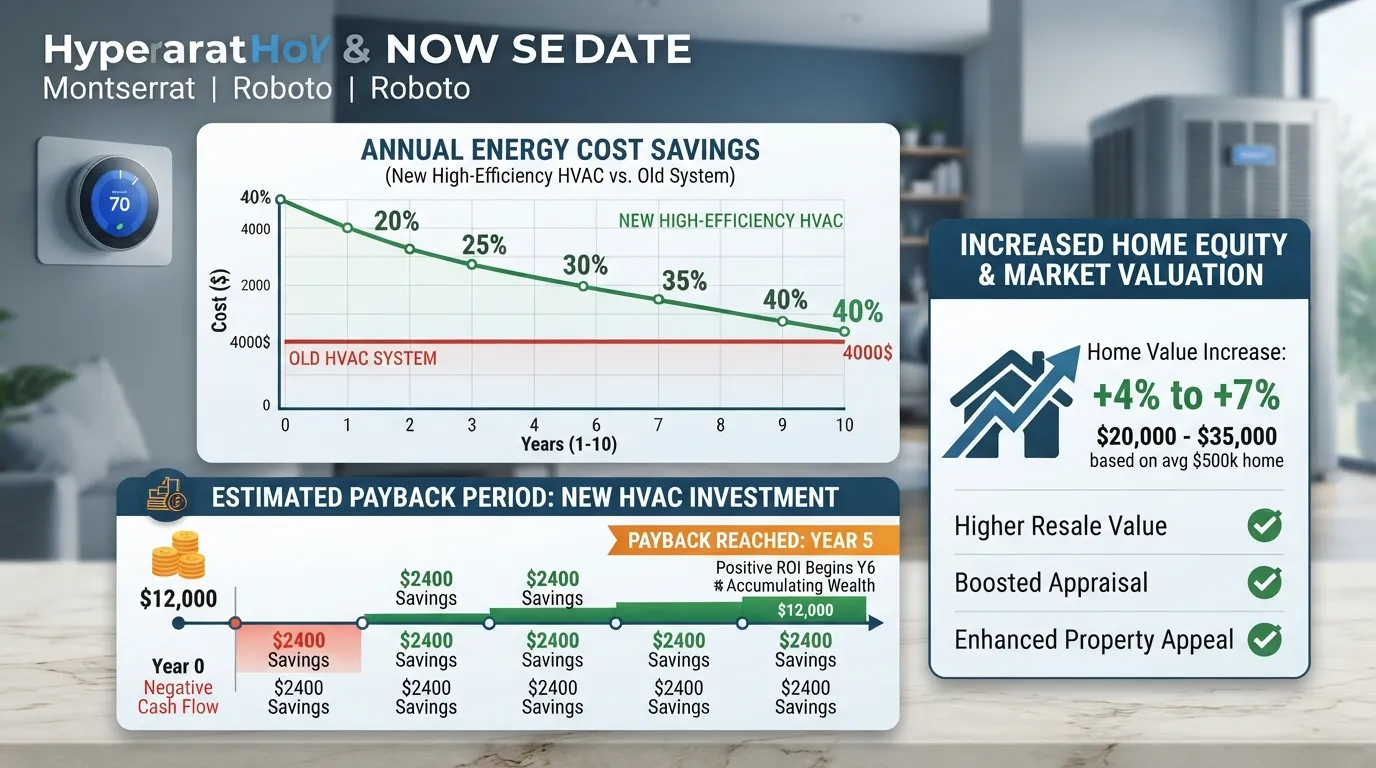 A new HVAC system typically delivers a return on investment between 50% and 70%, depending on equipment efficiency, local climate demands, and current real estate trends. While it rarely translates to a full dollar-for-dollar cash return, it acts as a critical asset that preserves home equity and prevents purchase price drops.
Average ROI Percentage 30–60% Range Explained
Most mid-range climate control updates return roughly half to two-thirds of their initial installation cost at the closing table. This percentage reflects how real estate markets value functional mechanical improvements versus aesthetic upgrades.
- Baseline Recovery: Standard equipment replacements consistently capture a 50% to 65% cost-recouped ratio.
- Energy Premiums: High-efficiency heat pump upgrades or complete system electrification often command slightly higher localized recovery rates.
- Appraisal Adjustments: Appraisers calculate value based on remaining system lifespan, rewarding brand-new warranties over aging units.
Why HVAC Rarely Gives 100% Dollar-for-Dollar Return
Mechanical infrastructure is viewed by the market as a baseline requirement rather than an optional luxury feature. Buyers expect a home to keep them warm in the winter and cool in the summer without immediate failure risks.
- Invisible Value: Unlike a remodeled kitchen or a new deck, a hidden furnace or duct system does not immediately drive emotional buyer bidding wars.
- Depreciation Factors: The moment new equipment is turned on, it begins depreciating physically, even though its operational lifespan is maximized.
- Maintenance Expectation: Real estate markets treat functional climate control as a standard expectation rather than a value-additive luxury.
What Remodeling Industry Cost vs Value Data Actually Shows
Comprehensive tracking from industry benchmarks, such as the Journal of Light Construction Cost vs. Value Report, confirms that heating and cooling updates hold steady economic positions relative to major structural overhauls. Rather than viewing an installation as a short-term financial flip, it should be measured as risk mitigation.
- Defensive Pricing: Houses with broken or ancient systems routinely suffer price reductions or repair credits far exceeding replacement costs.
- Days on Market: Homes featuring updated efficiency packages sell faster because buyers bypass immediate capital expenditure hurdles.
- Long-Term Savings: Cumulative monthly utility savings bridge the gap between initial layout costs and final resale figures.
HVAC Cost vs Value by Home Size 2026 Breakdown
Property square footage dictates both the equipment tonnage required and the overall financial return you can expect at resale. Evaluating replacement metrics by home size helps homeowners accurately forecast their upfront installation budget alongside expected equity gains.
HVAC Cost for 1000 sq ft Home
Compact living spaces require smaller capacity systems, typically ranging from 1.5 to 2 tons of cooling capacity. Lower equipment expenses mean the overall project footprint remains affordable while still yielding an attractive value-to-cost ratio.
- Average Installation Cost: $3,500 to $5,500 for standard split systems.
- Estimated Home Value Add: $2,200 to $3,500 in direct resale bump.
- Appraisal Benefit: Eliminates major deferred maintenance flags for entry-level buyers.
HVAC Cost for 1200–1500 sq ft Home
Mid-sized single-family houses and larger townhomes typically demand a 2.5-ton system to maintain balanced airflow and humidity control. This scale represents the most common residential configuration across suburban real estate markets.
- Average Installation Cost: $5,000 to $7,500 depending on efficiency ratings.
- Estimated Home Value Add: $3,200 to $5,000 at closing.
- Market Appeal: Attracts family buyers who heavily scrutinize utility efficiency and mechanical reliability.
HVAC Cost for 1600–2000 sq ft Home
Larger suburban properties or multi-level layouts require 3 to 4 tons of HVAC capacity to ensure even climate distribution. While upfront capital expenditure is higher, the absolute protection against buyer repair credits is substantial.
- Average Installation Cost: $7,000 to $11,000 for high-efficiency configurations.
- Estimated Home Value Add: $4,500 to $7,500 in equity enhancement.
- Risk Mitigation: Prevents buyers from demanding massive price concessions due to aging infrastructure.
Old or Broken HVAC System How It Hurts Your Sale Price
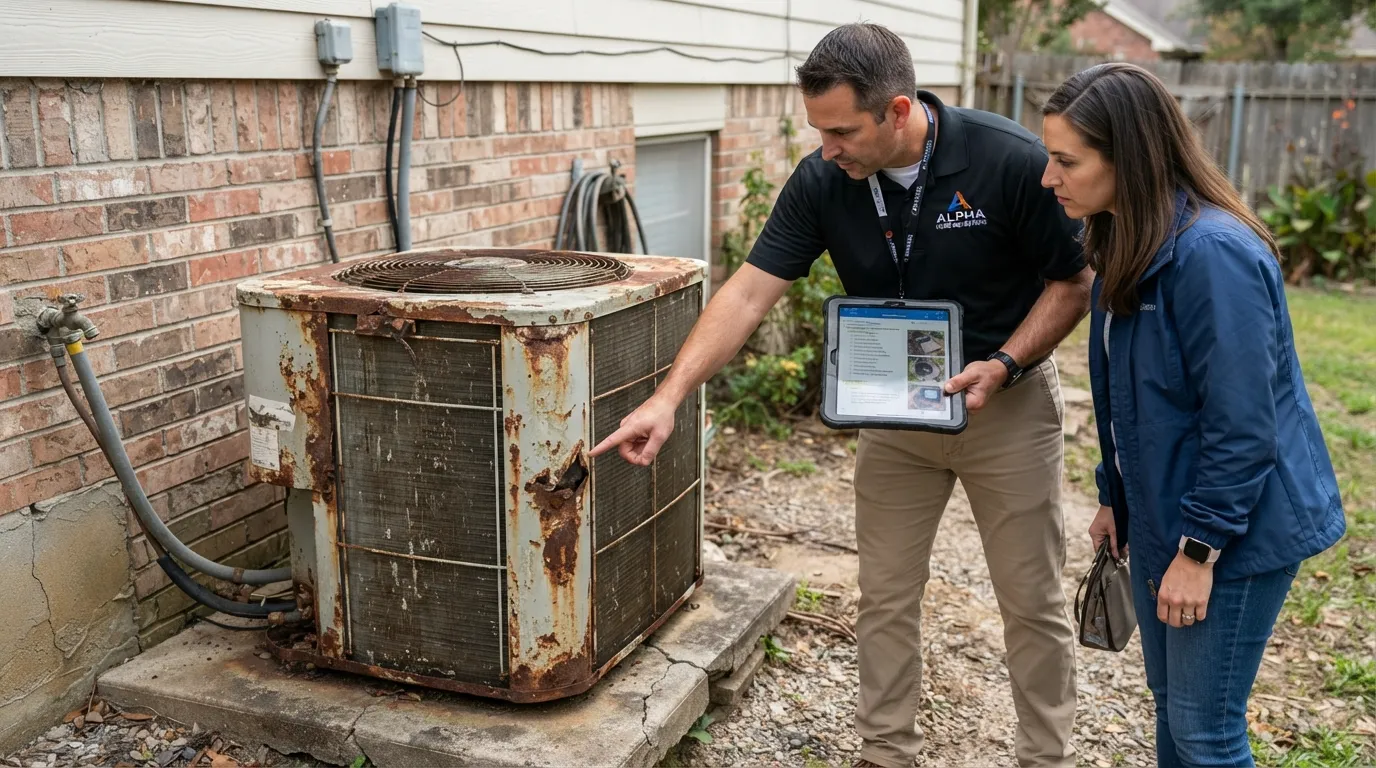 An aging or malfunctioning HVAC system acts as a major red flag for prospective home buyers during negotiations. Instead of simply ignoring outdated infrastructure, buyers aggressively leverage worn-out heating and cooling units to slash thousands off your asking price or demand substantial repair concessions.
How Buyers Use a Bad HVAC System as a Negotiation Tool
Home inspectors routinely flag outdated or failing furnaces and air conditioners in their final reports. Armed with these findings, buyers view mechanical deficiencies as open invitations to lower their purchase offers well below market value.
- Leverage for Price Cuts: Buyers amplify estimated replacement costs to justify deep discounts on the final purchase price.
- Perception of Neglect: An old system signals to buyers that other hidden maintenance issues might exist throughout the property.
- Financing Hurdles: Severe structural or mechanical failures can occasionally stall mortgage underwriting if loan programs require immediate habitability clearances.
Repair Credits vs. Full Replacement What Costs You More
Attempting to patch up an ancient system right before listing often backfires financially. Homeowners frequently spend money on emergency service calls only to watch buyers demand a full replacement credit anyway.
- The Patch-Work Trap: Sinking hundreds of dollars into frequent repairs on a 15-year-old unit offers zero return at resale.
- Inflated Credit Demands: Buyers often ask for inflated contractor quotes to replace systems themselves, costing you more than managing the project independently.
- Transaction Delays: Last-minute credit negotiations can derail closing timelines and cause anxious buyers to walk away entirely.
What Happens During Home Inspection
During a standard real estate transaction, the home inspector tests the HVAC cycle and records the manufacture date. If the unit fails operational tests or exceeds its expected lifespan, the resulting domino effect damages your seller leverage.
- Inspection Red Flags: Dated service logs or rusted internal components immediately trigger mandatory buyer disclosure discussions.
- Immediate Concession Requests: Expect buyers to demand a $5,000 to $10,000 credit adjustment right before closing contracts.
- Stalled Momentum: Lengthy back-and-forth negotiations over mechanical credits frequently jeopardize smooth home sales.
Should You Replace a 20-Year-Old Furnace Before Selling?
Replacing a 20-year-old furnace before putting your house on the market is often a smart defensive move that prevents stalled sales and aggressive buyer negotiation. While the upgrade requires upfront capital, eliminating a glaring inspection red flag keeps your home competitive and protects your asking price.
Signs Your System Is Too Old to Sell As-Is
Most residential heating units operate efficiently for 15 to 20 years before wearing down. If your furnace is entering its third decade, visible wear and tear will instantly alert inspectors and buyers to upcoming failure risks.
- Exceeded Lifespan: Operating past the 20-year mark means parts are obsolete and breakdown risks are exceptionally high.
- Frequent Service Calls: If you are constantly paying for repairs, the unit has reached the end of its reliable operational life.
- Aesthetic Deterioration: Rust, loud operational noises, and cracked heat exchangers signal total mechanical exhaustion.
When Replacement Makes Financial Sense Decision Checklist
Investing in a brand-new installation prior to listing makes strong financial sense under specific market and property conditions. Evaluate your situation against key operational checkpoints before contacting contractors.
- Competitive Neighborhoods: If competing homes feature modern HVAC upgrades, an ancient furnace will cause buyers to pass on your property.
- Financing Requirements: FHA or VA loan guidelines sometimes mandate functional mechanical systems to clear underwriting inspections.
- Added Marketing Power: A transferable manufacturer warranty acts as a powerful selling point in listing descriptions.
When It’s Better to Leave It and Offer a Credit Instead
There are instances where installing a brand-new system right before selling is unnecessary or financially unviable. In these scenarios, offering a targeted closing credit serves as a practical alternative.
- Tight Seller Budgets: If liquidity is low and upfront cash for an emergency replacement is unavailable, withholding funds for a credit is safer.
- Custom System Demands: Allowing the buyer to choose their preferred efficiency tier or contractor prevents wasted out-of-pocket spending.
- Fast-Paced Seller Markets: In aggressive seller markets with low inventory, buyers are often willing to overlook aging mechanics without major fuss.
Tax Credits & Rebates on New HVAC Systems 2026
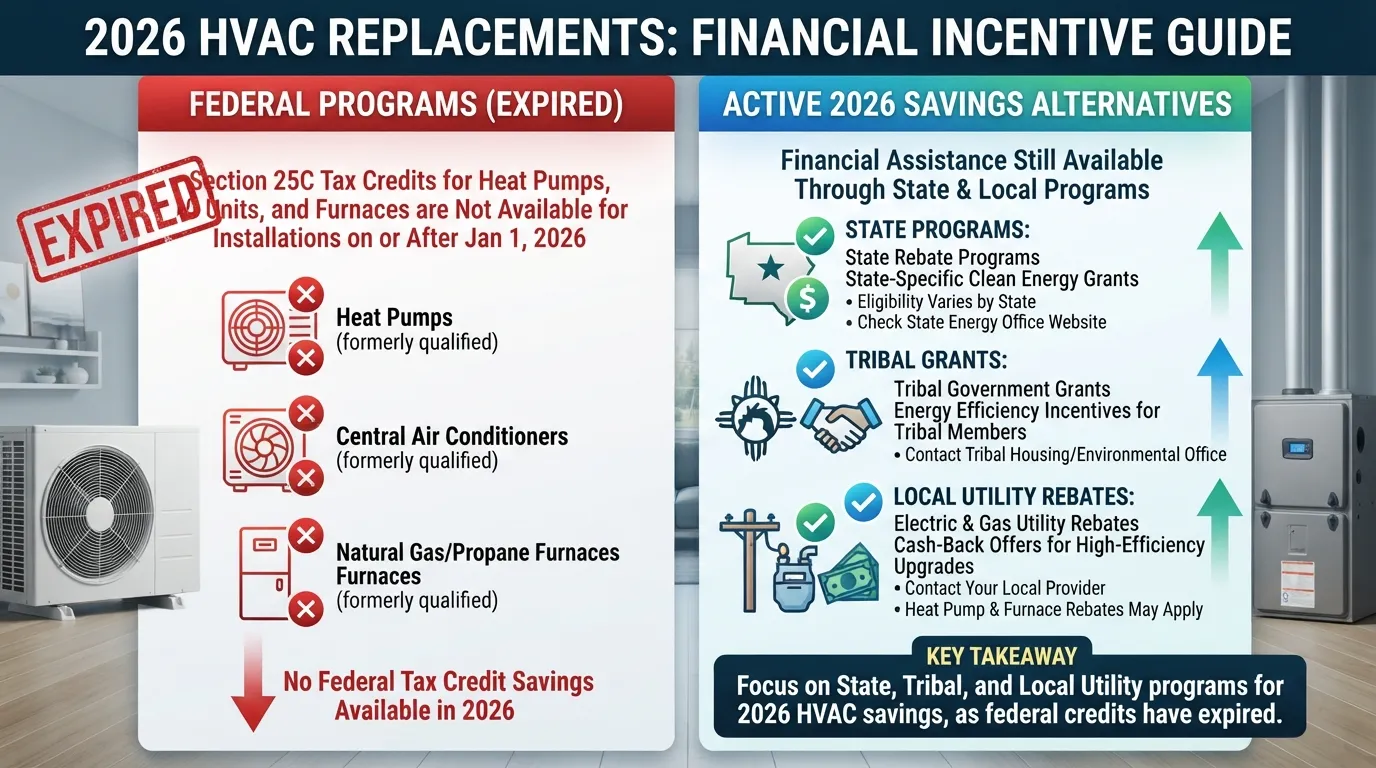 Leveraging available tax incentives and utility rebates significantly lowers the net out-of-pocket expense of a new HVAC installation, directly improving your overall return on investment. Factoring these savings into your pre-listing budget transforms a costly mechanical replacement into a financially optimized home improvement.
Federal Energy Efficiency Tax Credits Explained
While historic federal programs like Section 25C have evolved, strategic homeowners can still evaluate remaining federal incentives alongside updated filing rules for recent installations. Navigating manufacturer certification requirements ensures you capture every eligible dollar during tax season.
- Filing Previous Installations: Systems installed and placed in service during previous tax cycles remain eligible for historic credit claims using IRS Form 5695.
- Product Identification Numbers: Modern IRS compliance mandates unique manufacturer PINs for qualifying high-efficiency equipment validation.
- Matched System Rules: Federal guidelines historically require indoor and outdoor components to operate as a certified matched set to qualify for energy credits.
How Rebates Reduce Your Net Investment
Local utility providers and state-level energy initiatives frequently offer aggressive cash-back rebates for upgrading to high-efficiency heat pumps or advanced central air systems. These localized programs bridge the gap between gross installation costs and net property equity gains.
- Instant Utility Cash-Back: Regional electric and gas providers offer direct rebates ranging from hundreds to thousands of dollars upon verified installation.
- Lower Net Capital Outlay: Reducing your initial cash layout via rebates accelerates your financial recovery percentage at the closing table.
- Enhanced Marketability: Highlighting energy-efficient certifications and local rebate participation in listing descriptions attracts eco-conscious buyers.
Ductless Mini-Split vs. Central HVAC Which Adds More Resale Value?
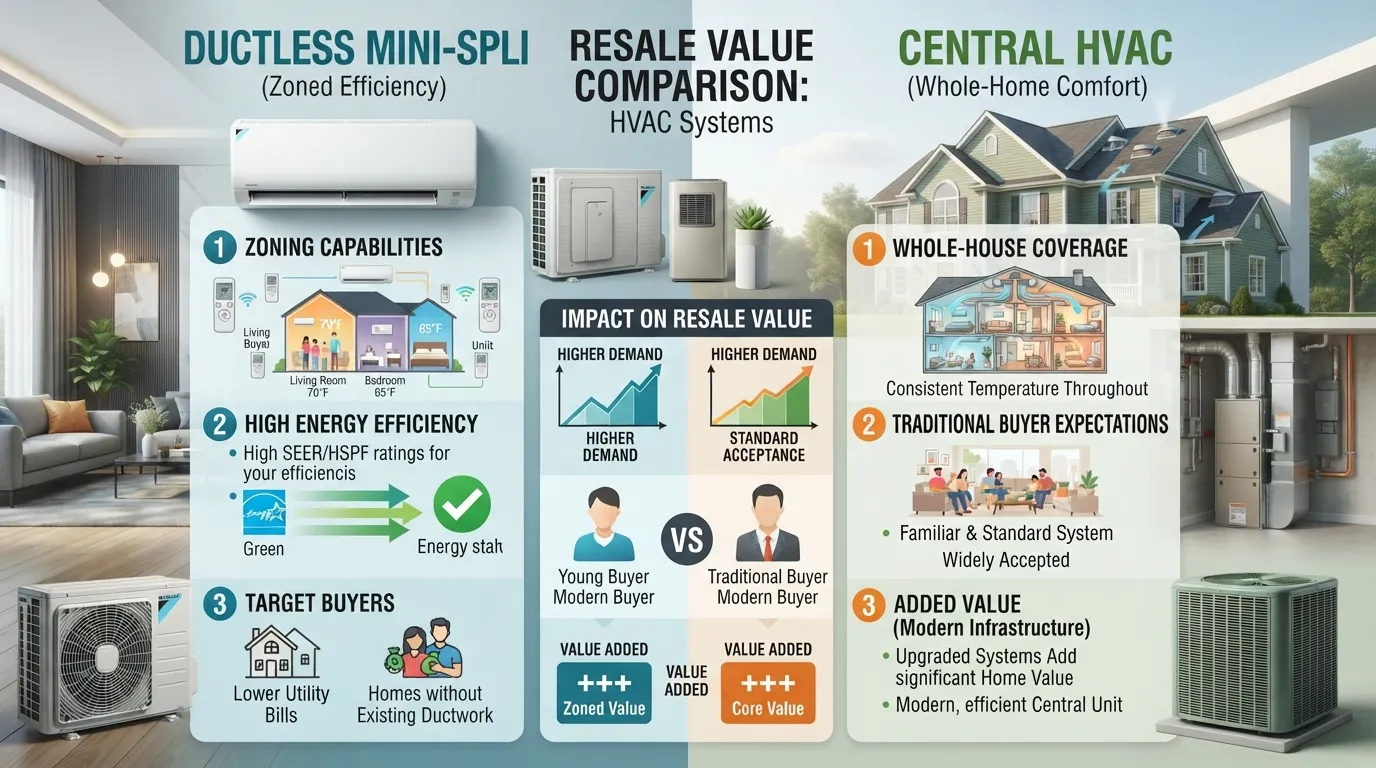 Choosing between a traditional central HVAC setup and a modern ductless mini-split system significantly impacts both buyer appeal and appraisal outcomes. While both options enhance modern home comfort, real estate markets often weigh centralized infrastructure differently than zoned wall units.
Buyer Perception: Central vs. Ductless
Prospective buyers view climate control systems through the lens of convenience, visual integration, and whole-house comfort. Each system type triggers distinct psychological reactions during property viewings.
- Central HVAC Appeal: Buyers love the hidden aesthetic of central ductwork, where temperature control is invisible and uniform across every room.
- Ductless Mini-Split Appeal: Eco-conscious buyers and owners of older homes appreciate zoned efficiency, individual room control, and lower monthly utility bills.
- Historic Home Value: In older properties lacking pre-existing ductwork, mini-splits add immense value by introducing modern cooling without destructive wall modifications.
Which One Appraisers Value More
Appraisers evaluate replacement cost, market standards, and regional buyer expectations when assigning equity value to mechanical upgrades.
- Standard Central Dominance: In traditional suburban housing tracts, central HVAC remains the expected baseline that appraisers easily integrate into comparable sales.
- Multi-Zone Multiplier: Multi-head ductless systems command strong appraisal value when installed in homes where central duct installation is physically impossible.
- Energy Rating Impact: High SEER-rated ductless heat pumps often score higher energy efficiency credits on appraisal evaluations than standard basic central units.
Best Choice Based on Home Type
Matching your climate upgrade to your specific architectural layout ensures you maximize your return on investment at resale.
- Suburban Single-Family Homes: Stick with central HVAC, as buyers expect unified duct systems in standard suburban floor plans.
- Homes with Additions or Garages: Use ductless mini-splits to solve localized temperature hot spots without overhauling existing central trunk lines.
- Older Urban Properties: Opt for ductless systems to bypass the prohibitive expense of retrofitting massive sheet metal ductwork into historic walls.
Best Time to Buy an HVAC System For Cost Savings + Selling Timeline
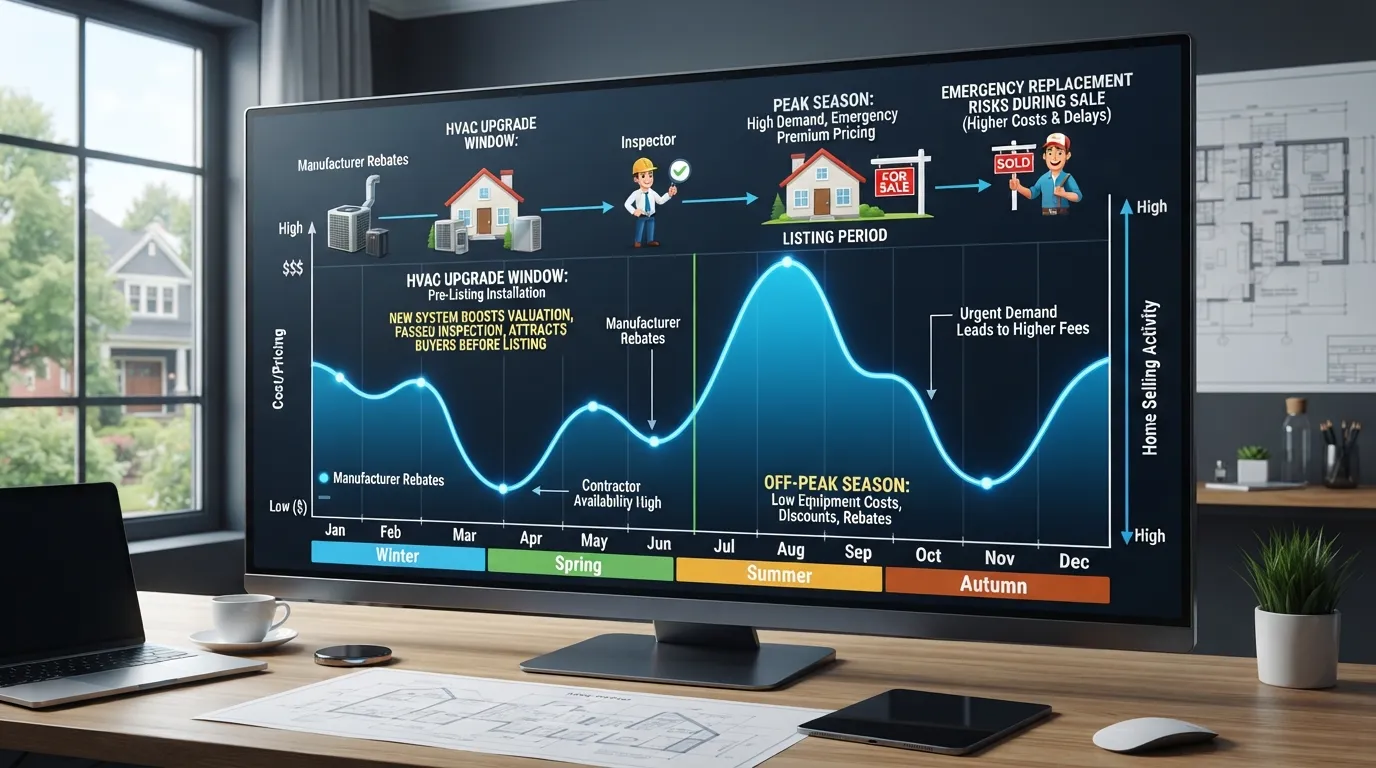
Timing your HVAC replacement strategically allows you to secure deep off-season contractor discounts while perfectly aligning with your upcoming real estate listing schedule. Synchronizing purchase savings with market entry prevents rushed installations and maximizes your net financial return.
Cheapest Season to Buy an HVAC Unit
HVAC contractors experience natural demand lulls during spring and fall, making these shoulder months the most cost-effective periods to purchase new equipment. Capitalizing on manufacturer promotions during these slow seasons reduces your upfront capital investment.
- Shoulder Season Discounts: April through May and September through October feature lower labor rates and aggressive dealer promotional pricing.
- Manufacturer Rebate Cycles: Equipment brands frequently launch seasonal equipment rebates during inventory transition months.
- Faster Scheduling: Off-peak scheduling ensures installation quality without the rush of emergency summer breakdowns or freezing winter overhauls.
How to Time It With Your Home Sale
Balancing equipment installation with your target real estate listing date ensures your new system operates at peak efficiency when buyers tour the property. Executing upgrades a few weeks prior to listing gives you ample time to collect warranty documentation for disclosures.
- Pre-Listing Buffer: Complete your HVAC upgrade 30 to 60 days before hitting the market to finalize maintenance logs and permits.
- Warranty Transfer Prep: Ensure new manufacturer warranties are fully registered and easily transferable to future owners as a marketing asset.
- Inspection Readiness: Freshly installed systems breeze through standard home inspections, completely eliminating buyer repair leverage.
Faster Sales & Buyer Confidence With a New System
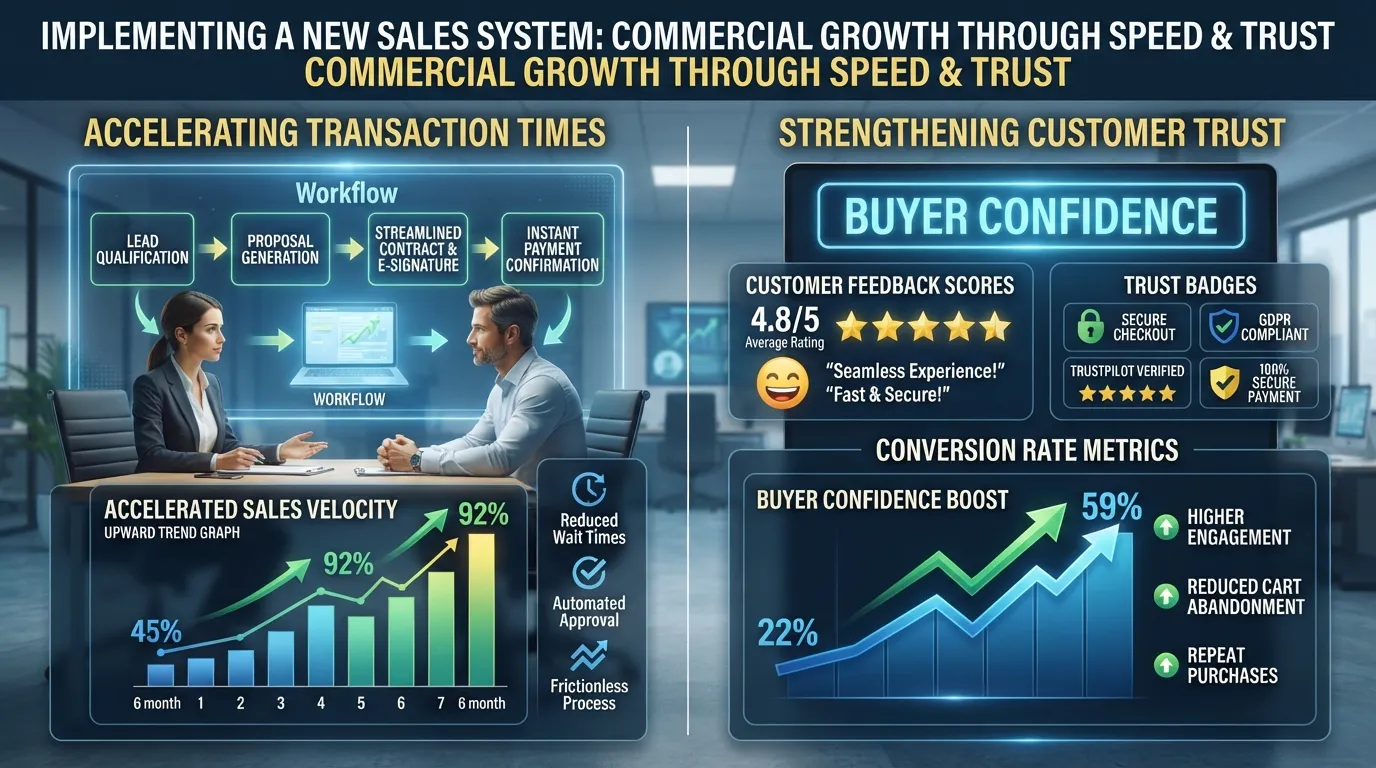 A brand-new HVAC system dramatically accelerates your home’s speed to sale by eliminating major mechanical anxieties and instilling immediate buyer confidence. Presenting a turnkey, move-in-ready property transforms technical infrastructure into a powerful closing incentive that drives competitive offers.
Why Move-In-Ready Homes Sell Quicker
Modern home buyers increasingly prioritize properties that require zero immediate capital expenditure or heavy maintenance after closing. When major mechanical hurdles are completely removed, buyer hesitation vanishes.
- Reduced Days on Market: Homes featuring updated roofs, plumbing, and climate systems consistently sell faster than properties requiring deferred maintenance updates.
- Eliminating Closing Friction: Buyers do not have to worry about negotiating repair credits or budgeting for emergency furnace replacements right after a down payment.
- Stronger Competitive Edge: In competitive housing markets, turnkey operational reliability often serves as the deciding factor between multiple competing offers.
Listing Language That Highlights HVAC as a Selling Point
Effectively marketing your new HVAC investment in listing descriptions captures buyer attention and justifies a premium asking price. Utilizing specific, value-driven terminology highlights mechanical peace of mind.
- Highlighting Energy Savings: Emphasize high SEER ratings or smart thermostat integration to appeal to utility-conscious buyers looking for low monthly overhead.
- Promoting Transferable Warranties: Explicitly state that a new multi-year manufacturer warranty transfers directly to the new homeowner for ultimate security.
- Showcasing Recent Upgrades: Frame the system update as a premium modern feature alongside recent kitchen or bathroom enhancements.
2026 HVAC Pricing & Best Brands Snapshot
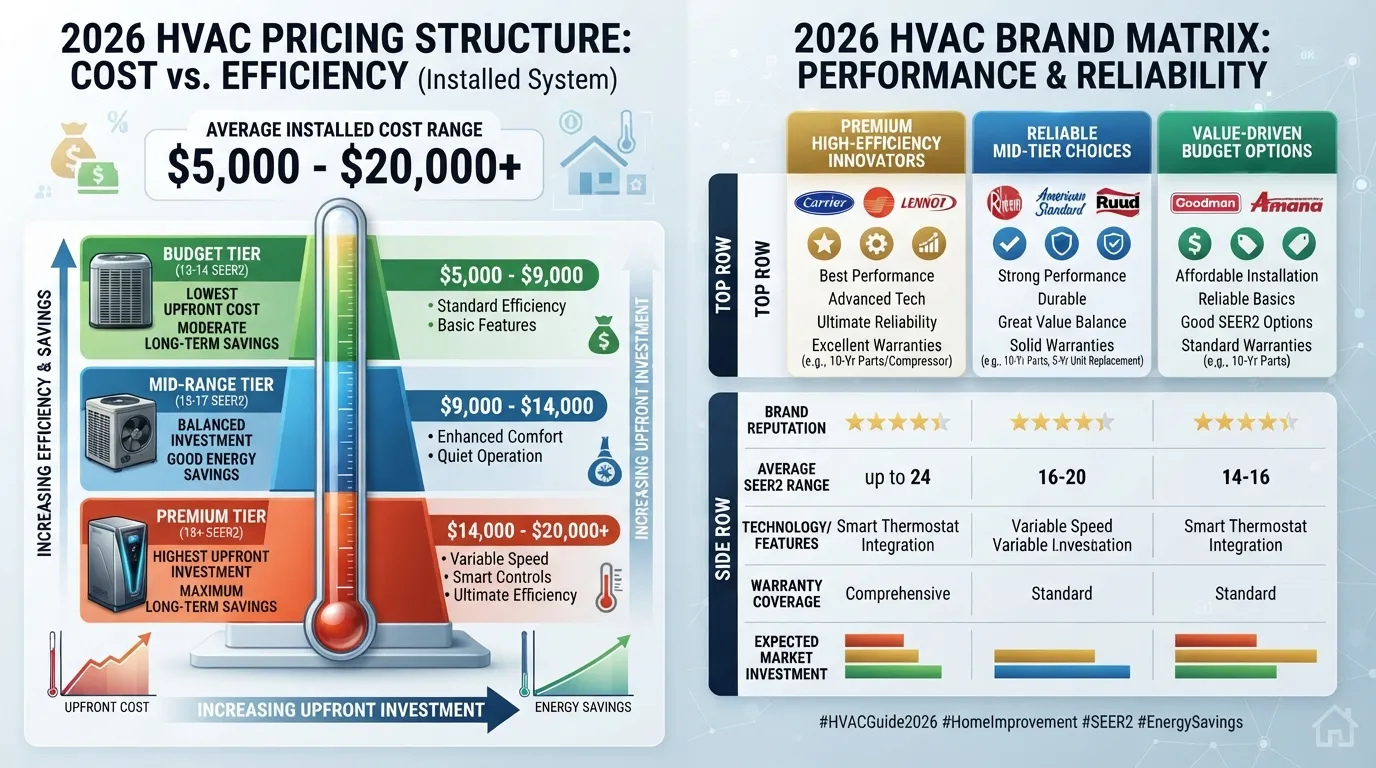 Navigating the climate control market requires understanding current equipment expenses and manufacturing shifts. Staying informed on industry adjustments helps homeowners strategically budget replacement projects while selecting reliable, high-performing equipment.
Why HVAC Prices Are Trending Up in 2026
Equipment retail values continue to face upward pressure due to macroeconomic factors and regulatory updates. Anticipating these adjustments ensures your home improvement budget accounts for realistic market expenses.
- Raw Material Inflation: Surging global costs for copper, aluminum, and steel directly impact the manufacturing of coils and electrical components.
- Refrigerant Transitions: Industry-wide mandates shifting production toward modern, eco-friendly A2L refrigerants introduce temporary re-tooling expenses.
- Manufacturer Price Adjustments: Major industry brands have rolled out baseline equipment price bumps ranging from 5% to 10% to offset supply chain and tariff pressures.
Top-Rated Brands This Year Reliability + Efficiency
Selecting an industry-trusted manufacturer safeguards your investment by offering robust warranty support and exceptional energy ratings. Leading brands balance long-term durability with advanced variable-speed technology.
- Carrier: Recognized for premium engineering and exceptional energy-efficiency ratings through its advanced variable-speed Infinity series.
- Trane: Renowned for rugged mechanical construction and reliable performance under extreme weather conditions.
- Goodman & Amana: Exceptional budget-friendly choices offering strong value and competitive warranty coverage for cost-conscious sellers.
Evaluating these top-tier options helps you choose a system that satisfies potential buyers while maximizing your home’s ultimate resale equity.
Homeowner & Realtor Insights E-E-A-T Section
 From real estate professionals and home sellers reveals the true impact of mechanical upgrades during high-stakes property transactions. Grounding your replacement decisions in verified market feedback bridges the gap between theoretical calculations and practical closing results.
What Realtors Say About HVAC and Home Value
Top-producing real estate agents consistently report that mechanical condition dictates whether a home sails through negotiations or stalls out during inspections. Experienced listing specialists share unanimous insights regarding worn-out climate control infrastructure.
- Deal Killers: Veteran agents note that ancient heating units frequently cause hesitant buyers to walk away before contracts are finalized.
- Staging Mechanics: Realtors emphasize that a clean, modern thermostat and whisper-quiet vents establish an immediate sense of quality the moment buyers walk through the door.
- Credit Deductions: Agents confirm that asking price reductions due to deferred mechanical maintenance almost always exceed what the seller would have spent on a proactive replacement.
Homeowner Who Replaced HVAC Before Listing
Examining a documented seller scenario highlights the direct financial advantages of upgrading aging infrastructure ahead of a market launch. Proactive planning transforms a potential liability into a verified selling advantage.
- The Pre-Listing Dilemma: A suburban homeowner faced an appraisal risk with an 18-year-old gas furnace before listing their three-bedroom property.
- The Proactive Investment: Rather than risking a $7,500 negotiation credit deduction, the owner invested $6,200 in a modern high-efficiency replacement system.
- The Closing Result: The home cleared its inspection without a single mechanical flag, securing a competitive, full-price offer within five days on the market.
Frequently Asked Questions
Get direct, authoritative answers to the most common questions homeowners ask regarding HVAC replacements, property equity, installation costs, and real estate market impacts.
How much does a new HVAC system increase home value?
A brand-new HVAC system typically recovers roughly 60% to 70% of its initial installation cost in direct home resale value. While it rarely yields a 100% dollar-for-dollar return, it preserves property equity and prevents buyers from demanding steep repair credits.
- Equity Protection: Appraisers view modern systems as major functional assets that eliminate deferred maintenance penalties.
- Average Recovery: Most mid-range installations add thousands to closing sale prices depending on regional climate demands.
How much is a new HVAC system for a 2000 sq ft house?
Equipping a 2,000-square-foot home typically requires a 3.5 to 4-ton cooling capacity combined with a matching furnace or heat pump. Total project expenses vary based on chosen efficiency tiers.
- Cost Range: Expect to invest between $7,000 and $11,000 for standard to high-efficiency configurations.
- Value Add: This size range generally generates $4,500 to $7,500 in direct home equity enhancement at resale.
Is ductless HVAC as good as central for resale value?
Central HVAC remains the gold standard and expected baseline for traditional single-family suburban homes. However, ductless mini-splits add exceptional value in older historic properties or finished spaces lacking pre-existing ductwork.
- Suburban Preference: Buyers in standard neighborhoods heavily favor hidden, whole-house central duct networks.
- Zoned Efficiency: Mini-splits score high appraisal points when solving temperature challenges in additions or older urban homes.
Is there a tax credit for a new furnace?
Yes, strategic homeowners can leverage federal energy-efficiency programs and state-level incentives when installing qualifying high-efficiency furnaces or heat pumps. Meeting strict SEER2 and AFUE certification standards is required.
- Federal Savings: Historic tax credit structures help offset net installation expenses when filing annual returns using proper IRS forms.
- Utility Rebates: Local gas and electric providers frequently offer instant cash-back rebates for energy-star-rated upgrades.
How often should HVAC be replaced?
Most residential heating and cooling systems operate reliably for 15 to 20 years before physical wear and plummeting efficiency necessitate replacement. Proactive planning prevents emergency failures right before listing a property.
- Lifespan Expectancy: Air conditioners typically last 12 to 15 years, while well-maintained gas furnaces can reach up to 20 years.
- Warning Signs: Frequent repairs, rising utility bills, and loud operational noises indicate your unit has reached the end of its useful life.
Does replacing HVAC increase home value more than other upgrades?
Mechanical infrastructure updates provide lower visual excitement than kitchen or bathroom renovations, but they offer vastly superior risk management. Instead of driving bidding wars, they protect your asking price from aggressive buyer deductions.
- Defensive Value: Aesthetic updates improve emotional appeal, whereas new HVAC eliminates critical inspection red flags.
- Reliability Factor: Buyers prioritize functional safety and low maintenance over luxury cosmetic finishes when evaluating major property investments.
Final Verdict Is It Worth It for You?
Deciding whether to install a new HVAC system before putting your home on the market depends entirely on your system’s current age, local real estate competition, and your target listing timeline. Evaluating these core factors ensures your capital investment yields maximum financial protection at closing.
Quick Decision Checklist
Reviewing your property against key operational benchmarks helps clarify whether an immediate replacement will pay off or if a targeted closing credit is your best strategic path forward.
- System Age & Condition: If your furnace or AC unit is over 15 to 20 years old and requires frequent repairs, replacement is usually the safest financial move.
- Competitive Market Demands: In buyer-leaning markets with high inventory, having a brand-new, worry-free mechanical system gives your property an instant competitive edge.
- Inspection Preparedness: Avoiding last-minute repair credits and panicked negotiations makes proactive upgrades well worth the upfront expense.
When to Replace vs. When to Skip It
Knowing when to pull the trigger on a new installation versus holding off saves you from unnecessary out-of-pocket spending during a stressful home sale.
- Replace Immediately If: The current unit fails completely, your local market heavily penalizes deferred maintenance, or financing requirements mandate a functional inspection clearance.
- Skip and Credit If: Your budget is tight, you are selling in an aggressive seller’s market where buyers waive inspections, or you prefer giving the buyer customization flexibility.
Assessing your unique timeline and property condition allows you to transform necessary mechanical maintenance into a powerful, equity-protecting asset.

Oscar Vance | Master Plumber & Drainage Expert
Meet Oscar Vance, a licensed master plumber sharing practical solutions on residential repairs, preventive maintenance, and thoughtful home upkeep.