What Are Energy-Efficient HVAC Systems for Commercial Buildings?
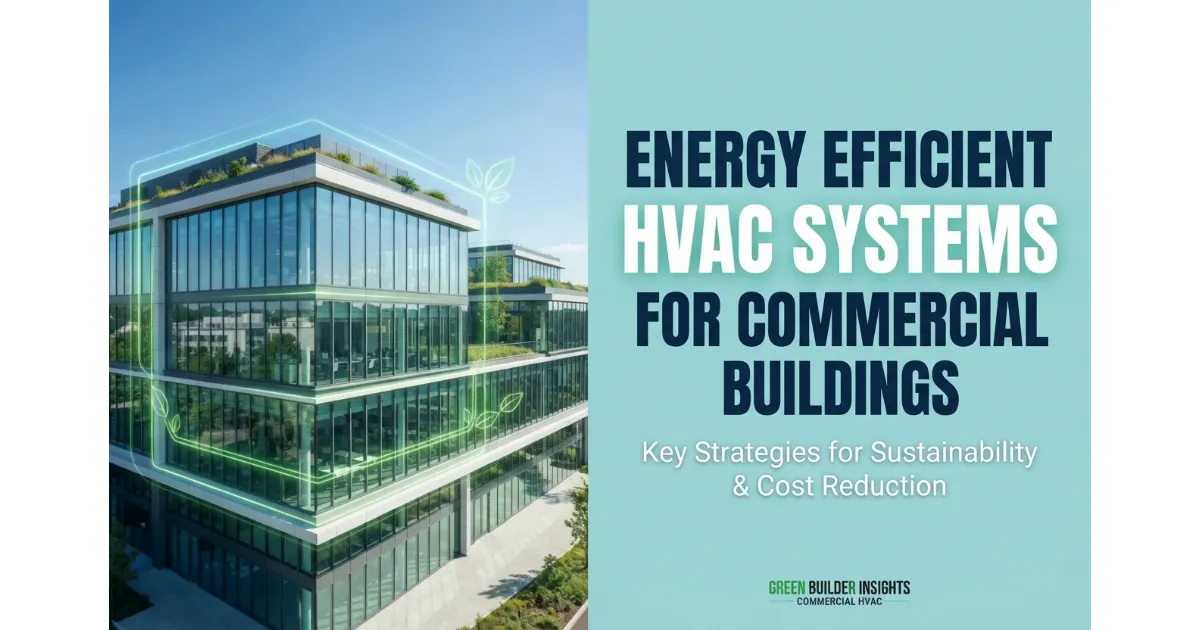 Energy-efficient HVAC systems for commercial buildings are advanced heating, ventilation, and air conditioning technologies engineered to minimize power consumption while optimizing indoor environmental quality. By integrating variable-speed compressors, smart building automation, and high-performance heat recovery mechanisms, these systems drastically lower operational carbon footprints and utility overhead.
Energy-Efficient HVAC in One Paragraph
Modern commercial energy-efficient HVAC units utilize state-of-the-art engineering to regulate large-scale indoor climates with minimal energy waste. Because space cooling accounts for roughly 15 percent of total electricity consumption in commercial buildings, upgrading to these systems is essential for achieving long-term sustainability and compliance.
- Reduces overall electricity consumption by deploying variable refrigerant flow (VRF) and inverter-driven compressors.
- Integrates smart sensors to adjust airflow dynamically based on real-time occupancy and thermal loads.
- Enhances tenant comfort by maintaining consistent temperatures and optimized humidity control.
Why This Matters Now 2026 Energy Codes Context
Strict 2026 energy codes and building decarbonization mandates require facility managers to abandon legacy equipment in favor of high-efficiency alternatives. Non-compliance risks severe financial penalties, while optimized systems directly protect asset valuations and reduce sky-high utility costs.
- Stricter municipal building performance standards demand continuous verification of lower greenhouse gas emissions.
- Elevated utility costs make energy efficiency a core driver of commercial property net operating income (NOI).
- Advanced filtration and ventilation protocols simultaneously safeguard indoor air quality, meeting post-pandemic health benchmarks.
Types of Energy-Efficient Commercial HVAC Systems
Choosing the right energy-efficient HVAC system depends on building size, climate zone, and operational demands. Commercial facilities typically leverage advanced technologies like variable refrigerant flow, heat pumps, and high-performance rooftop units to minimize energy draw while maintaining optimal indoor climate control.
Variable Refrigerant Flow VRF Systems
VRF systems utilize advanced inverter compressors to regulate refrigerant flow precisely according to varying building loads. This modular approach allows simultaneous heating and cooling across different zones, drastically reducing energy waste compared to legacy constant-volume systems.
- Delivers superior part-load efficiency through dynamic speed modulation.
- Eliminates energy losses associated with traditional ductwork by piping refrigerant directly to zone terminals.
- Provides independent zone control, ideal for multi-tenant commercial office buildings.
Commercial Heat Pumps
Modern commercial heat pumps transfer heat rather than generating it combustion-style, achieving an exceptionally high Coefficient of Performance (COP). They harness ambient energy from the air or ground to deliver reliable year-round climate conditioning.
- Operates with high efficiency even in sub-freezing ambient temperatures using enhanced vapor injection technology.
- Reduces direct fossil-fuel reliance by substituting natural gas boilers with electric heating cycles.
- Qualifies facilities for valuable green building tax incentives and decarbonization rebates.
Geothermal HVAC Systems
Geothermal or ground-source heat pump systems leverage the stable underground temperature via a closed or open geothermal loop. By trading heat with the earth, these systems achieve peak thermodynamic efficiency.
- Offers the lowest long-term operational and maintenance costs of any commercial HVAC technology.
- Features extended equipment lifespans due to protected underground components and minimal mechanical stress.
- Provides consistent heating and cooling regardless of extreme surface weather fluctuations.
High-Efficiency Rooftop Units RTUs
Modern commercial rooftop units combine ventilation, heating, and cooling into a single packaged outdoor chassis. Premium units, such as Daikin RTU pricing models ranging between $8,780 and $20,470 depending on tonnage, integrate advanced economizers and variable-speed blowers.
- Engineered in various tonnage capacities to scale efficiently across small retail spaces to large warehouses.
- Reduces installation footprint and interior noise by housing core mechanical components on the roof.
- Simplifies scheduled maintenance through centralized access panels and modular plug-and-play parts.
The $5000 Rule for HVAC Systems Repair or Replace?
 Deciding whether to fix a failing commercial heating and ventilation unit or invest in a brand-new system is a high-stakes financial choice. Facility managers often rely on established valuation frameworks to prevent sinking capital into obsolete infrastructure.
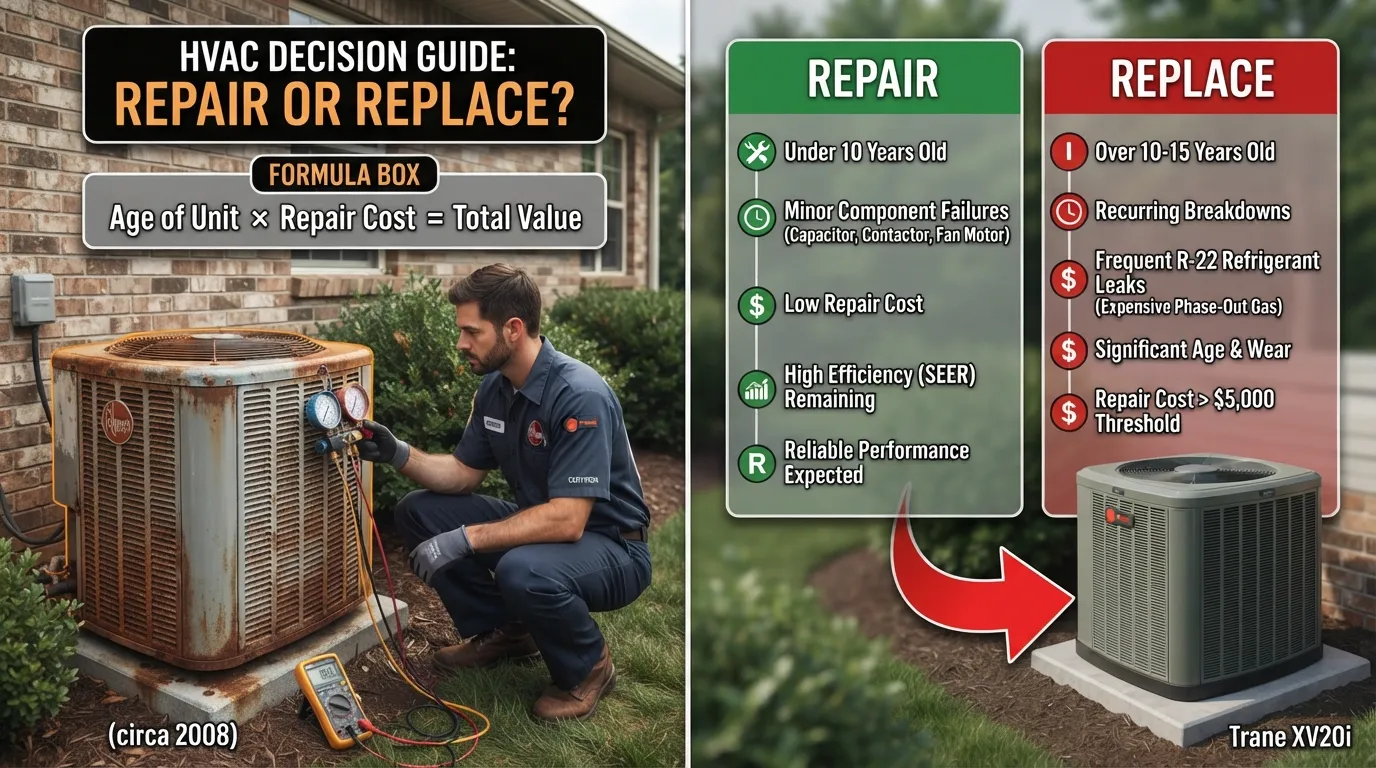
What Is the $5000 Rule? Formula Explained
The dollar-value formula is a quick heuristic used to determine the financial viability of fixing aging equipment. Facility operators calculate this by multiplying the estimated age of the commercial unit in years by the current repair quotation in dollars.
- If the resulting product exceeds five thousand dollars, replacement is almost always the more economically sound decision.
- The formula bridges short-term repair fixes with long-term capital depreciation schedules.
- It prevents building owners from throwing good money after bad on units nearing the end of their operational lifecycle.
When to Repair vs Replace Your Commercial HVAC
While the valuation heuristic provides a baseline, technical conditions like component availability and energy efficiency ratings also dictate the final verdict. Evaluating failure frequency prevents unexpected downtime during peak operating seasons.
- Repair: Opt for a fix if the equipment is under ten years old, the malfunction is isolated, and repair costs fall well below the threshold limit.
- Replace: Invest in a new unit if the compressor fails, the system relies on phased-out refrigerants like R-22, or continuous breakdowns disrupt business operations.
- Efficiency Check: Weigh ongoing utility savings from a modern system against the upfront cost of full replacement.
Key Efficiency Technologies Behind Modern HVAC Systems
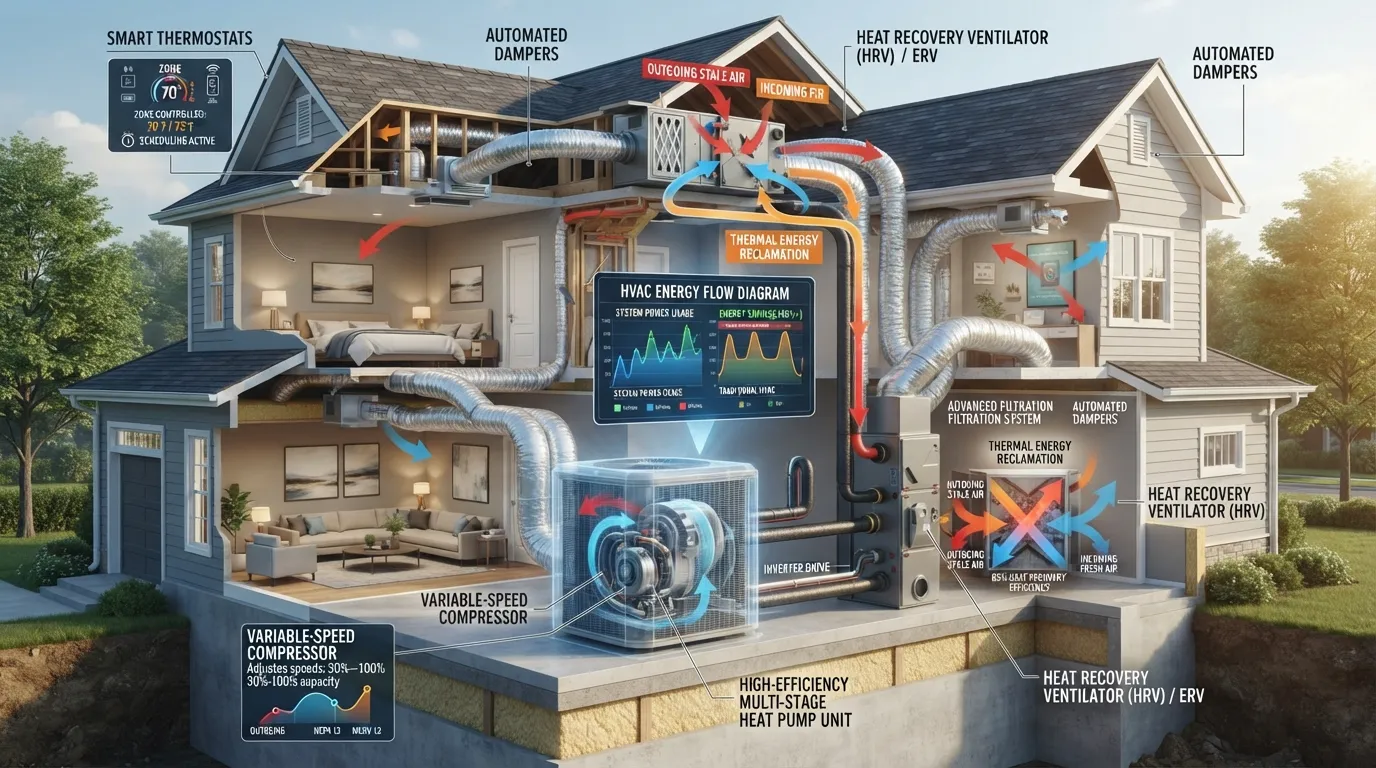 Modern commercial climate control relies on advanced mechanical and digital innovations to drastically cut power draw. Integrating these cutting-edge components ensures optimal thermal performance while minimizing operational utility overhead.
Variable Frequency Drives VFDs
Variable Frequency Drives regulate the rotational speed of electric motors in fans and pumps by adjusting incoming electrical frequency. Instead of running at full capacity continuously, motors scale down dynamically, yielding massive motor energy savings.
- Prevents mechanical shock and electrical strain during motor startup.
- Adjusts airflow precisely to real-time building thermal loads.
- Cuts fan motor power consumption by up to 50 percent during partial-load conditions.
Demand-Controlled Ventilation DCV
Demand-Controlled Ventilation optimizes outdoor air intake by continuously monitoring indoor occupancy levels using advanced CO2 sensors. Rather than cycling a fixed amount of outside air regardless of headcount, the system adjusts airflow dynamically.
- Reduces energy wasted on conditioning unnecessary volumes of untreated outdoor air.
- Maintains superior indoor air quality and compliance with strict ventilation standards.
- Lowers cooling and heating loads significantly during low-occupancy hours.
Energy Recovery Ventilation ERV
Energy Recovery Ventilation systems capture thermal energy from exhaust air streams and pre-condition incoming fresh outdoor air. This passive heat recovery process significantly lessens the thermal load on primary chillers and boilers.
- Transfers both sensible heat and latent moisture depending on seasonal humidity requirements.
- Improves overall system energy efficiency performance ratings across seasonal shifts.
- Supports net-zero building designs by recycling waste thermal energy efficiently.
The Honest Truth Why Some Contractors Avoid Heat Pumps
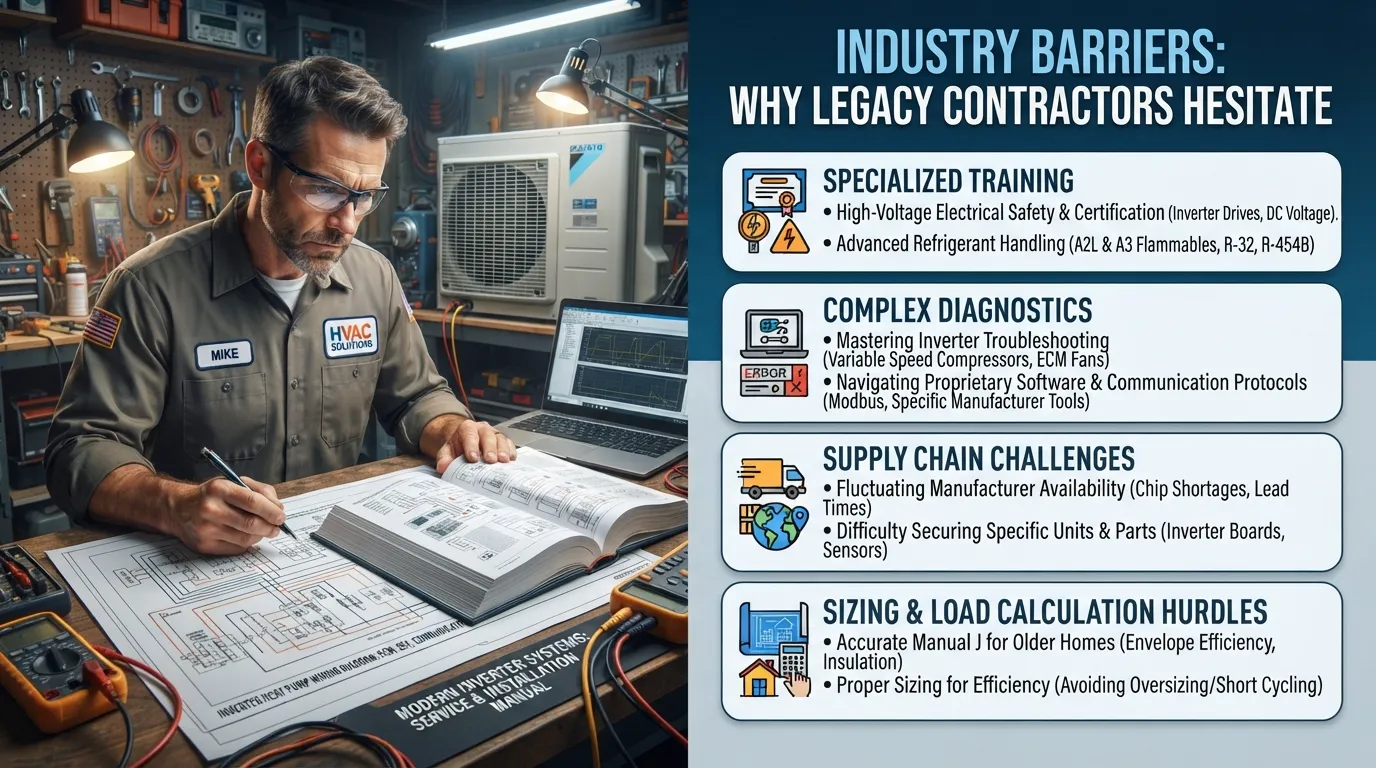 Despite their superior thermodynamic efficiency and lower long-term operating costs, some commercial contractors remain hesitant to recommend heat pumps. Understanding these industry biases and technical hurdles helps facility managers separate genuine infrastructure limitations from traditional resistance to change.
Common Contractor Concerns Installation Complexity Upfront Training Cost
Heat pump systems require specialized electrical engineering knowledge and precise refrigerant charge calculations that differ significantly from legacy gas furnaces. Many traditional mechanical contractors avoid them due to the steep learning curve and expensive re-tooling requirements.
- Complex wiring, multi-stage reversing valves, and advanced electronic controls demand rigorous ongoing technician certification.
- Upfront investment in specialized diagnostic equipment and specialized technician training deters smaller service shops.
- Incorrect sizing or improper installation of heat pump systems can lead to frequent cycling and performance complaints, raising warranty liabilities for contractors.
Situations Where a Heat Pump Isn’t the Right Fit
While modern units perform exceptionally well across varied climates, certain building profiles and geographic regions present severe performance challenges for standard air-source heat pumps. In these extreme edge cases, alternative solutions remain necessary.
- Extremely cold sub-zero environments can cause heating capacities to drop, forcing a heavy reliance on supplemental electric resistance heat.
- Buildings lacking robust electrical service infrastructure may face cost-prohibitive upgrades to handle the high electrical load drawn during peak resistance cycles.
- High-humidity industrial facilities often require specialized dehumidification equipment that standard heat pump cycles alone cannot efficiently manage.
Alternatives Worth Considering
When an air-source heat pump is ill-suited for a specific commercial layout, alternative high-efficiency mechanical systems can fill the gap. Facility managers can leverage hybrid or gas-driven technologies to maintain optimal climate performance.
- Hybrid Dual-Fuel Systems: Pair an electric heat pump with a high-efficiency gas boiler to automatically switch energy sources based on utility pricing and outdoor temperatures.
- VRF Gas-Driven Engines (GHP): Utilize natural gas engines to drive compressors, bypassing electrical grid capacity limitations while maintaining elite part-load efficiencies.
- Advanced Condensing Boilers: Deliver reliable high-temperature hydronic heating for older commercial structures that cannot easily support retrofitted ductless distribution networks.
Heat Pump Performance in Extreme Temperatures
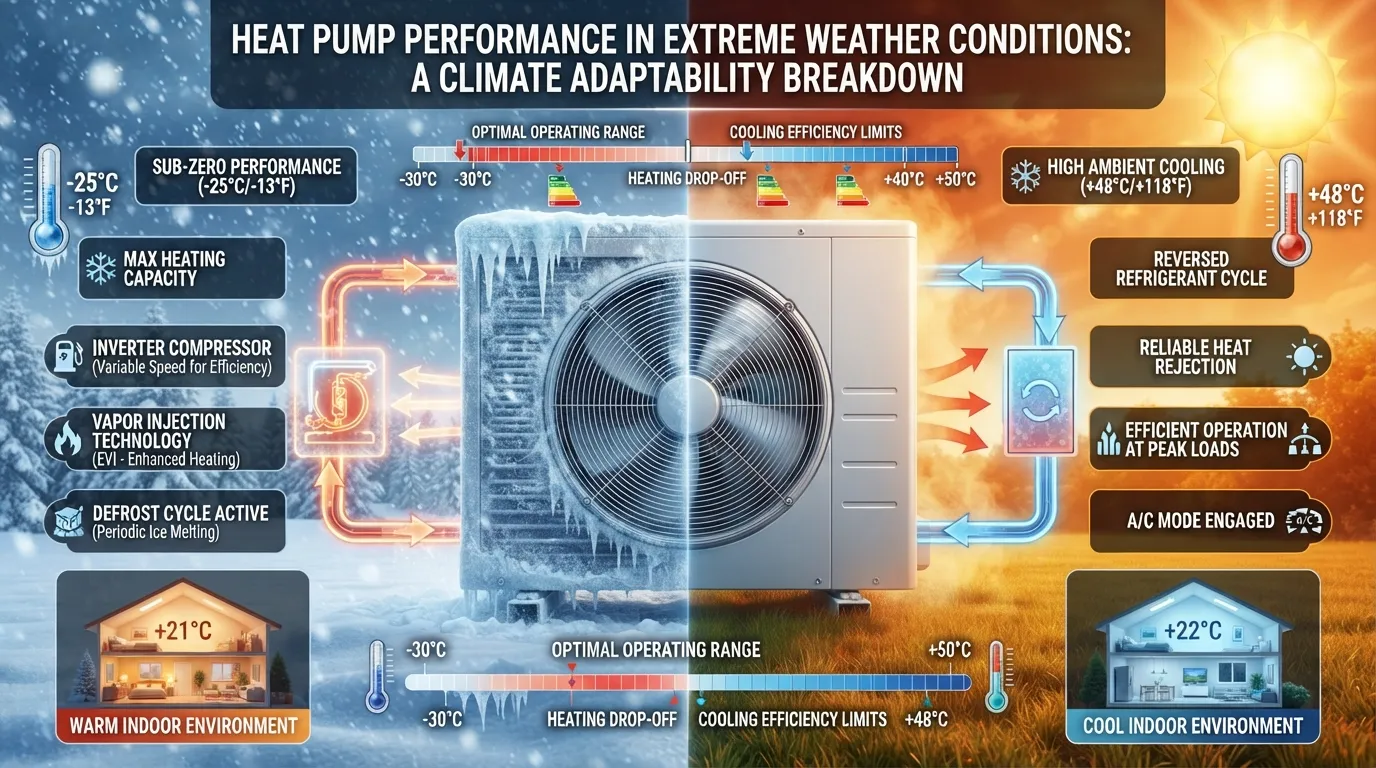 Understanding how commercial heat pumps behave under intense weather extremes is critical for accurate system sizing and year-round operational reliability. While legacy units struggled in harsh climates, advanced thermodynamic engineering has radically expanded their practical operating boundaries.
Performance in Extreme Heat 100°F+
When outdoor ambient temperatures soar past 100 degrees Fahrenheit, air-source heat pumps face heavier thermodynamic resistance when rejecting heat outdoors. This can lead to a minor drop-off in cooling capacity if the equipment is under-sized or if condenser coils suffer from restricted airflow.
- Compressors work overtime to compress high-temperature refrigerant, driving up power consumption and decreasing overall seasonal energy efficiency ratios.
- Proper unit sizing and regular coil maintenance prevent thermal throttling during intense summer heat waves.
- Smart staging and variable-speed fan modulation help stabilize indoor cooling performance even during peak heat conditions.
Performance in Cold Climates
In sub-freezing winter conditions, traditional heat pumps experience a sharp COP drop-off because extracting ambient heat from freezing air becomes thermodynamically challenging. Additionally, moisture accumulation on outdoor coils triggers an automated defrost cycle, temporarily shifting modes to melt ice buildup.
- Standard systems lose heating capacity as temperatures approach single digits, often requiring supplementary heating elements.
- The defrost cycle reverses the refrigeration loop periodically, which can cause brief fluctuations in indoor supply air temperatures.
- Proper outdoor unit placement and elevated mounting prevent snow drifts from blocking critical bottom drain paths.
Cold-Climate VRF Technology Newer Solutions
Modern cold-climate variable refrigerant flow (VRF) and air-source systems integrate enhanced vapor injection (EVI) and advanced inverter-driven compressors to maintain high performance in sub-zero environments. These innovations allow commercial units to deliver reliable heating even when outdoor air plummets well below zero.
- Maintains high heating capacities at extreme sub-zero temperatures without completely relying on auxiliary electric resistance heat.
- Utilizes flash injection technology to maintain adequate refrigerant mass flow and compressor protection under heavy thermal loads.
- Meets rigorous municipal decarbonization standards, making heat pumps viable even in northern commercial building markets.
Choosing the Right System by Building Type
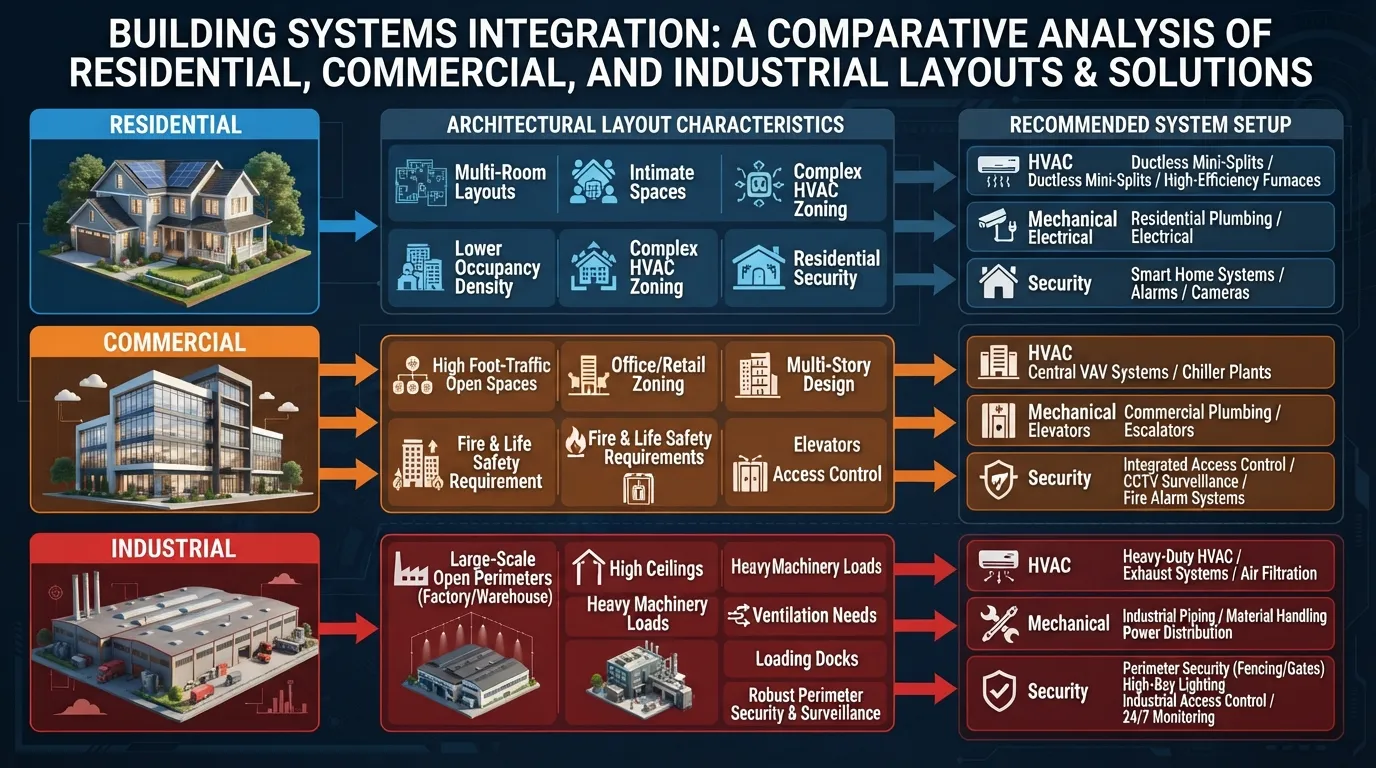 Every commercial facility features distinct structural layouts, occupant densities, and thermal loads that dictate the ideal climate control architecture. Selecting the right energy-efficient HVAC system requires matching mechanical performance capabilities to the specific demands of your building type.
Best HVAC Systems for Office Buildings
Office environments require granular zoning to accommodate shifting conference room occupancies, perimeter solar heat gains, and multi-tenant layouts. Variable Refrigerant Flow (VRF) systems and advanced multi-zone Variable Air Volume (VAV) setups provide the precise individual room control necessary for these dynamic floor plans.
- Delivers simultaneous heating and cooling to different zones across multi-story office complexes.
- Integrates seamlessly with building automation systems to schedule shut-offs during unoccupied evening hours.
- Optimizes indoor air quality and ventilation rates based on real-time CO2 monitoring across densely populated work areas.
Best HVAC Systems for Retail Spaces
Retail spaces experience rapid foot traffic fluctuations, large open floor plans, and frequent exterior door openings that challenge indoor thermal stability. High-efficiency Rooftop Units (RTUs) equipped with advanced economizers and multi-stage blowers offer the robust, centralized conditioning required for retail environments.
- Maintains consistent comfort across large open sales floors without requiring complex interior duct networks.
- Utilizes economizer cycles to pull in cool outdoor air when weather permits, slashing mechanical cooling costs.
- Features compact exterior footprints that preserve valuable interior sales and storage square footage.
Best HVAC Systems for Warehouses
Warehouses and distribution centers feature expansive square footage, towering ceiling heights, and minimal insulation, making traditional climate control prohibitively expensive. High-volume low-speed (HVLS) fans paired with commercial unit heaters or high-efficiency packaged heat pumps provide effective thermal management.
- Circulates stratified air masses from high ceilings back down to the working floor level, reducing heating loads.
- Provides targeted spot-heating and cooling for specific loading dock zones rather than wasting energy on empty vertical space.
- Lowers overall utility overhead through rugged, low-maintenance mechanical designs built for industrial environments.
Installation Best Practices for Maximum Efficiency
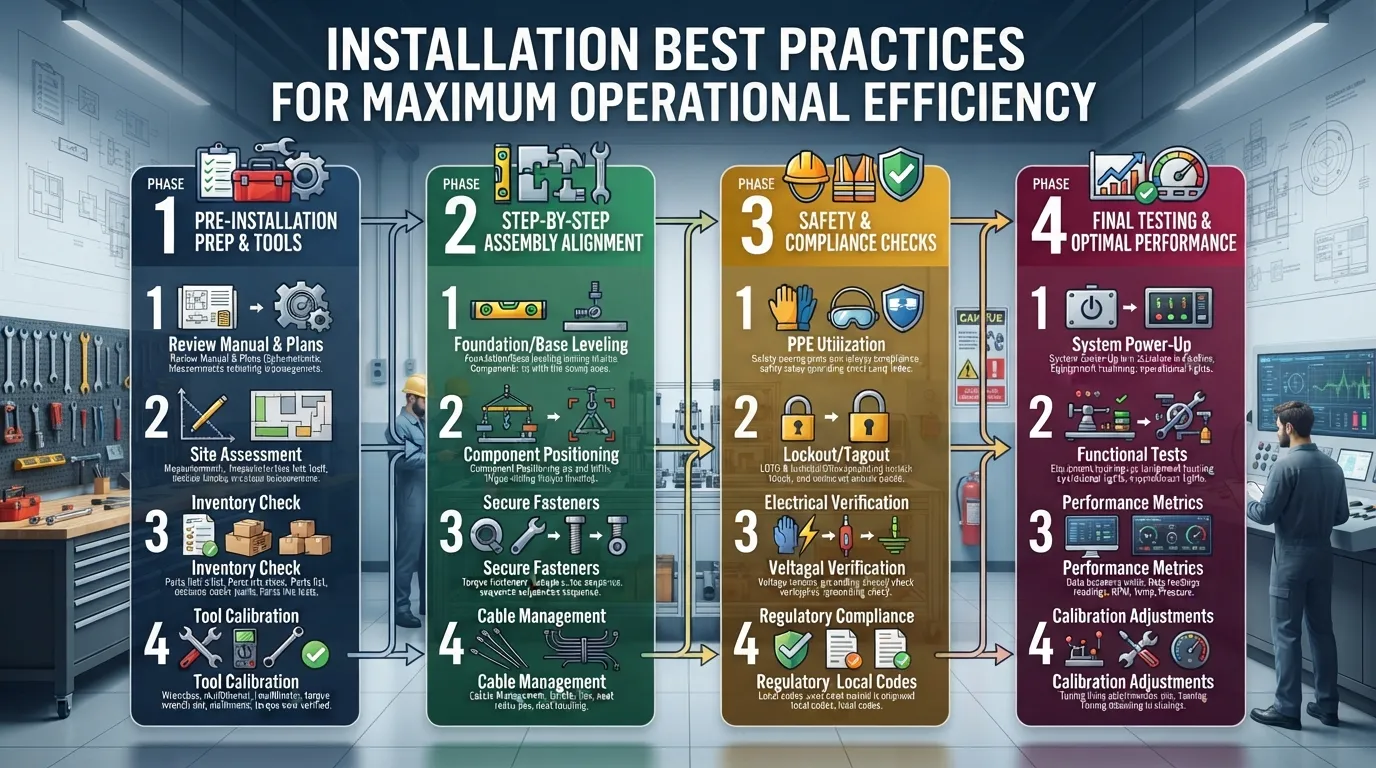 Investing in elite commercial HVAC hardware alone does not guarantee low utility bills or optimal performance; flawless installation and precise commissioning are equally critical. Following industry-standard installation protocols ensures your equipment operates at peak thermodynamic efficiency throughout its entire operational lifecycle.
Proper Load Calculation & Sizing Avoiding Oversizing
Technicians must perform rigorous Manual N or equivalent commercial load calculations accounting for building materials, window orientations, lighting loads, and peak occupancy. Installing oversized rooftop units or chillers based on guesswork leads to severe operational inefficiencies.
- Prevents short-cycling, a damaging phenomenon where oversized units satisfy thermostats too quickly and shut down prematurely without adequately dehumidifying the air.
- Reduces premature mechanical wear on compressors and fan motors caused by constant rapid-firing cycles.
- Ensures stable, comfortable indoor temperatures across all interior zones without wild thermal fluctuations.
ENERGY STAR Certification Why It Matters
Specifying and installing provides a verified benchmark for superior energy performance in commercial environments. These high-efficiency units are independently tested to meet stringent federal efficiency guidelines.
- Delivers up to 17 percent higher energy efficiency compared to standard baseline commercial models, significantly cutting annual utility expenses.
- Qualifies commercial real estate owners for lucrative federal tax deductions, local utility rebates, and green building certifications like LEED.
- Provides independent verification of lower greenhouse gas emissions, aligning facility operations with mandatory 2026 corporate sustainability goals.
Cost ROI & Available Rebates
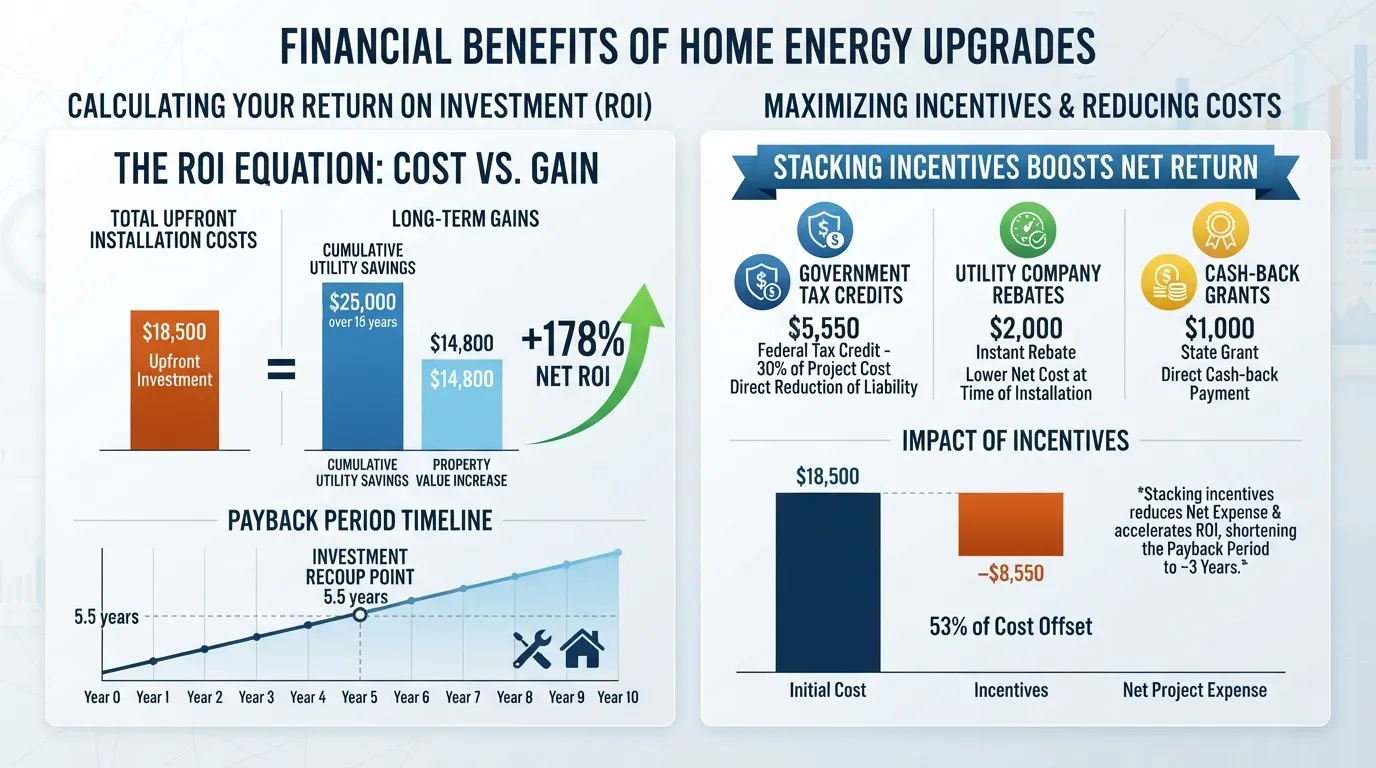 Evaluating the financial blueprint of a commercial HVAC upgrade requires looking beyond initial hardware costs to calculate total lifecycle savings. Strategic investments in high-efficiency systems consistently deliver rapid payback periods through lowered energy consumption and lucrative financial incentives.
Upfront Cost vs Long-Term Savings 10–30% Reduction Data
While premium commercial systems carry higher initial acquisition costs, they consistently reduce overall utility overhead by 10 to 30 percent. When paired with smart building automation controls, facilities frequently achieve six-figure annual savings, transforming a capital expenditure into an aggressive net-operating-income driver.
- Small-scale commercial retrofits typically range from $5,000 to $15,000, while complex multi-zone upgrades exceed $30,000 depending on tonnage.
- Reduced maintenance calls and avoided emergency breakdown premiums protect annual operating budgets.
- Part-load efficiency gains mean systems consume significantly less power during standard business hours.
Federal & State-Level Rebate Programs Beyond California
Property owners nationwide can leverage layered financial incentives to drastically slash net project expenditures. Stacking local utility rebates with federal mechanisms creates an immediate reduction in net capital outlay.
- Utility Incentives: Regional electric and gas providers offer substantial cash-back rebates for qualifying high-efficiency chillers, RTUs, and ventilation upgrades.
- Section 179 Expensing: Allows businesses to write off qualifying commercial HVAC purchases in the year equipment is placed in service.
- Geothermal Investment Tax Credit (ITC): Preserves a 30% tax credit for qualifying ground-source heat pump installations.
Total Cost of Ownership TCO Over 10–15 Years
Conducting a lifecycle cost analysis (LCCA) reveals that energy consumption accounts for nearly 80 percent of an HVAC system’s total cost of ownership over a 15-year horizon. Investing in high-efficiency equipment shifts the cost curve downward permanently.
- Shortens simple payback periods down to 2 to 5 years for high-impact commercial upgrades.
- Protects building operations against unpredictable spikes in commercial utility and electricity rates.
- Enhances commercial property valuation and tenant retention by guaranteeing superior indoor comfort and green compliance.
Energy Savings in Action
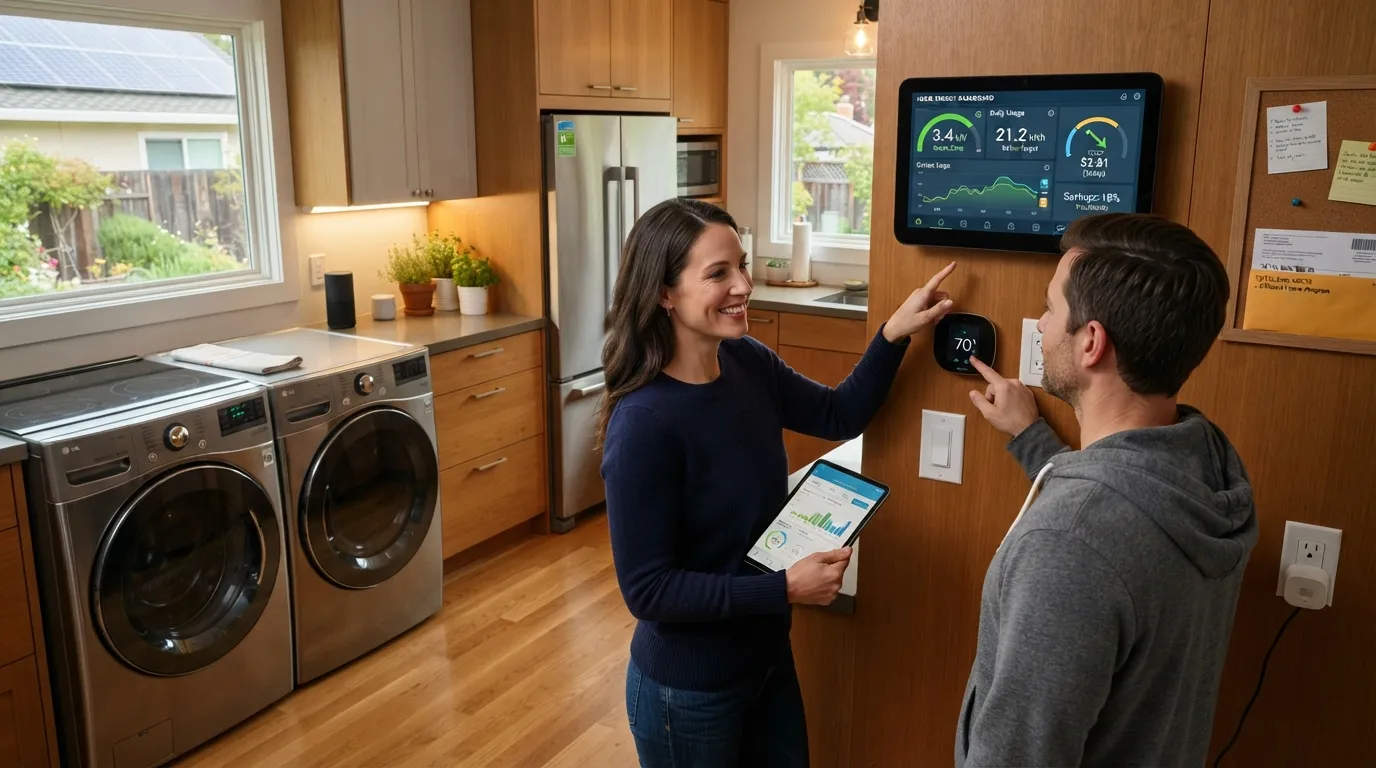 Examining a concrete case study bridges the gap between theoretical efficiency metrics and actual financial performance. Analyzing how a commercial property transitions from legacy machinery to a modern setup reveals the tangible power of energy-efficient design.
Before After Scenario Old RTU vs Upgraded VRF System
A 45,000-square-foot mid-rise commercial office building in a temperate climate zone recently replaced a 15-year-old constant-volume rooftop setup with a modern, inverter-driven VRF system paired with advanced energy recovery ventilation. The legacy system suffered from chronic short-cycling and uneven thermal zoning.
- Before: The aging rooftop units operated continuously at full capacity, leading to severe temperature imbalances across multi-tenant floors and massive electricity waste.
- After: The new VRF installation dynamically modulated compressor speeds based on real-time occupant density and exterior solar heat loads.
- Result: Tenant comfort complaints dropped to near zero while mechanical equipment runtime optimized significantly.
Actual Dollar Savings Breakdown Illustrative Numbers
The financial impact of the retrofit materialized immediately on monthly commercial utility billing statements. The efficiency gains translated directly into substantial operating income preservation over the subsequent cooling and heating seasons.
- kWh Consumption Drop: Total electricity usage dropped by 34 percent annually, saving roughly 112,000 kilowatt-hours per year.
- Utility Cost Savings: At an average commercial rate of $0.14 per kWh, annual energy expenditures fell by over $15,600.
- Payback & Maintenance: Factoring in utility cash-back rebates and reduced emergency service calls, the net capital investment achieved full payback in under 3.5 years.
Frequently Asked Questions
Facility managers and building owners often have specific questions regarding commercial climate control options, installation metrics, and long-term efficiency standards. Reviewing these targeted answers clarifies the best operational strategies for modern facilities.
Which type of HVAC system is most commonly used in commercial buildings?
Packaged rooftop units (RTUs) and central chilled-water systems are the most widely deployed HVAC architectures in commercial real estate. RTUs are particularly popular for single-story and low-rise commercial properties because they house all core heating and cooling components in a single outdoor enclosure, preserving valuable interior space.
- Central chillers dominate large multi-story high-rises, utilizing water loops to distribute conditioning efficiently across massive vertical footprints.
- Packaged systems simplify routine maintenance and filter replacements through centralized, weather-resistant roof access panels.
What are the best heating systems for commercial buildings?
The optimal commercial heating system depends on local climate severity, building size, and energy infrastructure. High-efficiency commercial heat pumps, variable refrigerant flow (VRF) systems, and condensing hydronic boilers represent the gold standard for balancing heating output with low operating costs.
- Cold-climate heat pumps and VRF systems offer exceptional efficiency by transferring ambient thermal energy rather than burning fossil fuels.
- Condensing boilers provide reliable, high-capacity hydronic heating for older structures or heavy industrial manufacturing facilities.
What are the 3 most common types of HVAC systems?
The three most prevalent HVAC configurations across residential and light commercial sectors are single-split systems, multi-split/VRF systems, and packaged units. Each architecture is engineered to scale differently depending on square footage and zoning requirements.
- Single-Split Systems: Feature separate indoor and outdoor units connected by refrigerant lines, ideal for small shops or individual offices.
- Multi-Split & VRF Systems: Connect a single outdoor compressor to multiple indoor handlers for independent multi-zone temperature control.
- Packaged Units: Self-contained outdoor systems housing all heating and cooling components, commonly seen on retail and warehouse rooftops.
What is a high-efficiency heat pump?
A high-efficiency heat pump is an advanced climate control unit engineered with inverter-driven compressors, electronic expansion valves, and enhanced vapor injection technology. These units deliver superior heating and cooling performance while consuming significantly less electrical power than standard baseline models.
- Achieves high Coefficients of Performance (COP), often generating three to four units of thermal energy for every single unit of electrical energy consumed.
- Maintains reliable heating performance even when outdoor ambient temperatures drop well below freezing.
Conclusion Final Recommendation Framework
Upgrading to an energy-efficient commercial HVAC system is one of the most impactful capital investments a facility owner can make. Balancing upfront costs, long-term utility savings, and modern decarbonization codes requires a structured, strategic approach to ensure optimal building performance.
Quick Decision Checklist
Before committing to a specific commercial HVAC replacement or retrofit, facility managers should evaluate key operational criteria to ensure the chosen system aligns with long-term building goals.
- Assess the current equipment age using the dollar-value repair threshold rule to determine if replacement outweighs continued maintenance.
- Audit existing building insulation, zoning layouts, and ventilation protocols to match the appropriate tonnage and system type (such as VRF, heat pumps, or RTUs).
- Verify that selected equipment meets or exceeds regional energy standards and qualifies for available federal tax incentives or utility rebates.
Next Steps for Building Owners
Executing a successful HVAC transition requires professional collaboration and rigorous technical oversight from initial audit to final commissioning.
- Schedule a comprehensive commercial energy audit with a certified mechanical engineer to establish baseline consumption metrics.
- Request detailed proposals from experienced contractors specializing in high-efficiency systems and proper load calculations.
- Develop a phased capital replacement plan to minimize tenant disruption and maximize utility savings over a 10-to-15-year horizon.

Oscar Vance | Master Plumber & Drainage Expert
Meet Oscar Vance, a licensed master plumber sharing practical solutions on residential repairs, preventive maintenance, and thoughtful home upkeep.