The High-Stakes Dilemma of Home Climate Control
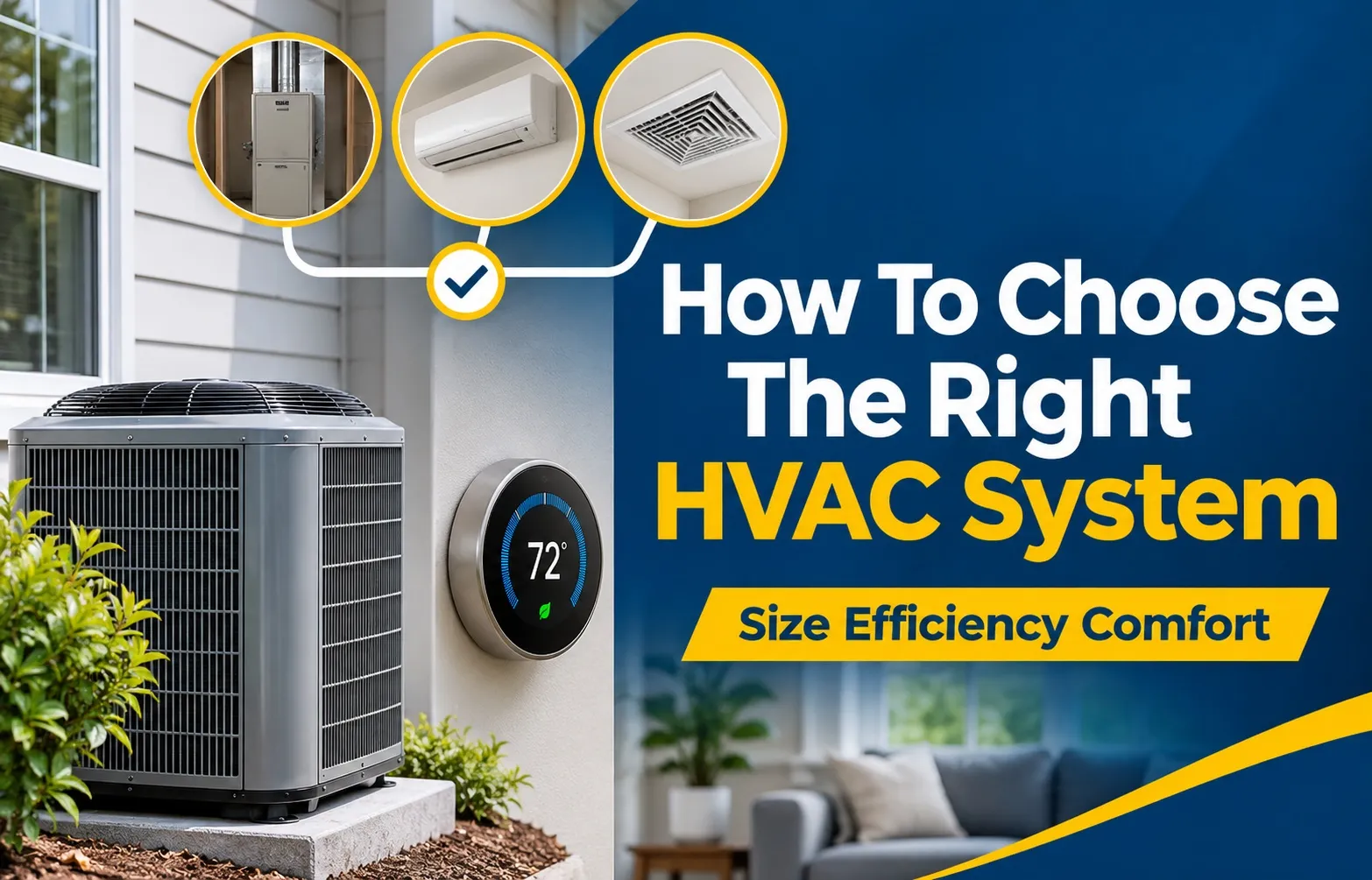 Choosing an HVAC system is one of the most critical and expensive investments a homeowner will ever make. An improper selection leads to soaring monthly energy bills, uneven home temperatures, and premature equipment failure.
Understanding the core fundamentals of heating, ventilation, and air conditioning equipment protects your budget and ensures long-term indoor comfort. The right decision balances local climate conditions, household square footage, and energy efficiency standards.
Why Your HVAC Choice Matters More Than You Think
Your HVAC system accounts for over 50 percent of your home’s total energy consumption. Selecting an inappropriate unit or incorrect capacity causes constant mechanical strain, resulting in expensive repairs and shortened equipment lifespans.
- Utility Cost Impact: High-efficiency modern systems significantly reduce monthly electricity and gas expenditures.
- Indoor Air Quality: Advanced filtration and humidity control protect your household from allergens, mold, and airborne pollutants.
- Property Valuation: A modern, efficient climate control system increases overall residential resale value.
Avoid rushing into a purchase based solely on upfront equipment price tags. Long-term operating costs and reliability outweigh initial savings every single time.
The Turning Point: Should You Repair or Replace Your Old Unit?
Before purchasing a brand new climate system, homeowners must evaluate whether their current equipment warrants another repair or a total replacement. Throwing money at an aging unit drains financial resources needlessly.
- Equipment Age: Most traditional split systems and heat pumps last between 12 to 15 years with proper maintenance.
- The $5,000 Rule: Multiply the age of your system by the estimated repair cost. If the total exceeds $5,000, replacement is far more economical than repair.
- Frequency of Breakdowns: Needing multiple service calls within a single two-year window signals systemic mechanical failure.
Transitioning to a modern unit eliminates chronic performance issues and qualifies homeowners for valuable federal energy tax credits.
The Pre-Purchase Decision Framework: When to Replace vs. Repair
Evaluating an aging heating and cooling setup requires a clear mathematical rule rather than guesswork. Determining whether to continue maintaining equipment or invest in a full system replacement hinges on key performance metrics, overall mechanical age, and hidden infrastructure readiness.
Establishing this decision framework early prevents unnecessary expenditures on obsolete technology and sets a baseline for your home’s total heating and cooling requirements.
What is the $5,000 Rule for HVAC Systems?
The $5,000 rule provides an objective financial threshold for deciding between equipment repair and system replacement. To calculate your system’s standing, multiply the age of the unit in years by the estimated repair quote provided by your technician.
- Calculation Method: System Age (Years) × Estimated Repair Cost ($) = Decision Value.
- Repair Threshold: If the total result is under $5,000, proceeding with the repair remains a financially sound decision.
- Replacement Threshold: If the total exceeds $5,000, investing in a new high-efficiency system provides greater long-term economic value.
For example, a 12-year-old compressor requiring a $500 repair yields a score of 6,000 (12 × 500 = 6,000). Because this score exceeds the 5,000 baseline, replacing the unit is significantly more cost-effective than absorbing ongoing repair costs on an aging system.
How Long Do Most HVAC Systems Last?
The average operational lifespan of a residential HVAC system ranges from 12 to 15 years. Equipment survival depends heavily on routine maintenance history, local climate demands, and original installation quality.
- Central Air Conditioners & Heat Pumps: Typically last 12 to 15 years due to continuous summer operation and combined heating duties.
- Gas & Propane Furnaces: Offer an average lifespan of 15 to 20 years when heat exchangers are properly maintained.
- Ductless Mini-Splits: Average 15 to 20 years with consistent coil cleaning and filter changes.
Operating an equipment setup past the 15-year mark often leads to drastic declines in seasonal energy efficiency, frequent refrigerant leaks, and higher monthly utility charges.
Assessing Your Home’s Current Ductwork and Infrastructure
Connecting a modern, high-efficiency system to damaged or improperly sized ductwork compromises overall performance. A thorough ductwork integrity assessment ensures your home’s infrastructure can handle updated airflow demands.
- Duct Leakage & Air Losses: Aging or unsealed metal joints can leak up to 30 percent of conditioned air before it reaches living spaces.
- Airflow Sizing Constraints: Modern variable-speed compressors require precise static pressure balances to prevent premature blower motor failure.
- Electrical Infrastructure: Confirming your home’s electrical panel capacity supports updated breaker ratings for modern high-efficiency outdoor units.
Address physical ductwork repairs and insulation upgrades before finalizing equipment sizes to maximize energy conversion and airflow distribution.
Determine the Right HVAC System Type for Your Climate
Selecting the correct climate control category depends heavily on your regional geography, seasonal weather variations, and fuel accessibility. Matching your home layout to the appropriate system architecture guarantees optimal energy conversion and year-round indoor comfort.
Central Split Systems (Furnace and AC)
Central split systems remain the traditional standard for homes featuring pre-existing ductwork infrastructure. They divide equipment components between indoor and outdoor spaces, utilizing a gas furnace for heavy winter heating and an exterior compressor for summer air conditioning.
- Regional Suitability: Ideal for cold-to-moderate climates where natural gas or propane provides cost-effective winter heating.
- System Layout: Requires an indoor utility room, basement, or attic to house the air handler and gas furnace.
- Operational Reliability: Proven mechanical design that handles extreme sub-freezing temperatures effortlessly when paired with a robust furnace.
Air-Source and Geothermal Heat Pumps (High Efficiency)
Air-source and geothermal heat pumps provide exceptional high-efficiency heating and cooling by transferring thermal energy rather than generating it directly through combustion. These systems pull heat from the outside air or underground earth to warm living spaces efficiently.
- Air-Source Performance: Outstanding efficiency in mild-to-moderate winter regions, though modern cold-climate models perform well below freezing.
- Geothermal Advantage: Utilizes stable underground ground temperatures to deliver unmatched efficiency regardless of extreme surface weather.
- Electric Operation: Runs entirely on electricity, making them eligible for significant federal clean-energy tax incentives.
Ductless Mini-Splits (Zoned and Ductless Solutions)
Ductless mini-splits deliver targeted zone control and exceptional climate flexibility for homes lacking traditional ductwork networks. They connect an outdoor compressor directly to individual wall-mounted indoor air handlers via small conduit lines.
- No Ductwork Required: Perfect for older historic homes, home additions, finished basements, and converted attics.
- Independent Zoning: Allows family members to customize individual room temperatures, eliminating energy waste in unoccupied spaces.
- Inverter Technology: Utilizes variable-speed compressors that maintain precise indoor comfort while consuming minimal electrical power.
Packaged Systems (Ideal for Limited Indoor Space)
Packaged systems house all major heating and cooling components inside a single outdoor cabinet, typically installed on the roof or on a concrete slab beside the home. This centralized design eliminates the need for bulky indoor mechanical closets.
- Space-Saving Design: Excellent choice for houses built over crawl spaces or properties with minimal interior utility room space.
- Simplified Maintenance: Technicians access all refrigeration, heating, and blower components from one centralized outdoor enclosure.
- Configuration Options: Available in electric heat pump configurations or gas-electric packaged units for diverse regional climates.
Get a Proper Load Calculation (The Manual J Standard)
Guessing your HVAC system size using basic square footage rules of thumb is a costly mistake that leads to equipment failure and high utility bills. Professional contractors rely on precise engineering standards to determine exact heating and cooling capacities.
Why Square Footage Estimation Fails
Relying on generic square footage formulas completely ignores critical environmental and structural variables that dictate how a home gains or loses heat. Every house has unique architectural characteristics that influence total thermal loads.
- Square Footage Myths: Old rules of thumb assume every home requires one ton of cooling per 500 square feet, ignoring modern construction differences.
- Insulation R-Values: Poor attic and wall insulation drastically increases thermal transfer, making simple size estimations completely inaccurate.
- Window Orientation: Large south-facing or west-facing windows introduce massive solar heat gain that basic square footage math fails to measure.
What is a Manual J Load Calculation?
A Manual J load calculation is the industry-accepted engineering standard established by the Air Conditioning Contractors of America (ACCA) to determine exact heating and cooling loads. It evaluates your entire property room by room to calculate precise equipment requirements.
- Comprehensive Evaluation: Calculates total heat gain and heat loss based on local climate data and historical weather extremes.
- Structural Analysis: Accounts for building materials, ceiling heights, door seals, and thermal envelope integrity.
- Occupancy & Appliance Loads: Factors in the number of household residents and internal heat generated by kitchen appliances and electronics.
The Dangers of Oversized (Short-Cycling) and Undersized Systems
Installing an incorrectly sized system severely damages indoor comfort, spikes monthly energy costs, and shortens mechanical lifespans. Both oversized and undersized units fail to maintain proper temperature and humidity control.
- Short-Cycling Risks: Oversized units blast air too quickly, satisfying the thermostat instantly and turning off before dehumidifying the home, leading to clammy air and mold growth.
- Continuous Running Failures: Undersized systems run constantly without stopping, pushing compressors past their design limits and causing premature mechanical burnout.
- Uneven Temperatures: Incorrect sizing creates severe hot and cold spots across different rooms, ruining overall residential comfort.
Decode Energy Efficiency Ratings (SEER2, HSPF2 & AFUE)
Evaluating modern HVAC equipment requires understanding post-2023 energy efficiency standards. Higher efficiency ratings translate directly to lower monthly utility bills, reduced environmental impact, and long-term financial savings.
Navigating modern ratings ensures you choose equipment that complies with current federal mandates while maximizing long-term return on investment.
Understanding SEER2 and EER2 Ratings
Cooling efficiency is measured using Seasonal Energy Efficiency Ratio 2 (SEER2) and Energy Efficiency Ratio 2 (EER2). These updated testing standards reflect real-world duct static pressure conditions far more accurately than legacy SEER metrics.
- SEER2 Basics: Measures total cooling output over an entire seasonal period divided by total electrical energy input under varying exterior temperatures.
- EER2 Application: Calculates cooling efficiency at peak high-temperature conditions (specifically 95°F), offering a reliable snapshot of peak summer demand performance.
- Efficiency Benchmarks: Modern minimum regional requirements typically range from 13.4 to 14.3 SEER2, with high-efficiency inverter models exceeding 20+ SEER2.
Heating Efficiency: HSPF2 and AFUE Explained
Heating performance relies on dedicated metrics that vary according to whether your primary heat source utilizes electricity or combustible fossil fuels. Understanding these metrics helps you compare operational costs across different system designs.
- HSPF2 (Heat Pumps): Heating Seasonal Performance Factor 2 measures heat pump heating efficiency over a seasonal cycle; higher HSPF2 ratings indicate greater electrical conservation in cold weather.
- AFUE (Furnaces): Annual Fuel Utilization Efficiency measures the percentage of fuel converted directly into usable heat versus thermal energy lost up the flue vent.
- AFUE Thresholds: Standard-efficiency gas furnaces operate near 80 percent AFUE, whereas high-efficiency condensing furnaces reach 90 to 98 percent AFUE.
Energy Star Certification and Federal Tax Credits
Selecting certified equipment unlocks significant upfront rebates and government incentives that offset higher initial equipment purchase prices. These programs lower overall barrier-to-entry costs for ultra-high-efficiency systems.
- Energy Star Verification: Systems meeting strict federal criteria deliver superior efficiency without sacrificing performance or indoor comfort features.
- Inflation Reduction Act Incentives: Qualifying high-efficiency air-source heat pumps can qualify homeowners for federal tax credits up to $2,000 under Section 25C.
- Verification Requirements: Review official guidelines provided by Energy Star to verify specific model eligibility criteria and maximum available rebate amounts before finalizing purchase agreements.
Evaluate Comfort Features, Variable Speed, and Noise Levels
High-performance climate control relies heavily on advanced compressor technology, precise humidity management, and low operational sound levels. Choosing modern comfort features transforms basic temperature maintenance into seamless residential living.
Single-Stage vs. Two-Stage vs. Variable-Speed Inverter Compressors
Compressor staging dictates how precisely your HVAC system matches heating and cooling loads, transitioning from basic on-off operation to continuous adaptive control. Upgrading beyond traditional single-stage equipment dramatically enhances indoor temperature stability and energy conservation.
- Single-Stage Compressors: Operate exclusively at 100 percent capacity or off entirely, acting like a light switch that causes frequent temperature swings and higher energy surges.
- Two-Stage Compressors: Offer high and low operational settings, allowing the system to run on low capacity during mild weather for improved efficiency and continuous comfort.
- Variable-Speed Inverter Compressors: Function like a dimmer switch, continuously adjusting compressor speeds in precise increments to maintain exact set temperatures with minimal power usage.
Humidity Control and Indoor Air Quality
Effective moisture management is just as crucial as temperature regulation for achieving true indoor comfort and preventing structural mold growth. Advanced variable-speed systems extract excess humidity during long, low-capacity cooling cycles without over-cooling your living spaces.
- Relative Humidity Balance: Maintaining indoor humidity between 30 and 50 percent prevents airborne allergens, dust mites, and microbial growth.
- Dehumidification Performance: Multi-stage equipment runs longer cooling cycles at lower speeds, pulling significantly more moisture out of humid summer air.
- Enhanced Filtration Integration: Pairing modern blowers with high-MERV media filters captures microscopic particles, pollen, and pet dander effectively.
Decibel Ratings: Keeping Outdoor Units Quiet
Outdoor equipment noise levels directly impact your outdoor living enjoyment and neighborhood peace, making sound ratings an essential purchasing factor. Modern engineering advancements have reduced outdoor condenser noise to whisper-quiet decibel ranges.
- Decibel (dB) Standards: Traditional units often operate between 70 and 78 decibels, comparable to a loud vacuum cleaner or heavy traffic.
- Acoustic Engineering: Premium inverter systems feature insulated compressor compartments and skewed fan blades that lower sound outputs below 55 decibels.
- Strategic Placement: Selecting low-decibel models prevents annoying hums near bedroom windows, patios, and outdoor entertaining areas.
Prioritize Installation Quality Over Brand Name
The success or failure of your new HVAC system relies far more on the competence of your installation crew than the brand name stamped on the cabinet. A premium unit installed poorly will underperform, fail frequently, and waste energy from day one.
Focusing your effort on hiring a qualified, licensed contractor guarantees your investment operates according to factory engineering specifications.
The Brand Myth: Why Installation Quality Matters More
Industry field data and technician consensus consistently prove that over 80 percent of premature HVAC failures stem directly from improper installation techniques rather than manufacturing defects. Top-tier equipment cannot compensate for incorrect sizing or poor craftsmanship.
- Refrigerant Charge Accuracy: Improper refrigerant levels severely reduce cooling capacity, increase power consumption, and damage compressor valves.
- Airflow Balancing: Incorrect duct connections and improper static pressure testing cause restricted airflow, leading to frozen evaporator coils and blower failure.
- Combustion Safety: Flawed gas furnace venting leaks toxic carbon monoxide into living spaces and risks severe equipment overheating.
How to Vet and Interview HVAC Contractors
Protecting your financial investment requires interviewing multiple prospective contractors before signing work agreements. Never accept simple verbal estimates or single-page high-level quotes.
- Require Written Quotes: Collect detailed written estimates from at least 3 licensed mechanical contractors specifying exact model numbers, labor scope, and permit fees.
- Demand Load Calculations: Ensure the contractor performs a formal Manual J calculation rather than sizing equipment based on old unit tonnage.
- Verify Credentials: Confirm valid state licensing, active general liability insurance, worker’s compensation coverage, and EPA Section 608 technician certifications.
Demystifying Manufacturer Warranties vs. Labor Warranties
Understanding the clear legal boundary between equipment warranties and installation coverage prevents unexpected out-of-pocket repair costs down the road.
- Manufacturer Parts Warranty: Covers mechanical component failures (compressors, heat exchangers, coils) typically for 5 to 10 years upon proper product registration; it never covers technician labor costs.
- Contractor Labor Warranty: Covers the diagnostic time and physical labor required to replace failed parts, usually lasting 1 to 3 years depending on company policy.
- Warranty Safeguards: Ensure your contractor explicitly details labor coverage in writing and files factory registrations immediately post-installation.
Comprehensive HVAC Comparison Matrix
Comparing equipment types side-by-side streamlines the selection process by highlighting key operational differences, efficiency metrics, and long-term costs. Reviewing structural options against your specific home layout ensures you invest in the right climate control architecture.
Use this evaluation matrix as an at-a-glance reference before requesting formal equipment quotes from certified contractors.
At-a-Glance HVAC System Comparison Table
The comparative breakdown below matches major residential heating and cooling categories with their primary application areas, seasonal efficiency ratings, lifespan tiers, and relative operating costs.
Evaluating system types through this comparison matrix ensures you balance upfront equipment installation expenses against long-term utility savings and architectural limits.
Frequently Asked Questions (FAQ)
Selecting, sizing, and operating a home climate control system often raises specific technical and practical questions. Clear answers to common homeowner inquiries help maximize long-term energy savings and equipment performance.
What brand of HVAC is the most reliable?
No single brand holds a monopoly on reliability, as equipment longevity depends heavily on proper installation and routine maintenance. However, established manufacturers consistently rank highest for build quality, parts availability, and low factory defect rates.
- Top Premium Tier: Trane, American Standard, Carrier, and Bryant are widely recognized for robust engineering, quiet operation, and strong regional distributor networks.
- Heat Pump & Inverter Leaders: Mitsubishi Electric and Daikin lead the market in advanced ductless and variable-capacity inverter technology.
- Value & Mid-Tier Brands: Rheem, Ruud, Bosch, and Amana offer solid performance and lower initial purchase costs when paired with a quality installation.
Choose a brand backed by local contractor support and reliable warranty processing rather than focusing solely on the badge on the cabinet.
How big of an AC unit do I need for a 2,000 sq ft house?
A typical 2,000-square-foot home generally requires an air conditioner rated between 3.0 and 4.0 tons (36,000 to 48,000 BTUs). However, selecting equipment size based on square footage alone is dangerous and inaccurate.
- Climate Zone Impact: Homes in hot southern regions require significantly more cooling tonnage than identical homes in cooler northern states.
- Thermal Envelope Variables: Ceiling height, insulation quality, window efficiency, and home orientation alter cooling requirements dramatically.
- Mandatory Verification: Insist on a formal Manual J load calculation to determine exact tonnage before purchasing equipment.
What is the best temperature to set my AC to in summer?
Energy Star recommends setting your thermostat to 78°F (26°C) when you are home and awake during the summer months to achieve the optimal balance between indoor comfort and electrical efficiency.
- Energy Conservation Benchmark: Keeping the thermostat at 78°F prevents excessive compressor wear and controls energy bills during peak summer heat.
- Away & Sleep Setpoints: Set temperatures to 85°F when away from home and 82°F during overnight hours, or use ceiling fans to maintain airflow comfort.
- Cost Penalty per Degree: Dropping setpoints below 78°F increases summer cooling costs by roughly 3 to 8 percent per degree.
How can I improve my overall HVAC energy efficiency?
Maximizing system efficiency requires combining modern equipment features with proper home maintenance and smart operational habits.
- Install a Programmable or Smart Thermostat: Automating setback schedules prevents cooling empty spaces and saves up to 10 to 15 percent annually.
- Seal and Insulate Ductwork: Sealing air leaks and insulating ducts in unconditioned attics or crawl spaces prevents up to 30 percent energy loss.
- Perform Regular Filter Changes: Replacing air filters every 1 to 3 months ensures proper static airflow, reducing strain on the blower motor.
- Schedule Annual Professional Maintenance: Spring AC tune-ups and autumn furnace inspections keep coils clean and verify correct refrigerant charges.

Oscar Vance | Master Plumber & Drainage Expert
Meet Oscar Vance, a licensed master plumber sharing practical solutions on residential repairs, preventive maintenance, and thoughtful home upkeep.