Emergency Triage: What to Do Immediately
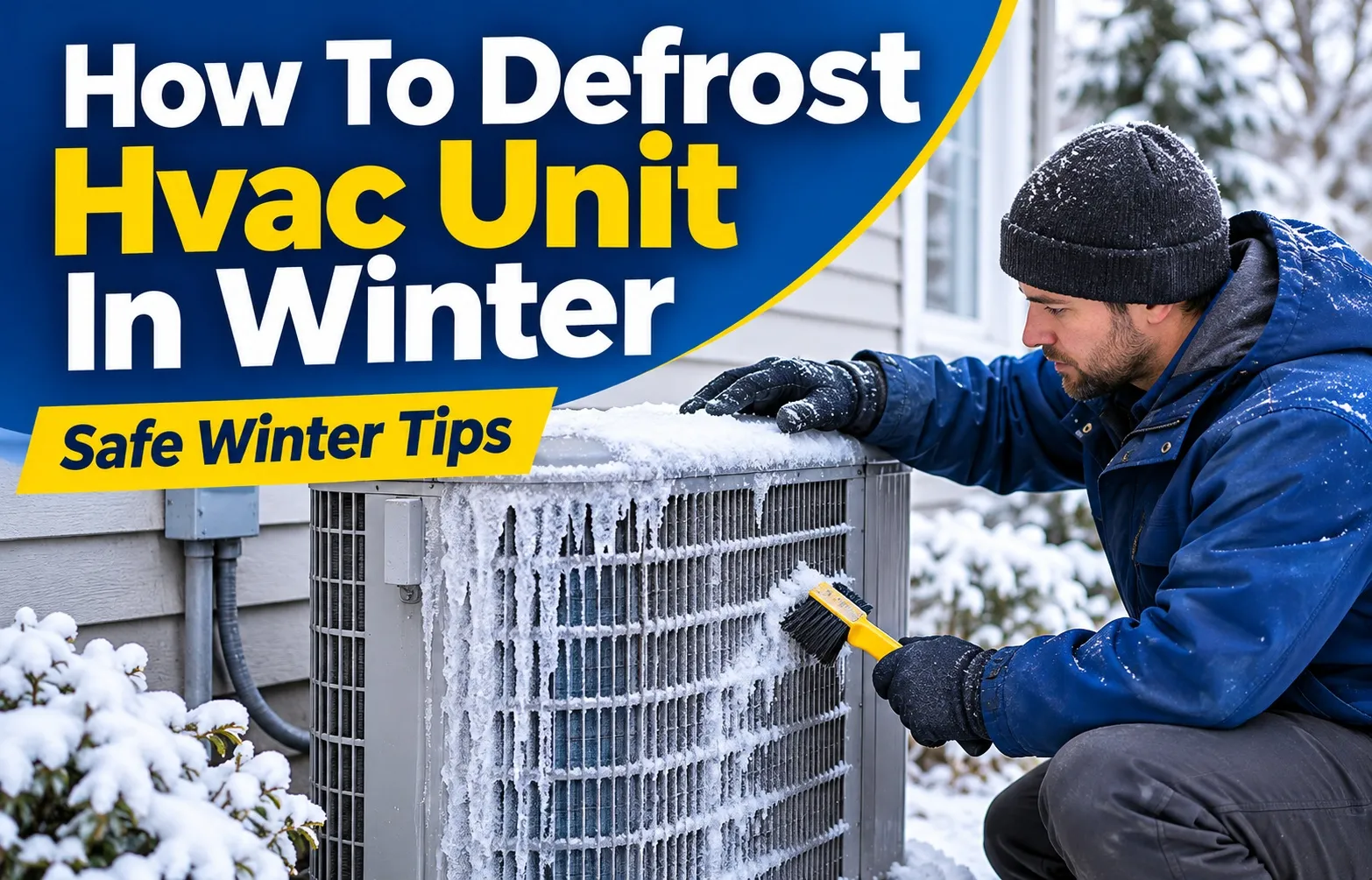 When your outdoor HVAC unit freezes over in winter, quick action prevents severe compressor damage and protects your heating system. Immediately turning off the cooling/heating cycle prevents mechanical strain while maintaining household safety.
3-Step Emergency Checklist to Prevent Heat Pump Damage
Execute these three essential thermostat and physical control adjustments right away to safeguard your system during a winter freeze-up:
- Switch Thermostat to Emergency Heat (Aux Heat): Change your thermostat setting directly to “Emergency Heat” or “Auxiliary Heat.” This control action shuts down the outdoor compressor immediately to prevent severe motor strain while activating your indoor electric heat strips to keep your home warm.
- Set Blower Fan to “ON”: Toggle the indoor fan setting from “AUTO” to “ON.” Continuous fan operation circulates warm ambient indoor air continuously across the indoor evaporator coil, maintaining essential airflow and stabilizing indoor system temperatures.
- Inspect Outdoor Unit for Physical Airflow Blockage: Walk outside and verify that the perimeter of the heat pump is clear. Remove any heavy snow drifts, frozen ice sheets, fallen leaves, or low-hanging branches resting within two feet of the aluminum fins to restore proper intake ventilation.
Critical Warnings: What NEVER to Do When Defrosting
Improper thawing techniques often cause permanent physical and mechanical destruction to heating equipment. Avoid these dangerous practices under all circumstances:
- Never Use Sharp Metallic Tools: Do not use screwdrivers, ice picks, shovels, or knives to chip ice off the cabinet. Striking the unit easily punctures fragile aluminum fins or delicate copper refrigerant lines, resulting in expensive refrigerant leaks and sudden system pressure loss.
- Never Pour Boiling or Hot Water on Frozen Coils: Avoid pouring boiling or scorching water directly onto sub-freezing outdoor components. Extreme sudden temperature swings trigger thermal shock, which can instantly fracture metal tubing, rupture copper capillary lines, and crack severe solder joints.
- Never Rest Heavy Enclosures Directly on Iced Guards: Do not force structural components, heavy tarps, or rigid covers over an iced-over outdoor fan guard while the system is powered, as restricted fan blade motion leads directly to motor burnouts.
Normal Frost vs. Abnormal Ice: The Diagnostic Matrix
Differentiating routine operational frost from a dangerous system freeze-up is critical during freezing weather. Understanding how outdoor heat pumps manage low ambient temperatures helps homeowners identify minor operational shifts before major mechanical failures occur.
Is Your Heat Pump Supposed to Freeze in Winter?
Light frost formation on an outdoor heat pump coil is a completely normal part of winter operation. When ambient outdoor temperatures drop below 40°F (4°C), moisture in the surrounding cold air naturally condenses and freezes upon touching the cold outdoor coil surface.
To clear this accumulation, heat pumps automatically enter periodic defrost cycles. However, if light frost transitions into a thick layer of solid ice that lingers for hours, your system has progressed from normal operation into an active mechanical failure.
Diagnostic Table: Defrost Cycle vs. System Freeze-Up
Use this practical troubleshooting matrix to evaluate whether your outdoor heating unit is performing a routine self-thaw or suffering from a severe freeze-up:
How the Automatic Defrost Cycle Works (30, 60, 90-Minute Intervals)
Modern heat pumps rely on a defrost control board and an outdoor temperature sensor to schedule regular defrost runs. Depending on system logic and humidity levels, the controller initiates a defrost sequence every 30, 60, or 90 minutes of total compressor runtime.
When triggered, the system temporarily shifts back into heating/cooling modes to clear coil ice safely:
- Reversing Valve Actuation: The reversing valve energizes, redirecting high-pressure, hot refrigerant vapor back into the outdoor coil to rapidly melt accumulated ice from the inside out.
- Outdoor Fan Shutoff: The outdoor fan motor powers down temporarily, keeping heat concentrated within the cabinet to speed up thawing while preventing cold wind from chilling the coils.
- Auxiliary Heat Activation: Indoor electric heating elements switch on simultaneously to counteract cold air airflow, ensuring indoor living areas remain comfortable throughout the 10-to-15 minute thaw cycle.
How to Safely Defrost Your HVAC Unit
Safely clearing a frozen outdoor heat pump requires controlled thermal methods and careful environmental management. Utilizing tap water rinsing and indoor blower fan circulation clears stubborn ice quickly without risking fragile copper refrigerant lines or internal compressor components.
Method 1: The Controlled Tap-Water Hose Rinse
Spraying standard tap water over iced-up condenser coils provides a fast, safe manual defrost for heavy ice accumulations. Applying gentle water pressure starting from the bottom of the unit and working upward melts stubborn ice layers efficiently.
- Recommended Water Temperature: Use cool to lukewarm tap water exclusively. Never use boiling or hot water, which triggers severe thermal shock and fractures sub-freezing copper coils.
- Water Pressure Standards: Keep your garden hose spray nozzle at a moderate, gentle setting. High-pressure water jets can easily bend and crush delicate aluminum fins, restricting future airflow.
- Real-World Thawing Timeline: Expect a thawing timeline of roughly 10 to 20 minutes of continuous, controlled rinsing per 1 inch of solid ice accumulation on the exterior coils.
Method 2: The Fan-Only Ambient Air Thaw
When outdoor temperatures rise slightly above freezing, using indoor blower circulation provides a completely hands-off defrost method. This technique utilizes indoor air warmth to melt external frost and thin ice sheets naturally.
- Thermostat Adjustment: Set your indoor thermostat mode to “Off” or “Emergency Heat” while leaving the system fan switch turned permanently to the “ON” position.
- Blower Airflow Action: The indoor blower pulls room-temperature air across the indoor evaporator coil and circulates thermal energy through the refrigerant lines to warm outdoor components gently.
- Operational Monitoring: Monitor outdoor ice reduction over several hours until the coils are fully clear before returning your thermostat back to normal heating mode.
Clearing Snow Drifts and Gutter Overflow Drainage
Environmental moisture factors around your home frequently cause recurring unit freeze-ups during winter storms. Eliminating exterior water hazards prevents melting snow and roof runoff from refreezing into solid ice sheets.
- Snow Drift Clearance: Shovel accumulated snow away from all sides of the outdoor unit, maintaining an uninhibited clearance perimeter of at least two feet for proper air intake.
- Gutter Drip Line Mitigation: Inspect overhead rooflines and gutters to ensure downspouts or melting icicles do not drip water directly onto the top or sides of your HVAC cabinet.
- Drainage Channeling: Direct melting snow and gutter overflow away from the concrete or composite equipment pad to prevent standing water from freezing solid around the base plate.
Why HVAC Units Freeze Solid in Winter
Understanding the mechanical and electrical failures behind heavy ice accumulation helps diagnose why an outdoor unit remains frozen. When specific components fail or system pressures drop, heat pumps lose the ability to clear frost automatically.
Defrost System Component Failures
A breakdown in electrical sequencing or valving stops the system from initiating its automatic thaw cycle. When any sensor or relay in the control chain fails, frost builds up continuously until the outdoor coil freezes solid.
- Defrost Control Board Issues: The defrost control board acts as the central brain, processing time and temperature signals. Faulty logic circuits or burnt relays prevent the board from sending power to the reversing valve and outdoor fan motor.
- Faulty Defrost Sensors & Thermostats: The defrost thermostat or coil sensor reads outdoor coil temperatures. If the sensor drops out of calibration, it fails to signal the control board when ice is present.
- Stuck Reversing Valve Solenoid: The reversing valve switches the flow of refrigerant to heat the outdoor coil during defrost mode. A damaged solenoid coil or stuck mechanical slide keeps the unit locked in standard heating mode.
Airflow Restrictions & Filter Maintenance
Restricted airflow starves the system of thermal energy, lowering operating temperatures across the indoor and outdoor heat exchangers. Maintaining adequate CFM airflow prevents extreme temperature drops inside the system.
- Clogged Indoor Air Filters: A dirty indoor air filter blocks return airflow, drastically reducing total system CFM airflow. Reduced air exchange prevents heat transfer, causing coil surface temperatures to plummet below freezing.
- Blocked Returns and Vents: Closed supply registers or obstructed return grilles reduce overall system static pressure, leading to unstable refrigerant evaporation rates.
- Dirty Coil Surfaces: Dust and debris accumulation on heat exchanger fins insulate the metal, preventing efficient heat transfer during both heating and defrost cycles.
Low Refrigerant Charge & System Leaks
Refrigerant is the primary medium responsible for transferring thermal energy. When a system leaks, the thermodynamic balance shifts, causing rapid ice formation across system components.
- Sub-Cooling & Pressure Drop: A low refrigerant leak drops the suction line pressure within the system. Lower pressure directly lowers the boiling point of the refrigerant inside the coils.
- Rapid Ice Formation: As operating pressure drops below normal parameters for R-410A or R-32 systems, the outdoor coil drops well below sub-freezing temperatures, causing ambient atmospheric moisture to freeze immediately upon contact.
- Compressor Strain: Operating a leaking system with low suction pressure starves the compressor of return gas cooling, accelerating mechanical wear while aggravating coil freeze-ups.
Troubleshooting FAQs: Addressing PAA & Community Questions
Common real-world questions from homeowners and HVAC forums provide critical clarity on tricky freezing scenarios. Reviewing these direct answers helps resolve common winter heating uncertainties quickly and safely.
Can You Pour Warm Water on a Frozen AC or Heat Pump Unit?
Pouring cool or lukewarm tap water over frozen coils is safe and effective when done gently, but boiling or hot water must be completely avoided. Thermal shock from extreme heat differentials can instantly crack copper tubing and rupture delicate refrigerant lines, leading to catastrophic system failures.
- Safe Temperature Range: Stick exclusively to tap water that feels cool or lukewarm to the touch to prevent metal stress.
- Thermal Shock Prevention: Gradual warming allows metal components to expand evenly without fracturing solder joints or capillary tubes.
How Long Does it Take for a Frozen HVAC Unit to Thaw Completely?
A completely frozen outdoor heat pump typically takes between 30 to 60 minutes to thaw when using a controlled garden hose rinse or switching to emergency heat mode. Heavy blocks of ice encasing the entire cabinet structure may require up to two hours of active intervention and monitoring.
- Ambient Temperature Impact: Thawing speeds accelerate significantly when outdoor air temperatures rise above freezing during daylight hours.
- Ice Thickness Variable: Units covered in thick, multi-inch ice sheets take longer to clear than systems with thin exterior frost layers.
Will an HVAC System Defrost on Its Own If Left Running?
A heat pump will defrost on its own if it is experiencing normal light frost and its automatic defrost cycle is fully functional. However, if the outdoor unit is encased in a solid block of ice, leaving the system running will not fix the issue and can permanently ruin the compressor.
- Automatic Cycle Limits: Built-in defrost boards only clear light operational frost; they cannot melt massive ice blockages caused by system malfunctions or heavy weather.
- Risk of Compressor Burnout: Forcing a heavily iced compressor to run under load causes liquid slugging and motor failure.
Why Is My AC Freezing Up at 67 Degrees Fahrenheit?
Freezing up at a moderate thermostat setting like 67°F usually indicates restricted airflow from a dirty air filter or low refrigerant levels rather than outdoor weather. When indoor airflow drops, refrigerant in the evaporator coil cannot absorb enough heat, causing ambient moisture to freeze instantly.
- Airflow Starvation: Clogged filters or closed return vents reduce CFM rates below the manufacturer’s required operating threshold.
- Thermostat Calibration: Setting indoor temperatures too low during transitional weather can inadvertently push system coils past safe operating limits.
Is It Safe to Run Heating Strips Overnight While the Outdoor Unit Is Iced Over?
Running auxiliary electric heating strips overnight while your outdoor unit is iced over is safe for temporary emergency warmth, but it will result in high electricity bills. The indoor strips keep your home comfortable while protecting the locked outdoor compressor from mechanical burnout.
- Emergency Heat Protection: Running on auxiliary strips locks out the outdoor compressor entirely, preventing further physical damage while you sleep.
- Energy Consumption Notice: Electric resistance heating consumes significantly more electricity than standard heat pump operation, so address the ice blockage promptly the next morning.

Oscar Vance | Master Plumber & Drainage Expert
Meet Oscar Vance, a licensed master plumber sharing practical solutions on residential repairs, preventive maintenance, and thoughtful home upkeep.