How to Keep HVAC from Freezing in Winter: Emergency Triage
 To keep your HVAC unit or heat pump from freezing up during winter, maintain unrestricted indoor airflow, keep a clear 3-foot perimeter around the outdoor condenser coil, and verify that your thermostat handles defrost cycles correctly. Restricted airflow from dirty filters causes indoor evaporator coils to ice over, while winter debris, snow buildup, or a faulty defrost board will lock your outdoor unit in a solid block of ice.
Immediate Action Checklist: What to Do If Your HVAC Unit Is Frozen Right Now
If you discover solid ice accumulation on your outdoor fan blades, refrigerant lines, or indoor coil, take these critical steps immediately to avoid permanent compressor failure:
- Initiate System Shutdown: Switch your system from Heating mode to OFF at the thermostat right away. Continuing to run a frozen heat pump starves the compressor of heat and destroys internal mechanical valves.
- Engage Emergency Heat (If Temperatures Drop): If your home requires immediate warmth during sub-freezing weather, switch your thermostat setting to Emergency Heat Mode (Em Heat). This activates your auxiliary electric heat strips or gas backup while isolating the outdoor unit completely.
- Switch Fan to ON (For Indoor Coil Thawing): Turn the fan setting from AUTO to ON. Running the blower motor pushes warm indoor air across frozen coils, thawing the ice safely without damaging electrical components.
- Clear Snow and Ice Obstructions: Gently remove loose snow drift and fallen leaves around the outdoor fan unit. Never use sharp tools, screwdrivers, or ice picks to chip away ice, as this easily punctures the aluminum coils and releases high-pressure refrigerant.
- Inspect Your Air Filter: Pull out the furnace air filter immediately. A clogged filter is the single most common trigger for static pressure spikes and rapid system freeze-ups.
Diagnostic Matrix: Normal Winter Defrost vs. Dangerous HVAC Freezing
When temperatures drop below freezing, a heat pump extracts ambient heat from the outside air. Because the outdoor coil operates at temperatures significantly lower than the surrounding atmosphere, moisture in the air naturally condenses and freezes upon contact, creating a layer of frost.
Understanding this heat exchange process clarifies why some surface accumulation is expected during sub-freezing weather:
- Refrigerant Temperature Drop: Liquid refrigerant inside the coil must be colder than outside air to absorb heat energy.
- Relative Humidity Impact: High moisture content in the air accelerates frost formation on the metal fins.
- Continuous Operation: Extended heating cycles cause moisture accumulation to build up progressively over time.
Is Frost Normal? Defrost Cycle vs. Ice Buildup Breakdown
A thin layer of white frost covering an outdoor coil is completely normal and is managed automatically by the system’s built-in defrost cycle. Conversely, thick, solid blocks of ice indicate a malfunction where the reversing valve, sensor, or control board fails to trigger the defrost mode.
During a standard defrost cycle, the system temporarily reverses operations, melting the light frost and creating a brief puff of steam mist as warm refrigerant melts the outer layer. If this cycle fails, ice accumulation rapidly turns into a destructive coil block.
Warning Signs of Severe Coil & Unit Icing
Identifying severe coil block early prevents catastrophic compressor burnout and costly emergency repairs. Warning signs include persistent mechanical strain, total loss of indoor heating efficiency, and thick ice sheets bridging the outdoor fins.
Watch out for these specific red flags indicating abnormal ice accumulation:
- Solid Ice Bridging: Ice sheets completely blocking the gaps between outdoor coil fins rather than uniform light frost.
- Abnormal Steam Mist Behavior: Dense fog or steam mist rising continuously without the ice actually melting away.
- Fan Blade Interference: A loud scraping or ticking noise caused by ice striking the spinning outdoor fan blades.
Core Preventative Measures: Essential DIY Maintenance
Restricting airflow across your indoor evaporator coil is the primary cause of winter HVAC freeze-ups. When dirty air filters block air intake, static pressure spikes rapidly, reducing the volume of air flowing over the coils and dropping temperatures below freezing to form solid ice sheets.
To keep air moving efficiently through your heating system, follow these maintenance habits:
- Change Filters Every 30 to 90 Days: Swap out disposable pleated filters regularly. High MERV ratings above 11 can restrict airflow too much if your ductwork isn’t designed for them.
- Keep All Supply Vents Fully Open: Never close vents in unused rooms. Closing registers increases static pressure, which forces the blower motor to work harder and starves the evaporator coil of warm air.
- Protect Your Blower Motor: Maintaining clear air pathways prevents the blower motor from overheating under excessive pressure loads.
2. Protect and Clear the Outdoor Unit Perimeter
Keeping a strict 3-foot clearance around your outdoor heat pump prevents snow drift, fallen leaves, and roof runoff from choking the system’s air intake. When exterior coils cannot draw ambient air, they freeze over quickly during freezing rain or heavy frost conditions.
Protect your outdoor hardware from external moisture and blockage by performing these checks:
- Maintain a 3-Foot Perimeter: Clear away high weeds, tall ornamental grasses, and accumulated leaf debris from all sides of the unit.
- Manage Snow and Ice Drifts: After heavy snowstorms, gently brush snow away from the side fins and top grille without damaging the aluminum housing.
- Monitor Roof Gutter Leaks: Ensure overhead gutters or roof leaks do not drip water directly onto the top of the outdoor unit, where it can refreeze into a solid block of ice.
3. Optimize Thermostat & Winter Temperature Settings
Proper thermostat management prevents unnecessary system strain and optimizes the use of backup heating elements during sub-freezing dips. Avoiding rapid set-point adjustments stops the heat pump from relying too heavily on inefficient heating cycles that trigger icing.
Configure your thermostat correctly for winter conditions with these guidelines:
- Avoid Rapid Set-Point Spikes: Do not jump your thermostat temperature up by 5 or 10 degrees all at once, as this forces the system into continuous overdrive and auxiliary heat mode.
- Understand Auxiliary Heat: Auxiliary heat kicks on automatically when outdoor temperatures drop below your heat pump’s balance point to maintain indoor comfort.
- Use Emergency Heat Correctly: Switch to emergency heat only when the outdoor compressor fails or is heavily iced over, utilizing your backup electric strips safely.
4. Outdoor AC & Heat Pump Winter Cover Rules
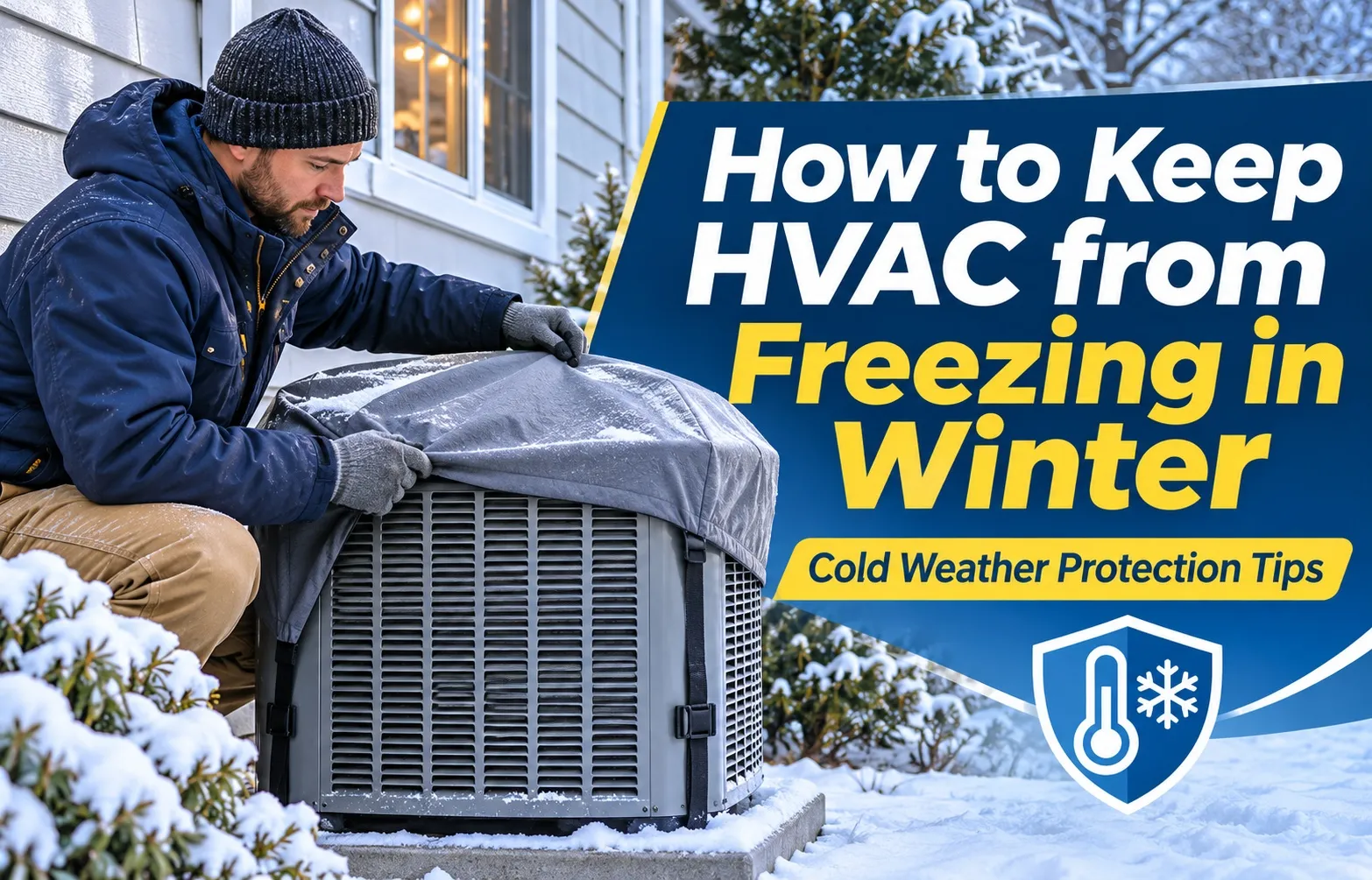
Covering your outdoor unit incorrectly during winter can trap moisture, invite nesting rodents, or cause catastrophic compressor failure if the system is accidentally turned on. Always ensure you use breathable materials and never enclose an active heat pump.
Follow these essential rules when protecting your equipment for the colder months:
- Use Breathable Covers Only: Select specialized breathable mesh or canvas covers designed to allow trapped moisture to evaporate naturally.
- Avoid Airtight Plastic Tarps: Never wrap your outdoor unit in sealed plastic sheeting, which traps condensation and accelerates internal electrical corrosion.
- Never Cover an Active Unit: Ensure the system is completely shut off before placing any cover over it, preventing overheating and destroyed fan motors.
Technical & Mechanical Causes (When to Call an HVAC Technician)
Refrigerant leaks are a leading mechanical cause of severe winter freeze-ups. When an HVAC system loses refrigerant such as R-410A or R-32, the internal pressure drops, causing liquid refrigerant to expand at sub-freezing temperatures inside the coils and creating rapid ice formation.
Resolving refrigerant issues requires diagnostic tools and specialized EPA certification to restore proper system balance:
- Superheat and Subcooling Imbalances: Low refrigerant charge alters pressure-temperature relationships, forcing the coil surface below 32°F even under normal heating loads.
- Pinhole Leak Identification: Vibrations or corrosion over time create tiny leaks along copper lines, requiring ultrasonic or electronic leak detectors to isolate.
- Professional Coil Protection: For advanced industrial and commercial coil freeze protection, consult the Cooney Technologies Guide to Protecting HVAC Coils.
Defrost Board, Ambient Sensor, & Reversing Valve Failures
A heat pump relies on a coordinated network of sensors and mechanical switches to enter its defrost cycle. If any single component in this sequence fails, the system will continue running in heat mode while the outdoor unit locks up completely in ice.
Electrical and mechanical diagnostics require a licensed HVAC technician to inspect these core controls:
- Defrost Control Board Malfunctions: A damaged circuit board fails to signal the system to reverse operation and clear frost at scheduled intervals.
- Faulty Ambient Temperature Sensor: Miscalibrated thermistors report incorrect outdoor air temperatures, preventing the defrost cycle from initiating when ice is present.
- Stuck Reversing Valve Solenoid: A failing reversing valve slider prevents the heat pump from switching between heating and cooling modes to thaw the outdoor coil.
Blower Motor Malfunctions & Ductwork Collapses
Severe airflow restrictions deep inside your home can cause the system to freeze regardless of outdoor conditions. If air cannot move across the heat exchanger, thermal energy remains trapped, disrupting system equilibrium and lowering coil temperatures.
Critical mechanical and structural airflow failures include:
- Blower Motor Capacitance Failures: Weak start or run capacitors cause the indoor blower motor to spin too slowly or fail to start entirely.
- Excessive Duct Static Pressure: Undersized ductwork or internal obstructions restrict air movement, causing severe pressure spikes across the air handler.
- Collapsed Flexible Ductwork: Dislodged, crushed, or disconnected flex ducts choke off return air supplies, cutting airflow to critical low thresholds.
Safe Thawing Protocol & What NOT to Do
Safely recovering a frozen HVAC system requires patience, with a typical thawing timeframe ranging anywhere from 4 to 24 hours depending on ambient outdoor temperatures and the thickness of the ice block. Forcing a frozen system to run prematurely risks burning out the compressor and destroying expensive internal mechanical parts.
Execute this sequence to begin safe recovery:
- Turn System Switch OFF: Move your thermostat setting from Heat to OFF immediately to stop refrigerant flow and prevent electrical strain.
- Engage Fan-Only Mode: Switch the indoor blower fan setting from AUTO to ON to circulate room-temperature air across the frozen coils.
- Open Interior Doors: Keep internal doors wide open to maximize indoor air circulation and speed up the natural melting process.
The Fan-Only Thawing Technique
Utilizing the indoor blower motor in fan-only mode accelerates the overall thawing process by pushing ambient indoor air through the ductwork without activating the outdoor compressor. This safe technique protects electrical components while melting internal frost deposits.
Monitor these critical components during the fan-only phase:
- Track Meltwater Runoff: Watch for continuous water flow, ensuring your condensate drain line remains clear and unobstructed.
- Prevent Indoor Water Damage: Place towels around indoor air handlers if heavy condensation or melting ice overflows auxiliary drip pans.
- Inspect Line Sets: Check outdoor copper refrigerant lines periodically to confirm ice is melting outward from the core.
Dangerous Myths: What NOT to Do When Removing Ice
Attempting to speed up the thawing process using aggressive DIY hacks often leads to permanent hardware destruction, expensive component replacements, and voided manufacturer warranties. Avoid hazardous shortcuts that jeopardize your safety and system integrity.
Never perform these harmful actions when clearing ice:
- Never chip ice with ice picks or screwdrivers: Puncturing aluminum tubing causes instant refrigerant leaks and severe fin damage.
- Never pour boiling water on frozen coils: Extreme temperature changes trigger severe thermal shock, leading directly to coil cracking.
- Never run heat with frozen fan blades: Forcing a frozen outdoor fan motor to spin results in instant motor burnout and blade fracture.
Post-Thaw System Safety & Restart Checklist
Executing a careful restarting protocol after the ice completely melts ensures your HVAC system operates safely and efficiently before normal heating cycles resume. Skipping post-thaw checks can lead to an immediate secondary freeze-up.
Complete this checklist before turning your heat back on:
- Check Air Filter Condition: Verify that your air filter is clean and completely dry before re-inserting it into the blower housing.
- Verify Condensate Drain Lines: Ensure melting ice cleared the condensate drain line completely without pooling around the equipment base.
- Evaluate Air Vent Output: Walk through your home to confirm steady, warm airflow is pushing evenly out of all supply registers.
Frequently Asked Questions
Should I cover my HVAC unit during an ice storm?
You should only cover a standalone air conditioner—never cover an active heat pump during an ice storm. Straight air conditioners sit unused in winter, so applying a breathable top cover prevents falling ice and heavy debris from crushing the top grille. However, a heat pump runs continuously throughout winter and requires unobstructed airflow to draw heat from outdoor air. Encasing an active heat pump in a tarp causes sudden system overheating, severe coil icing, and potential fan motor destruction.
Will an HVAC unit unfreeze on its own in winter?
A heat pump undergoing a normal defrost cycle will unfreeze on its own in 10 to 15 minutes. However, a system locked in a thick block of ice due to low refrigerant or a mechanical failure will passive thaw extremely slowly—often taking 24 hours or longer if ambient outdoor temperatures remain below freezing. Leaving a malfunctioning unit on in hopes that it thaws naturally without intervention risks running the compressor continuously until it burns out completely.
At what temperature will an AC unit or heat pump freeze?
An indoor air conditioner coil can freeze at any outdoor temperature below 60°F (15°C) if operated without low-ambient controls. For heat pumps operating in heating mode, outdoor coils naturally form frost whenever ambient temperatures fall below 40°F (4°C) alongside high relative humidity. While light frost is manageable down to sub-zero levels using built-in defrost features, sustained sub-freezing dips paired with moisture accelerate condensate freeze and severe icing risk.
Can I turn my heat back on immediately after the ice melts?
You can turn your heating system back on after confirming that all ice has melted from internal coils, fan blades, and exterior fins. Before restarting, inspect your indoor air filter to make sure it is clean and dry, and verify that the condensate drain line is flowing freely without ice plugs. Once these checks are complete, set your thermostat to Heating mode at a moderate temperature set-point to avoid overwhelming the system.
Will freezing permanently ruin my air conditioner or heat pump?
A single freeze-up rarely causes permanent damage if caught quickly, but prolonged operation while iced over can ruin the system completely. Continuous thermal stress can cause coil cracking, leading to severe refrigerant leaks. Furthermore, liquid refrigerant returning to the compressor during an icing event risks liquid slugging, which fractures internal valves and causes permanent compressor burn-out, necessitating a total system replacement.

Oscar Vance | Master Plumber & Drainage Expert
Meet Oscar Vance, a licensed master plumber sharing practical solutions on residential repairs, preventive maintenance, and thoughtful home upkeep.