Triage & Emergency Checklist
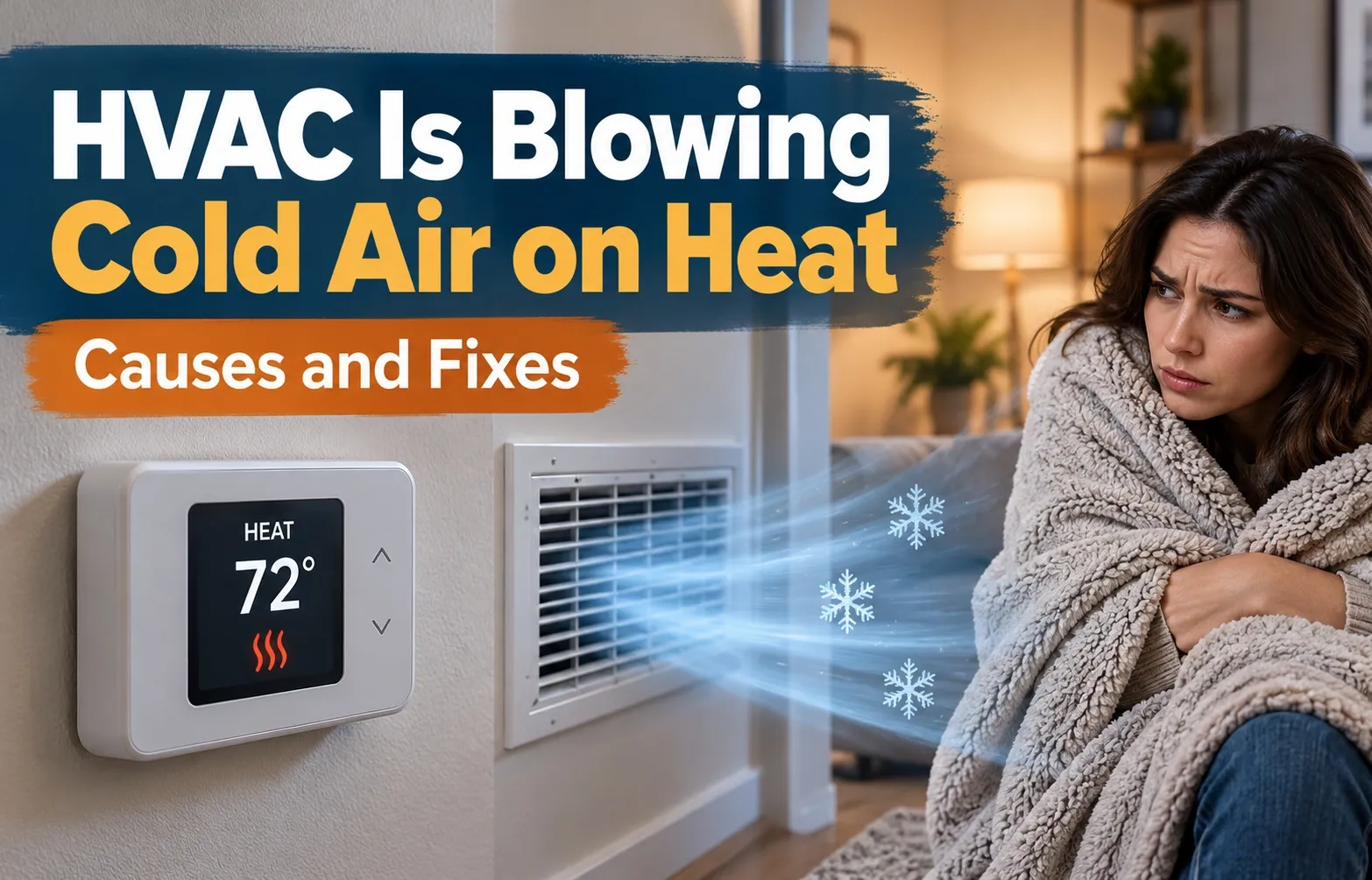 When an HVAC system blows cold air while set to heat, the quickest fix often comes down to thermostat settings, restricted airflow, or a routine system cycle. Before calling a professional technician or assuming a major mechanical failure, performing a few immediate zero-cost checks can resolve the problem right away.
30-Second Quick-Check Checklist (Before You Panic)
A system circulating unheated air often points to a minor control mismatch or a basic safety lockout. Follow these targeted steps to isolate the cause immediately:
- Check the Fan Setting: Look at the thermostat display. If the fan setting is switched to
ON, the blower motor runs continuously, even when the furnace or heat pump is not actively heating. Switch this setting toAUTOso the fan only blows when heat is actively generated. - Feel the Air Return Vents: Place a hand over the air return vents to verify adequate suction. Restricted intake airflow starves the heating unit, frequently triggering an internal high-limit safety switch that shuts off heat production while leaving the fan running.
- Confirm System Mode: Verify the system is set securely to
HEATorEMERGENCY HEAT, and set the target temperature at least 3 to 5 degrees above the current indoor room temperature. - Check for System Lockout: If the unit experienced an ignition failure or overheating event, the control board may enter a temporary system lockout. Reset power at the main unit switch or circuit breaker for 5 minutes to clear soft codes.
Is Cold Air Dangerously Cold or Just Room Temperature?
Distinguishing between room-temperature airflow and ice-cold exterior air helps pinpoint whether the system is malfunctioning or operating within normal operational delays.
A gas furnace delivers air at higher temperatures (120°F to 140°F), making any loss of flame immediately noticeable as room-temperature air. Conversely, a heat pump produces air closer to 90°F to 100°F, which feels cooler to human touch (below body temperature of 98.6°F) even when properly heating a room.
Understanding Your System Type: Heat Pump vs. Gas Furnace
Diagnosing an HVAC system blowing cool air requires knowing whether your equipment uses a heat pump or a gas furnace. Because these systems use entirely different thermodynamic principles, what feels like a system failure on one unit might be completely normal operation for another.
Heat Pump Air vs. Furnace Air: The Temperature Illusion
Homeowners often mistake a heat pump for blowing cold air due to a common physiological reaction known as the body temperature illusion. Human body temperature sits at approximately 98.6°F, meaning any air discharged below this threshold can feel surprisingly chilly to the touch.
- Gas Furnace Output: Standard gas furnaces produce high supply air temperatures ranging from 120°F to 140°F, creating an intense, hot airflow from room vents.
- Heat Pump Output: Heat pumps absorb ambient thermal energy from the outside air and discharge supply air between 90°F and 100°F.
- The Perception Gap: Because 95°F air is lower than your skin temperature, it registers as “cool” or lukewarm to your hand, even though the system is successfully warming the living space.
The Defrost Cycle: Why Heat Pumps Blow Cool Air for 5–15 Minutes
During freezing winter conditions, the outdoor coil of a heat pump naturally accumulates frost and ice layers. To maintain heating efficiency, the system periodically initiates an automated defrost cycle that temporarily alters the refrigerant flow.
When the defrost board triggers, the reversing valve switches position, effectively putting the outdoor unit into a temporary cooling mode to melt the exterior ice. This operational shift can cause indoor vents to blow cool air for 5 to 15 minutes unless auxiliary heat strips engage to temper the airflow.
Understanding how the reversing valve and outdoor coil interact helps prevent unnecessary service calls when a heat pump temporarily reverses its cycle on freezing days.
Temperature Split Benchmarks: What Should Your Vents Actually Read?
Evaluating heating efficiency requires measuring the temperature difference—known as the temperature split—between the air pulled into the return duct and the air pushed out of the supply registers.
- Heat Pump Mode Only: A properly functioning heat pump should produce a consistent temperature split of roughly 30°F between return air and supply air.
- Auxiliary & Emergency Heat Mode: When outdoor temperatures drop below the balance point, auxiliary heat strips engage, expanding the temperature split up to 60°F.
- Gas Furnace Benchmark: Gas systems typically generate a much higher operational rise, often measuring a 40°F to 60°F difference depending on BTU ratings and blower speeds.
Using a digital thermometer to record return and supply temperatures provides objective diagnostic data to verify whether your equipment is producing adequate thermal output.
Top 5 DIY Fixes for Cold Air in Heat Mode
Troubleshooting an HVAC system that blows unheated air does not always require an expensive service call. Homeowners can safely resolve many common heating issues using standard household tools and simple diagnostic checks.
Fix 1: Thermostat Fan Setting Mismatch (ON vs. AUTO)
A frequent reason for unheated air is an incorrect fan switch configuration on the wall thermostat. If the blower fan is locked in the continuous position, it will circulate room-temperature air even when the heating elements are turned off.
- Check the Display: Look at your thermostat interface to see if the fan mode is set to
ONrather than auto. - Adjust the Setting: Switch the fan mode to
AUTOso the blower motor only operates during an active heating cycle.
Fix 2: Clogged Air Filter & High-Limit Safety Switch Lockout
A restricted airflow caused by a clogged air filter prevents proper heat transfer across the heat exchanger. This traps thermal energy inside the furnace compartment, forcing the high-limit switch to trip as a safety precaution.
- Safety Mechanism: When the limit switch trips, it deactivates the gas burners to prevent a fire hazard while keeping the blower fan running continuously to cool down the overheated system.
- Resetting the Switch: Turn off power at the furnace switch, locate the limit switch on the burner firewall, and firmly press any manual reset button if equipped.
- Replace the Filter: Remove the dirty air filter and replace it with a clean, high-efficiency media filter to restore proper airflow.
Fix 3: Dirty Gas Furnace Flame Sensor (Cleaning Step-by-Step)
Over time, carbon buildup and soot accumulate on the flame sensor rod, preventing it from verifying ignition. When the control board fails to detect a stable flame, it initiates an ignition lockout and leaves the blower running to purge gas vapors.
- Locate the Sensor: Turn off power and gas, then find the metal flame sensor rod mounted near the burner assembly.
- Clean the Surface: Gently clean the rod using a clean dollar bill or a fine non-abrasive emery cloth to remove oxidation without scratching the metal coating.
- Reinstall and Test: Secure the sensor back into position, restore system power, and test the heating cycle.
Fix 4: Pilot Light Out or Electronic Igniter Failure
Older gas furnaces rely on a standing pilot light, while modern units use electronic hot surface igniters to light the burners. If either component fails, gas flow stops while the blower fan continues to move cold air.
- Inspect Pilot Assembly: For older systems, check if the pilot flame has gone out and relight it following manufacturer instructions.
- Check Electronic Igniter: For modern furnaces, look for a cracked or non-glowing igniter during a heating call, which indicates a failed part requiring replacement.
Fix 5: Ductwork Thermal Delay (The First 120 Seconds)
Sometimes, what feels like a system failure is simply a normal operational delay as the equipment clears out ambient air. When a furnace first starts up, it must push out the residual room-temperature air trapped inside the ductwork before warm air reaches the vents.
- Wait Out the Delay: Allow the system to run uninterrupted for 2 to 3 minutes during startup.
- Verify Warmth: Check if the air transitioning from cool to warm occurs naturally as the heat exchanger reaches operating temperature.
Complex Component Failures (When to Call an HVAC Pro)
When basic DIY checks do not restore warm airflow, the root cause usually involves high-voltage electrical failures, sealed refrigeration leaks, or critical mechanical faults. Attempting self-repairs on complex HVAC internal components poses serious safety risks, so identifying these severe issues helps homeowners know when to contact a certified technician immediately.
Faulty Reversing Valve or Solenoid Wiring (O/B Terminals)
The reversing valve changes the direction of refrigerant flow in a heat pump, enabling the system to switch between cooling and heating modes. If the internal valve mechanism sticks or the solenoid coil loses low-voltage signal, the system remains stuck in cooling mode despite thermostat demands.
- Manufacturer Logic Variations: Systems made by Carrier, Trane, and Lennox energize the reversing valve in cooling mode using the
Oterminal. Conversely, Rheem/Ruud units energize the valve in heating mode using theBterminal. - Diagnostic Complication: Incorrect thermostat wiring or loose solenoid wiring on the
O/Bterminals prevents the valve from shifting, causing cold air to blow continuously during winter.
Burnt-Out Heat Strips, Sequencers, or Auxiliary Relays
Electric furnaces and heat pump air handlers use electric heat strips to supply supplemental or emergency heat. When severe cold forces auxiliary heat to engage, failing electrical relays or bad sequencers will keep the heating elements de-energized.
- Sequencer Failure: A damaged sequencer fails to send 240-volt power sequentially to the resistance heating coils.
- Element Burnout: Restricted airflow or electrical surges can melt or break individual heat strips, leaving the indoor blower fan running while circulating unheated air.
Failing Inducer Fan Motor or Blocked Exhaust Flue
A draft inducer motor must clear lingering combustion gases out of the heat exchanger before burners can ignite. If the inducer motor fails or the exterior exhaust flue becomes blocked by ice, leaves, or debris, safety pressure switches refuse to close.
- System Lockout: The furnace control board detects an open pressure switch and cuts fuel delivery to prevent toxic gas buildup, forcing the system into an ignition lockout while the main blower continues pushing cool air.
- Safety Guidelines: Technicians inspect draft pressure and safety lockouts according to established industry benchmarks, such as Carrier’s residential furnace troubleshooting standards.
Refrigerant Leaks & Frozen Outdoor Coils
Low refrigerant levels diminish a heat pump’s capacity to absorb heat from outdoor air. When a leak occurs, suction line pressure drops drastically, causing the outdoor coil to freeze solid into a block of ice.
- System Stress: A frozen coil starves the compressor of heat energy, leading to continuous indoor fan operation with little to no temperature rise across supply registers.
- Professional Care: Recovering refrigerant, locating microscopic leaks, and repairing sealed copper lines requires EPA-certified handling tools and technical equipment.
Cracked Heat Exchanger (Carbon Monoxide Risk)
A cracked heat exchanger represents the most severe safety hazard in gas heating systems. Overheating caused by long-term airflow restrictions stresses metal walls until microscopic cracks form across the chambers.
- Flame Rollout Hazard: Pressure from the main supply blower can blow air directly into exchanger cracks, pushing burner flames backward and tripping the flame rollout switch.
- Toxic Exposure Risk: Cracks permit deadly carbon monoxide gas to mix directly with the indoor airstream, requiring immediate system shutdown and complete heat exchanger replacement.
How to Safely Reset Your HVAC System Step-by-Step
When an HVAC control board detects an ignition failure, overheating event, or sensor fault, it enters a protective lockout state. Safely resetting the system clears soft error codes, allowing the unit to attempt a clean startup sequence.
The Breaker & Power Switch Power-Cycle Method
Performing a manual power cycle is the safest way to clear a system lockout and reset the main control board without opening electrical panels.
- Step 1 (Thermostat Control): Turn the system switch off on your thermostat to prevent electrical arcing during shutdown.
- Step 2 (Cut Main Power): Flip the main circuit breaker that powers the indoor air handler and furnace switch off. Leave the power completely cut for 5 to 10 minutes to allow all onboard capacitors to discharge fully.
- Step 3 (Restore and Test): Flip the circuit breaker and furnace switch back on, then return your thermostat setting to
HEATwith a target temperature set 3 degrees above room temperature.
Locating and Pressing the Furnace Limit Switch Reset Button
If an overheating condition trips a primary limit or flame rollout control, the furnace enters a hard lockout that requires a manual reset on the physical sensor.
- Safety Preparation: Shut off all electrical power at the main breaker before opening the upper or lower furnace access panels.
- Identify the Sensor: Locate the limit switch or rollout switch mounted on the burner compartment housing or firewall. Look for a small raised red or black button positioned between two wire terminals.
- Press the Button: Firmly press the manual HVAC reset button until you hear a distinct click, which indicates the internal thermal disc has reset. Reinstall access panels securely to clear the door safety switch.
How Long Does an HVAC System Take to Reset?
The time required for an HVAC system to reset depends on whether the control board registered a soft lockout or a hard lockout.
Soft lockouts caused by temporary signal interruptions or minor ignition delays typically clear within 1 to 3 hours automatically, or within 10 minutes after a complete power cycle. Hard lockouts triggered by physical safety sensors remain active until the physical issue is resolved and manually reset.
After restoring power, modern systems enforce a built-in 3 to 5 minute compressor protection delay to equalize system refrigerant pressure before starting the heating cycle. Allow at least 10 full minutes following a power cycle for the full diagnostic sequence to finish.
Frequently Asked Questions
Homeowners frequently encounter specific questions when troubleshooting unexpected cool airflow from heating systems. Direct answers to these common inquiries help clarify whether the issue stems from a simple thermostat setting or requires professional diagnostic service.
Why is my air conditioner blowing cold air when set to heat?
An air conditioner blowing cold air while set to heat mode usually indicates a thermostat wiring cross-connection or a stuck reversing valve on a heat pump system. When the control board fails to receive the proper 24-volt heating signal, the compressor and outdoor unit continue running in cooling mode.
- Check Thermostat Mode: Verify that the system is properly switched to
HEATrather thanAUTOorCOOL. - Inspect Wiring Terminals: Ensure wires are correctly landed on the
WandO/Bterminals based on your equipment brand specifications.
Why is my heat pump blowing cold air in winter?
Heat pumps naturally discharge air at 90°F to 100°F—which feels cool against human skin—or enter automated defrost cycles that temporarily reverse refrigerant flow. If outdoor coils are frozen or refrigerant levels are low, the system stops producing effective heat altogether.
- Defrost Operation: Allow 5 to 15 minutes for automated defrost cycles to clear outdoor frost before adjusting equipment settings.
- Auxiliary Heat Status: Check whether auxiliary or emergency heat strips are engaging to supplement low ambient temperatures.
What does it mean if my heat is on but blowing cold air?
When an HVAC system blows cold air during a heating call, it typically signals a safety lockout triggered by a clogged air filter, a tripped high-limit switch, or an unlit gas burner. The safety mechanism shuts off the burners to prevent overheating while leaving the indoor blower fan running to dissipate trapped heat.
- Filter Restriction: Inspect and replace dirty air filters to restore normal airflow across the heat exchanger.
- Ignition Lockout: Clean the flame sensor or power-cycle the furnace switch to reset soft lockout codes.
Why is my car HVAC blowing cold air on heat?
A vehicle’s HVAC system blowing cold air when set to warm usually points to low engine coolant levels, a stuck-open engine thermostat, or a blocked heater core. Unlike home systems powered by gas burners or heat pumps, car heaters rely on circulating hot engine coolant through a miniature radiator core behind the dashboard.
- Check Coolant Levels: Inspect the vehicle’s overflow reservoir and radiator coolant levels when the engine is completely cold.
- Heater Core Flow: Feel the inlet and outlet hoses connected to the firewall; if one is hot and the other is cold, the heater core may be clogged or air-locked.

Oscar Vance | Master Plumber & Drainage Expert
Meet Oscar Vance, a licensed master plumber sharing practical solutions on residential repairs, preventive maintenance, and thoughtful home upkeep.