Introduction & Direct Framework Clarification
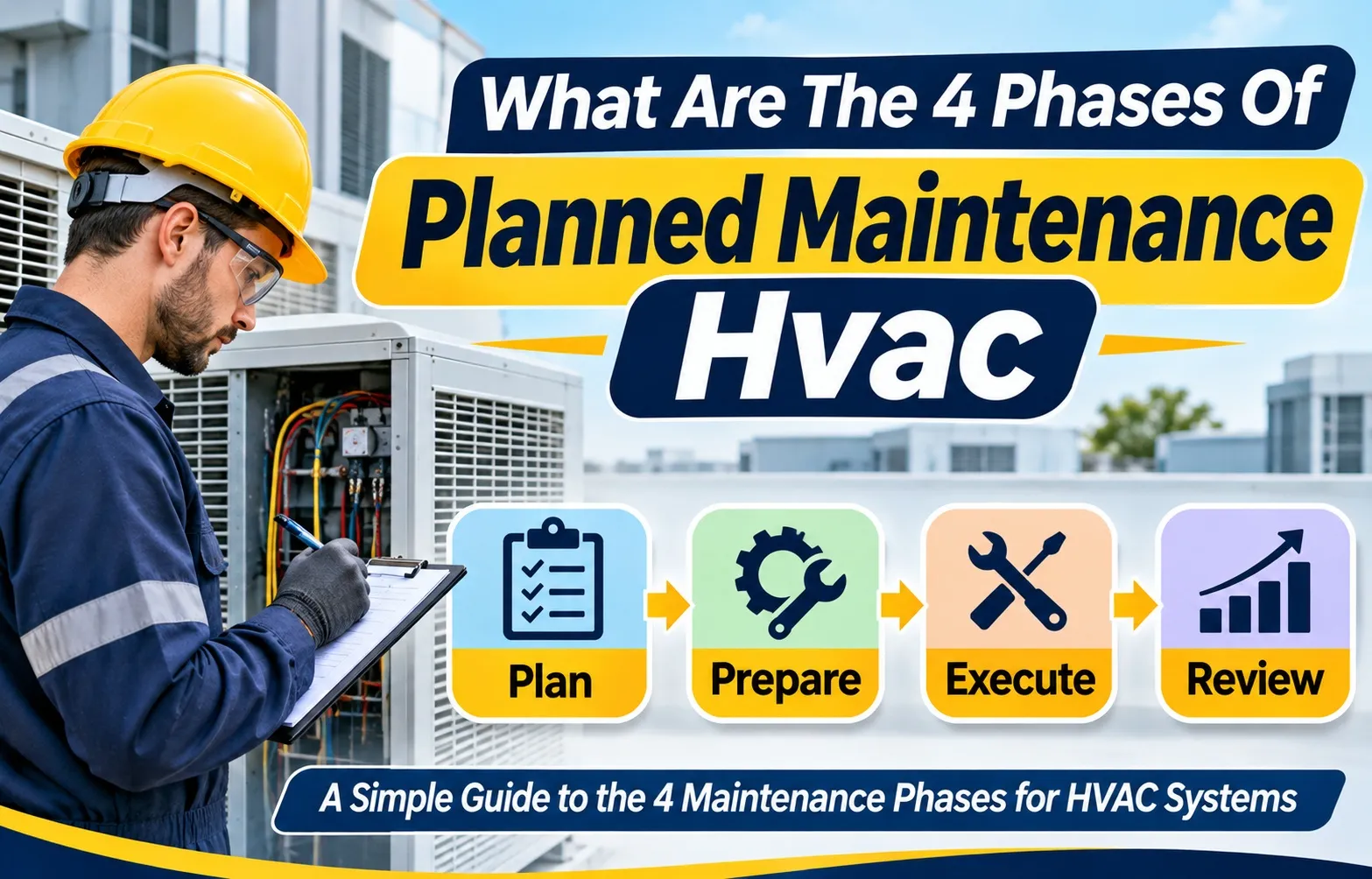 Planned HVAC maintenance consists of four structured operational phases designed to maximize system efficiency, prevent catastrophic equipment failure, and extend asset lifespan: Phase 1: Inspection & Diagnostics, Phase 2: Deep Cleaning & System Hygiene, Phase 3: Precision Adjustments & Calibration, and Phase 4: Proactive Repair.
Executing these four sequential phases during a routine seasonal tune-up maintains proper airflow dynamics, stabilizes refrigerant levels, and ensures safe operation across commercial rooftop units (RTUs) and residential air handling units (AHUs).
The 4 Operational Service Visit Phases
Technicians execute a disciplined, four-step operational workflow during scheduled service visits to ensure commercial rooftop units (RTUs) and air handler units (AHUs) operate at peak performance, safety, and energy efficiency.
Phase 1: Comprehensive System Inspection & Diagnostic Checks
Phase 1 establishes a baseline health check by thoroughly inspecting mechanical integrity, testing electrical current draw, and verifying safety limit controls before any adjustments occur. Identifying thermal stress early prevents costly emergency breakdowns.
- Heat Exchanger Integrity: Inspecting combustion chambers and heat exchangers for micro-cracks to eliminate carbon monoxide leak risks in heating systems.
- Electrical Current Analysis: Measuring amp draw on blower motors and compressor terminals against manufacturer nameplate ratings to detect motor winding stress.
- Static Pressure Measurement: Evaluating static pressure drop across filter racks and duct systems to ensure proper airflow distribution.
Phase 2: Deep Cleaning & System Hygiene
Phase 2 restores thermal transfer efficiency and indoor air quality by aggressively removing particulate buildup, biological growth, and scale from key system components across residential and commercial setups.
- Chemical Coil Washing: Applying specialized cleaning agents to evaporator and condenser coils to dissolve grease, dust, and environmental grime that inhibit heat exchange.
- Condensate Management: Flushing condensate drain lines with algaecide and clearing blockages from the condensate drain pan to prevent water overflow and property damage.
- Air Filtration Renewal: Inspecting and replacing high-efficiency filters according to specific MERV ratings to maintain optimum airflow dynamics.
Phase 3: Precision Adjustments & Calibration
Phase 3 fine-tunes mechanical and thermodynamic parameters to match seasonal cooling or heating demands, ensuring optimal mechanical alignment and energy conservation across the system.
- Refrigerant Performance Metrics: Measuring exact superheat and subcooling values to verify proper refrigerant charge and prevent compressor flooding or starvation.
- Mechanical Alignment: Checking blower belt tension, aligning pulleys, and lubricating motor bearings to eliminate friction and mechanical vibration.
- Control Calibration: Recalibrating thermostat setpoints and integrating updates into Building Automation Systems (BAS) for precise environmental control.
Phase 4: Proactive Repair & Component Replacement
Phase 4 neutralizes imminent equipment failures by replacing worn, degraded, or electrically compromised components identified during the initial diagnostic, cleaning, and tuning phases.
- Capacitor & Contactor Testing: Pre-emptively swapping weak dual-run capacitors and pitted electrical contactors before they cause electrical failure.
- Belt & Seal Replacement: Exchanging frayed blower belts and worn service valve caps before micro-refrigerant leaks or mechanical snags cause system shutdowns.
- Reliability Assurance: Completing targeted component swaps to guarantee uncompromised operational continuity through peak seasonal load periods.
Framework 2: The 4 Strategic Asset Lifecycle Models
Facility managers rely on long-term asset management strategies to optimize capital expenditure (CapEx), minimize operational disruption, and lower the Total Cost of Ownership (TCO) across facility infrastructure.
Corrective Maintenance: Addressing Identified Minor Failures
Corrective maintenance focuses on fixing non-critical wear and minor defects identified during routine inspections before they escalate into severe system failures. Unlike unmanaged run-to-failure emergency fixes, corrective interventions are planned, budgeted, and scheduled.
- Controlled Repair Scheduling: Resolves minor issues like minor refrigerant pinholes or worn gaskets during scheduled downtime rather than emergency peak hours.
- Cost Containment: Reduces high labor premiums and expedited freight costs associated with emergency component sourcing.
Preventive Maintenance: Time-Based & Usage-Based Routines
Preventive maintenance relies on structured calendar schedules or operating hour intervals to service equipment regardless of current operational status. These time-based maintenance protocols ensure foundational mechanical reliability across building HVAC systems.
- Calendar & Meter Routines: Mandates filter swaps, coil washes, and motor bearing lubrication every 30, 60, or 90 days based on equipment run hours.
- Baseline Efficiency Preservation: Prevents cumulative wear and tear from degrading original factory performance parameters.
Risk-Based Maintenance: Prioritizing Critical Building Assets
Risk-based maintenance evaluates breakdown probabilities and operational consequences to allocate maintenance resources effectively. Facility teams use a tailored criticality matrix to prioritize equipment supporting mission-critical environments.
- Criticality Matrix Allocation: Assigns intensive inspection schedules to primary data center cooling or hospital operating room units over secondary common-area systems.
- Resource Optimization: Directs limited maintenance budgets toward assets whose failure carries the highest financial or safety impact.
Predictive Maintenance: Leveraging IoT Sensors & Advanced Analytics
Predictive maintenance uses real-time condition monitoring tools to detect early equipment deterioration. IoT vibration monitoring, thermal imaging, and runtime analytics identify mechanical anomalies so components can be replaced right before catastrophic failure occurs.
- Real-Time Condition Monitoring: Employs wireless IoT vibration sensors and continuous thermal imaging to spot bearing play and electrical hotspots before burnout.
- CapEx Optimization: Maximizes useful component life by shifting from arbitrary time-based replacement schedules to data-driven, just-in-time repairs.
Seasonal Adaptations: Spring Cooling vs. Fall Heating Workflows
Adapting planned HVAC maintenance to seasonal climate demands ensures equipment operates efficiently during peak thermal loads. Adjusting tasks for heating degree days (HDD) or maximum summer temperatures protects key components from unexpected mechanical strain.
Spring & Summer HVAC Maintenance Focus (Cooling Load Preparation)
Spring seasonal tune-up visits prepare system components for heavy summer cooling loads, prioritizing thermal heat rejection and precise refrigerant cycles.
- Condenser Coil Hygiene (Phase 2): Thoroughly clearing organic debris, leaves, and salt buildup accumulated on outdoor condenser coils over winter to allow full heat dissipation.
- Refrigerant Pressure Balancing (Phase 3): Verifying exact refrigerant charge pressures under active cooling conditions to maintain targeted subcooling and superheat metrics.
- Drainage Flow Verification: Clearing condensate pans and flushing lines to manage high indoor humidity condensation throughout peak summer operations.
Fall & Winter HVAC Maintenance Focus (Heating Load & Safety Checks)
Fall maintenance shifts focus to combustion safety, heating efficiency, and air distribution integrity before severe winter weather arrives.
- Combustion & Flame Testing (Phase 1): Conducting flame sensor cleaning, gas valve testing, and burner assembly alignments to ensure clean, reliable ignition.
- Safety Control Verification: Testing high-limit switches, rollout sensors, and carbon monoxide detection systems for proper emergency shutdown capability.
- Furnace Ignition Parameters (Phase 3): Adjusting fuel-to-air ratios and checking heat exchanger draft pressure to maintain optimum thermal conversion.
Why Off-Season Maintenance Saves Commercial Facilities Up to 25%
Scheduling planned maintenance during shoulder seasons—early spring and late fall—delivers distinct operational cost advantages over emergency peak-season service calls.
- Reduced Operational Costs: Scheduling service during off-season windows helps facility managers secure favorable service rates and avoid premium overtime labor fees.
- Enhanced Technician Availability: Off-peak maintenance allows field technicians to complete comprehensive, unhurried multi-phase diagnostics.
- Pre-Emptive Parts Sourcing: Identifying worn parts during shoulder seasons prevents long supply chain delays when weather extremes occur.
Google AI Overview & People Also Ask (PAA) Breakdown
Why is planned maintenance performed during the off-season?
Planned HVAC maintenance is scheduled during off-season shoulder months (early spring and late fall) to prevent system breakdowns before peak weather demands arrive. This strategy ensures priority technician availability, avoids emergency call rates, and allows facility managers to fix minor component wear without interrupting building heating or cooling operations.
- Operational Readiness: Completing inspections during mild weather ensures systems operate at full efficiency before extreme seasonal temperature spikes occur.
- Efficiency Standards: Aligning routines with recommendations like the U.S. Department of Energy HVAC Maintenance Guidelines ensures air filters and coils are serviced to cut energy consumption.
What is the purpose of checking supply voltage before and after operating the system?
Checking supply voltage before operation measures baseline line voltage delivered by the electrical utility. Measuring voltage during operation evaluates voltage drop under active electrical load, identifying high resistance caused by loose wiring connections, pitted contactor points, or excessive winding resistance in the blower motor and compressor.
- Static Baseline Testing: Verifies incoming electrical service meets equipment design specifications before energizing internal components.
- Dynamic Load Testing: Uncovers dynamic voltage drops that lead to premature motor overheating, tripped breakers, and severe electrical damage.
What is the difference between planned maintenance and reactive repairs?
Planned maintenance relies on scheduled, proactive inspections, cleaning, and adjustments to preserve efficiency and prevent component failure. Reactive repairs occur after an equipment breakdown, resulting in unplanned system downtime, higher emergency repair costs, accelerated component degradation, and potential secondary damage to adjacent building assets.
- Proactive Strategy: Minimizes total cost of ownership by fixing minor wear during routine service visits.
- Reactive Risk: Multiplies emergency repair costs and forces sudden operational shutdowns during peak heating or cooling periods.
What is the $5,000 rule in HVAC maintenance and replacement?
The $5,000 rule is an industry benchmark used to decide whether to repair or replace an aging HVAC system. The formula multiplies the age of the system in years by the estimated repair cost in dollars. If the total exceeds $5,000, replacing the unit is recommended over repair.
- Evaluation Formula: $\text{Age of System (Years)} \times \text{Repair Cost (\$)} > \$5,000 \implies \text{Replace System}$.
- Decision Example: A 12-year-old unit requiring a $500 repair equals $6,000, signaling that complete system replacement yields better long-term return on investment.

Oscar Vance | Master Plumber & Drainage Expert
Meet Oscar Vance, a licensed master plumber sharing practical solutions on residential repairs, preventive maintenance, and thoughtful home upkeep.