Are Flushable Wipes Really Bad for Your Plumbing?
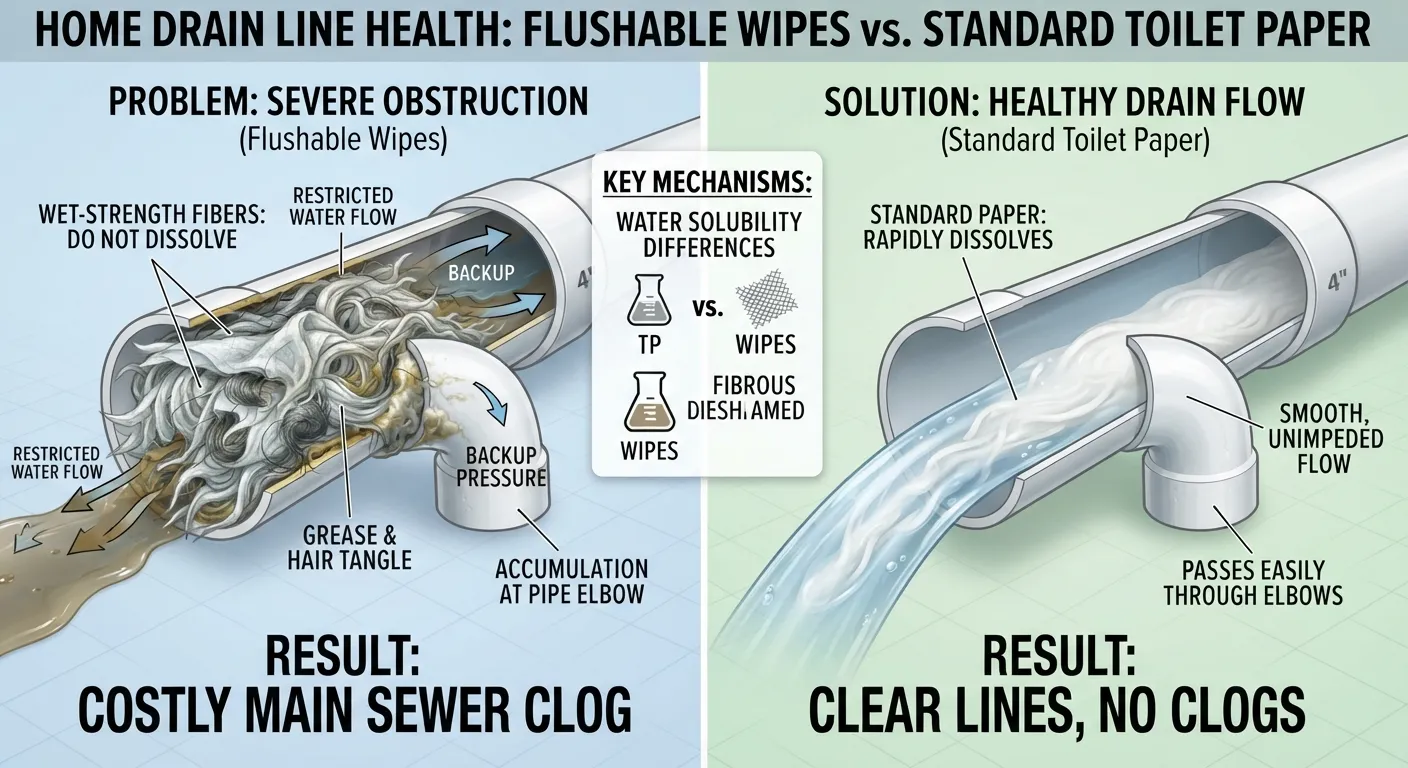
Flushable wipes are genuinely harmful to both household plumbing systems and municipal sewer networks. Despite marketing labels claiming safety, these products do not disintegrate rapidly enough in water, routinely causing severe blockages, expensive pipe damage, and municipal infrastructure failures.
The Short Answer: Yes Here’s Why
The core issue with flushable wipes stems from their material composition and lack of disintegration. Unlike standard toilet paper, which is engineered to break down almost instantly upon contact with water and agitation, flushable wipes are manufactured from resilient synthetic or reinforced plant fibers.
- Fiber Strength: The interlocking synthetic or treated cellulose fibers give the wipe extreme tensile strength, allowing it to survive the entire journey through your drainage pipes intact.
- Accumulation: As these intact wipes travel, they snag on pipe joints, grease buildups, and root intrusions, catching subsequent waste and toilet paper to form massive blockages commonly known as fatbergs.
- Mechanical Failure: Once lodged inside home sewer lines or municipal pumps, these wipes wrap around impeller blades, burning out pump motors and backing up raw sewage into homes.
What “Flushable” Actually Means vs Reality
The term “flushable” is a marketing and regulatory designation rather than a guarantee of plumbing safety. Manufacturers base this claim on specific laboratory tests showing that wipes can clear a toilet trap and move through a straight pipe, ignoring real-world plumbing conditions.
- Standard Disintegration Tests: Current industry standards only require wipes to break down partially within a mechanical tumbler over several hours, which far exceeds the timeline of a typical home plumbing system.
- Real-World Obstacles: Real drainage systems feature 90-degree bends, rough pipe interiors, grease coating, and tree roots that instantly catch wipes long before laboratory disintegration standards can occur.
- Regulatory Disconnect: While municipal water agencies and wastewater operators universally condemn the flushing of these products, packaging regulations continue to lag behind actual sewer system impacts.
Why Companies Are Allowed to Call Wipes Flushable The Truth Behind the Label
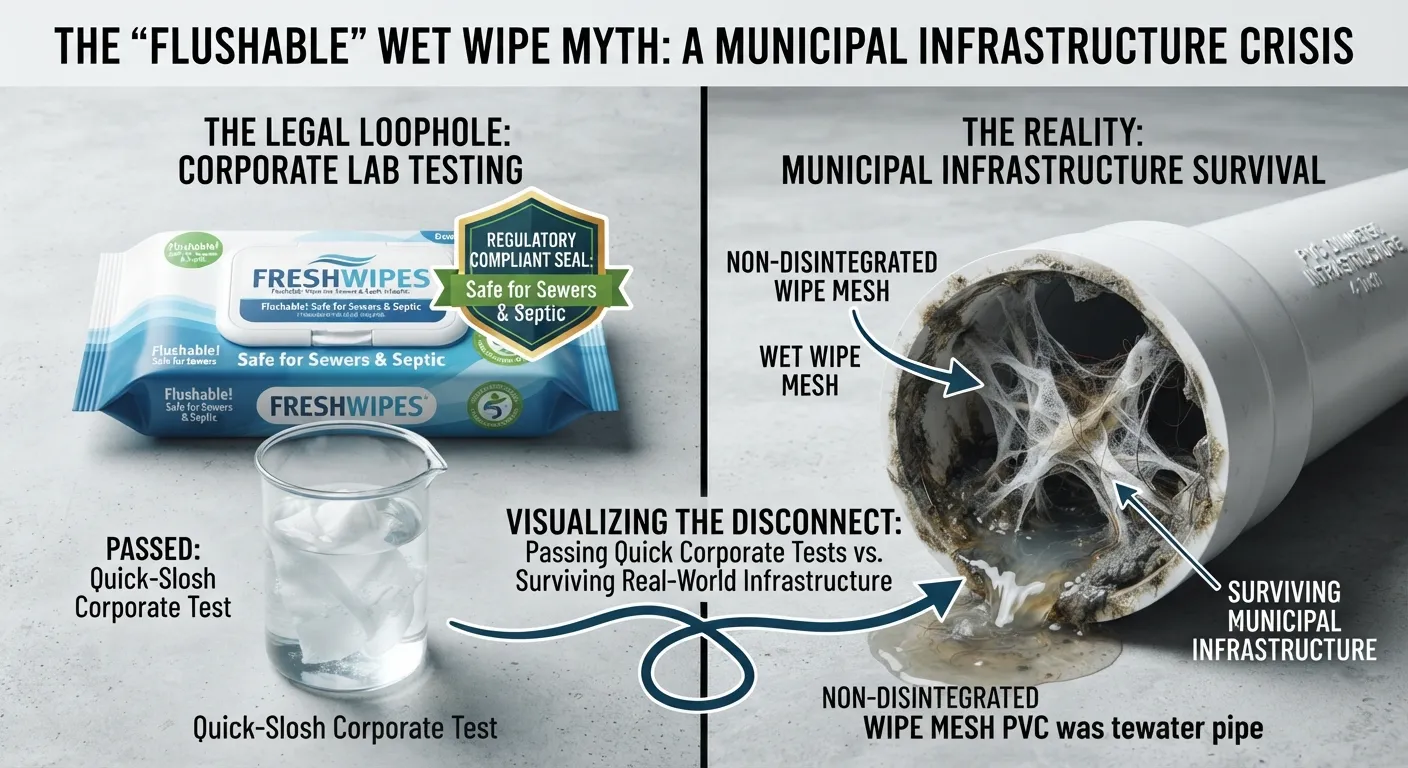
Manufacturers can legally label wipes as “flushable” because current regulatory testing standards measure structural passage through a toilet rather than complete disintegration inside home plumbing systems. This creates a massive legal loophole where products pass outdated laboratory benchmarks while causing widespread municipal sewer damage.
What Industry Flushability Testing Standards Actually Check
Official labeling is governed by industry trade groups rather than strict government plumbing regulators. These standards evaluate whether a wipe can successfully exit a toilet bowl and travel a short distance through a straight pipe without immediate clogging.
- Mechanical Slosh Box Tests: Testing protocols typically involve placing a wipe in a specialized laboratory container of water and measuring how much it breaks apart after a set number of mechanical rotations.
- Limited Timeframes: Standard guidelines often grant wipes hours to degrade, which completely ignores the fact that household pipes deliver sewage to main lines in mere seconds.
- Industry Self-Regulation: Major trade associations like INDA (Association of the Nonwoven Fabrics Industry) develop these test parameters, favoring specifications that allow synthetic products to maintain market viability.
Why Passing a Lab Test Safe for Your Home Pipes
Laboratory environments use ideal conditions that bear zero resemblance to the complex network of private and municipal drainage infrastructure. Real homes feature aging infrastructure, physical obstructions, and organic buildup that change how materials behave.
- Pristine Test Pipes: Labs test wipes using straight, brand-new PVC pipes filled with clean water, avoiding the grease layers and tree roots found in actual sewer lines.
- Absence of Friction: Real-world plumbing involves 90-degree elbows, sanitary tees, and pipe corrosion that snag flexible synthetic fibers instantly.
- Hydraulic Speed: Wastewater travels from a toilet to the municipal main in seconds, giving wipes virtually no time to break down even under optimal conditions.
The Gap Between Marketing Claims and Plumber Reality
The stark contradiction between corporate marketing copy and daily service calls has created a profound trust deficit among consumers and trade professionals alike. While legal departments protect packaging terminology, service technicians deal with the physical fallout.
- Universal Plumber Consensus: Independent plumbers and municipal water operators uniformly advise against flushing anything other than human waste and toilet paper.
- Wipes Labeling Controversy: Consumer advocacy groups and wastewater districts have filed multiple lawsuits against manufacturers, arguing that the “flushable” designation constitutes deceptive advertising.
- Financial Liability: Homeowners bear the total financial burden when manufacturer-labeled wipes trigger expensive main line hydro-jetting or sewer line replacements.
How Flushable Wipes Actually Damage Your Pipes and Sewer System
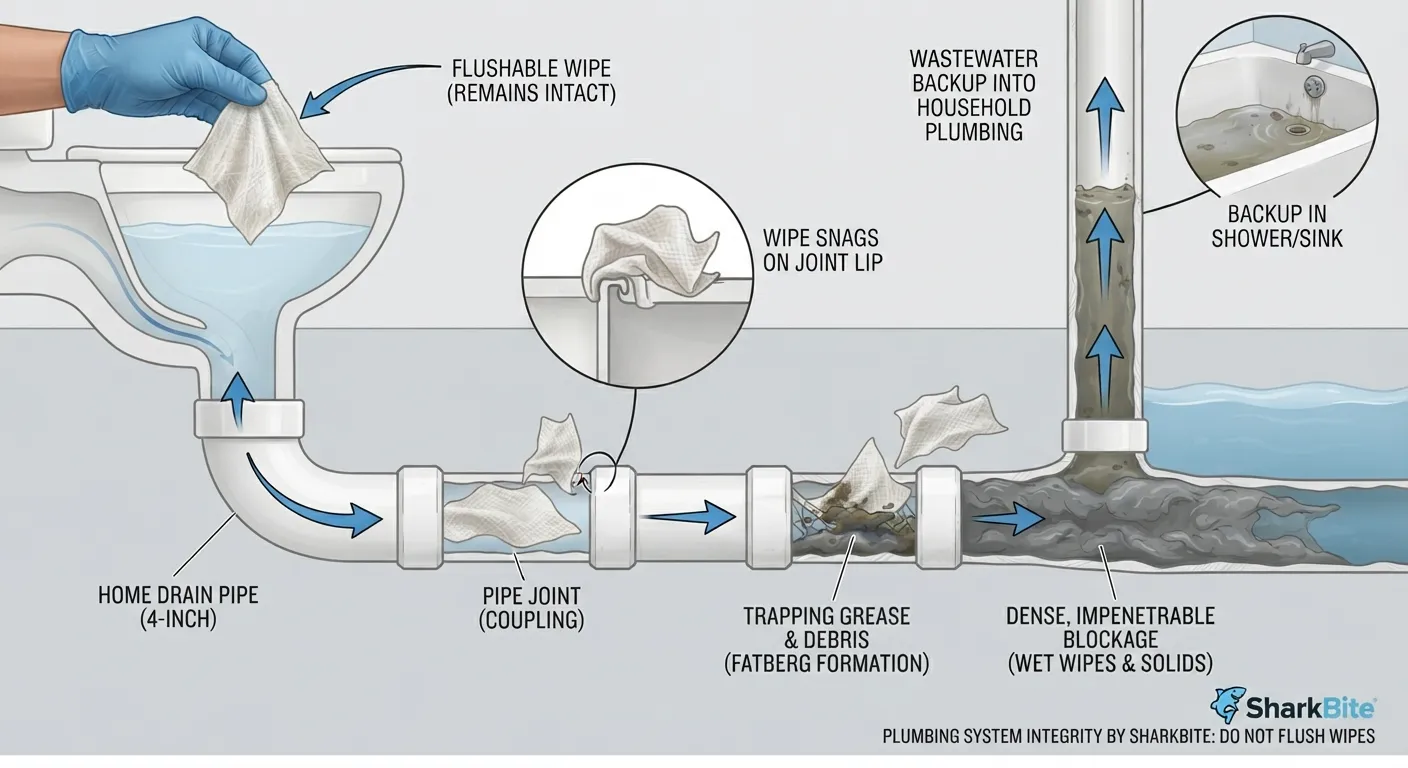
Flushable wipes inflict widespread structural damage by retaining their structural integrity inside wastewater networks, where they trap grease and organic matter. According to the U.S. Environmental Protection Agency (EPA), flushing non-disintegrating wipes creates severe blockages, endangers public health, and overburdens municipal treatment infrastructure.
No Disintegration: The Fiber Strength Problem
The fundamental mechanism of failure is the extreme durability of the nonwoven synthetic or blended plant fibers used in manufacturing wipes. While toilet paper rapidly dissolves into small particles via hydration and gentle turbulence, flushable wipes feature tightly cross-woven matrixes engineered not to tear during cleaning use.
- Tensile Resistance: The synthetic polymers and polyester blends withstand hydraulic force without breaking apart, maintaining full sheet dimensions long after entering drainage systems.
- Catch Points: Because they remain whole, these durable sheets easily snag on minor pipe irregularities, root intrusions, or offset joints inside lateral lines.
- Accumulation Effect: As each successive flush passes, more fibrous sheets anchor onto existing snags, rapidly constricting the internal diameter of the pipe.
How Fatbergs Form in Home and Municipal Pipes
When resilient wipes interact with fats, oils, and grease (FOG) introduced through kitchen sinks, they act as a structural scaffolding for massive, rock-hard obstructions known as fatbergs. These conglomerations bind together into immovable masses that completely choke utility mains and home drainage paths.
- Grease Adhesion: Cooking fats and soap scum coat the surface of synthetic wipe fibers, creating a sticky matrix that repels water and binds tightly to surrounding debris.
- Solidification: Over time, calcium and other minerals leach into the mass, hardening the trapped wipe and grease combination into a concrete-like consistency.
- Complete Flow Restriction: The resulting fatberg grows until it fills the entire cross-section of the sewer pipe, causing catastrophic wastewater backups.
Impact on Sewer Pumps and Septic Systems
Beyond gravity-fed pipelines, flushable wipes present an immediate mechanical threat to specialized wastewater equipment, including residential septic tanks and commercial municipal lift station pumps.
- Septic Drain Field Failure: Septic systems lack the mechanical agitators required to break down synthetic fibers, allowing wipes to accumulate directly inside the tank and clog outlet baffles or infiltrate drain fields.
- Grinder Pump Entanglement: Residential sewage ejector pumps and grinder pumps easily stall when durable wipes wrap tightly around rotating impeller blades, burning out expensive motors.
- Municipal Lift Station Overloads: City sewage pumps regularly fail when massive volumes of un-degraded wipes bind internal valves, triggering untreated sewage overflows into local waterways.
Real Municipal Case Data Cost & Scale of the Problem
Municipalities globally spend hundreds of millions of dollars annually clearing wipes from infrastructure and repairing damaged mechanical assets. Wastewater agencies report that cleaning clogged pump stations and clearing main line blockages drives up local utility maintenance budgets drastically.
- Equipment Maintenance Costs: Public utilities routinely dispatch specialized hydro-jetting crews and spend countless man-hours manually pulling tangled masses of wipes from municipal wet wells.
- Capital Infrastructure Strain: Premature wear on heavy-duty pumps forces cities to replace multi-thousand-dollar machinery years ahead of scheduled lifecycles.
- Environmental Violations: Sewer overflows caused by wipe blockages often result in severe state and federal environmental fines for municipalities, costs that ultimately trickle down to taxpayers.
Is Your Toilet or Drain Clogged From Wipes? Warning Signs to Check
Catching a wipe-induced clog early can prevent catastrophic sewer line backups and expensive property damage. Watch for subtle hydraulic changes across your home plumbing network, as synthetic wipes rarely create instant blockages without prior warning indicators.
Gurgling Sounds and Slow Drains
Unusual noises coming from your plumbing fixtures are often the first audible indicator that a partial blockage is restricting airflow inside the vent and drain lines. When trapped wipes trap air pockets, water struggle to flow freely.
- Drain Gurgling: Hearing a bubbling or gurgling sound in the bathtub or sink when you flush the toilet usually means air is trapped by an upstream obstruction.
- Sluggish Flow: Sinks, showers, or tubs that drain noticeably slower than usual point toward narrowing pipe diameters caused by accumulating fibrous material.
- Multi-Fixture Impact: If using water in one appliance causes backups or bubbling in another, the restriction is located deep within the main sewer line.
Bad Odors Coming From Drains
Persistent foul smells around floor drains, sinks, or utility rooms often signal trapped organic waste and decomposing material caught behind a wipe accumulation. When airflow is blocked, sewer gases cannot escape safely through the roof vent.
- Sewer Gas Smell: A distinct sulfur or rotten egg odor emerging from dry or slow-moving drains indicates pressure forcing sewer vapor back into living spaces.
- Trap Evaporation: Partial blockages can create a vacuum effect that pulls water out of P-traps, eliminating the liquid barrier blocking sewer odors.
- Trapped Organic Matter: Wipes hold onto soap scum, grease, and organic waste, creating an ideal breeding ground for foul-smelling bacteria inside the pipe walls.
Toilet Backing Up or Overflowing
An unexpected rise in toilet water levels or frequent bowl overflows after flushing indicates a significant restriction in the branch line or main sewer stack. Standard plunging may provide temporary relief if the blockage consists of soft paper, but synthetic wipes usually snap right back into place.
- Unresponsive Plunging: If traditional plunging fails to clear the line or if water immediately pushes back up into the bowl, a durable fibrous mass is likely lodged in the trapway.
- Unstable Water Levels: A toilet bowl that fluctuates wildly in water level without being used points to venting issues caused by downstream clogs.
- Basement Floor Drain Seepage: Water rising from lower-level floor drains during a toilet flush is a severe warning sign that your main sewer line is completely choked.
How Long Does It Take for Wipes to Clog a Pipe?
The timeline for a wipe-induced obstruction to manifest depends heavily on household usage habits, pipe condition, and existing grease accumulation. While some clogs form instantly, others build over months.
- Immediate Blockages: A large clump of multiple wipes flushed simultaneously can wedge tightly inside a narrow toilet trap or 90-degree elbow right away.
- Gradual Accumulation: Single wipes flushed routinely over weeks or months will snag on pipe imperfections, slowly building an anchored web that catches toilet paper and grease until total failure occurs.
- Aging Infrastructure Acceleration: Homes with older cast iron or clay pipes feature rough, pitted interiors that drastically accelerate how quickly wipes catch and form a dense clog.
Do Any Flushable Wipes Actually Disintegrate? Brand-by-Brand Breakdown
Independent consumer tests and wastewater studies reveal that the vast majority of popular “flushable” wipe brands fail to disintegrate adequately within standard plumbing timelines. While manufacturers frequently market plant-based fibers or proprietary technology as safe, physical performance in water tells a dramatically different story.
Testing Method: How Disintegration Was Compared
Independent laboratory evaluations and plumbing advocacy groups test wipes using standardized agitation models to replicate real-world sewer conditions. These protocols measure how long a wipe takes to break apart under mechanical stress compared to traditional bathroom tissue.
- Jar Agitation Testing: Wipes are placed in sealed water containers and shaken vigorously for standardized intervals to observe structural fiber breakdown.
- Dissolution Timelines: Evaluators record whether a product dissolves into fine particles within minutes—like standard toilet paper—or maintains its sheet form entirely.
- Residue Inspection: Technicians inspect the remaining pulp to determine if synthetic binders or polyester mesh threads prevent true biological degradation.
Comparison Table: Cottonelle, Dude Wipes, and Others
Different brands utilize distinct material blends, resulting in varying degrees of structural integrity and plumbing risk. The data below summarizes how leading commercial brands perform under standard disintegration tests.
Are There Any Wipes That Are Truly Safe to Flush?
From a strict municipal plumbing perspective, no pre-moistened wipe matches the instantaneous breakdown capabilities of standard dry toilet paper. Even products certified under stricter industry guidelines require extended timeframes that far exceed normal residential wastewater transit.
- The Safe Alternative: Plumbers universally recommend utilizing dry toilet paper or switching to a bidet attachment if enhanced personal hygiene is desired without plumbing risks.
- Disposal Best Practices: If you prefer using moist wipes for personal cleaning, always throw them directly into a waste bin rather than flushing them down the toilet.
- Label Misconceptions: Never assume a product is safe for your specific septic system or municipal lateral line simply because packaging marketing utilizes terms like “biodegradable” or “sewer safe.”
How Much Can Flushing Wipes Actually Cost You?
Flushing non-disintegrating wipes creates severe financial burdens for homeowners and municipal utilities alike. What begins as a convenient bathroom habit routinely escalates into hundreds or thousands of dollars in emergency plumbing repairs, equipment replacement, and property damage restoration.
Average Plumber Call Out Costs for Clog Removal
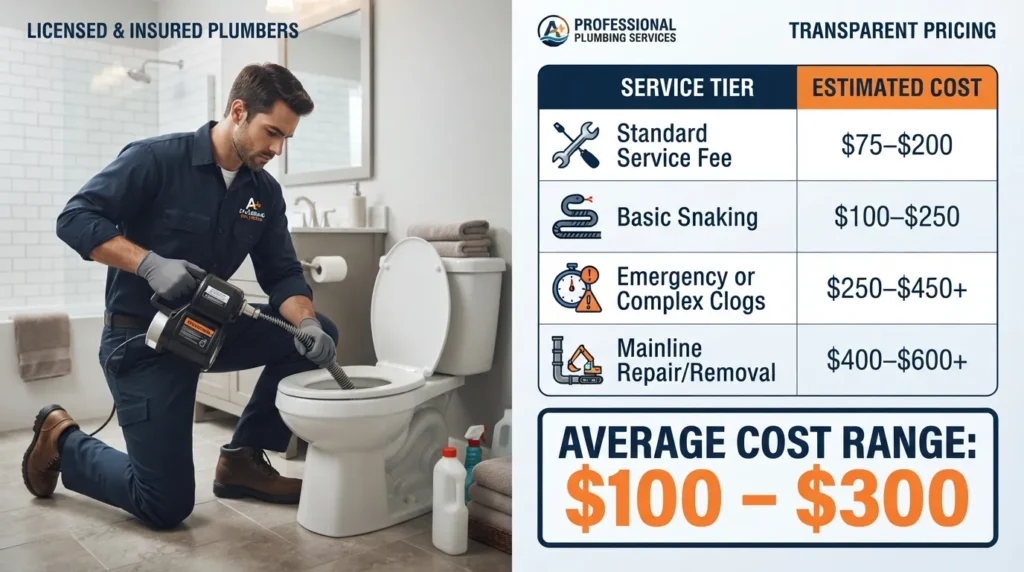
When synthetic wipes become wedged inside main drainage lines or branch pipes, standard plunging becomes useless, forcing homeowners to hire licensed plumbing professionals equipped with specialized clearing machinery.
- Standard Drain Snaking: Basic augering or snaking services for localized blockages typically range from $150 to $350, depending on geographic location and accessibility.
- Hydro-Jetting Services: Because wipes wrap tightly around pipe walls, high-pressure water jetting is frequently required to scour the interior, costing between $400 and $1,200.
- Emergency After-Hours Fees: Wastewater backups rarely occur during normal business hours, meaning emergency weekend or night call-outs can easily double standard hourly service rates.
Sewer Line Repair and Replacement Costs
When accumulated wipes combine with grease and tree roots to crack, collapse, or completely choke underground lateral pipes, repairs shift from routine drain cleaning to major structural excavation.
- Video Camera Inspections: Plumbers charge $250 to $500 just to feed an optical scope into the line to confirm that wipes and structural damage caused the blockage.
- Trenchless Pipe Repair: Relining an underground sewer pipe damaged by recurring wipe clogs typically costs between $4,000 and $11,000.
- Full Excavation Replacement: Digging up and replacing a collapsed, wipe-choked sewer line under landscaping or concrete driveways can easily skyrocket from $5,000 to over $20,000.
Municipal Fatberg Cleanup Costs City Level Impact
On a macro scale, the cumulative habit of flushing moist wipes drains millions of dollars from public municipal budgets, costs that are ultimately passed down to residents via raised local utility rates and property taxes.
- Lift Station Overhauls: Municipalities spend hundreds of thousands of dollars annually repairing or replacing commercial sewage pumps burned out by tangled synthetic fibers.
- Manhole and Main Clearing: Public works crews deploy heavy industrial vacuum trucks and manual clearing equipment constantly to break apart massive underground fatbergs.
- Environmental Remediation Fines: Cities facing raw sewage overflows into local waterways due to wipe-blocked mains often incur steep regulatory penalties enforced by environmental protection agencies.
Are Flushable Wipes Safe for Your Body? Health Facts
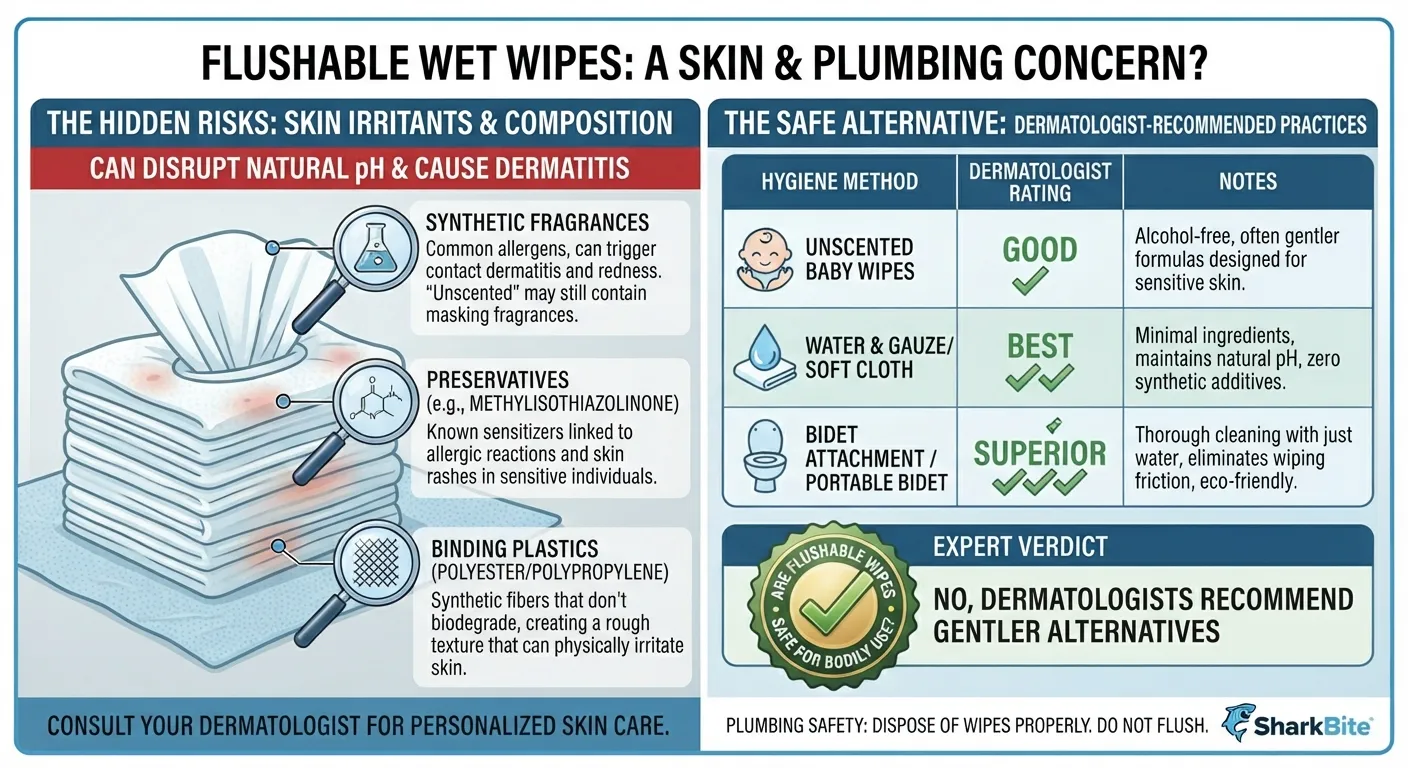
While pre-moistened wipes offer a perceived upgrade in personal cleanliness, regular use can introduce unexpected dermatological concerns. Chemical preservatives, synthetic fragrances, and residual cleansing agents frequently disrupt delicate skin microbiomes and trigger localized irritation.
Skin Irritation and Chemical Concerns
The chemical formulations required to keep pre-moistened paper products wet in a package for months without growing mold often include harsh preservatives and stabilizers that react poorly with sensitive skin.
- Contact Dermatitis: Chemical additives, surfactants, and synthetic preservatives can trigger allergic contact dermatitis, leading to persistent redness, itching, and discomfort.
- Microbiome Disruption: Aggressive cleansing agents strip away natural protective oils and beneficial bacteria in sensitive areas, increasing vulnerability to infections and chafing.
- Moisture Trapping: Failing to dry thoroughly after using wet wipes leaves residual moisture against the skin, which commonly fosters bacterial and fungal growth.
Are Fragrance-Free Wipes Safer?
Switching to unscented or hypoallergenic products eliminates artificial perfumes, but it does not completely remove all chemical skin irritants present in commercial wipe manufacturing.
- Hidden Irritants: Many products marketed as “fragrance-free” still utilize masking agents or powerful chemical preservatives like methylisothiazolinone to prevent bacterial contamination.
- Hypoallergenic Limitations: The term “hypoallergenic” is largely unregulated, meaning manufacturers can apply it without meeting strict medical testing standards for sensitive skin.
- Better Alternatives: Dermatologists generally recommend using plain water with a bidet or simply sticking to dry, high-quality toilet paper if you experience chronic irritation or sensitivity.
I Already Flushed a Wipe What Should I Do Now?
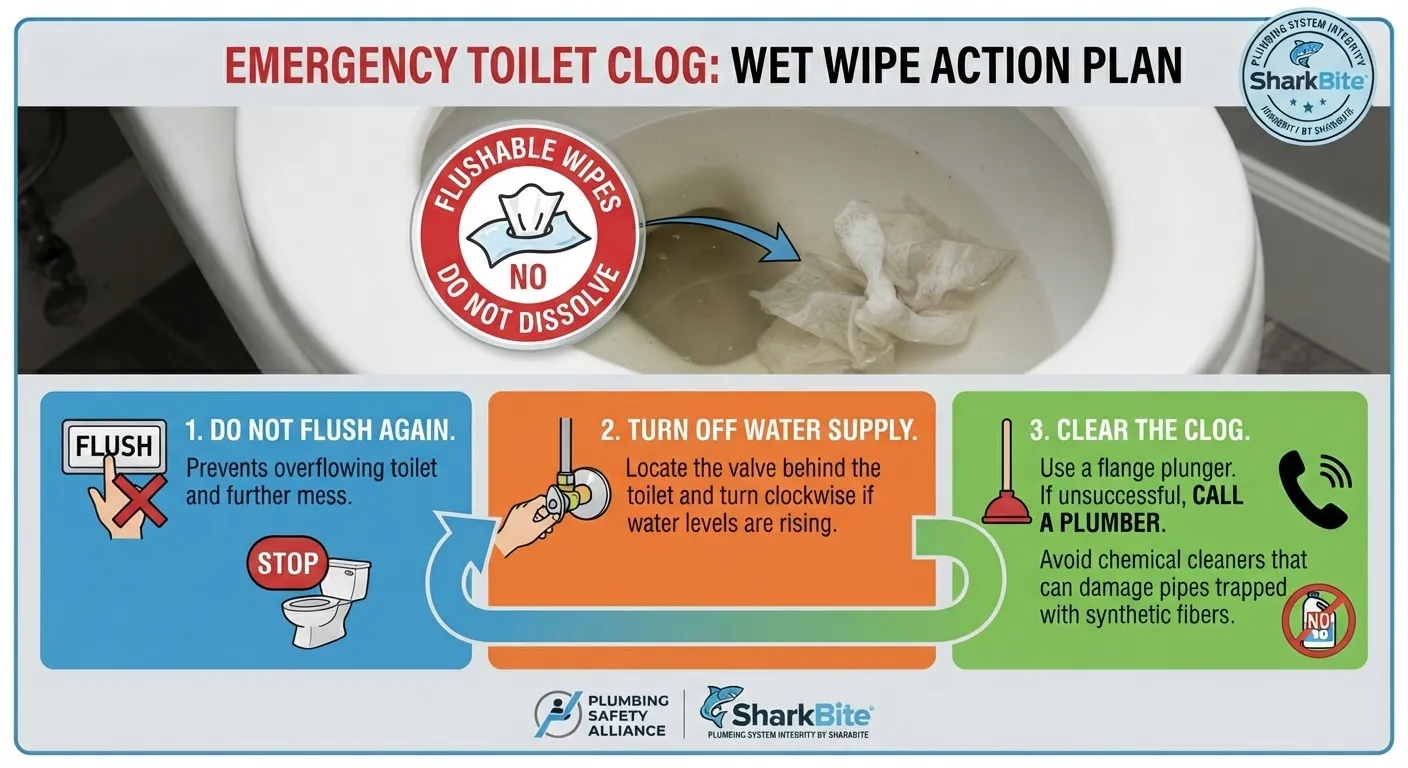
If you have just flushed a wipe and notice your toilet beginning to back up, immediate action can prevent a minor blockage from turning into an expensive household flood. Knowing how to safely intervene—and what methods to avoid—will protect your plumbing from further damage.
Immediate Steps If Your Toilet Is Backing Up
Stopping additional water from entering the bowl is the most critical first step when managing an active drainage blockage caused by a synthetic wipe.
- Stop Flushing Immediately: Never attempt a second flush, as adding more water to an already restricted line will quickly cause the bowl to overflow onto your bathroom floor.
- Shut Off the Water Valve: Turn the small oval valve located on the water supply line behind the toilet clockwise to shut off incoming water entirely.
- Remove Excess Water: If the bowl is dangerously full, use a small disposable cup or container to bail excess water into a bucket before attempting any mechanical clearing.
Should You Use a Plunger or Drain Snake First?
Choosing the correct tool depends on whether the blockage is trapped right in the toilet trapway or further down inside the main branch line.
- Flange Plunger Technique: Use a heavy-duty bell-shaped flange plunger rather than a shallow cup plunger, ensuring a tight seal over the drain hole to create adequate hydraulic pressure.
- Gentle Plunging: Push and pull gently on the first stroke to avoid splashing wastewater, then use vigorous rhythmic strokes to force the trapped wipe back up or through.
- Toilet Auger Usage: If plunging fails, carefully feed a rubber-coated toilet auger (snake) down the bowl to catch and pull back the fibrous material rather than pushing it deeper.
Why You Should Avoid Chemical Drain Cleaners
Pouring harsh liquid drain openers like Drano or liquid lye into a wipe-clogged toilet is rarely effective and creates severe physical safety hazards.
- Chemical Ineffectiveness: Caustic chemicals are engineered to dissolve hair, grease, and organic matter, but they bounce off or slide right past durable synthetic wipe fibers without breaking them down.
- Severe Splash Risks: If chemicals fail to clear the blockage and you later try to plunge or snake the line, standing caustic liquid can splash back onto your skin and eyes.
- Fixture and Pipe Damage: Trapped chemicals sitting against porcelain or older metal and PVC pipe joints can generate excessive heat, cracking fixtures and degrading pipe integrity.
When to Call a Professional Plumber
Recognizing your limits prevents amateur clearing attempts from turning into major structural pipe replacements or raw sewage property damage.
- Multiple Fixture Backups: If sinks, showers, or floor drains gurgle or back up when you use the toilet, the blockage is deep in the main sewer line and requires professional hydro-jetting.
- Persistent Clogs: If plunging and augering provide only temporary relief before the toilet backs up again within a few hours, a dense mass remains lodged in the line.
- Property Flooding: If raw sewage begins pooling on your basement floor or bathroom tile, immediately shut off your home’s main water supply and call an emergency licensed plumber.
What to Use Instead of Flushable Wipes
Eliminating flushable wipes from your daily bathroom routine requires transitioning to reliable, plumbing-safe alternatives that deliver equal or superior cleanliness. From advanced bidet fixtures to eco-friendly disposal methods, multiple options protect your infrastructure without sacrificing personal hygiene.
Bidet Attachments: Cost and Installation Overview
Bidet attachments represent the gold standard for modern bathroom hygiene, completely replacing the need for moist wipes by using a targeted stream of fresh water for cleaning.
- Affordable Upgrades: Non-electric bidet attachments mount easily beneath existing toilet seats and typically cost between $30 and $80, making them highly cost-effective.
- Simple DIY Installation: Installing a bidet requires ordinary household tools, connecting directly to your toilet’s existing water supply line via a small T-valve in under 20 minutes.
- Plumbing Safety: Bidets use zero paper or synthetic materials, eliminating clog risks entirely while drastically reducing household toilet paper consumption.
Standard Toilet Paper
Traditional bathroom tissue remains the only paper product engineered specifically to disintegrate rapidly within water systems, preventing pipe blockages.
- Rapid Dissolution: Standard toilet paper breaks down into microscopic cellulose fibers within seconds of entering water and agitation, moving safely through municipal and home lines.
- Enhanced Effectiveness: If you prefer a moist clean without risking clogs, lightly misting standard toilet paper with water right before use provides a safe alternative to pre-packaged wet wipes.
- Plodding Prevention: Sticking exclusively to single- or multi-ply standard toilet paper ensures your drainage system remains clear of fibrous buildups and fatbergs.
Truly Biodegradable Non Flushable Wipe Options
If you prefer using pre-moistened wet wipes for personal comfort, you can safely continue using them by altering your disposal method rather than flushing them down the drain.
- Trash Bin Disposal: Install a small, lidded bathroom trash can lined with a plastic bag dedicated solely to tossing used wet wipes directly into the solid waste stream.
- True Plant-Based Materials: Look for certified 100% bamboo or organic cotton wipes that decompose naturally in municipal landfills without leaving behind plastic polymers.
- Household Habit Shift: Training family members and guests to treat all pre-moistened wipes as trash-only items protects your home from sudden, expensive plumbing emergencies.
How to Correctly Dispose of Wipes After Use
Properly discarding pre-moistened wipes into the household solid waste stream is the single most effective way to enjoy the convenience of wet wipes while protecting your home plumbing network. Establishing a reliable bathroom disposal routine prevents accidental flushes and eliminates costly sewer line emergencies.
Step by Step Disposal Method
Handling used personal hygiene wipes requires a clean, sanitary workflow that maintains household cleanliness and prevents unpleasant odors from developing in your bathroom.
- Fold and Seal: Fold the used wipe inward on itself to contain waste securely before transferring it from your hand toward the waste receptacle.
- Direct Transfer: Drop the folded wipe immediately into your designated bathroom trash container, ensuring no residue contacts surrounding surfaces.
- Bag Maintenance: Tie off and empty the bathroom trash liner regularly—ideally every few days—to maintain a fresh, odor-free environment.
Best Bin Container Setup for Bathroom Wipes
Selecting the right waste container ensures that used wipes remain completely out of sight and sealed away from household pests and ambient air.
- Step-Can with Tight Lid: Use a foot-pedal operated trash can with a tightly sealing lid to trap odors and keep the container hands-free and hygienic.
- Odor Control Liners: Line the container with scented or charcoal-infused small trash bags to neutralize any decomposition odors between garbage disposal days.
- Discreet Placement: Position the bin conveniently next to the toilet so it is effortless to reach without tempting household members or guests to toss wipes into the bowl.
Frequently Asked Questions About Flushable Wipes and Plumbing
Get clear, expert answers to the most common questions surrounding flushable wipes, plumbing safety, and proper wastewater management.
Do Plumbers Recommend Flushing Flushable Wipes?
Licensed plumbers universally recommend never flushing any pre-moistened wipe down a toilet, regardless of manufacturer labeling. Professional service technicians consistently pull intact synthetic wipes out of clogged main lines, lift stations, and sewer pumps daily.
- Universal Consensus: Every major trade association and municipal wastewater utility advises treating all wipes as trash-only items.
- Service Experience: Plumbers witness firsthand how even products labeled “flushable” catch on grease, roots, and pipe joints.
How Long Does It Take for Flushable Wipes to Clog Pipes?
The time it takes for wipes to cause a complete blockage varies depending on your plumbing layout, household usage volume, and existing grease buildup. Clogs can form instantly or accumulate slowly over many months.
- Immediate Clogs: Flushing multiple wipes at once can instantly wedge a dense mass inside a narrow toilet trap or 90-degree elbow.
- Gradual Buildup: Single wipes flushed routinely will snag on pipe imperfections, slowly creating an anchored web that traps paper and waste until total backup occurs.
Are Dude Wipes Really Safe for Plumbing?
Dude Wipes maintain high tensile strength and durable synthetic fiber blends that prevent rapid breakdown in water systems. Because they resist disintegration, they carry a high risk of catching on pipe infrastructure and contributing to stubborn sewer clogs.
- High Tensile Strength: The durable material resists tearing under normal hydraulic pressure.
- Disposal Advice: Consumers should always throw Dude Wipes into a trash bin rather than flushing them.
Are There Any Wet Wipes That Are Truly Flushable?
From a strict municipal plumbing perspective, no pre-moistened wipe matches the instantaneous breakdown capabilities of standard dry toilet paper. Even products certified under strict industry guidelines require extended timeframes that far exceed normal residential wastewater transit.
- Transit Timelines: Wastewater reaches municipal mains in seconds, giving wipes zero time to disintegrate safely.
- Alternative Cleanliness: Bidet attachments offer a water-based clean without introducing paper or synthetic hazards into your pipes.
Do Flushable Wipes Clog Pipes Even in New Homes?
Modern homes featuring brand-new PVC plumbing can still experience severe clogs from flushable wipes if grease, hair, or soap scum is present. While smooth plastic pipes delay obstruction compared to old cast iron, wipes will eventually snag on fittings and branch connections.
- Grease Adhesion: Kitchen fats entering modern drainage systems coat wipe fibers and create sticky blockages anywhere in the home.
- Fitting Obstructions: Sanitary tees, bends, and cleanout fittings provide natural catch points for durable synthetic fibers regardless of pipe age.

Oscar Vance | Master Plumber & Drainage Expert
Meet Oscar Vance, a licensed master plumber sharing practical solutions on residential repairs, preventive maintenance, and thoughtful home upkeep.
Pingback: How to Unclog a Toilet Fast: 5 Safe Methods That Work