Can a Failing Softener Cause Plumbing Damage?
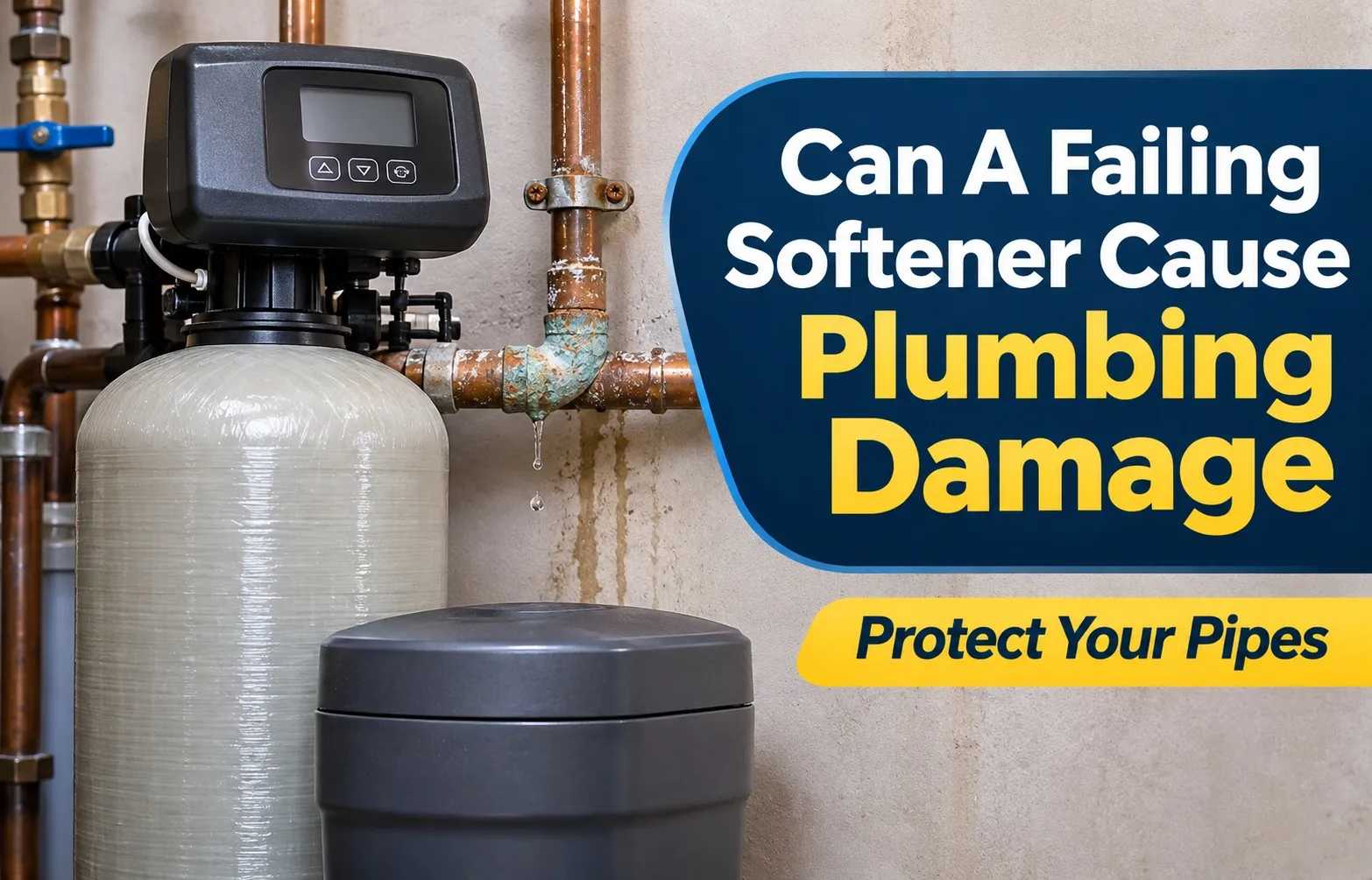 Yes, a failing water softener can cause severe plumbing damage by leaking resin beads into pipes, triggering sudden pressure fluctuations, and allowing destructive hard water mineral scale to ruin fixtures and home appliances.
When an aging water softener breaks down internally, the immediate risks to your home plumbing system escalate rapidly. Taking quick action prevents widespread contamination across your entire supply line.
Can a Failing Water Softener Cause Plumbing Damage?
A neglected or broken water softener transitions from protecting your plumbing system to actively damaging it. When the internal components fail, degraded water chemistry and physical debris enter your distribution lines.
The primary mechanisms behind softener-induced plumbing failures include:
- Resin Tank Breakdown: A cracked bottom basket allows millions of tiny polymer resin beads to escape directly into your home plumbing, instantly clogging faucet aerators, showerheads, and appliance valves.
- Hard Water Scale Return: Exhausted resin beds or mechanical control valve failures allow untreated hard minerals (calcium and magnesium) to form thick scale deposits inside water heaters and copper pipes.
- Pressure Drops and Surges: Blocked internal distributor tubes or stuck control valves create severe water pressure drops and hydraulic shocks across household fixtures.
- Corrosion Acceleration: Improperly balanced regeneration cycles and altered sodium levels can increase the corrosion rate inside older galvanized steel and copper water lines.
Immediate Action: How to Use Your Bypass Valve to Stop Damage Right Now
If you suspect water softener failure, your immediate priority is isolating the unit from your main supply lines using the bypass valve. Activating the bypass allows raw water to flow around the softener, preventing further debris from entering your plumbing.
Follow these steps to isolate a failing water softener unit immediately:
- Locate the Bypass Valve Assembly: Find the valve manifold located directly behind the water softener unit where the inlet and outlet pipes connect.
- Identify Your Valve Configuration: Determine whether your installation uses a single lever valve, a push-button valve, or a traditional three-valve setup.
- Engage the Bypass Position:
- Single-Lever Valves: Turn the valve handle clockwise until it points directly away from the unit or aligns parallel to the bypass pipe.
- Push-Button (Piston) Valves: Push the red or blue valve button firmly from one side to the opposite side until it stops completely.
- Three-Valve Systems: Turn the inline inlet and outlet valves clockwise to close them, then turn the center bypass valve counterclockwise to open it fully.
- Flush Household Lines: Open an outside hose spigot or bathtub faucet to clear trapped air and flush out lingering resin particles without clogging smaller fixture aerators.
4 Direct Ways a Broken Water Softener Ruins Your Plumbing
When a water softener malfunctions internally, it stops functioning as a protective shield and transforms into a physical hazard for your home’s water distribution network. Mechanical wear, cracked internal parts, and exhausted media directly attack pipes and connected fixtures.
Escaping Resin Beads: Clogging Aerators, Valves, and Appliances
A damaged or cracked internal distributor tube allows microscopic polymer resin beads to escape the tank and flood your household supply lines. These tiny synthetic beads travel through the plumbing network, lodging inside faucet aerators, toilet fill valves, and appliance water inlets.
The sudden release of filter media creates immediate blockages and mechanical failures across multiple points of use:
- Faucet Aerator Obstruction: Resin beads jam inside kitchen and bathroom faucet screens, causing sputtering water flow or complete pressure loss.
- Appliance Valve Damage: Washing machines and dishwashers pull beads into their internal solenoid valves, burning out motors and causing costly water leaks.
- Toilet Mechanism Jamming: Beads become trapped in fill valves, preventing proper tank sealing and causing continuous running water.
Water Pressure Drops & Dangerous Pressure Surges
Control valve failures and clogged internal media beds create severe water pressure irregularities throughout your home. When the internal pistons or seals jam, water restriction causes sudden drops followed by high-velocity pressure surges.
Unstable water pressure stresses your piping infrastructure, particularly affecting vulnerable connection points:
- PEX Tubing Strain: Extreme pressure spikes can weaken flexible PEX tubing expansions and slip fittings if clamps are fatigued.
- Joint and Solder Stress: Copper pipe joints experience mechanical water hammer effects, increasing the risk of pinhole leaks at soldered elbows.
- Flow Restriction: Damaged control valves restrict overall flow rate, starving showers and multi-fixture usage simultaneously.
Return of Unfiltered Mineral Scale Buildup
When a softener’s resin bed exhausts completely or salt bridging prevents proper regeneration, hard water minerals rush back into your pipes. Calcium and magnesium immediately begin precipitating out of solution, coating pipe interiors with stubborn scale layers.
Unchecked mineral accumulation compromises the structural integrity of your plumbing system over time:
- Copper Pipe Scale: Hard mineral crust narrows the inner diameter of copper lines, constricting water volume and increasing friction loss.
- Galvanized Pipe Corrosion: Returning hard water accelerates pre-existing rust and mineral bridging inside older iron and galvanized steel pipes.
- Fixture Restriction: Showerheads and ceramic valve cartridges accumulate thick scale crust, freezing movable parts.
Accelerated Water Heater Tank Rusting & Anode Rod Depletion
A failing or improperly balanced water softener changes ion concentrations, which can chemically accelerate the degradation of internal tank components. Specifically, altered water chemistry forces sacrificial anode rods inside water heaters to corrode and dissolve at an abnormal rate.
Once the sacrificial anode rod is entirely depleted, the unprotected steel tank faces direct corrosive attack:
- Premature Tank Failure: Unprotected inner glass-lined steel begins to rust, leading to catastrophic water heater tank ruptures and basement flooding.
- Sediment Accumulation: Accelerated breakdown deposits heavy mineral sludge at the bottom of the water heater, reducing heating efficiency and causing loud rumbling noises.
- Heating Element Scaling: Electric heating elements become coated in heavy scale insulation, causing them to overheat and fail prematurely.
Pipe-by-Pipe Vulnerability Assessment
The extent of plumbing damage caused by a failing water softener largely depends on your home’s specific piping material. While flexible modern plastics handle mechanical issues differently than rigid metals, no plumbing system is entirely immune to water chemistry shifts, escaping resin debris, or scale returning from a broken unit.
Review the guidelines provided by the Minnesota Department of Health Water Softening Guidelines to understand how water chemistry balances affect municipal and private plumbing systems.
Copper Pipes vs. Softened Water Chemistry
Copper pipes are highly susceptible to sudden changes in water pH levels and mineral concentration. When a softener fails, it can destabilize the internal protective layer inside copper lines, leading to localized corrosion and structural degradation.
Chemical and physical failure modes in copper plumbing include:
- Scale Stripping: If an old copper pipe already has mineral buildup, introducing unstable or improperly softened water can aggressively dissolve this layer, exposing raw metal beneath and causing sudden leaks.
- Copper Pipe Pinhole Leaks: Corrosive water chemistry combined with high sodium or unbuffered pH levels causes pitting along soldered elbow joints and thin wall sections.
- Abrasive Bead Erosion: Escaping polymer resin beads flowing at high velocity act like mild sandpaper, wearing down delicate internal copper bends over time.
Galvanized Steel & Pre-1980s Iron Plumbing Risks
Older homes featuring galvanized steel or cast-iron plumbing face the highest damage risk during water softener breakdown. These rigid metallic pipes rely heavily on stable water chemistry to prevent internal rust blooms from expanding.
Key hazards affecting legacy iron and steel lines include:
- Iron Pipe Corrosion Acceleration: Unfiltered hard water returning through an unmaintained unit triggers rapid oxidation on pre-existing iron rust deposits.
- Internal Bridging and Clogging: Loose mineral scale strips off and catches on rough pipe interiors, creating severe flow bottlenecks throughout the house.
- Threaded Joint Ruptures: Sudden pressure shocks caused by jammed control valves place severe stress on weakened, rusty pipe threads, leading to major floods.
PEX and PVC Plastic Pipes: Are They Safe from Softener Failure?
Plastic plumbing systems like PEX tubing and rigid PVC are completely immune to rust and chemical pitting. However, plastic lines are highly vulnerable to the physical debris and pressure anomalies produced by broken softener units.
Risks specifically targeting modern PEX and PVC plumbing setups include:
- PVC Fitting Blockages: Tiny polymer resin beads collect inside narrow 90-degree PVC elbows and manifold connection valves, choking off supply volume.
- PEX Expansion Stress: Frequent water pressure fluctuations and sudden valve closures stress flexible PEX tubing expansions, crimp rings, and brass push-fit adapters.
- Manifold Contamination: PEX home distribution manifolds get packed with escaping resin, requiring a total system flush to restore normal water distribution.
Troubleshooting & Warning Signs
Homeowners often notice physical symptoms long before identifying a complete water softener breakdown. Recognizing these early warning signs allows you to intervene before minor component failures cause severe plumbing line blockages or structural leaks.
Why Are Tiny Plastic Beads Coming Out of My Faucets?
Finding small gold, amber, or black plastic beads in your sink basin or shower floor is the definitive sign of internal resin bed degradation. This occurs when the bottom distributor screen inside the mineral tank cracks or collapses under pressure.
When this internal barrier breaks, the high-pressure backwash sequence pushes media directly into your fresh water supply:
- Visual Identification: The particles look like tiny translucent beads or gritty sand that feels slick or rubbery between your fingers.
- Immediate Action Required: Put the unit into bypass mode instantly to prevent millions of additional beads from clogging water lines and tankless water heaters.
- System Cleaning Needs: You must drain, disconnect, and flush every faucet aerator, showerhead, and appliance valve line to remove trapped debris.
Salt Mushing, Salt Bridging, and Brine Tank Flooding
Problems within the brine tank disrupt proper salt dissolution, preventing the system from producing the brine solution required for regeneration cycles. When salt fails to dissolve correctly, the unit cannot recharge its ion-exchange bed.
Watch for these three common brine tank malfunctions:
- Salt Bridge Formation: High humidity or improper salt types create a hard crust above empty space, preventing salt from reaching the water below.
- Salt Mushing Sludge: Recrystallized salt settles at the bottom of the brine tank as a thick sludge, blocking the brine line intake screen.
- Brine Line Overflow: A stuck air check valve or clogged injector nozzle prevents the unit from drawing brine during regeneration, resulting in brine tank flooding.
Salty Water Tastes and Strange Drain Noises
Changes in water flavor or persistent gurgling sounds from your drain lines signal control valve malfunctions during automatic regeneration cycles. A healthy system completely flushes residual salt water out through the drain line before returning to service mode.
These symptoms point to specific mechanical failures inside the control head:
- Salty Tap Water: A worn rotor disc, cracked spacer stack, or clogged drain line restrictor traps salty water inside the tank, discharging it into your kitchen tap.
- Continuous Drain Flowing: Damaged internal seals allow water to run continuously out of the drain line, wasting thousands of gallons and increasing utility bills.
- Gurgling or Knocking Drain Noises: Air pulled through a loose brine line fitting causes loud suction sounds and water splashing during backwash cycles.
Diagnostic Matrix: Symptom vs. Plumbing Risk Level
A quick risk assessment helps homeowners differentiate between minor maintenance issues and critical plumbing hazards. Use this diagnostic matrix to perform initial DIY triage and determine whether your system requires simple cleaning, valve replacement, or immediate isolation.
Quick-Reference Softener Failure Diagnostic Chart
Match your system’s physical symptoms with the corresponding plumbing risk level and recommended immediate response to protect your home’s water distribution infrastructure.
Prevention, Maintenance & When to Call a Plumber
Preventing water softener failures requires proactive care, scheduled chemical maintenance, and timely component upgrades. Following a routine service regimen protects your plumbing infrastructure, extends equipment service life, and avoids costly emergency home repairs.
Annual Softener Maintenance Checklist
Performing preventive maintenance every twelve months prevents scale buildup, removes accumulated iron deposits, and keeps internal control valves operating efficiently.
Incorporate these crucial tasks into your regular home maintenance routine:
- Clean the Brine Tank: Empty the brine tank annually to remove accumulated salt sludge, dirt, and unrefined mineral deposits from the bottom.
- Dose with Resin Cleaner Solution: Pour specialized liquid resin cleaner into the brine well to strip iron, manganese, and silt accumulation from the polymer beads.
- Inspect the Salt Level and Quality: Ensure salt levels remain above the water line, and clear any developing salt bridges or salt mushing immediately.
- Clean Valve Injectors and Screens: Remove and flush the small injector nozzles and venturi assemblies inside the main control head to maintain proper brine draw vacuum.
- Test Raw vs. Softened Water Hardness: Use a liquid hardness testing kit to confirm grains-per-gallon reduction and verify valve calibration setting accuracy.
When to Replace the Resin Bed vs. Replacing the Entire System
The average water softener lifespan ranges between 10–15 years, depending on incoming water quality, iron concentration, and municipal chlorine levels. Determining whether to replace individual media or purchase a completely new unit depends on overall equipment age and wear.
Evaluate these factors before making a repair or replacement decision:
- Replacing Media (Resin Replacement): If your control valve functions perfectly, the tank chassis shows no leaks, and the unit is under 8 years old, replacing degraded media is cost-effective. Resin bed replacement cost ranges significantly lower than complete system installation.
- Replacing the Whole Unit: If the control head leaks continuously, electronic control boards fail, or the housing is over 12 years old, schedule a professional plumber consultation to upgrade the complete system.
- Chlorine Damage Considerations: City water chlorine breaks down polymer bead bonds over time, causing them to turn mushy and require earlier media replacement.
Water Heater Anode Rod Maintenance Protocol
Softened water accelerates sacrificial anode rod depletion inside storage-tank water heaters. Inspecting and replacing this protective component every 2 to 3 years prevents premature tank corrosion and severe water heater failure.
Follow this maintenance protocol to extend your water heater’s operating life:
- Inspect Anode Rod Condition: Unscrew the hex-head anode rod from the top of the water heater tank using a socket wrench to check metal erosion levels.
- Replace Worn Rods Promptly: Replace the rod immediately if core wire is exposed across more than 6 inches or if metal thickness has reduced by over 50 percent.
- Perform an Annual Water Heater Flush: Connect a hose to the bottom drain valve and flush sediment accumulation out of the tank annually to preserve heating efficiency.
- Upgrade to Powered Anode Rods: Consider replacing traditional sacrificial aluminum or magnesium rods with a powered titanium anode rod to stop sacrificial degradation entirely.
Frequently Asked Questions
Addressing common questions about water softener failure helps homeowners troubleshoot issues quickly, prevent unnecessary plumbing repairs, and understand system replacement requirements.
What is the average lifespan of a water softener?
The average lifespan of a well-maintained water softener is 10 to 15 years. Units fed by well water containing heavy iron concentrations or municipal supplies high in chlorine may experience faster resin degradation, shortening functional service life to around 8 to 10 years.
Regular maintenance, including annual resin bed chemical cleaning and brine tank flushing, maximizes unit longevity and protects household plumbing from premature hard water mineral damage.
Will a broken water softener cause low water pressure in the whole house?
Yes, a broken water softener is a leading cause of sudden, house-wide water pressure drops. When internal resin beads degrade or compact tightly inside the mineral tank, water flow becomes restricted as it tries to pass through the vessel.
Additionally, if a cracked distributor tube releases resin beads into your plumbing lines, those beads will block faucet aerators, showerheads, and appliance valves, causing widespread pressure loss across individual fixtures.
How do I bypass a clogged water softener unit safely?
You can safely bypass a clogged water softener by locating the valve manifold behind the unit and turning the bypass valve lever into the bypass position. For single-lever valves, turn the handle clockwise until it is perpendicular to the inlet and outlet pipes.
For push-button bypass valves, push the piston firmly from one side until it locks into place on the opposite side. Once bypassed, open a high-flow fixture like a bathtub tap or outdoor spigot to clear trapped pressure and test system flow.
Can a failing softener ruin my water heater?
Yes, a failing water softener can severely damage your water heater. If a broken softener allows hard water minerals to return, calcium and magnesium scale rapidly coats internal heating elements and accumulates at the bottom of the tank, reducing heating efficiency and causing localized overheating.
Furthermore, if degraded resin beads escape the tank, they collect in the water heater’s dip tube and bottom drain line, requiring a full water heater tank flush and plumbing system inspection to clear the obstruction.

Oscar Vance | Master Plumber & Drainage Expert
Meet Oscar Vance, a licensed master plumber sharing practical solutions on residential repairs, preventive maintenance, and thoughtful home upkeep.