Why Your Shower Drain Gets Clogged
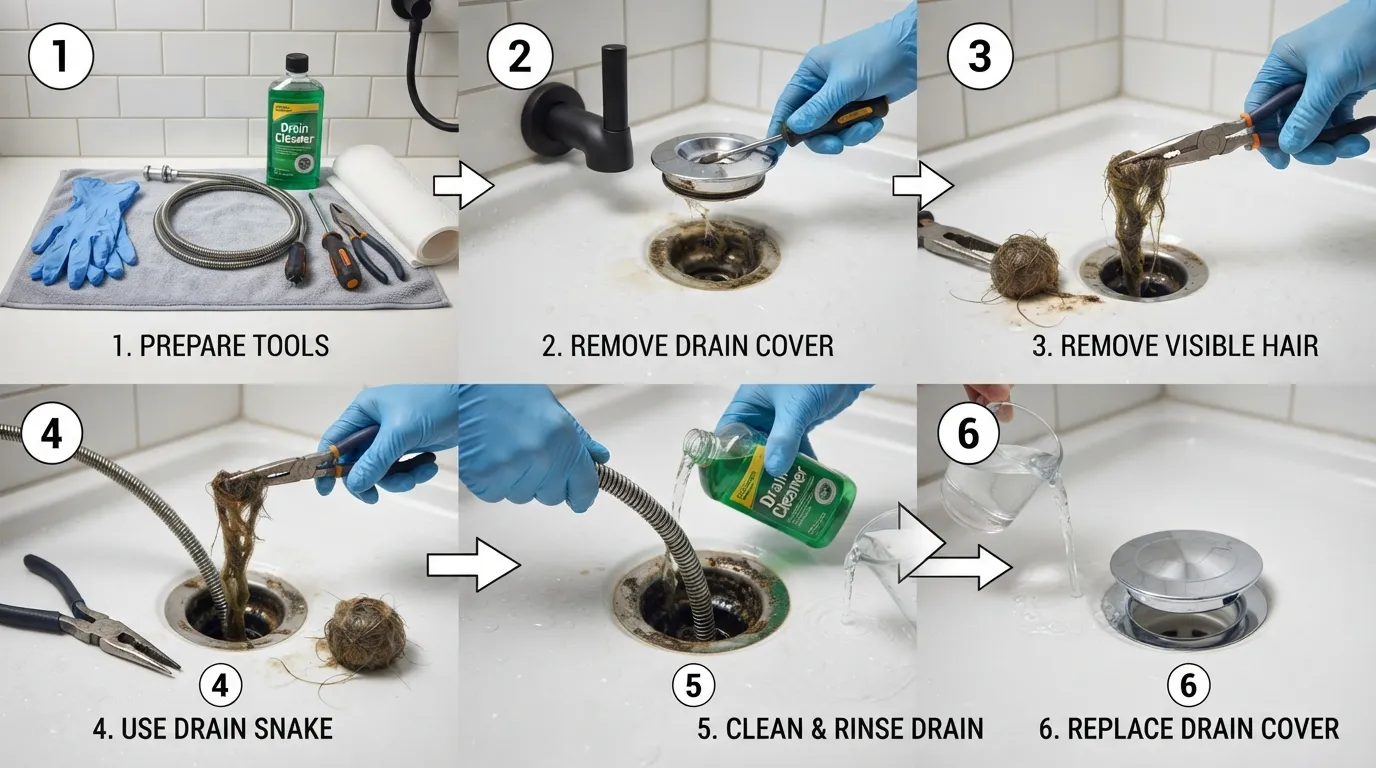
A blocked shower drain is one of the most frustrating household plumbing issues, often starting as a minor inconvenience before turning into standing water during every wash. Understanding the root causes and early warning signs helps you address the problem before it requires costly professional intervention or pipe replacement.
Common Signs Your Shower Drain Is Clogged
Recognizing the early indicators of a shower drain pipe clogged situation allows you to act before wastewater backs up into your bathroom floor. Catching these symptoms early saves time, effort, and plumbing repair costs.
- Slow drainage: Water pools around your ankles and takes noticeably longer to drain after you turn off the shower.
- Shower won’t drain completely: Standing water remains in the tub or shower pan long after you finish washing.
- Gurgling sounds: Trapped air escaping through the plumbing lines creates bubbling noises when the water runs.
- Unpleasant odors: A foul, musty smell rises from the drain due to decomposing hair, skin cells, and trapped organic gunk.
What Causes Shower Drain Clogs?
Most shower clogs do not happen overnight; they form gradually as various types of debris accumulate inside the plumbing trap and pipes. Knowing what materials build up helps you prevent future blockages.
- Hair accumulation: Loose strands combine with other residues to form dense mats that anchor themselves inside the drain pipe.
- Soap scum residue: Traditional bar soaps react with hard water minerals to create a sticky, waxy film that coats the pipe walls.
- Body oils and dead skin cells: Natural oils shed during washing act as a glue, binding loose debris together into stubborn blockages.
- Mineral buildup: Hard water deposits accumulate over time, narrowing the internal diameter of the drainage pipes and catching loose gunk more easily.
Can Hair Go Down the Shower Drain?
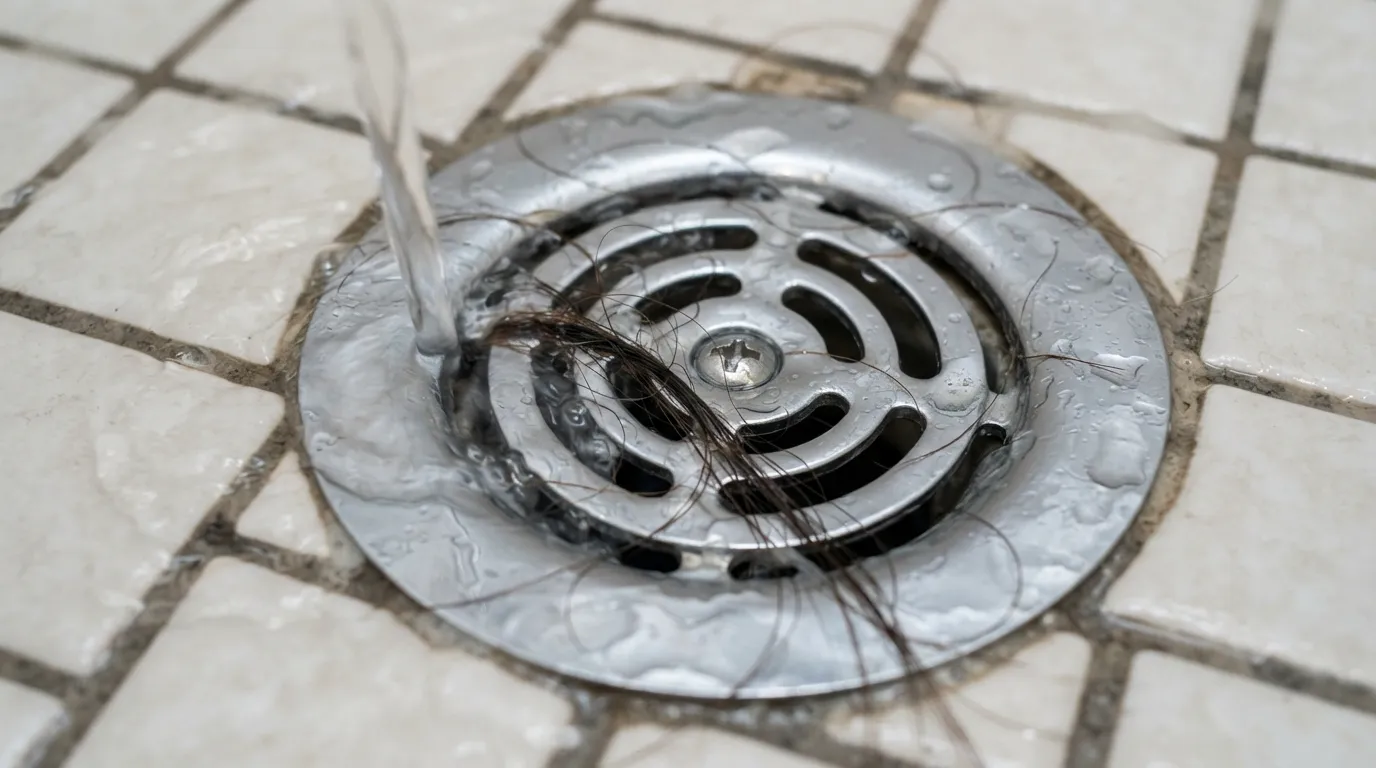
While hair naturally falls out during washing and inevitably slips down the opening, allowing large amounts to enter unchecked is the primary reason your shower clogged system fails. Small strands may occasionally wash through, but unmanaged hair accumulation rapidly leads to a severe drain pipe blockage.
What Happens When Hair Enters the Drain?
Once hair slips past the drain cover, it does not simply wash harmlessly out into the main sewer line. Instead, it creates structural snags inside your plumbing network.
- Snagging on pipe imperfections: Strands catch on tiny microscopic imperfections, corrosion spots, or pipe joints inside the drainage system.
- Creating a filtration net: The initial trapped hairs act like a net, catching incoming soap scum, body oils, and organic debris.
- Expanding over time: As more debris wraps around the core mass, the blockage grows denser, severely restricting water flow until you require a hair snake for shower drain extraction.
Why Hair Is the #1 Cause of Shower Drain Clogs
Hair possesses unique physical properties that make it uniquely destructive to residential plumbing systems compared to other household debris.
- Tensile strength and flexibility: Human hair is remarkably strong and flexible, allowing it to weave into tight, impenetrable knots inside curved pipe traps.
- Resistance to decay: Unlike organic waste, hair does not dissolve easily in water and resists breakdown by standard liquid drain cleaners.
- High volume shedding: The average person sheds between 50 and 100 hairs daily, with a significant percentage washing away during routine showers.
Tools & Supplies You’ll Need Before You Start
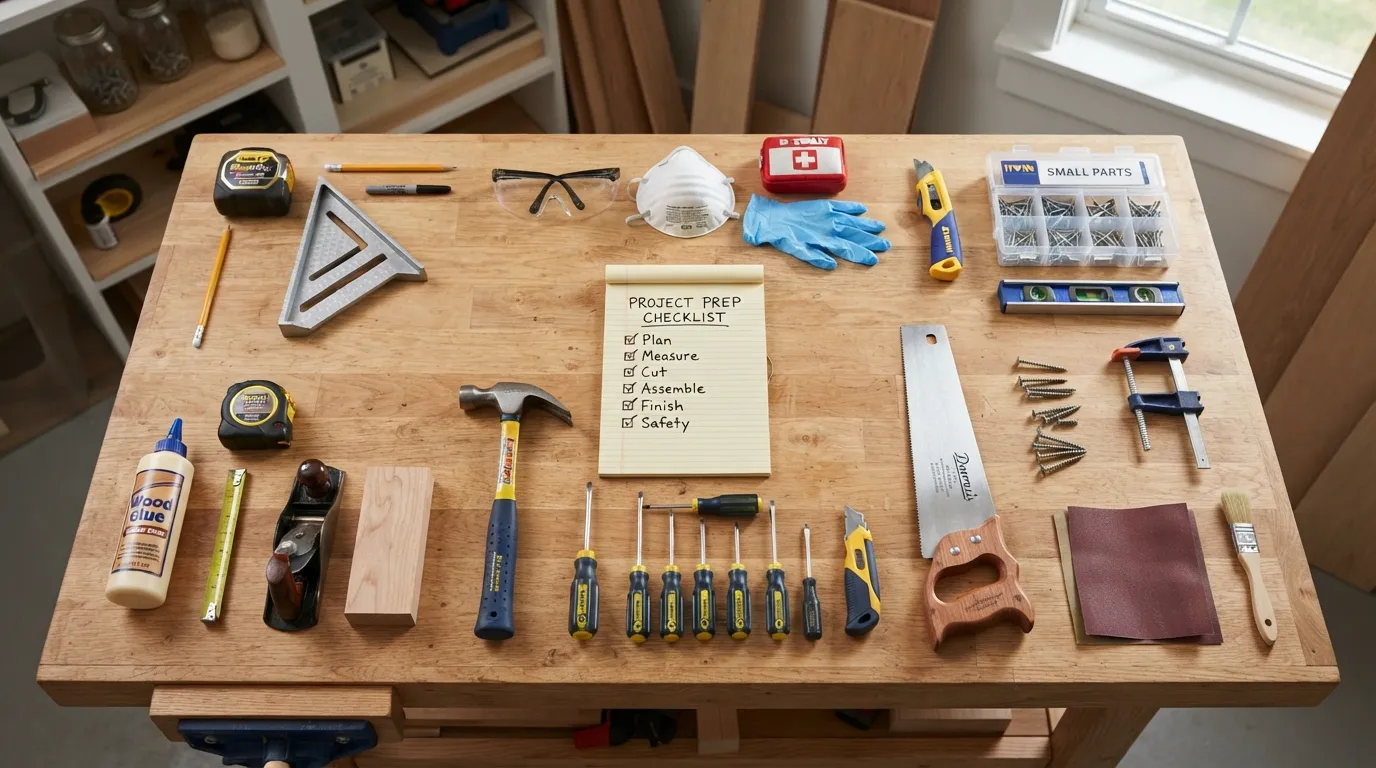
Gathering the right equipment before tackling a stubborn blockage ensures a smooth, mess-free plumbing repair. Having proper gear on hand transforms a frustrating chore into a manageable DIY fix while protecting your hands from harmful bacteria and harsh chemicals.
Basic Tools:Rubber Gloves Needle-Nose Pliers Drain Claw Grabber Tool
Equipping yourself with manual extraction tools allows you to physically remove the bulk of the hair and gunk without relying exclusively on harsh chemical solutions.
- Heavy-duty rubber gloves: Protect your skin from bacteria, mold, and harsh cleaning agents residing inside the P-trap.
- Needle-nose pliers: Ideal for gripping and pulling out tangled clumps of hair right beneath the drain cover.
- Plastic drain claw or grabber tool: A flexible multi-pronged tool designed to snake around pipe bends and lock onto deep-seated debris.
Drain Snake Manual vs Drill-Powered Hair Snake
When clogs reside deeper within your plumbing lines, basic manual grabbers may not reach far enough. Selecting the right shower drain snake depends on the severity and distance of the blockage.
- Manual hand-crank snake: Features a flexible cable housed in a drum, perfect for DIYers clearing minor to moderate blockages within arm’s reach.
- Drill-powered hair snake: Attaches to a standard power drill for high-speed rotation, making it exceptionally effective at tearing through thick hair mats.
- Specialized plastic barbs: A flexible drain snake for shower drain maintenance that features tiny side teeth to catch and pull out hair effortlessly.
Household Items Baking Soda White Vinegar Salt Hot Water
For minor residue and soap scum buildup, everyday kitchen ingredients offer a safe, eco-friendly way to clean pipe walls before resorting to mechanical tools.
- Baking soda and white vinegar: Creates a natural foaming chemical reaction that helps loosen organic grime and neutralize foul drain odors.
- Table salt: Acts as a mild abrasive agent when combined with baking soda to scour away clinging grease and soap residue.
- Boiling or hot water: Flushes loosened debris down the main line and melts remaining waxy soap scum out of the drainage pipes.
How to Clean a Shower Drain Basic Method
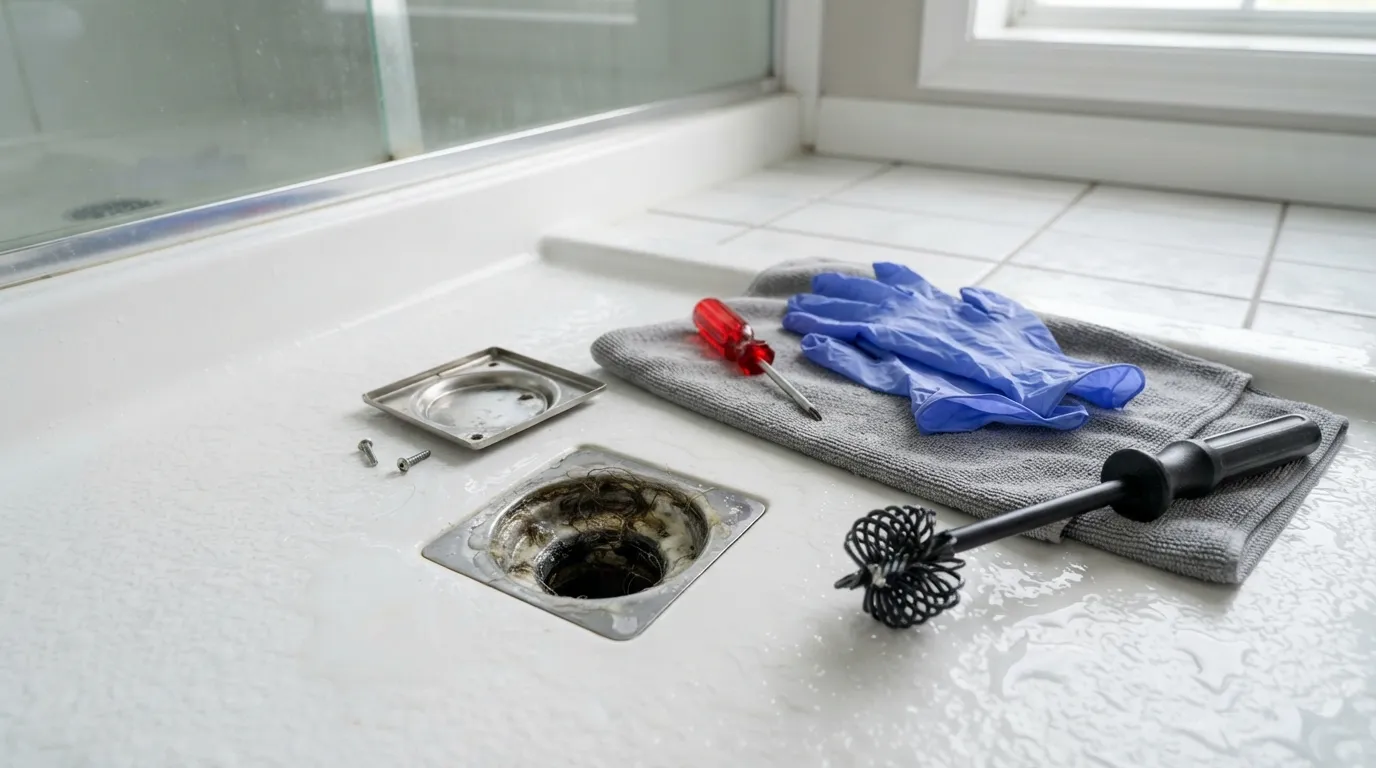
Learning how to clean out shower drain blockages using a basic, natural approach can save you from costly plumber bills. This standard method safely tackles minor to moderate buildup without damaging your home’s plumbing lines.
Clear Out Visible Hair & Gunk
Inspect the top layer of the pipe opening to extract accumulated debris before applying cleaning solutions. Use gloved hands, needle-nose pliers, or a grabber tool to pull out tangled hair clumps [00:00:20].
- Reach just inside the P-trap entrance to grab trapped hair mats [00:00:24].
- Dispose of the extracted gunk directly into the trash can.
Apply Baking Soda and Vinegar
Pour a half cup of baking soda directly down the open drain, followed immediately by a half cup of white vinegar. This triggers a natural bubbling reaction that breaks down greasy residue.
- Allow the mixture to fizz and sit undisturbed for 15 to 30 minutes.
- This chemical-free reaction effectively loosens clinging soap scum and neutralizes foul odors.
Flush with HotBoiling Water
After the mixture has worked its magic, flush the pipeline to clear away the dissolved residue. Pour a kettle of hot or boiling water slowly down the drain.
- Ensure the water is hot enough to melt remaining waxy soap buildup.
- Run the tap for a minute to verify that water flows smoothly without pooling.
Replace the Cover
Once the drainage path is clear and clean, restore your shower setup to its original condition. Place the strainer back over the opening [00:00:55].
- Secure the plate tightly with its original screws [00:00:59].
- Test the shower one final time to confirm fast, unobstructed drainage [00:00:59].
How to Snake a Shower Drain Complete Step by Step Guide
Mastering how to snake a shower drain is the ultimate DIY skill for resolving stubborn blockages that chemical cleaners and surface grabs cannot fix. Knowing the right mechanics prevents plumbing mishaps and restores smooth water flow quickly.
What Is a Drain Snake and How Does It Work?
A shower drain snake (also called a plumber’s auger) is a flexible metal or plastic cable designed to navigate tight pipe bends [00:02:18]. It bores directly through dense obstructions, hooking onto hair clumps or breaking them apart.
- The flexible coil bends seamlessly through the P-trap configuration.
- Rotating the handle forces the auger head to latch onto deep-seated obstructions [00:02:18].
How to Snake a Shower Drain for a Standing Shower
Standing showers feature a direct vertical drop leading straight into the P-trap, making them relatively straightforward to clear with a standard tool.
- Remove the strainer plate completely to expose the open pipe inlet.
- Feed the flexible cable downward gently until you feel resistance from the clog [00:02:18].
How to Snake a Shower Tub Combo Drain Different Technique
Bathtub combinations require a specific technique because access usually runs through the overflow plate rather than the direct drain.
- Unscrew and remove the overflow faceplate on the tub wall to access the internal trip lever mechanism.
- Feed the snake downward through the overflow opening, which offers a smoother path past internal sanitary tees than the restrictive tub drain basket.
Tips for Using a Drain Snake Safely Avoiding Pipe Damage
Improper handling of a heavy-duty auger can crack PVC pipes or scratch older metal fixtures. For more detailed manufacturer safety guidelines on drain tools, see Home Depot’s guide.
- Never force the cable aggressively if you hit a rigid obstruction, as it may puncture old or delicate pipe elbows.
- Wear protective gear to shield against splashing wastewater during extraction.
How to Use a Drain Snake in a Shower Manual vs Powered Snake
Choosing between a hand-crank drum auger and an automated tool depends on the depth and toughness of the clog.
- Manual hand snake: Perfect for standard DIYers managing everyday hair mats within a few feet of the opening.
- Powered snake: Utilizes drill attachments for high-speed torque, ideal for deep main-line blockages requiring intensive clearance.
Alternative Method Using a Plunger on a Clogged Shower Drain
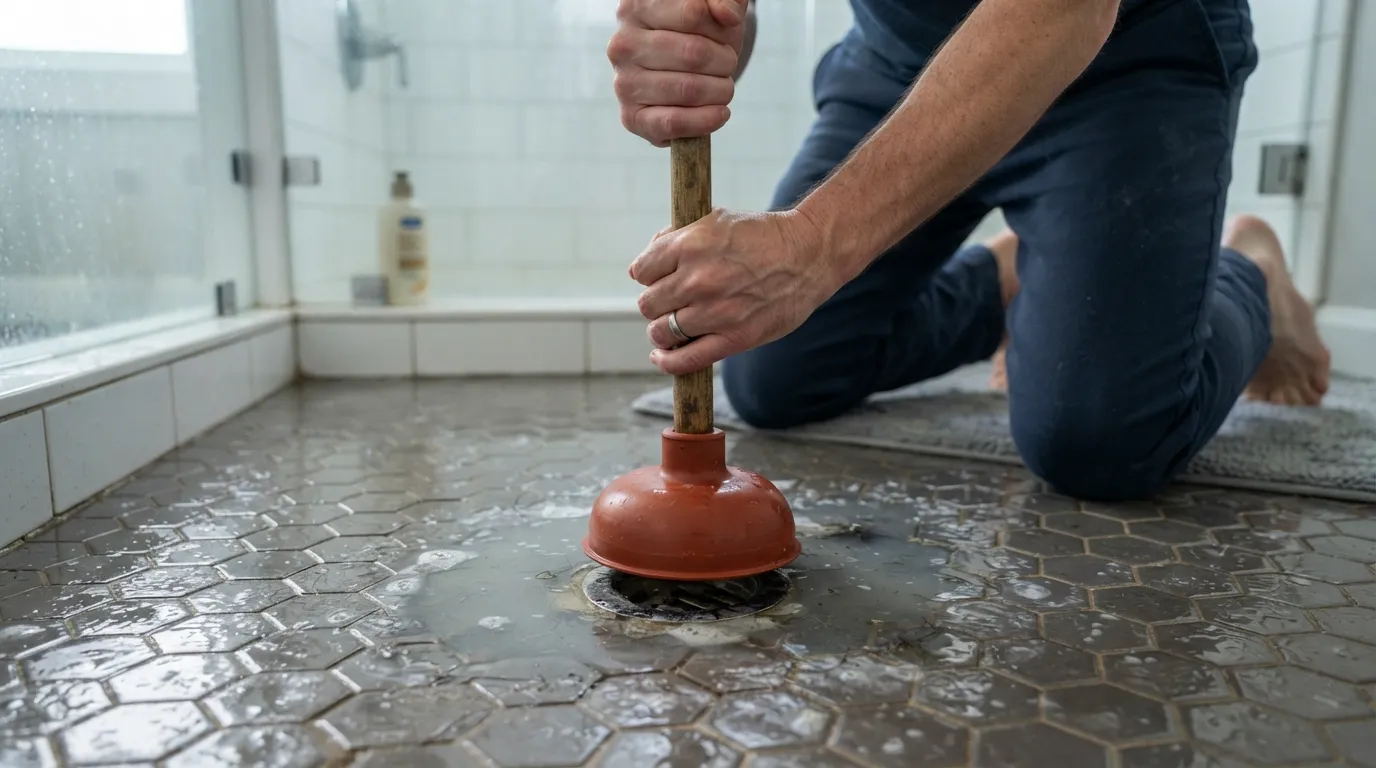
Deploying a plunger for clogged shower drain issues provides a quick, hydraulic solution without requiring mechanical cables or harsh chemical cleaners. Utilizing water pressure effectively forces stubborn blockages out of the trap.
When to Use a Plunger Instead of a Snake
Plunging works best as an initial troubleshooting step when water drains slowly or stops entirely due to soft, loose organic buildup near the surface.
- Soft, recent clogs: Ideal when the obstruction consists primarily of fresh hair and loose soap scum rather than hardened mineral scale.
- Flat-surface showers: Works exceptionally well on flat shower pans where a proper suction seal can form around the drain opening.
- Before chemical usage: Serves as a safe physical alternative before pouring corrosive commercial drain openers down your pipes.
Step-by-Step Plunging Technique
Executing the correct plunging motion creates the necessary pressure differential to dislodge and clear the trapped debris safely.
- Select the right tool: Use a flat cup plunger rather than a flange toilet plunger to ensure maximum flat surface contact around the drain.
- Create a water seal: Pour enough water into the shower floor to completely submerge the rubber cup of the plunger.
- Pump vigorously: Push and pull rhythmically 5 to 10 times while maintaining a tight seal, then pull up sharply to break the clog apart.
- Flush the line: Run clean tap water for a couple of minutes to wash away the dislodged debris down the main drainage stack.
Chemical-Free Ways to Unclog a Shower Drain
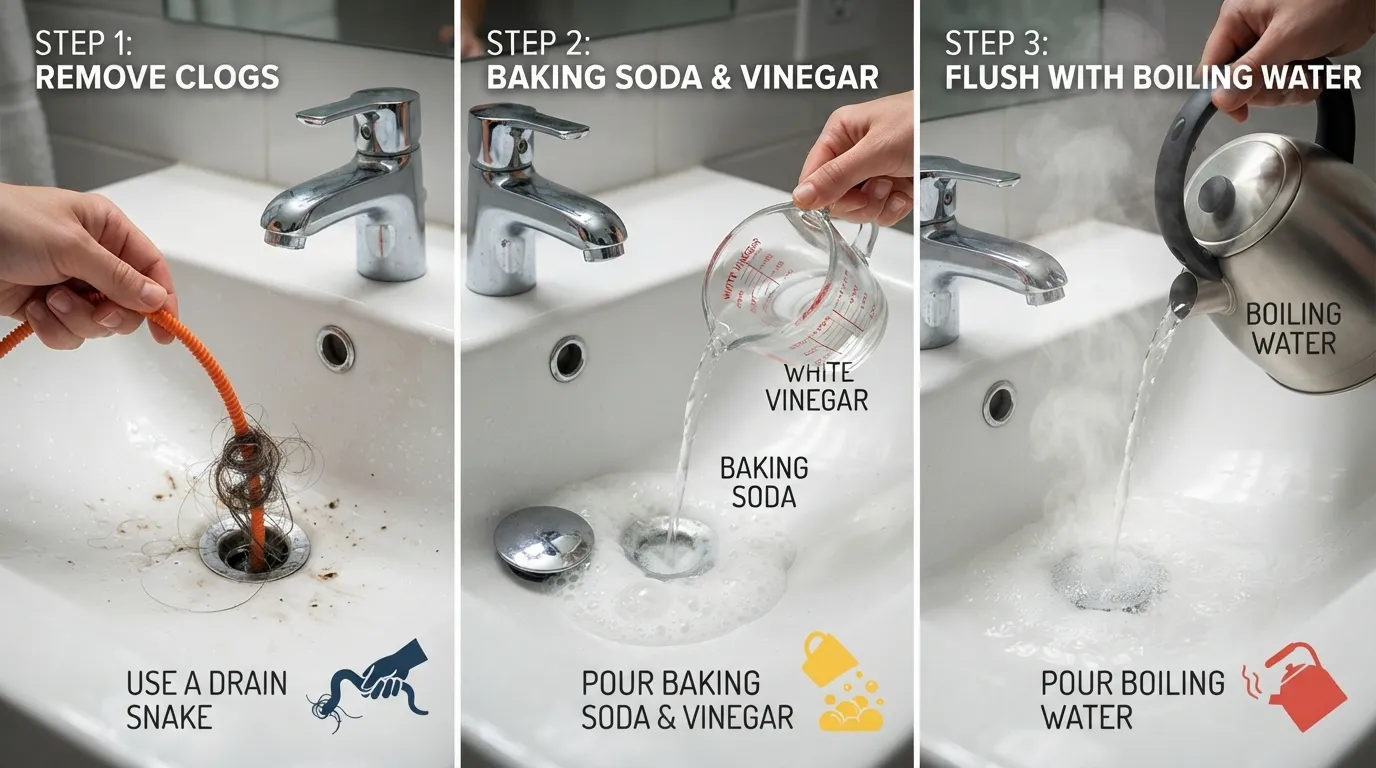
Maintaining a natural method to clear blocked plumbing keeps your home environmentally friendly and protects sensitive fixtures. Learning how to unclog drain without chemicals ensures your household stays safe from harsh fumes and caustic substances.
Manual Removal Methods Snake Claw Pliers Only
Physical extraction remains the most efficient, chemical-free way to eradicate stubborn hair mats and debris bundles directly from the pipe trap.
- Plastic drain claws: Hook deep-seated hair clusters and pull them out physically without introducing any foreign liquids into the plumbing.
- Needle-nose pliers: Precision-grip visible surface hair tangled around the crossbars of the drain basket.
- Manual hand snakes: Bore straight through tough blockages mechanically, relying solely on torque and physical friction.
Boiling Water Alone as a Natural Method
Thermal energy provides a surprisingly powerful tool for melting away congealed grease, body oils, and soft soap residues without any additives.
- Thermal dissolving action: Pure boiling water softens waxy build-ups clinging to inner pipe walls, allowing them to wash away naturally.
- Immediate flushing: Pouring a full kettle down the opening right after mechanical snaking clears away leftover residue fragments instantly.
- Zero chemical footprint: Completely safe for all pipe materials, leaving behind no residual toxins or artificial fragrances.
Why Some People Avoid Chemical Solutions
Many homeowners deliberately bypass commercial liquid drain openers due to significant risks associated with older plumbing infrastructure and environmental health.
- Septic system preservation: Harsh commercial chemicals kill beneficial bacteria inside rural septic tanks, disrupting the entire waste breakdown cycle.
- Pipe degradation risks: Highly acidic or caustic formulas can corrode older metal pipes and weaken PVC glue joints over time.
- Skin and respiratory safety: Eliminating chemical splashes prevents accidental skin burns and toxic vapor inhalation during bathroom maintenance.
Other Home Remedies Dawn Dish Soap & Salt-Vinegar-Baking Soda Combo
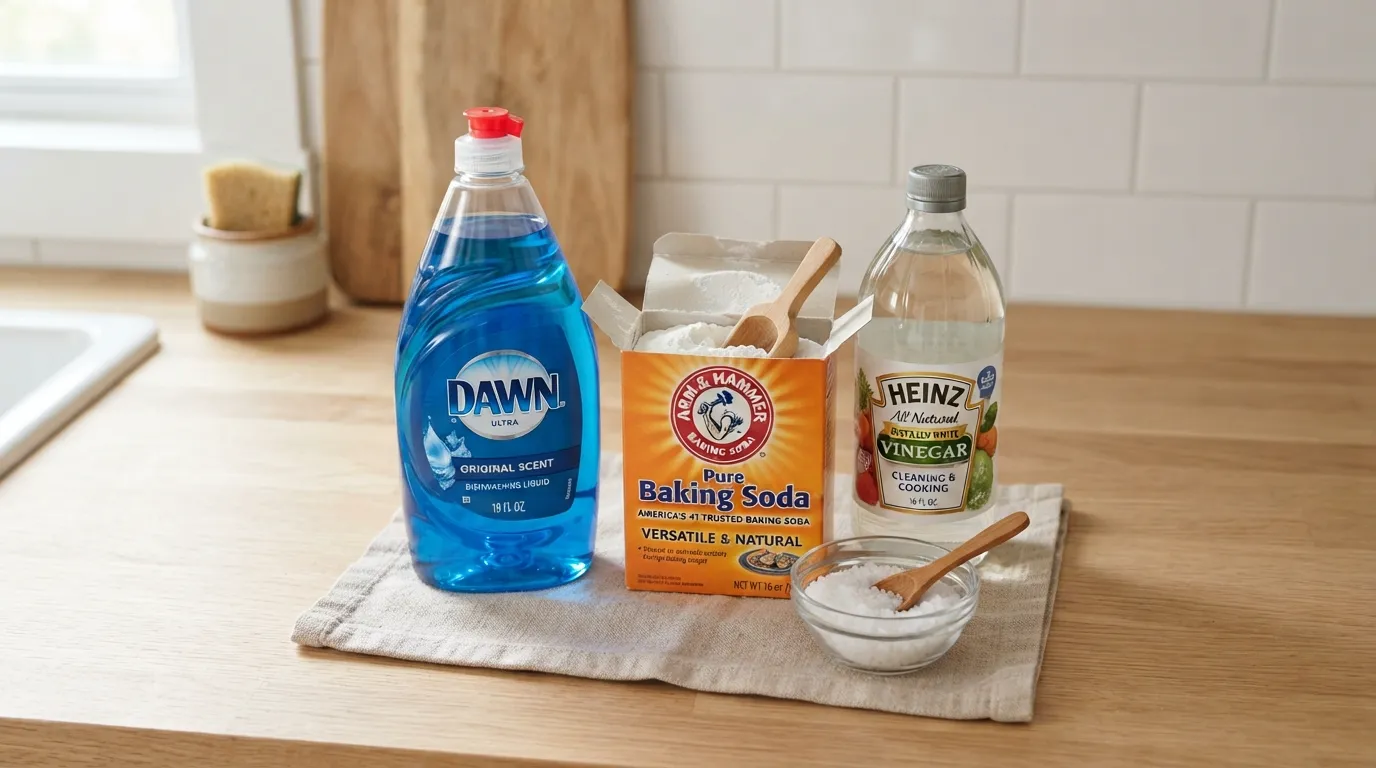
Utilizing common household pantry and cleaning staples offers a reliable, low-cost alternative to harsh commercial products. These specialized home mixtures leverage grease-cutting surfactants and mineral-scouring agents to break down stubborn gunk naturally.
Does Dawn Dish Soap Unclog Shower Drains?
Yes, Dawn dish soap is remarkably effective at clearing minor clogs caused by a combination of body oils, hair, and waxy soap scum. Its specialized grease-cutting formula breaks down the oily binder holding the blockage together.
- Surfactant action: The dish soap coats the sticky residue, reducing surface tension and allowing warm water to wash the loosened grease away.
- Application steps: Squirt a generous amount of liquid dish soap directly into the drain opening, followed immediately by a kettle of boiling hot water.
- Best for oily clogs: Works exceptionally well when the blockage stems from heavy conditioner or body lotion buildup mixed with shed hair.
The Salt + Baking Soda + Vinegar Overnight Method
When dealing with a moderately stubborn blockage that resists quick fixes, an extended soak using dry abrasives and acidic solutions provides a deeper clean.
- Create the dry mix: Combine equal parts coarse table salt and baking soda, then pour half a cup of the dry mixture down the drain.
- Add the catalyst: Follow with a half cup of warm white vinegar to trigger an intense foaming reaction inside the pipe trap.
- The overnight soak: Leave the mixture undisturbed for 8 to 12 hours (ideally overnight) to let the active ingredients scour away hardened scale.
- Final flush: Rinse the pipe thoroughly with hot tap water the following morning to flush out the dissolved residue and loosened debris.
Baking Soda & Vinegar vs Drano What Do Plumbers Recommend?
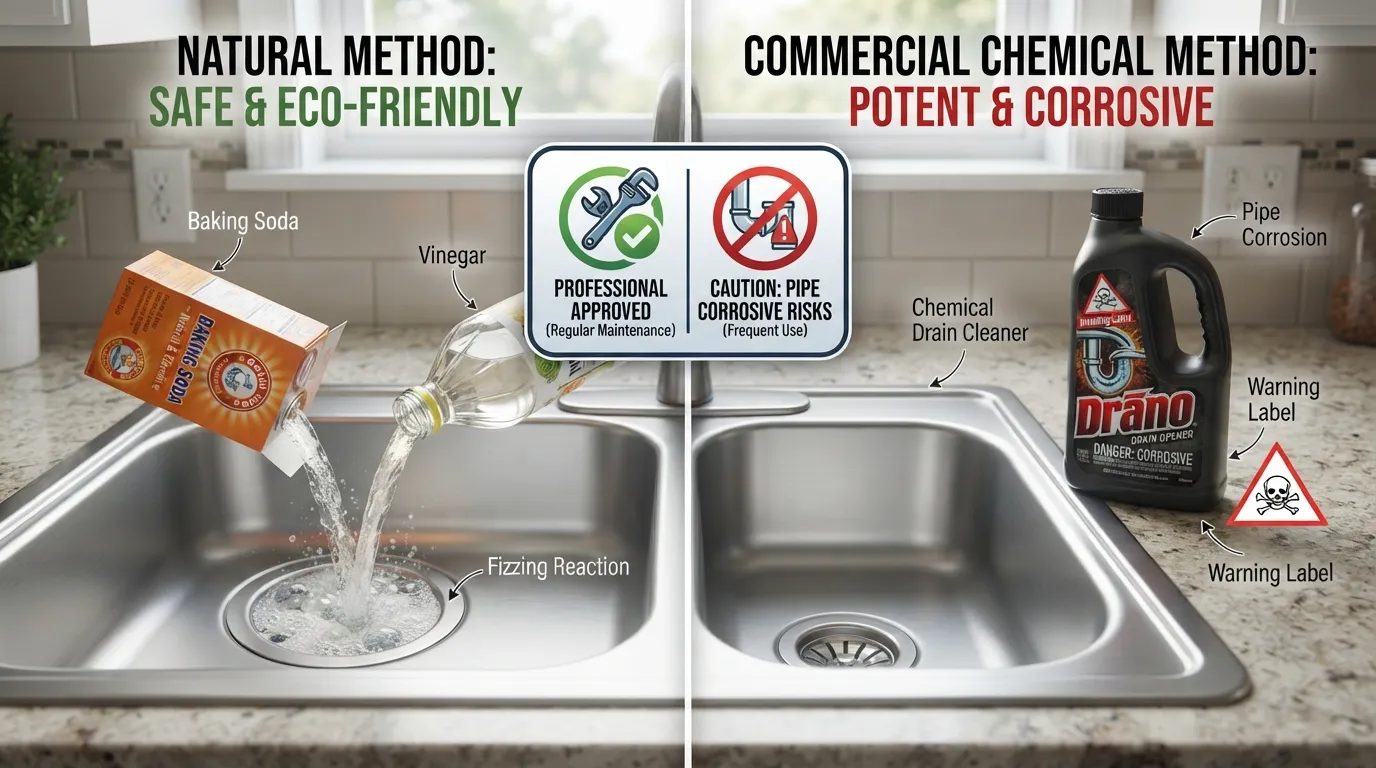
Choosing between natural pantry remedies and harsh chemical options like Drano is a common dilemma for homeowners facing slow fixtures. Understanding how each method impacts your plumbing system helps you protect your pipes while effectively clearing blockages.
Is Baking Soda and Vinegar Better Than Drano?
Yes, for routine maintenance and minor buildup, a baking soda and vinegar solution is far safer and more environmentally friendly than commercial products. While chemical drain cleaner formulas rely on harsh exothermic reactions, natural mixtures protect your pipe infrastructure from thermal shock and rapid corrosion.
- Gentle on materials: Natural remedies will not warp PVC pipes or degrade aging metal plumbing lines over time.
- Safe for septic systems: Eco-friendly ingredients preserve the healthy bacteria balance required in residential septic tanks.
- Zero toxic fumes: Natural mixtures emit no hazardous chemical gases that irritate your lungs or eyes during application.
What Do Plumbers Recommend Instead of Chemical Cleaners?
Professional plumbers consistently advise against pouring caustic liquid chemicals down your drains, offering safer mechanical and preventative alternatives instead.
- Mechanical augers over chemicals: Professional plumber recommendation guidelines favor physical snakes and grabbers to pull hair out entirely rather than dissolving it partially.
- Enzymatic maintenance treatments: Experts suggest using monthly bio-enzymatic drain maintainers to organically consume residual hair and soap scum.
- Regular physical cleaning: Routine manual clearing of surface strainers prevents severe blockages before they ever form in the deep pipe traps.
Risks of Commercial Drain Cleaners on Pipes
Pouring harsh chemical openers into your plumbing system carries hidden hazards that can result in expensive emergency plumbing repairs down the line.
- Severe pipe corrosion: Strong alkaline or acidic formulas eat away at metal pipe threading and weaken rubber gaskets.
- Trapped chemical hazards: If a commercial cleaner fails to clear a blockage, caustic standing liquid remains trapped in the pipe, posing extreme danger to anyone servicing the fixture later.
- Thermal cracking: High-heat chemical reactions can crack porcelain toilet bowls and fragile older drainage pipes.
Why Is My Shower Drain Smelly? Separate From Clogging
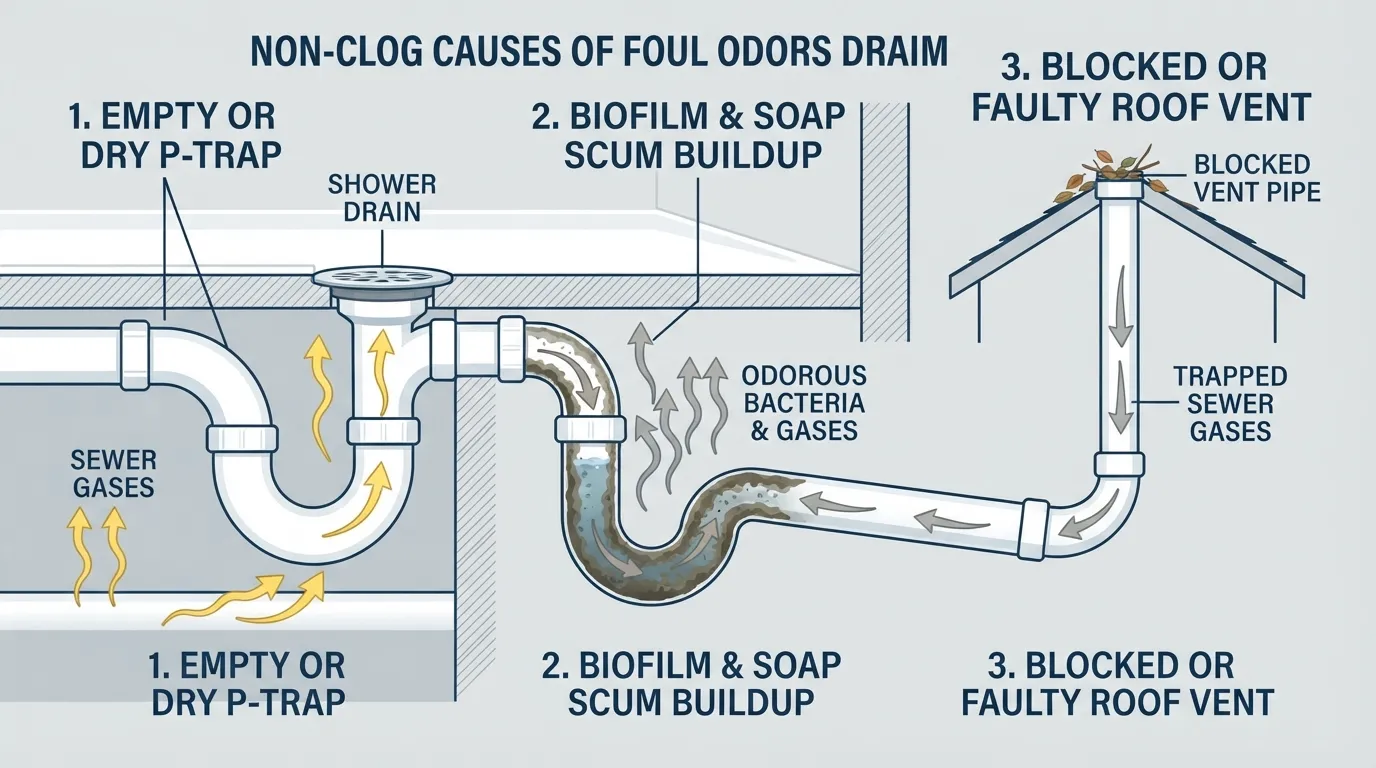
Encountering a foul smell when stepping into your bathroom does not always mean your pipe is blocked. A smelly shower drain can occur even when water flows down smoothly, usually pointing to organic growth, mold, or dried-out plumbing traps rather than a physical obstruction.
Common Causes of Drain Odor
Bad odors emanating from bathroom fixtures typically stem from trapped biological matter decomposing inside hidden crevices of the drainage assembly.
- Bacteria buildup in biofilm: A slimy layer of soap scum and dead skin cells breeds odor-causing bacteria buildup right beneath the strainer plate.
- Mold and mildew growth: Damp, dark pipe walls provide an ideal breeding ground for mold spores that release musty, damp smells into the room.
- Dry P-trap seals: If a shower is rarely used, the water inside the curved P-trap evaporates completely, allowing raw sewer gases to vent directly up into your bathroom.
Quick Fix for a Smelly But Not Clogged Drain
Neutralizing unpleasant bathroom odor requires targeting the biological source rather than trying to clear a non-existent blockage.
- Disinfect with boiling water and soap: Flush the fixture with boiling water mixed with a squirt of grease-cutting dish soap to break down the organic slime layer.
- Apply baking soda and vinegar: Pour half a cup of baking soda followed by white vinegar down the opening to deodorize the internal pipe surfaces naturally.
- Refill the P-trap: Run your shower for a full minute to replenish the water barrier inside the trap if the odor stems from an empty plumbing seal.
Types of Shower Drains and How to Identify Yours
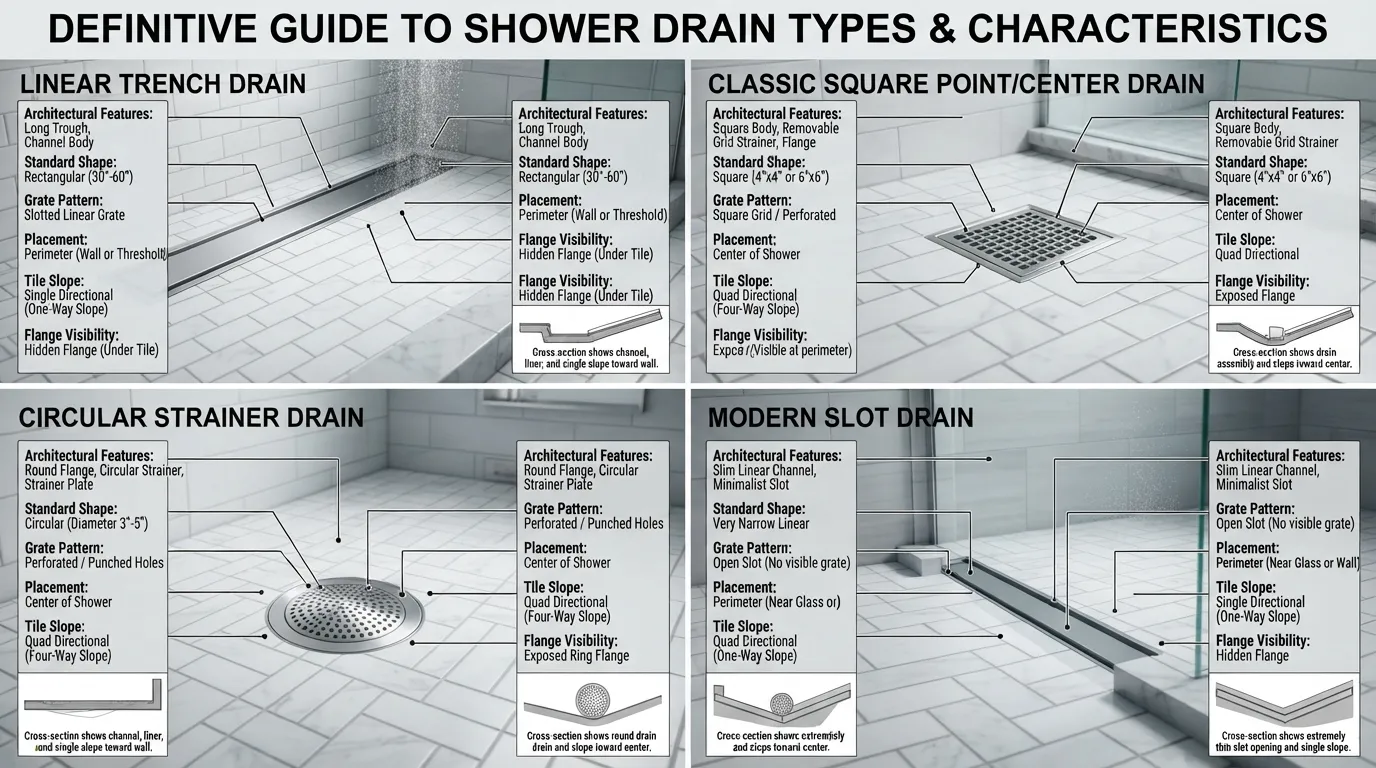
Recognizing the specific category of plumbing hardware installed in your bathroom is vital before attempting any DIY maintenance. Different drain types require distinct removal techniques and specialized tools to avoid damaging the fixture.
Push-Pull Toe-Touch Drains
These mechanical fixtures allow you to open and close the stopper easily using your foot or hand during a bath or shower.
- Identification: Features a knob or cap in the center that moves up and down when pressed or pulled.
- Removal technique: Hold the stopper in the open position, locate the set screw beneath the cap or unscrew the entire stopper counterclockwise while holding the post steady.
Screw-In Drains
Commonly found in standard residential showers, these circular strainers thread directly into the drain shoe or pipe adapter.
- Identification: A perforated metal or plastic grid secured by one or more visible screws passing straight through the center plate.
- Removal technique: Use a properly sized screwdriver to back out the holding screws, making sure not to drop the hardware down the open pipe.
Snap-In Grate-Only Drains
These minimalist fixtures use friction rather than threaded hardware to stay securely in place within the shower floor pan.
- Identification: A smooth flat grid or slotted plate with no visible mounting screws or mechanical push-buttons.
- Removal technique: Slide a flathead screwdriver or utility knife edge beneath the rim of the snap-in cover, gently prying upward until the friction prongs release.
How to Prevent Future Shower Drain Clogs
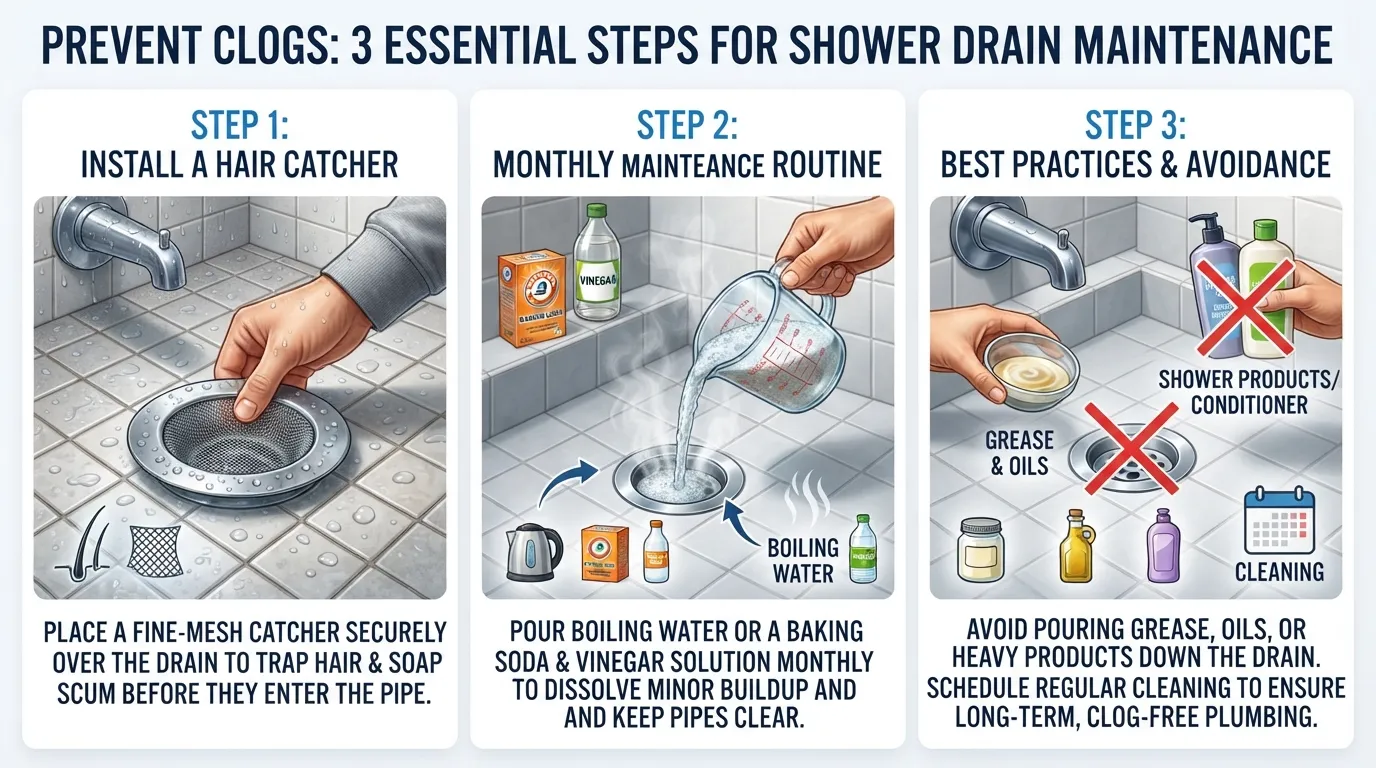
Adopting proactive habits and simple maintenance routines stops stubborn blockages before they disrupt your daily routine. Effective prevention safeguards your plumbing infrastructure and saves you from recurring emergency repairs.
Install a Mesh Drain Screen or Strainer
Adding an extra layer of defense right at the surface is the single most effective way to intercept loose hair before it enters your plumbing lines.
- Stainless steel hair catchers: Place a fine-mesh mesh drain screen over your existing opening to trap loose strands effortlessly.
- Silicone flower strainers: Flexible silicone catchers conform to various drain shapes and catch hair while allowing rapid water flow.
- Daily emptying habit: Clean out the trapped hair from your strainer after every shower to prevent buildup from overflowing into the pipe.
Monthly Maintenance Routine Baking Soda + Vinegar Schedule
Establishing a regular cleaning calendar prevents soap scum and organic residue from hardening inside your drainage system.
- Bi-weekly hot water flushes: Pour a kettle of boiling water down your drain every two weeks to melt away fresh soap film.
- Monthly natural treatment: Run a routine baking soda and vinegar cycle once a month to keep internal pipe walls scoured and fresh.
- Enzyme cleaner application: Introduce septic-safe bio-enzymatic liquids monthly to organically digest lingering oils and hair fragments.
Habits That Prevent Buildup
Small behavioral adjustments during your daily washing routine significantly reduce the amount of debris entering your plumbing pipes.
- Brush hair before showering: Detangling your hair with a brush before stepping into the shower removes loose strands in advance.
- Avoid washing heavy oils down: Wipe excess heavy body butters or hair masks off with a paper towel before rinsing.
- Regular basket checks: Inspect the drain basket periodically to ensure no small debris slips past the protective cover.
When the Problem Is Bigger Than Your Shower Drain
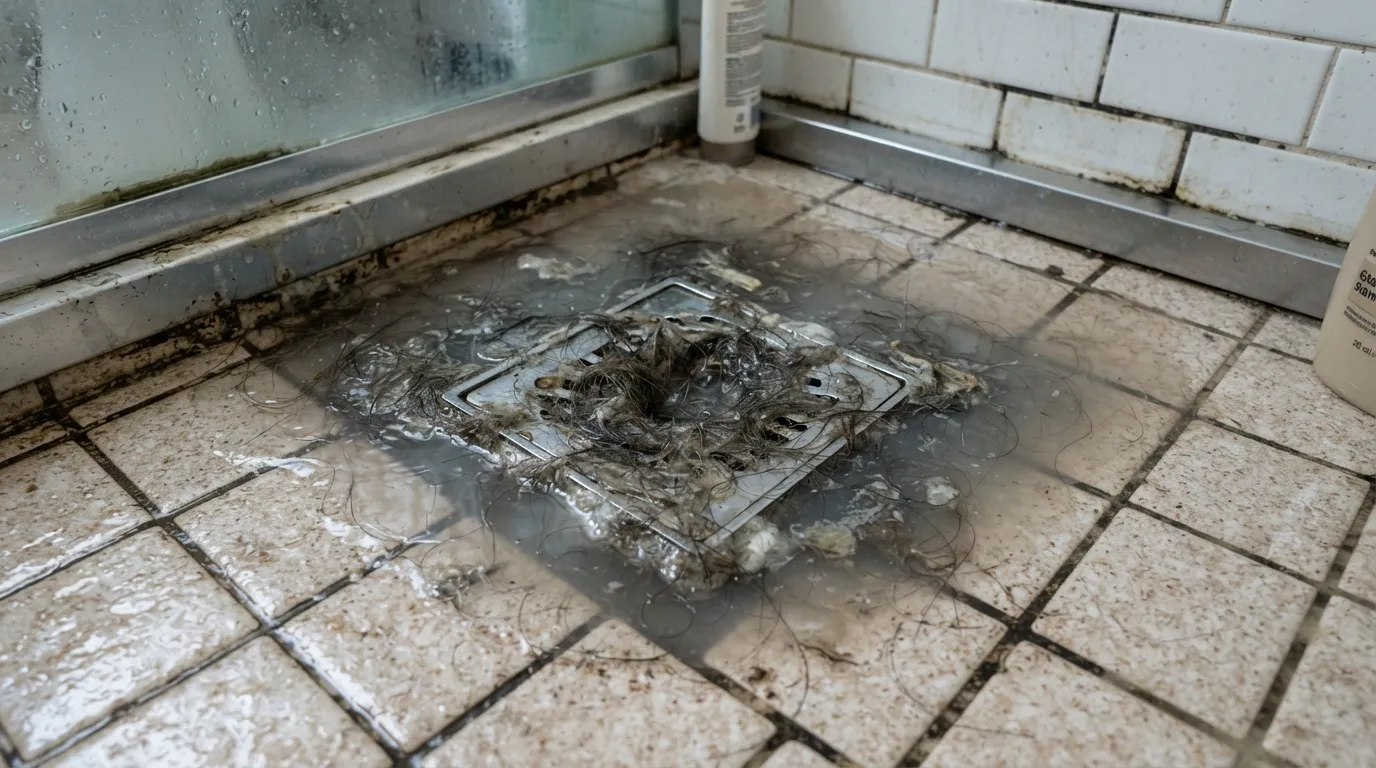
Sometimes a slow-draining fixture points to a much larger plumbing malfunction rather than a localized hair clog in your immediate P-trap. Recognizing the warning signs of a failing main drain line prevents catastrophic wastewater backups throughout your entire home.
Signs It’s a Main Line Issue Not Just the Shower Drain
If clearing your shower trap does not resolve the slow water flow, check other household fixtures to determine if the blockage is systemic.
- Multiple fixtures backing up: Water bubbles up in your toilet or overflows into your bathtub when you run the washing machine or bathroom sink.
- Gurgling plumbing lines: Several drains emit bubbling noises simultaneously whenever wastewater runs down any fixture in the house.
- Unexplained basement floor drain flooding: Wastewater rises through the lowest drain in your home, which is a classic indicator of a blocked sewer line.
When to Call a Professional Plumber
Attempting DIY fixes on deep structural pipe failures can worsen property damage and result in costly emergency repairs.
- Persistent deep blockages: If a mechanical auger hits a rigid obstruction feet down the line that refuses to budge, stop immediately to avoid puncturing old pipes.
- Tree root intrusion: Tree roots invading underground sewer pipes require specialized hydro-jetting or mechanical cutting equipment operated by a licensed professional plumber.
- Cracked or collapsed pipes: Older clay or cast-iron lines that have fractured require professional camera inspections and trenchless pipe repair solutions.
FAQs People Also Ask Format
Get quick, direct answers to the most frequently asked questions about clearing and maintaining residential shower drains. These concise insights address common troubleshooting scenarios and effective cleaning solutions.
What will dissolve hair in a shower drain?
Chemical hair-dissolving products typically contain sodium hydroxide or potassium hydroxide, which liquefy protein bonds in hair. However, because harsh chemicals damage pipes, mechanical extraction using a plastic drain claw or manual snake remains the safest method for removing hair.
- Enzymatic drain cleaners break down hair organically over several hours without harming PVC lines.
- Commercial openers work by dissolving organic proteins, but require careful handling to avoid toxic fumes.
Is baking soda and vinegar better than Drano?
Yes, baking soda and white vinegar are far superior for routine maintenance because they are non-corrosive, septic-safe, and gentle on PVC or metal plumbing infrastructure. Commercial products like Drano use harsh exothermic reactions that can overheat and crack fragile pipes over time.
- Natural solutions prevent severe chemical burns and toxic vapor inhalation during bathroom cleaning.
- Eco-friendly methods preserve beneficial bacteria inside residential septic systems.
What is the best thing to clean shower drains with?
The most effective cleaning combination is a mix of mechanical tool extraction followed by hot water flushing. Using a plastic hair snake or grabber physically pulls out the bulk of the debris, while boiling water and Dawn dish soap melt away remaining grease and soap scum.
- Physical grabbers remove the root cause of the clog instantly without chemical residue.
- Boiling water flushes dissolved soap scum and loose particles completely down the stack.
What is the most powerful shower drain cleaner?
Industrial-strength sulfuric acid or lye-based liquid cleaners are chemically the most powerful, but professional plumbers strongly advise against using them. These harsh formulas generate extreme heat that can warp plastic pipes, ruin metal fixtures, and cause severe chemical burns.
- Commercial heavy-duty openers risk destroying older pipe glue joints and threading.
- Mechanical augers and professional hydro-jets offer powerful clearance without chemical risks.
What is the best homemade drain cleaner?
A mixture of one-half cup of baking soda followed by one-half cup of white vinegar is the premier homemade cleaning solution. The natural fizzing action creates carbon dioxide bubbles that lift grease, break up soap scum, and neutralize foul odors safely.
- Combine with a kettle of boiling water afterward to flush away loosened residue.
- Safe for all standard household pipe materials and everyday maintenance routines.
What can I pour down my shower drain to make it drain faster?
Pouring a mixture of boiling water and grease-cutting Dawn dish soap instantly helps clear slow-moving, oily blockages. For tougher buildup, a half cup of baking soda followed by white vinegar will break down organic gunk and restore fast drainage.
- Hot water melts waxy soap accumulation clinging to inner pipe walls.
- Regular monthly flushing prevents slow drainage from developing into total blockages.
Conclusion Quick Recap
Clearing a blocked fixture and learning how to properly clean shower drain blockages does not have to be an intimidating or expensive chore. By combining mechanical tools like hair snakes and drain claws with natural home remedies like baking soda, vinegar, and hot water, you can safely restore optimal water flow without risking pipe damage.
Establishing a consistent shower drain maintenance routine—such as installing a mesh strainer, flushing lines with boiling water, and clearing hair weekly—ensures your plumbing stays clear, fresh, and fully functional for years to come.

Oscar Vance | Master Plumber & Drainage Expert
Meet Oscar Vance, a licensed master plumber sharing practical solutions on residential repairs, preventive maintenance, and thoughtful home upkeep.