 How to Remove a Push-Fit Plumbing Fitting
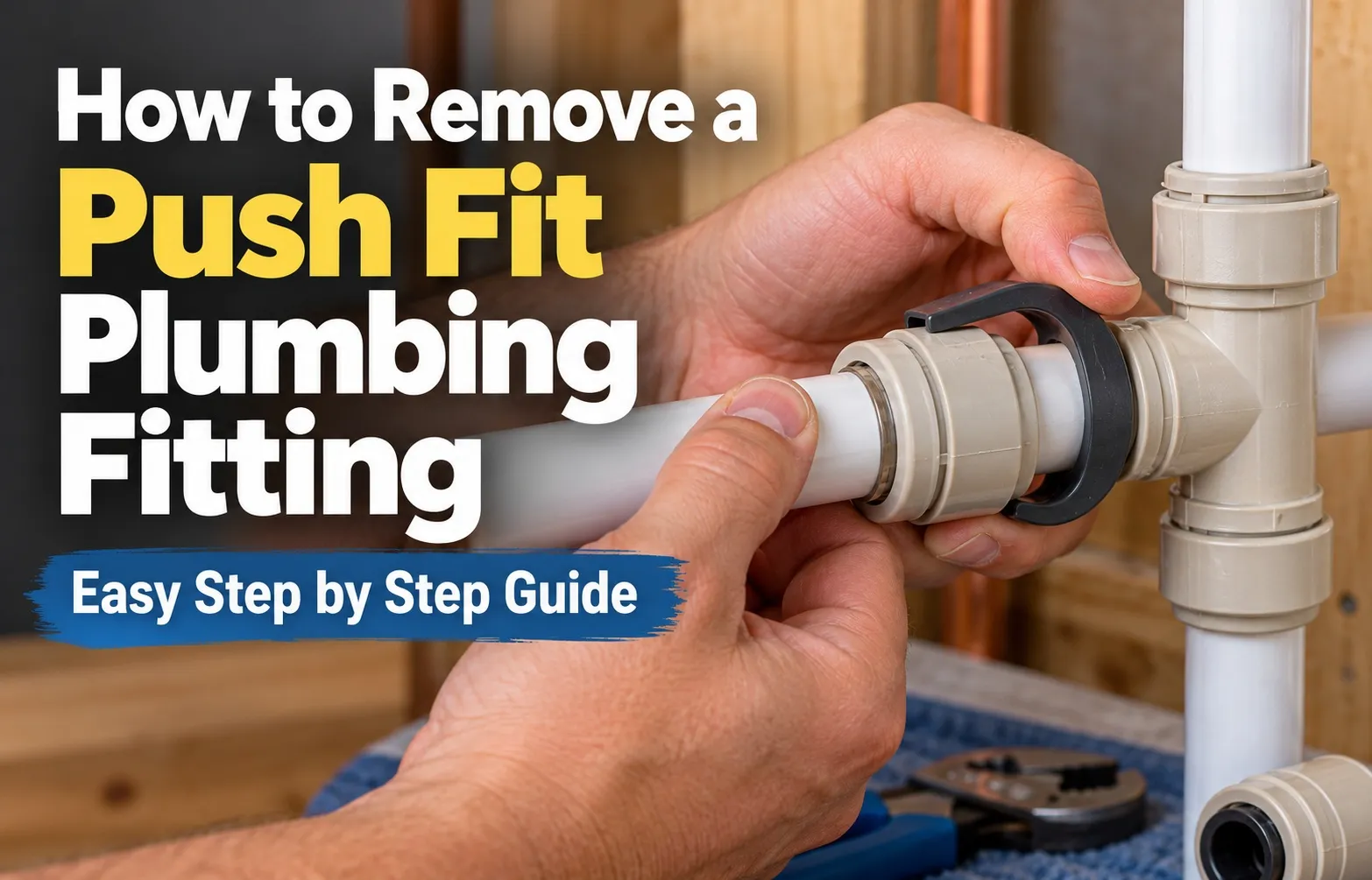
To remove a push-fit plumbing fitting like a SharkBite or John Guest connector, you must depress the outer release collar (collet) firmly against the fitting body to disengage the internal grab ring teeth, and then pull the pipe straight out. This enables fast, reliable detachment without damaging copper, PEX, or CPVC water pipe connectors.
What is a Push-Fit Fitting Release Mechanism?
Modern push-fit water pipe connectors rely on a clever internal design that grips pipes securely without soldering, gluing, or threading. Understanding how this system locks together makes disassembly straightforward.
- The Collet (Release Collar): The visible plastic or metal ring at the opening of the fitting that controls the locking teeth.
- The Internal Grab Ring: A stainless-steel ring equipped with sharp teeth that bite into the pipe to prevent it from backing out under water pressure.
- The O-Ring Seal: A precision rubber gasket positioned deeper inside the fitting body that compresses against the pipe to create a 100% watertight seal.
How to Detach a Connect Fitting Fast
When you are working in cramped spaces under a sink or behind a wall, following a precise, fast sequence ensures you disconnect the line safely on your first attempt.
- Shut Off and Depressurize: Turn off the main water supply to the area and open a nearby faucet to drain remaining water and release all internal line pressure.
- Depress the Collet: Push the outer release collar evenly and firmly into the body of the fitting to tilt the internal grab-ring teeth away from the pipe.
- Pull the Pipe Straight Out: Maintain downward pressure on the collet with one hand while pulling the pipe straight out of the socket with your other hand.
Essential Tools and Safety Gear You Will Need
Gathering the correct tools and safety gear before you crawl under a sink prevents pipe damage, avoids frustrating delays, and protects you from unexpected water sprays. Having the right disconnect accessory or substitute ensures you can depress the collet evenly without scoring your copper pipe, PEX pipe, or CPVC lines.
Standard Disconnect Tools (Clips, Tongs, and Keys)
Using manufacturer-approved removal tools provides the safest and cleanest detachment method. These specialized instruments apply uniform pressure around the release collar to disengage the internal grab ring instantly.
- Disconnect Clip: A small plastic horseshoe-shaped tool designed to snap around the pipe and press the collet flush into fittings like SharkBite.
- Disconnect Tongs: Pliers-like tools featuring curved jaws that squeeze opposing sides of larger fittings for effortless release.
- HepKey: A brand-specific specialized plastic key engineered for Hep2O systems to hold the internal release mechanism open securely.
Alternative Tools (What to Use If You Lack a Specialized Clip)
If you are caught mid-project without a professional disconnect clip, everyday household and garage tools can substitute safely when used with care. Proper leverage prevents accidental kinking or scratching of your water lines.
- Adjustable Wrench: Slide an open adjustable wrench around the pipe and squeeze it against the collet to push the release collar evenly into the fitting body.
- Small Flathead Screwdriver: Gently wedge a small flathead tool against the collet, alternating sides carefully to avoid gouging soft PEX or fragile CPVC pipes.
Safety Prep (Towels, Buckets, and Eye Protection)
Plumbing lines often retain trapped water and mineral sediment even after the main valve is shut off. Adequate preparation shields your workspace and eyes from sudden splashes.
- Absorbent Towels and Small Bucket: Place dry rags directly beneath the workspace and position a shallow bucket to catch residual drainage water.
- Protective Eyewear: Wear safety glasses when working overhead or under tight cabinets to guard against falling debris, rust flakes, and pressurized water droplets.
How to Properly Remove a Push-Fit Fitting
Removing a push-fit plumbing connection safely requires a systematic approach to prevent water damage and hardware distortion. Following a structured procedure ensures you disengage the internal grab ring without scratching your water lines.
Step 1: Shut Off the Main Water Supply and Relieve Pressure
Always isolate your work area by shutting off the main water valve before attempting any disassembly. Never attempt to work on a pressurized line, as trapped pressure makes collet compression impossible and creates severe splash hazards.
- Locate the Isolation Valve: Turn off the local stopcock or main water supply line feeding the fixture.
- Drain Remaining Water: Open the nearest faucet completely to drain leftover water and fully relieve water pressure from the pipework.
Step 2: Remove Security Locking Clips (If Applicable)
Inspect your fitting for secondary locking mechanisms or spacer rings that prevent accidental release. Snapping these security components off first clears a direct path to the release mechanism.
- Check for Spacer Rings: Look closely between the collet and the fitting body for a small plastic horseshoe clip or spacer.
- Pry Off Safely: Gently pop or slide the locking spacer ring off using your fingers or a small flathead tool so the collet can move freely.
Step 3: Depress the Collet Evenly Against the Fitting Body
Pushing the collet release collar straight back into the fitting body tilts the internal grab ring teeth away from the pipe surface. Uneven pressure will cause the teeth to bind, keeping the pipe locked tightly in place.
- Position Your Tool: Snap your horseshoe-shaped disconnect clip or squeeze your tongs squarely around the pipe directly over the collet.
- Apply Firm, Even Force: Press the collar flush against the body of the fitting while maintaining constant pressure to keep the internal grab ring disengaged.
Step 4: Pull the Pipe Straight Out Without Bending
With the release collar fully depressed, pull the pipe directly out of the fitting in a straight, fluid motion. Avoid twisting, wiggling, or bending the pipe at an angle, which can score the metal or deform the plastic tubing.
- Maintain Collet Pressure: Keep your removal tool or fingers pressing down on the collet while pulling the pipe away with your opposite hand.
- Check for Smooth Exit: The pipe should slide out freely; if it resists, release the tension, ensure the collet is fully depressed, and try again without force.
How to Remove a Push-Fit Fitting Without a Special Tool
If you are caught under a sink without a professional disconnect clip, you can easily remove a quick connect fitting without a tool by using common household alternatives like an adjustable wrench or a small flathead screwdriver to depress the collet.
Using an Adjustable Wrench as a Makeshift Release Lever
Open a standard adjustable wrench just wide enough to slip around the pipe. Slide it down until the jaws rest squarely against the collet, then gently squeeze or leverage the wrench against the fitting body to depress the release collar evenly.
- Adjust Jaw Width: Set the wrench opening so it fits snugly around the pipe diameter without pinching the tubing material.
- Leverage the Collet: Press the flat face of the wrench against the release collar while pulling the pipe straight out with your other hand.
The Flathead Screwdriver Method (Caution Required)
When a wrench won’t fit into tight spaces, a small flathead screwdriver can push the collet down. You must work carefully around the perimeter, alternating sides to avoid scratching the pipe surface or gouging the plastic release ring.
- Alternate Sides: Gently wedge the flat tip against the collet edge, pressing down slightly on one side before switching to the opposite side to keep pressure balanced.
- Protect Soft Pipes: Exercise extreme caution if your pipe is made of soft PEX or CPVC to prevent puncturing or scoring the exterior wall.
Brand-Specific No-Tool Hacks (SharkBite vs. John Guest)
Different manufacturers design their release collars with unique clearances. Knowing how to adapt your makeshift leverage technique for popular brands like SharkBite or John Guest ensures a clean detachment even when specialized disconnect clips are missing.
- SharkBite Fittings: These feature a wider plastic collet that responds well to dual flathead screwdrivers plying downward simultaneously from opposing angles.
- John Guest / Speedfit: Their slender collets require precise, even pressure from a tight adjustable wrench or a customized thin shim to disengage the internal grab ring.
Troubleshooting: What to Do If Your Push-Fit Fitting Is Stuck
When a push-fit fitting refuses to budge, mineral deposits, paint overspray, or wedged pipe stiffeners are usually to blame. Applying targeted solutions like scale dissolvers or gentle tapping breaks stubborn seals safely without damaging the plumbing hardware.
Problem 1: Lime Scale and Mineral Buildup Locking the Collet
Hard water minerals crystallize around the outer release collar, freezing it in place so you cannot depress it. Dissolving these calcium deposits restores full mechanical movement to the collet.
- Apply a Scale Dissolver: Spray a vinegar-based or commercial plumbing descaling solution directly onto the collar and let it penetrate for several minutes.
- Wipe Away Corrosion: Use a fine wire brush or abrasive pad to scrub away loosened scale buildup before attempting to compress the release ring again.
Problem 2: Stuck Pipe Stiffeners / Inserts Inside PEX Tubing
When pulling PEX tubing out of an old connector, the brass or plastic pipe stiffener insert can remain wedged inside the fitting or pipe end. Extracting this insert carefully prevents obstruction during reinstallation.
- Grip with Pliers: Use a pair of needle-nose pliers to firmly grasp the exposed edge of the stuck pipe stiffener insert.
- Pull Straight Out: Pull outward with steady, controlled force to slide the insert free without distorting the internal fitting body.
Problem 3: Rotating and Tapping to Break the Internal Seal
Years of static water pressure can cause the internal O-ring seal to fuse tightly against the pipe surface. Gentle rotational force and vibration break this suction bond instantly.
- Rotate the Fitting: Twist the fitting slightly clockwise and counter-clockwise on the pipe to break the rubber O-ring seal loose.
- Tap Gently: Lightly tap the body of the fitting with a rubber mallet or wrench handle to fracture any remaining internal corrosion.
Material-Specific Precautions: Copper, PEX, and CPVC
Different plumbing materials react uniquely to removal pressure, requiring tailored handling techniques to prevent structural damage. Protecting your water lines during detachment ensures they remain safe, smooth, and leak-free for future connections.
Removing Fittings from Copper Pipes (Avoiding Score Marks)
Rigid copper tubing is durable, but sharp metal removal tools or excessive wrench pressure can easily gouge the surface. Deep score marks prevent new O-rings from sealing properly, resulting in post-installation leaks.
- Protect the Surface: Avoid using biting metal teeth directly on exposed copper sections where the new fitting will sit.
- Sand Away Blemishes: Lightly polish any minor scratches with fine-grit emery cloth before sliding on a replacement connector.
Detaching from PEX Tubing (Preventing Kinks and Scratches)
Flexible PEX tubing bends easily under heavy pulling force, which can permanently kink the line or weaken its structural integrity. Maintaining rigid alignment while pulling protects the soft polymer walls.
- Support the Tubing: Hold the PEX line steady close to the fitting entry point to absorb pulling strain without bending the pipe.
- Inspect the Depth Mark: Check the original pipe depth mark to ensure no sharp tool jaws pierced or scarred the exterior plastic layer.
Handling Fragile CPVC Lines Safely
Aged CPVC pipes become brittle over time and crack easily under aggressive twisting or bending forces. Extreme gentleness is mandatory when releasing push-fit connectors from CPVC plumbing.
- Eliminate All Twisting: Pull the pipe strictly in a linear direction without any rotational force that could snap brittle plastic walls.
- Check for Micro-Cracks: Inspect the end of the CPVC line immediately after removal for stress fractures or chipping.
Material-Specific Precautions: Copper, PEX, and CPVC
Different plumbing materials react uniquely to removal pressure, requiring tailored handling techniques to prevent structural damage. Protecting your water lines during copper pipe removal, PEX pipe handling, or working on CPVC brittle lines ensures they remain safe, smooth, and leak-free for future connections.
Removing Fittings from Copper Pipes (Avoiding Score Marks)
Rigid copper tubing is durable, but sharp metal removal tools or excessive wrench pressure can easily gouge the surface. Avoiding internal teeth scoring is crucial because deep score marks prevent new O-rings from sealing properly, resulting in post-installation leaks.
- Protect the Surface Area: Never allow biting metal tool jaws to grip directly onto the exposed copper section where the new fitting will sit.
- Sand Away Blemishes: Lightly polish any minor scratches with fine-grit emery cloth before sliding on a replacement connector.
Detaching from PEX Tubing (Preventing Kinks and Scratches)
Flexible PEX tubing bends easily under heavy pulling force, which can permanently kink the line or weaken its structural integrity. Preventing PEX pipe damage requires maintaining rigid alignment and verifying the original pipe depth mark during detachment.
- Support the Tubing: Hold the PEX line steady close to the fitting entry point to absorb pulling strain without bending the pipe.
- Inspect the Depth Mark: Check the original pipe depth mark to ensure no sharp tool jaws pierced or scarred the exterior plastic layer.
Handling Fragile CPVC Lines Safely
Aged CPVC pipes become brittle over time and crack easily under aggressive twisting or bending forces. Extreme gentleness when releasing push-fit connectors from CPVC brittle lines is mandatory to prevent catastrophic fractures.
- Eliminate All Twisting: Pull the pipe strictly in a linear direction without any rotational force that could snap brittle plastic walls.
- Check for Micro-Cracks: Inspect the end of the CPVC line immediately after removal for stress fractures or chipping before installing a new component.
Can You Reuse Push-Fit Fittings After Removal?
Yes, you can often reuse push-fit fittings if they show no structural wear, but a thorough plumbing safety inspection is mandatory. Examining the internal components ensures you prevent a leaking connector and maintain a reliable, watertight seal.
According to official manufacturer installation standards, clean, undamaged connectors can be safely reconnected when proper preparation steps are followed.
Inspecting the Internal O-Ring and Grab Ring Teeth
Before deciding to reuse push-fit fittings, use a flashlight to look inside the connector chamber. Verifying the condition of both the rubber gasket and the metal gripping mechanism prevents unexpected failures under household water pressure.
- O-Ring Integrity: Check that the internal rubber O-ring seal is supple, properly seated, and free from cuts, tears, or permanent flattening.
- Grab Ring Condition: Confirm that the stainless steel grab ring teeth are clean, unbent, and sharp enough to bite securely into the reinserted pipe.
Signs That a Fitting Must Be Replaced Immediately
Reinstalling a compromised connector risks sudden flooding and costly water damage. You must discard any fitting that displays signs of physical fatigue or mechanical distortion.
- Cracks or Housing Damage: Any visible hairline fracture on the plastic body or deep scoring inside the collar requires immediate replacement.
- Corrosion and Pitting: Heavy mineral buildup that resists descaling or severe oxidation on brass bodies indicates the fitting is no longer reliable.
Best Practices for Reinstalling Cleaned Connectors
If your hardware passes inspection, proper tube preparation ensures a secure secondary installation. Taking extra care during reinsertion avoids damaging the newly inspected internal seals.
- Debur and Clean the Pipe: Remove all burrs, paint, and surface debris from the pipe end so it enters the fitting smoothly without snagging the O-ring.
- Mark Insertion Depth: Measure and mark the correct insertion depth on the pipe exterior to guarantee it pushes fully past the internal grab ring.
Frequently Asked Questions
Addressing common push-fit plumbing fitting questions helps you troubleshoot disassembly hurdles and handle your water lines safely. Review these expert answers to master quick connect fittings and complete your plumbing FAQ research.
How Do I Release a Hep2O Push-Fit Fitting?
Releasing a Hep2O push-fit fitting requires using a brand-specific plastic tool known as a HepKey. Unlike standard SharkBite connectors that feature a simple push-collar, Hep2O fittings utilize a secure demountable sleeve system that must be depressed evenly with the matching key to release the internal teeth.
- Clip the HepKey: Snap the correct size plastic HepKey around the pipe directly behind the fitting.
- Slide into Socket: Push the tool forward into the socket until it depresses the internal release mechanism completely.
- Pull Pipe Free: Maintain firm pressure on the key with one hand while pulling the pipe straight out with the other.
Will Removing a Push-Fit Fitting Damage My Pipe?
Removing a push-fit connector will not damage your pipe as long as you follow proper disassembly techniques and avoid excessive twisting or bending. Knowing how to handle different pipe materials prevents costly mistakes and structural leaks.
- Protect Copper Surfaces: Never let metal tool teeth bite into copper pipe sections where the new O-ring will seat.
- Prevent PEX Kinks: Pull flexible PEX lines in a straight line without bending or straining the polymer walls.
Can I Use Pliers Directly on the Release Collar?
You should avoid using standard metal pliers directly on a plastic release collar because excessive clamping force can shatter the collar or crush the fitting body. Instead, use approved disconnect clips, tongs, or an adjustable wrench to apply balanced, even pressure.
- Risk of Shattering: Standard pliers concentrate too much force on a single point, frequently cracking delicate plastic collets.
- Approved Alternatives: Use horseshoe disconnect clips, open-jaw wrenches, or specialized tongs designed for quick connect hose fittings and rigid pipes.

Oscar Vance | Master Plumber & Drainage Expert
Meet Oscar Vance, a licensed master plumber sharing practical solutions on residential repairs, preventive maintenance, and thoughtful home upkeep.