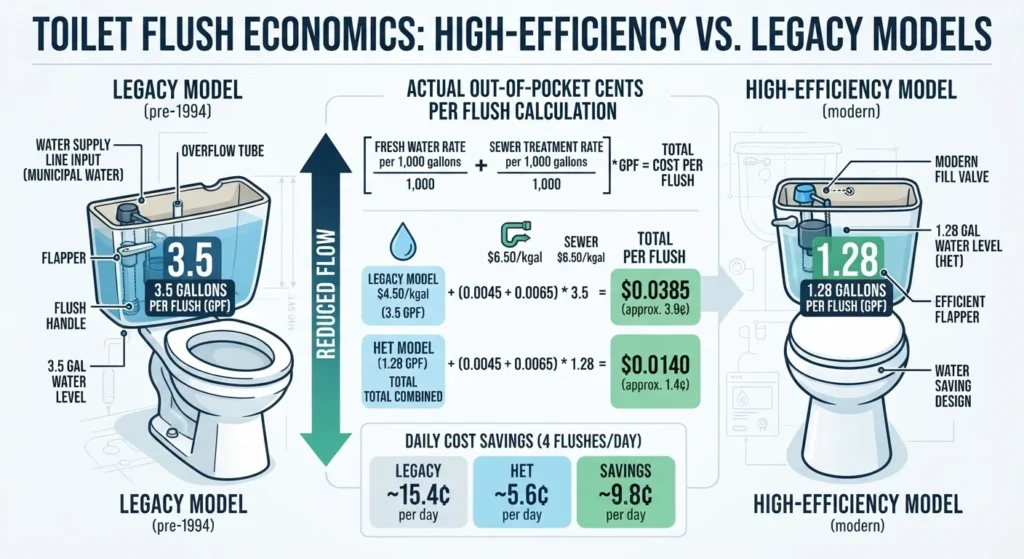
Where Does Storm Sewer Water Go?
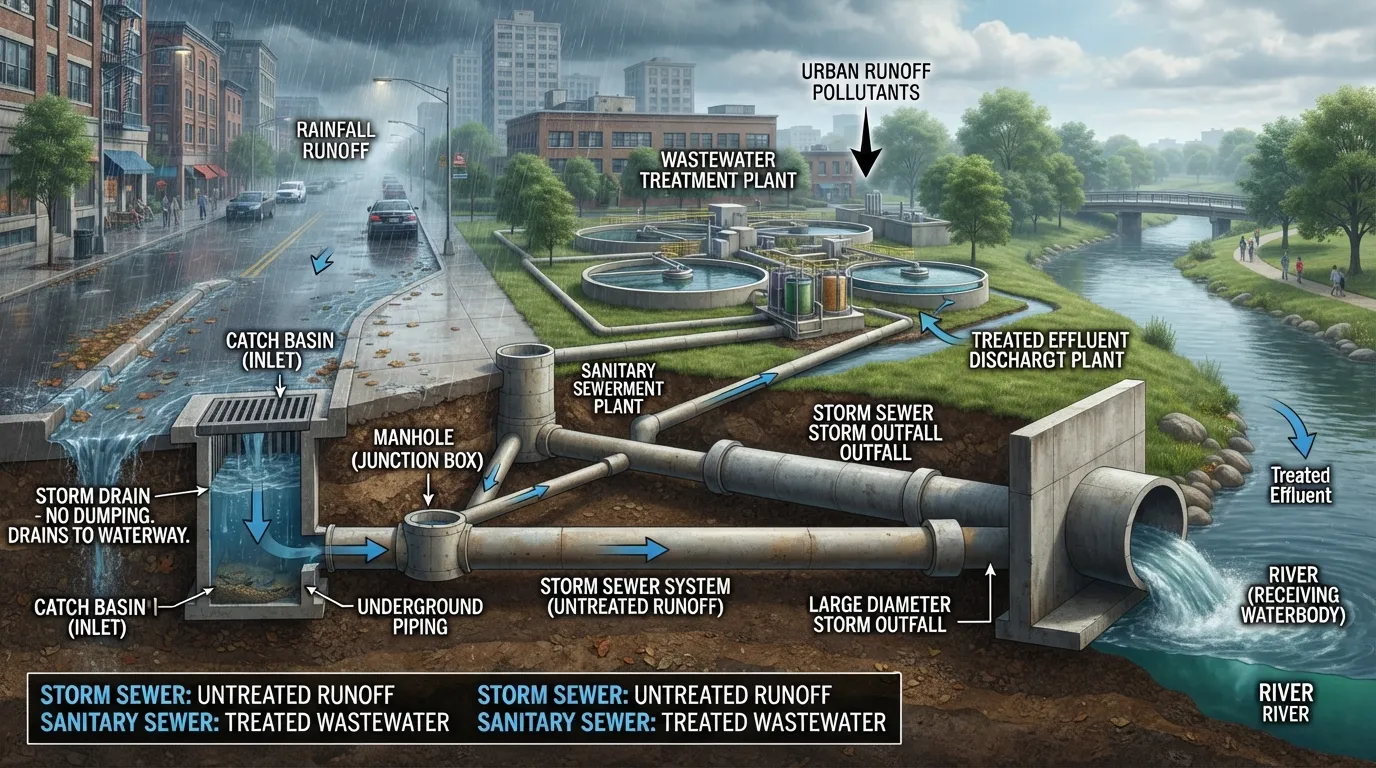
Storm sewer water flows directly from street catch basins through a dedicated network of underground pipes into local water bodies—such as rivers, lakes, and the ocean—without undergoing any treatment process. Unlike sanitary sewage, stormwater runoff remains entirely untreated.
The Direct Definition
The storm drain system functions as a completely separate infrastructure from municipal wastewater treatment facilities. When rain or snowmelt washes over urban surfaces, it picks up urban pollutants and channels them straight into natural aquatic ecosystems.
- Catch Basin: The initial entry point on streets where stormwater runoff enters the underground drainage network.
- Untreated Water: Water that bypasses filtration and chemical processing entirely before discharge.
- Natural Water Bodies: The final destination points, including local rivers, lakes, and coastal ocean waters.
- Ecosystem Impact: Unfiltered runoff introduces heavy metals, debris, and chemicals directly into aquatic habitats.
How the Storm Sewer System Actually Works Step by Step
The storm sewer system operates through a gravity-fed network designed strictly to prevent urban flooding by channeling rainwater away from streets. Every drop entering a curb inlet follows a direct path from neighborhood catch basins through large underground conduits straight into local water bodies.
Step 1 – Rainwater Enters Street Drains & Catch Basins
Rainwater and snowmelt flow off rooftops, driveways, and roadways into street-level structures called catch basins. These heavy-duty grates capture coarse debris, sediment, and trash before the runoff enters the underground plumbing network.
- Catch Basin Grates: Act as the first line of defense to prevent large branches and litter from clogging pipes.
- Sump Area: Captures heavy sediment and grit at the bottom of the basin to prevent downstream blockages.
- Surface Runoff: Directly collects unfiltered water generated during heavy precipitation events.
Step 2 – Underground Pipes & Culverts Carry It Forward
Once inside the basin, gravity pulls the water downward and into a network of interlocking underground pipes and structural culverts. These conduits expand in diameter as they merge with secondary lines draining entire municipal blocks and commercial zones.
- Underground Pipes: Large concrete or corrugated metal conduits that transport high volumes of water safely beneath city streets.
- Culverts: Channels or bridged pipes that allow stormwater to pass smoothly underneath roads, railways, and pathways.
- Dry Wells: Specialized subsurface structures utilized in specific regions to allow collected water to percolate slowly back into the local groundwater table.
Step 3 – Final Destination (Rivers, Creeks, Lakes, Ocean)
The extensive pipe network terminates at designated discharge points known as outfalls. At these structural exits, the accumulated stormwater empties directly into nearby natural environments, including creeks, rivers, lakes, and coastal ocean waters.
- Outfall Structures: The physical concrete or rock-reinforced endpoints where the storm sewer system meets natural waterways.
- Watershed Integration: Discharged runoff flows through regional river basins, ultimately impacting broader ecological zones.
- Zero Treatment Reality: Because water bypasses municipal treatment plants, anything entering the street drain enters the environment raw.
Can You Track Where Your Storm Drain Water Goes?
Tracking local stormwater pathways is entirely possible through municipal engineering maps and active community involvement initiatives. Residents can easily discover their local discharge routes by observing neighborhood watershed markers or reviewing municipal drainage blueprints.
- Storm Drain Marking Program: Local volunteer initiatives that paint “No Dumping – Drains to River” reminders directly onto curb grates.
- Municipal GIS Maps: Publicly accessible city planning tools that map out underground stormwater trunk lines and local outfalls.
- Watershed Associations: Local environmental groups that provide detailed catchment area diagrams and water quality reports.
Storm Sewer vs. Sanitary Sewer What’s the Real Difference?
Understanding the fundamental divide between storm sewers and sanitary sewers is critical for urban water management. While both systems use underground networks of pipes, they serve entirely different purposes and operate under completely separate regulatory frameworks.
Storm Sewer System What It Carries
The storm sewer system manages outdoor surface runoff generated exclusively by rainfall and snowmelt. This infrastructure operates as an MS4 (Municipal Separate Storm Sewer System), collecting water from streets and parking lots and discharging it raw into local water bodies.
- Untreated Discharge: Water flows directly into rivers, lakes, and oceans without filtration or chemical sanitization.
- Environmental Exposure: Picks up street-level debris, motor oil, fertilizers, and litter as it travels.
- Capacity Design: Built massively to handle sudden, high-volume surges during heavy storms and flash floods.
Sanitary Sewer System What It Carries
The sanitary sewer system transports wastewater generated exclusively inside residential, commercial, and industrial buildings. Every flush, shower, and sink drain connects to this network, directing indoor wastewater to a municipal facility for comprehensive processing.
- Wastewater Treatment Plant: All incoming sewage undergoes rigorous physical, biological, and chemical treatment before release.
- Indoor Plumbed Source: Exclusively handles blackwater and graywater originating from toilets, sinks, and washing machines.
- Controlled Flow: Regulated by steady daily usage patterns rather than unpredictable weather events.
Comparison Table Storm Sewer vs Sanitary Sewer
Do Storm Drains Go To The Sewer?
Storm drains do not connect to the municipal sanitary sewer system in modern separated infrastructure networks. Wastewater from street grates flows entirely independent of indoor plumbing, ensuring that heavy rain events do not overwhelm or overload sewage treatment plants.
- Separate Networks: Dedicated conduits keep rainwater separate from household sewage to prevent plant flooding.
- Combined Sewer Exceptions: Older historic cities feature combined systems that route both runoff and sewage to a single plant, which can overflow during heavy storms.
- Direct Environmental Risk: Because standard storm drains bypass treatment entirely, pouring contaminants down a street drain directly pollutes local ecosystems.
Combined Sewer Systems When Storm Water Mixes with Sewage
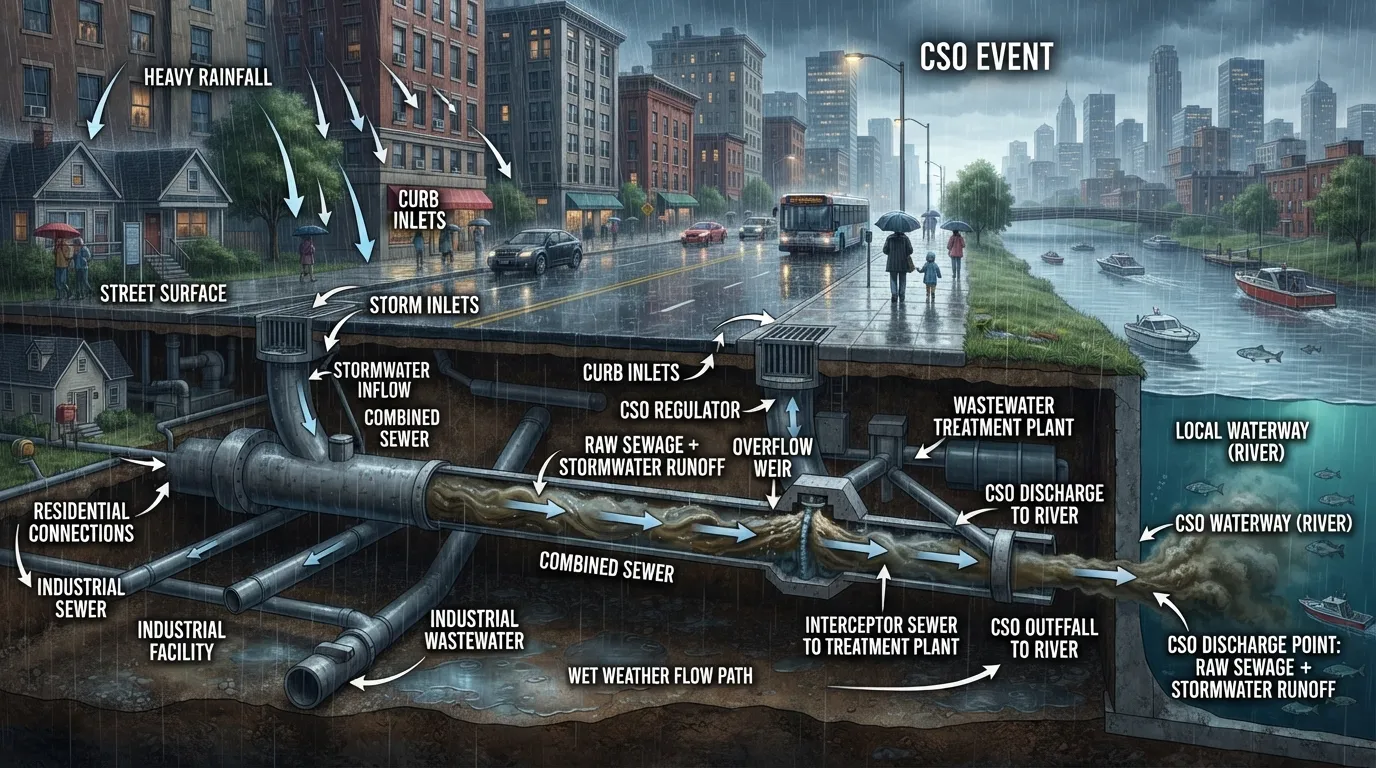
Older metropolitan areas often rely on a single, legacy network known as a combined sewer system. Unlike modern separated infrastructure, these historic configurations transport both indoor sanitary wastewater and outdoor stormwater runoff through the exact same underground pipe network.
What Is a Combined Sewer System?
A combined sewer system merges household sewage from indoor plumbing with outdoor street runoff into a shared conveyance pipe. During dry weather, the entire volume flows directly to a municipal facility for comprehensive treatment before environmental release.
- Shared Conduits: Single large-diameter underground trunks handle both blackwater and rain runoff simultaneously.
- Dry-Weather Processing: All collected fluids route straight to a regional wastewater treatment plant.
- Legacy Infrastructure: Found primarily in historic urban centers built before modern environmental regulations were established.
What Happens During Heavy Rainfall CSO Explained
Severe rainstorms overwhelm the processing limits of combined systems, triggering a Combined Sewer Overflow (CSO). When incoming volumes exceed plant capacity, excess untreated sewage and stormwater mix and discharge directly into local waterways to prevent urban flooding and facility damage.
- Capacity Overload: Sudden massive inflows surpass the physical holding and pumping thresholds of treatment facilities.
- CSO Event: Regulated relief valves open to release raw, untreated mixtures into nearby rivers and bays.
- Environmental Hazard: Introduces raw pathogens, chemical pollutants, and debris straight into natural aquatic ecosystems.
Real-World Example – The Chicago Deep Tunnel Project
Major cities combat CSO challenges through massive engineering interventions like Chicago’s Tunnel and Reservoir Plan (TARP). According to the Metropolitan Water Reclamation District of Greater Chicago, huge underground storage caverns capture billions of gallons of combined overflow during heavy storms, holding it safely until treatment plants can process it.
- Subsurface Reservoirs: Massive rock caverns carved hundreds of feet underground temporarily store excess stormwater and sewage.
- Pollution Reduction: Dramatically minimizes the frequency and volume of untreated discharges into local river systems.
- Engineering Scale: Serves as a global benchmark for retrofitting historic urban infrastructure against heavy rainfall surges.
What Pollutes Storm Water And Why It Matters
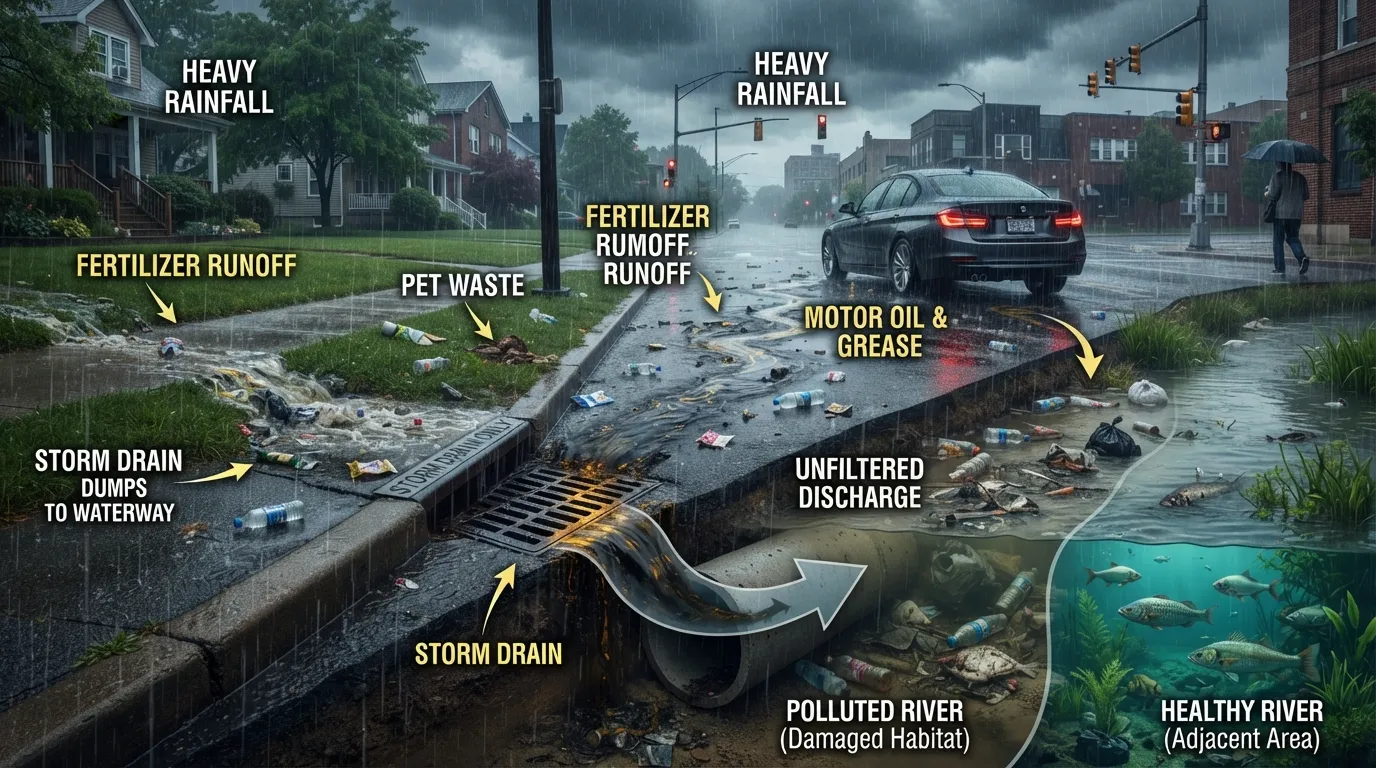
Stormwater runoff acts as a universal conveyor belt, picking up toxic chemicals, trash, and organic debris as it flows across paved urban landscapes. Because this water receives no treatment before discharge, every pollutant swept into a street drain flows directly into our natural ecosystems.
Common Pollutants Found in Stormwater
Urban runoff contains a complex mixture of residential, automotive, and industrial contaminants accumulated from daily human activity. Rain and snowmelt wash these surface deposits directly into the nearest catch basin without filtration.
- Motor Oil and Heavy Metals: Drip leaks from vehicles deposit zinc, copper, lead, and petroleum hydrocarbons directly onto roadways.
- Pesticides and Fertilizers: Lawn care chemicals wash off suburban yards, introducing high nutrient loads that trigger toxic algae blooms.
- Pet Waste: Uncollected animal feces introduce harmful bacteria, E. coli, and excess pathogens into local waterways.
- Trash and Microplastics: Single-use plastics, packaging debris, and synthetic particles blow or wash into street gutters.
Why Untreated Discharge Harms Rivers & Oceans
The unmitigated entry of urban runoff into aquatic habitats causes severe ecological degradation and threatens public health. According to guidelines enforced by the EPA NPDES Program, controlling non-point source pollution is vital to preserving clean water resources.
- Eutrophication: Fertilizer runoff causes massive nutrient spikes that deplete dissolved oxygen, suffocating fish and aquatic life.
- Pathogen Contamination: Bacteria from pet waste and street debris frequently force the closure of public beaches and recreational fisheries.
- Habitat Destruction: Floating plastics and chemical toxins poison wildlife, disrupting delicate food webs in rivers and coastal oceans.
Retention Basins & Bioswales How Some Systems Filter Runoff
Modern municipalities implement green infrastructure engineering to mitigate pollution before stormwater reaches natural water bodies. These nature-based systems use natural sedimentation and biological filtration to clean runoff prior to discharge.
- Retention Basins: Artificial ponds designed to temporarily hold runoff, allowing heavy sediments and particulate pollutants to settle out.
- Bioswales: Engineered landscape channels planted with native vegetation that filter pollutants and promote natural groundwater infiltration.
- Constructed Wetlands: Managed marsh environments that utilize biological plant processes to break down chemical contaminants naturally.
How to Check Your Local Storm Sewer System State City Specific Gap
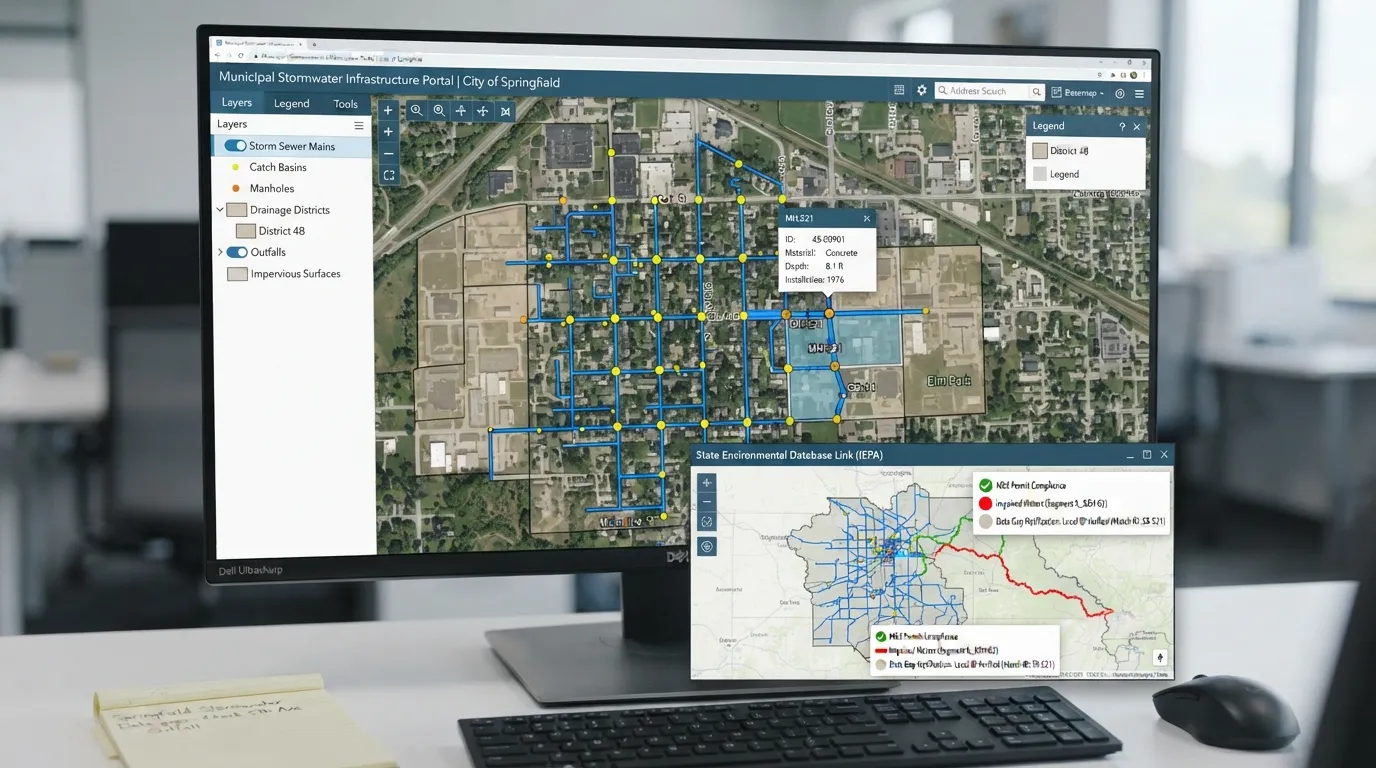
Storm sewer configurations vary dramatically depending on local geography, municipal infrastructure age, and state environmental regulations. Because drainage management is decentralized, finding out exactly where your neighborhood runoff goes requires checking specific municipal records.
Why Every City’s System Is Different
Drainage design is dictated by local climate conditions, historical development timelines, and regional topography. While modern cities rely exclusively on separated storm sewer systems (MS4s), older industrial municipalities often retain legacy combined networks, making hyper-local research essential.
- Infrastructure Age: Older cities founded before the mid-20th century frequently use combined sewers, whereas newer developments use separated systems.
- Geographic and Climatic Needs: Arid regions utilize dry wells and retention basins, while high-rainfall coastal zones rely on massive outfall canals.
- State Environmental Mandates: State-level environmental protection departments enforce distinct compliance standards for regional stormwater management.
How to Find Your Municipality’s Stormwater Info Practical Steps
Accessing precise details about your local watershed and drainage routes is straightforward when utilizing municipal public works resources and regional environmental databases.
- Check the Public Works Department: Visit your city or county website’s public works or engineering page to review local drainage maps and outfall locations.
- Look Up Your Local Water Authority: Search for regional water management districts or conservation authorities that publish annual stormwater quality reports.
- Review State Environmental Agencies: Check state environmental protection department websites for municipal stormwater permit data and compliance reports.
- Inspect Neighborhood Catch Basins: Look for curb markers or municipal stenciling indicating which local river or lake your street runoff discharges into.
How You Can Help Prevent Stormwater Pollution
Because storm sewer systems discharge water directly into natural water bodies without filtration, everyday household habits play a vital role in protecting local aquatic ecosystems. Homeowners can easily adopt preventative practices to stop pollutants from entering neighborhood catch basins.
Simple Things You Can Do at Home
Implementing basic eco-friendly habits around your property significantly reduces the volume of harmful chemicals and debris entering public stormwater conduits. Small adjustments to lawn care and vehicle maintenance yield massive environmental benefits.
- Install a Rain Barrel: Capture rooftop runoff to use for garden irrigation, reducing overall runoff volume and local pipe strain.
- Practice Smart Lawn Care: Apply organic or slow-release fertilizers sparingly and avoid application immediately before forecasted rainstorms.
- Wash Vehicles on Grass: Direct soapy runoff onto lawns or visit commercial car washes where wastewater routes to sanitary treatment facilities.
- Participate in Storm Drain Stenciling: Volunteer with local watershed groups to paint environmental reminder messages directly onto street grates.
What NOT to Pour Down a Storm Drain
Treating a street catch basin like a disposal utility directly poisons local rivers, lakes, and coastal wildlife habitats. Hazardous materials and chemical waste must always be directed to official municipal drop-off centers rather than outdoor drainage inlets.
- Never Dump Motor Oil or Antifreeze: Automotive fluids cause severe toxicity in aquatic ecosystems even in extremely small quantities.
- Keep Paint and Solvents Away: Latex and oil-based paints introduce heavy chemicals and pigments straight into unprotected waterways.
- Dispose of Pet Waste Properly: Scoop and trash animal waste rather than leaving it on pavement where rain washes bacteria into storm grates.
- Avoid Sweeping Yard Debris: Bag grass clippings and leaves instead of blowing them into the street gutter, where they clog drains and deplete water oxygen.
Types of Storm Drainage Infrastructure
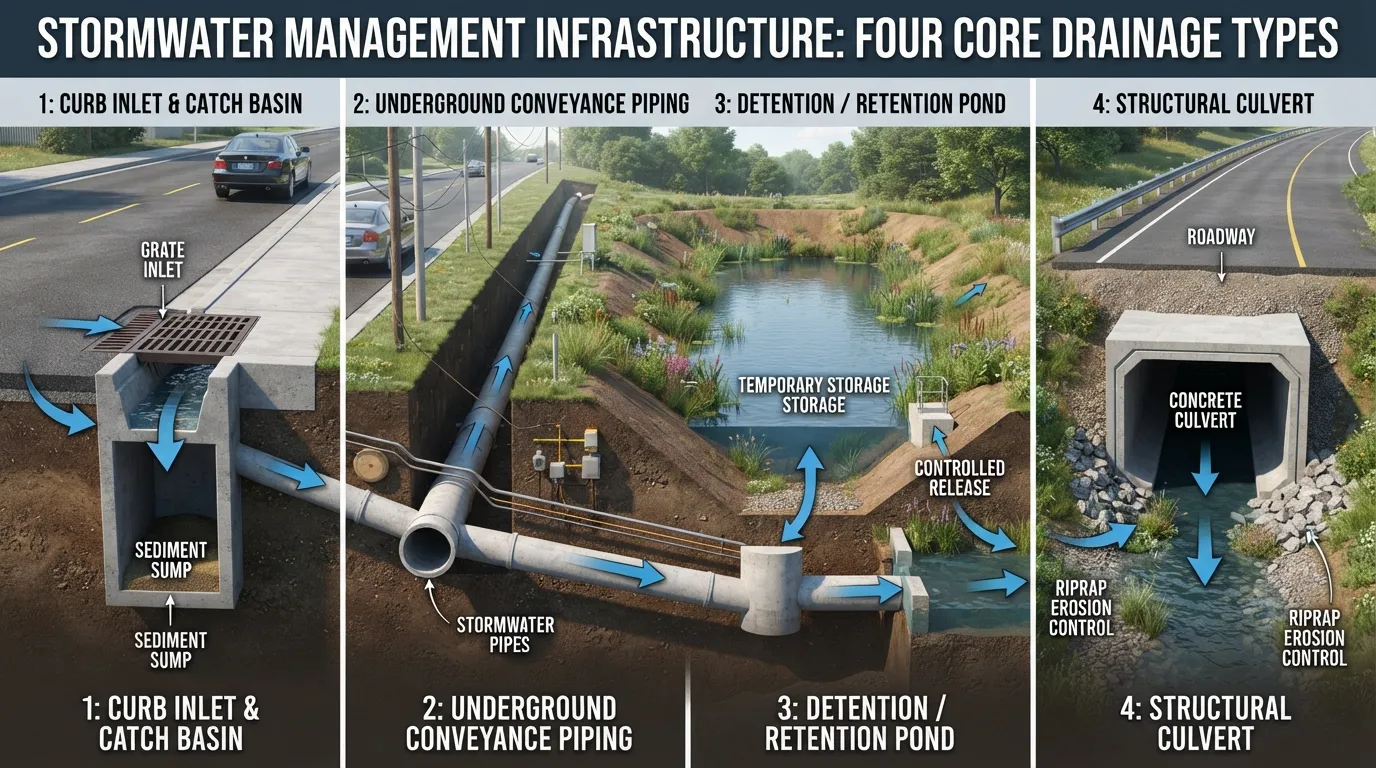
Municipalities deploy a diverse array of civil engineering structures to manage surface water depending on regional development density, topography, and regional precipitation volumes. These engineered networks work in unison to control flooding and guide water safely away from populated zones.
Underground Pipes and Culverts
Subsurface conduits form the structural backbone of urban drainage networks, utilizing gravity to transport massive volumes of stormwater beneath streets and commercial corridors. Culverts act as specialized bridges that allow water to flow smoothly under roads, railways, and paths without disrupting traffic.
- Reinforced Concrete Pipes (RCP): High-durability underground conduits built to handle tremendous structural weight and heavy water flow.
- Corrugated Metal Pipes: Flexible, cost-effective piping options utilized for municipal trunk lines and smaller secondary drainage branches.
- Box Culverts: Large rectangular concrete channels engineered to handle high-capacity stream crossings and major roadway underpasses.
Dry Wells & Detention Basins
Subsurface and surface detention features temporarily hold stormwater runoff to mitigate peak flow rates and prevent downstream erosion or urban flooding. Dry wells facilitate groundwater recharge by allowing collected water to percolate downward into underlying soil layers.
- Dry Wells: Perforated subsurface chambers surrounded by crushed stone that drain rooftop or parking lot runoff directly into local aquifers.
- Detention Basins: Surface depressions designed to collect high-volume stormwater during storms and slowly release it at a controlled rate.
- Flow Control Structures: Internal restrictors that regulate the discharge speed leaving the basin to prevent downstream channel scouring.
Open Ditches and Channels Rural Systems
Suburban and rural settings frequently rely on open-air drainage channels rather than expensive underground piping networks to manage surface runoff. These grass-lined or concrete-paved ditches use natural slopes to guide water toward regional streams and agricultural outfalls.
- Grass-Lined Swales: Vegetated channels that slow down runoff velocity while filtering out suspended sediment and particulate pollutants.
- Concrete Drainage Ditches: Hard-lined channels engineered for high-speed water transport in areas prone to rapid erosion.
- Roadside Bar Ditches: Parallel depressions flanking rural highways designed to keep road subgrades dry and structurally sound.
What Are Those White Tubes in Retention Ponds?
The vertical white or corrugated plastic pipes visible inside retention basins are engineering control devices known as standpipes or perforated riser structures. These assemblies regulate the pond’s water level and manage the outflow rate during severe weather events.
- Orifice Holes: Pre-drilled openings along the standpipe that control the slow, steady release of trapped stormwater after a heavy rain.
- Trash Racks: Protective wire cages mounted over the top of the standpipe to prevent debris, leaves, and plastic bottles from clogging internal pipes.
- Emergency Spillway Integration: Works alongside overflow channels to protect the basin dam or earthen banks from catastrophic structural washouts.
Stormwater Regulations The Clean Water Act & NPDES Explained
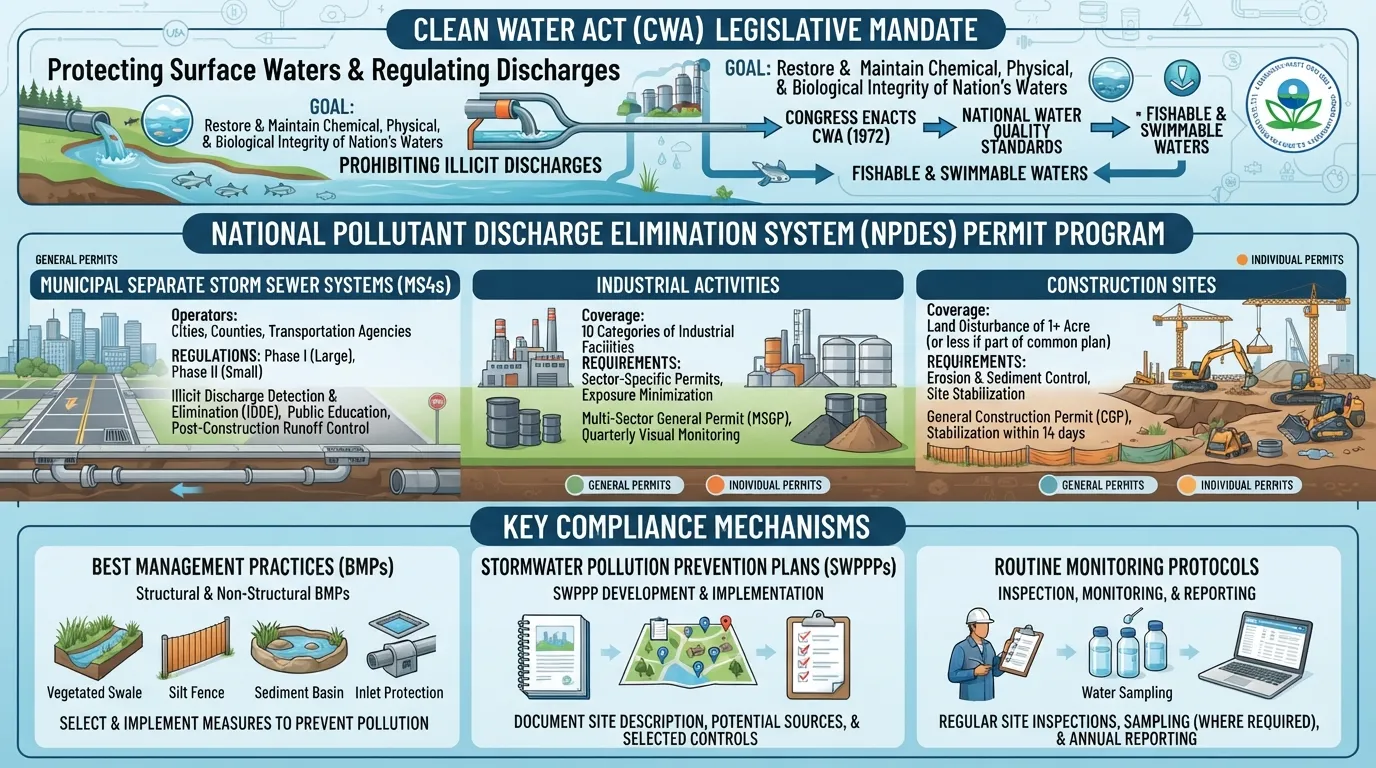
Federal environmental legislation governs municipal stormwater management to protect public health and preserve natural water quality. Regulatory frameworks enforce strict legal boundaries on how cities collect, manage, and discharge urban runoff into public waterways.
What Is the Clean Water Act?
Enacted in 1972, the Clean Water Act (CWA) establishes the foundational legal framework for regulating pollutant discharges into United States surface waters. The legislation transformed national environmental policy by making it unlawful to discharge any pollutant from a point source into navigable waters without an explicit permit.
- Federal Jurisdiction: Empowers environmental agencies to regulate industrial, municipal, and commercial pollution sources.
- Water Quality Standards: Establishes ambient water quality criteria for surface waters supporting recreation and aquatic life.
- Enforcement Powers: Imposes severe civil and criminal penalties for illegal dumping and unauthorized municipal discharges.
NPDES Permits and Municipal Compliance MS4 Explained
The National Pollutant Discharge Elimination System (NPDES) program regulates point sources that discharge pollutants into waters of the United States. Municipalities operate under specialized MS4 (Municipal Separate Storm Sewer System) permits that require active pollution reduction programs.
- MS4 Permits: Legal authorizations requiring cities to implement comprehensive stormwater management programs and public education.
- Illicit Discharge Detection: Mandates systematic field screening and tracing to eliminate unauthorized cross-connections from sanitary plumbing.
- Construction Runoff Controls: Requires developers to implement erosion and sediment control measures on active building sites.
How Regulations Protect Local Waterways
Environmental compliance regulations mandate proactive infrastructure investments and rigorous monitoring standards across urban centers. These legal frameworks ensure that local governments minimize chemical toxicity and physical degradation in regional watersheds.
- Runoff Monitoring: Regular sampling of outfall discharges to detect industrial chemical leaks or sewage infiltration.
- Best Management Practices (BMPs): Enforces the adoption of structural and non-structural controls to capture urban pollutants at the source.
- Ecosystem Preservation: Protects vulnerable aquatic habitats from the catastrophic impacts of unmanaged industrial and urban runoff.
How Climate Change Is Increasing Stormwater Challenges
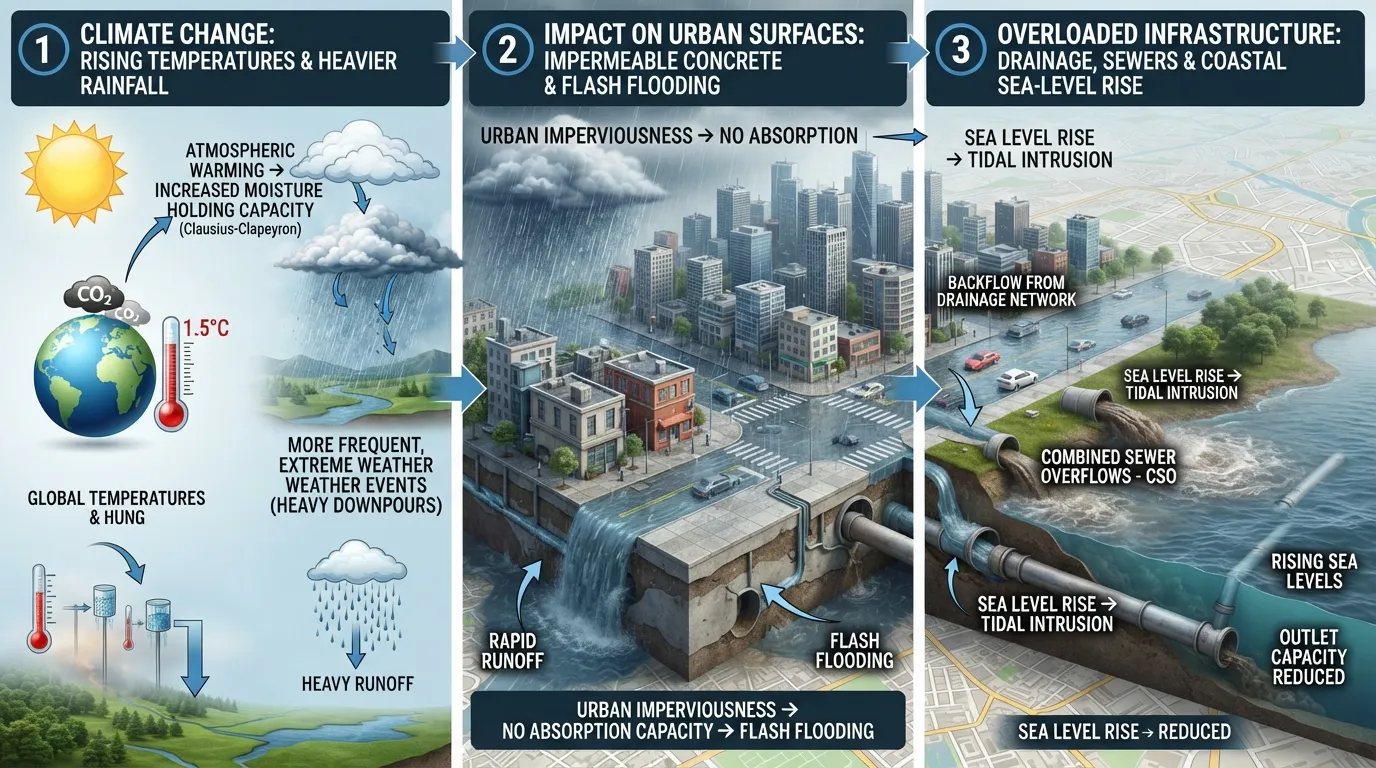
Shifting climatic patterns and increasingly frequent extreme weather events are pushing urban drainage infrastructure past its historical design capacity. As rainfall intensity increases, municipal storm sewer networks face unprecedented pressure to prevent widespread urban flooding and environmental contamination.
More Intense Storms More Runoff Volume
Atmospheric warming increases moisture retention capacity, resulting in cloudbursts and high-intensity storms that dump massive volumes of precipitation in short timeframes. Paved urban surfaces cannot absorb this intense deluge, instantly overwhelming neighborhood catch basins with excessive runoff.
- Flash Flooding Risks: Rapid downpours quickly submerge low-lying intersections and underpasses faster than gravity-fed pipes can drain them.
- Hydraulic Overload: Peak water volumes exceed the structural diameter of legacy trunk lines, causing violent backups into streets.
- Accelerated Erosion: High-velocity water scouring severely damages natural stream banks and unlined drainage ditches downstream.
Why Older Combined Sewer Systems Are Struggling Today
Legacy combined sewer systems built over a century ago were engineered for historical rainfall averages rather than modern torrential downpours. Consequently, frequent extreme weather events trigger constant overflow events that release untreated sewage into local ecosystems.
- Frequent CSO Events: Heavy precipitation forces municipal treatment facilities to bypass processing entirely to protect plant infrastructure.
- Capacity Mismatch: Infrastructure designed for 20th-century weather patterns cannot cope with modern multi-inch cloudbursts.
- Public Health Risks: Repeated overflows elevate bacterial counts in recreational water bodies near metropolitan centers.
Cities Adapting Their Infrastructure for Heavier Rainfall
Forward-thinking municipalities are transitioning from traditional concrete-only engineering to adaptive climate-resilient frameworks. These modern mitigation strategies combine massive underground storage with decentralized green infrastructure to absorb climate shocks.
- Smart Retention Tunnels: Expanding subsurface storage caverns to capture peak storm surges before treatment facilities experience hydraulic overload.
- Sponge City Initiatives: Integrating permeable pavements, rain gardens, and bioswales to maximize natural on-site water retention.
- Real-Time Sensor Networks: Deploying automated digital sensors across drainage gates to dynamically route stormwater through available network capacity.
Green Infrastructure Solutions Rain Gardens Bioswales, Permeable Pavement
Modern stormwater management increasingly relies on green infrastructure to mimic natural hydrological cycles within urban environments. By integrating engineered natural systems into cityscapes, municipalities reduce peak runoff volumes and filter contaminants before they reach local waterways.
What Is Green Infrastructure?
Green infrastructure utilizes vegetation, soils, and natural processes to manage rainwater and create healthier urban environments. Unlike traditional “gray” infrastructure made strictly of concrete pipes and culverts, green systems absorb and filter precipitation right at the source.
- At-Source Absorption: Captures rainfall where it falls, dramatically reducing the volume entering municipal storm sewers.
- Natural Filtration: Utilizes plant roots and engineered soil layers to break down heavy metals and organic pollutants.
- Urban Cooling: Mitigates the urban heat island effect while enhancing neighborhood aesthetic appeal and property values.
Rain Gardens vs Bioswales What’s the Difference?
While both rain gardens and bioswales are planted bioretention systems designed to manage runoff, they serve different structural roles in landscape architecture. Rain gardens function as bowl-shaped collection basins, whereas bioswales operate as linear conveyance channels.
- Rain Gardens: Shallow, landscaped depressions designed to collect, hold, and slowly infiltrate runoff from roofs and driveways.
- Bioswales: Sloped, vegetated linear channels engineered to transport, slow down, and filter water along roadways or parking lots.
- Conveyance vs Collection: Bioswales actively move water toward discharge points, while rain gardens retain water entirely on-site.
Permeable Pavement & Green Roofs
Pervasive urban surfaces like traditional asphalt and standard roofing prevent natural water infiltration, generating massive volumes of runoff. Permeable paving materials and rooftop vegetation transform these impermeable spaces into active stormwater retention tools.
- Permeable Pavement: Porous asphalt, concrete, or interlocking pavers that allow rainwater to pass straight through to an underlying stone reservoir.
- Green Roofs: Vegetated rooftop systems that absorb up to 70% of annual rainfall, insulating buildings while curbing peak sewer loads.
- Subsurface Storage: Integrated stone beds beneath permeable surfaces store water temporarily before it slowly recharges local aquifers.
Real Example NYC’s Rain Garden Program
Metropolitan centers like New York City deploy extensive street-side rain garden initiatives to combat combined sewer overflows during heavy storms. These sidewalk bioretention basins capture millions of gallons of street runoff, relieving immense pressure on municipal processing facilities.
- Sidewalk Inlets: Specially designed curb cuts direct street-level runoff straight into engineered soil and plant beds.
- CSO Reduction: Significantly curtails the frequency of untreated sewage discharges into local rivers and bays during heavy downpours.
- Community Integration: Transforms drab concrete street corners into thriving green biospaces that improve local air and water quality.
Frequently Asked Questions
Quick answers to the most common questions regarding storm sewer systems, municipal drainage networks, and environmental safety regulations.
Where does stormwater drain water go?
Stormwater runoff flows directly from street catch basins through underground pipes and outfalls into local water bodies—including rivers, lakes, streams, and coastal oceans—without undergoing any treatment process.
- Untreated Discharge: Water bypasses filtration and chemical processing entirely.
- Direct Environmental Entry: Enters local aquatic ecosystems straight from street gutters.
Where does sewer water eventually go?
Sanitary sewer water from indoor plumbing travels through dedicated underground pipes directly to a municipal wastewater treatment plant, where it undergoes rigorous physical, biological, and chemical processing before being safely released.
- Treatment Facility: Processed to remove organic waste, bacteria, and chemical contaminants.
- Regulated Effluent: Cleaned water is discharged into approved waterways or reused for irrigation.
What’s the difference between a sewer and a storm sewer?
A sanitary sewer carries indoor wastewater from homes and businesses to a treatment facility, while a storm sewer collects outdoor rain and snowmelt runoff from streets and discharges it raw into natural water bodies.
- Sanitary: Handles indoor plumbing wastewater and requires treatment.
- Storm: Handles outdoor surface runoff and discharges without treatment.
How often should storm drains be cleaned?
Municipalities typically clean and inspect street catch basins and storm drains at least once a year, usually in the late fall or early spring, though flood-prone or high-debris areas require quarterly maintenance.
- Vactor Truck Cleaning: Vacuum trucks clear out accumulated sediment, leaves, and grit from basin sumps.
- Pre-Storm Inspections: Cleared ahead of heavy seasonal rainfall to prevent localized street flooding.
Does stormwater go into the sewer?
In modern separated sewer systems, stormwater never mixes with sanitary sewage. However, older historic cities utilize combined sewer systems where rain runoff and household sewage share the exact same piping network.
- Separated Systems: Keep stormwater and sanitary sewage completely isolated.
- Combined Systems: Route both types of water to treatment plants, risking raw overflows during heavy storms.
What happens if you pour something other than rain into a storm drain?
Pouring chemicals, motor oil, paint, or soapy water into a storm drain introduces toxic pollutants directly into local rivers and lakes, harming aquatic wildlife, contaminating drinking water sources, and violating environmental laws.
- Direct Contamination: Pollutants bypass treatment plants completely, poisoning local aquatic habitats.
- Legal Penalties: Illicit dumping into storm drains carries severe civil fines under federal regulations.

Oscar Vance | Master Plumber & Drainage Expert
Meet Oscar Vance, a licensed master plumber sharing practical solutions on residential repairs, preventive maintenance, and thoughtful home upkeep.