Which Process Requires Separate Plumbing?
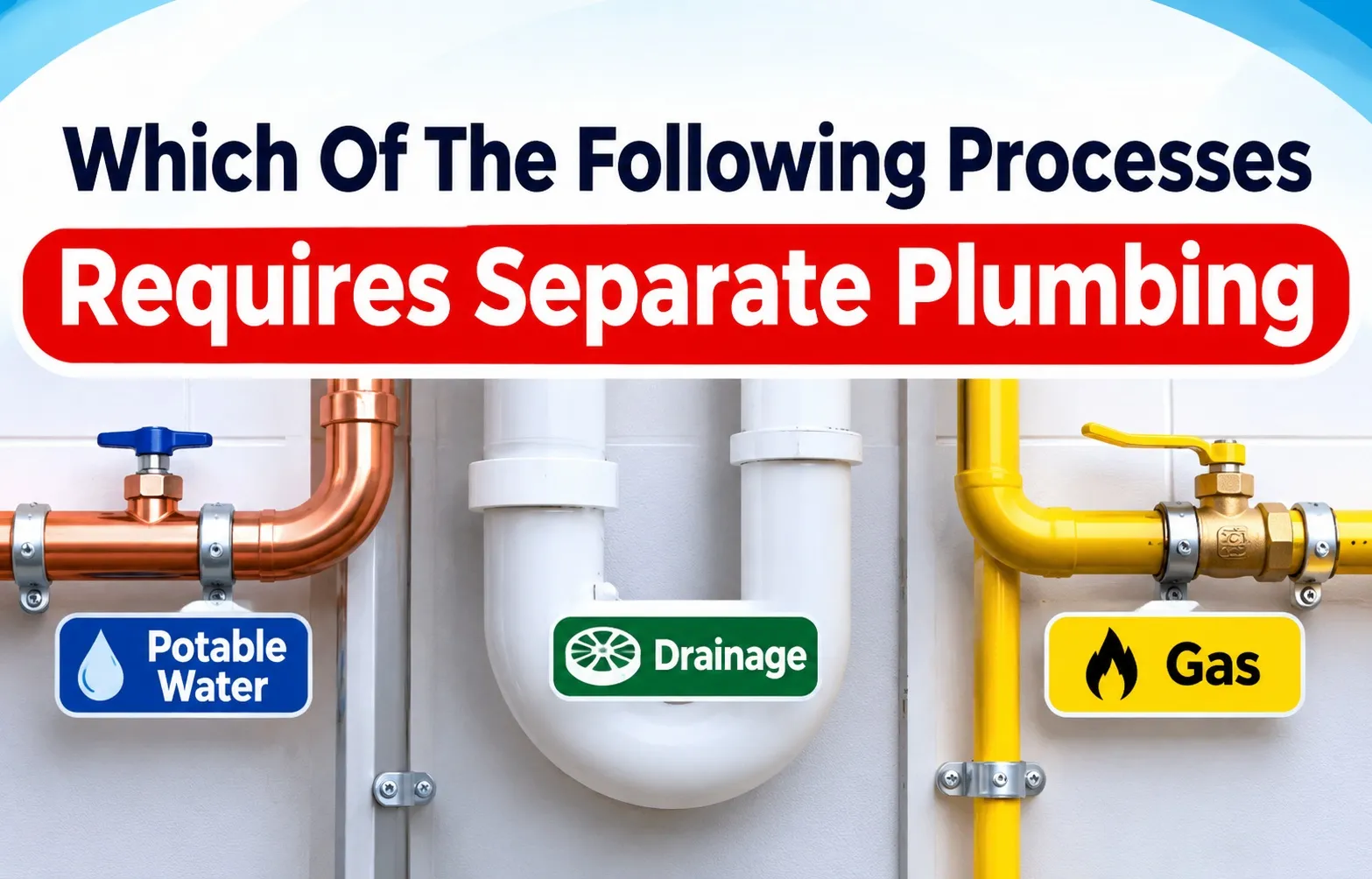 Greywater use is the specific process that requires a separate plumbing system. Unlike standard domestic water setups, greywater systems demand a dual-plumbing network to isolate non-potable wastewater from clean drinking water, preventing cross-contamination and protecting public health.
Greywater Use Requires Dual Piping
In standard building codes and water management certification exams, greywater use is the single process requiring dedicated, isolated piping. Greywater consists of gently used water from household fixtures such as laundry washing machines, showers, bathtubs, and bathroom sinks.
Because greywater contains organic matter, hair, soap residues, and traces of bacteria, it cannot mix with freshwater lines. Consequently, building codes mandate an entirely independent plumbing infrastructure to collect, filter, and distribute greywater safely for non-potable applications.
- Dedicated Collection Infrastructure: Requires purple-coded piping to separate greywater lines from municipal supply lines.
- Allowed Non-Potable Applications: Strictly restricted to subterranean landscape irrigation and dedicated toilet flushing networks.
- Immediate Health Protection: Eliminates physical connections between non-potable drainage and main drinking water supplies.
Quick Breakdown of the Multiple-Choice Options
Understanding why alternative water management options do not require dual residential piping relies on how water treatment plants process and distribute municipal water supplies:
- Greywater Use (Correct Answer): Demands an isolated, on-site dual-plumbing network to handle untreated household wastewater safely before non-potable reuse.
- Desalination: Saltwater is purified at centralized industrial treatment facilities until it meets strict potable drinking water standards. Once treated, it is pumped directly through standard municipal supply mains.
- Water Reclamation: Municipal wastewater is processed through multi-stage centralized facilities to meet safety regulations. Purified reclaimed water is delivered back to consumers via primary municipal utility pipes.
- None of the Above: Incorrect, because greywater use explicitly requires separate plumbing lines under national and international plumbing codes.
Why Greywater Use Demands an Isolated Plumbing Network
Maintaining complete physical separation between alternative water systems and public drinking supplies is mandatory to safeguard public health. Without total isolation, backflow events can introduce harmful pathogens directly into municipal drinking water networks.
Preventing Cross-Contamination and Health Risks
Preserving sanitary conditions in residential and commercial buildings requires absolute prevention of cross-contamination between untreated wastewater and clean water lines. Greywater contains organic residues, soaps, and bacteria that pose severe health hazards if introduced into potable water networks.
- Physical Air Gaps: Enforces permanent physical separation to stop backflow and siphoning events.
- Pathogen Containment: Prevents harmful microorganisms from entering clean drinking water reservoirs.
- Regulatory Compliance: Aligns with strict health department guidelines governing public safety.
Diverting Wastewater from Main Sewage Lines
Effective greywater diversion requires separating gently used water from blackwater originating in toilets and kitchen sinks. By routing domestic runoff away from standard sewage lines, facilities can safely recover water for secondary non-potable reuse.
- Blackwater Isolation: Keeps highly contaminated toilet waste completely away from recycling loops.
- On-Site Retention: Captures laundry and shower runoff before it enters municipal sewer mains.
- Load Reduction: Decreases total wastewater volume processed by public sewage treatment plants.
Understanding the Mechanics of Dual-Pipe Infrastructure
Implementing dual piping allows buildings to run separate utility networks parallel to each other safely. One network supplies pressurized drinking water, while the second dedicated network distributes treated greywater exclusively for permitted non-potable reuse applications.
- Parallel Utility Routing: Runs independent piping corridors throughout the structure.
- Non-Potable Designation: Restricts secondary water strictly to subsurface irrigation and toilet flushing.
- System Longevity: Protects infrastructure valves and fixtures from premature bio-fouling or chemical corrosion.
Why Desalination and Water Reclamation Do Not Require Separate Home Plumbing
Municipal water treatment facilities purify raw water to meet strict drinking water standards before distribution. Because purified water leaving these centralized plants is fully potable, homes do not require separate plumbing lines to receive it.
How Desalination Integrates with Municipal Mains
Desalination facilities remove dissolved salts and minerals from ocean water through advanced processes like reverse osmosis. Once treatment is complete, the resulting water satisfies all federal and local drinking water standards for human consumption.
- Direct Grid Injection: Purified water blends directly into public distribution networks alongside standard freshwater supplies.
- Standard Pipe Material: Transports seamlessly through standard municipal water infrastructure without special isolation.
- Potable Quality Assurance: Undergoes continuous monitoring to guarantee safety before reaching home utility meters.
The Role of Centralized Water Reclamation Facilities
Centralized water reclamation plants collect regional wastewater and process it through rigorous multi-stage filtration and disinfection cycles. When treated for indirect or direct potable reuse, the final output meets or exceeds established drinking water criteria.
- Multi-Barrier Purification: Employs microfiltration, ultraviolet disinfection, and advanced oxidation to remove contaminants.
- Unified Distribution: Delivers high-grade potable water into municipal mains without requiring dual building service connections.
- Environmental Augmentation: Replenishes natural aquifers and reservoirs that feed existing municipal supply lines.
Distinguishing Municipal Treatment from On-Site Building Plumbing
Understanding why greywater requires separate piping while desalination and centralized reclamation do not comes down to where the treatment occurs and the final purity level of the water.
- Point-of-Treatment Location: Centralized plants purify water off-site before delivery, whereas greywater systems handle untreated runoff on-site inside the building.
- Purity at Point-of-Use: Municipal facilities discharge 100% potable water; on-site greywater remains non-potable and must be isolated to prevent accidental ingestion.
- Infrastructure Requirements: Off-site municipal purification uses single supply lines, while on-site non-potable reuse mandates dual-plumbing networks within the facility.
Plumbing Codes, Safety Standards, and Cross-Connection Control
Dual-plumbing systems and non-potable water reuse are governed by strict regulatory frameworks to ensure public health safety. Adhering to established plumbing codes eliminates cross-connection hazards and guarantees full regulatory compliance in modern building design.
International Plumbing Code (IPC) and Uniform Plumbing Code (UPC) Standards
Model plumbing codes provide detailed engineering standards for designing, installing, and inspecting non-potable water networks. Standards outlined in national frameworks like the International Plumbing Code (IPC) and the Uniform Plumbing Code (UPC) mandate complete separation between drinking water and non-potable greywater lines.
- IPC Section 1301 Provisions: Governs non-potable water systems, establishing design criteria for non-potable supply lines and storage tanks.
- UPC Chapter 15 Regulations: Outlines detailed installation rules, system testing, and inspection protocols for alternate water sources.
- Permitted End Uses: Strictly defines authorized non-potable applications, including subsurface landscape irrigation and fixture flushing.
Color-Coding and Pipe Identification (The Purple Pipe Standard)
To prevent accidental cross-connections during maintenance or structural modification, dual-piping systems require clear visual identification. Building regulations globally mandate distinct visual markers for all non-potable conveyances.
- The Purple Pipe Mandate: Requires all non-potable supply lines, fittings, and distribution points to be colored Pantone 512C purple.
- Continuous Stenciled Labeling: Pipes must carry clear, repeating legend print stating “CAUTION: NON-POTABLE WATER – DO NOT DRINK.”
- Valve and Outlet Tagging: Outlets and control valves must feature permanent warning signage to prevent unauthorized potable connections.
Backflow Prevention Devices and Compliance
Cross-connection control is the mechanical baseline of dual-plumbing safety. Installing certified backflow prevention assemblies prevents non-potable water from siphoning back into main freshwater supplies during pressure drops.
- Reduced Pressure Zone (RPZ) Assemblies: Mandates high-hazard backflow preventers at municipal meter connections serving dual-piped facilities.
- Annual Certification Testing: Requires licensed cross-connection control testers to inspect and verify mechanical backflow devices yearly.
- Physical Air Gaps: Enforces unobstructed vertical air gaps at all greywater discharge points to guarantee complete backsiphonage isolation.
Frequently Asked Questions: Water Systems & Plumbing Design
Understanding dual-plumbing standards, wastewater classifications, and building system architecture is essential for passing water policy certifications and mastering modern plumbing design principles.
What are the main types of plumbing systems in modern construction?
Modern building infrastructure relies on three core plumbing systems to manage water delivery, waste removal, and environmental drainage safely within a structure.
- Potable Water Supply System: Distributes clean, pressurized drinking water from municipal mains or private wells to fixtures throughout the building.
- Drain-Waste-Vent (DWV) System: Removes fixture wastewater and sewage while venting sewer gases safely out through the roof.
- Stormwater Drainage System: Captures and channels rainwater runoff away from building foundations and roofs to prevent structural flooding.
What is the difference between greywater and blackwater?
The primary distinction between greywater and blackwater lies in the level of biological contamination and the potential health hazards associated with each wastewater source.
- Greywater: Gently used wastewater originating from washing machines, showers, bathtubs, and bathroom sinks that contains low pathogen levels and can be reused on-site.
- Blackwater: Heavily contaminated wastewater originating from toilets, bidets, and kitchen sinks containing high levels of organic matter, feces, and dangerous food-borne pathogens.
Why are separate pipes necessary for alternative water sources?
Installing isolated, dedicated piping for alternative water sources protects public health by preventing cross-contamination with potable drinking lines while optimizing water conservation efforts.
- Preventing Cross-Connections: Keeps untreated alternative water completely isolated from municipal freshwater drinking supplies.
- Regulatory Safety Compliance: Ensures adherence to international plumbing codes that mandate non-potable lines be visually identified with purple piping.
- Sustainable Building Design: Enables safe reuse of collected rainwater or greywater for landscape irrigation and toilet flushing without risking contamination.

Oscar Vance | Master Plumber & Drainage Expert
Meet Oscar Vance, a licensed master plumber sharing practical solutions on residential repairs, preventive maintenance, and thoughtful home upkeep.