Which Five Tools Are Most Common to Plumbing?
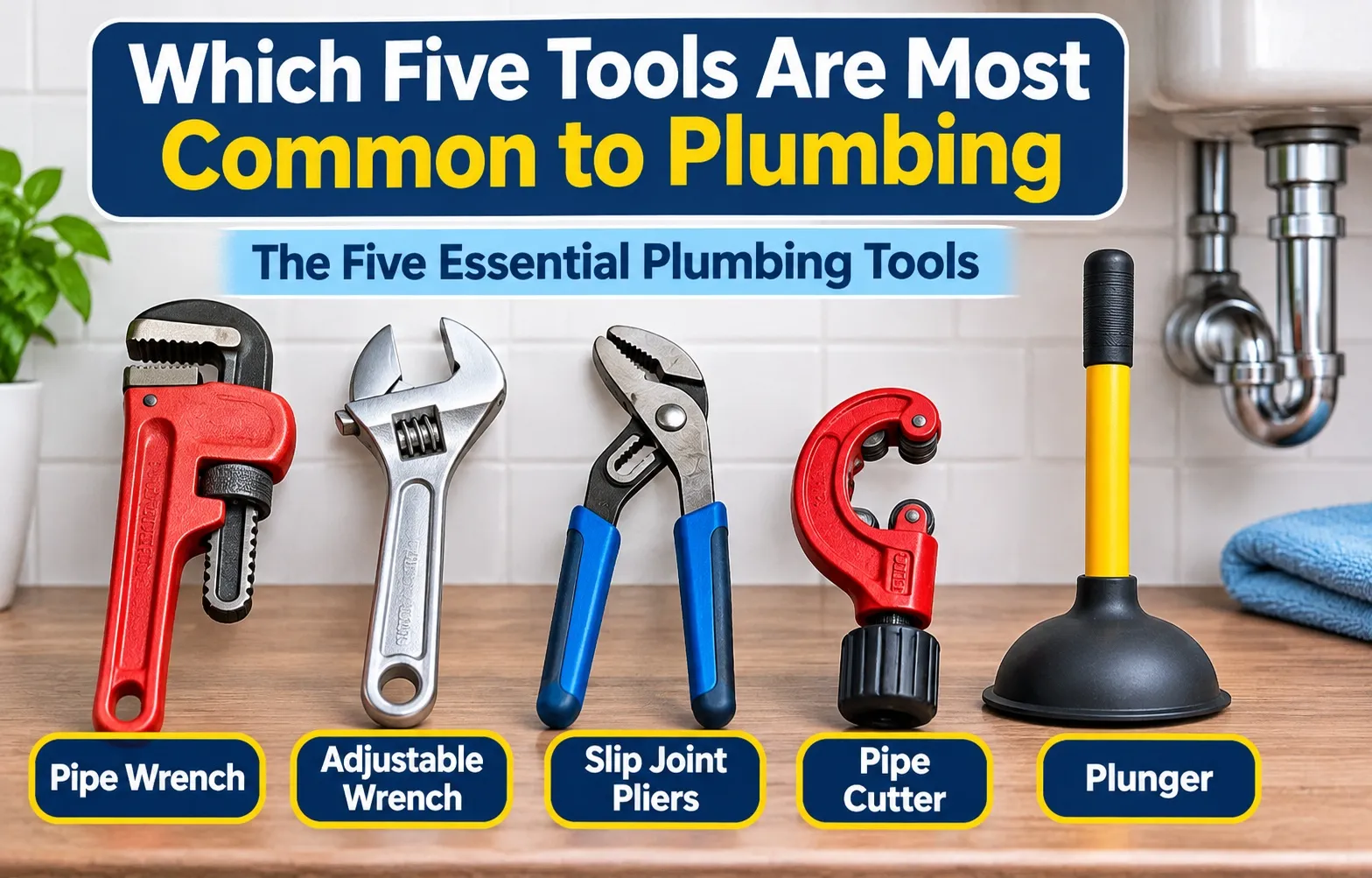 When addressing routine leaks or assembling new pipe connections, having the right gear on hand prevents minor plumbing repairs from spiraling into costly structural damage. The five tools most common to plumbing are the Pipe Wrench, Basin Wrench, Tongue-and-Groove Pliers (Channel Locks), Drain Snake (Hand Auger), and the Adjustable Wrench.
Whether you are assembling a home emergency kit or building your initial trade setup, these five core plumbing hand tools cover over 90% of household maintenance needs, from securing stubborn pipe joints to clearing deep line blockages.
At a Glance: The 5 Core Plumbing Tools
- 1. Pipe Wrench: A heavy-duty, cast-iron tool equipped with serrated steel jaws engineered to bite into, grip, and turn rounded metal pipes and threaded iron fittings.
- 2. Basin Wrench: A specialized reach tool featuring a long shaft and a 180-degree pivoting head designed specifically to tighten or loosen mounting nuts under deep sink cavities.
- 3. Tongue-and-Groove Pliers (Channel Locks): Slip-joint adjustable pliers built with angled serrated jaws to grip, stabilize, hold, and turn pipes, hex valves, and fittings of varying diameters.
- 4. Drain Snake (Hand Auger): A flexible coiled steel cable housed in a drum that extends past fixture P-traps to physically dislodge and retrieve organic clogs deep within drain lines.
- 5. Adjustable Wrench: A smooth-jawed crescent wrench designed to turn hexagonal compression nuts, supply line valves, and decorative chrome fixtures without marring the finish.
Equipping your essential toolkit with these foundational devices ensures you can quickly manage shut-off valves, repair supply lines, and resolve common drainage emergencies without stripping threads or damaging delicate fixtures.
Plumbing Tool Comparison Matrix
Selecting the correct instrument for a specific material or fitting prevents costly household repairs and stripped threads. Mechanical jaw types, surface finishes, and structural piping materials determine how torque should be applied during installation or maintenance.
This quick-reference matrix breaks down the primary applications, mechanical features, and critical operational warnings for each essential plumbing hand tool to ensure safe, effective usage across different fixtures.
Understanding the distinct purpose of each mechanism prevents tool slippage, material distortion, and unnecessary plumbing repairs during routine maintenance.
The Top 5 Plumbing Tools & Operational Rules
Mastering plumbing repairs requires understanding not just what each tool does, but its exact mechanical limits, material compatibility, and operational safety rules. Applying professional technique prevents stripped fasteners, cracked pipes, and costly water damage.
Here is an in-depth breakdown of the five core tools, detailing their functional mechanics, first-hand professional tips, and critical operational constraints.
1. Heavy-Duty Pipe Wrench: Master of Threaded Metal Pipes
The heavy-duty pipe wrench is engineered for maximum torque generation on round metal fixtures, iron pipes, and threaded steel joints. Featuring spring-loaded serrated teeth, the jaws bite deeper into the metal the harder you pull, creating an unbreakable mechanical grip.
- First-Hand Pro Tip: Always use two pipe wrenches in opposing directions—applying counter-torque with one wrench to hold the backing pipe steady while the second wrench turns the fitting—to prevent cracking rigid joint assemblies.
- Material Caution: Never apply a pipe wrench to decorative chrome finishes or soft copper tubing, as the aggressive teeth will instantly gouge and permanently ruin the metal.
2. Basin Wrench: The Tight-Space Problem Solver
The basin wrench is a specialized reach tool designed specifically for accessing narrow vertical cavities behind faucet bases and underneath deep sink basins. Its long shaft allows you to reach mounting nuts that standard wrenches cannot touch.
- Operational Insight: Swivel and lock the T-shaped pivoting head to a 90-degree angle to gain perpendicular leverage when loosening stubborn, rusted sink mounting nuts in cramped cabinetry.
- Application Limit: Use this tool strictly for faucet and sink fixture installation; it is not built for general high-torque plumbing applications in wide-open spaces.
3. Tongue-and-Groove Pliers (Channel Locks): The Versatile Gripper
Tongue-and-groove pliers provide rapid adjustment across multi-diameter pipes, slip-joint nuts, and plumbing valves. Their adjustable slip-joint design allows the jaws to lock securely at various widths, functioning like an adjustable hand vise.
- Grip Mechanics: Position the lower jaw to create a parallel grip on hex nuts, ensuring uniform pressure distribution and preventing tool slippage.
- Sealant Application: When securing threaded joints stabilized by these pliers, always apply high-grade thread sealant or PTFE tape to ensure a watertight seal without over-tightening.
4. Drain Snake (Hand Auger): Bypassing Stubborn Clogs
The hand auger features a flexible steel cable housed within a manual crank drum, designed to navigate past fixture P-trap clearance and physically break apart deep organic blockages.
- Clearing Technique: Feed the cable slowly into the drain opening while cranking clockwise until you encounter resistance, then rotate and push gently to hook or pierce hair and grease clogs.
- Elbow Warning: Never force the metal cable aggressively through sharp PVC or metallic pipe elbows, as abrupt pressure can puncture joint seals.
5. Smooth-Jaw Adjustable Wrench: Preserving Fixture Finishes
The smooth-jaw adjustable wrench provides non-marring torque application for hexagonal nuts, supply line lines, and chrome-plated fixture components. Its parallel smooth jaws distribute pressure evenly across flat surfaces.
- Fixture Protection: Designed specifically for modern supply line compression fittings and chrome-finished valves where scratching would compromise both appearance and seal integrity.
- Torque Rule: Adjust the thumb screw tightly against the fastener flats before applying force to prevent jaw rounding and fastener slip.
Building a Complete Homeowner Plumbing Emergency Kit
While having core hand tools is vital, responding effectively to sudden pipe leaks or severe drainage backups requires secondary support gear and specialized consumables. Pair your primary tools with essential supplies to prevent immediate structural water damage and streamline maintenance under tight sink cabinet clearance.
Before attempting repairs, ensure you locate your main water line or emergency shut-off valve to isolate supply pressure safely.
Essential Consumables & Secondary Gear to Pair with Your Tools
- PTFE Thread Seal Tape (Teflon Tape): An indispensable non-adhesive film applied clockwise around male pipe threads to create a reliable, watertight thread seal and lubricate joint assembly.
- Heavy-Duty Cup & Flange Plungers: Keep a standard flat rubber cup plunger for flat sink drains and a shaped flange plunger for toilet bowl traps to clear minor pressure clogs instantly.
- Bucket & Microfiber Absorbent Towels: Essential for catching residual water during P-trap removal, draining supply lines, and ensuring immediate water damage prevention around subflooring.
- LED Headlamp for Dark Cabinet Cavities: Hands-free illumination ensures full visibility when maneuvering wrenches inside pitch-black dark cabinet cavities or under floor joists.
Combining these auxiliary items with your five core hand tools allows you to handle unexpected leaks efficiently while keeping your home aligned with official home maintenance safety standards.
Frequently Asked Questions
Addressing common technical uncertainties helps DIYers and trade beginners select the correct tool, avoid mechanical failure, and protect plumbing infrastructure.
Here are direct, expert answers to key questions regarding tool substitution, clog clearance methods, and essential trade setups.
Can an adjustable wrench replace a pipe wrench?
No, an adjustable wrench cannot replace a pipe wrench when working on circular pipes. Smooth parallel jaws create a severe slip risk on rounded surfaces, whereas a pipe wrench relies on angled serrated teeth to establish a secure pipe bite that grips tighter as torque increases.
Reserve smooth-jaw adjustable wrenches strictly for parallel flat surfaces, such as hexagonal compression nuts and brass supply line fittings.
What is the difference between a drain snake and a plunger?
Plungers rely on air and hydraulic pressure to dislodge soft, temporary obstructions located near fixture drain openings. A drain snake (hand auger) uses a flexible, rotatable steel cable to physical cut through, break apart, or retrieve dense organic blockages deep inside the pipe network beyond the reach of hydraulic pressure.
Use a plunger first for minor standing water clogs, and escalate to a hand auger when line blockages persist down the branch drain.
What hand tools should a new plumbing apprentice buy first?
A new apprentice tool kit should prioritize foundational hand tools that deliver daily versatility across rough-in and trim-out tasks:
- 10-Inch Tongue-and-Groove Pliers: Essential for gripping fittings, valves, and locknuts.
- 14-Inch Pipe Wrench: Provides optimal leverage for standard residential iron and steel pipe joints.
- Smooth-Jaw Adjustable Wrench: Protects modern chrome trim and hex fittings during final assembly.
- Torpedo Level: Ensures precise pitch measurement for drainage runs and proper fixture alignment.

Oscar Vance | Master Plumber & Drainage Expert
Meet Oscar Vance, a licensed master plumber sharing practical solutions on residential repairs, preventive maintenance, and thoughtful home upkeep.