How to Choose a Commercial Roofing Contractor
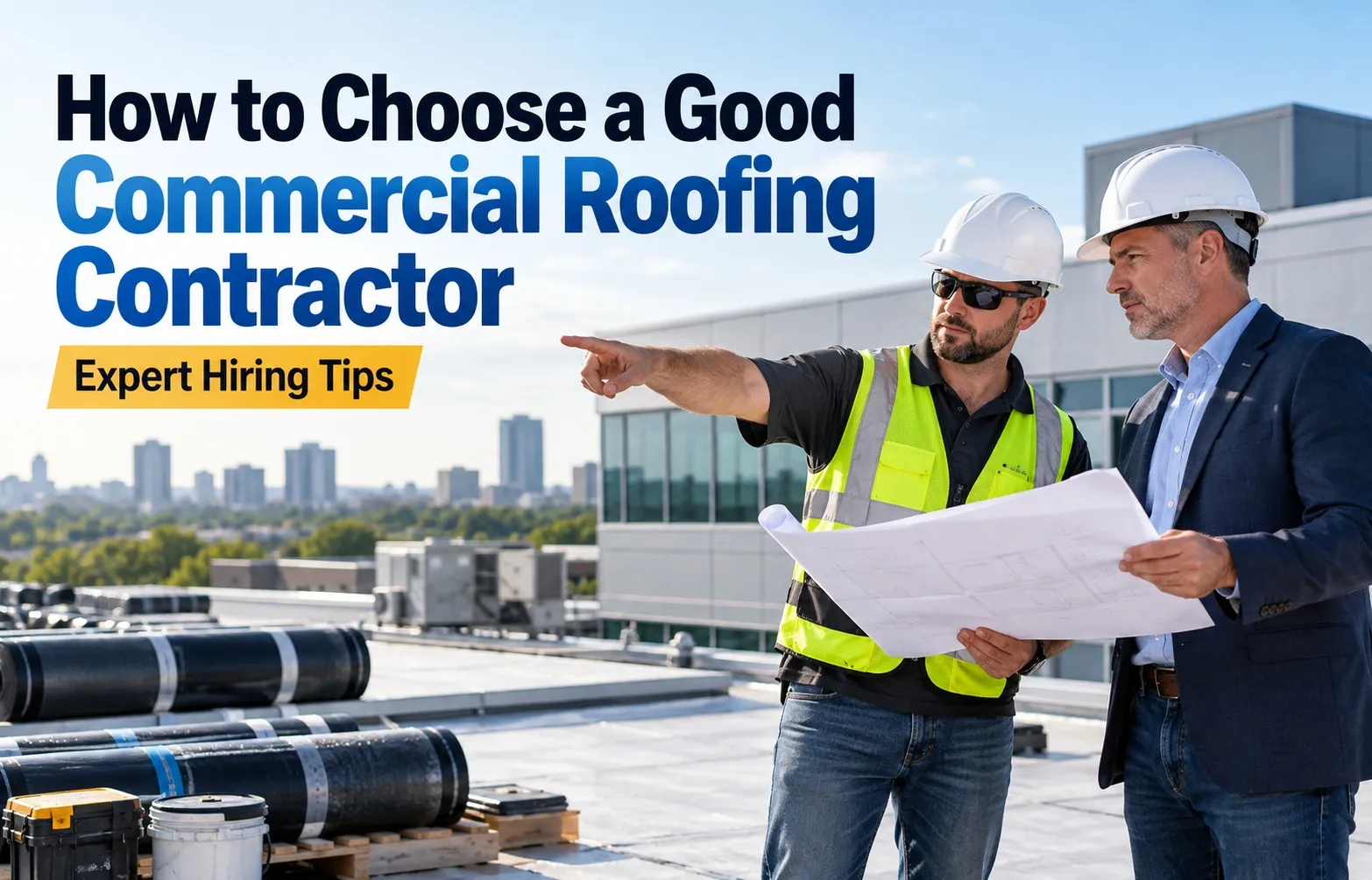 Selecting the right commercial roofing contractor requires evaluating legal compliance, financial stability, technical expertise, and safety metrics. Property managers must look beyond initial cost estimates to prevent premature system failures, project delays, and legal liabilities.
The 6-Step Vetting Checklist at a Glance
A structured evaluation protocol ensures every commercial roofing candidate meets industry benchmarks before entering the bidding stage. Use this six-point decision framework to vet candidates systematically:
- Verify Licensing and Active Insurance: Confirm active state commercial contractor licenses along with a minimum of $1,000,000 to $5,000,000 in general liability coverage and full workers’ compensation policies.
- Review Safety Metrics (EMR): Demand the contractor’s Experience Modification Rate (EMR). An EMR score below 1.0 indicates a superior safety record and fewer jobsite incidents.
- Confirm Manufacturer Certifications: Ensure factory-authorized status with major membrane manufacturers (such as GAF, Holcim Elevate, or Carlisle) to secure No Dollar Limit (NDL) system warranties.
- Evaluate System-Specific Expertise: Verify proven experience installing your specific commercial assembly, whether single-ply (TPO, PVC, EPDM), modified bitumen, or standing seam metal.
- Execute Bid Leveling: Compare itemized scope-of-work proposals side-by-side to account for tear-off details, insulation R-values, flashing grades, and equipment fees.
- Secure Legal Protections: Require unconditional lien waivers upon progress payments and clear indemnification clauses within the final service agreement.
Commercial vs. Residential Roofing: Key Operational Differences You Must Know
Commercial roofing projects involve complex structural engineering, strict building codes, and distinct risk profiles compared to residential projects. Hiring a contractor whose primary experience is residential shingle installation creates severe operational and financial risks for commercial assets.
Verify Essential Licensing Bonding, and Commercial Insurance
Commercial roofing involves high-stakes capital expenditures and severe liability risks. Verifying a contractor’s legal credentials, surety bonding capacity, and commercial insurance protections safeguards your property against catastrophic financial exposure during construction.
General Liability & Workers’ Comp: Recommended Coverage Thresholds
Standard residential policies are woefully inadequate for multi-story commercial buildings. Property managers must inspect active certificates of insurance directly issued by the carrier rather than relying on unverified copies.
- General Liability Insurance: Require a minimum of $1,000,000 to $5,000,000 in aggregate and per-occurrence limits to cover property damage, water intrusion events, or structural accidents.
- Workers’ Compensation: Verify active state-mandated coverage for every crew member to completely isolate your business from personal injury lawsuits if a worker is hurt on-site.
- Builder’s Risk Insurance: Ensure coverage protects raw materials, staging equipment, and the uncompleted roof assembly against fire, severe weather, or theft during the project lifecycle.
Why You Must Demand the Contractor’s EMR (Experience Modification Rate) Safety Score
Insurance costs and jobsite safety correlate directly with a contractor’s Experience Modification Rate (EMR). An EMR score tracks workplace safety history, injury frequency, and claims severity over a multi-year period.
- The 1.0 Benchmark: Always look for an EMR below 1.0, which indicates a safety record significantly better than the industry average and reduces your exposure to catastrophic jobsite liabilities.
- OSHA Compliance Records: Confirm that the contractor maintains an active safety program with zero severe OSHA violations or citations over the past three operating years.
Protecting Your Asset: Lien Waivers and Indemnification Clauses
Unpaid material suppliers or tier-two subcontractors can file mechanics’ liens against your commercial real estate title if the primary contractor defaults on payments. Protecting your property equity requires strict administrative checkpoints in the service contract.
- Conditional and Unconditional Lien Waivers: Collect signed lien waivers at every milestone or progress payment to legally certify that all material suppliers and subcontractors have been compensated.
- Indemnification Clauses: Review contract agreements with legal counsel to ensure the contractor holds your property harmless from third-party injury claims or structural negligence suits.
Step 2: Evaluate Factory Certifications and Warranty Protection
Roofing manufacturers limit their strongest warranties to certified installation firms that pass continuous field inspections and financial audits. Verifying factory credentials ensures your commercial roof receives direct manufacturer backing and meets rigorous assembly specifications.
Decoding Contractor Tier Levels (GAF Master Commercial Holcim Elevate Master Carlisle Authorized)
Manufacturers use tiered authorization levels to distinguish standard installers from top-tier commercial roofers. Higher tiers signify advanced training, proper installation equipment, and established financial stability.
- Tier Distinctions: Specialized programs such as GAF Commercial Contractor status, Carlisle Authorized Applicator status, or Holcim Elevate Commercial Roofing Guidelines demand rigorous ongoing training and continuous field quality inspections.
- Quality Control Audits: Top-tier installers undergo unannounced manufacturer audits on active jobsites to verify seam welding temperature, fastener patterns, and perimeter termination details.
- System Upgrades: Certified contractors gain access to premium assembly options, including thicker membranes (such as 60-mil or 80-mil single-ply TPO/EPDM) with extended protection lifespans.
Workmanship Warranties vs. Manufacturer NDL (No Dollar Limit) System Warranties
Commercial property owners often confuse contractor labor guarantees with manufacturer material guarantees. Protecting your financial investment requires securing both forms of warranty coverage.
- Contractor Workmanship Warranties: Issued directly by the installer to cover installation labor, flashing details, and seam failures. Typical coverage ranges from 5 to 25 years based on contractor stability.
- Manufacturer NDL (No Dollar Limit) System Warranties: Covers the cost of repairs or complete roof replacement if the roof system fails due to defective materials or certified installation errors, without capping financial liability over a 10 to 30-year term.
- Mandatory Field Inspections: NDL warranties are only issued after a technical representative from the manufacturer inspects the finished roof assembly and verifies full compliance with original design specifications.
Match Contractor Expertise to Your Buildings Roof System
Commercial roofing assemblies require specialized engineering, precise fastening patterns, and distinct technical competencies. Matching a contractor’s core experience to your specific roof assembly prevents installation defects, structural water intrusion, and premature material degradation.
Single-Ply Systems (TPO PVC EPDM) vs. Built-Up (BUR) & Metal Systems
Different commercial roof types demand specialized installation equipment, unique adhesive chemistries, and precise thermal expansion tolerances. Hiring a contractor with proven mastery of your building’s exact membrane system protects long-term asset value.
- Thermoplastic Polyolefin (TPO) & PVC: Reflective single-ply membranes requiring automated hot-air heat welding for seams and strict compliance with wind uplift standards like FM Global and ASCE 7.
- EPDM Rubber: High-durability elastomeric thermoset sheets joined using specialized primer and adhesive tape systems designed to resist chemical and thermal shock.
- Built-Up Roofs (BUR) & Modified Bitumen: Multi-ply asphalt and ply-sheet systems bonded via hot bitumen or cold-applied adhesives, engineered for heavy foot traffic and mechanical equipment weight.
- Standing Seam Metal Roofing: Architectural and structural metal panel systems requiring expert panel locking, expansion clips, and concealed fastener detailing.
Thermal Imaging Drones Core Sampling and Moisture Mapping
Elite commercial roofing contractors rely on advanced non-destructive diagnostic equipment rather than visual guesses. Utilizing high-tech inspection tools uncovers hidden vulnerabilities before submitting project bids or scope recommendations.
- Infrared Thermal Imaging: Utilizes aerial drones or handheld cameras to detect trapped moisture and saturated insulation by measuring heat retention differentials across flat roof surfaces.
- Moisture Mapping: Generates comprehensive roof condition surveys that isolate damp insulation zones, allowing property managers to repair localized areas rather than funding unnecessary full tear-offs.
- Core Sampling: Extracts small cross-section plug samples of the roof assembly to verify total existing layers, deck composition, and insulation R-value thickness.
- Wind Uplift Compliance: Calculates exact attachment densities and perimeter fastening requirements to ensure structural resilience against severe localized windstorms.
How to Level Bids and Compare Commercial Estimates
Commercial roof replacement quotes often vary widely because contractors utilize different material grades, tear-off assumptions, and project scopes. Performing systematic bid leveling allows property managers to evaluate proposals on an equal basis and identify artificially low bids that rely on hidden change orders.
Line-Item Analysis: Tear-Off Insulation R-Value Flashing, and Fasteners
Demanding a line-item estimate rather than a lump-sum total prevents contractors from cutting corners on vital system components. Evaluating specific line items ensures each quote complies with commercial building codes and manufacturer warranty standards.
- Existing Tear-Off Details: Verify whether the quote covers complete removal down to the structural deck, substrate disposal costs, and continuous surface cleaning.
- R-Value Energy Compliance: Ensure polyisocyanurate (polyiso) insulation thickness meets current local energy codes (typically requiring R-30 or higher for low-slope commercial roofs).
- Flashing Details & Edge Metal: Check for pre-manufactured 24-gauge Kynar-finished perimeter metal and reinforced wall termination boots rather than shop-bent light-gauge aluminum.
- Fastener Density & Patterns: Compare mechanical fastener counts and adhesive application rates, which directly determine the wind uplift rating of the completed assembly.
Uncovering Hidden Costs: Crane Fees Decking Replacement and Permits
Low-ball contractors frequently omit necessary operational overhead items from their initial proposal to present a lower baseline price. Uncovering hidden exclusions before signing protects your budget from mid-project cost escalations.
- Crane and Hoisting Logistics: Confirm whether heavy equipment setup, street closure permits, traffic control flaggers, and crane rental fees are bundled into the proposal.
- Decking Replacement Rates: Establish pre-negotiated unit pricing (such as decking replacement cost per sq ft for metal, wood, or poured concrete decks) before work begins.
- Municipal Building Permits: Ensure the contractor obtains all local building permits and manages required municipal inspections prior to final project sign-off.
Spotting Red Flags Before Signing a Contract
Spotting deceptive practices early protects commercial property owners from devastating financial losses and structural water damage. Recognizing critical warning signs allows facility managers to eliminate unreliable contractors before committing capital.
The 7 Red Flags of a Fraudulent Commercial Roofer
Unethical contractors often target commercial flat roofs following major weather events, utilizing high-pressure sales tactics and hidden contractual loopholes. Watch out for these seven critical warning signs:
- Storm Chasers: Out-of-state contractors targeting local commercial properties after severe weather events without maintaining local permanent offices or valid state licensing.
- Upfront Payment Demands: Demanding excessive upfront deposits (50 percent or more) before materials arrive or before any physical work commences on-site.
- Low-Ball Bids: Presenting artificially low estimates that intentionally omit mandatory insulation thickness, full tear-off costs, or code-compliant perimeter flashing details.
- Lack of a Dedicated Project Manager: Failing to assign a qualified on-site supervisor, leaving unsupervised crews to manage complex commercial roof installations.
- Sub-Contracting Without Disclosure: Subcontracting the entire commercial installation to unverified third-party labor crews without prior written disclosure or manufacturer backing.
- Missing Local References: Inability or refusal to provide verifiable, completed commercial project references within your local region or state.
- High-Pressure Sales Tactics: Using aggressive expiration deadlines to pressure property managers into signing contracts before verifying insurance or manufacturer credentials.
10 Non-Negotiable Questions to Ask During Contractor Interviews
Conducting a rigorous interview process reveals a contractor’s true level of competence, safety compliance, and operational organization. Ask these ten non-negotiable questions before signing any service agreement:
- Are you directly licensed for commercial roofing in this municipality, and can you provide your verified license number?
- What are the exact aggregate and per-occurrence limits on your general liability and workers’ compensation insurance policies?
- What is your current EMR (Experience Modification Rate) safety score, and do you employ dedicated OSHA compliance officers?
- Which specific manufacturer certifications do you hold, and will this installation qualify for a No Dollar Limit (NDL) system warranty?
- Will you provide a detailed, line-item proposal breaking down tear-off, insulation R-values, fasteners, and flashing details?
- Who will serve as our dedicated on-site project manager throughout the entire construction lifecycle?
- Do you use in-house installation crews or sub-contractors, and how do you vet their training and background?
- What non-destructive diagnostic tools, such as infrared thermal imaging or core sampling, will you use to evaluate underlying roof moisture?
- How do you handle unexpected structural decking repairs, and what is your pre-negotiated cost per square foot for deck replacement?
- Can you provide contact information for at least three commercial property references with similar roof assemblies completed in the past two years?
Frequently Asked Questions About Commercial Roofing Contractors
Addressing common financial, regulatory, and technical queries helps commercial building owners make informed decisions. Here are direct answers to high-volume questions regarding commercial roofing replacement and contractor selection.
What is the 25% rule for commercial roofing?
The 25% rule is a strict building code requirement enforced by the International Building Code (IBC) and local municipal authorities. If more than 25% of a commercial roof area or section is repaired, replaced, or recovered within a 12-month period, the entire roof assembly must be upgraded to comply with current building code standards.
- Thermal Insulation Upgrades: Reaching the 25% threshold mandates upgrading existing insulation to meet current R-value energy code requirements (often R-30 or higher).
- Structural Weight Limits: Codes typically restrict buildings from having more than two roof layers. If two layers exist, a full tear-off down to the structural deck is legally required.
Is $30,000 too much for a commercial roof replacement?
Whether $30,000 is expensive depends on building square footage, system type, and structural accessibility. Commercial roof replacements typically range from $6.00 to $14.00+ per square foot depending on membrane materials and jobsite complexity.
- Small Buildings (2,000–4,000 sq ft): A $30,000 budget is standard for small commercial footprints or single-ply membrane overlays (TPO/EPDM).
- Medium to Large Commercial Facilities: For larger retail centers or industrial warehouses (10,000+ sq ft), $30,000 represents only a fraction of the total replacement investment.
- Cost Variables: Factors that increase total cost include steep slope angles, high insulation requirements, extensive structural deck repairs, and crane staging logistics.
What are the top commercial roofing companies in the USA?
The United States commercial roofing landscape features both large national contractors and regional specialists. Major national firms offer multi-location facility management, standardized safety protocols, and massive bonding capacity.
- CentiMark Corporation: One of the largest national commercial roofing contractors, specializing in single-ply installations, roof maintenance programs, and emergency leak repairs.
- Tecta America: A leading national commercial roofing enterprise with over 90 locations nationwide, delivering large-scale industrial and institutional roofing projects.
- Nations Roof & Flynn Group: Premier national firms known for extensive commercial maintenance networks and specialized membrane system expertise.
What is the best commercial roofing system for flat roofs?
Determining the ideal commercial flat roof assembly depends on roof usage, chemical exposure, energy efficiency goals, and regional climate conditions.
- TPO (Thermoplastic Polyolefin): Excellent balance of cost, UV reflectivity, and heat-welded seam strength. Ideal for standard commercial buildings seeking low cooling costs.
- PVC (Polyvinyl Chloride): Superior resistance to chemical grease, animal fats, and oils. Preferred for restaurants, food processing plants, and manufacturing facilities.
- EPDM Rubber: Exceptional durability and impact resistance in cold climates, with proven service lifespans exceeding 30 years when properly maintained.

Oscar Vance | Master Plumber & Drainage Expert
Meet Oscar Vance, a licensed master plumber sharing practical solutions on residential repairs, preventive maintenance, and thoughtful home upkeep.