Why Does Your Bathroom Smell Like Sewage?
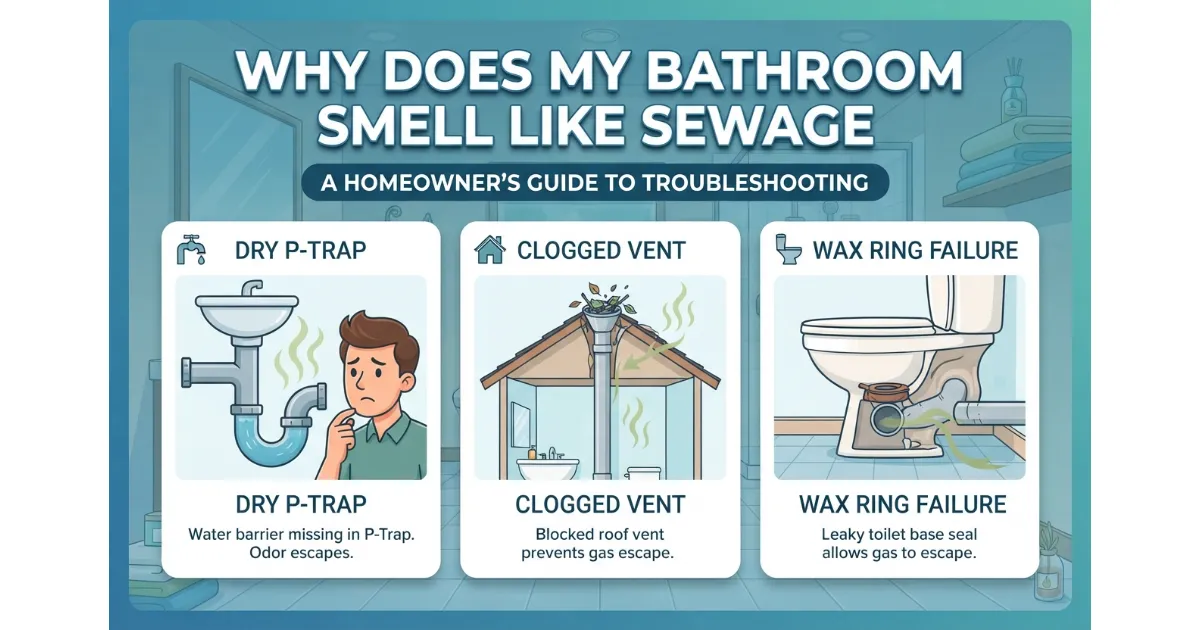 Sewer gases typically enter your bathroom because a water or wax barrier, such as the P-trap or toilet seal, has failed, or because there is an obstruction in your plumbing vent or main drain line. Identifying the exact root cause quickly prevents exposure to harmful gases and eliminates lingering foul odors.
The 5 Most Likely Causes at a Glance
- Dry P-trap: Evaporated water in the drain trap allows sewer gases to freely rise into the room.
- Dirty drain: Accumulated hair, soap scum, and organic buildup inside the pipe create a foul, decomposing odor.
- Loose toilet seal: A damaged or worn-out wax ring beneath the toilet leaks sewer gas around the base.
- Blocked vent: Debris or nests in the roof plumbing vent trap odors and push gases back down into fixtures.
- Sewer line damage: Cracks or breaks in the main drainage system allow potent sewage odors to seep indoors.
Is It Dangerous?
Yes, prolonged exposure to sewer gas can pose health risks due to trace amounts of hydrogen sulfide and methane. Minor smells often point to simple maintenance fixes, while persistent odors require immediate inspection as detailed further below.
How to Find Where the Smell Is Coming From
Pinpointing the exact source of a sewage odor requires a systematic elimination approach across all fixtures. Isolating the room and tracking airflow patterns helps you identify whether the issue stems from a dry drain, a failing seal, or a ventilation problem.
The 5-Minute Smell Detective Test
- Close the door: Shut the bathroom door for 30 minutes to trap the odor, then open it to assess the concentration intensity immediately.
- Sniff each fixture: Get close to the floor drain, sink drain, shower, and tub to find where the scent is strongest.
- Cover drains with cups: Place a flat cup or plastic wrap tightly over individual drains to temporarily trap rising gases and test if the odor disappears.
- Check the toilet base: Gently push and rock the toilet to see if the wax seal is compromised or if moisture and gas are leaking underneath.
- Listen for gurgling: Pay attention to unusual bubbling or gurgling sounds in pipes when sinks drain or toilets flush.
Diagnosis Table: Where It Smells vs. Likely Cause
What Does Gurgling Mean?
- Negative pressure: Gurgling sounds occur when a blocked roof vent creates suction, pulling water out of nearby P-traps.
- Main line restriction: Trapped air struggling to escape through a clogged drainage pipe forces its way up through household water seals.
Why Do I Smell It But No One Else Does?
- Olfactory fatigue: Constant low-level exposure can desensitize others while making the scent uniquely noticeable to you.
- Micro-leaks: Very small seal breaches release tiny pockets of gas that dissipate before filling the entire room.
- Airflow dynamics: HVAC vents and localized drafts can push a narrow plume of sewer gas directly toward your breathing level.
7 Common Causes of a Sewage Smell in the Bathroom
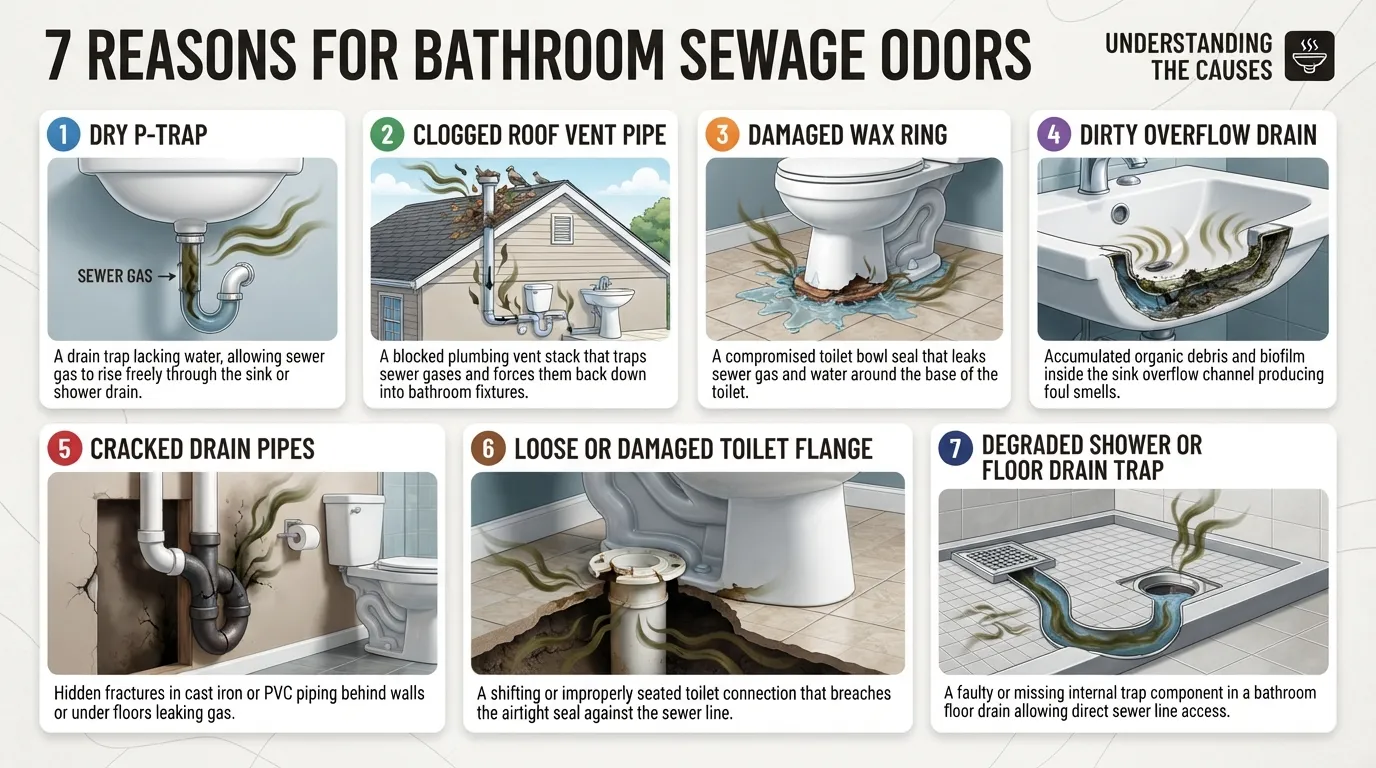 Identifying the root cause of a sewage odor ensures you apply the correct long-term remedy rather than just masking the symptoms. Most bathroom odors stem from localized plumbing seal failures or trapped organic buildup.
1. Dry P-Trap The Most Common Culpri
A P-trap is the curved section of pipe beneath fixtures designed to hold a standing barrier of water that blocks sewer gas. When a bathroom or guest shower goes unused for weeks, this water evaporates completely, leaving an open pipeline directly to the sewer system. As a licensed residential plumber notes, “A completely dry trap is responsible for over half of sudden, unexplained residential sewer smells.” This is extremely common in guest bathrooms or rarely used basement facilities. The fix involves simply replenishing the water barrier, as detailed further down.
2. Dirty or Clogged Drain
Hair, soap scum, skin cells, and personal care products accumulate inside drain pipes over time to form a thick, decomposing biofilm. This organic sludge harbors sulfur-producing bacteria that generate foul, pungent odors resembling sewage. This issue occurs in nearly every heavily used bathroom and worsens with humidity. Routine chemical-free flushing or mechanical snaking resolves the problem, which is outlined in our repair section.
3. Broken or Loose Toilet Wax Ring
The wax ring creates an airtight and watertight seal between the bottom of your toilet bowl and the bathroom floor flange. If the toilet rocks slightly due to loose floor bolts or shifting subfloors, the wax seal crushes unevenly and leaks sewer gas. This issue is moderately common in older homes or poorly installed toilets. Replacing the compromised wax ring completely eliminates the escaping gas.
4. Blocked Plumbing Vent Pipe
The plumbing vent stack runs from your drainage system up through the roof to safely release sewer gases outside. When leaves, bird nests, or ice block this vertical pipe, flushing toilets creates a vacuum that pulls water straight out of nearby P-traps through siphoning. This occurs periodically after heavy autumn storms or in heavily wooded neighborhoods. Clearing the vent obstruction restores proper air pressure balance.
5. Damaged or Blocked Sewer Line
Tree roots, shifting soil, or structural pipe cracks can compromise your main underground drainage line, trapping waste and forcing pungent gas backward into indoor fixtures. This is a severe, less common issue that usually affects multiple drains simultaneously. Professional hydro-jetting or trenchless pipe repair is required, as referenced in our structural fixes section.
6. Dry or Dirty Floor Drain
Basement or laundry-adjacent bathroom floor drains frequently dry out or accumulate stagnant debris and pet hair. Because these drains receive very little regular splash water, their internal traps evaporate rapidly. This is an easily overlooked cause that creates localized, heavy foul odors near the floor. Pouring water or installing a specialized one-way drain valve solves the issue.
7. Septic Tank or Sump Pit Problem
Homes operating on independent septic systems or indoor sump pump pits can experience severe gas leaks if tank baffles fail, lids unseal, or vent filters saturate. This issue is specific only to rural or suburban properties utilizing private waste systems. Checking tank levels and replacing worn pit basin gaskets rectifies the odor permanently.
Why Does the Smell Come and Go? Timing-Based Clues
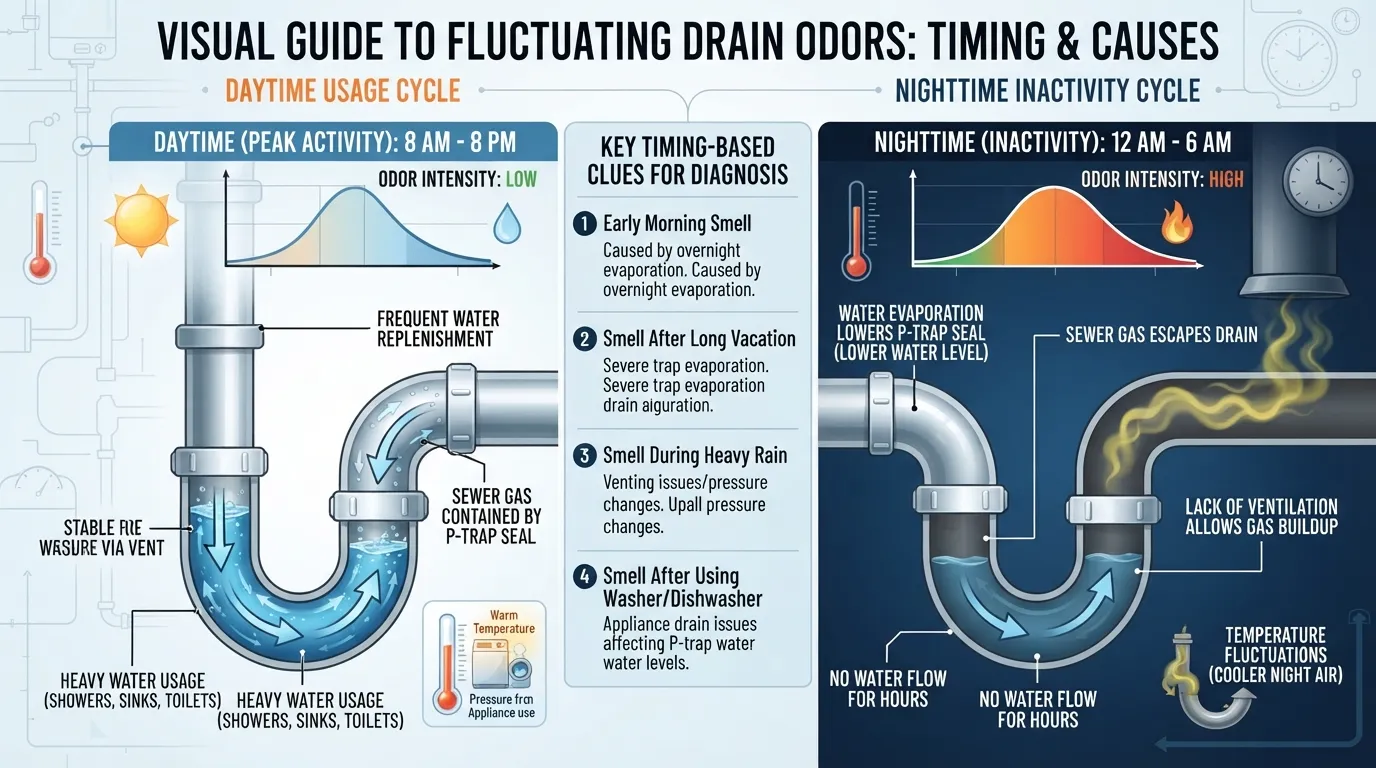 Intermittent sewage smells provide critical diagnostic clues that help pinpoint whether the issue is tied to weather, water usage habits, or underlying pressure changes in your plumbing system. Tracking when the odor occurs narrows down the exact root cause.
Why Does My Bathroom Smell Like Sewage in the Morning?
- Overnight evaporation: Lack of fixture usage while sleeping allows marginal P-trap water levels to drop below the critical seal threshold.
- Barometric pressure shifts: Cooler nighttime outdoor temperatures create low atmospheric pressure that pulls sewer gases up through vulnerable traps.
Why Does It Smell After a Shower?
- Biofilm activation: Pouring hot water down the drain rapidly warms and activates sulfur-producing bacteria trapped inside the pipe’s organic slime.
- Pressure-induced siphoning: High-volume water flow rushing down the main stack pulls air behind it, drawing water out of nearby dry or semi-dry traps.
Why Did the Smell Start All of a Sudden?
- Sudden seal failure: The toilet wax ring or a pipe joint may have shifted abruptly due to minor structural settling.
- New blockages: Debris accumulation or a foreign object falling into the drain instantly restricts airflow and traps stagnant air.
Why Does My Upstairs Bathroom Smell Like Sewage?
- Vent pipe vulnerability: Upper-level fixtures sit closest to the roof vent terminal, making them the first to suffer from blockages or stack-effect drafts.
- Thermal stack effect: Warm indoor air rises through multi-story homes, carrying trapped gases upward and concentrating them in upper bathrooms.
Why Does the Smell Come and Go?
- Wind and airflow: Strong outdoor winds blowing across roof vent pipes can force sewer gases down into household lines intermittently.
- Erratic fixture usage: Irregular guest room or powder room usage causes traps to intermittently dry out and replenish depending on your weekly schedule.
What Kind of Smell Is It? Sewage vs Rotten Egg vs Musty
Identifying the exact olfactory signature of the odor helps differentiate between plumbing seal failures, bacterial growth inside pipes, and appliance-related issues. Each distinct scent points to a specific source within your home.
Smell Comparison Table
Can a Water Heater Cause a Sewage Smell?
- Anode rod reaction: Sulfur bacteria reacting with the aluminum or magnesium anode rod inside the water heater tank can generate a distinct rotten egg smell when hot water runs.
- Sewer gas trap siphon: If a nearby floor drain or sink trap near the water heater dries out due to lack of use, rising sewer gas is often mistakenly blamed on the tank itself.
Can a Washing Machine Drain Smell Like Sewage?
- Standpipe trap issues: Washing machine standpipe traps can easily dry out between infrequent heavy laundry cycles or siphon dry during high-speed pumping.
- Laundromat biofilm: Accumulated lint, fabric softener residue, and detergent sludge inside the drain hose create a breeding ground for sulfur bacteria.
How to Fix a Sewage Smell in Your Bathroom
Resolving a persistent sewage odor involves targeted, step-by-step troubleshooting that addresses the exact mechanical failure causing the issue. Tackling these fixes in order of frequency saves time and eliminates guesswork.
Fix 1: Refill a Dry P-Trap
- Pour water into all fixtures: Run water for 60 seconds down every sink, shower, and bathtub drain to rebuild the liquid barrier.
- Target the floor drain: Pour a full gallon of water mixed with a cup of mineral oil or neutral cleaner down neglected floor drains to slow down future evaporation.
- Consider a trap primer: For frequently drying floor drains in guest areas, install an automatic trap primer to keep the water seal consistently replenished.
Fix 2: Clean a Smelly Drain Safely
- Remove organic blockages: Use a plastic drain snake or zip tool to pull out trapped hair, soap scum, and black biofilm from the pop-up stopper and pipe walls.
- Apply baking soda and vinegar: Pour one-half cup of baking soda followed by one cup of white vinegar down the drain, let it fizz for 15 minutes, and flush with hot water.
- Avoid harsh chemical destroyers: Steer clear of caustic commercial drain openers that can warp plastic PVC pipes or corrode metal connections over time.
Fix 3: Check and Tighten the Toilet
- Test for movement: Gently grip the sides of the toilet bowl and try to rock it back and forth to check if the base is secure.
- Tighten closet bolts: Pop off the decorative caps on the floor bolts and carefully tighten the nuts underneath using a wrench to stabilize the fixture.
- Replace the wax ring: If the toilet continues to wobble or leak gas, shut off the water supply, unbolt the unit, scrape away the old wax ring, and install a brand-new rubber or wax seal on the flange.
Fix 4: Check the Roof Vent
- Inspect visually from the ground: Use binoculars from ground level to examine your roof’s plumbing vent stack for accumulated leaves, bird nests, tennis balls, or winter ice caps.
- Prioritize safety over DIY: Climbing onto a slippery or steep roof carries severe fall risks. If you suspect a deep stack blockage, hire a licensed professional rather than attempting a roof climb.
What Fixes Need a Plumber?
- Cracked underground sewer lines: Tree root infiltration, shifting foundations, or broken main drainage pipes require professional hydro-jetting and camera inspections.
- Severe structural leaks: Hidden pipe cracks behind tiled walls or beneath concrete slab floors demand advanced repiping and specialized plumbing contractor intervention.
- Septic system failures: Tank baffle collapses or saturated leach fields require specialized septic pumping and repair services.
Common Mistakes to Avoid
 Attempting DIY plumbing repairs without understanding safety precautions can lead to hazardous chemical reactions, expensive pipe damage, or unaddressed structural issues. Avoiding these critical pitfalls protects both your health and your plumbing system.
Never Mix Bleach and Vinegar or Ammonia
- Toxic gas formation: Combining household bleach with vinegar or ammonia creates lethal chlorine or chloramine gas, which causes severe respiratory damage upon inhalation.
- Safe cleaning alternatives: Always rinse and flush drains completely with plain water before introducing any new cleaning agents or natural enzyme solutions.
Why Chemical Drain Cleaners Can Damage Pipes
- Thermal corrosion: Highly caustic commercial chemical openers generate extreme heat that can warp thin PVC pipes or melt older plastic fittings.
- Seal degradation: Harsh acidic or alkaline formulas eat away at rubber gaskets and O-rings, creating brand-new leaks where sewer gas can escape.
Air Fresheners Only Hide the Problem
- Temporary masking: Scented sprays, plug-in fresheners, and candles only overpower the odor temporarily without eliminating the underlying toxic gases.
- Unnoticed health risks: Masking a persistent sewer smell allows harmful hydrogen sulfide exposure to continue unchecked while ignoring the root mechanical failure.
Ignoring a Smell That Keeps Coming Back
- Escalating structural damage: Intermittent odors often point to slow foundational settling, hidden root intrusion, or expanding cracks in your main drainage line.
- Costly future repairs: Postponing simple fixes like tightening a toilet or refilling a trap frequently turns minor maintenance tasks into major emergency plumbing overhauls.
Is a Sewage Smell Dangerous? Health and Safety Guide
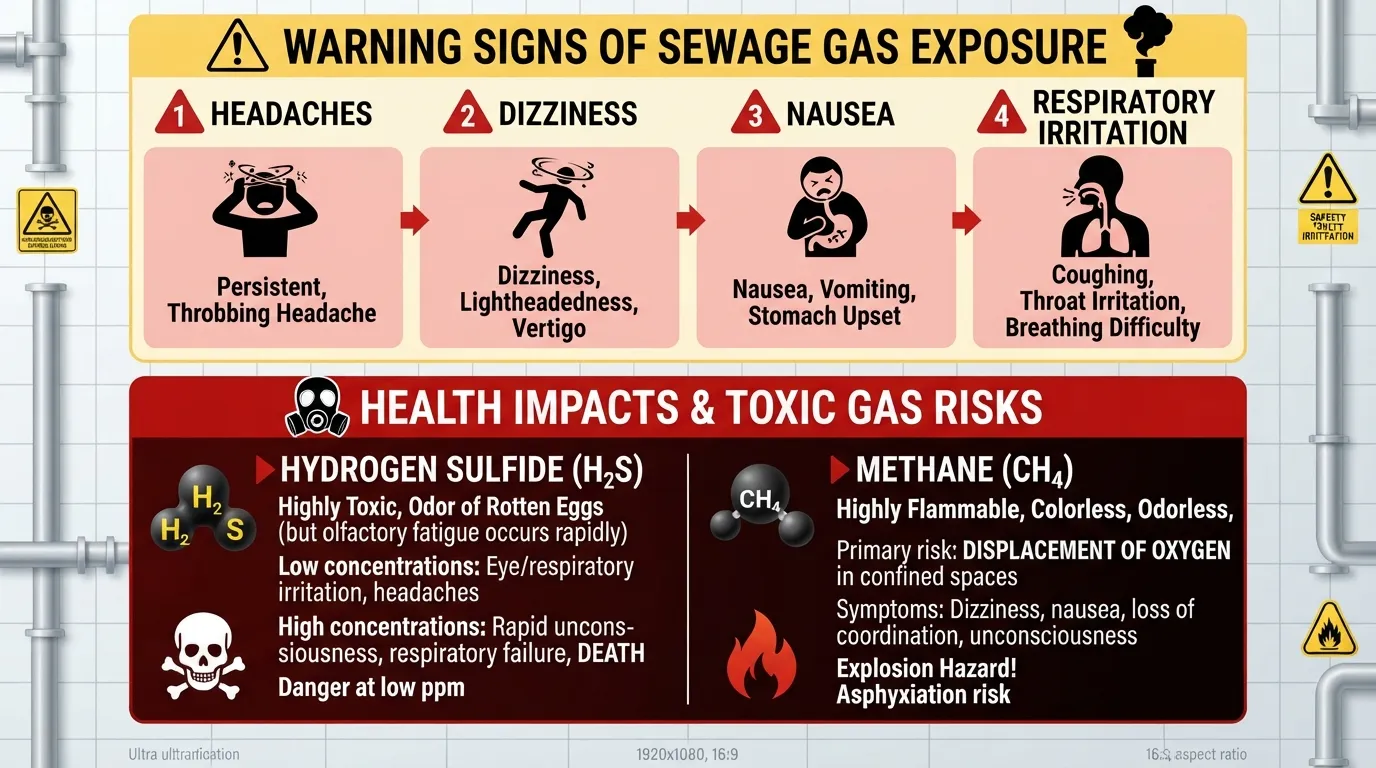 Understanding the health implications of sewer gas exposure helps you balance immediate safety with appropriate home maintenance. While minor household odors are typically more nuisance than emergency, prolonged exposure to toxic components warrants prompt action.
Is the Smell of Sewage in Your Bathroom Toxic?
Sewer gas is a complex mixture of vapors, including hydrogen sulfide, methane, ammonia, and carbon dioxide, generated by the breakdown of organic waste. In small, diluted amounts typical of minor household plumbing leaks, these gases are generally unpleasant rather than immediately toxic, but they should never be ignored.
Can Breathing Sewer Gas Make You Sick?
Yes, breathing sewer gas over extended periods can lead to physical discomfort and health issues. According to government health data outlined by the ATSDR Hydrogen Sulfide ToxFAQs, low-level exposure to hydrogen sulfide can trigger headaches, dizziness, and eye irritation.
First Signs of Sewer Gas Poisoning
- Neurological warning signs: Mild to moderate exposure frequently causes persistent headaches, lightheadedness, fatigue, and poor concentration.
- Sensory and respiratory irritation: Inhalation can irritate the eyes, nose, and throat, causing watering eyes, coughing, or mild nausea.
Who Is at Higher Risk?
- Asthma and respiratory patients: Individuals with pre-existing breathing conditions or chronic airway sensitivity may experience triggered asthma attacks or severe shortness of breath.
- Vulnerable household members: Infants, young children, pregnant women, and elderly residents have lower physiological tolerance to environmental toxins.
Is It Safe to Stay in a House That Smells Like Sewer?
- When it is manageable: If the odor is faint, localized to a single bathroom, and dissipates with basic ventilation or trap refilling, staying in the home while resolving the issue is generally safe.
- When to evacuate: If the smell is overwhelmingly strong, accompanied by physical symptoms like dizziness or nausea, or suspected to stem from a major gas or main line rupture, vacate the premises immediately and call a professional.
Methane and Fire Risk
- Flammable properties: Methane is a key component of sewer gas and is highly flammable, though dangerous concentrations rarely accumulate in open residential bathrooms unless there is a catastrophic main line break.
- Safety precaution: Never light matches, candles, or use open flames in an area heavily permeated by unresolved sewage odors.
How Long Will the Sewage Smell Last?
- Duration before repair: The odor will persist indefinitely as long as the underlying mechanical failure—such as a dry trap or unsealed toilet—remains unaddressed.
- Timeline after fixing: Once the correct repair is completed and the space is thoroughly aired out, lingering traces typically clear completely within 30 to 60 minutes.
When to Call a Plumber and What It Costs
While many sewer odors stem from simple DIY fixes like refilling a trap or tightening a toilet, certain complex plumbing failures require licensed professional intervention. Recognizing when to escalate prevents costly structural damage and health hazards.
6 Signs You Need a Professional Right Away
- Persistent odor post-fix: The sewage smell returns immediately or lingers despite thorough drain cleaning, trap refilling, and seal checks.
- Widespread fixture gurgling: Multiple sinks, showers, or toilets bubble and gurgle simultaneously when water is drained or flushed.
- Multi-fixture odors: Foul smells emerge from more than one bathroom or drain at the same time, pointing to a main line issue.
- Wastewater backups: Slow-draining tubs or toilets backing up with murky water indicate a severe downstream blockage.
- Unexplained dampness: Unexplained wet spots, stains, or warped flooring near bathroom walls suggest a hidden pipe leak.
- Physical health symptoms: Residents experience recurring headaches, dizziness, or respiratory irritation while inside the home.
What Will a Plumber Do?
- Comprehensive inspection: A licensed plumber systematically checks all vents, traps, and fixtures to isolate the source of failure.
- Video camera scoping: They thread a specialized fiber-optic camera down the drainage lines to inspect for structural cracks, root intrusion, or heavy blockages.
- Smoke testing: If invisible leaks persist, they introduce non-toxic plumbing smoke into the vent system to trace exactly where gas is escaping.
Typical Repair Costs
Renters: Who Is Responsible?
- Landlord responsibility: Structural plumbing defects, broken sewer lines, faulty wax rings, and blocked roof vents are structural maintenance issues legally managed and paid for by the landlord.
- Tenant reporting steps: Document the odor intensity and timing, notify your landlord or property manager in writing immediately, and request a professional plumbing inspection to preserve living standards.
How to Prevent Sewage Smell From Coming Back
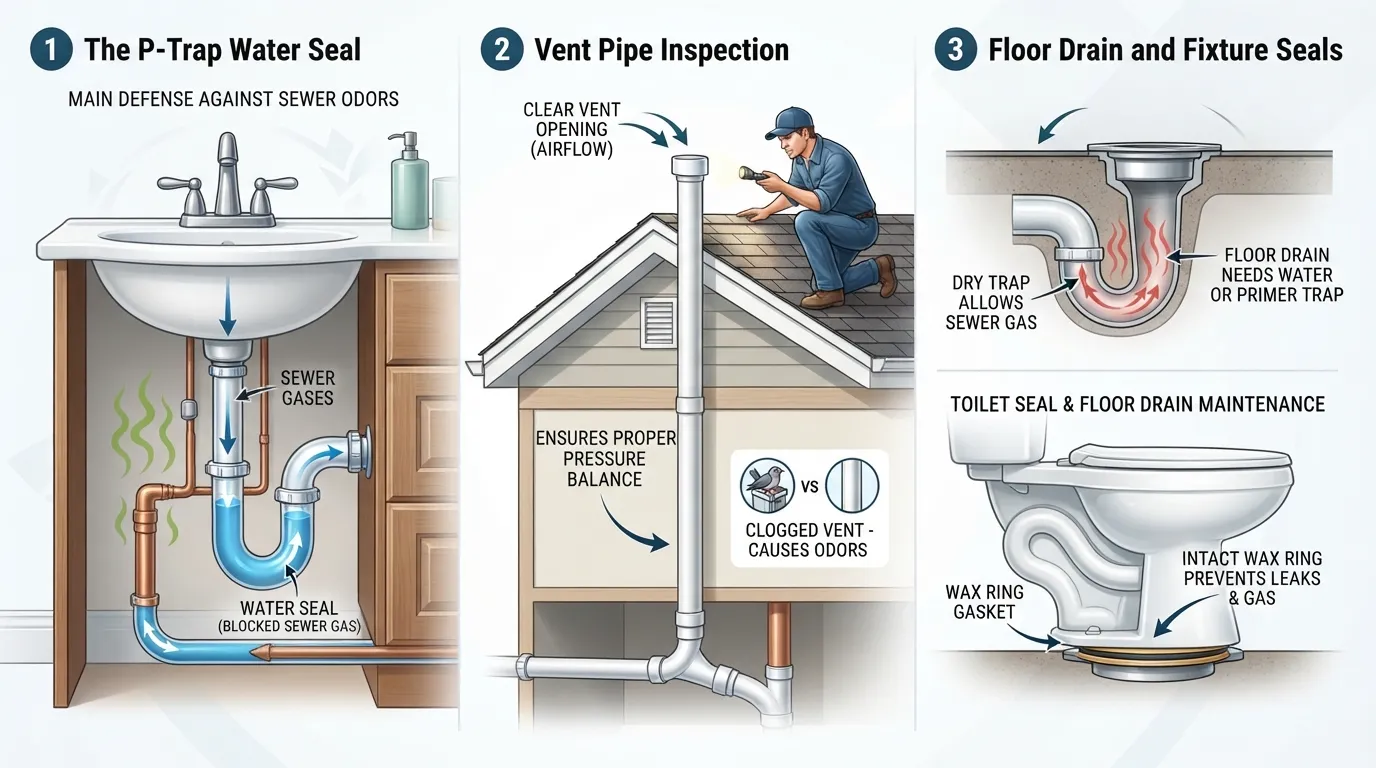 Maintaining your plumbing system with simple preventive habits ensures your bathroom remains fresh and free of foul odors long-term. Establishing a routine maintenance schedule stops minor issues from turning into major repairs.
Monthly Bathroom Drain Maintenance Checklist
- Flush all fixtures: Run warm water down every sink, shower, and tub for at least one minute once a month to keep all P-traps full.
- Clean hair catchers: Empty and wash out mesh hair strainers in the shower and sink to prevent organic buildup and biofilm formation.
- Apply natural cleaner: Pour a monthly cup of baking soda followed by warm water down active drains to neutralize early bacterial sludge.
Keep Unused Bathrooms and Floor Drains Wet
- Service guest suites: Run water in guest bathroom fixtures bi-weekly or cover unused drains to prevent complete water evaporation in the P-traps.
- Protect floor drains: Add a small cup of mineral oil or water to basement and laundry room floor drains every few weeks to lock in the liquid seal.
What Not to Flush or Wash Down the Drain
- Avoid flushable wipes: Never flush so-called “flushable” wipes, paper towels, or feminine hygiene products, as they cause severe line clogs.
- Keep grease out: Never pour cooking oils, heavy fats, or coffee grounds down bathroom or utility sinks where they solidify and trap organic matter.
Seasonal Checks Leaves Ice Heavy Rain
- Fall leaf clearance: Inspect your roof vent stacks after autumn leaves fall to ensure proper airflow and prevent pressure blockages.
- Winter ice monitoring: Check outdoor vent terminals during freezing snaps to clear frost or ice accumulation that seals off the plumbing stack.
FAQs About Sewage Smell in the Bathroom
Get immediate, direct answers to the most common questions regarding bathroom sewer odors, underlying causes, and effective solutions.
How do I stop my bathroom from smelling like sewer?
Stopping a sewer smell involves identifying the root cause and applying the proper remedy. Run water for 60 seconds down all sinks and showers to refill dry P-traps, clear organic biofilm with baking soda and vinegar, tighten loose toilet floor bolts, or clear blocked roof vent stacks.
Why does my bathroom smell like sewage but no one else notices?
Olfactory fatigue causes your brain to tune out constant, low-level odors over time, making a faint smell uniquely noticeable to you. Alternatively, micro-leaks from a tiny seal breach or narrow airflow drafts can direct a concentrated plume of gas straight to your breathing height.
Can a bathroom smell like sewage from a dry drain?
Yes, a dry drain is one of the most common culprits behind sudden sewer smells. When a shower, sink, or floor drain goes unused for a long period, the standing water barrier inside the P-trap evaporates completely, opening a direct pipeline for sewer gas.
Why does my shower smell like sewage?
A shower drain typically smells like sewage because hair, soap scum, and dead skin cells accumulate inside the pipe to form a decomposing biofilm that breeds sulfur-producing bacteria. Additionally, negative air pressure from running hot water can siphon water right out of the trap.
Why does my bathroom sink drain sink smell like sewage?
Your bathroom sink smells like sewage because the curved P-trap beneath the basin has lost its water seal through evaporation or siphoning, or because organic sludge and hair buildup inside the overflow channels and pipe walls are generating foul-smelling bacterial gases.
Why does my floor drain smell like sewage?
Basement or bathroom floor drains rarely receive splash water during daily routines, causing their internal trap seals to dry out rapidly. Pouring a gallon of water and a cup of mineral oil down the drain reestablishes the liquid barrier and stops the gas.
Can sewage smell come from a water heater if the water doesn’t smell?
Yes, if the water from your tap smells normal, the odor is likely not coming from the water heater itself. Instead, a nearby floor drain, sink trap, or laundry standpipe near the appliance has likely dried out and is allowing ambient sewer gas to escape.
Is a sewage smell in my bathroom a sign of a bigger plumbing problem?
Not always, as many odors stem from simple dry traps or dirty drains that are easily fixed. However, if the smell persists after cleaning, is accompanied by gurgling pipes, or affects multiple fixtures simultaneously, it indicates a severe main sewer line or vent block.
Conclusion
Resolving a sewage smell in your bathroom comes down to systematic diagnosis, starting with simple fixes like refilling dry P-traps or clearing organic drain biofilm. While many common causes can be handled safely with straightforward DIY steps, persistent odors, widespread gurgling, or physical symptoms require immediate professional plumbing intervention.
Smell kahan se aa rahi hai aur kab, yeh apne case mein pehchaan kar hi sahi fix chunein.

Oscar Vance | Master Plumber & Drainage Expert
Meet Oscar Vance, a licensed master plumber sharing practical solutions on residential repairs, preventive maintenance, and thoughtful home upkeep.