How Much Does It Cost to Start a Plumbing Business?
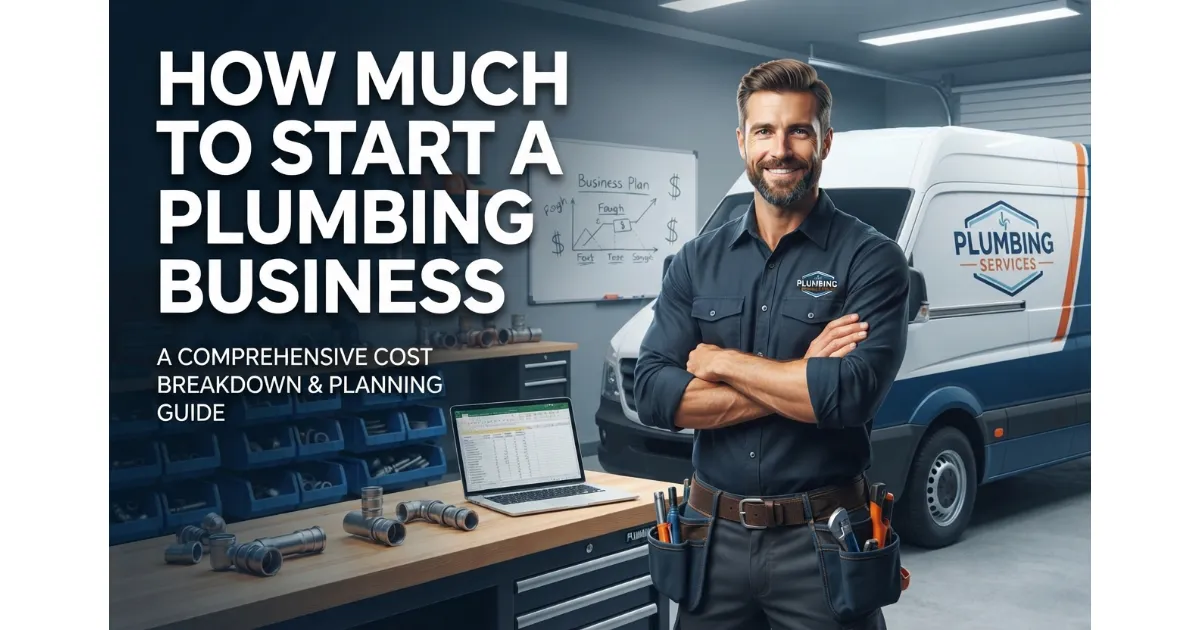 Launching a plumbing venture typically requires an upfront investment ranging fro m $10,000 to $50,000 for a lean solo operation, while establishing a fully equipped fleet with multiple technicians can exceed $60,000 to $100,000+. Your total plumbing business startup cost heavily depends on your licensing status, vehicle acquisition strategy, professional tool inventory, and local regulatory fees.
Securing the right funding from day one prevents cash flow bottlenecks and ensures regulatory compliance. Every aspiring contractor must balance immediate overhead with long-term revenue potential to build a resilient service enterprise.
What This Guide Covers
Navigating the complexities of launching a contracting enterprise requires a structured roadmap. This comprehensive guide breaks down every essential operational phase.
- Licensing & Legal Compliance: Step-by-step breakdowns of master plumber credentials, bonding requirements, and liability insurance.
- Equipment & Fleet Acquisition: Direct comparisons between leasing and buying service vehicles and essential tool inventories.
- Marketing & Customer Acquisition: Proven strategies for capturing local search traffic, building professional websites, and generating service calls.
- Financial Management & Scaling: Practical budgeting frameworks, cash flow stabilization techniques, and strategies for hiring your first technician.
What Affects the Cost of Starting a Plumbing Business?
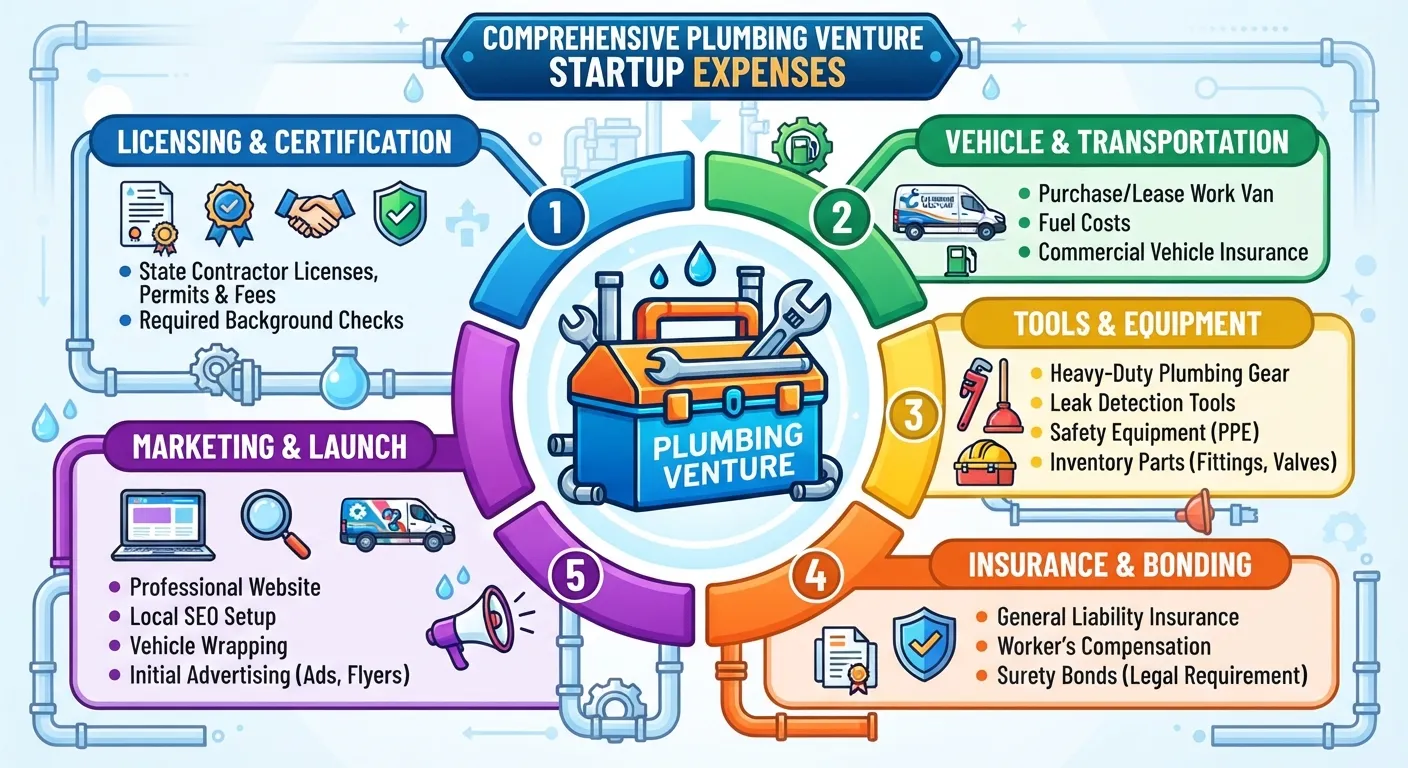 The wide cost spectrum between launching a basic solo venture and establishing a commercial enterprise stems from several critical operational variables. Understanding these cost drivers helps you optimize your capital allocation and avoid unexpected financial strain.
Solo Operator vs. Team with Employees
Operating entirely alone keeps overhead to a minimum, as you only account for your own draw and basic operational expenses. Bringing on administrative staff or secondary technicians immediately introduces payroll taxes, workers’ compensation insurance, and mandatory benefits.
Cost Impact: High
New vs. Used Vehicle and Tools
Purchasing brand-new service vehicles outfitted with custom shelving and specialized diagnostic gear demands substantial upfront capital or large monthly lease commitments. Opting for reliable used work vans and pre-owned hand tools drastically reduces initial capital requirements.
Cost Impact: High
Already Licensed vs. Starting from Zero
Entering the market as an already certified master plumber allows you to skip years of apprenticeship fees and expensive continuing education exams. Starting from zero requires paying for trade school, apprentice registration, and extensive testing fees.
Cost Impact: Medium
Residential vs. Commercial Plumbing
Residential service calls focusing on drain cleaning and basic water heater services require standard tools and smaller inventory footprints. Commercial plumbing demands heavy-duty machinery, specialized safety gear, and higher liability insurance policies to cover massive industrial properties.
Cost Impact: High
Your Location State City Country
Local regulations, municipal permit fees, and state licensing boards dictate vastly different baseline expenses depending on your geographic region. High-cost-of-living metropolitan areas also feature steeper commercial insurance premiums and advertising costs.
Cost Impact: Medium
Plumbing Business Startup Costs: Complete Breakdown
Building an accurate financial forecast requires analyzing every line item necessary to get your operations off the ground. Mapping these individual expenses prevents sudden cash shortages and ensures your initial capital covers both legal and operational essentials.
Startup Cost Table Low Mid High with Total Row
Reviewing a detailed breakdown of capital requirements helps you visualize how individual line items accumulate into your total startup budget. This comprehensive matrix outlines realistic pricing models across varying tiers.
Adding the low-end estimate column totals $16,200, while summing the high-end estimate column reaches $100,000 across all operational categories.
Service Vehicle: Used vs. New
Your service van acts as your rolling storefront and primary mobile workstation. Purchasing a brand-new vehicle guarantees reliability and factory warranties, but a dependable used work van with custom interior shelving cuts initial vehicle expenses in half.
Factor in auxiliary customization expenses like roof racks, storage bins, and safety partitions to secure your tools while driving. Choosing a pre-owned vehicle with under 100,000 miles is a reliable sweet spot for startup contractors.
Plumbing Tools and Equipment
Your equipment inventory ranges from basic hand tools to heavy-duty diagnostic gear. A standard starter kit includes pipe wrenches, torches, copper cutters, a basic drain snake, and cordless power tools.
Upgrading to professional-grade equipment like a sewer camera and electronic locator significantly expands your service offerings into lucrative line-inspection and main-line excavation jobs. However, purchasing high-end diagnostic hardware immediately can strain a tight startup budget.
Licensing Permits and Exam Fees
Securing official legal credentials is non-negotiable for operating a legitimate trade contracting business. Expenses include your master plumber trade exam fees, apprentice card registrations, local municipal business licenses, and official entity filing fees for your LLC and EIN.
Failing to acquire proper local permits can result in hefty municipal fines and stop-work orders. Always check state-specific contractor board mandates before booking exam dates.
Insurance and Bonding
Protecting your enterprise from liability requires robust insurance coverage and state-mandated bonding. General liability insurance shields your business from property damage claims, while a surety bond guarantees your adherence to local contracting codes.
If you plan on bringing on employees right away, you must also budget for mandatory workers’ compensation insurance and commercial auto coverage. Premiums vary heavily based on your geographic location and claims history.
Inventory Software and Marketing
Maintaining a baseline stock of common fittings, valves, pipe connectors, and copper tubing ensures you can complete emergency service calls without constant supply house runs. Modern operations also rely heavily on field service software like Jobber or Housecall Pro to streamline dispatching and invoicing.
For customer acquisition, setting up an optimized Google Business Profile, building a responsive website, and outfitting your uniform with professional branding drive your initial local lead generation.
Sample Budgets: 4 Realistic Startup Scenarios
Every contractor’s starting point is unique, meaning your exact financial runway depends heavily on your current licensing status, equipment ownership, and staffing goals. Analyzing concrete budget profiles allows you to identify which operational model mirrors your exact career trajectory.
Scenario 1: Already Licensed Own Truck Home-Based
This lean entry model is designed for experienced technicians who already possess a valid master plumber certification, own a dependable truck, and plan to operate out of a home office without commercial rental overhead.
Who this fits: Seasoned trade professionals stepping out on their own with existing assets and minimal initial overhead.
Scenario 2: Solo Plumber with a Used Van
This balanced model accommodates a licensed plumber who needs to acquire a reliable pre-owned cargo van, standard hand tools, and foundational marketing materials to launch an independent service business.
Who this fits: Independent plumbers starting from scratch who need a reliable rolling workstation and solid marketing foundation.
Scenario 3: Owner + 1 Helper with Van
This growth-oriented model incorporates an additional plumbing helper or apprentice, requiring expanded tool inventories, commercial auto coverage, and workers’ compensation insurance from day one.
Who this fits: Ambitious business owners ready to scale job capacity immediately by hiring an apprentice or helper.
Scenario 4: Small Team with 2-3 Trucks
This enterprise-level setup involves running multiple service vehicles, employing multiple technicians, and investing heavily in advanced diagnostic equipment, commercial insurance policies, and aggressive local advertising.
Who this fits: Established entrepreneurs scaling into a multi-truck regional operation with dedicated technical staff.
Can You Start a Plumbing Business Without Being a Licensed Plumber?
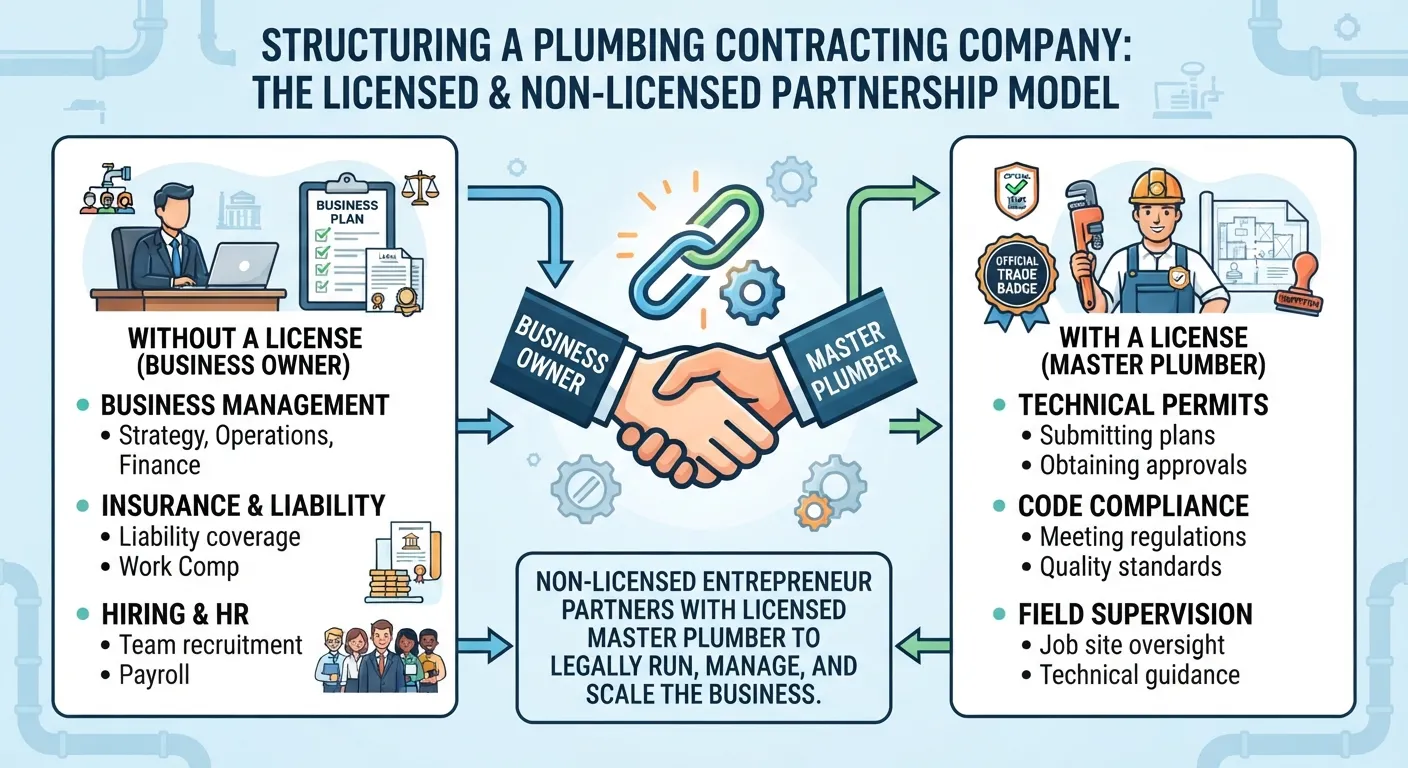 Launching a plumbing enterprise without holding a personal trade license is entirely possible, provided you structure your business model around hiring or partnering with certified professionals. Understanding the legal boundaries ensures your venture remains compliant with state regulations.
Yes You Can Own One But You Can’t Do the Work Yourself
You can legally own and operate a contracting company without being a licensed plumber, but you are strictly prohibited from performing any physical trade work or pulling permits yourself. To remain compliant, you must hire a qualified trade professional to oversee all technical operations, installations, and safety code inspections.
Operating as a business owner without doing technical labor allows you to focus entirely on marketing, dispatching, sales, and administrative growth while your licensed staff handles the hands-on plumbing services.
Hire a Licensed Master Plumber as Your Qualifier
State licensing boards typically require plumbing companies to designate a “qualifying agent” or qualifier who holds an active master plumber license. This individual acts as the technical authority for your company and ensures every service call adheres strictly to local building codes.
Securing a reliable qualifier often involves offering competitive compensation, profit-sharing incentives, or equity partnerships, as their professional license is tied directly to your company’s operational standing.
What License Do You Need to Start a Plumbing Business?
Plumbing credentials follow a strict hierarchical structure governed by state or municipal licensing boards. Understanding these tiers clarifies what credentials your team must hold:
- Apprentice Plumber: Entry-level workers learning the trade under direct supervision while completing classroom training and accumulating required work hours.
- Journeyman Plumber: Licensed professionals qualified to perform installations and repairs independently but usually prohibited from pulling commercial permits or running an independent contracting business.
- Master Plumber: The highest credential attainable, granting full authority to design plumbing systems, pull municipal permits, and qualify an official contracting business entity.
Penalties for Operating Without a License
Attempting to perform plumbing work or running an unverified contracting business without proper licensing carries severe legal repercussions. State contractor boards and local municipalities aggressively penalize unlicensed operators.
Consequences include heavy financial fines, immediate stop-work orders, misdemeanor or felony criminal charges for fraudulent contracting, and complete forfeiture of insurance coverage if property damage occurs during a job.
How Hard Is It to Start a Plumbing Business?
Launching a plumbing venture is moderately difficult due to strict regulatory compliance, bonding requirements, and high initial equipment overhead. While the administrative setup of an LLC and website is straightforward, securing qualified master plumbers and navigating municipal licensing boards demands patience and industry insight.
Once your initial licensing hurdles are cleared and your local search presence is established, customer retention and high emergency service demand make plumbing one of the most resilient trade businesses to operate.
Quickest Legal Path if You’re Not a Plumber Yet
If you are an entrepreneur entering the trade industry without a plumbing background, executing a strategic partnership is your fastest route to market. Follow these key steps to establish your business legally:
- Form Your Business Entity: Register your LLC, obtain your federal EIN, and set up your business bank accounts.
- Partner with a Qualifier: Recruit an active master plumber willing to act as your company’s qualifying agent for state licensing board submissions.
- Secure General Liability: Purchase comprehensive liability insurance and surety bonds tied to your corporate entity and qualifying license.
- Launch Local Marketing: Build your website, set up your Google Business Profile, and begin generating service calls for your employed technicians.
Monthly Running Costs and Working Capital
Transitioning from one-time startup expenses to predictable monthly operating costs is critical for long-term survival. Many contractors fail because they budget solely for initial equipment without preparing for ongoing monthly overhead.
Managing cash flow requires a firm grasp of your fixed and variable expenditures. As Jered Williams notes in How Much It Cost To Run A Plumbing Business, tracking every operational dollar—from fuel and credit card fees to vehicle insurance—reveals the true cost of keeping your trucks on the road [00:00:46]. Dividing these cumulative overhead expenses by your actual billable hours ensures your hourly rates accurately cover your costs [00:03:05].
Startup Costs vs. Monthly Operating Costs
Startup costs represent the one-time capital expenditures required to open your doors, such as purchasing vans, securing licenses, and buying initial tool kits. Monthly operating expenses are the recurring bills you must pay every 30 days regardless of how many service calls you complete.
Separating these financial metrics prevents you from confusing initial setup investments with your ongoing monthly break-even point.
Monthly Expense Table
Reviewing a standard monthly expense breakdown helps you estimate your recurring overhead before taking on your first customer.
How Much Working Capital and Emergency Fund Do You Need?
Having a robust financial safety buffer prevents unexpected cash flow gaps from stalling your business during slow seasons or major vehicle repairs. Financial experts universally recommend maintaining 3 to 6 months of operating expenses in liquid working capital.
This emergency fund ensures you can comfortably cover payroll, insurance, and loan payments even if client invoice collections experience seasonal delays.
Know Your Overhead Before You Set Your Prices
Pricing your plumbing services too low is the fastest way to drain your capital and run out of business. To calculate profitable service rates, divide your total monthly fixed overhead by your expected billable hours, then factor in material markups and profit margins.
Remember that technicians are rarely billable 100% of the working day; accounting for a realistic 55% utilization rate ensures every billable hour covers your idle administrative time [00:02:19].
Sample Monthly Profit & Loss P&L Statement
Reviewing a simplified monthly P&L model illustrates how revenue transforms into net profit after accounting for operating overhead.
Cost by Location: Does Where You Start Change the Price?
Your geographic location drastically alters your baseline startup expenses. State-specific licensing mandates, municipal permit fees, commercial insurance rates, and regional labor markets create significant financial variations for new contractors.
Why Location Changes Licensing, Insurance, and Labor Costs
Every state, province, and country maintains its own regulatory bodies that dictate how much you must pay for contractor exams, background checks, and surety bonds. High-cost-of-living metropolitan areas also enforce steeper commercial auto insurance premiums and require larger investments in local digital advertising.
Failing to account for regional compliance variations can result in unexpected legal fees or frozen permit applications before your business ever opens its doors.
Starting a Plumbing Business in California
Launching a plumbing venture in California requires compliance with the Contractors State License Board (CSLB) for the C-36 Plumbing classification. Initial state expenses are notably higher than the national average due to rigorous structural mandates.
Key California startup requirements include a $450 application fee, a $200 to $350 initial license fee, mandatory live scan fingerprinting, and a mandatory $25,000 contractor surety bond which typically costs between $100 and $250 annually with good credit.
Starting in Other US States
Requirements and baseline costs differ substantially across state lines. Reviewing regional licensing and bonding expectations helps you gauge local market entry barriers.
Outside the US
Operating internationally introduces distinct regulatory frameworks and currency dynamics:
- Canada: Provincial bodies (like SkilledTradesBC or Ontario College of Trades) require Red Seal certification, local business registration, and commercial vehicle insurance.
- Australia: State-based regulators (such as NSW Fair Trading or Victorian Building Authority) mandate strict plumbing licenses, compulsory contractor insurance, and high safety compliance.
- Nigeria: Governed by industrial training funds and local trade associations, focusing heavily on independent tool procurement, workshop space, and direct client networks.
- Other Regions: Always verify your local municipal building department guidelines and trade licensing board mandates before purchasing inventory or vehicles.
Legal Setup: LLC EIN Bank Account and Insurance
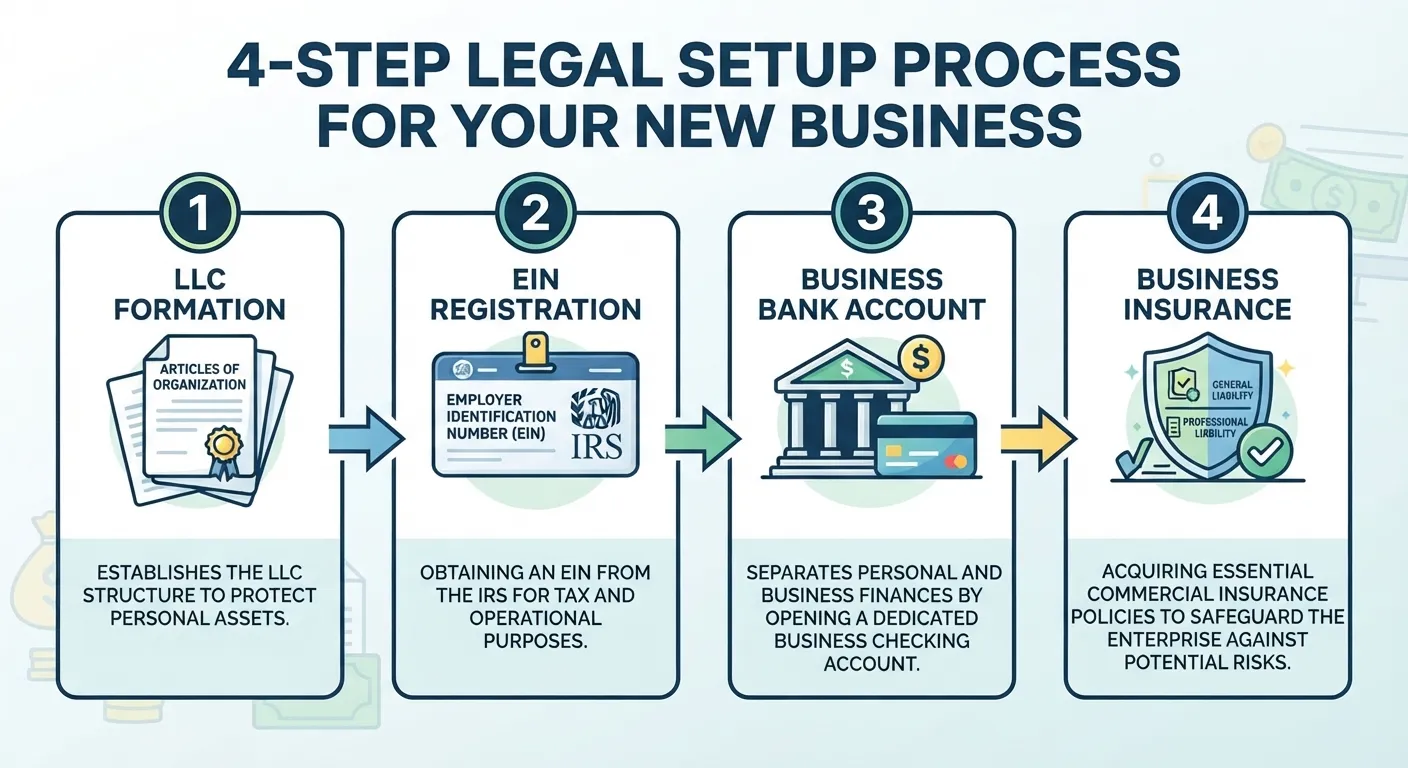 Establishing a rock-solid legal and financial foundation protects your personal assets from corporate liability and ensures your enterprise complies with state and federal regulations. Skipping these foundational steps exposes your business to severe financial vulnerability.
Sole Proprietorship vs. LLC vs. Corporation
Selecting the correct business structure impacts your personal liability, taxation rules, and setup expenses. A sole proprietorship is inexpensive to launch but leaves your personal savings exposed to lawsuits or debt. Forming a Limited Liability Company (LLC) typically costs between $150 and $500 depending on your state, shielding your personal assets behind a formal corporate barrier. Registering as a corporation offers advanced tax advantages for larger operations but introduces complex governance mandates.
Establishing an LLC early is the most popular choice for independent plumbing contractors seeking a balance of legal protection and operational simplicity.
Get an EIN and Open a Business Bank Account
Once your state entity is approved, you must apply for a free Employer Identification Number (EIN) directly through the IRS website. Your EIN acts as a social security number for your business, allowing you to hire employees, file taxes, and open commercial banking accounts.
Never deposit client checks or pay business expenses out of your personal checking account. Opening a dedicated business bank account simplifies your accounting and preserves the legal protections of your LLC.
Insurance You Actually Need
Plumbing is a high-risk trade where a single burst pipe or accidental property flood can result in catastrophic financial damages. You must secure comprehensive coverage before visiting your first job site:
- General Liability Insurance: Protects your business against third-party property damage and bodily injury claims.
- Commercial Auto Insurance: Covers your service vans, tools in transit, and liability during vehicle accidents.
- Workers’ Compensation: Legally required in most states the moment you hire employees or apprentices.
- Inland Marine / Tool Coverage: Protects your expensive trade tools and diagnostic equipment if stolen from your vehicle or job site.
Taxes and Bookkeeping Basics for New Plumbing Owners
Managing your tax obligations requires meticulous record-keeping from day one. As an independent business owner, you are responsible for paying self-employment taxes, federal income taxes, and state-specific corporate filings.
Utilizing dedicated accounting software like QuickBooks or hiring a local CPA to review your monthly profit and loss statements ensures you never miss quarterly tax deadlines or face unexpected audit penalties.
How to Start a Plumbing Business With Little or No Money
Launching a service contracting enterprise with minimal initial capital requires strategic bootstrapping, phased equipment acquisitions, and heavy reliance on sweat equity. Many successful trade businesses start with tight budgets by prioritizing low-overhead operations.
As expert plumber Roger Wakefield highlights in So You Want to Start a Plumbing Company… Here’s How!, starting with very little money means trading financial abundance for extreme hustle during your early months [00:09:41]. Leveraging existing relationships, mastering local networking, and protecting your cash flow are essential survival strategies [00:09:31].
Start Small: Home-Based and Phased Tool Buying
Eliminate immediate commercial rental overhead by operating your dispatch office entirely out of a home-office or garage setup. Instead of purchasing an extensive inventory of specialized machinery all at once, acquire tools on a phased schedule based on the exact requirements of your booked service calls.
Purchasing core hand tools first while renting or postponing advanced diagnostic hardware preserves your liquid capital during the critical initial startup phase.
Buy Used: Vans and Tools
Buying brand-new vehicles and premium tools heavily drains your early financial runway. Opting for a dependable, pre-owned cargo van with verified mechanical maintenance history cuts your capital equipment expenditure in half.
Always inspect used mechanical tools, drain snakes, and power equipment for motor wear before purchasing, but feel completely comfortable buying pre-owned hand wrenches and pipe cutters to save cash.
Rent or Lease vs. Buy Equipment
When high-ticket jobs demand expensive equipment like specialized sewer cameras or heavy hydro-jetters, renting or leasing the machinery for specific project days prevents you from locking up thousands of dollars in depreciating assets.
Equipment leasing also offers predictable monthly expenses and occasional upgrade paths once your service volume generates consistent cash flow.
Work Under a Licensed Plumber First
If you lack industry experience or trade certifications, attempting to launch an independent plumbing operation is legally impossible. Spend your foundational years working as an apprentice or journeyman under an active master plumber.
This hands-on route allows you to master technical installations, build customer management skills, and accumulate required hours while earning a steady wage before launching your own brand.
Get Your First Customers Cheaply
When your marketing budget is near zero, your primary currency is grassroots hustle and digital optimization. Claiming and fully optimizing your free Google Business Profile drives high-intent local search traffic directly to your phone.
Encourage your earliest residential clients to leave glowing online reviews, and leverage local referral networks to generate word-of-mouth service calls without spending money on paid advertising.
Bootstrap Blueprint: Starting with $5,000 for the First 3 Months
If you already own a reliable personal truck and basic hand tools, launching with a tight $5,000 capital reserve is entirely feasible when managed through a strict 90-day execution plan:
- Month 1 ($1,500): File your LLC paperwork, secure basic general liability insurance, register your free Google Business Profile, and buy initial plumbing fittings and consumables.
- Month 2 ($1,500): Invest heavily in local networking, hand out professional business cards to local real estate agents, and allocate funds for emergency fuel and digital ad testing.
- Month 3 ($2,000): Retain remaining cash strictly as an emergency buffer for unexpected van repairs while reinvesting 100% of incoming service revenue back into inventory expansion.
How to Fund Your Plumbing Business
Securing adequate capital is the final major hurdle when transitioning from a business plan to active operations. Evaluating your funding options helps you choose the right financial vehicle without overwhelming your early cash flow with high-interest debt.
Personal Savings and Bootstrapping
Funding your venture through personal savings or bootstrapping remains the safest and most common route for solo operators. Using your own capital means you owe no monthly loan payments and retain 100% equity in your company from day one.
While this method requires severe financial discipline and limits your initial scale, it completely eliminates early debt pressure during months when client billings fluctuate.
Small Business Loans and SBA-Style Loans
Traditional bank loans and government-backed lending programs (such as Small Business Administration loans) provide larger capital injections with lower interest rates and extended repayment terms. These loans are ideal for ambitious owners launching with a multi-truck fleet or commercial shop.
Qualifying for these loans typically demands a strong personal credit score, a detailed business plan, and several months of personal financial statements.
Equipment and Vehicle Financing
Instead of paying cash upfront for work vans and heavy-duty diagnostic gear, equipment and vehicle financing allows you to spread the cost over 3 to 5 years. Lenders use the purchased hardware or vehicle as collateral, preserving your liquid cash for daily operations.
Monthly lease payments are predictable, but long-term interest rates mean you will pay more overall than purchasing items outright.
Business Credit Cards and Supplier Credit
Revolving business credit cards and supplier lines of credit from plumbing wholesalers provide short-term liquidity for purchasing daily consumable parts, fittings, and emergency tools. Many wholesale suppliers offer 30-day net terms, allowing you to complete jobs and collect customer payments before your material bill is due.
Paying these balances in full every month prevents compounding interest charges from eating into your profit margins.
Partners and Investors
Bringing in a silent investor or a working partner injects immediate capital into your business without taking on traditional bank debt. In exchange, investors typically receive an equity percentage or profit-sharing agreement.
Ensure all partnership agreements, equity splits, and operational responsibilities are formally drafted by a corporate attorney before accepting outside money.
Pros and Cons Comparison Table
Comparing funding methods side-by-side helps you align your capital strategy with your risk tolerance and growth goals.
Is a Plumbing Business Profitable? Owner Income Margins and Break-Even
Owning a plumbing business is exceptionally profitable when managed with disciplined pricing, efficient routing, and strict overhead control. Industry data indicates that successful plumbing contractors consistently achieve healthy net profit margins between 20% and 30%, significantly outperforming many traditional retail and service sectors.
Is Owning a Plumbing Business Profitable?
Yes, owning a plumbing business is highly profitable, with typical net profit margins ranging between 20% and 30% according to industry financial benchmarks. Because essential water, sewer, and gas repairs are non-discretionary expenses for property owners, residential service and emergency plumbing models generate robust returns on investment by combining high hourly labor billing with profitable markups on replacement parts and materials.
How Much Does a Plumbing Business Owner Make?
Plumbing business owner earnings vary significantly based on whether you operate as a solo technician or scale an enterprise with multiple service trucks. Solo owner-operators typically take home between $75,000 and $120,000 annually, while owners managing growing teams often clear $150,000 to $250,000+ per year.
For broader wage context on licensed trade professionals, you can review official figures provided by the U.S. Bureau of Labor Statistics, which tracks nationwide median pay and employment trends across the trade.
Can a Plumber Make $200,000 a Year?
Grossing or netting $200,000 a year as a plumbing owner is entirely realistic, but it requires transitioning away from trade-only labor into strategic business management. To hit this milestone, you must implement flat-rate pricing models, hire at least two to four field technicians, and focus on high-margin niches like emergency service calls, water heater replacements, and trenchless sewer repair.
When your trucks are running billable hours while you manage marketing and dispatch, your income potential scales far beyond standard employee wages.
Break-Even Example
Calculating your monthly break-even point ensures your pricing covers all operating expenses before you pocket a dollar of profit. Consider a startup plumbing business with the following monthly fixed and variable assumptions:
- Monthly Fixed Costs: $4,000 (Insurance, software subscriptions, van loan, local marketing, and storage rent)
- Average Job Revenue: $400 per service call
- Cost of Goods Sold (Parts & Materials per job): $100 (25%)
- Gross Profit per Job: $300
To cover your $4,000 monthly overhead, your break-even calculation is:
$$\text{Break-Even Jobs} = \frac{\text{Fixed Costs}}{\text{Gross Profit per Job}} = \frac{\$4,000}{\$300} \approx 14 \text{ jobs per month}$$
Completing just 14 service calls a month covers every penny of your business debt and operational overhead. Any job completed past that threshold generates direct net profit.
Which Type of Plumbing Makes the Most Money?
Not all plumbing work generates equal profit margins. Specializing in high-demand, urgent service niches maximizes your revenue per hour:
- Emergency Plumbing: After-hours and weekend emergency calls command premium rates, often billing at 1.5x to 2x standard labor rates.
- Water Heater Installation: High-ticket equipment replacements offer rapid turnaround times and lucrative equipment markups.
- Drain Cleaning & Hydro-Jetting: Low material costs combined with high-fee specialized machine operation yield massive profit margins.
- Commercial Plumbing: Large-scale contracts provide steady, high-volume recurring revenue despite slightly lower percentage margins.
From Owner-Operator to a Business That Runs Without You
Scaling past the solo-operator phase requires building structured standard operating procedures (SOPs), implementing automated dispatch and CRM software, and empowering field supervisors. True business ownership means your enterprise generates revenue whether you are physically wrenching pipes or spending time with family.
As detailed in the video below, removing yourself from day-to-day dispatching is the ultimate step in creating a sellable, highly profitable trade enterprise.
Start From Scratch or Buy an Existing Plumbing Business?
When entering the plumbing industry, aspiring owners face a major strategic crossroads: building a brand entirely from scratch or purchasing an established enterprise. Evaluating the financial tradeoffs, operational risks, and speed-to-revenue helps you choose the right path for your entrepreneurial goals.
Buying an Existing Plumbing Business: Costs and Examples
Purchasing an existing plumbing company lets you bypass the painful zero-revenue startup phase by acquiring an active customer database, equipped service vehicles, and trained technicians. Acquisition costs vary wildly based on revenue volume, asset quality, and market location.
For example, a smaller residential service operation with a modest truck fleet might list an asking price of $95,000 with a $150,000 working capital requirement. In contrast, an established commercial and residential outfit generating $1,500,000 in annual revenue might command an asking price of $275,000+ due to its locked-in service contracts and recurring maintenance agreements.
Pros and Cons: Startup vs. Buying vs. Franchise
Comparing your three primary entry models side-by-side clarifies which path best matches your risk tolerance, capital availability, and management experience:
- Building From Scratch: Offers maximum creative control and minimal upfront capital requirements, but demands extreme hustle to build a client base from zero.
- Buying an Existing Business: Provides immediate cash flow, established phone lines, and existing customer reviews, but carries higher upfront purchase costs and potential hidden liabilities.
- Plumbing Franchises: Delivers proven operational systems, national brand recognition, and marketing support, but requires high initial franchise fees, ongoing royalty percentages, and strict operational rules.
What to Check Before You Buy
If you choose the acquisition route, performing rigorous due diligence before signing a purchase agreement is non-negotiable. Inspect these critical operational components:
- License Transferability: Verify whether the owner’s master or contractor plumbing license transfers to a new owner or if you must personally qualify.
- Customer Reviews & Reputation: Check online ratings across Google, Yelp, and the Better Business Bureau to ensure the company has no unresolved complaints or pending litigation.
- Vehicle & Equipment Condition: Inspect all service vans and specialized machinery to avoid inheriting broken-down equipment requiring immediate replacement.
- Financial Audit: Review at least three years of tax returns, profit and loss statements, and bank records with a CPA to verify actual revenue.
- Active Contracts: Examine commercial service agreements and recurring maintenance customer lists to confirm they are legally transferable.
Plumbing vs. Electrical Business and Will AI Replace Plumbers?
Evaluating broader industry dynamics helps position your long-term business strategy. Understanding how plumbing stacks up against other trades and how technological shifts impact your career security ensures your enterprise remains resilient for decades.
Plumbing vs. Electrical: Startup Cost and Demand Compared
Both plumbing and electrical contracting are exceptionally lucrative, recession-resistant essential trades, but they differ significantly in startup equipment requirements and technical licensing pathways.
Will AI Replace Plumbers?
Artificial intelligence and automation will not replace plumbers. While software can streamline dispatching, accounting, and customer scheduling, physical trade work requires complex manual dexterity, real-time spatial problem-solving, and unpredictable physical maneuvering in tight crawlspaces that software and robotics cannot replicate.
Why Skilled Trades Stay in Demand
The physical infrastructure of modern buildings ages continuously, ensuring permanent, non-outsourceable demand for skilled trade professionals. As older generations of contractors retire and infrastructure ages, plumbing and electrical businesses remain completely immune to automation threats, making them among the safest long-term career investments available.
Common Mistakes New Plumbing Business Owners Make
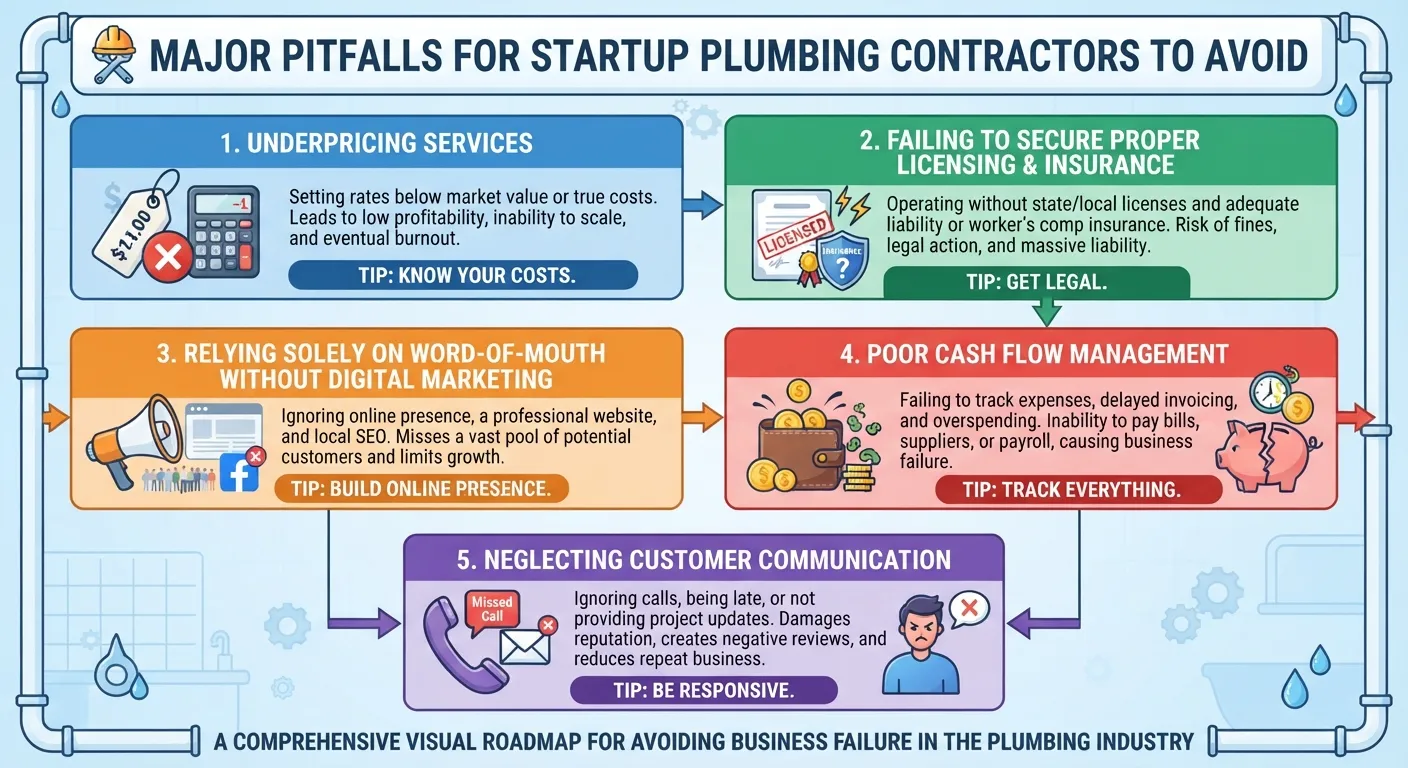 Launching a service business is filled with hidden traps. Learning from the costly missteps of seasoned contractors helps you protect your capital and accelerate your path to profitability.
Underpricing and Ignoring Overhead
Many new owners set their service rates by simply guessing what competitors charge, failing to calculate their true operational overhead. What happened: A new contractor charged $75 per hour to win bids quickly, ignoring van payments, fuel, and insurance. What was learned: After six months of heavy workload, he realized he was actually losing money on every service call. Accurate pricing must account for all fixed business expenses plus desired net profit margins.
Buying a New Van and Too Many Tools Too Early
Sensing the excitement of starting a business, many owners finance a brand-new custom cargo van and purchase top-tier specialty cameras before securing a steady client base. What happened: A rookie owner took on an $800 monthly vehicle payment alongside expensive equipment loans. What was learned: When slow months hit, debt service crippled cash flow. Buying a reliable pre-owned van and renting specialized tools until cash flow supports them keeps your financial runway safe.
Skipping Insurance or the Right License
Operating without comprehensive coverage or proper licensing to save a few hundred dollars is a catastrophic gamble. What happened: A contractor accidentally flooded a customer’s hardwood living room while repairing a supply line without general liability insurance. What was learned: The $12,000 out-of-pocket repair bill wiped out his entire savings. Securing proper licensing and active liability insurance before taking your first job is non-negotiable.
No Cash Reserve for the First 90 Days
Expecting immediate, consistent cash flow from day one leaves many businesses vulnerable to delayed customer payments and slow quarters. What happened: An owner spent every dollar of his $3,000 startup capital on initial flyers, leaving zero buffer when invoices took 30 days to clear. What was learned: Always maintain a dedicated 90-day cash reserve to cover emergency payroll, fuel, and van repairs when accounts receivable run slow.
No Marketing Plan Relying on Word of Mouth Only
Waiting for word-of-mouth recommendations to magically fill your schedule stalls growth during your critical launch phase. What happened: A skilled technician opened his doors expecting past clients to call automatically, but received only two service requests in his first month. What was learned: Active digital marketing—including a fully optimized Google Business Profile, local review generation, and networking—is required to drive consistent inbound phone calls.
Step by Step Startup Checklist + Free Cost Calculator
Executing your launch with a structured roadmap eliminates guesswork and ensures you meet all regulatory and operational milestones. Use this comprehensive checklist and startup budget framework to guide your business from concept to your first paid service call.
10-Step Launch Checklist
Follow this sequential roadmap to keep your startup organized, legal, and profitable from day one:
- 1. Licensing & Certification: Complete your state apprentice or journeyman hours and secure your official contractor’s license.
- 2. Legal Entity Formation: Form your LLC or corporation through your state’s Secretary of State office.
- 3. Employer Identification Number (EIN): Apply for a free federal tax ID directly on the IRS website.
- 4. Business Insurance: Secure general liability insurance, commercial auto coverage, and workers’ compensation.
- 5. Business Bank Account: Open a dedicated commercial checking account using your LLC documents and EIN.
- 6. Essential Tools & Equipment: Procure core hand tools, drain snakes, and diagnostic equipment based on your service niche.
- 7. Service Vehicle: Purchase or lease a reliable pre-owned cargo van equipped with shelving.
- 8. Software & Invoicing Setup: Subscribe to industry-standard dispatch, invoicing, and accounting software like QuickBooks.
- 9. Professional Branding & Pricing: Finalize your company name, logo, and flat-rate pricing schedule.
- 10. First Customers & Marketing: Claim and optimize your Google Business Profile and launch local referral outreach.
Startup Cost Calculator & Budget Framework
Calculating your precise startup requirements prevents unexpected cash flow shortfalls during your first quarter of operation. Review the estimated startup cost breakdown below to model your initial capital needs:
To create your own customized budget sheet, download a local spreadsheet template, plug in your specific vehicle lease or purchase quotes, insurance premiums, and tool inventories to calculate your exact personal capital runway before opening for business.
FAQs About Plumbing Business Startup Costs
Get direct, practical answers to the most common questions aspiring contractors ask before launching their plumbing business.
How much money do I need to start a plumbing business?
Starting a lean, home-based plumbing business typically requires between $8,500 and $16,100 to cover basic licensing, insurance down payments, pre-owned vehicle financing, and essential hand tools. If you choose to launch with new equipment, multiple vans, and a large inventory, initial capital requirements can easily exceed $30,000 to $60,000.
Can I start a plumbing business with no experience?
No, you cannot legally or safely start a plumbing business without industry experience. Operating a plumbing enterprise requires formal trade certification, completed apprentice or journeyman hours, and a valid state contractor’s license. Attempting to operate without professional experience exposes you to severe legal liabilities and building code violations.
How long does it take for a plumbing business to become profitable?
Most well-managed plumbing businesses reach a consistent break-even point within 3 to 6 months. Profitability depends heavily on your local market demand, overhead control, and how quickly you build an active customer base through local marketing and Google Business Profile optimization.
What is the cheapest way to start a plumbing business?
The most cost-effective startup route is operating out of a home-based office, utilizing a reliable personal truck or affordable pre-owned van, and buying only essential hand tools. By postponing large equipment purchases and leveraging free digital marketing like Google Business Profile and local word-of-mouth referrals, you keep overhead near zero.
Do I need a truck to start a plumbing business?
While you do not necessarily need a brand-new commercial cargo van on day one, you do need a dependable vehicle capable of transporting your tools, replacement parts, and drainage equipment. Many solo operators begin out of a clean personal pickup truck equipped with secure toolboxes before upgrading to a dedicated service van.
Is it worth starting a plumbing business in 2026?
Yes, starting a plumbing business in 2026 is exceptionally lucrative. Aging residential and commercial water infrastructure guarantees steady, recession-resistant demand, while digital booking tools and flat-rate pricing models make it easier than ever for modern trade owners to scale profitable enterprises.
Conclusion and Next Steps
Launching and scaling a profitable plumbing business requires careful financial planning, strict adherence to licensing regulations, and disciplined execution. By understanding your true startup costs and avoiding common rookie mistakes, you can build a resilient, high-margin trade enterprise.
Key Takeaways
- Realistic Startup Cost Range: Launching a lean, home-based plumbing operation typically requires between $8,500 and $16,100, while fully equipped multi-van setups can range from $29,000 to $63,000+.
- Profit Margins: Well-managed plumbing businesses consistently achieve net profit margins between 20% and 30% by combining high hourly billing with parts markups.
- Legal Protection: Always separate personal and business finances, establish an LLC, and secure proper general liability and workers’ compensation insurance before taking your first job.
- Bootstrapping & Scaling: Start small with pre-owned equipment, optimize your free Google Business Profile, and eventually transition from solo wrenching to team management.

Oscar Vance | Master Plumber & Drainage Expert
Meet Oscar Vance, a licensed master plumber sharing practical solutions on residential repairs, preventive maintenance, and thoughtful home upkeep.