 Understanding Your House Plumbing System: The Core Framework
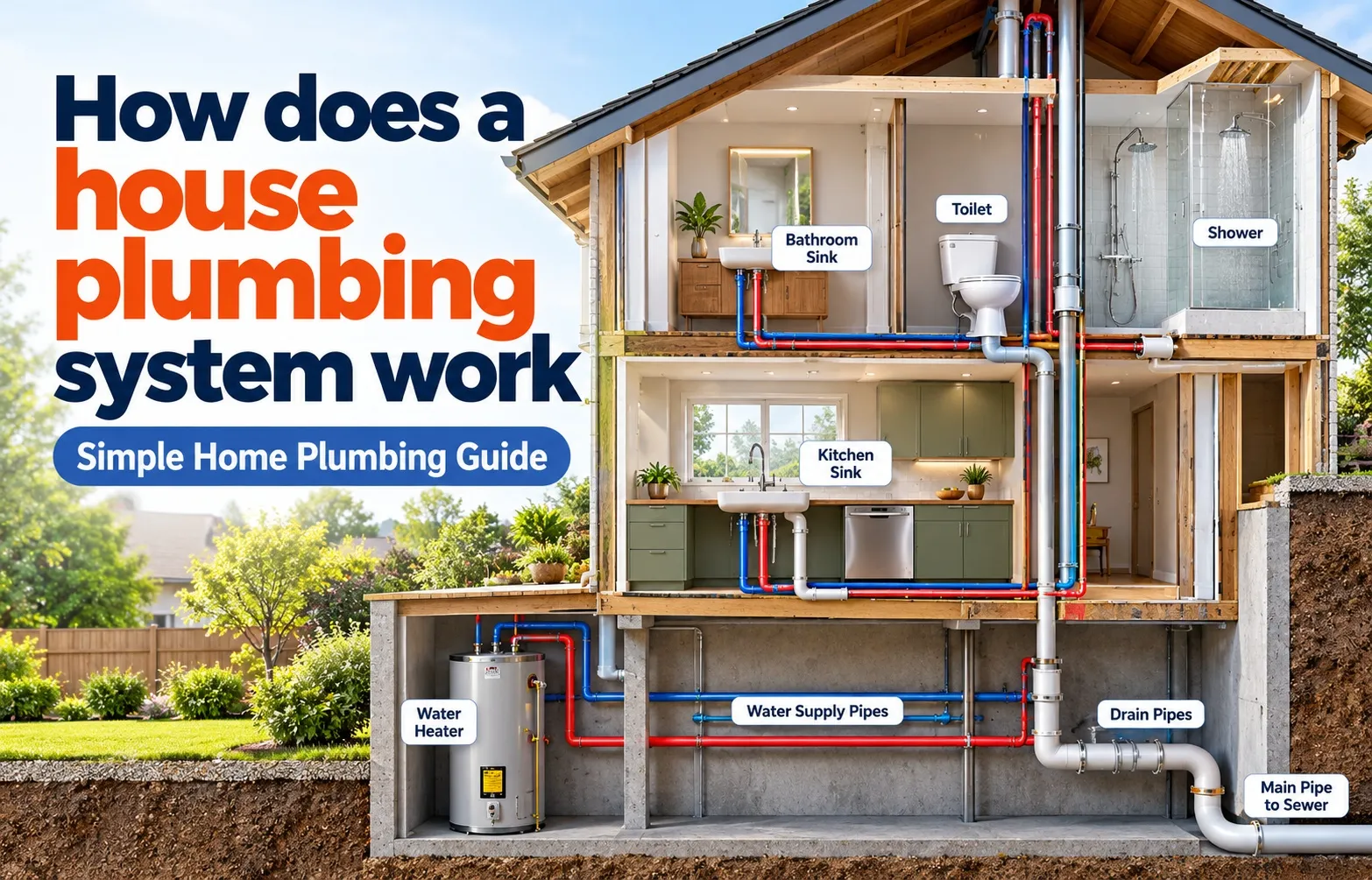
A house plumbing system operates through two completely independent, non-overlapping networks: an inbound freshwater supply system under high pressure and an outbound drainage system driven entirely by gravity. Understanding how these dual loops function helps homeowners troubleshoot everyday issues, manage routine maintenance safely, and prevent costly plumbing emergencies.
The Big Picture: How Water Enters and Leaves Your Home
Clean municipal water travels under active pressure into your home to supply kitchen faucets, showers, and appliances, while used wastewater instantly exits through unpressurized drain pipes. This continuous indoor water cycle relies on a delicate balance of mechanical pressure, pipe slopes, and atmospheric venting.
- Inbound Supply: Water enters the property under 40 to 80 PSI of active pressure, passing through a primary utility meter and a main shut-off valve.
- Active Fixture Use: Copper and PEX distribution lines branch out to deliver hot and cold water directly to functional endpoints throughout the building.
- Outbound Drainage: Once used, water transforms into wastewater, dropping smoothly down downward-sloped PVC or ABS waste pipes toward the municipal sewer main or private septic tank.
Why Residential Plumbing is Split into Two Separate Loops
Residential plumbing separates clean water from wastewater into two distinct loops to prevent contamination and safeguard household health. If these independent circuits ever cross or lack proper isolation, dangerous pathogens and toxic sewer gases would instantly infiltrate the clean water supply.
Maintaining absolute physical separation is the core foundational rule of modern plumbing design and international building codes:
- Contamination Prevention: Pressurized lines ensure that stagnant wastewater or bacteria can never siphon backward into indoor drinking water sources.
- Pressure vs. Gravity Mechanics: Supply lines require constant mechanical or well pump pressure, whereas drainage networks rely exclusively on gravity and atmospheric air pressure.
- Safety & Sanitation: Specialized structural barriers, including P-traps and roof vent stacks, protect living spaces from harmful biological hazards and toxic sewer odors.
System 1: The Fresh Water Supply System (Inbound)
The inbound freshwater supply system brings clean, pressurized water into your home from an external source, distributing it reliably to every fixture and appliance. This pressurized loop operates continuously to ensure clean drinking water is instantly available on demand.
Where Water Begins: Municipal Mains vs. Private Wells
Clean water enters residential properties either from a municipal public utility main driven by city pumps or via a private underground well utilizing an electric pump and pressure tank, serving as the starting point of the entire water supply system. Municipal systems deliver treated water under consistent public pressure, whereas well setups rely on private subterranean aquifers managed by home pressure tanks.
- Municipal Water Main: Publicly treated water flows directly from city water mains into the home service line under high municipal pressure.
- Private Well Systems: An automated submersible pump pulls groundwater from deep underground into a pressure tank to maintain steady indoor flow.
- Backflow Prevention: Check valves ensure that contaminated or stagnant water can never reverse direction back into the public supply or well source.
Regulating Pressure: The 40 to 80 PSI Standard
Safe residential water pressure is strictly maintained between 40 and 80 PSI (pounds per square inch) using a specialized pressure regulator valve to prevent pipe bursts, fixture damage, and premature wear throughout the plumbing network. Pressures exceeding 80 PSI strain washing machine hoses, water heaters, and faucet cartridges.
- Pressure Reducing Valve (PRV): Typically installed near the main entry point to automatically lower high municipal pressure down to a safe residential level.
- High Pressure Risks: Unregulated pressure causes water hammer, noisy pipes, dripping faucets, and catastrophic joint leaks over time.
- Low Pressure Symptoms: Pressure dropping below 40 PSI results in weak shower performance and simultaneous fixture flow starvation.
The Main Shut-Off Valve & Utility Meter Location
The utility water meter tracks overall consumption while the main shut-off valve acts as the emergency kill switch for the entire property, allowing homeowners to instantly halt water flow during leaks or burst pipes. Knowing the exact location of this valve is vital for preventing major water damage during plumbing emergencies.
- Utility Meter: Installed by the municipal water authority near the property boundary, street curb, or outdoor meter pit to measure total gallons used.
- Main Shut-Off Location: Usually found where the main supply line enters the home through the basement wall, crawl space, garage, or near the water heater.
- Emergency Readiness: Testing the main valve annually ensures it turns smoothly and shuts off completely when quick intervention is required.
Hot & Cold Distribution: Copper vs. PEX Plumbing
From the main supply line, water splits into cold lines and hot lines routed through a water heater, utilizing either traditional rigid copper pipes or flexible modern PEX tubing to supply every fixture. Cold water feeds toilets and outdoor hose bibs directly, while hot water lines divert through the water heater tank or tankless unit.
- Cold Water Routing: Unheated lines branch out across the home to supply toilet tanks, washing machine cold inlets, and cold tap faucets.
- Hot Water Heating: A dedicated branch pipe sends cold water into the water heater where it is warmed to 120°F–140°F before entering hot supply lines.
- Copper vs. PEX Tubing: Rigid copper offers decades of durability and bacteria resistance, whereas flexible PEX tubing resists freezing and requires fewer fittings.
System 2: The Drainage, Waste, and Vent (DWV) System (Outbound)
The drainage, waste, and vent (DWV) system operates entirely on gravity to remove used wastewater from your home while safely routing noxious sewer gases away from living spaces through atmospheric roof vents. Unlike the high-pressure supply network, this outbound network relies on precise downward pipe slopes and continuous airflow to function efficiently. For more details on standard architectural layout standards, you can review this basic plumbing reference guide.
How Gravity Drives Wastewater Out
Gravity drains remove wastewater by using a precise downward architectural slope that pulls liquid waste smoothly downward through the home. Every horizontal drain pipe must tilt downward toward the main sewer line at a consistent grade.
- Downward Slope: Ensures waste flows rapidly without pooling or leaving residue behind in the pipe interior.
- Main Sewer Line: Collects all branch drain flows and exits the home foundation toward the municipal sewer main or private septic tank.
- Fixture Branches: Smaller drain pipes from sinks, tubs, and toilets feed directly into larger vertical waste stacks.
Modern Drainage Materials: PVC, ABS, and Cast Iron
Modern residential drainage relies on durable, corrosion-resistant plastic pipes like PVC and ABS alongside heavy-duty cast iron for vertical stack sound dampening. These robust materials withstand daily chemical exposure and high wastewater volumes without degrading over decades of heavy residential use.
- PVC Pipes: White rigid plastic known for chemical resistance, smooth inner walls, and longevity in drain lines.
- ABS Pipes: Black petroleum-based rigid plastic that handles cold temperatures exceptionally well and installs quickly with single-step cement.
- Cast Iron: Traditional heavy metal piping utilized in main vertical stacks to significantly dampen the sound of rushing water.
The Physics of P-Traps: Stopping Foul Sewer Gases
A P-trap is a curved U-shaped pipe situated beneath every fixture that always retains a small pool of water to block foul sewer gases. This standing water acts as an airtight physical seal preventing toxic methane and odors from entering living areas.
- Airtight Seal: The trapped water blocks odorous and dangerous gases from backing up into kitchens and bathrooms.
- Self-Replenishing: Every time a fixture is used, fresh water flushes through the trap, replacing the standing barrier.
- Built-in Toilet Traps: Toilets feature an internal trap molded directly into the porcelain bowl structure to perform the exact same sealing function.
Roof Vent Stacks: Eliminating Vacuum-Like Gurgling
Roof vent stacks connect drainage lines to outdoor atmospheric air, eliminating vacuum locks and stopping water from being siphoned out of P-traps. Without proper ventilation, rushing wastewater would create negative pressure, sucking traps dry and releasing sewer gases indoors.
- Atmospheric Airflow: Vent pipes extend vertically through the roof to supply continuous air pressure to the entire drainage network.
- Preventing Siphoning: Balanced air pressure stops fast-flowing water from pulling liquid seals out of nearby P-traps.
- Smooth Drainage: Guarantees that wastewater drops swiftly down waste stacks without gurgling or slow-draining symptoms.
Advanced Plumbing Mechanics & Code Rules
Navigating advanced plumbing mechanics and building codes ensures your home drainage network remains compliant, safe, and efficient. Understanding structural regulations like directional fitting angles, fixture sharing, cleanout placements, and modern smart technology protects your property from major failures and costly water damage.
What is the 135-Degree Rule in Plumbing?
The 135-degree rule in plumbing dictates that any horizontal drainage change of direction totaling more than 45 degrees—meaning a cumulative turn of 135 degrees or sharper—requires specific long-sweep fittings or cleanouts. This crucial code standard prevents solid waste accumulation, friction bottlenecks, and recurring clogs within underground or in-wall piping.
- Preventing Blockages: Sharp 90-degree abrupt turns in horizontal lines cause organic solids to catch and create stubborn blockages.
- Fitting Requirements: Plumbers use two 45-degree elbows or sweep combinations to ease the transition smoothly.
- Code Compliance: Strict adherence to directional angle limits satisfies municipal inspector standards and keeps wastewater flowing freely.
Can a Shower and Toilet Share the Same Drain? (Wet Venting Explained)
Yes, a shower and a toilet can share the same drain line through a code-approved practice known as wet venting. In this setup, the vertical drain pipe of one fixture serves simultaneously as the atmospheric vent for another, saving space and materials while maintaining safe pressure balance.
- Wet Venting Mechanics: Wastewater flowing down from an upper fixture washes past the connection point while air passes through the upper section.
- Code Limitations: Building codes strictly regulate sizing, fixture unit loads, and distances to prevent the siphonage of nearby P-traps.
- Sizing Standards: Typically requires a larger diameter pipe (such as 3-inch lines for toilets combined with secondary fixtures) to handle combined hydraulic loads.
How Many Cleanout Drains Does a House Have?
A typical residential home features between two to four primary cleanout drains strategically placed along the main sewer line and secondary branch networks. These access points provide direct mechanical entry for plumbing snakes or hydro-jetters to clear severe blockages quickly without tearing open walls or floors.
- Main Sewer Cleanout: Usually located outside near the foundation wall, property line, or basement exit where the line leaves the house.
- Secondary Cleanouts: Positioned near major group fixtures like bathroom clusters, laundry rooms, or kitchen sink stacks.
- Accessibility Rules: Building codes mandate that cleanouts remain fully exposed and accessible rather than buried behind permanent drywall finishes.
Automatic Water Shut-Off Valves
Modern smart home plumbing upgrades like the Flo by Moen and Phyn Plus systems utilize real-time flow monitoring and automated shut-off valves to stop catastrophic leaks instantly. These advanced devices detect micro-leaks, unusual water usage spikes, or freezing temperatures, shutting off the main water supply automatically via smartphone alerts.
- Continuous Monitoring: Daily pressure tests and flow tracking identify hidden pinhole leaks behind walls before major structural damage occurs.
- Automated Emergency Protection: The valve snaps shut instantly upon detecting a ruptured pipe, running toilet, or continuous water flow event.
- Smartphone Integration: Companion mobile apps give homeowners remote control capability and instant push notifications when anomalies arise.
Complete Homeowner FAQ & Troubleshooting Guide
Addressing frequent homeowner questions regarding pipe durability, maintenance timelines, and repair costs helps clarify long-term upkeep requirements. Knowing what to expect from your residential plumbing network empowers you to handle minor issues before they escalate into major emergencies.
How Often Do House Water Pipes Need to Be Replaced?
Residential water pipes have a varied lifespan depending on material quality, ranging from 40 years for flexible plastics up to 70 years or more for rigid metals. Following a consistent pipe replacement timeline helps homeowners plan proactive upgrades before aging lines corrode, leak, or burst unexpectedly.
- Copper Pipes: Typically last 50 to 70 years, offering excellent durability against corrosion under balanced water chemistry.
- PEX Tubing: Engineered to last 40 to 50 years while offering superior flexibility and resistance to freeze-crack expansion.
- Galvanized Steel: Historically lasts 20 to 50 years, though older lines frequently suffer from internal rust blockages and severe pressure loss.
What Are the Most Common Household Plumbing Problems?
Common household plumbing problems typically stem from everyday wear and tear, featuring frequent issues like leaky pipes, stubborn slow drains, and continuously running toilets. Identifying these minor symptoms early prevents costly structural water damage and emergency service calls.
- Leaky Pipes: Usually caused by joint corrosion, high water pressure exceeding 80 PSI, or aging pipe seals.
- Slow Drains: Triggered by hair, soap scum, or grease accumulation inside P-traps and branch waste lines.
- Running Toilets: Resulting from worn-out flapper valves that allow water to constantly leak from the tank into the bowl.
How Much Does a Whole-House Repipe Cost?
A whole house repipe cost typically ranges from $4,000 to $15,000, depending heavily on the total square footage, wall accessibility, and whether you choose copper or PEX tubing. While a major upfront investment, replacing failing or corroded piping permanently secures your home against catastrophic water damage.
- PEX Repiping Options: Generally more affordable ($4,000 to $8,000) due to flexible routing and fewer drywall cuts.
- Copper Repiping Options: Premium investment ($8,000 to $15,000+) requiring meticulous soldering and labor-intensive installation.
- Cost Factors: Labor expenses usually make up the largest portion of the project budget because opening and repairing walls takes significant time.
Home Improvement Researchers & Guides Editors
Meet the Nest Team, a collective of dedicated researchers, home improvement enthusiasts, and industry writers sharing practical guides, thorough category research, and trusted solutions for residential repairs and thoughtful home upkeep.