What Is an Open Ground Electrical Outlet?
 An open ground electrical outlet is a three-prong receptacle that lacks a functional, continuous connection to your home’s grounding system or earth ground. While the outlet may still deliver power to connected devices, it cannot safely divert stray electricity during a fault, creating significant shock and fire risks.
What Is an Open Ground Electrical Outlet?
An open ground electrical outlet occurs when a three-prong receptacle is disconnected from your electrical panel’s physical grounding wire or continuous grounding path. Power will still flow normally through the hot and neutral terminals, but any electrical fault inside an appliance will have no safe path to escape into the earth.
This condition frequently triggers an “Open Ground” reading on standard three-prong circuit testers, multimeters, and home inspection reports. It is one of the most common electrical safety violations found in modern residential properties.
- Active Power: Electricity flows normally between hot and neutral slots to power plugged-in equipment.
- Missing Protection: The round grounding slot lacks a continuous path back to the main breaker panel and ground rod.
- Primary Danger: Voltage can energize the metal casing of connected appliances instead of tripping the circuit breaker.
The Anatomy of an Open Ground: Hot, Neutral, and Ground Wires Explained
To understand an open ground, you must look at how a modern three-prong outlet relies on three distinct conductors inside your wall box to safely distribute alternating current (AC) voltage throughout your living space.
- Hot Wire (Brass Terminal): Carries 120 volts of electricity directly from the main breaker panel into the outlet to supply power.
- Neutral Wire (Silver Terminal): Completes the electrical circuit by returning current back from the device to the panel board.
- Ground Wire (Green Terminal): Serves as an emergency, non-current-carrying safety path designed to divert stray fault currents harmlessly into the earth ground.
During an electrical fault—such as a loose hot wire contacting a metal appliance housing—the grounding conductor provides a low-resistance pathway back to the breaker panel. This instant surge of current trips the circuit breaker immediately, shutting off power before a shock or fire can occur.
In an open ground scenario, the grounding path is severed, missing, or improperly terminated. Without this vital ground connection, electrical faults remain trapped on exposed metal surfaces, waiting for a human touch to complete the circuit to the ground.
Root Causes Why Your Outlet Has an Open Ground
Open ground conditions typically stem from historical building practices, unpermitted DIY updates, or physical hardware failures hidden behind your wall plates. Identifying the exact root cause requires looking at both the age of your property’s electrical system and the physical continuity of its wiring components.
Pre-1960s Legacy Wiring (Two-Wire Systems)
Older residential properties constructed before the mid-1960s commonly feature legacy wiring systems that entirely lack a physical grounding conductor. These traditional two-wire setups only routed hot and neutral conductors through early non-metallic wiring or unbonded armored cable (BX), leaving wall receptacles completely ungrounded from the main electrical panel.
- Two-Wire Limitations: Original systems only supplied two active conductors without an integrated earth path.
- Vintage Materials: Older knob-and-tube or ungrounded metallic sheaths fail to meet modern residential electrical codes.
- Inherent Vulnerability: Receptacles installed in these structures will always register an open ground until completely rewired or retrofitted.
Unsafe DIY Upgrades: The Three-Prong Outlet Swap Without Grounding
Property owners frequently create severe open ground hazards by replacing worn two-prong receptacles with modern three-prong outlets without adding a proper grounding wire. This misleading cosmetic upgrade creates a false sense of security because the visible third prong has no physical connection to earth ground.
- Cosmetic Changes: Swapping faceplates and receptacles does not magically create a missing ground circuit.
- False Security: Modern appliances plug in physically, but lack the crucial surge and shock protection they require.
- Inspection Failures: Home inspectors easily catch this wiring violation using basic plug-in circuit analyzers.
Physical Wire Breakage or Loose Screw Connections
Modern electrical systems can still develop open grounds due to physical hardware failures occurring deep within the wall box. A broken copper conductor, a detached wire nut, or a loose green grounding screw instantly interrupts the continuous loop required for safety grounding.
- Hardware Wear: Vibration, thermal expansion, and age can cause internal electrical connections to slip or snap.
- Terminal Failures: A loose terminal screw on the receptacle fails to maintain electrical contact with the ground wire.
- Junction Disruption: A failed wire nut inside a crowded junction box will disconnect downstream outlets from earth ground.
The “Ground Connected, But Still Reads Open Ground” Paradox (Troubleshooting Failure)
Discovering an open ground reading despite a visible wire wrapped around the green grounding screw points to a hidden continuity break. A detailed multi-tester reading often demonstrates that while the physical wire is present locally, it is severed or unbonded further back in the circuit path.
- Upstream/Downstream Breaks: A fault higher up in the circuit feed disconnects the ground path before it reaches the main breaker board.
- Unbonded Metal Boxes: In older metal box installations, the box itself may lack proper bonding jumpers to complete the safety loop.
- Hidden Disconnections: Diagnostic checks often require tracing the entire cable run back through intermediate junction boxes to locate the missing link.
Diagnostic Guide How to Detect an Open Ground
Diagnosing an open ground condition requires systematic testing using specialized electrical tools to distinguish between surface-level wiring errors and deeper circuit-level continuity failures. Proper evaluation prevents dangerous guesswork and ensures your troubleshooting pinpoints the exact breakdown point.
Method 1: Testing with a Standard 3-Prong Receptacle Tester
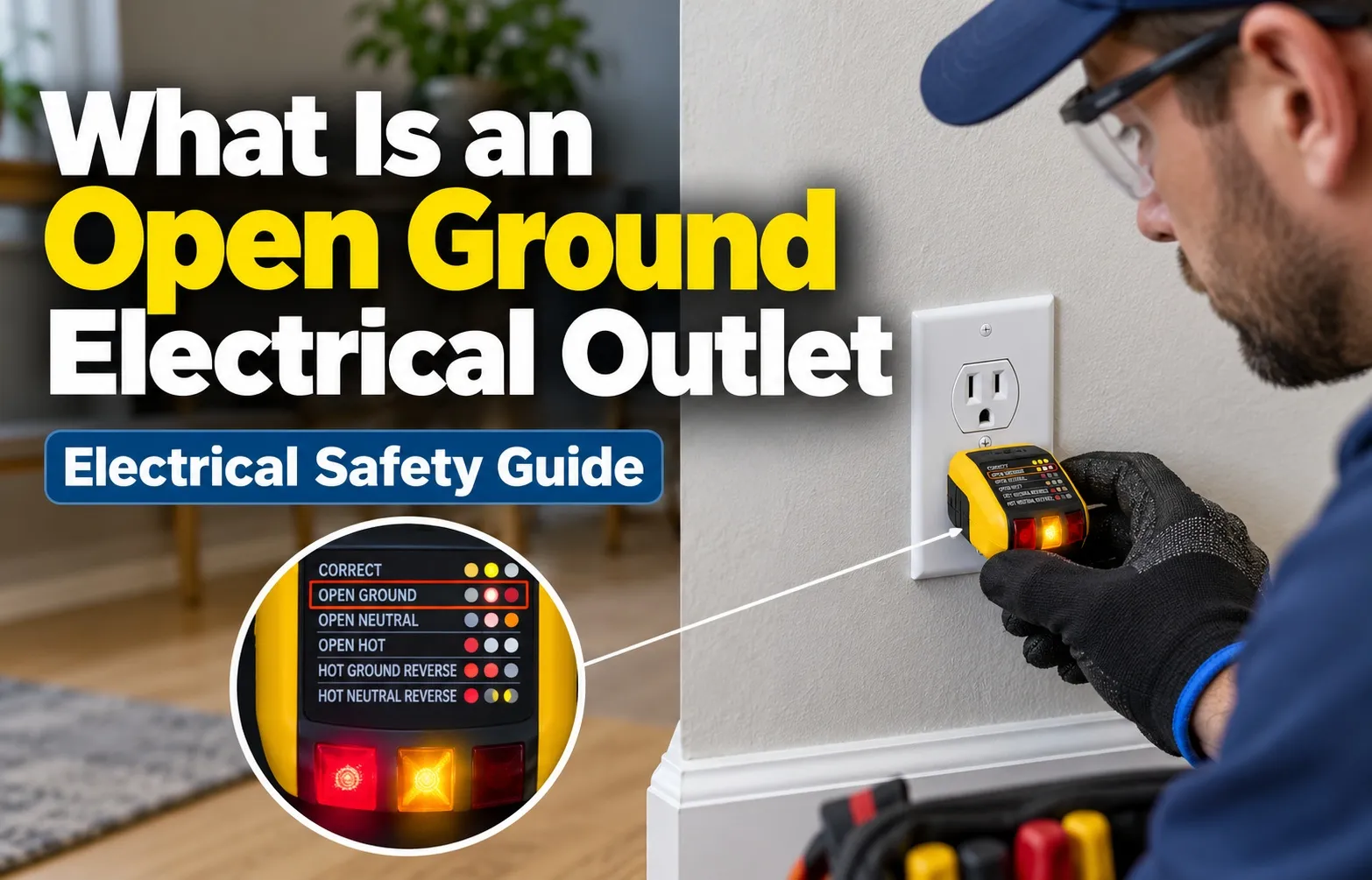
Using a standard 3-prong receptacle tester is the fastest and most common method to instantly identify open ground faults. You simply plug the compact diagnostic device directly into the live outlet and interpret the pattern of the neon indicator lights using the manufacturer’s printed reference legend.
- Instant Screening: Provides immediate visual feedback regarding wiring status without exposing live electrical wires.
- Light Interpretation: A missing illumination on the ground light paired with lit hot/neutral lamps indicates an open ground condition.
- Diagnostic Limits: While efficient, basic plug-in testers can occasionally yield misleading results if complex wiring anomalies are present upstream.
Method 2: Verifying Real Ground Continuity with a Digital Multimeter
Verifying true electrical safety requires a digital multimeter to measure precise voltage values across the live, neutral, and ground slots. This advanced diagnostic check confirms whether a grounding path is genuinely operational or merely providing a superficial, unbonded reading.
- AC Voltage Check: Turn your digital multimeter dial to the AC voltage setting (ACV) capable of reading standard household levels.
- Hot-to-Ground Voltage Test: Insert probes into the hot and ground slots; a healthy circuit should display a stable 120V reading matching hot-to-neutral.
- Neutral-to-Ground Reading: Measuring between neutral and ground should yield close to 0V; significant voltage or fluctuating numbers point directly to an open or compromised ground path.
Identifying False Open Ground Readings (Upstream Junction Box Issues)
Faulty diagnostic results can sometimes manifest due to loose wire nuts, oxidized terminals, or broken jumpers hidden inside upstream junction boxes. Recognizing these false open ground readings prevents unnecessary receptacle replacements by tracing continuity failures back to their true source.
- Upstream Inspection: Power off the circuit breaker and inspect feed wires in preceding wall boxes connected to the same run.
- Corrosion and Wear: Look for oxidized wire connectors, loose wire nuts, or disconnected pigtails that sever the ground continuity before it reaches the target outlet.
- Box Bonding Checks: Ensure metal electrical boxes utilize proper bonding jumpers to maintain uninterrupted earth connection across older metallic cable systems.
Code-Compliant Fixes How to Correct an Open Ground Outlet
Correcting an open ground condition requires applying an approved, code-compliant solution that addresses the physical absence or interruption of the grounding path. Depending on your home’s wiring age and budget, fixes range from cost-effective component retrofits to complete circuit upgrades.
Option 1: Install a GFCI Receptacle (The NEC-Approved Retrofit)
Replacing an ungrounded three-prong outlet with a GFCI (Ground Fault Circuit Interrupter) receptacle is the most common and cost-effective fix for older homes. While a GFCI does not magically create a ground wire, its internal current-sensing mechanism protects users by instantly shutting off power during an electrical fault.
- Shock Mitigation: Detects microscopic imbalances between hot and neutral currents to trip the circuit in milliseconds.
- Code Authority: Explicitly authorized under National Electrical Code (NEC 406.4(D)) guidelines as an acceptable replacement for ungrounded circuits.
- Upstream Protection: A single GFCI installed at the beginning of a circuit run can protect multiple downstream receptacles.
Applying the “No Equipment Ground” Label Correctly
When installing a GFCI on a circuit lacking an earth ground, you must apply the blue-and-white “No Equipment Ground” sticker included in the box onto the receptacle cover plate. This mandatory code step warns future users that sensitive electronics requiring a physical ground—such as surge protectors—will not function as intended.
Option 2: Reattach or Repair the Broken Ground Wire inside the Junction Box
If your outlet box already contains a bare copper or green insulated wire that has slipped off the terminal screw, restoring safety ground continuity is straightforward. Always shut off power at the main breaker panel before attempting any physical box repairs.
- Tighten Terminal Connections: Loop the bare ground conductor clockwise around the green grounding screw and tighten securely.
- Use Grounding Pigtails: Connect loose box wires to the receptacle ground screw using a rated wire nut and a green grounding pigtail.
- Inspect Metal Box Bonding: Ensure the ground conductor connects directly to metal junction boxes using an approved grounding clip or screw.
Option 3: Complete Circuit Rewiring with Modern Grounded Cable
The ultimate solution for resolving open ground issues permanently involves replacing legacy two-wire systems with modern 3-conductor Romex cable. This comprehensive upgrade establishes a continuous physical path back to your electrical panel’s grounding bus bar.
- Permanent Safety: Provides full protection for surge protectors, computers, and heavy appliances.
- Property Value: Modernizes your electrical infrastructure to meet current building codes and home inspection standards.
- Professional Installation: Typically requires hiring a licensed electrician to fish new wire runs through walls and connect them at the breaker panel.
Option 4: Grounding via Equipment Grounding Conductor (EGC) Run
An alternative code-compliant approach permits running an individual Equipment Grounding Conductor (EGC) from an ungrounded receptacle back to an accessible grounding point. This method allows you to ground specific high-value outlets without re-pulling the entire circuit cable.
- Flexible Routing: The standalone copper conductor can tie directly into the main grounding electrode conductor, grounding bus bar, or a grounded junction box.
- Targeted Protection: Ideal for home offices or entertainment centers where sensitive electronics demand a true earth ground connection.
- Code Adherence: Must follow strict sizing and mechanical protection rules governed by local building codes.
Financial Cost Breakdown Repair Costs
Resolving an open ground outlet involves varying financial commitments depending on whether you opt for a simple component swap or a complete system overhaul. Understanding the pricing dynamics between self-performed repairs and professional electrical work helps you budget effectively while keeping your home safe and compliant.
DIY vs. Professional Repair Cost Comparison
Self-performing an open ground fix yields substantial savings on labor, but it is limited to straightforward tasks like installing a GFCI receptacle or reattaching a loose ground screw. Hiring a licensed electrician introduces labor charges, but it remains essential for complex troubleshooting, pulling new wire, or working inside the main breaker panel.
- Component Costs: Standard GFCI receptacles, green grounding pigtails, and basic outlet testers are inexpensive, making simple DIY retrofits very affordable.
- Electrician Labor Rates: Professional labor costs typically range between $75 and $150 per hour, often accompanied by a minimum service call fee.
- Project Scope: Fixing a single loose ground terminal is a fast, low-cost job, whereas rewiring an entire older residence requires significant material and labor investment.
Cost Comparison for Open Ground Solutions
The table below breaks down estimated expenditures across common open ground resolution methods, contrasting material-only expenses against typical professional installation pricing.
When Is Hiring a Licensed Electrician Mandatory?
While basic receptacle swaps are manageable for experienced DIYers, certain electrical conditions strictly demand the expertise of a credentialed professional to prevent safety hazards and code violations.
- Main Panel Modifications: Any work requiring access to the main grounding bus bar or installing a new circuit breaker requires a licensed electrician.
- Wall Wire Runs: Fishing new 3-conductor cable through finished walls, attics, or crawlspaces requires specialized tools and permits.
- Unclear Diagnostics: If a multi-tester indicates complex voltage fluctuations or persistent open ground readings despite proper local box connections, a professional diagnosis is necessary.
Home Inspection & Real Estate Implications
Discovering open ground outlets during a real estate transaction can create significant hurdles during buyer negotiations, property appraisals, and insurance underwriting. Understanding how ungrounded receptacles impact home sales allows buyers and sellers to resolve safety violations proactively before closing.
Will an Open Ground Fail a Home Inspection?
An open ground condition will not technically “fail” a general home inspection, as inspectors issue detailed evaluation reports rather than pass/fail marks. However, it will be flagged as a prominent safety hazard in the official home inspection report, prompting buyers to request immediate electrical repairs or seller credits.
- Detailed Flagging: Inspectors test every accessible receptacle and document open ground defects in the electrical section of their report.
- Safety Escalation: Unlabeled three-prong outlets lacking a physical ground are highlighted as active shock hazards that violate current safety standards.
- Negotiation Trigger: Buyers frequently leverage flagged open ground readings to request licensed electrician repairs or financial concessions during escrow.
Can You Sell a House with Open Ground Outlets?
Yes, you can legally sell a residential property containing open ground electrical outlets, provided you comply with state seller disclosure laws. However, failing to disclose known ungrounded outlets can expose sellers to post-sale legal liability if electrical accidents or fires occur.
- Mandatory Disclosure: Property sellers must disclose known electrical defects and ungrounded wiring conditions on official home seller disclosure forms.
- As-Is Sales: Homes sold “as-is” can feature open ground outlets, though mortgage lenders may still require repairs before releasing loan funds.
- Proactive Resolution: Retrofitting ungrounded outlets with GFCI receptacles prior to listing eliminates buyer pushback and speeds up transaction timelines.
Impact on FHA, VA, and Conventional Home Loans
Government-backed mortgage programs enforce stricter safety criteria than standard conventional loans. Appraisers evaluating properties for government loans carefully check electrical systems for safety hazards that could stall closing schedules.
- FHA Loan Inspection Standards: FHA guidelines require functioning, safe electrical systems. Open ground outlets—especially in kitchens, bathrooms, and outdoor areas—must be fixed or upgraded to GFCI receptacles to clear safety contingencies.
- VA Loan Appraisals: VA appraisals strictly enforce Minimum Property Requirements (MPRs). Hazardous electrical conditions, including ungrounded outlets masquerading as modern three-prong receptacles, must be corrected before loan approval.
- Conventional Financing: Conventional lenders are generally more flexible, but severe electrical hazards flagged on the inspection report can still trigger mandatory lender repair demands.
Homeowner’s Insurance and Electrical Safety Compliance
Insurance providers closely assess electrical risks when underwriting new policies or renewing existing coverage. An uncorrected open ground condition or outdated two-wire electrical infrastructure can directly affect your coverage terms and premium pricing.
- Policy Clauses & Coverage: Insurers may include specific policy exclusions or require proof of a professional electrical inspection before issuing coverage on older homes.
- Increased Premiums: Homes with legacy ungrounded wiring or uncorrected electrical hazards often face higher insurance premiums due to elevated fire risk.
- Claim Denial Risks: Failing to correct flagged open ground defects after a home inspection could complicate fire or shock damage claims if an ungrounded outlet is identified as the root cause.
Frequently Asked Questions
Here are concise, authoritative answers to the most common questions regarding open ground electrical outlets, safety risks, and proper repair methods.
Will a GFCI fix an open ground?
A GFCI receptacle does not restore a missing physical ground connection, but it is a code-compliant way to mitigate shock hazards on ungrounded circuits. The GFCI’s safety trip mechanism constantly monitors current balance between hot and neutral wires, cutting power in milliseconds during a fault even without an equipment ground wire present.
Can an outlet still provide power with an open ground?
Yes, an outlet will function and power connected devices normally because current flows entirely between the hot and neutral wires. However, operating without a ground means appliances lack shock and surge protection, allowing fault electricity to energize metal casings or damage sensitive electronics during power spikes.
What is the difference between an open ground and an open neutral?
An open ground means the emergency earth safety path is disconnected while power still flows through the circuit. An open neutral breaks the primary returning current path, causing the outlet to completely lose functionality or create dangerous voltage fluctuations across connected devices on shared multi-wire branch circuits.
Can I replace a two-prong outlet with a three-prong outlet without grounding it?
No, simply swapping a two-prong outlet for an ungrounded 3-prong outlet violates the National Electrical Code and creates a dangerous false sense of security. To legally install a three-prong receptacle on an ungrounded circuit, you must either run a real grounding wire, install a GFCI receptacle labeled “No Equipment Ground,” or protect the circuit upstream with a GFCI breaker.
Is an open ground a fire hazard?
Yes, an open ground can indirectly pose a fire hazard. Without a dedicated grounding path to trip the circuit breaker immediately during an internal short, stray electricity can arc against nearby building materials, melt wire insulation, or overheat connected electrical equipment.

Oscar Vance | Master Plumber & Drainage Expert
Meet Oscar Vance, a licensed master plumber sharing practical solutions on residential repairs, preventive maintenance, and thoughtful home upkeep.