How to Identify a Federal Pacific Electrical Panel
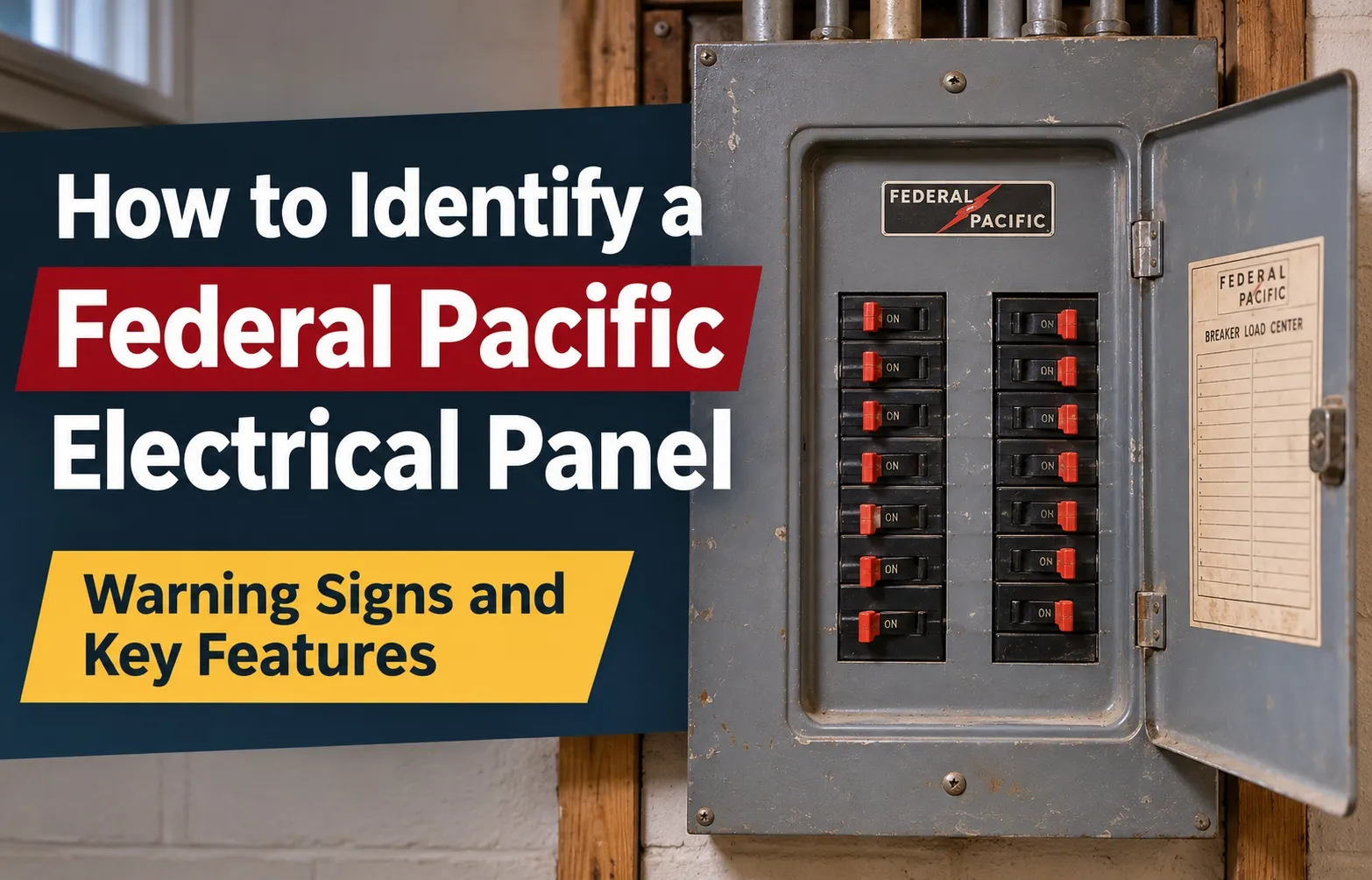 Federal Pacific Electric (FPE) panels are identified by distinct manufacturer labels, signature colored circuit breaker handles, and specific product branding. If your home was built or remodeled between 1950 and 1990, verifying your panel’s make is a critical first step for electrical safety.
5-Second Checklist to Spot an FPE Panel
Perform a quick visual inspection of the outer box and door cover using these key identification markers:
- Brand Logos: Look for text reading Federal Pacific Electric, FPE, Federal NoArk, or Federal Pioneer (widely distributed across Canada).
- Stab-Lok Branding: Check for the trademarked Stab-Lok name printed on the panel door matrix or inside the cover enclosure.
- Red or Orange Toggle Tips: Inspect individual circuit breakers for bright red, orange, or white painted stripes across the switch handles.
- Property Construction Era: Confirm if the structure was built between 1950 and 1990, the primary installation period for FPE service equipment.
Safety Warning: Conduct your electrical panel identification strictly by visual examination from the outside. Never open the interior dead-front cover, insert objects, or touch uninsulated internal components, as live electrical bus bars pose severe shock and arc flash risks. 1. Exterior & Interior Logo Markings (FPE, Federal NoArk, Federal Pioneer)
Manufacturer labels located on the main metal door or interior service directory provide the clearest initial proof of panel make. Checking for specific brand variations ensures proper identification across different regional markets.
- Federal Pacific Electric (FPE): The standard full corporate name stamped directly onto the exterior panel door or inside the main metal cover.
- Federal NoArk: An older iteration of the brand name commonly found on legacy residential service boxes.
- Federal Pioneer Canada: The primary brand designation used for units manufactured, sold, and distributed across Canadian properties.
2. Signature Red and Orange Breaker Toggles
Individual circuit breaker switches feature striking visual color accents that differentiate FPE equipment from modern panel alternatives. Inspecting the front toggle handles reveals these distinctive manufacturer markings.
- Colored Switch Tips: Standard FPE Stab-Lok breakers typically display a bright red, orange, or white colored stripe right across the center of the handle toggle.
- Toggle Configuration: Handles are grouped tightly together in twin or double-pole configurations within narrow vertical slots.
3. The Stab-Lok Name Stamp
The trademarked Stab-Lok designation is a definitive indicator stamped onto the interior bus bar assembly or panel directory label. This specific engineering term identifies the plug-in mechanism used by the circuit breakers.
Examine the panel door label pasted on the inside of the metal cover. If you see explicit references to Stab-Lok breakers, your electrical service box belongs to this high-risk product line.
4. Enclosure Style, Color, and Breaker Layout
The physical housing and internal structural layout offer additional confirmation when exterior branding is weathered or obscured. These older units feature unique industrial aesthetics compared to contemporary breaker boxes.
- Beige Panel Enclosure: The outer metal box is frequently finished in a neutral beige, cream, or industrial gray paint coat.
- Double-Pole Breaker Layout: The interior features a compact, double-stacked breaker design where thin tandem poles share narrow vertical slots along the central bus bar.
How to Identify an FPE Panel If Labels Are Faded, Painted, or Missing
Over decades of use, many electrical boxes lose their original door stickers due to renovation paint, humidity, rust, or physical wear. You can still confirm a Federal Pacific Electric panel by looking closely at the mechanical breaker casing and specific physical features without relying on text labels.
Spotting Unlabeled Panels via Breaker Design and Bus Bar Slots
Even on a painted electrical box with no legible manufacturer stamp, the physical shape and connection style of the installed breakers reveal their origin. FPE Stab-Lok systems feature distinct structural elements that differ from standard modern panel designs.
- E-Shaped Bus Bar Slots: Stab-Lok circuit breakers clip into unique E-shaped or rectangular openings along the central metal bus bar rather than gripping round plug-in prongs.
- Narrow Breaker Casing: Individual breaker units use a distinct compact body shape with flat sides and horizontal toggle switches that sit tightly side-by-side.
- Center-Stitched Toggles: Multi-pole circuit breakers are held together by a thin center pin or colored plastic clip across the handle switches, rather than a solid wide handle bar.
Dead-Front Cover Safety Warning: What NOT to Do
Evaluating an unlabeled service panel must remain strictly visual from the outside. Removing metal panels to inspect internal wiring creates extreme hazards that only trained professionals should handle.
Never attempt to unbolt the dead-front panel cover or loosen internal faceplates yourself. If a missing door sticker prevents quick identification, schedule a professional licensed electrician inspection to verify the panel interior safely.
Why Federal Pacific Panels Are a Fire Hazard
Federal Pacific Electric Stab-Lok panels pose significant safety risks because their circuit breakers frequently fail to shut off power during electrical overloads or short circuits. Understanding the mechanical flaws behind these units helps homeowners assess risk accurately without relying on undue sensationalism.
The Stab-Lok Failure Mechanism: Breakers That Fail to Trip
A circuit breaker’s primary function is overcurrent protection, designed to trip and interrupt electrical current when wires carry excessive power. Stab-Lok breakers suffer from a high failure rate where thermal and magnetic trip mechanisms jam, resulting in severe circuit breaker non-tripping.
- Continuous Current Flow: When a breaker refuses to trip during an overload condition, electrical current continues surging through household wiring.
- Severe Panel Overheating: Uncontrolled current generates immense heat along internal circuits, melting wire insulation and panel components.
- Electrical Fire Hazard: Sustained overheating inside wall cavities and electrical boxes dramatically elevates the threat of structural house fires.
CPSC Findings and Testing Data
Independent engineering studies and a formal CPSC safety investigation revealed that FPE Stab-Lok breakers failed to meet standard safety baseline requirements. Extensive laboratory testing confirmed that these units experience high failure rates under normal overload conditions.
In field and lab evaluations, double-pole Stab-Lok breakers failed to trip under overload in up to 1 out of 4 tests, with certain configurations failing at even higher rates. For comprehensive engineering reports, test results, and historical data, review InspectAPedia’s FPE Stab-Lok Technical Documentation.
Real Estate, Home Insurance, and Financial Impacts of FPE Panels
Discovering a Federal Pacific Electric panel during a property transaction creates immediate financial and operational hurdles. Understanding how real estate markets, insurance carriers, and panel replacement costs interact allows homeowners and buyers to navigate sales smoothly and budget effectively.
Can You Sell a House with a Federal Pacific Panel?
While no federal law strictly prohibits selling a property equipped with an FPE unit, presence of this equipment routinely triggers complications during real estate transactions. Most home inspection reports highlight Stab-Lok boxes as major safety hazards, prompting specific buyer demands.
- Buyer Replacement Demands: Buyers frequently require seller panel replacement as a mandatory condition prior to closing deal agreements.
- Escrow Credit Negotiations: Sellers often agree to issue repair credits during real estate escrow negotiation to offset replacement costs for incoming buyers.
- Delayed Closing Timelines: Mortgage lenders may withhold final loan approval if property insurance cannot be bound prior to closing day.
Homeowners Insurance and Uninsurable Electrical Panels
Insurance underwriting guidelines have tightened significantly regarding legacy electrical systems. Many major carriers classify FPE units alongside Zinsco panels as uninsurable panels due to elevated fire risk profiles.
- Policy Denial or Non-Renewal: Insurance companies may issue immediate homeowners insurance non-renewal notices upon discovering an FPE panel during routine home surveys.
- Mandatory Replacement Directives: New buyers often receive conditional coverage binding terms requiring panel replacement within 30 days of policy origination.
How Much Does Panel Replacement Cost?
Replacing an obsolete Federal Pacific panel involves upgrading the enclosure, main breaker, interior bus assembly, and service entrance conductors. Total expenses vary based on local labor rates, utility requirements, and system capacity.
Investing in a modern panel upgrade eliminates property safety hazards, restores insurance eligibility, and preserves home equity value during future sales.
Frequently Asked Questions About Federal Pacific Electrical Panels
Navigating panel replacement decisions often raises questions about replacement alternatives, code compliance, and breaker compatibility. Here are clear, practical answers to common owner concerns regarding FPE equipment.
Can I just replace individual Stab-Lok breakers instead of the entire panel?
No, installing new or aftermarket replacement breakers does not fix the underlying safety hazards of an FPE system. The core design defect resides within the internal Stab-Lok bus bar assembly itself, which causes connection points to loosen, arc, and fail regardless of breaker age.
- Bus Bar Degradation: Over time, the internal bus bar contacts lose spring tension, resulting in poor electrical contact and localized overheating.
- Unreliable Replacement Units: Brand-new or refurbished aftermarket replacement breakers built for Stab-Lok designs still exhibit high failure rates in independent testing.
- Complete System Risk: Replacing single circuit components leaves the primary distribution box prone to failure, making a full panel swap the only safe remedy.
Is a Federal Pacific electrical panel illegal?
Owning or using an existing Federal Pacific panel is not technically illegal, as local electrical codes generally do not require retroactive removal of installed legacy equipment. However, these units fail to meet contemporary National Electrical Code (NEC) standards and are widely flagged as active fire hazards.
While no building inspector will issue criminal citations simply for having an FPE box, building authorities will require a complete panel replacement whenever major electrical permits, solar installations, or home additions are initiated.
Do all Federal Pacific panels need to be replaced?
Yes, licensed electrical contractors and safety experts strongly recommend replacing every FPE Stab-Lok panel regardless of its current operating appearance. Because circuit breaker non-tripping exhibits no exterior warning signs prior to an overload event, visual absence of damage does not indicate safety.
Continuing to operate an FPE panel exposes structures to unmitigated electrical fire risks and eventual homeowners insurance cancellation. Replacing the panel proactive protects occupants and prevents sudden service interruptions.
What brands are common replacements for FPE panels?
When replacing a legacy FPE panel, electricians install modern load centers built by established equipment manufacturers that strictly adhere to current NEC specifications. Standard industry replacements include:
- Square D (by Schneider Electric): Widely recognized for their QO and Homeline series, offering exceptional reliability and modular design.
- Eaton: Offers BR and CH series electrical panels featuring robust copper bus options and integrated surge protection solutions.
- Siemens: Highly trusted service equipment known for versatile breaker configurations and comprehensive residential product lines.
- Leviton: Modern smart panel options featuring sleek aesthetic enclosures and built-in Wi-Fi circuit monitoring capabilities.

Oscar Vance | Master Plumber & Drainage Expert
Meet Oscar Vance, a licensed master plumber sharing practical solutions on residential repairs, preventive maintenance, and thoughtful home upkeep.