What Does PEX Stand For in Plumbing?
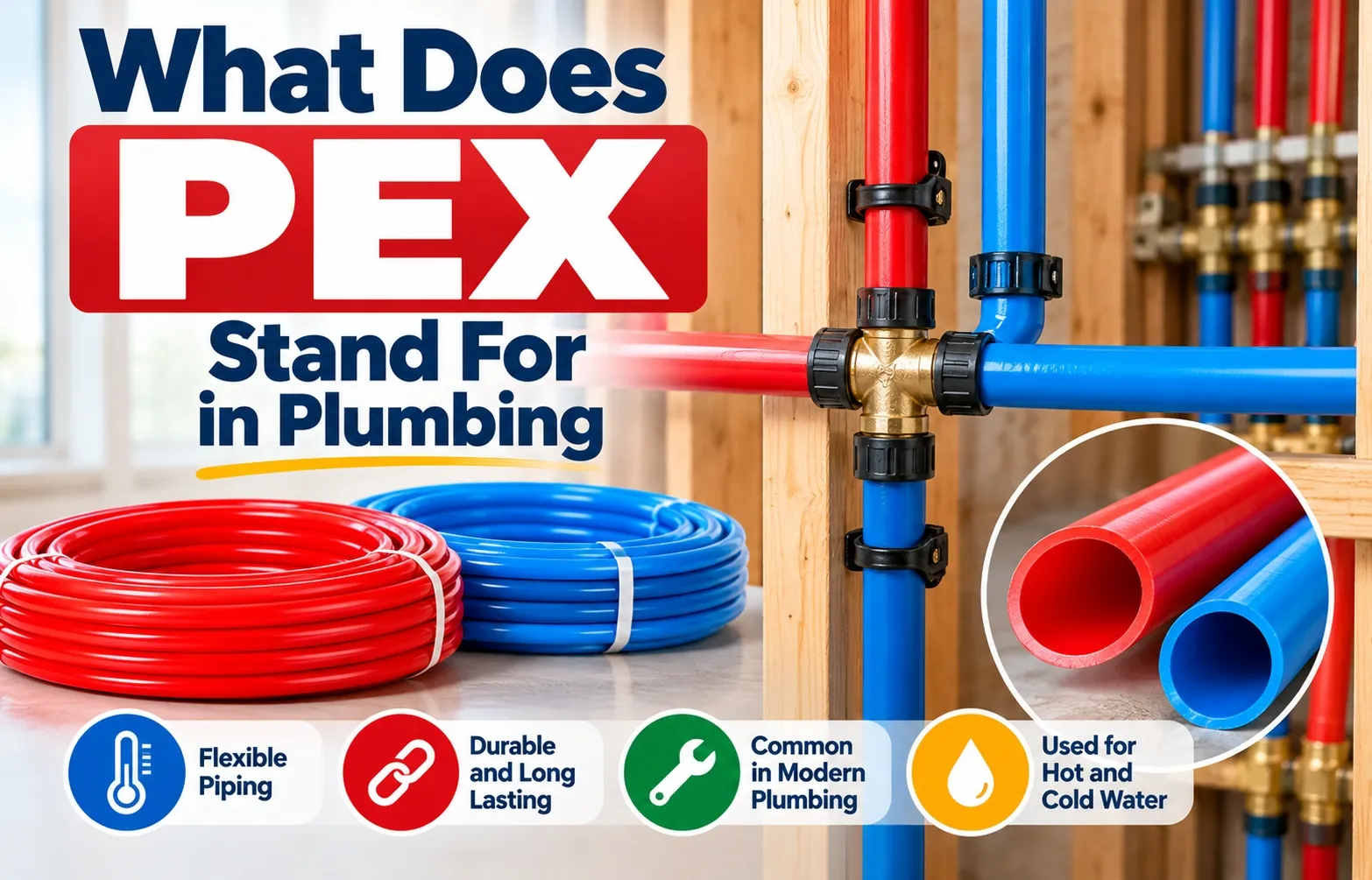 PEX stands for cross-linked polyethylene. It is a flexible, highly durable plastic tubing widely used for hot and cold drinking water supply lines in residential and commercial plumbing systems. Engineered as a modern alternative to rigid piping, PEX has largely replaced copper, galvanized steel, and traditional PVC in new construction and home repiping projects due to its superior flexibility and cost efficiency.
Definition & Core Purpose
PEX is an acronym for PolyEthylene X-link (where “X” signifies the chemical cross-linking of the polymer structure). Its core purpose is to deliver clean potable water throughout a building using a continuous, bendable pipe system that minimizes leak points.
- Material Base: Manufactured using specialized high-density polyethylene resin tailored for pressure applications.
- Temperature Range: Capable of handling operating temperatures from freezing conditions up to 200°F (93°C).
- Primary Application: Ideal for indoor hot and cold water distribution, radiant floor heating, and snow-melting systems.
- Installation Benefit: Snaking around wall studs and floor joists eliminates the need for frequent 90-degree elbow fittings.
Why Cross-Linked Polyethylene? (Understanding the Molecular Structure)
Standard High-Density Polyethylene (HDPE) consists of straight, unlinked polymer chains that can melt under heat and deform under continuous pressure. Chemical or physical cross-linking permanently binds these individual polymer chains into a dense, three-dimensional network.
This structural change alters the physical behavior of the plastic, granting it key mechanical properties required for long-term plumbing performance:
- Thermal Stability: Enables the tubing to transport hot water under continuous pressure without softening or bursting.
- Creep Resistance: Prevents the pipe wall from expanding or stretching permanently when subjected to constant water pressure.
- Shape Memory: Allows certain types of PEX tubing to expand significantly and then contract back to their original dimensions, forming high-integrity mechanical joints.
- Chemical Resistance: Protects against oxidative degradation caused by chlorine and chloramines present in municipal water supplies.
For official engineering criteria and material specifications regarding cross-linked tubing, refer to the Plastic Pipe Institute (PPI) Technical Standards.
The 3 Types of PEX Tubing: PEX-A vs. PEX-B vs. PEX-C
PEX tubing is categorized into three distinct types based on the manufacturing method used to cross-link the polyethylene molecules. Understanding these variations—known as PEX-A, PEX-B, and PEX-C—is essential for selecting the correct material, matching compatible fittings, and executing a reliable plumbing installation.
PEX-A (Peroxide Method): Maximum Flexibility & Kink Repair
PEX-A is manufactured using the peroxide (Engel) method, which cross-links the polyethylene in its molten state to create the most flexible and resilient tubing available. Its high degree of cross-linking provides exceptional thermal shape memory, allowing accidental kinks to be easily repaired on-site using a standard heat gun.
- Flexibility: Offers the tightest bend radius among all PEX types, making it easier to maneuver through narrow wall cavities and tight corners.
- Kink Recovery: Features unique thermal memory; if accidentally bent too far, applying heat with a heat gun restores the pipe to its original structure.
- Fittings: Perfectly paired with expansion fittings and rings that shrink tightly back onto the barb for secure connections.
PEX-B (Silane Method): High Burst Strength & Cost Efficiency
PEX-B is produced using the silane (moisture-cure) method, where cross-linking occurs after extrusion via exposure to moisture. This process yields the most common and budget-friendly PEX tubing in North America, delivering high burst pressure resistance and strong chlorine durability.
- Market Availability: The most widely stocked PEX variety found in plumbing supply houses and home improvement retailers.
- Rigidity Profile: Slightly stiffer than PEX-A, requiring more care during cold-weather installations to avoid tight or improper bends.
- Connection Methods: Typically installed using traditional copper crimp rings, stainless steel clamp rings, or universal push fittings.
PEX-C (Electron-Beam Method): Secondary Applications & Radiant Heating
PEX-C is created through a physical electron-beam (cold) irradiation process, bombarding finished polyethylene tubing with high-energy electrons to cross-link the polymer chains. While less common for whole-home potable water supply lines, its structured manufacturing makes it a dependable choice for specialized loops and radiant floor heating.
- Manufacturing Process: A chemical-free, cold irradiation technique performed after the tube has already taken shape.
- Handling Characteristics: Exhibits a firmer, stiffer consistency compared to PEX-A and PEX-B tubing.
- Primary Uses: Frequently utilized in closed-loop radiant heating systems, snow-melting networks, and specific minor distribution runs.
Fitting Compatibility Matrix: Expansion vs. Crimp Systems
Selecting the right connection system depends directly on your PEX tubing type and the installation tools you have available. PEX-A requires specialized expansion tools, whereas PEX-B and PEX-C rely on mechanical crimping, clamping, or universal push-to-connect systems.
- Expansion Systems: Designed exclusively for PEX-A; an expansion tool stretches the pipe and ring outward before sliding over a fitting, creating an ultra-secure joint as it contracts.
- Crimp and Clamp Systems: Standard for PEX-B; utilizes metal copper crimp rings or stainless steel cinch clamps compressed over barbed fittings using dedicated hand tools.
- SharkBite Fittings: Universal push-to-connect fittings that grip tightly onto PEX-A, PEX-B, and PEX-C pipe instantly without requiring crimping or expansion tools.
Advantages and Disadvantages of PEX Piping
Evaluating PEX piping requires an objective balance of its real-world performance benefits against its physical material limits. While PEX has modernized domestic water delivery with unmatched flexibility and lower material costs, understanding its limitations ensures you make an informed decision when repiping or building.
Top Advantages: Freeze Resistance, Scale Immunity, and Fast Installation
PEX outperforms legacy metal pipes in resilience, long-term maintenance, and speed of installation. Its inherent structural elasticity allows it to adapt to harsh environmental conditions and hard water without compromising water pressure or system integrity.
- Freeze Resistance: PEX possesses natural expansion capability, allowing it to stretch up to 500% without cracking when water freezes inside, significantly reducing the risk of burst pipes during winter freezes.
- Corrosion and Scale Immunity: Unlike metallic pipes, the smooth plastic walls of PEX never rust, pit, or accumulate mineral scale buildup from hard water supplies over decades of operation.
- Rapid Installation: Flexible coils permit long, continuous runs straight from a central manifold to fixtures, cutting down installation time and reducing unnecessary joint fittings by up to 60%.
- Quiet Operation: Absorbs pressure surges naturally, virtually eliminating the loud “water hammer” noises common in rigid copper systems.
Key Limitations: UV Sensitivity, Temperature Caps, and Rodent Risk
Despite its durability indoors, PEX is susceptible to environmental factors that can break down the polymer cross-linking if installed incorrectly or exposed to unapproved conditions.
- UV Degradation: Prolonged exposure to UV light or direct sunlight degrades the cross-linked polymer chains within weeks, causing the material to turn brittle and fail under normal water pressure.
- Temperature and Pressure Limits: Standard PEX is rated for a continuous maximum temperature of 200°F (93°C) at 80 PSI, making it unsuitable for direct connection to steam boilers or high-temperature flues.
- Vulnerability to Pests: Because the material is softer than copper or steel, persistent rodents can gnaw through PEX walls if an active infestation exists within wall cavities.
- Non-Recyclable Material: Cross-linked polyethylene cannot be melted down and repurposed like standard non-cross-linked plastics, creating environmental recycling limitations.
PEX vs. Copper vs. PVC: Modern Plumbing Comparison
Choosing the right piping material requires weighing cost, installation complexity, and long-term durability across different plumbing applications. PEX, copper piping, and rigid plastics each serve distinct roles, making a direct feature comparison essential for any building or repiping project.
Feature-by-Feature Comparison Table (Cost, Lifespan, Flexibility, Tooling)
Comparing key performance and economic factors across PEX, copper, and PVC/CPVC reveals why material selection depends heavily on your specific installation requirements, labor constraints, and overall budget.
When to Choose Copper Over PEX
While PEX dominates residential loops, copper piping remains the premier choice for outdoor exposure, high-temperature lines, and visible structural runs. Copper’s inherent rigidity and complete UV resistance make it irreplaceable in specific architectural scenarios.
- Outdoor and Exposed Runs: Copper handles direct sunlight without degrading, making it ideal for exterior water lines where PEX would fail from UV damage.
- Aesthetic Basement Installations: Main lines left exposed in utility rooms or basements maintain a clean, professional look without sagging over long spans.
- High-Temperature Demands: Perfect for handling extreme heat environments near boilers or specialized commercial heating returns.
Why PEX Has Replaced Traditional PVC and CPVC in Potable Lines
Traditional rigid PVC and CPVC have largely been phased out for indoor potable water distribution because they become brittle over time and prone to catastrophic cracking. PEX offers superior structural resilience, eliminating these brittle-failure risks completely.
- Brittleness Under Pressure: Rigid plastics age and lose impact resistance, whereas PEX retains its elasticity for decades under shifting water pressure.
- Joint Integrity: Solvent-welded PVC joints can fail if primer is skipped or chemical bonding degrades, whereas mechanical PEX fittings rely on secure physical compression or expansion.
- Labor Efficiency: Installing flexible PEX coils bypasses the tedious measuring, cutting, priming, and gluing steps required for every single PVC or CPVC elbow and tee.
Critical Installation Rules & Gaps (Where NOT to Use PEX)
While PEX simplifies many residential plumbing tasks, installing it incorrectly or exposing it to harsh conditions can lead to sudden pipe failure. Following mandatory physical clearances, bend tolerances, and burial precautions guarantees your system operates safely for decades without leaks.
Bending PEX: Bend Radius Rules and Making 90-Degree Turns Without Fittings
One of PEX’s biggest advantages is sweeping around corners without additional joints, but bending the pipe too tightly restricts water flow and creates permanent structural kinks. Professional installers adhere to a strict minimum bend radius to prevent stress on the pipe walls.
- The 6x–8x Bend Radius Rule: As a general rule, the minimum bending radius for PEX is 6 to 8 times the outer diameter of the pipe (for example, a 1/2-inch pipe requires a minimum bend radius of 3.75 to 4 inches).
- Drop-Ear and Support Elbows: When making sharp 90-degree turns—such as bringing pipe out from a wall stud to supply a toilet or sink—always install rigid plastic or metal support elbows to hold the bend securely without kinking.
- Fixing Kinks: If PEX-A is accidentally kinked, carefully heat the affected area with a heat gun until the tubing expands back to its original uniform round shape (PEX-B cannot be heat-repaired and must be cut out).
Can You Bury PEX Underground or Use It Outdoors? (Sleeving & UV Rules)
Direct exposure to environmental elements will rapidly degrade cross-linked polyethylene. While PEX can be used in underground installations, strict protective measures are required before putting it in contact with soil or sunlight.
- Zero Direct Sunlight Exposure: Never run PEX above ground outdoors where it faces direct sunlight; UV light destabilizes the cross-linked polymer chains within weeks, leading to catastrophic bursts.
- Underground Burial Rules: PEX can be buried below the local frost line, provided it is backfilled with smooth material free of sharp rocks or glass that could puncture the pipe under soil settling pressure.
- Protective Conduit/Sleeving: When running PEX underground through concrete slabs, foundations, or areas with contaminated soil, route the pipe through protective PVC conduit or corrugated sleeving to safeguard it from soil chemicals and physical abrasion.
Water Heater Connections: Why You Must Use a Copper Stub-Out First
Connecting PEX directly to hot water appliances is a common installation error that violates most local plumbing codes. The high radiant heat emitted by water heater flues can melt or weaken PEX pipe walls.
- 18-Inch Clearance Requirement: Plumbing codes require at least an 18-inch metal buffer (typically a rigid copper stub-out or stainless steel braided connector) between the water heater and the start of any PEX tubing.
- Gas Water Heater Flue Protection: Exhaust gases from gas-fired water heaters create extreme ambient heat near the top vents; maintaining a metallic distance prevents thermal deformation of nearby plastic lines.
- Vibration and Strain Relief: Rigid copper connections absorb thermal expansion and vibration directly at the heater inlet and outlet, preventing mechanical strain on flexible PEX joints.
Cost, Sizing, and Real-World Implementation
Estimating the financial investment and technical layout requirements for modernizing your home’s water supply system with PEX ensures a smooth plumbing project. Proper pipe sizing and accurate cost forecasting prevent pressure drops and budget overruns during installation.
How Much Does It Cost to Repipe a House with PEX? (Material vs. Labor Breakdown)
Repiping an average 1,500 sq ft house with PEX typically ranges between $2,000 and $6,000 for full professional installation, making it roughly 30% to 50% cheaper than copper repiping. Actual expenses vary depending on home accessibility, number of plumbing fixtures, and labor rates in your region.
- Material Expenses: PEX tubing itself costs between $0.40 and $0.80 per linear foot, with specialized expansion or crimp fittings adding $150 to $400 for a standard residential layout.
- Labor Expenses: Professional plumbing labor accounts for 60% to 70% of the total project cost, running roughly $70 to $150 per hour depending on geographic location.
- Drywall and Repair Costs: Budget an extra $500 to $1,500 if contractors must open and patch drywall or plaster to route new lines through interior walls.
Sizing Guide: 3/4-Inch Main Trunk Lines vs. 1/2-Inch Fixture Lines
Maintaining adequate water volume and static pressure across multiple fixtures requires stepping down pipe diameters systematically. A well-designed distribution network prevents sudden pressure drops when multiple showers, toilets, or appliances run simultaneously.
- 3/4-Inch Main Trunk Lines: Serve as the primary water supply line entering the home and running to central manifolds or main distribution branches to maintain high flow volume.
- 1/2-Inch Fixture Lines: Tapped off the 3/4-inch main trunk line to directly feed individual fixtures like faucets, toilets, shower valves, and ice makers.
- Trunk-and-Branch System: Uses a rigid main line with branch fittings reduced to 1/2-inch tubing for each fixture, mimicking traditional rigid plumbing layouts.
- Manifold System: Routes dedicated 1/2-inch lines from a central distribution manifold directly to every fixture, enabling individual valve shutoffs for effortless maintenance.
Signs Your Existing Home Has PEX Installed
Identifying whether your home already contains PEX tubing takes only a quick inspection of exposed basement, crawlspace, or water heater plumbing lines.
- Color-Coded Tubing: Look for distinct flexible plastic lines—red tubing designates dedicated hot water lines, blue designates cold water lines, and white or grey designates neutral drinking water runs.
- Continuous Flexible Runs: Observe whether lines bend smoothly through floor joists and wall studs without elbow solder joints every few feet.
- Stamped Manufacturer Specifications: Check the outer wall of the pipe for printed text showing the PEX type (A, B, or C), pressure ratings, and ASTM standard certifications.
Frequently Asked Questions
Addressing common homeowner and installer inquiries provides definitive clarity on PEX performance, safety standards, and practical application rules in modern plumbing.
How many years will PEX pipe last?
PEX pipe is engineered to provide a reliable 50-year lifespan or longer when installed correctly within standard temperature and pressure parameters. Accelerated aging tests conducted by manufacturers indicate that high-quality cross-linked polyethylene can easily endure decades of continuous water delivery without degrading.
- Thermal and Pressure Limits: Operating consistently below 160°F and 80 PSI maximizes the structural longevity of the polymer chains.
- Indoor Protection: Because PEX is protected from harmful UV light and extreme environmental stress inside walls and crawlspaces, it rarely suffers from premature aging.
- Manufacturer Warranties: Most leading PEX manufacturers back their piping and fitting systems with 25-year to limited lifetime warranties.
Is PEX safe for drinking water?
Yes, PEX is completely safe for potable drinking water distribution. It undergoes rigorous toxicological and water quality evaluations to ensure no harmful chemicals leach into home water supplies.
- NSF/ANSI 61 Certification: Certified to meet strict public health and safety standards governing the suitability of drinking water system components.
- Rigorous Leaching Tests: Independent laboratory testing confirms that PEX does not leach dangerous levels of heavy metals, volatile organic compounds, or taste-altering agents into water.
- Chlorine Resistance: Modern PEX formulations are chemically stabilized to resist aggressive municipal disinfectants like chlorine and chloramines.
Do plumbers still use PEX in new construction?
Professional plumbers heavily rely on PEX for modern residential and commercial new construction, making it the dominant material specified under current building codes across North America.
- Labor and Time Savings: Flexible continuous runs bypass the tedious measuring, cutting, and soldering required by copper, cutting total installation labor hours in half.
- Reduced Joint Count: Fewer behind-the-wall joints mean significantly fewer potential leak points over the lifetime of the structure.
- Modern Building Standards: Updated plumbing codes universally recognize and approve PEX for all hot and cold indoor potable water distribution systems.
Can PEX pipe freeze and burst?
While PEX possesses exceptional elasticity that makes it far more freeze-resistant than rigid copper or PVC, it is not completely freeze-proof and can still rupture under severe conditions.
- Freeze Expansion: When water freezes, PEX can stretch up to 300% to 500% to accommodate the expanding ice, often preventing a burst where copper would instantly split.
- Severe Vulnerability Points: Uninsulated PEX lines exposed to extreme outdoor temperatures, unheated crawlspaces, or rigid metal fittings are still susceptible to cracking if completely frozen solid.
- Prevention Standards: Standard pipe insulation rules and proper foam sleeving must still be applied to exterior-facing or unconditioned wall cavities during sub-freezing winters.

Oscar Vance | Master Plumber & Drainage Expert
Meet Oscar Vance, a licensed master plumber sharing practical solutions on residential repairs, preventive maintenance, and thoughtful home upkeep.