Roofing Shingle Weights
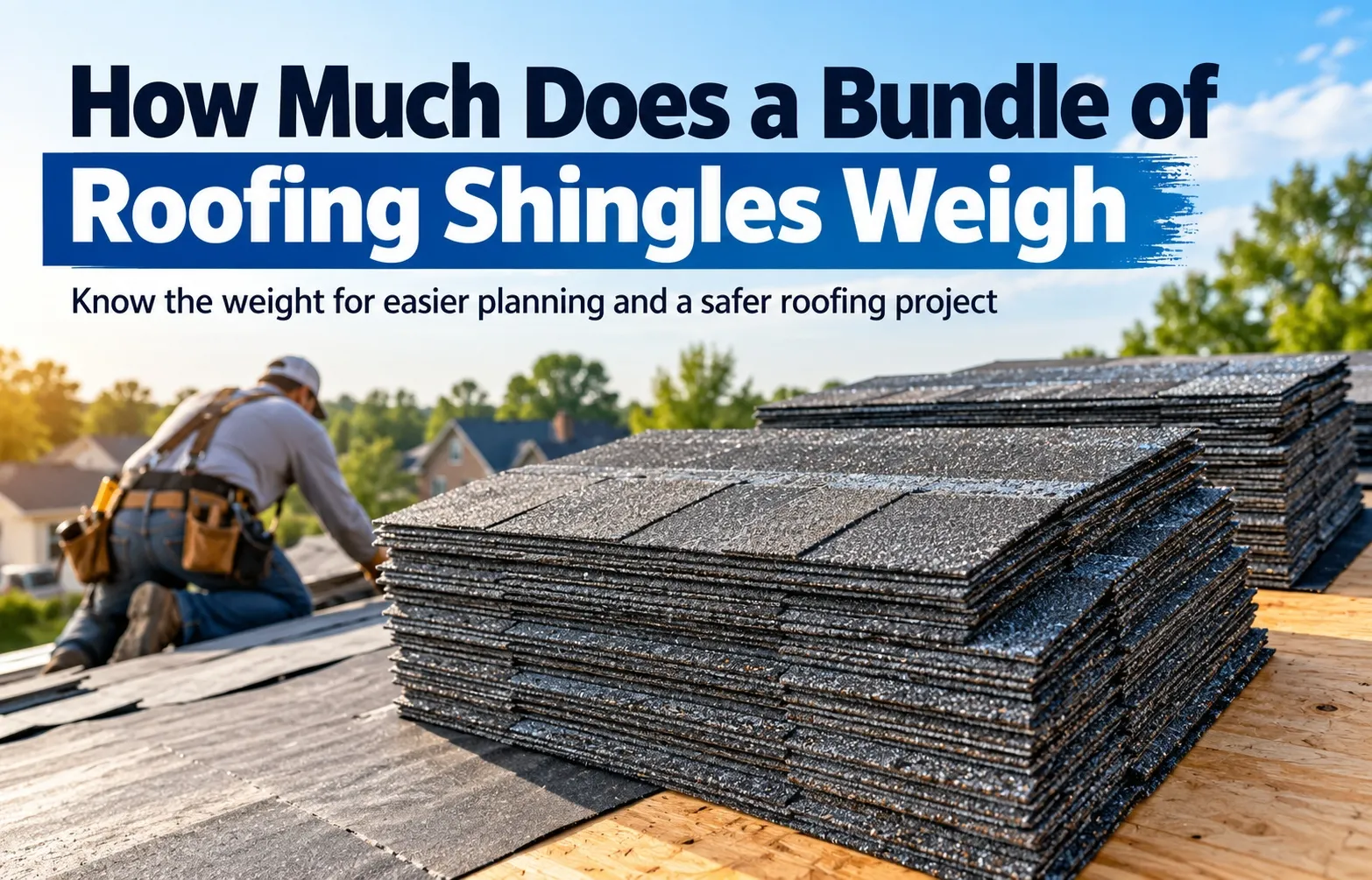 A standard bundle of asphalt roofing shingles weighs between 50 and 80 pounds. The exact weight depends primarily on the material thickness, profile design, and manufacturer specifications. Laminated architectural shingles generally weigh 60 to 80 pounds per bundle, standard 3-tab shingles weigh 45 to 65 pounds, and heavy luxury shingles range from 80 to over 120 pounds per bundle.
Roofing materials are measured and sold in “squares,” where one square represents 100 square feet of finished roof area. Because standard asphalt products require 3 bundles to complete one square, an entire square of installed shingles weighs between 135 and 240 pounds on average.
Average Shingle Bundle Weights at a Glance
Knowing the exact weight of different shingle categories helps contractors and homeowners plan physical labor, deck loading, and vehicle transport requirements accurately. Shingle options fall into three distinct weight classifications:
- 3-Tab Asphalt Shingles: 45 to 65 lbs per bundle. These traditional flat shingles utilize a single-layer construction, making them the lightest asphalt option available.
- Architectural / Dimensional Shingles: 60 to 80 lbs per bundle. Featuring multi-layered laminated construction, these standard residential shingles deliver enhanced wind resistance and durability at a moderate weight.
- Luxury / Heavyweight Shingles: 80 to 120+ lbs per bundle. Designed to mimic natural slate tile or heavy wood shake, these dense shingles add substantial mass to a roof structure.
Shingle Weight Comparison Table (By Type, Square, & Pallet)
The table below breaks down weight metrics across individual bundles, full roofing squares, and complete manufacturer pallets. Standard pallets hold between 36 and 42 bundles depending on the shingle design.
Shingle Weight Analysis by Type and Manufacturer
Individual shingle specifications vary significantly across distinct product lines and major roofing manufacturers. While asphalt shingles generally fall into three structural classifications, material density, mat thickness, and surface granule composition create specific weight differences between competing brands.
Standard 3-Tab Asphalt Shingles (Lightweight Option)
Standard 3-tab asphalt shingles represent the lightest residential roofing option, weighing between 45 and 65 pounds per bundle. These shingles feature a single-layer fiberglass mat coated with asphalt and mineral granules, cut into uniform rectangular tabs.
Key technical characteristics of standard 3-tab products include:
- Bundle Coverage: Exactly 3 bundles cover one roofing square (100 square feet).
- Square Weight: Total installed weight ranges from 135 to 195 pounds per square.
- Structural Mass: Thinner profile designed primarily for basic weather protection with reduced physical strain during installation.
Architectural Dimensional Shingles (Mid-Weight Standard)
Architectural shingles, also known as dimensional or laminated shingles, weigh between 60 and 80 pounds per bundle. Manufactured by bonding two or more asphalt layers together, these multi-layered shingles add 20% to 30% more structural mass than 3-tab alternatives to provide elevated wind resistance and dimensional depth.
Core performance specs for architectural shingles include:
- Bundle Count: 3 bundles cover 100 square feet of roof space.
- Installed Square Weight: Ranges from 180 to 240 pounds per square.
- Laminated Construction: Extra asphalt mat layers enhance rigidity and prolong overall service life under harsh weather conditions.
Luxury & Heavyweight Specialty Shingles (Heavy-Duty)
Luxury specialty shingles weigh between 80 and 120+ pounds per bundle, making them the heaviest asphalt products on the market. Engineered as a high-durability slate alternative or cedar shake replica, these heavyweight shingles feature dense, extra-thick mats designed for premium aesthetics and maximum impact resistance.
Characteristics of luxury asphalt roofing include:
- Variable Bundle Requirements: Higher-density profiles often require 4 to 5 bundles to cover one square due to piece thickness and overlap design.
- Square Weight: Total load ranges from 320 to over 480 pounds per square.
- Structural Considerations: Requires verified roof deck structural capacity prior to installation due to extreme unit mass.
Brand Weight Comparison: GAF vs. Owens Corning vs. CertainTeed
Leading roofing manufacturers engineer their proprietary product lines with subtle variations in asphalt formulation, filler density, and mat reinforcement. The specs below outline precise weight ratings across the industry’s top architectural and luxury lines:
- GAF Timberline HDZ: Averages 70 to 75 lbs per bundle (~210 to 225 lbs per square). As North America’s top-selling architectural line, it strikes an ideal balance between worker handling and wind-uplift stability.
- Owens Corning Duration: Weighs 70 to 80 lbs per bundle (~210 to 240 lbs per square). Engineered with SureNail technology, these laminated shingles incorporate extra material density along the fastening zone.
- CertainTeed Landmark: Weighs 75 to 82 lbs per bundle (~225 to 246 lbs per square). Known for heavier fiberglass mats, this series sits on the upper end of standard architectural weights.
- CertainTeed Grand Manor (Luxury): Weighs 110 to 125 lbs per bundle (~425 to 480 lbs per square). Designed with double-layer construction across the entire surface to replicate natural slate tile mass.
Roofing Calculations and Material Weight Sizing
Accurate material calculations require converting total roof surface area into trade units while factoring in waste allowances and material density. Proper project sizing ensures vehicle payload compliance, correct structural loading, and precise dumpster rental planning.
Understanding Roofing Terminology: Bundles vs. Squares
The roofing industry measures material quantities using “squares” rather than simple square footage. Understanding these fundamental conversions is essential for estimating weight:
- 1 Roofing Square: Equals 100 square feet of finished roof deck surface area.
- Bundles Per Square: Standard 3-tab and architectural asphalt shingles require exactly 3 bundles to cover 1 square.
- Unit Relationship: 1 Bundle covers approximately 33.3 square feet of roof deck.
How Many Bundles Do You Need for a 20×20 Roof?
A simple gable or flat structure measuring 20 feet by 20 feet contains 400 square feet of surface area. Calculating the required bundles and net material load involves a simple three-step process:
- Square Calculation: Divide total square footage by 100 (400 sq. ft. ÷ 100 = 4 Roofing Squares).
- Base Bundle Requirement: Multiply total squares by 3 (4 squares × 3 = 12 bundles).
- Waste Allowance Calculation: Add a standard 10% waste factor for starter strips, ridge caps, and valley cuts, resulting in 13 to 14 bundles total.
At an average architectural shingle weight of 70 lbs per bundle, 12 base bundles weigh approximately 840 lbs. Adding the 10% waste factor brings total material weight to roughly 910 to 980 lbs for a 20×20 roof structure.
Bulk Weight Reference Guide: 10, 20, 30, and 40 Bundles
Bulk bundle shipments quickly accumulate significant tonnage. The reference guide below outlines projected weight metrics based on standard architectural shingles weighing 70 lbs per bundle:
- 10 Bundles (~3.3 Squares): Weighs approximately 700 lbs. Suitable for small sheds or garage repairs.
- 20 Bundles (~6.6 Squares): Weighs 1,400 to 1,600 lbs (0.7 to 0.8 tons). Represents maximum payload capacity for standard half-ton pickup trucks.
- 30 Bundles (~10 Squares): Weighs 2,100 to 2,400 lbs (1.05 to 1.2 tons). Covers small residential roof replacements or porch additions.
- 40 Bundles (~13.3 Squares / 1 Full Pallet): Weighs 2,800 to 3,200 lbs (1.4 to 1.6 tons). Requires dedicated freight delivery or heavy-duty trailers.
On-Site Handling Realities and Weight Dynamics
Managing roofing materials on a job site involves more than dry weight numbers. Physical handling challenges, ladder safety protocols, and proper roof deck weight distribution dictate how heavy an 80-pound bundle feels during an actual installation.
Contractor Insight: True Square vs. Commercial Bundles
A licensed general contractor or professional roofing contractor understands that shingle bundles rarely behave like rigid dead weight. Because asphalt bundles are flexible, awkward, and prone to bending, they shift continuously when lifted.
Key field realities of shingle weight include:
- Ergonomic Strain: A 70 to 80-pound bundle lacks handles, forcing workers to grip the plastic wrapper or squeeze the flexible asphalt layers, which increases perceived physical effort.
- Manufacturer Variations: Certain commercial production runs target exact square coverage per bundle, while others adhere to standard 3-bundle-per-square ratios, altering individual bundle mass.
- Material Flexibility: Shifting granules and pliable asphalt create dynamic weight distribution, making bundles feel significantly heavier than a rigid 80-pound object of identical size.
Physical Handling & Safety Limits on the Ladder
Transporting heavy roofing materials up extension ladders or onto steep roof surfaces requires strict adherence to job-site safety rules to prevent slips, falls, and structural deck overloading.
Essential safety protocols for material loading include:
- Single-Bundle Limit: Never carry more than 1 bundle per trip up an extension ladder. Overloading increases center-of-gravity shifts and compromises ladder stability.
- Strategic Truss Placement: Distribute stacked bundles evenly across load-bearing roof trusses rather than concentration points to avoid structural deck sag or collapse.
- Deck Load Management: Avoid stacking multiple full pallets or heavy tile bundles on unreinforced roof sections before final fastening.
Hauling Dumpster Sizing and Logistics Management
Transporting asphalt shingles and disposing of old roofing materials present major logistical challenges. Because shingles are exceptionally dense compared to bulkier construction debris, failing to calculate net tonnage can result in blown vehicle suspensions, unsafe highway transport, or severe overweight penalty fees from waste haulers.
Vehicle Hauling Limits: Half-Ton Trucks vs. Heavy-Duty Trailers
Standard pickup trucks have strict payload capacities that limit the volume of roofing shingles they can safely haul in a single trip. Payload includes the total weight of cargo in the bed, passengers in the cabin, and fuel in the tank.
Safe transportation thresholds for common vehicles include:
- Standard Half-Ton Pickup (e.g., Ford F-150, Chevrolet Silverado 1500): Average payload capacity ranges from 1,500 to 2,000 lbs. Based on a standard 70-lb architectural bundle, a half-ton truck can safely carry a maximum of 15 to 20 bundles (roughly 5 to 6 roofing squares) before risking suspension, tire, or axle damage.
- Three-Quarter Ton & One-Ton Trucks (e.g., F-250 / F-350): Payload capacity increases to 3,000–4,500 lbs, allowing safe transport of 35 to 50 bundles (approximately one full pallet).
- Single or Dual-Axle Utility Trailers: Must adhere to Gross Vehicle Weight Ratings (GVWR). Always review local transport rules and Federal Motor Carrier Safety Administration weight guidelines to ensure total trailer axle weight remains legally compliant during road transport.
Dumpster Rental Sizing & Avoidable Weight Penalty Fees
Renting a dumpster for a tear-off project requires choosing a container based on weight capacity rather than sheer volumetric size. Waste management companies enforce strict weight allowances (typically 2 to 4 tons per container) before charging steep overage fees per extra ton.
Best practices for sizing roll-off dumpsters include:
- 10-Yard to 20-Yard Containers: The ideal size range for residential roofing waste. A 10-yard or 20-yard dumpster easily accommodates 20 to 30 squares of asphalt shingles while staying within standard 2 to 4-ton weight caps.
- Avoid Large 30-Yard or 40-Yard Dumpsters: Filling a 30 or 40-yard container completely with dense asphalt shingles will far exceed the mechanical lifting limit of the hook-lift truck and breach legal highway axle weight restrictions.
- Single-Layer vs. Double-Layer Tear-Offs: A 2,000 sq. ft. roof deck with one layer of old shingles generates approximately 2 to 2.5 tons of waste. A double-layer tear-off doubles that total to 4 to 5 tons, requiring multiple smaller dumpsters or split disposal trips.
The Wet Shingle Factor in Roof Replacement Tear-Offs
Old shingles being removed during a roof replacement weigh significantly more than new shingles fresh from the factory. Years of weather exposure, trapped water, and organic growth increase total disposal mass substantially.
Factors that increase tear-off mass include:
- Water Absorption: Water-logged materials, saturated underlayment felt, and trapped debris add 20% to 40% additional weight to old asphalt shingles during wet-weather tear-offs.
- Granule Loss & Underlayment: Accumulated moss, heavy saturated decking felt, and multiple layers of soaked nails boost overall dumpster payload tonnage quickly.
- Pre-Tear-Off Inspection: Inspect the roof for moisture retention after heavy rainfall to estimate dry versus wet disposal weight accurately before contracting a roll-off dumpster.
Frequently Asked Questions About Shingle Weight
Below are clear, direct answers to common questions regarding shingle weights, pallet calculations, and disposal estimates.
How heavy is a pallet of shingles?
A full pallet of shingles typically holds 36 to 42 bundles and weighs between 2,500 and 3,400 pounds (1.25 to 1.7 short tons). Exact pallet weight varies depending on product design, with luxury shingle pallets reaching up to 5,000 pounds.
How many bundles of shingles weigh a ton (2,000 lbs)?
Approximately 28 to 29 architectural shingle bundles equal one short ton (2,000 lbs), based on an average weight of 70 lbs per bundle. For lighter 3-tab shingles averaging 50 lbs per bundle, it takes roughly 40 bundles to reach one ton.
Do 30-year shingles weigh more than 20-year shingles?
Yes, 30-year architectural shingles weigh roughly 20% to 30% more than 20-year 3-tab shingles. The extended lifespan comes from multi-layered laminated construction, heavier fiberglass mats, and thicker asphalt coatings designed for enhanced weather resistance.
How much do old shingles weigh when torn off?
A single layer of dry old asphalt shingles weighs approximately 2 to 2.5 pounds per square foot, or 200 to 250 pounds per roofing square. A double-layer tear-off doubles that weight to roughly 4 to 5 pounds per square foot (400 to 500 pounds per square), excluding any extra weight from absorbed moisture or wet underlayment felt.

Oscar Vance | Master Plumber & Drainage Expert
Meet Oscar Vance, a licensed master plumber sharing practical solutions on residential repairs, preventive maintenance, and thoughtful home upkeep.