How Much Is Metal Roofing Per Square Foot?
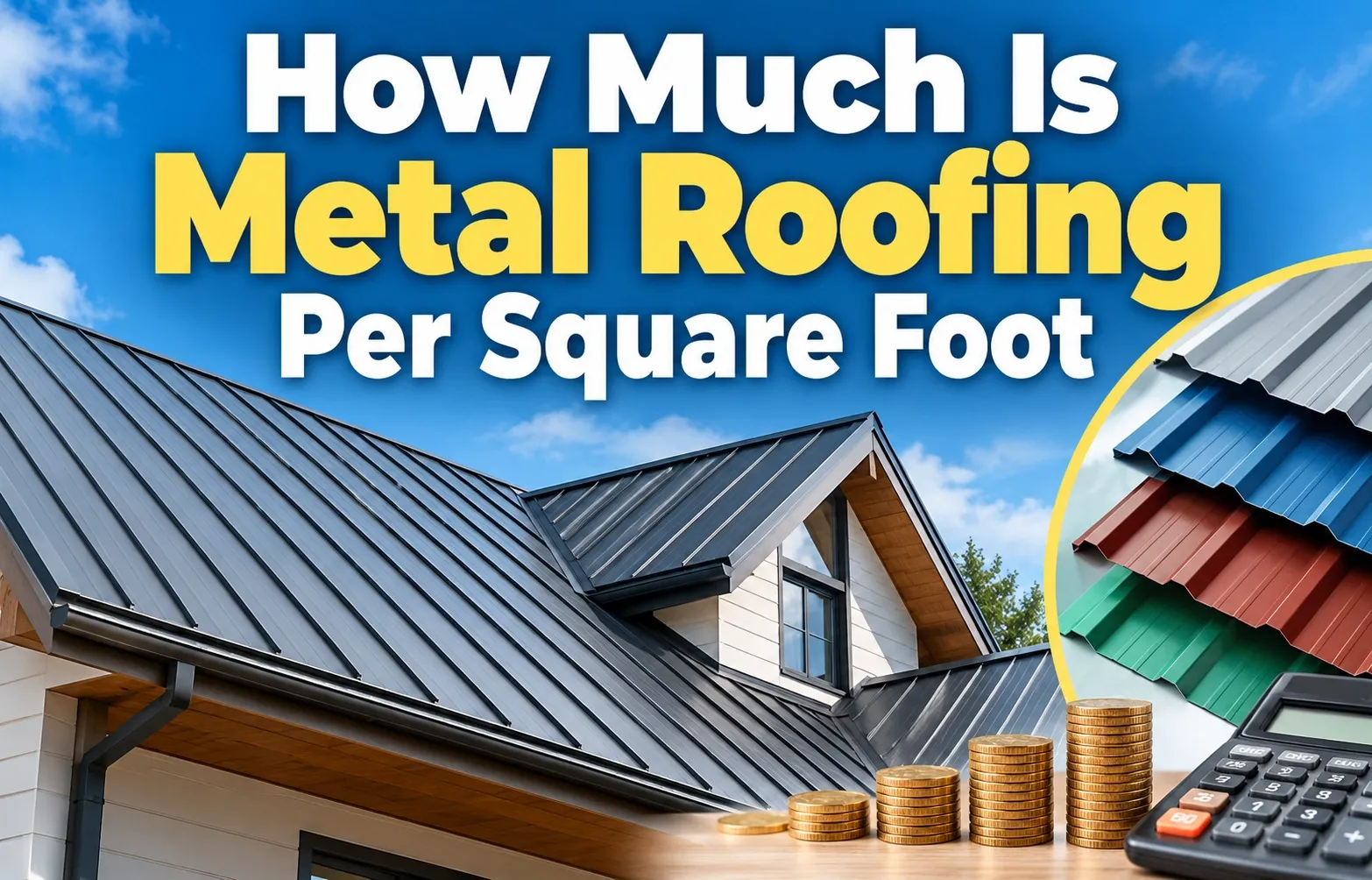 Professionally installed metal roofing costs between $7 and $30 per square foot for standard residential projects. Uninstalled raw materials range from $1.50 to $15 per square foot, while specialized roofing labor accounts for an additional $4 to $15 per square foot depending on structural panel design and roof pitch complexity.
In the roofing industry, contractor pricing is typically calculated by “roofing squares,” where one square equals 100 square feet of deck surface. On average, a standard residential metal roof project costs between $700 and $3,000 per square installed.
Metal Roofing Cost Breakdown at a Glance
Understanding how your total estimate breaks down into material choices and specialized trade labor helps ensure accurate budget planning and contractor proposal evaluations.
- Material Cost: $1.50 to $15 per square foot ($150 to $1,500 per roofing square) covering raw panels, synthetic underlayment, drip edges, fasteners, and ridge caps.
- Labor Cost: $4 to $15 per square foot ($400 to $1,500 per roofing square) depending on regional labor rates, tear-off requirements, and roof height.
- Total Installed Cost: $7 to $30 per square foot ($700 to $3,000 per square) for complete turn-key professional installation.
Average Total Project Cost by Popular Home Sizes (1,000 to 2,500 Sq. Ft.)
Total installation costs vary directly with overall roof deck surface area. The reference values below represent full professional replacement estimates across common home footprints.
Key primary factors determining whether your final price lands on the lower or higher end of these brackets include:
- Metal Substrate Selection: Galvanized steel sits at the economical end, aluminum serves mid-range budgets, while zinc and copper represent luxury options.
- Panel Fastening Style: Corrugated panels with exposed screws require less labor than modern standing seam panels with concealed clip systems.
- Existing Roof Tear-off: Removing and disposing of old asphalt shingle layers adds $1 to $3 per square foot to overall job costs.
Metal Roofing Cost Breakdown by Profile & Panel Style
The visual style and installation profile of your metal roof dictate both its upfront installation cost and long-term weather performance. Homeowners can choose from economical exposed fastener options, decorative stamped metal shingles, or premium architectural standing seam systems.
Corrugated & Exposed Fastener Panels ($7 – $12 sq. ft. Installed)
Corrugated metal panels represent the most budget-friendly option available for roofing projects. They feature wavy or ribbed sheets that are screwed directly through the exterior metal surface into the underlying roof decking.
- Installation Speed: Large panel coverage allows contractors to complete installation rapidly, lowering initial labor costs.
- Practical Maintenance Insight: Exposed screws rely on small rubber or neoprene washers (gaskets) underneath the screw heads to create a watertight seal. Over 10 to 15 years, thermal expansion and UV exposure cause these rubber gaskets to dry out, crack, and leak, requiring routine screw replacement or retightening.
- Aesthetic Fit: Highly popular for agricultural buildings, workshops, and modern industrial-style residential architecture.
Metal Shingles Tiles and Stamped Shake ($5 – $15 sq. ft. Installed)
Stamped metal panels and shingles mimic the classic architectural appearance of traditional clay tiles, slate, or wood shakes while retaining the structural durability of steel or aluminum.
- Visual Versatility: Homeowners can achieve a high-end luxury aesthetic without placing excessive weight load on standard residential roof framing.
- Interlocking Design: Individual units interlock tightly with hidden fastening systems, shielding screw penetrations from direct rain and snow exposure.
- HOA Compliance: Ideal for neighborhoods with strict aesthetic guidelines that prohibit traditional industrial corrugated panels.
Standing Seam Metal Roofs ($10 – $22 sq. ft. Installed)
Standing seam systems are the gold standard for residential metal roofing. They use vertical metal panels with interlocking vertical legs that rise above the roof deck line.
- Snap-Lock Panels: Panels snap together manually over concealed fastening clips, providing fast installation and dependable leak protection for standard slopes.
- Mechanically Seamed Panels: Heavy-duty mechanical seamers fold the panel edges over one another using electric tools, locking panels together to deliver ultimate wind uplift resistance and superior leak protection on low-slope roofs.
- Why Labor Fees Are Higher: Concealed clip installation requires precise manual alignment, custom metal bending around valleys and roof penetrations, and skilled trade expertise, driving up labor allocation.
Metal Roofing Cost Breakdown by Material Type
The core metal substrate selected for your roof dictates its total raw material cost, structural weight load, long-term corrosion resistance, and geographical suitability. Baseline materials like steel provide strength and budget flexibility, while specialty metals like aluminum, zinc, and copper offer targeted protection against coastal salt air or harsh environmental exposure.
Galvanized & Galvalume Steel ($5 – $14 sq. ft.)
Steel serves as the structural baseline for most residential metal roofing projects due to its high tensile strength and budget versatility. To prevent rust, steel coils undergo protective hot-dip metallurgical coating processes.
- Galvanized Steel: Features a protective zinc coating layer. It offers an economical price point but remains susceptible to red rust if the zinc layer degrades in high-moisture regions.
- Galvalume Steel: Coated with a patented alloy containing 55% aluminum, 43.4% zinc, and 1.6% silicone. This dual-action barrier provides superior corrosion resistance and edge-creep protection compared to standard galvanized steel.
Understanding Steel Gauges: 24-Gauge vs. 29-Gauge
Metal panel thickness is measured in gauges, where a lower gauge number indicates a thicker, stronger panel. Choosing the right thickness directly impacts structural performance and pricing.
- 24-Gauge Steel (Heavy-Duty Grade): Measures approximately 0.024 inches thick. It is the industry standard for residential standing seam systems, offering high oil-canning resistance, superior impact strength against hail, and rigid panel integrity. Expect to pay 20% to 35% more compared to economy gauges.
- 29-Gauge Steel (Economy Grade): Measures approximately 0.014 inches thick. Typically reserved for agricultural post-frame buildings or budget corrugated roofing. While cheaper upfront, thinner panels buckle more easily under heavy snow loads and require closer screw spacing.
Aluminum Roofing ($7 – $17 / sq. ft.)
An aluminum metal roof provides complete salt-spray resistance, making it the mandatory choice for homes located within 1,500 feet of ocean coastlines or saltwater estuaries.
- Corrosion Resistance: Aluminum does not rust when exposed to moisture. Instead, it reacts with oxygen to form a protective aluminum oxide film that seals the metal against further degradation.
- Weight Efficiency: Weighing roughly one-third of steel per square foot, aluminum reduces structural strain on aging roof deck framing.
Architectural Zinc ($10 – $25 sq. ft.)
Zinc is a sustainable, premium architectural metal celebrated for its long-term durability and low-maintenance characteristics.
- Self-Healing Patina: Over time, exposure to carbon dioxide and rainfall develops a protective zinc carbonate layer (patina) that automatically heals minor surface scratches and blocks environmental corrosion.
- Service Life: Quality architectural zinc installations routinely exceed 80 to 100 years of service life without requiring repainting.
Premium Copper Roofing ($20 – $40+ sq. ft.)
Copper represents the ultimate luxury option in the roofing industry, combining handcrafted beauty with unmatched longevity.
- Patina Evolution: Bright raw copper naturally matures into a deep bronze finish before developing a blue-green patina over 15 to 30 years.
- Zero Paint Requirements: Copper requires no synthetic paint finishes or anti-corrosion coatings, delivering a 100+ year operational lifespan.
Paint Systems Impact on Cost & Longevity: SMP vs. Kynar 500 PVDF
Factory-applied paint finishes protect metal substrates against chalking, fading, and UV degradation. The resin chemistry chosen directly dictates color retention performance and overall panel cost.
- Silicone Modified Polyester (SMP): Standard budget finish applied to economy panels. SMP offers strong scratch resistance during handling, but chalks and loses color vibrance after 10 to 15 years under intense sunlight.
- Kynar 500 / PVDF (Polyvinylidene Fluoride): Premium fluoropolymer resin paint system. Kynar 500 maintains its original color hue and gloss retention for 30 to 40+ years, even under severe UV exposure. Choosing Kynar 500 adds roughly 15% to 25% to raw material costs but secures long-term aesthetic warranties.
Individual Metal Panel Pricing & DIY Material Estimates
Buying metal roofing by the panel is common for DIYers, small outbuilding projects, sheds, and contractors purchasing uninstalled materials directly from distributors. Knowing the individual sheet price based on dimensions helps streamline material estimates before ordering.
How Much Do Individual Metal Roofing Panels Cost?
Individual panel prices depend primarily on sheet length, width, gauge thickness, and surface finish. While standard residential corrugated or rib panels feature a 36-inch (3-foot) nominal width, keep in mind that actual net coverage width is typically 32 to 36 inches due to side-lap overlapping requirements during installation.
- Budget Rib & Corrugated Sheets: Standard 29-gauge or 26-gauge utility panels represent the lowest price per sheet, ideal for shed, barn, and residential DIY builds.
- Architectural & Heavy-Duty Panels: Thicker 24-gauge standing seam sheets or premium PVDF-coated panels increase cost per sheet accordingly.
- Coverage Considerations: Always calculate panel counts using net coverage width rather than gross panel width to avoid under-ordering materials.
Standard Panel Dimensions Pricing Table (3×8 ft to 3×20 ft)
The cost breakdown below outlines typical retail and distributor price ranges for uninstalled 36-inch wide metal roofing panels across standard stock lengths.
Calculating Material Quantities and Waste Factor
Planning a DIY metal roof installation requires accurate panel math to account for panel overlap, pitch angles, hips, valleys, and rake trim cuts. Comparing your estimates against established industry data like This Old House Roofing Cost Benchmarks helps cross-verify material budgets before purchasing.
Follow this step-by-step calculation approach to determine total panel needs:
- Determine Roof Deck Area: Calculate the total square footage of your roof deck surfaces (length × width × roof pitch multiplier).
- Add Waste Factor Percentage: Add a 10% waste factor for standard gable roofs, or 15% to 20% waste factor for complex roofs with valleys, dormers, and hips to cover cut waste and trimming.
- Calculate Panel Count: Divide total square footage (including waste) by the net effective square footage of your chosen panel size.
- Include Accessory Hardware: Budget extra for ridge caps, drip edge trim, sidewall flashing, rubber-washer neoprene screws (or hidden clips), and synthetic underlayment.
Labor, Installation & Hidden Cost Variables
Labor and installation variables account for 40% to 60% of total metal roofing project expenses. While material costs remain relatively stable, labor charges fluctuate dramatically based on installation difficulty, structural complexity, local building codes, and necessary accessory components.
Labor Cost per Square Foot ($4 – $15 sq. ft.)
Specialized metal roofing labor ranges from $4 to $15 per square foot ($400 to $1,500 per roofing square). Installing metal requires skilled trade craftsmanship, custom sheet-metal bending equipment, and precise torque-controlled fastening to prevent leaks and thermal expansion damage.
- Skill Requirements: Standard asphalt shingle crews cannot properly install standing seam metal roofs, requiring certified sheet-metal technicians who charge higher hourly labor rates.
- Fastening Precision: Over-tightening or under-tightening panel fasteners leads to premature structural leaks or panel buckling, demanding meticulous quality control during installation.
- Regional Labor Rates: High-cost-of-living metro areas and extreme climate regions command premium labor rates compared to rural markets.
Old Roof Tear-Off and Disposal Fees ($1 – $3 sq. ft.)
Removing and disposing of old roofing materials typically adds $1 to $3 per square foot ($100 to $300 per square) to your project estimate depending on weight, layer count, and regional landfill tipping fees.
- Single-Layer Shingle Removal: Standard single-layer asphalt shingle tear-off costs roughly $1 to $2 per square foot including dumpster rental fees.
- Multi-Layer Tear-Off: Stripping multiple existing layers or heavy materials like wood shake or concrete tile increases labor hours and disposal costs toward $3+ per square foot.
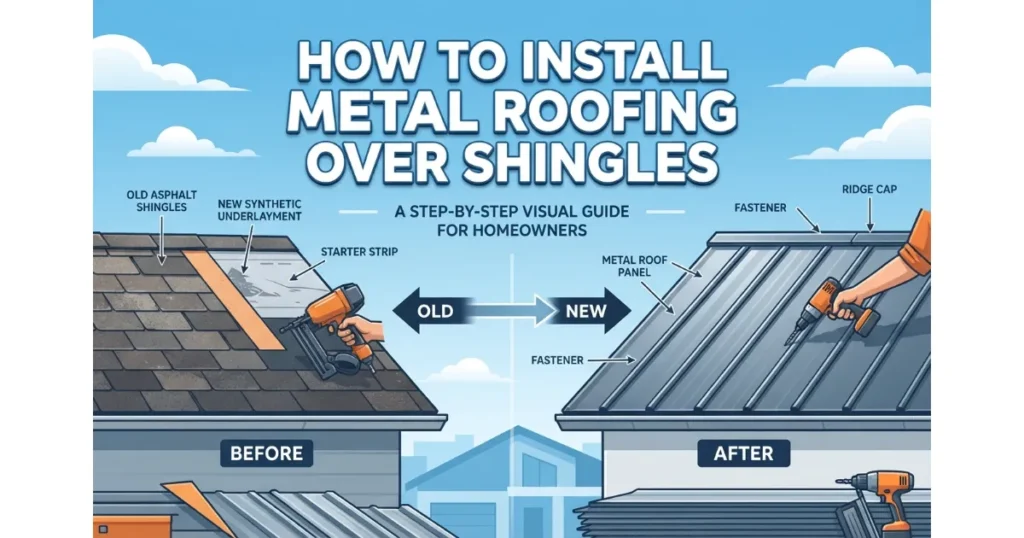
- Installing Metal Over Existing Shingles (Overlay): Installing metal directly over a single layer of asphalt shingles can save on tear-off costs. However, local building codes generally limit roofs to a maximum of two total layers, and an overlay requires installing a solid synthetic underlayment barrier to protect the back of the metal panels from abrasion against rough shingles.
Roof Pitch Slope and Architectural Complexity
The layout and geometry of your roof deck heavily influence labor safety requirements, material waste factors, and custom flashing trim fabrication requirements.
- Steep Pitch Multipliers: Roofs with steep slopes exceeding a 6/12 pitch (6 inches of vertical rise per 12 inches of horizontal run) require OSHA-mandated safety harnesses, staging scaffolding, and slower panel placement, increasing labor costs by 15% to 30%.
- Valleys and Dormers: Roof planes featuring multiple valleys, dormers, and gables require custom field-bent metal flashing and extensive manual trimming, driving up labor hours.
- Penetrations and Skylights: Sealing around chimneys, skylights, plumbing vents, and HVAC curbs requires specialized boots and solderless transition flashings to maintain long-term watertight protection.
Essential Accessories: Underlayment, Trim, and Flashing
A complete metal roofing system requires specialized accessory components that ensure long-term waterproofing integrity across all seams and roof edges.
- Synthetic Underlayment: High-temperature synthetic underlayment ($0.15 to $0.40 per sq. ft.) provides a durable secondary water barrier beneath metal panels.
- Ice and Water Shield: Self-adhering modified bitumen membrane ($0.50 to $1.20 per sq. ft.) applied along eaves, valleys, and rakes to prevent ice dam leaks in cold climates.
- Flashing Trim & Ridge Caps: Custom color-matched perimeter trims, drip edges, sidewall flashings, and ventilated ridge caps account for 10% to 20% of total material order packages.
Metal Roofing vs. Asphalt Shingles: Long-Term ROI Analysis
While traditional asphalt shingles require a significantly lower initial investment, a metal roof offers a vastly superior long-term return on investment (ROI). Analyzing total lifecycle costs over a 50-year period reveals that metal roofing frequently proves more economical than multiple asphalt shingle replacements.
Initial Upfront Cost vs. 50-Year Lifetime Value
An asphalt shingle roof carries an average installed cost of $4 to $7 per square foot, making it the lower upfront choice. However, asphalt shingles have an average lifespan of only 15 to 20 years, requiring at least two to three full replacements over a 50-year period, alongside recurring maintenance and repair expenses.
Conversely, a standing seam metal roof ($10 to $22 per sq. ft. installed) is built to last 50 years or more with minimal maintenance. The initial capital expenditure covers a lifetime solution that eliminates recurring tear-off and re-roofing costs.
Insurance Premium Discounts & Class 4 Impact Ratings
Installing metal roofing can qualify homeowners for substantial reductions on their annual homeowners insurance premiums, particularly in geographic zones prone to severe weather, hail, or wildfires.
- Class 4 Impact Resistance (UL 2218): Most residential metal roofs carry a UL 2218 Class 4 impact rating, demonstrating resistance against steel ball impacts simulating large hail. Insurers often offer discounts ranging from 15% to 35% annually for Class 4 roofs.
- Class A Fire Rating: Metal is non-combustible and provides a Class A fire rating when installed over approved underlayments. This offers critical protection and insurance incentives in wildfire-prone or drought-affected regions.
- Wind Uplift Resistance: Interlocking panels and standing seam clips engineered to withstand winds up to 140+ mph reduce storm damage claims.
Energy Efficiency & Cool Roof Savings
Asphalt shingles absorb solar radiation, transferring extreme heat directly into the attic and increasing summer air conditioning loads. Highly reflective metal roofing systems combat heat absorption through advanced surface technology.
- Reflective Cool Roof Coatings: Factory-applied PVDF/Kynar 500 finishes infused with cool roof pigments reflect a high percentage of solar infrared radiation away from the home.
- Reduced Cooling Demand: Cool metal roofs lower roof surface temperatures by up to 50°F compared to dark asphalt shingles, cutting summer cooling energy consumption by 10% to 25%.
- Winter Insulation Value: Proper air-gap installation and synthetic underlayment layers create a thermal break that helps stabilize interior attic temperatures during winter months.
What Is the Biggest Problem with Metal Roofs? (Honest Evaluation)
While metal roofs offer unmatched durability and lifespan, they are not without potential drawbacks and engineering challenges. Understanding real-world product limitations, practical panel behavior, and mitigation strategies allows homeowners to make informed investments and avoid common installation pitfalls.
Oil Canning (Panel Distortion)
Oil canning is a visible waviness or distortion across the flat areas of metal panels. It is an aesthetic issue inherent to light-gauge sheet metal roll-forming rather than a structural failure, but it remains one of the primary cosmetic complaints among homeowners.
- Causes: Thermal stress, uneven roof decking substrates, over-tightened fasteners, and coil tension variations during manufacturing.
- Prevention & Solutions: Specify heavier panel gauges (such as 24-gauge over 29-gauge steel) and select panels designed with striations, rib profiles, or stiffening ribs. These textured profiles break up flat metal surfaces and minimize visible reflection distortions.
Noise During Rain & Hailstorms
A common myth is that metal roofing creates deafening noise inside the living space during heavy rain or hailstorms. While bare metal installed over open framing (like a barn) is loud, standard residential installations perform differently.
- Roof Decking Soundproofing: Residential metal panels are installed directly over solid roof decking (plywood or OSB), high-temperature synthetic underlayment, and insulated attic spaces.
- Sound Dampening Performance: This multi-layer construction absorbs impact vibrations, dampening rain sound to decibel levels virtually identical to traditional asphalt shingle roofs.
Higher Upfront Capital Investment
The single largest practical barrier for most homeowners is the initial purchase and installation cost. Metal roofing requires a significantly higher upfront capital allocation compared to standard asphalt shingles.
- Budgeting Reality: Premium standing seam systems cost two to three times more upfront than architectural shingles.
- Long-Term Value: Homeowners who plan to sell within a few years may not fully recoup the premium cost through equity alone, making metal roofing best suited for long-term property ownership.
Thermal Expansion & Screw Backout (Exposed Fasteners)
Metal expands and contracts significantly as ambient temperatures fluctuate throughout the day and across seasons. Unaccommodated thermal movement creates mechanical stress across panels and fastening systems.
- Exposed Fastener Vulnerability: On corrugated or ribbed panels, screws driven directly through the sheet undergo constant shear stress as the metal expands. Over time, this movement enlarges screw holes and causes fastener backout, compromising neoprene rubber sealing washers.
- Concealed Clip Advantage: Standing seam systems use thermal expansion clips and slotted mounting holes that allow panels to glide smoothly back and forth during temperature swings without buckling or loosening fasteners.
Frequently Asked Questions About Metal Roofing Costs
How much does a metal roof cost for a 1,000 sq ft house?
A complete metal roof installation for a 1,000 square foot house typically ranges from $7,000 to $30,000, with most homeowners spending around $12,000 total depending on material choice, panel profile, and local labor rates.
- Material Impact: Basic corrugated steel panels keep 1000 sq ft metal roof cost estimates at the lower end, while premium standing seam systems push pricing higher.
- Labor Factor: Professional installation labor accounts for roughly 40% to 60% of the overall project estimate.
What is the cheapest month for roofing installation?
Winter months—specifically late November through February in colder climates—are typically the cheapest months for roofing installations due to lower contractor demand, reduced seasonal booking backlogs, and off-peak labor discounts.
- Contractor Incentives: Roofing companies often offer promotional discounts or flexible scheduling to keep crews working during slow winter months.
- Weather Considerations: While winter offers financial savings, contractors must monitor temperatures closely to ensure proper sealant and underlayment adhesion.
Can you put a metal roof over existing asphalt shingles?
Yes, you can install a metal roof directly over a single layer of existing asphalt shingles in many cases, which saves thousands of dollars in old roof tear-off and disposal fees.
- Building Code Limits: Local building codes generally prohibit metal over shingles overlays if the roof already has two or more existing shingle layers.
- Underlayment Protection: An approved synthetic underlayment must be installed over the old shingles to prevent abrasive friction against the underside of the metal panels.
How long does a metal roof last compared to shingles?
A quality metal roof lifespan routinely spans 40 to 70 years with minimal maintenance, vastly outlasting traditional asphalt shingles that typically require full replacement every 15 to 20 years.
- Lifecycle Durability: Standing seam metal roofs endure high winds, heavy snow loads, and severe hail without cracking, curling, or rotting.
- Replacement Frequency: Homeowners with metal roofing avoid the recurring cycle of multiple shingle tear-offs over a 50-year horizon.
Do metal roofs affect cell phone service inside the house?
Metal roofs can occasionally cause minor cell phone signal attenuation inside a house because solid steel, aluminum, or copper panels reflect wireless radio frequency signals similar to a Faraday cage effect.
- Signal Strength Variability: Modern multi-pane windows and exterior wall materials allow most cellular signals to enter homes without complete disruption.
- Mitigation Solutions: Homes with weak cellular reception experiencing interference from a cell phone signal metal roof setup can easily resolve drops by installing an affordable cellular signal booster.

Oscar Vance | Master Plumber & Drainage Expert
Meet Oscar Vance, a licensed master plumber sharing practical solutions on residential repairs, preventive maintenance, and thoughtful home upkeep.