Is Black Mold on Your Bathroom Ceiling Dangerous?
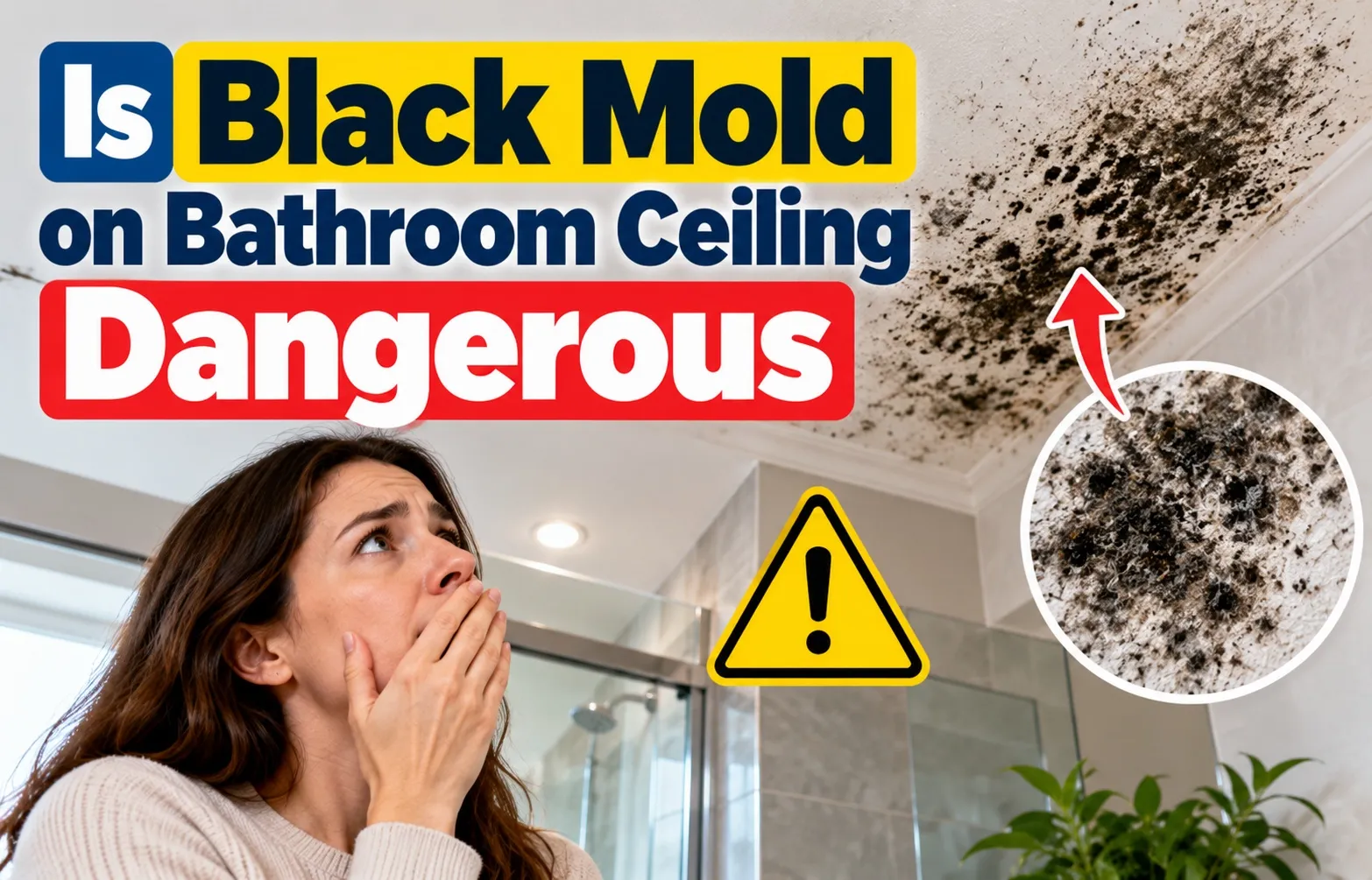 Yes, black mold on a bathroom ceiling is dangerous because it releases airborne spores that trigger respiratory irritation, worsen asthma, and signal hidden moisture damage behind your drywall. However, not every dark spot is toxic black mold (Stachybotrys chartarum); many ceiling growths are surface mildew caused by trapped shower humidity.
Immediate exposure risks depend heavily on texture, coverage area, and room ventilation:
- Small surface mildew patches: Low immediate danger, easily cleaned with proper protective gear.
- Fuzzy or slimy black clusters: High risk of active spore release, requiring targeted fungicidal treatment.
- Soft or sagging drywall: Critical risk indicating chronic plumbing or roof leaks inside the ceiling cavity.
Surface Mildew vs. Toxic Black Mold: How to Spot the Difference Immediately
Differentiating surface mildew from toxic black mold comes down to texture, color depth, and structural impact. Surface mildew grows in flat, dusty patches that wipe away easily, whereas true black mold develops a slimy or fuzzy elevated texture that penetrates deep into ceiling drywall fibers.
To identify your ceiling infestation safely, examine these core growth characteristics:
- Physical Appearance: Mildew spreads outward in light, circular dusting patterns. True black mold displays irregular, dark patches that look wet or velvety.
- Wipe Test: Lightly wiping mildew with a damp cloth coated in white vinegar lifts the stain completely. Black mold leaves persistent dark stains embedded in the paint layer.
- Moisture Source: Mildew thrives strictly on surface steam from hot showers. Black mold usually thrives when moisture levels remain high for over 48 hours due to active leaks or total ventilation failure.
The Quick Health Risk Assessment: When Should You Be Worried?
You should be worried when ceiling mold covers an area larger than 10 square feet, releases a heavy musty odor, or triggers sudden allergic reactions like coughing and eye irritation upon entering the bathroom. Spore inhalation affects household members differently based on existing health vulnerabilities and overall indoor air quality.
Evaluate your situation using these emergency indicators:
- Active Physical Symptoms: Immediate wheezing, sneezing, nasal congestion, skin rashes, or burning eyes while in the bathroom signal high airborne spore concentrations.
- High-Risk Occupants: Extra caution is required if young children, elderly individuals, pregnant women, or asthma sufferers use the facility regularly.
- Structural Degradation: Peeling paint, bubbling ceiling plaster, or dark ring stains indicate water pooling above the sheetrock, creating an ideal breeding ground for toxic fungi.
Health Risks and Exposure Timelines of Bathroom Ceiling Mold
Mold exposure affects your body along distinct timelines depending on spore concentration and personal sensitivity. Inhaling airborne spores can trigger immediate allergic flare-ups within hours, while prolonged exposure over months or years risks developing severe respiratory complications.
Acute Exposure (Hours to Days): Immediate Allergic Reactions
Acute mold exposure begins producing physical symptoms within hours or days of entering a contaminated bathroom. Inhaling airborne spores irritates mucous membranes, triggering classic mold allergy symptoms that mimic seasonal allergies or a lingering cold.
Common acute signs and symptoms include:
- Throat Irritation: Scratchy or burning sensations in the back of the throat.
- Coughing and Wheezing: Spasmodic coughing fits and audible wheezing caused by airway constriction.
- Sneezing and Nasal Congestion: Frequent sneezing paired with blocked or runny nasal passages.
- Eye Irritation: Watery, red, itchy, or burning eyes exposed to floating spores.
Chronic Exposure (Months to Years): Long-Term Health Impact
Chronic mold exposure occurs when bathroom ceiling mold is ignored for months or years, leading to cumulative toxic overload in the respiratory system. Over time, continuous spore inhalation degrades lung function and provokes chronic inflammatory responses.
Long-term health consequences of untreated mold environments involve:
- Severe Asthma Attacks: Increased frequency and intensity of asthma episodes requiring medical intervention.
- Chronic Sinusitis: Persistent sinus infections and inflammation that resist standard treatments.
- Systemic Fatigue: Unexplained lethargy, headaches, and neurological brain fog linked to toxic mold byproducts.
- Lowered Immune Defense: Continuous respiratory strain that weakens overall physical resilience.
High-Risk Groups: Vulnerable Populations at Higher Risk
Vulnerable populations face exponentially higher risks of severe health complications from bathroom mold compared to healthy adults. Physiological differences or compromised immune responses make these groups prime targets for acute respiratory distress.
Populations requiring immediate mold remediation include:
- Children and Infants: Developing lungs and immune systems absorb and react aggressively to airborne mycotoxins.
- The Elderly: Aging respiratory tissue handles inflammatory triggers poorly, increasing pneumonia risks.
- Immunocompromised Individuals: People undergoing treatments, chemotherapy, or living with chronic illnesses face dangerous fungal infection vectors.
- Pets: Cats, dogs, and caged animals breathing low-to-the-ground air currents experience rapid respiratory distress.
Medical authorities like the Cleveland Clinic mold guide emphasize that identifying symptoms early and eliminating the source prevents permanent respiratory damage.
The Ceiling Triage Matrix: DIY vs. Professional Mold Removal
Deciding whether to tackle bathroom ceiling mold yourself or hire a professional comes down to three factors: the size of the growth, the depth of structural damage, and your budget. You do not always need an expensive remediation service; small surface infestations can be safely eliminated with low-cost DIY methods.
The 10-Square-Foot Rule: When Can You Fix It Yourself?
The Environmental Protection Agency establishes 10 square feet (roughly a 3ft by 3ft area) as the clear boundary between a manageable DIY project and required professional remediation. If the total affected surface area is smaller than this threshold and the drywall remains structurally sound, a cost-effective DIY cleaning method is entirely safe.
You can proceed with a budget-friendly DIY approach if your situation matches these conditions:
- Small Surface Area: The mold coverage is localized and measures less than 10 square feet overall.
- Solid Drywall Integrity: The ceiling plaster or sheetrock is firm, dry, and showing no signs of sagging or crumbling.
- No Active Internal Leaks: The growth stems purely from surface humidity and condensation rather than a bursting pipe overhead.
Ceiling Inspection Matrix: Drywall Damage, Leaks, and Depth Analysis
Before buying cleaning supplies or contacting a specialist, evaluate your ceiling using a physical depth analysis. Assessing structural damage and identifying hidden leaks behind the paint ensures you select the correct remediation path without wasting money on superficial fixes.
When assessing structural damage, keep these critical safety red flags in mind:
- The Screwdriver Test: Press the tip of a flathead screwdriver gently against the ceiling. If it sinks into the drywall without effort, the core is ruined and requires full drywall replacement.
- Water Ring Discoloration: Brownish ring patterns surrounding black spots indicate standing water above the board from hidden leaks.
- Budget Alternatives: If professional services are financially out of reach for structural issues, isolate the room, wear full protective gear, and replace the affected drywall section manually rather than spraying surface cleaners over rotted material.
Step-by-Step DIY Mold Removal on Bathroom Ceilings
Removing bathroom ceiling mold safely requires abandoning popular household myths like using straight bleach. By using distilled white vinegar or a commercial EPA-approved fungicide alongside proper personal protective equipment, you can permanently eradicate surface mold without damaging your drywall.
Why Bleach Fails on Bathroom Ceiling Drywall (The Science of Porous Surfaces)
The widespread bleach misconception causes many homeowners to accidentally worsen their mold problems. Because drywall is a highly porous material, the water in standard household bleach absorbs deep into the paper and gypsum core while the chlorine evaporates on the surface, leaving the mold roots alive beneath.
To truly eliminate mold roots on porous surfaces, alternative solutions work far more effectively:
- Distilled White Vinegar: Acetic acid penetrates porous drywall fibers to kill mold roots at their source rather than just bleaching the top color.
- Commercial EPA-Approved Fungicide: Specially formulated anti-fungal treatments coat the ceiling substrate to neutralize spores and inhibit future growth cycles.
- Surface Chemistry: Unlike bleach, vinegar leaves behind a low-pH micro-layer that discourages new mold spores from germinating on painted ceilings.
Required Personal Protective Equipment (PPE) & Room Setup
Scrubbing ceiling mold releases thousands of microscopic spores into the air, making proper gear and room preparation non-negotiable. Setting up a secure workspace prevents cross-contamination into living areas and protects your respiratory system.
Gather these essential safety items before touching the ceiling:
- N95 Mask or Respirator: Filters out airborne spores and mycotoxins to protect your lungs during scrubbing.
- Rubber Gloves: Shields your hands from harsh cleaning chemicals and direct contact with fungal matter.
- Safety Goggles: Prevents falling debris, cleaner drips, and displaced spores from entering your eyes.
- Spore Containment Setup: Seal off bathroom doorways with plastic sheeting and run a portable fan directed out an open window.
Step-by-Step Safe Treatment & Scrubbing Method
Executing a systematic cleaning procedure ensures the mold is destroyed completely without gouging the wet ceiling plaster. Follow a controlled sequence of application, dwelling time, gentle agitation, and rapid drying.
Complete these exact steps to clean your ceiling:
- Prepare the Solution: Pour undiluted distilled white vinegar into a spray bottle, or mix a commercial EPA-approved fungicide according to product instructions.
- Spray and Soak: Lightly mist the moldy area, ensuring the liquid saturates the paint layer without dripping excessively. Let it dwell for 15 minutes to break down cellular walls.
- Gentle Scrubbing: Use a soft-bristled sponge or microfiber cloth to wipe away the loosened mold using gentle circular motions. Avoid aggressive wire brushes that tear drywall paper.
- Rinse and Dry: Wipe the area with a clean, damp cloth to remove residue, then accelerate drying using a hair dryer on a cool setting or a running dehumidifier.
Unresolved Moisture & Prevention: Stopping Mold Re-Growth
Removing existing mold is only half the battle; unless you eliminate the underlying moisture source, ceiling mold will return within days. Controlling relative humidity, repairing structural leaks, and upgrading surface coatings are essential steps to keep your bathroom permanently mold-free.
Fixing Ventilation Gaps: Exhaust Fan Run-Time Rules
Poor ventilation is the primary cause of bathroom ceiling mold, as trapped shower steam settles on cool drywall surfaces. Running your exhaust fan correctly removes moisture before spores can germinate and anchor into the paint layer.
Implement these ventilation practices to control moisture effectively:
- The 20-Minute Rule: Turn on your bathroom exhaust fan at the start of your shower and leave it running for at least 20 minutes after turning off the water.
- Check CFM Rating: Ensure your exhaust fan matches your room size. As a rule of thumb, you need 1 CFM (Cubic Feet per Minute) per square foot of bathroom area.
- Maintain Low Relative Humidity: Keep indoor relative humidity below 50% using a compact dehumidifier if your bathroom lacks a window or high-volume exhaust fan.
Roof Leaks vs. Plumbing Leaks vs. High Humidity Condensation
Identifying how water reaches your ceiling determines whether you need a quick ventilation adjustment or a contractor repair. Isolating the moisture source prevents wasted time and unnecessary drywall replacements.
Diagnose your moisture origin by observing these patterns:
- Weather Sensitivity: Stains that grow larger or drip following heavy rain indicate an active roof leak or attic condensation issue.
- Upstairs Activity: Mold spots that darken when an upstairs shower or toilet is used point directly to a leaking drain line.
- Surface Droplets: Clear water beads pooling on ceiling paint during warm showers confirm steam condensation rather than a structural leak.
Anti-Mold Paint & Moisture Barrier Treatments
Once your ceiling is dry and completely mold-free, applying a specialized protective coating locks out future moisture absorption. Standard interior flat latex paint absorbs water vapor easily, whereas specialized anti-microbial coatings repel condensation.
Follow this coating protocol to build a long-lasting moisture barrier:
- Apply Anti-Microbial Primer: Coat the bare drywall with an oil-based or stain-blocking anti-microbial primer to seal lingering stains and suppress latent spores.
- Use Mold-Resistant Paint: Finish with a premium mold-resistant paint containing EPA-registered fungicides designed specifically for high-humidity environments.
- Select High-Gloss Finishes: Use semi-gloss or satin finishes rather than flat ceiling paint; smoother surfaces make it harder for moisture and spores to take hold.
Real-World Scenarios: Renters, Landlords, and Cross-Contamination
Dealing with bathroom ceiling mold often involves complex interpersonal and practical challenges beyond simple cleaning. Whether negotiating repairs with unhelpful landlords or managing fears of spreading spores to other environments, understanding proper containment and communication strategies protects both your health and legal rights.
What to Do If Your Landlord Refuses to Fix Bathroom Mold
When an unresponsive landlord ignores requests to fix structural leaks or severe ceiling mold, tenants face significant health risks. Documenting conditions thoroughly and understanding local tenant protections are essential steps to hold property owners accountable to basic health and safety standards.
Take these strategic steps to address landlord inaction effectively:
- Build a Written Evidence Trail: Document all mold spots with dated photos, videos, and written notices sent via certified mail to establish proof of landlord responsibility.
- Request Official Inspection: Contact your local housing authority, health department, or code enforcement office to request a formal property inspection.
- Utilize Legal Remedies Safely: Check regional tenant rights regarding “repair and deduct” options or legally withholding rent in escrow until environmental hazards are remediated.
- Deploy Temporary Containment: While awaiting repairs, run an air purifier equipped with a TRUE HEPA filter and keep the bathroom door closed to maintain isolated air circulation.
Luggage & Travel Anxiety: Can Bathroom Mold Spores Cross-Contaminate Your Home?
A common fear when visiting or living in moldy environments is whether microscopic fungal spores can travel on clothing or luggage and infest a clean home. While mold spores exist everywhere in ambient air, cross-contamination only leads to active mold growth if your home provides the necessary moisture and humidity.
Prevent spore transfer between living spaces using these simple decontamination steps:
- Luggage Isolation Protocol: Wipe down hard-shell suitcases with distilled white vinegar or disinfectant wipes, and store bags in well-ventilated areas away from damp basements or closets.
- Targeted Clothing Wash Protocol: Wash exposed clothing immediately using hot water and a cup of white vinegar or oxygen bleach, then dry on high heat to eliminate lingering spores.
- Control Ambient Home Moisture: Keep your destination environment dry; without active water leaks or relative humidity above 50%, hitchhiking spores cannot settle or grow on dry surfaces.
Frequently Asked Questions About Bathroom Ceiling Mold
Addressing specific micro-intents directly helps clarify lingering questions about body recovery, environmental prevalence, and rapid destruction methods for ceiling mold.
Can your body recover from black mold exposure once removed?
Yes, your body naturally begins recovering from black mold exposure as soon as you are removed from the contaminated environment and airborne spores are cleared. The human immune system and liver actively work on toxin elimination to clear absorbed mycotoxins over time.
Key factors supporting full physical body recovery include:
- Complete Exposure Elimination: Thoroughly remediating the mold source stops further spore inhalation immediately.
- Symptom Resolution: Acute symptoms like coughing, throat irritation, and burning eyes typically clear within a few days to weeks.
- Medical Support: Individuals with persistent chronic symptoms or severe allergies can consult a medical professional for targeted antihistamines or respiratory treatments.
Is black mold on a bathroom ceiling common?
Yes, finding dark mold spots or common bathroom mildew on a ceiling is extremely widespread due to the high humidity, warmth, and steam generated by daily showers. Paint surfaces and drywall paper absorb trapped moisture easily, creating an ideal breeding ground for fungal spores.
Common contributing factors include:
- Insufficient Ventilation: Lacking or failing to use a bathroom exhaust fan during and after showers.
- Temperature Spikes: Warm steam colliding with cooler ceiling plaster accelerates condensation buildup.
- Absorbent Coatings: Standard flat latex paints trap moisture on the surface, feeding surface fungal growth.
What kills mold spores instantly on a ceiling?
An EPA-approved commercial fungicide spray or pure 70% isopropyl alcohol destroys active mold spores on contact upon application. For a natural alternative, spraying undiluted distilled white vinegar penetrates deep into porous surfaces for rapid spore destruction within minutes.
Best practices for fast and effective destruction include:
- Direct Saturation: Spray the treatment directly onto the affected area to saturate the mold colonies completely.
- Sufficient Dwell Time: Allow the cleaning agent to sit on the surface for 10 to 15 minutes before wiping to ensure total cell membrane breakdown.
- Thorough Surface Drying: Completely dry the treated ceiling area using a clean towel or fan to prevent surviving spores from regrowing.

Oscar Vance | Master Plumber & Drainage Expert
Meet Oscar Vance, a licensed master plumber sharing practical solutions on residential repairs, preventive maintenance, and thoughtful home upkeep.