Who Is Responsible for the Sewer Line?
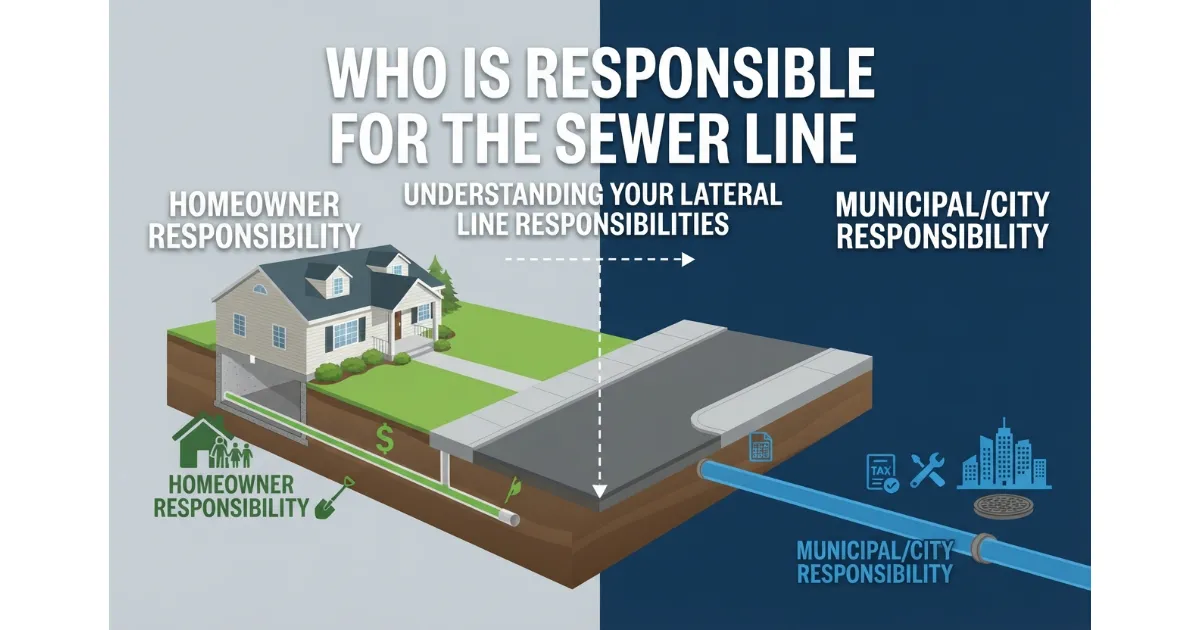
Property owners are generally responsible for maintaining and repairing the entire private sewer lateral connecting their home to the public sewer main. This responsibility typically extends right up to the property line, easement boundary, or connection tap managed by the municipality.
Why the Changes by City
- Local municipal ordinances dictate whether private ownership ends at the property line or the connection tap at the main.
- Public utility easements can shift legal maintenance duties onto the homeowner even if the pipe sits under public asphalt.
- Reviewing specific regional bylaws helps clarify exact financial liability before scheduling costly sewer line repairs.
Sewer Line Anatomy Upper Lateral Lower Lateral and Public Main
Understanding the precise layout of your sewer system helps determine maintenance duties across private and public zones. The sewer lateral travels from your indoor plumbing fixtures all the way to the municipal collection system beneath the street.
What Is the Upper Lateral? House to Property Line
The upper lateral represents the private section of the sewer line spanning from your home’s foundation to the property line. Homeowners carry full responsibility for clearing blockages, tree root intrusions, and pipe collapses within this residential boundary.
What Is the Lower Lateral? Property Line to Public Main
The lower lateral extends from the property line through the public right-of-way, sidewalk, or easement area down to the street connection. Maintenance duties here can shift depending on local municipal bylaws, where cities occasionally handle structural collapses in public zones.
What Is the Public Sewer Main and the Connection Point?
The public sewer main is the heavy-duty municipal pipeline running underneath the roadway that collects wastewater from multiple properties. The tap or connection point marks where your private lateral ties directly into this city infrastructure.
Where Is Your Sewer Cleanout Located?
- A sewer cleanout is a vertical access pipe capped with a threaded plug, typically found near the home’s foundation or close to the property line.
- It allows plumbers to insert inspection cameras or hydro-jetting equipment directly into the lateral to clear grease and root clogs.
- Properties missing a cleanout near the boundary line often need a plumber to install one for proper diagnostic access.
Sewer Line Diagram
- House Foundation: The starting point where wastewater exits indoor plumbing lines.
- Sewer Cleanout: Access point used for clearing blockages and running camera inspections.
- Upper Lateral: The pipe segment running across private property lines.
- Property Line / Easement: The legal boundary separating private yard space from public land.
- Lower Lateral & Right-of-Way: The section crossing beneath sidewalks, curbs, and street shoulders.
- Public Main & Tap: The ultimate municipal collection line where wastewater flows into city treatment networks.
How Much of the Sewer Line Is the Homeowner Responsible For?
Homeowners are generally responsible for the entire private sewer lateral stretching from the house foundation up to the property line. However, depending on local municipal bylaws, this financial and legal liability can extend all the way out to the public connection tap in the street.
What Homeowners Usually Have to Pay For
- Clearing routine clogs caused by grease, household debris, or flushable wipes within the private line.
- Repairing or replacing cracked, crushed, or bellied pipe sections located inside the property boundary.
- Removing invasive tree roots that have penetrated the upper lateral on private grounds.
- Installing an accessible sewer cleanout if the property lacks code-compliant diagnostic entry points.
Why Responsibility Can Extend Past Your Property Line
Many municipal codes dictate that a property owner owns and maintains the sewer service connection all the way to the public sewer main. This means even if a pipe break or root intrusion occurs beneath the sidewalk, easement, or street shoulder, the repair cost legally falls on the homeowner.
What the City or Water Authority Usually Handles
- Maintaining, repairing, and upgrading the heavy-duty public sewer main running beneath the middle of the street.
- Clearing blockages or structural failures within the main collection lines that affect multiple properties.
- Managing the municipal treatment facilities and regional infrastructure networks.
When the City Is Responsible: Real Exceptions
- If a structural collapse or major blockage occurs strictly on the municipal side of the connection point.
- When aggressive roots from a city-owned street tree infiltrate and destroy the public portion of the utility connection.
- If municipal construction or road work directly damages the sewer lateral within the public right-of-way.
- Under specific regional utility policies where the local government explicitly covers lower lateral maintenance.
How to Find Out Who Owns Your Section of the Sewer Line
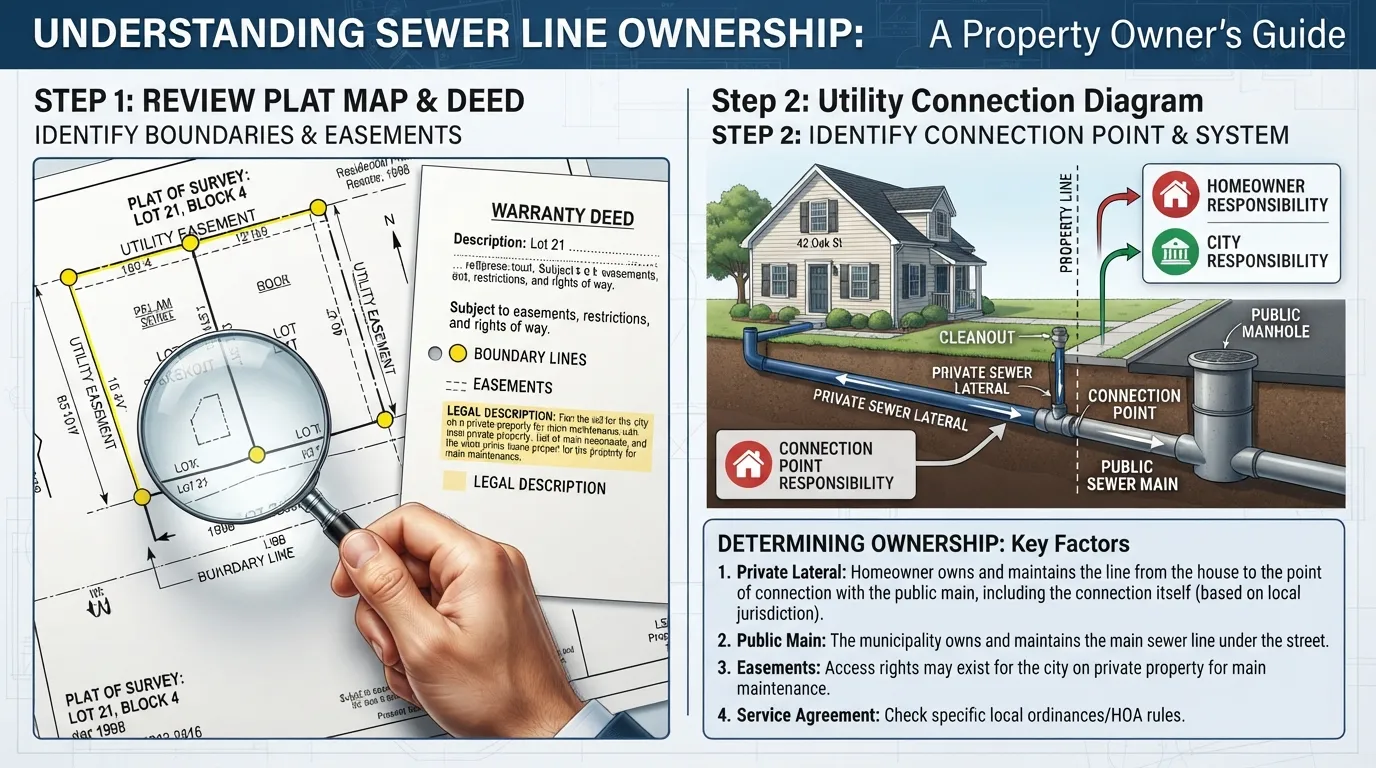
Determining exact legal ownership requires checking official local municipal records, property maps, and utility guidelines. Every municipality operates under unique regional codes that dictate whether private liability stops at the property boundary or extends to the street main.
Step 1: Check Your City’s Sewer Line Maps GIS
- Access your local government or county Geographic Information System (GIS) mapping portal online.
- Look at public utility overlays to trace municipal sewer mains running near or through your parcel.
- Identify registered easements where city infrastructure crosses designated sections of private land.
Step 2: Locate Your Cleanout and Property Line
Locate your property pins or boundary markers to see where private land ends and public right-of-way begins. Finding your sewer cleanout near this boundary often indicates the transition point between homeowner maintenance and municipal utility oversight.
Step 3: Review Your Plat, Deed or Property Records
- Examine your original home purchase deed or subdivision plat map for documented sewer easements.
- Check title documents for any restrictions, shared line agreements, or utility access covenants.
- Review historical building permits if past owners replaced or modified the sewer lateral connection.
Step 4: Call or Email Your Water Sewer Authority
Direct communication with your local utility provider provides the definitive answer for your specific street address. You can review guidelines such as those outlined on an official water authority’s sewer line responsibility page to understand standard reporting formats.
Example: How One City Explains Its Sewer Line Rules
Many urban municipalities enforce distinct separation rules where homeowners own the lateral to the property line, but some regional districts hold owners liable up to the curb stop or main tap. Reviewing your specific local ordinance prevents unexpected repair bills during an emergency plumbing failure.
Questions to Ask Your City
- Does the city maintain the lower lateral located within the public right-of-way or sidewalk zone?
- Is there a city-approved contractor list required for making repairs near the municipal main connection?
- Does the municipality offer any sewer line insurance programs or reimbursement for repairs caused by city infrastructure?
Whose Problem Is It?
Figuring out who to call during a sewer emergency depends entirely on the physical location of the block or pipe failure. Pinpointing where the issue occurs ensures you contact the right professional instead of wasting time and money.
Problem Inside Your House or Yard
- Backups originating from indoor drains, toilets, or the main stack are the homeowner’s responsibility.
- Blockages caused by tree roots, grease buildup, or structural cracks anywhere in the yard require hiring a licensed private plumber immediately.
- Camera inspections can pinpoint exact damage locations within the private property boundary.
Problem Under the Sidewalk or Curb
Issues occurring beneath the sidewalk, curb, or utility easement can fall into a gray area depending on local municipal ordinances. Homeowners must often coordinate with local plumbers to inspect the lower lateral before the city will acknowledge any public repair obligations.
Problem in the Street or at the Main Line
If sewage is overflowing from the street manhole or multiple neighbors are experiencing simultaneous backups, the issue lies in the public infrastructure. Call your local public works department or municipal water authority immediately to report a main line failure.
Decision Flowchart
Special Situations Townhomes Apartments Tenants Easements and Neighbors
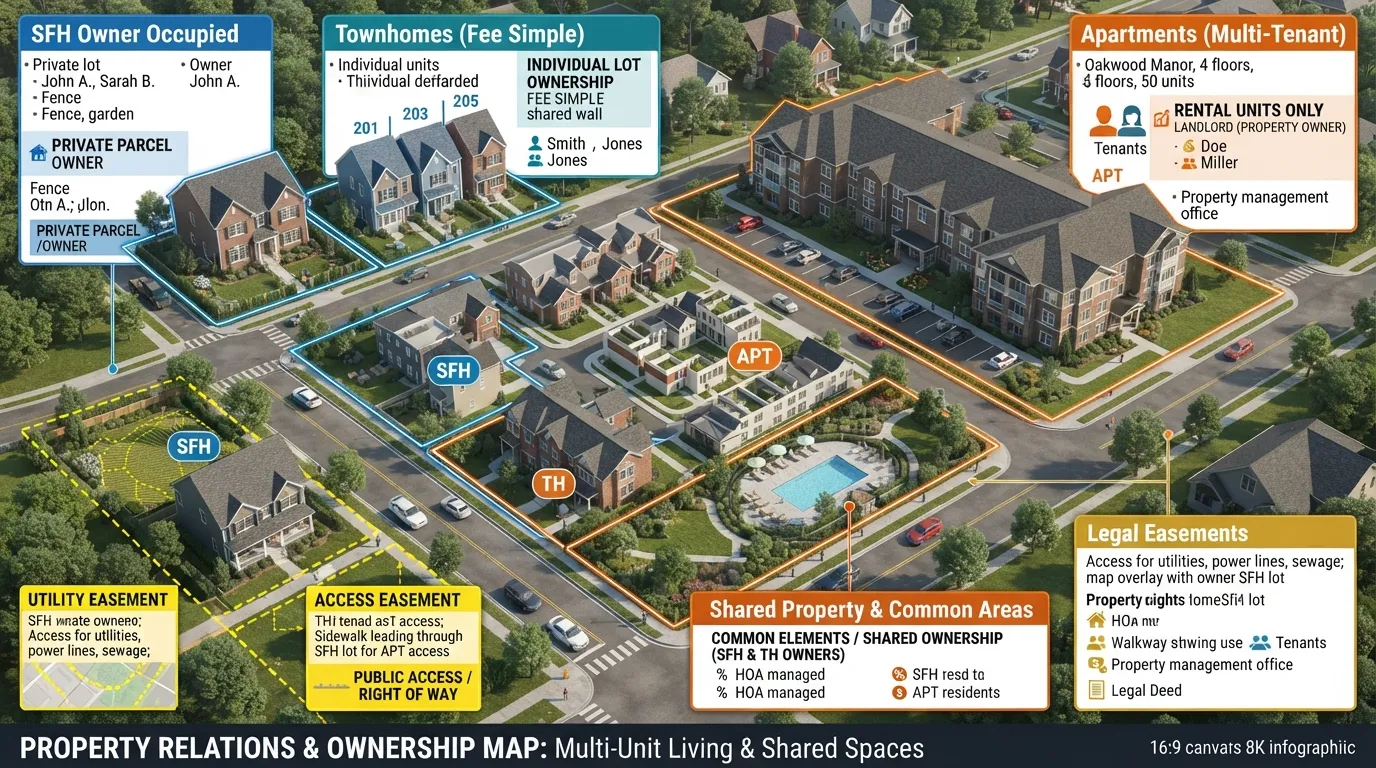
Property ownership structures outside of single-family homes introduce unique legal complexities for sewer maintenance. Shared lines, rental agreements, and multi-unit developments often blur standard utility responsibilities between individuals and governing bodies.
Who Is Responsible for the Sewer Line in a Townhome Community
- Townhome associations (HOAs) or condo boards typically manage shared main collection lines and community sewer trunks.
- Individual homeowners are usually responsible for the specific lateral line serving exclusively their unit.
- Reviewing the HOA CC&Rs (Covenants, Conditions, and Restrictions) is essential to clarify shared lateral maintenance costs.
Who Fixes a Broken Sewer Line in an Apartment Building
Landlords and property management companies carry full legal liability for fixing sewer backups and broken drainage lines in apartment complexes. Tenants should report slow drains or backups immediately, as structural building plumbing remains entirely the owner’s responsibility.
Is a Tenant Responsible for Repairing Drains and Sewers
Tenants are rarely responsible for structural sewer repairs, root intrusions, or worn-out pipes. However, rental lease agreements often hold tenants financially liable for clogs caused directly by improper disposal of grease, sanitary wipes, or foreign items.
What If Your Sewer Line Runs Through a Neighbor’s Yard or Under Their Garage?
When a private service line crosses an adjacent property, a recorded easement or right-of-way agreement usually dictates access rights. The owner of the home generating the wastewater remains responsible for maintaining the pipe, even if repairs require digging up a neighbor’s lawn.
Who Is Responsible for Roots When the Line Is on an Easement
Utility easements grant access rights for infrastructure maintenance, but property owners usually retain landscaping duties within that zone. If invasive roots from trees planted by the property owner damage the underground sewer pipe, that owner typically bears the repair liability.
Signs of a Damaged or Collapsed Sewer Line
Recognizing early warning signs of sewer failure prevents catastrophic property damage and costly emergency excavations. Identifying structural compromises helps homeowners address pipe deterioration before total collapse occurs.
Common Warning Signs
- Slow draining sinks, bathtubs, or showers that persist despite standard plunging or snaking.
- Gurgling sounds coming from toilets or floor drains when running washing machines or flushing.
- Persistent foul sewage odors lingering around basement drains, yards, or crawl spaces.
- Unusually lush, green patches of grass in the yard indicating a subsurface sewage leak fertilizing the lawn.
- Frequent sewage backups and overflows backing up into lower-level household fixtures.
How Can a Sewer Line Get Damaged
Aggressive tree roots actively seek out moisture and nutrients inside underground joints, cracking aging pipes. Additionally, shifting soil, ground settling, heavy construction vibrations, and natural pipe degradation over decades contribute to structural failures.
Pipe Materials and Lifespan
How Often Does a Sewer Line Need to Be Replaced
Traditional sewer lines constructed from clay or cast iron typically require replacement or major trenchless rehabilitation after 50 to 60 years. Modern PVC sewer systems are designed to last over a century when properly installed and maintained.
How Do I Know If My Sewer Line Needs Replacement
The only definitive way to confirm total pipe failure is by hiring a licensed plumber to perform a professional video camera inspection, also known as a sewer scope. This allows technicians to view interior pipe conditions directly and identify structural breaks, bellies, or heavy root intrusion.
Does Homeowners Insurance Cover a Broken Sewer Line
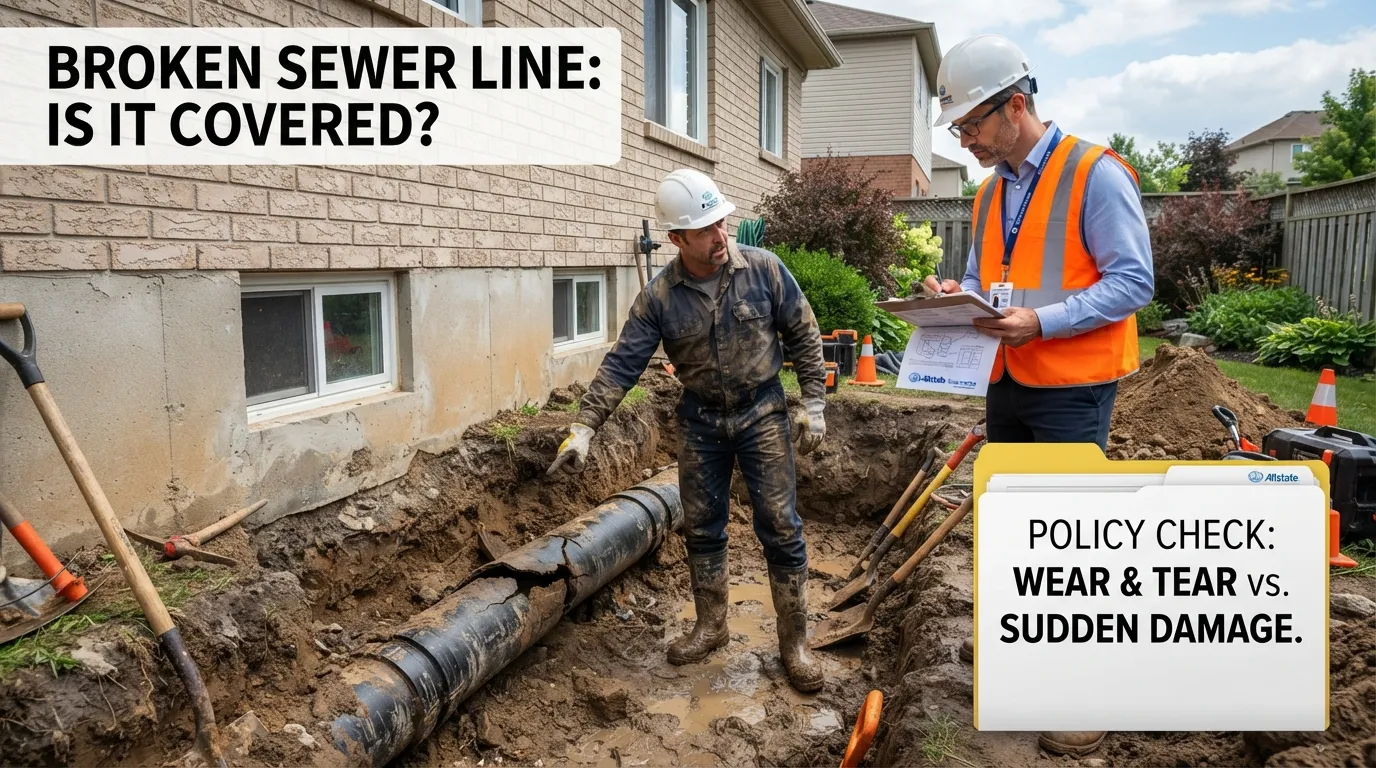
Standard homeowners insurance policies typically exclude underground sewer line damage caused by routine wear and tear, shifting soil, or tree root intrusion. However, optional policy endorsements or specialized service line coverages can protect homeowners from unexpected multi-thousand-dollar excavation expenses.
What a Standard Homeowners Policy Usually Covers and Doesn’t
- Standard policies generally cover sudden and accidental water damage inside the home if a backup floods living areas, subject to specific sub-limits.
- They explicitly exclude the physical repair, excavation, or replacement of the outdoor sewer lateral pipe itself.
- Damage caused by gradual deterioration, aging materials, lack of maintenance, or root growth is considered homeowner liability.
Service Line or Sewer Line Endorsements
Many insurance providers offer low-cost service line endorsements that bridge the coverage gap for underground piping. These specialized riders typically pay for the repair or replacement of damaged outdoor water and sewer pipes, wiring, and gas lines located on the property.
Sewer Backup Coverage vs. Line Repair Coverage
- Sewer Backup Endorsement: Covers water damage to your home’s interior, drywall, and personal belongings when municipal or private lines back up through drains or toilets.
- Service Line Coverage: Specifically pays for the physical excavation, trenchless repair, and replacement of the broken outdoor utility pipe itself.
How to Check Your Own Policy
Review your policy declarations page or call your insurance agent directly to check for riders like “Water Backup of Sewers and Drains” or “Service Line Enhancement.” Ask specifically whether outdoor underground piping on your property is protected under your current deductible level.
How to File a Claim: Document Before You Call
- Hire a licensed plumber to perform a professional video camera inspection and secure digital footage of the failure.
- Obtain a detailed written diagnostic report explaining whether the damage resulted from sudden breakage or long-term wear.
- Take clear photographs of any interior property damage before beginning cleanup or emergency repairs to support your insurance claim.
Who Pays for Sewer Line Replacement and How Much Does It Cost
Property owners are typically responsible for paying the full out-of-pocket costs of sewer line replacement on private property. Understanding average pricing metrics, repair techniques, and financial assistance programs helps homeowners budget effectively for unexpected plumbing failures.
Who Pays for Sewer Line Replacement
The homeowner covers all costs for repairing or replacing the private sewer lateral from the house up to the municipal connection point. If the structural break occurs strictly within the public right-of-way or main line, the city or local water authority absorbs the repair expenses.
Typical Cost Range
What Affects the Cost
- Depth and Length: Deeper trenches require shoring and heavy excavation equipment, driving up labor costs.
- Surface Obstructions: Having to break through concrete driveways, sidewalks, or paved patios adds significant restoration expenses.
- Material and Permits: Local municipal permit fees and specialized pipe materials influence overall project budgets.
What Is the Cheapest Way to Replace a Sewer Line
Trenchless pipe lining (CIPP) is often the most cost-effective long-term solution because it avoids extensive landscaping, concrete demolition, and yard restoration. While initial bids may look higher than quick spot patches, trenchless methods save thousands in property cleanup.
City Assistance and Repair Programs
Some progressive municipalities offer financial assistance programs, zero-interest loan pools, or cost-sharing agreements for lateral replacements. Homeowners should check with their local public works department to see if regional repair subsidies apply.
How to Get and Compare Plumber Quotes
- Always obtain at least three detailed, itemized bids from licensed, insured plumbing contractors specializing in sewer repair.
- Ensure each quote specifies whether trenchless or traditional open-cut excavation methods are being quoted.
- Confirm that the contractor handles all municipal permits, inspections, and cleanout installations included in the final price.
DIY Permits and Timeline
Modern trenchless technologies and traditional excavation techniques offer distinct advantages depending on the extent of pipe damage. Understanding repair methods, permit requirements, and project timelines helps homeowners prepare for construction phases.
Can a Sewer Line Be Replaced Without Digging
- Cured-in-Place Pipe (CIPP) Lining: Inserts a resin-saturated tube into the damaged pipe and inflates it, curing in place to create a seamless new pipe inside the old one.
- Pipe Bursting: Pulls a specialized steel bursting head through the old damaged pipe underground, simultaneously shattering it while pulling a new HDPE pipe into place.
- Both trenchless methods eliminate the need to excavate trenches across your entire lawn or driveway.
Trenchless vs Traditional Digging
Can a Homeowner Replace Their Own Sewer Line
Property owners cannot legally replace or tie into public sewer systems without proper contractor licensing and municipal bonding. Attempting DIY sewer excavation violates local plumbing codes, risks catastrophic environmental contamination, and fails required municipal inspections.
Do I Need a Permit to Replace My Sewer Line
Every legitimate sewer repair or replacement requires pulling official municipal plumbing and excavation permits before work begins. Municipal inspectors must physically sign off on the new pipe installation and connection tap before trenches can be backfilled.
How Long Does Sewer Line Replacement Take
Most standard residential sewer line replacements take between one to three days to complete, depending on soil conditions and excavation depth. Trenchless repairs are usually finished within 24 hours, whereas complex traditional digs involving concrete restoration may take up to a week.
What If a Plumber or Contractor Damages Your Sewer Line?
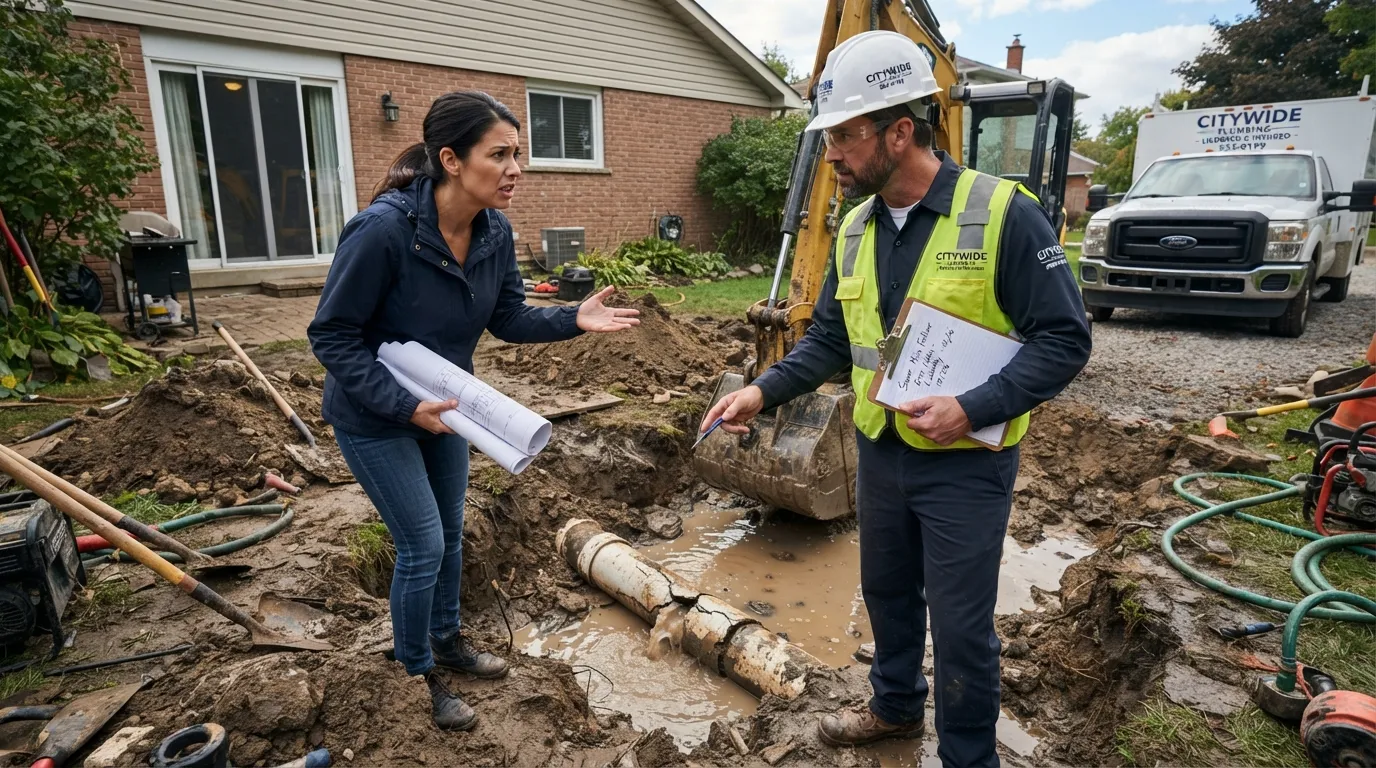
Accidental damage during routine drain cleaning or municipal construction can complicate repair liabilities. Knowing your rights and legal protections helps ensure accountable parties cover accidental property damage.
Is a Plumber Responsible If They Break the Line While Snaking?
Licensed plumbers carry liability insurance specifically to cover accidental damage caused during standard service calls. If an aggressive drain snake or hydro-jetting tool punches through an already fragile, corroded pipe, liability depends on whether the plumber exercised professional due diligence and warned you of pre-existing wear.
What to Do Immediately
- Document Everything: Take immediate photographs and demand unedited video footage from the contractor’s camera scope showing the exact moment and nature of the break.
- File Written Notice: Send formal written notification via email or certified mail to the plumbing company outlining the incident and requesting their commercial general liability insurance information.
- Get Independent Opinions: Hire an independent plumbing inspector to verify whether the break resulted from technician negligence or unavoidable structural failure.
Damage From Utility or Construction Work
If third-party utility contractors or municipal road crews damage your sewer lateral while working in the right-of-way, document the street excavation immediately. File a formal damage claim with the city public works department and the contractor’s bonding company to recover full repair expenses.
Buying or Selling a Home Sewer Line Checklist
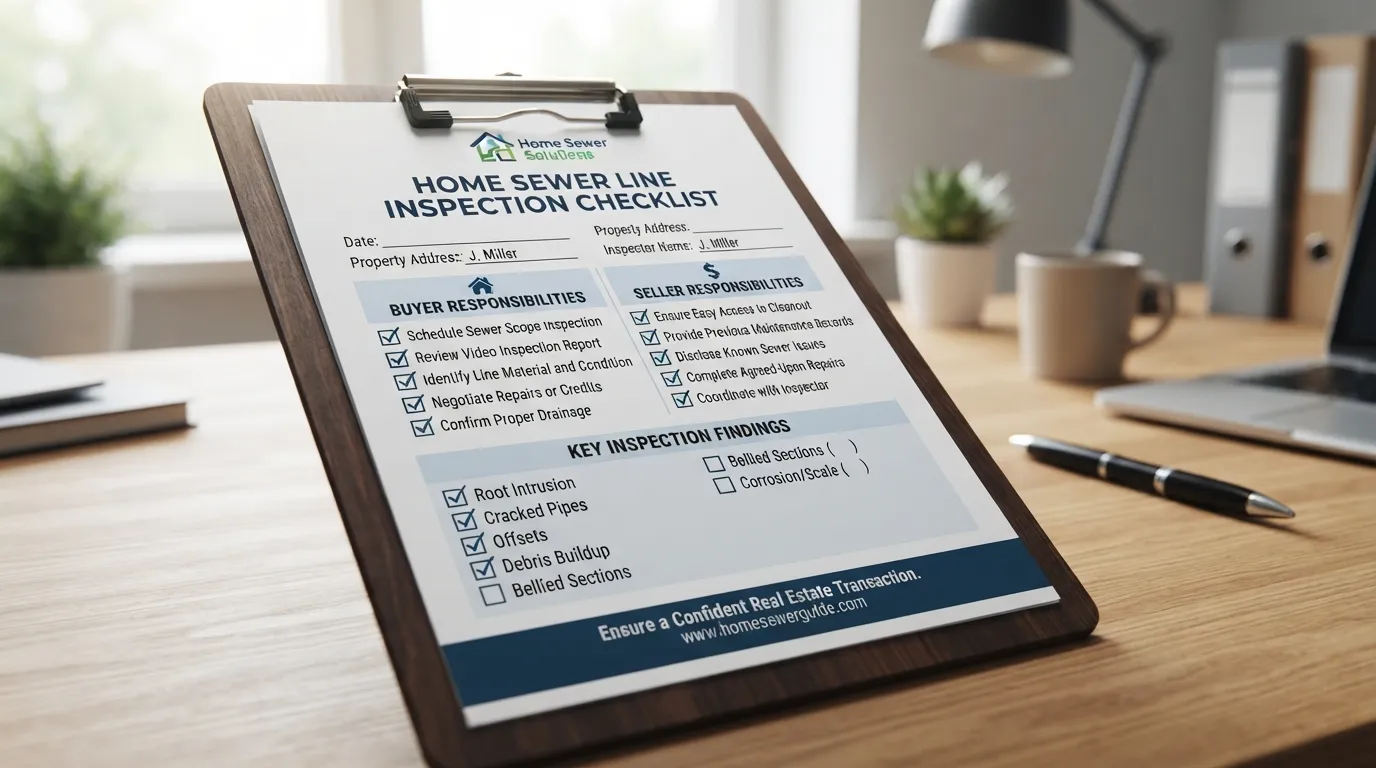
Unsuspected sewer line defects can cost new homeowners thousands of dollars immediately after closing. Incorporating a rigorous plumbing inspection into your real estate transaction checklist protects buyers from inheriting hidden structural liabilities.
Why a Sewer Scope Inspection Is Worth It
- Standard home inspectors check indoor plumbing fixtures but cannot see underground sewer lateral conditions.
- A specialized video sewer scope inspection reveals hidden root intrusions, pipe bellies, cracks, and structural collapses.
- Spending a small fee on a scope inspection can save buyers from facing unexpected $10,000 excavation bills shortly after moving in.
Questions to Ask the Seller or Agent
- Has the sewer lateral ever experienced backups, recurring clogs, or professional root cleaning during your occupancy?
- Are there records, permits, or warranties from past sewer line repairs, replacements, or trenchless upgrades?
- Does the property connect directly to a municipal sewer main, or does it utilize an aging private septic system?
How Responsibility Transfers to the New Owner
Once a real estate transaction closes, full legal and financial responsibility for the private sewer lateral transfers completely to the buyer. Sellers are generally not liable for post-closing plumbing failures unless intentional concealment or fraudulent disclosure can be proven.
Sewer Backup Right Now Step by Step Action Plan
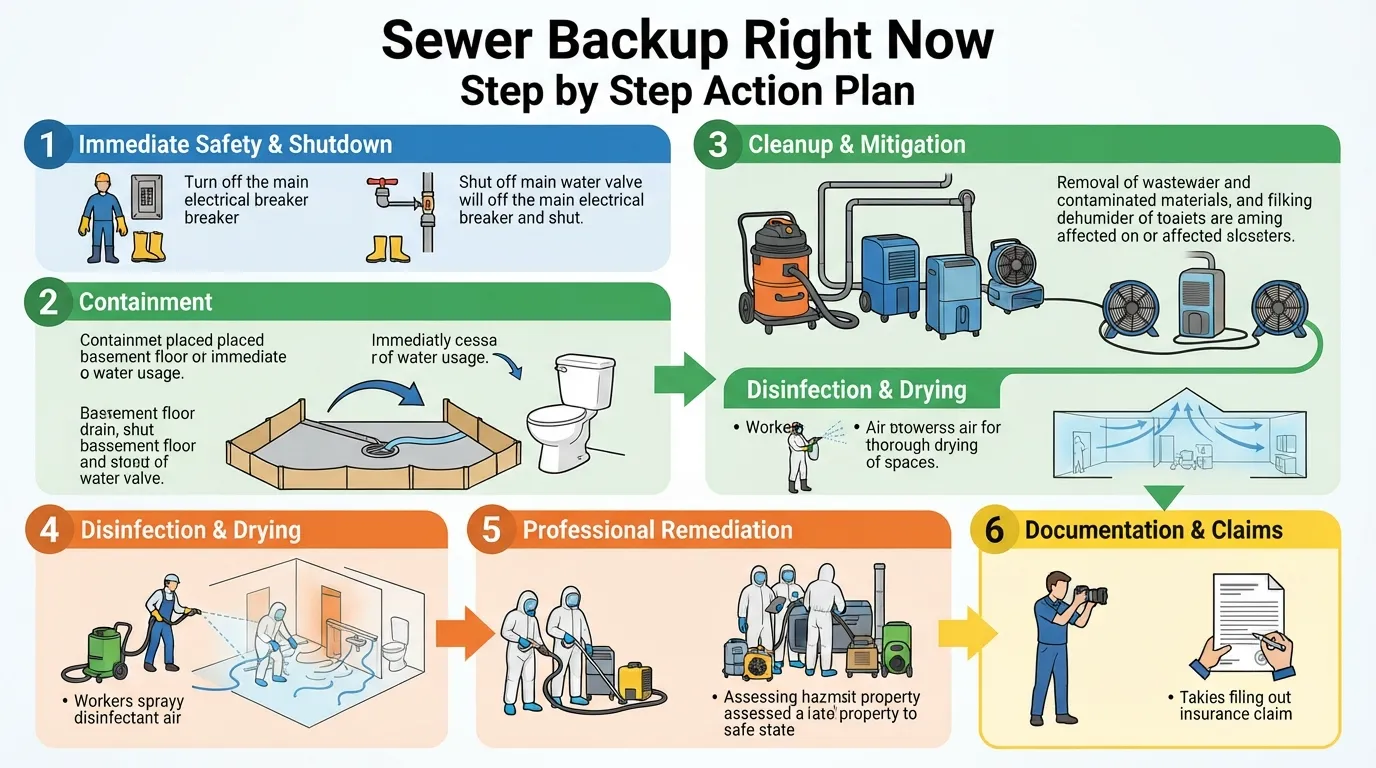
Experiencing an active sewer backup requires immediate, calm action to minimize health hazards and property destruction. Following a structured emergency response plan prevents further contamination while setting you up for a smooth repair and insurance process.
Step 1: Stop Water Use and Ensure Safety
- Immediately stop running washing machines, flushing toilets, and using any indoor sinks or showers to prevent wastewater from overflowing further.
- Keep family members and pets away from standing sewage pools to avoid exposure to harmful bacteria and biohazards.
- Turn off the electricity to affected basement areas if standing water approaches electrical outlets or circuit panels.
Step 2: Document the Damage With Photos and Video
Take clear, wide-angle photographs and video footage of all affected living areas, ruined drywall, damaged flooring, and personal belongings before starting any cleanup. Thorough visual evidence is mandatory for filing successful insurance claims and contractor liability disputes.
Step 3: Identify Where the Problem Is
Check if the backup is isolated to a single fixture or affecting multiple drains throughout the house. Locate your main cleanout access point to see if water is pooling outside or if the issue is confined entirely to indoor plumbing lines.
Step 4: Call the Right Party
- If the backup affects only your private home or yard, call a licensed emergency plumber immediately for a diagnostic inspection.
- If sewage is overflowing from the street manhole or multiple neighbors are experiencing identical backups, call your local public works department right away.
- Contact your insurance claims department to report water damage and ask if your policy includes backup or service line protection.
Step 5: Keep Records of Everything
Organize all plumber invoices, emergency cleanup receipts, written diagnostic reports, and correspondence with insurance adjusters in a dedicated folder. Maintaining a meticulous paper trail protects your legal rights and ensures you are fully prepared for reimbursement discussions.
Frequently Asked Questions
Quick answers to common questions regarding sewer line maintenance, legal responsibilities, and contractor selection.
Who is responsible for a sewer line on an easement?
Property owners generally remain responsible for maintaining the private sewer lateral even when it crosses a utility easement on their land. The easement grants the city access rights to perform municipal work, but private pipe maintenance stays with the homeowner unless regional codes state otherwise.
Is my sewer line my responsibility or the city’s?
Homeowners are responsible for the private sewer lateral running from the house foundation to the property line or connection tap. The city or local water authority takes full responsibility for the heavy-duty public sewer main running beneath the street.
Does the city sewer line run on my property?
City sewer mains usually run under public streets or dedicated utility easements located just inside property boundaries. You can verify municipal sewer line placements by checking your property plat map or local GIS zoning records.
What if the city sewer line is clogged?
If a blockage occurs in the municipal public main rather than your private lateral, the city is entirely responsible for clearing it. Contact your local public works department immediately if multiple neighbors experience simultaneous sewer backups or street manholes overflow.
Who offers sewer line repair near me?
To find reliable sewer repair services, search for licensed, bonded, and insured plumbing contractors specializing in trenchless technology and video camera scoping. Always check local reviews, request at least three itemized quotes, and verify state contractor licensing before hiring.
Conclusion and Key Takeaways
Navigating sewer line ownership requires balancing private maintenance duties with municipal utility rules. Understanding where private infrastructure ends and public jurisdiction begins protects property owners from unexpected financial liabilities.
Key Takeaways
- Homeowners are typically responsible for maintaining the entire private sewer lateral from the house foundation to the property line.
- Local municipal codes dictate whether liability stops at the boundary or extends all the way to the street connection tap.
- Routine warning signs like slow drains, gurgling toilets, and lush lawn patches indicate potential pipe failure requiring immediate camera scoping.
- Standard homeowners insurance policies exclude underground pipe wear, making optional service line endorsements essential financial safeguards.
- Trenchless repair methods offer cost-effective, non-invasive solutions to fix damaged pipes without destroying your lawn or driveway.
Your Next Step
Verify your specific local municipal rules by checking your city’s GIS mapping portal or calling your local water authority today. Once you confirm your exact boundary responsibilities, keep your plumber’s contact information ready and inspect your property records to stay prepared for any plumbing emergencies.

Oscar Vance | Master Plumber & Drainage Expert
Meet Oscar Vance, a licensed master plumber sharing practical solutions on residential repairs, preventive maintenance, and thoughtful home upkeep.

Pingback: How Much Does a Plumber Cost to Unclog a Toilet? 2026 Prices