How to Use Teflon Tape for Plumbing
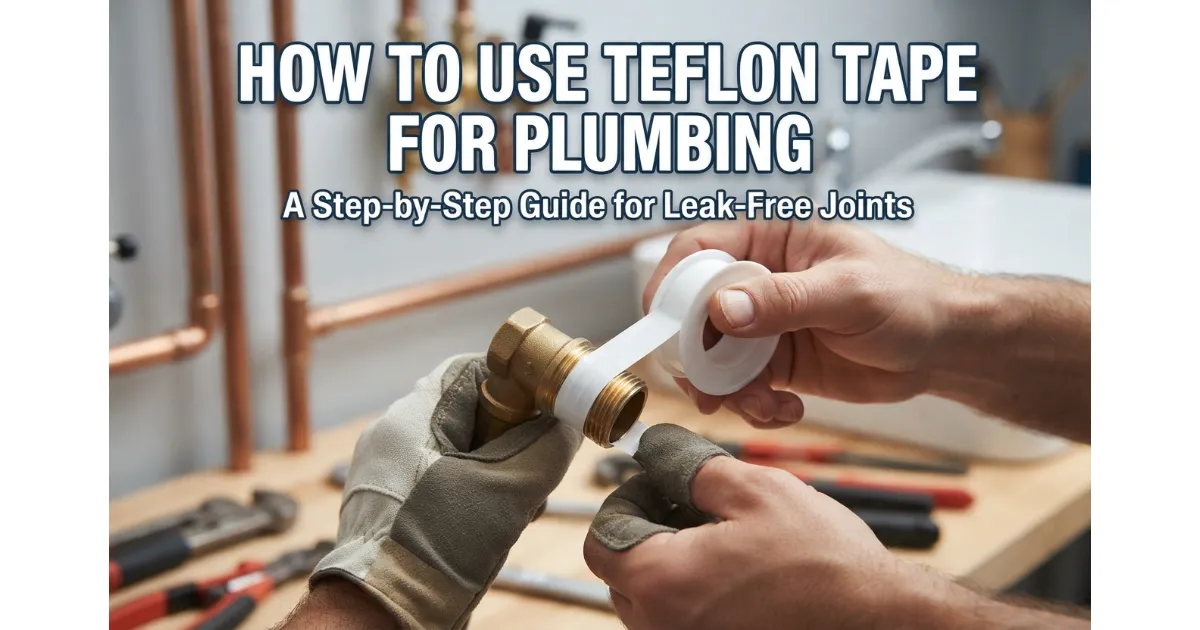 Applying plumbing tape incorrectly can lead to stubborn leaks and frustrating reworks during pipe repairs. Learning the proper technique from hands-on plumbing experience saves time and prevents joint failures.
What Is Teflon Tape and Where Does It Work?
Understanding the material and proper application areas of thread seal tape prevents common plumbing errors. Knowing how this material functions ensures tight, durable connections across various pipe systems.
What Is Teflon Tape PTFE Thread Seal Tape
Teflon tape, scientifically known as polytetrafluoroethylene (PTFE) thread seal tape, is a non-stick synthetic fluoropolymer film. Plumbers use it widely to lubricate and seal tapered pipe threads in residential and commercial plumbing applications.
How Does It Actually Seal a Leak?
- The tape fills microscopic gaps and imperfections between mating threads to block water or gas escape.
- It acts as a mechanical lubricant, allowing male and female fittings to screw together smoothly.
- It functions strictly as a thread sealant, not as a rubber gasket or structural adhesive.
Male Threads vs Female Threads
Thread seal tape is applied exclusively to male threads located on the outside of a pipe or fitting. Wrapping female threads inside a fitting pushes the tape backward, bunching it up and causing joint failure or obstruction inside the water flow.
Step based Guide: How to Apply Teflon Tape
Mastering the correct wrapping technique requires patience, precision, and the right tools. When I learned this trade, I realized that taking shortcuts during prep work almost always resulted in annoying drips.
Step 1: Clean the Threads
Wipe away all grease, moisture, and old residue using your rag. Use a wire brush to scrub out any hardened debris or old tape remaining inside the grooves.
Step 2: Hold the Pipe Correctly
Position the pipe securely in your hand or vise with the male threads facing toward you. Keeping your working angle clear prevents awkward hand movements while wrapping.
Step 3: Start at the Second Thread
Place the end of the teflon tape flat against the second thread from the open edge, leaving the first thread completely bare. This prevents cross-threading when engaging the fitting.
Step 4: Wrap Clockwise with Tension
Wind the tape tightly around the pipe in a clockwise direction, maintaining firm tension so it molds into the thread valleys with about a 50% overlap per turn.
Step 5: Finish and Tear the Tape
Apply 3 to 4 complete wraps around the fitting. Pull the tape tight until it snaps cleanly, then smooth the loose end down flat against the threads.
Step 6: Assemble and Tighten
Thread the mating part on immediately by hand, then finish tightening gently with a wrench. Avoid over-tightening, which can strip the threads or squeeze out the seal.
Why Clockwise? How Many Wraps Are Right?
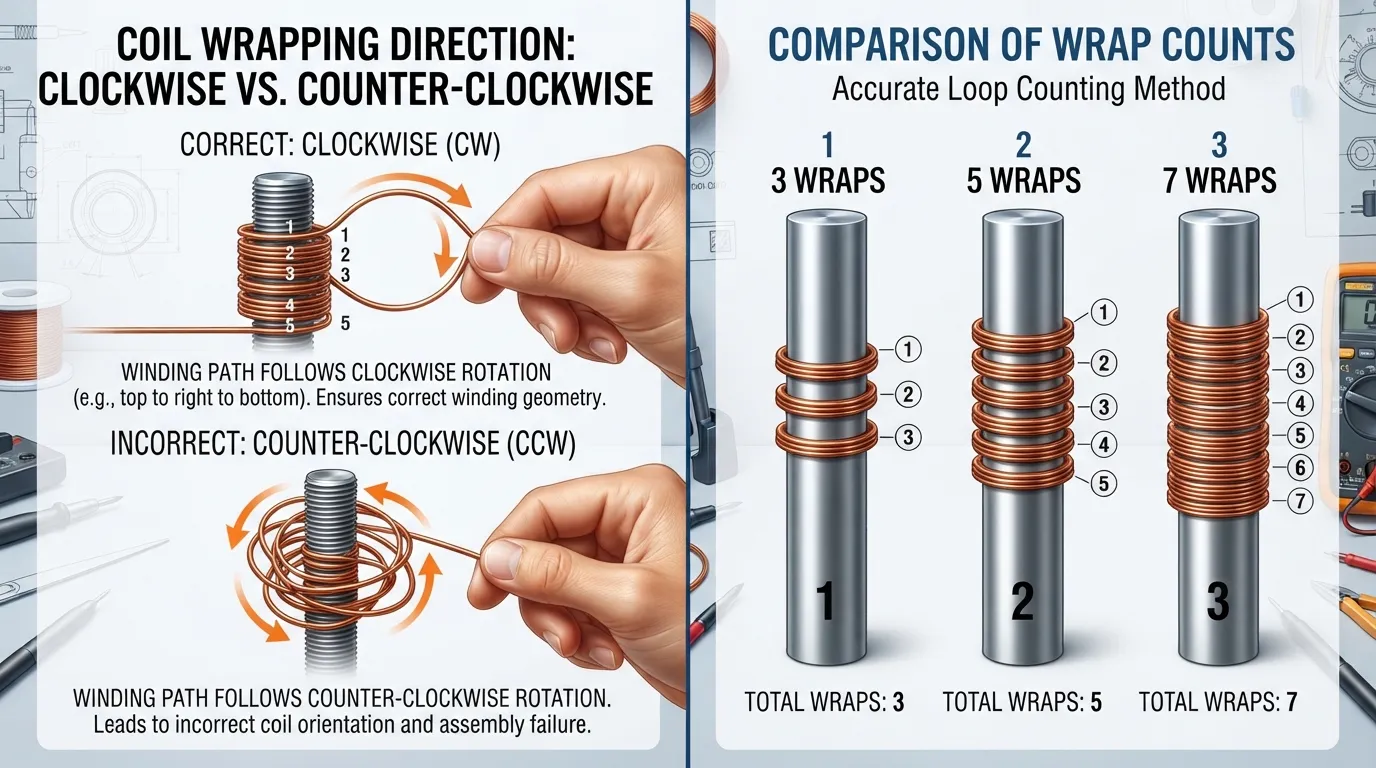 Understanding the physics behind wrapping technique prevents common mistakes that cause unexpected joint leaks. Technical reasoning separates amateur plumbing attempts from reliable professional installations.
Do I Put Teflon Tape on Clockwise or Counterclockwise?
Always wrap thread seal tape in a clockwise direction when looking straight at the open end of the male pipe. If you wrap counterclockwise, screwing on the female fitting will catch the loose edge of the tape, causing it to unwind and bunch up uselessly.
How Many Times Do You Wrap Teflon Tape?
- Standard 1/2-inch and 3/4-inch pipes typically require 3 to 4 complete wraps for a secure seal.
- Larger industrial pipe sizes or worn threads may need 5 to 6 wraps to fill deeper gaps.
- Thin standard tape requires slightly more turns than heavy-duty density tape.
Can You Put Too Much Teflon Tape on Pipes?
Applying more than 5 or 6 wraps creates excessive bulk that puts abnormal stress on threaded joints. On metal connections, it makes assembly extremely difficult, while on plastic fittings, over-wrapping frequently causes the female collar to crack or split under pressure.
My Test: 2 Wraps vs 4 Wraps vs 8 Wraps
During a hands-on pressure test on a 1/2-inch galvanized line, 2 wraps left a slow weeping leak under high pressure. 8 wraps made the fitting impossible to tighten fully without heavy tool force and distorted the seal. Exactly 4 wraps achieved a completely dry, secure joint without over-stressing the material.
When NOT to Use Teflon Tape
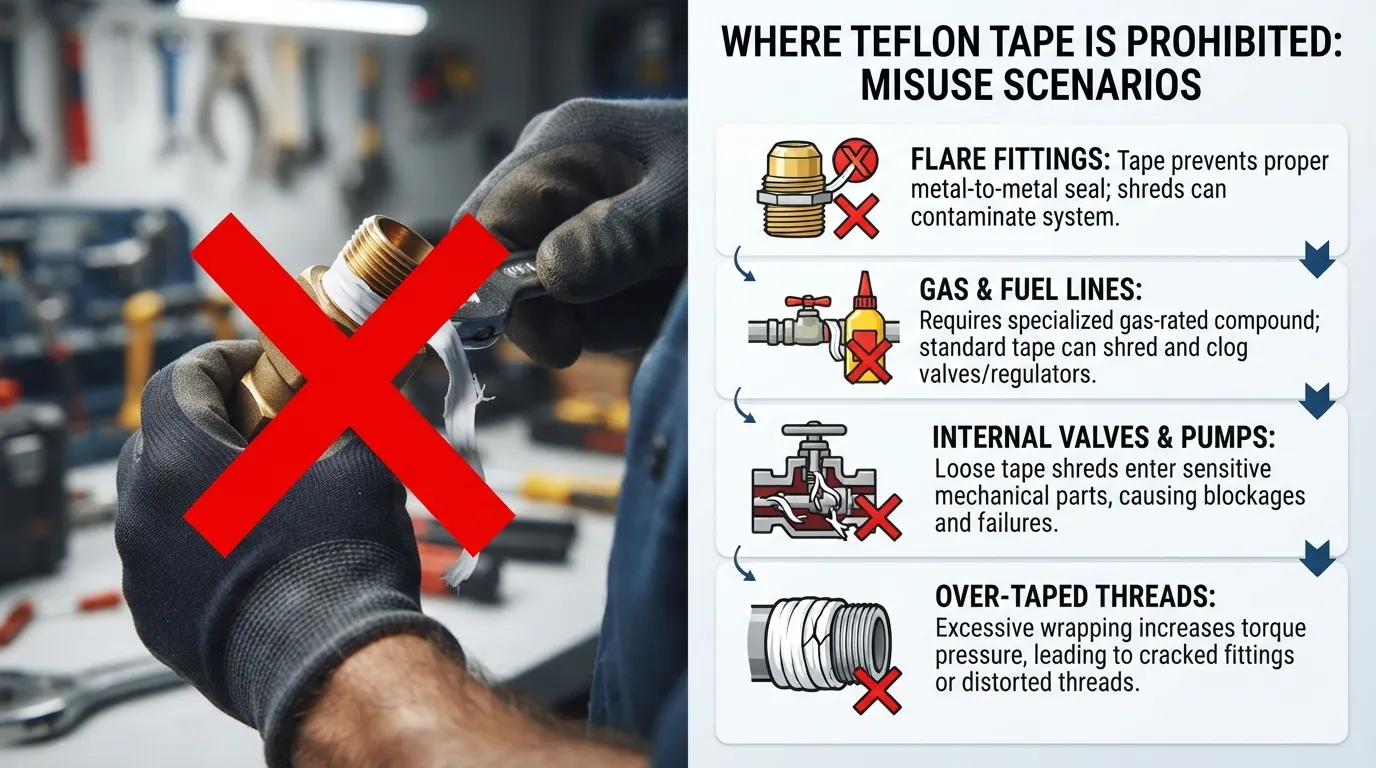 Applying thread seal tape to the wrong types of plumbing joints can prevent proper sealing and cause severe leaks. Recognizing where tape fails protects your hardware from improper installation.
Compression Fittings and Flare Fittings
Never apply teflon tape to compression fittings or flare fittings. These connections rely entirely on a metal ferrule or a flared cone pressing tightly against a machined seat to form a water-tight seal, making thread tape completely useless and harmful.
Garden Hose Connections and O-Ring Gasket Joints
- Garden hoses seal using internal rubber washers or flat gaskets, not the male threads.
- Placing tape on hose bibbs or showerheads with internal O-rings blocks proper seating and creates leaks.
- Joints equipped with rubber seals require no thread compounds or tape whatsoever.
Why Do People Still Use It on Compression Fittings?
Many beginners assume that wrapping thread tape everywhere ensures extra security against leaks. In reality, tape on a compression nut prevents the ferrule from sliding correctly, stopping the joint from locking down tightly.
Teflon Tape Colours Explained
Choosing the correct color of thread seal tape is critical for ensuring material compatibility and avoiding dangerous fitting failures. Different colors represent distinct tape thicknesses, densities, and specific application ratings.
Colour Chart
White vs Pink Teflon Tape
White tape features a lower density and is primarily designed for standard residential water pipes. Pink tape is a thicker, heavy-duty formulation that covers deeper thread tolerances quickly, saving time on larger plumbing projects.
What’s the Difference Between Blue and Red Teflon Tape?
- Blue tape is typically designed for oxygen lines, medical gases, or specialized stainless steel fittings.
- Red or orange variations usually denote high-temperature industrial thread sealants used in heavy mechanical environments.
- Always check the manufacturer specifications on the packaging because color coding can sometimes vary by brand. For more details, consult the official manufacturer’s guide to plumber’s tape.
Yellow Tape for Gas Lines and Gasoline
Yellow tape is specifically engineered to be thicker and resistant to chemical breakdown from natural gas, propane, butane, and petroleum products. Due to safety regulations, gas line installations should always be inspected or handled by a licensed professional.
Gray and Orange Tape, What Are They For?
Gray tape frequently contains nickel or specialized anti-seize compounds to prevent galling on stainless steel threads. Orange tape is generally formulated for high-pressure industrial fluid or chemical applications where standard white tape quickly degrades.
How to Use Teflon Tape on Specific Jobs
Different plumbing fixtures require tailored wrapping techniques to ensure a reliable, leak-free connection. Applying the right approach to specialized parts prevents unexpected failures in high-use areas.
Using Teflon Tape on Shower Arms and Shower Heads
Wrap the male threads of the shower arm with 3 to 4 turns of white or pink tape in a clockwise direction before screwing it into the drop-ear elbow behind the wall. Do not wrap the shower head connection if it features a built-in rubber washer or rubber seal.
Using Teflon Tape on a Toilet
- Apply tape to the male threads of the water supply shut-off valve connected to the toilet fill valve.
- Never use thread seal tape on the tank-to-bowl bolts or the flush valve nut, which rely on rubber gaskets.
- Ensure toilet bowl floor bolts remain completely free of thread tape since they are structural anchors.
Using Teflon Tape on Plastic PVC Threads
Plastic PVC threads require careful handling because they strip or crack easily under excessive pressure. Apply only 2 to 3 wraps of tape and tighten the fitting strictly by hand, followed by a quarter-turn with a wrench if necessary.
Fixing a Dripping Spigot or Outdoor Faucet
When reinstalling an outdoor hose spigot or wall hydrant, remove all old, degraded tape from the male pipe nipple using a wire brush. Apply 4 wraps of heavy-duty pink or white tape clockwise to create a weather-resistant seal against freezing temperatures and outdoor pressure.
Can Teflon Tape Be Used on a Threaded Joint Behind a Wall?
While threaded joints behind walls or tiles can use teflon tape, they carry a high hidden leak risk if not tested thoroughly before closing the wall. In local plumbing setups across Pakistan utilizing standard BSP threads alongside tapered fittings, ensuring proper wrap tension and conducting a pressure test prior to wall closure is critical to avoid costly water damage.
Teflon Tape vs Pipe Sealant and What Plumbers Use
Choosing between thread seal tape and liquid pipe compound depends on the specific project and material type. Understanding the trade-offs between these two sealing methods ensures long-lasting, leak-free pipe joints.
Teflon Tape vs Pipe Dope: Which Is Better?
What Do Plumbers Use Instead of Teflon Tape?
- Professional plumbers frequently use liquid pipe dope (thread sealant) or anaerobic thread sealants for heavy-duty metal joints.
- Some contractors combine heavy pink tape with a thin layer of pipe dope for maximum insurance on tricky high-pressure lines.
- For specialized gas and industrial systems, specialized paste compounds offer superior chemical resistance compared to basic tape.
Can You Use Teflon Tape and Pipe Sealant Together?
Yes, wrapping male threads with teflon tape and then brushing a thin layer of pipe dope over the tape is an accepted professional practice for difficult metal connections. The tape fills macro gaps while the paste acts as a chemical thread sealant, though this combination should be avoided on fragile plastic threads.
My Pick for Home Use
For everyday household plumbing repairs, I prefer using high-density teflon tape because it is clean, easy to store, and doesn’t expire or make a sticky mess in the toolbox. However, for permanent commercial metal installations, switching to a trusted liquid thread sealant provides ultimate peace of mind.
Common Teflon Tape Mistakes and What Happens
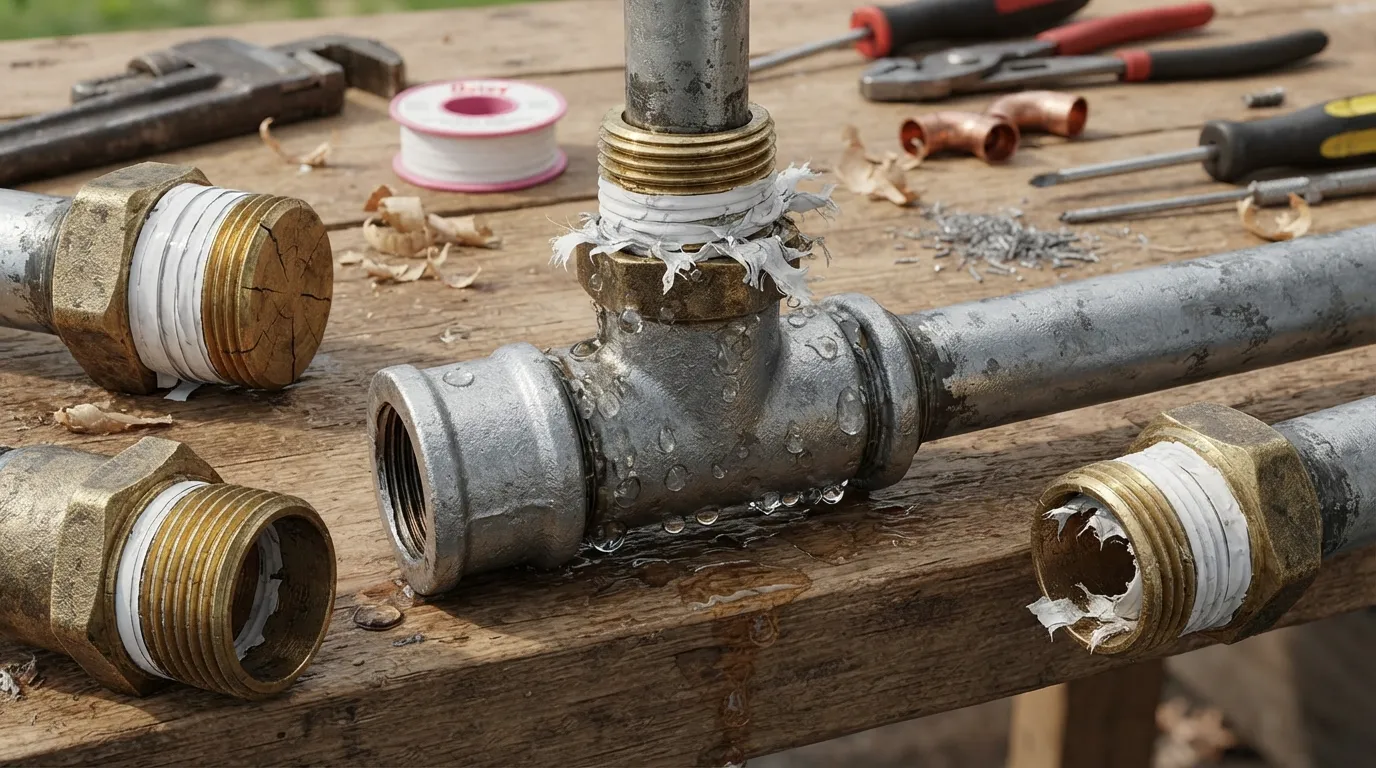 Even seasoned handymen occasionally make small execution errors that compromise the integrity of a plumbing joint. Recognizing these typical missteps prevents frustrating leaks and costly rework.
Wrapping the Wrong Direction
Wrapping thread seal tape counterclockwise causes the loose tail to catch and unwind as you screw on the fitting. Instead of tightening into the grooves, the tape bunches up into a useless clump, leaving the threads exposed to leak water.
Covering the First Thread
- Starting the wrap right at the very edge of the pipe pushes loose tape directly into the water stream.
- Stray shreds can break off and travel downstream, clogging aerators, valves, or sensitive cartridges.
- Leaving the first thread bare prevents cross-threading and ensures a clean, guided fit.
Using Too Much Tape
Applying six or eight wraps creates unnecessary bulk that places massive stress on the mating components. On a recent bathroom repair, I saw an over-wrapped PVC adapter split clean down the side because the excessive tape thickness acted like a wedge under torque.
Reusing Old Tape or Wrapping Over Dirt
Attempting to wrap fresh tape over old, shredded residue or grit prevents the material from seating evenly into the thread valleys. Debris creates tiny micro-channels that allow water pressure to seep through over time.
Over-Tightening the Fitting
Turning a wrench with excessive force after the joint feels snug strips the metal or plastic threads completely. Proper tape thickness means you only need hand-tightness plus a gentle quarter-turn with a wrench to achieve a watertight seal.
Will Teflon Tape Stop a Leak? Troubleshooting
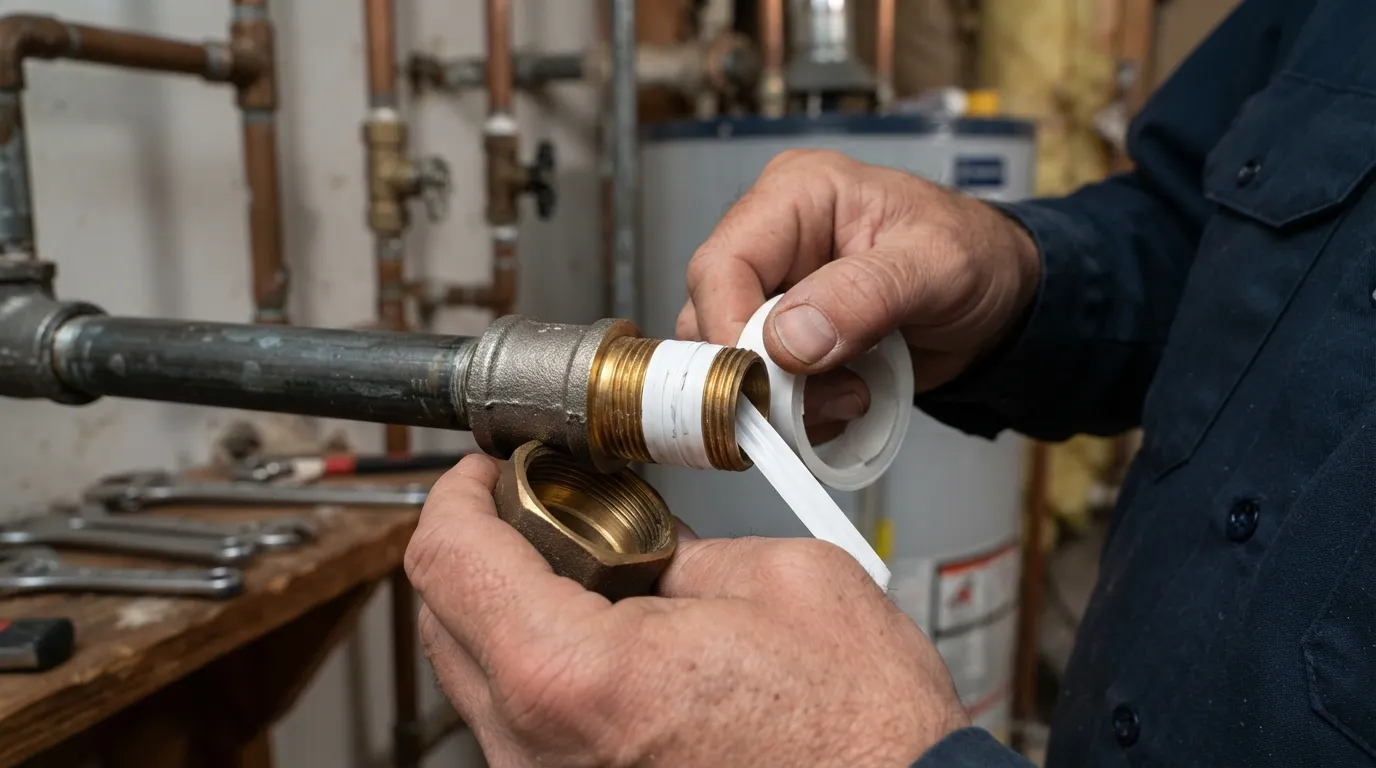 Discovering a damp puddle under a newly installed pipe joint can be frustrating, but identifying the root cause quickly solves the problem. Knowing when tape can fix a drip versus when a fitting needs replacement saves valuable time.
Can Teflon Tape Fix an Existing Leak?
Teflon tape can effectively stop thread leaks if the initial installation lacked proper wrap tension, direction, or thickness. However, thread seal tape cannot fix structural issues, such as a cracked pipe wall, a split fitting collar, or stripped metal threads.
Still Leaking After Taping? Quick Checklist
- Check if you wrapped in the wrong direction, causing the tape to bunch up and fail.
- Ensure you applied enough wraps (typically 3 to 4) to fill the thread tolerances completely.
- Inspect the mating threads closely for hidden hairline cracks, burrs, or manufacturing defects.
- Verify that the fitting is tightened adequately without being over-torqued.
How to Remove Old Teflon Tape and Rewrap
Unscrew the leaking fitting completely and use a wire brush or pick tool to strip away all shredded, old teflon tape from the male grooves. Wipe the threads clean with a rag, then apply 3 to 4 fresh wraps of tape tightly in a clockwise direction before reassembling.
What to Do If the Leak Is Not From the Threads
If water continues to drip from the body of a valve, a pinhole leak in the pipe wall, or a compression sleeve, thread tape will not help. You must either apply an approved liquid sealant patch, replace the damaged pipe section entirely, or call a licensed professional plumber.
What Is an Alternative for a Spigot Water Line Leak?
If an outdoor hose spigot leaks at the connection point and thread tape fails to seal the gap, switching to a high-grade liquid thread sealant or replacing the worn rubber washer inside the swivel nut usually resolves the issue permanently.
How Long Does Teflon Tape Last?
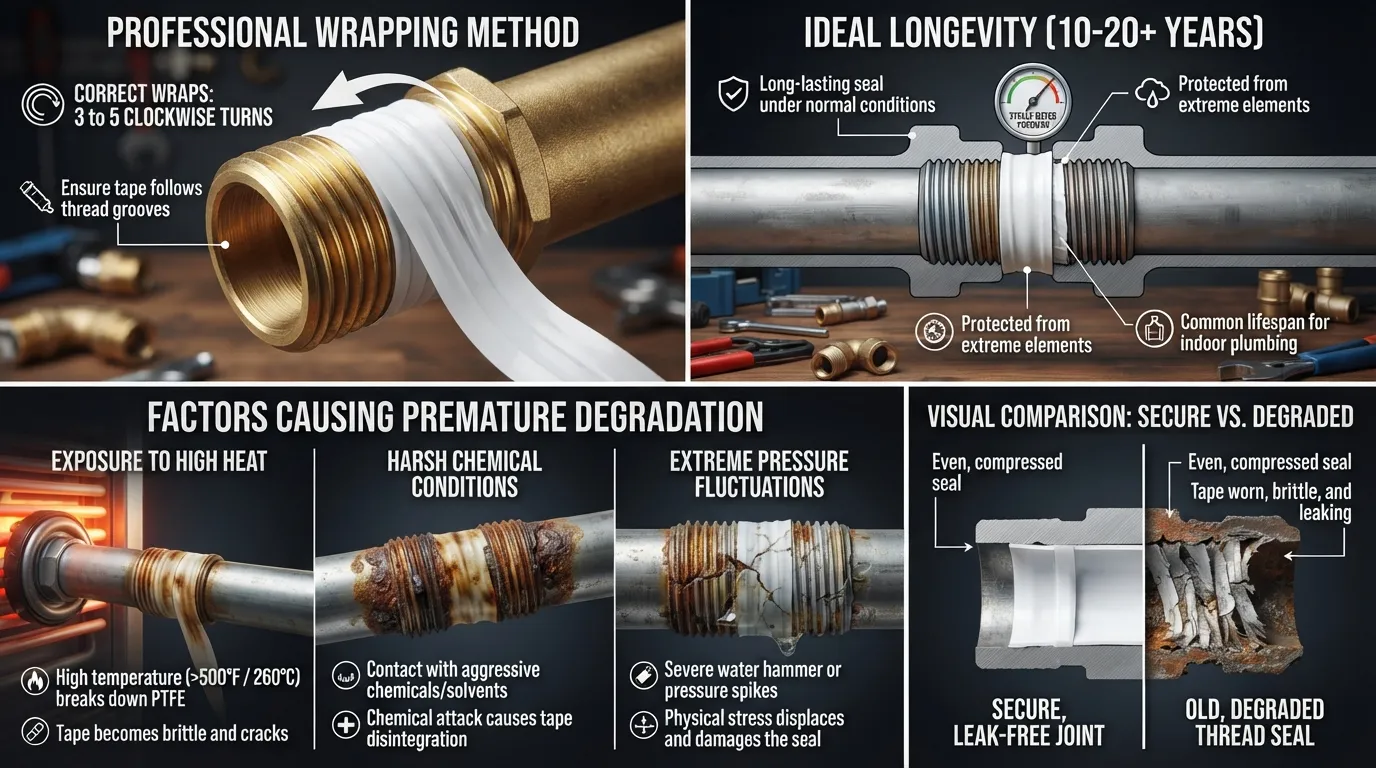 Understanding the durability of thread seal tape ensures long-term reliability for your home plumbing system. Knowing its lifespan and vulnerability factors prevents unexpected joint failures over time.
How Long Does Teflon Tape Last?
In a properly installed, undisturbed indoor plumbing joint, high-quality PTFE teflon tape can last virtually indefinitely, often matching the lifespan of the metal pipes themselves (frequently 20 to 50 years) without breaking down under normal water pressure.
What Can Damage or Dissolve It?
- Extreme continuous heat exceeding manufacturer ratings can cause PTFE to degrade or lose elasticity.
- Certain aggressive industrial chemicals, strong solvents, or specialized oxygen-rich fuels can dissolve standard tape.
- Constant mechanical vibration or severe water hammer can compress and shift the seal over many years.
When to Replace the Tape
Whenever you unscrew a plumbing fitting for maintenance, repairs, or inspection, always strip away the old tape completely. Never attempt to reuse or wrap over compressed old tape; always apply a fresh layer to guarantee a watertight seal upon reassembly.
Teflon Tape FAQs
Get quick, direct answers to the most common questions regarding thread seal tape selection and proper usage. These concise insights address remaining uncertainties for everyday plumbing repairs.
Is Pink Teflon Tape Better Than White?
Pink teflon tape is not necessarily better, but it is thicker and denser than standard white tape. Plumbers prefer pink tape for larger residential water pipes because fewer wraps are required to fill thread tolerances, whereas white tape is optimized for smaller standard lines.
What Are the Pros and Cons of Teflon Tape?
- Pros: Clean application, inexpensive, long shelf life, and excellent chemical resistance.
- Cons: Cannot fix structural cracks, requires complete replacement when joints are opened, and fails if wrapped counterclockwise.
Is Teflon Tape the Same as Sealant Tape?
Yes, sealant tape is simply another common industry name for Teflon or PTFE thread seal tape. Both terms refer to the thin, non-stick fluoropolymer film wrapped around male pipe threads to lubricate and seal threaded connections.
Can I Use Teflon Tape on Plastic Fittings?
Yes, you can use teflon tape on plastic fittings like PVC or CPVC, but you must use restraint. Apply only 2 to 3 light wraps and tighten by hand to prevent splitting the fragile female fitting.
Can You Reuse Teflon Tape?
No, you should never reuse teflon tape. Once a fitting is unscrewed, the tape becomes compressed and distorted, losing its sealing ability. Always strip the old residue and apply a fresh layer.
What Kind of Teflon Tape Is Used for Gasoline?
Yellow gas-rated teflon tape or specialized solvent-resistant PTFE tape is required for gasoline and fuel lines. Standard white tape dissolves when exposed to petroleum products, leading to hazardous leaks.
Do I Need Teflon Tape on Every Plumbing Connection?
No, you do not need tape on every connection. Joints that rely on rubber washers, O-rings, or compression ferrules—such as garden hoses and compression fittings—must never use thread seal tape.

Oscar Vance | Master Plumber & Drainage Expert
Meet Oscar Vance, a licensed master plumber sharing practical solutions on residential repairs, preventive maintenance, and thoughtful home upkeep.