what does abs stand for in plumbing?
 Understanding pipe materials is essential for any drain repair, home renovation, or structural plumbing project.
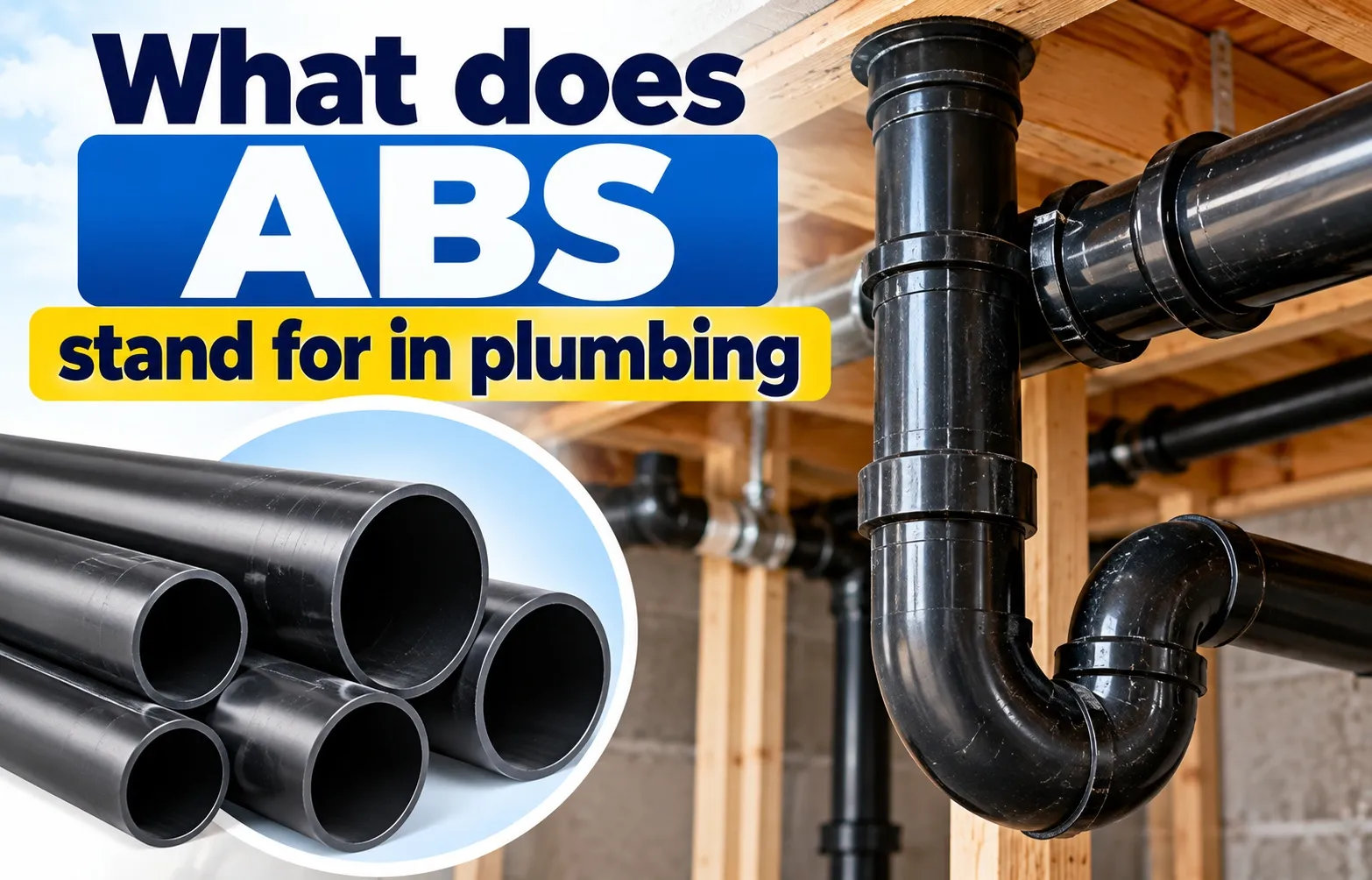
ABS stands for Acrylonitrile Butadiene Styrene in plumbing. It is a durable, rigid black thermoplastic resin engineered specifically for residential and commercial Drain, Waste, and Vent (DWV) systems as well as underground main sewer lines.
Unlike standard pressure pipes used for clean water delivery, ABS plumbing operates in non-pressurized gravity-drain networks. It safely conveys liquid waste, solid material, and sewer gases away from fixtures toward municipal sewers or septic tanks.
Key Properties of ABS Plumbing Pipe (At a Glance)
ABS pipes are easily recognized by their distinct physical traits and specific structural capabilities on job sites:
- Color Profile: Solid black finish throughout, allowing plumbers to immediately distinguish it from white or gray PVC lines.
- Fast Joining Method: Uses a single-step solvent cement process that welds joints securely without requiring a separate purple primer step.
- Impact Resistance: Retains high structural toughness and flexibility in cold weather environments, resisting cracks during winter handling.
- Application Scope: Intended strictly for non-pressurized DWV systems, underground building drains, and roof vent stacks.
- Pressure Limit: Not rated for pressurized drinking water lines or hot water distribution networks.
Material Science Breaking Down the Chemical Acronym
The performance, strength, and durability of ABS pipes stem directly from their unique triple-monomer chemical structure.
The Monomers Behind ABS: Acrylonitrile Butadiene and Styrene
ABS is a terpolymer formed by combining three distinct chemical building blocks, known as monomers. Each monomer contributes specific physical characteristics to the final thermoplastic resin:
- Acrylonitrile: Delivers chemical resistance, structural rigidity, and thermal stability to prevent the pipe from degrading when exposed to household drain fluids.
- Butadiene: Provides exceptional impact resistance, flexibility, and toughness, keeping the pipe resilient against physical stress and cold-weather fractures.
- Styrene: Imparts structural hardness, ease of manufacturing, and a smooth inner surface resin that optimizes fluid flow rates inside drain lines.
Why Material Composition Matters to Plumbers
Understanding these chemical properties explains how ABS behaves differently from other plastic piping materials during real-world installations.
The inclusion of butadiene rubber gives ABS superior cold-weather durability. When pipes are dropped, knocked, or handled roughly on freezing job sites, ABS remains tough and flexible, whereas rigid materials like PVC are far more prone to cracking under identical conditions.
Additionally, the balanced thermoplastic properties created by acrylonitrile and styrene allow the pipe to hold its structural shape under heavy soil compaction when buried underground, while maintaining high chemical resistance against common residential wastewater solutions.
Primary Applications Where & How ABS Pipes Are Used
ABS piping plays a vital role in modern plumbing, serving as a dependable choice for managing wastewater and ventilation in both residential homes and commercial buildings.
Drain Waste and Vent (DWV) Systems
ABS pipes are designed specifically for non-pressurized DWV piping networks. They rely on gravity to move wastewater efficiently away from plumbing fixtures and maintain proper air pressure throughout the system.
- Drain Lines: Safely direct wastewater away from sinks, showers, tubs, and washing machines.
- Waste Lines: Transport solid waste and water from toilets directly into the primary drainage stack.
- Vent Stacks: Extend upward through the roof to release sewer gases and equalize air pressure, preventing vacuum locks in P-traps.
Underground Drainage & Main Sewer Lines
ABS is widely utilized for underground sewer lines and building drains buried beneath slab foundations or outdoor soil.
The inherent impact resistance and flexural strength of ABS make it highly resilient against ground movement, soil settling, and freeze-thaw cycles. Plumbers frequently select ABS for below-grade applications because its durable structure minimizes the risk of joint shear or pipe cracking over time.
Where ABS Should NEVER Be Used
Despite its durability in drainage systems, ABS has strict operational limitations that must be followed to avoid catastrophic failures:
- Potable Water Supply Lines: ABS is not approved for pressurized drinking water delivery.
- High-Heat Industrial Discharge: Continuous exposure to boiling water or hot commercial waste can soften the thermoplastic material.
- Pressurized Systems: ABS is rated strictly for non-pressurized systems and must never be used for compressed air or pressurized water lines.
For technical compliance guidelines and structural specifications, review the official standards provided by the Plastic Pipe and Fittings Association (PPFA).
Comprehensive Comparison ABS vs. PVC vs. PEX
Choosing the correct plumbing material requires understanding how ABS compares directly against alternative piping options like Polyvinyl Chloride (PVC) and PEX tubing. While ABS excels in rapid drainage installation, other materials serve entirely different roles within residential plumbing systems.
ABS vs. PVC Pipe: Direct Comparison Matrix
A structured comparison highlights the core physical and functional differences between ABS and PVC drain pipes:
To visualize how these materials compare side-by-side during handling and installation, watch the video overview below:
Is ABS Plumbing the Same as PEX or PPR?
It is important to understand the structural divide between rigid drainage pipes and flexible supply lines. ABS and PVC are rigid thermoplastic pipes used exclusively for gravity-fed drain, waste, and vent networks.
In contrast, PEX tubing and PPR (Polypropylene Random Copolymer) pipe are engineered for high-pressure potable water distribution. PEX utilizes mechanical expansion or crimp fittings rather than solvent welding, offering flexibility that allows lines to weave through wall studs without requiring multiple elbow joints.
The Plumber Conflict Why Do Contractor Quotes Disagree?
Homeowners seeking quotes for pipe replacement or whole-house repiping frequently receive conflicting recommendations from licensed plumbers, with some insisting on ABS while others exclusively specify PVC.
This discrepancy rarely indicates poor contractor expertise; rather, it reflects contrasting installation environments, regional supply chain norms, and labor efficiency trade-offs.
Regional Preferences & Contractor Habits
Plumbing contractors heavily lean into local supply availability and regional climate conditions when preparing job estimates:
- Cold Weather Installation: Plumbers operating in northern regions often favor ABS due to its resilience against freezing temperatures and cold-weather impacts during winter job sites.
- Sun Exposure Concerns: Contractors in warmer southern climates or those working on outdoor drainage projects usually favor PVC because of its higher tolerance against UV exposure and sun degradation.
- Regional Stocking Norms: Distributor supply chains vary geographically, causing local contractor preference to standardize around whichever pipe material is most readily stocked in bulk.
Installation Speed vs. Long-Term Exposure Factors
Labor costs play a significant role in total plumber quotes, directly influencing why contractors lean toward one material over the other:
- Single-Step Cement Benefits: ABS requires only a single application of solvent cement without purple primer, cutting fitting assembly times and lowering overall labor efficiency metrics.
- Two-Step Assembly Requirements: PVC installations mandate a strict two-step process using purple primer followed by solvent cement, increasing labor time on extensive drainage layouts.
- Long-Term Material Trade-offs: While ABS reduces time-on-job costs, contractors specifying PVC prioritize its lower susceptibility to chemical softening and external sunlight wear in exposed areas.
Codes Bans & Prohibitions Is ABS Pipe Legal in Your Area?
Determining whether ABS piping is legal for your project requires reviewing local municipal building codes before starting any installation or repair work.
Why Certain Local Building Codes Ban ABS
While ABS remains widely used across North America, certain jurisdictions explicitly ban or restrict its installation in residential and commercial construction.
These prohibitions are typically tied to model code adoptions. Municipalities operating under the International Plumbing Code (IPC) or specific regional variations of the Uniform Plumbing Code (UPC) may enforce stricter material rules, favoring PVC or metallic piping over ABS.
Fire Safety Smoke Toxicity & Thermal Expansion Standards
Building code restrictions surrounding ABS stem primarily from fire performance metrics and structural expansion characteristics:
- Fire Spread and Smoke Toxicity: When exposed to structural fires, ABS burns readily and releases dense, toxic smoke containing hydrogen cyanide and carbon monoxide, leading high-density multi-family building codes to restrict its use.
- Fire-Stop Penetrations: ABS melts quickly under high temperatures, making fire-stop assembly seals harder to maintain in multi-story fire-rated wall assemblies.
- Thermal Expansion Rates: ABS exhibits higher thermal expansion coefficients than PVC, causing long pipe runs to expand and contract significantly, which can stress wall penetrations if uncompensated.
How to Check Local Code Compliance Before Repairing
Before purchasing materials or starting a DWV plumbing replacement, follow these steps to ensure complete building code compliance:
- Contact Your Municipal Building Department: Ask directly which model plumbing code (UPC or IPC) and local amendments are currently enforced in your city or county.
- Verify Multi-Family and Commercial Rules: Confirm if ABS is permitted for single-family homes only or if it is banned in multi-family units and commercial spaces.
- Check Permit Requirements: Determine if your planned drain repair or alteration requires an inspected plumbing permit before work begins.
Longevity Failure Modes & Maintenance Realities
Understanding the operational lifespan and vulnerability factors of ABS piping helps homeowners and property managers prevent costly structural leaks and drainage failures.
What Is the Life Expectancy of ABS Pipes?
The average life expectancy of ABS pipe systems ranges between 50 to 80+ years under optimal operating conditions.
Because ABS is a durable thermoplastic resin, it does not rust, pit, scale, or corrode like traditional galvanized iron or cast iron pipes. When properly installed indoors or buried underground away from direct sunlight, an ABS DWV system often lasts the entire lifetime of the building.
What Causes ABS Pipes to Crack or Fail?
Despite its structural toughness, several specific environmental and physical factors serve as primary pipe failure causes in ABS installations:
- UV Damage: Prolonged exposure to direct sunlight degrades the plastic polymer chains, causing the pipe to fade, warp, and become extremely brittle over time.
- Chemical Degradation: Exposure to harsh industrial solvents, petroleum-based products, or aggressive chemical drain cleaners can soften or melt the plastic resin, leading to structural cracks.
- Mechanical Stress & Sagging: Improper pipe hanger spacing or severe ground shifting places excess tension on joints, causing cracked ABS pipe sections or low spots where waste collects.
How to Inspect and Protect Existing ABS Piping
Conducting periodic plumbing inspection routines helps catch minor wear before full system failure occurs:
- Apply UV Protective Paint: Shield any outdoor or exposed ABS pipes from sunlight degradation by applying a coat of water-based latex paint.
- Verify Hanger Support Spacing: Ensure horizontal ABS pipe runs are supported by pipe hangers at least every 4 feet to prevent sagging and joint stress.
- Avoid Harsh Chemical Cleaners: Clear drain blockages using mechanical drain snakes or enzymatic cleaners instead of harsh chemical solvents.
Frequently Asked Questions About ABS Plumbing
Review these direct answers to common questions regarding ABS plumbing applications, material comparisons, and system durability.
Is ABS Plumbing Still Used Today?
Yes, ABS plumbing remains widely used in residential and commercial drain, waste, and vent (DWV) systems across North America. It is especially popular in northern regions due to its superior cold-weather impact resistance and fast, single-step installation process.
Which Is Better for a Drain Pipe: ABS or PVC?
Both materials perform exceptionally well for non-pressurized drainage systems, but each has distinct advantages. ABS offers higher cold-weather impact strength and faster solvent welding, whereas PVC provides superior UV resistance and broader code approval across municipal jurisdictions.
What Is the Greatest Disadvantage of ABS Pipes?
The primary disadvantage of ABS pipe is its vulnerability to UV degradation. When exposed to direct sunlight outdoors or in unshaded areas without protective paint, the polymer material breaks down, losing structural integrity and becoming brittle.
What Are the Worst Types of Pipes for Home Plumbing?
Outdated or obsolete piping materials—such as lead pipes (leach toxins into drinking water), galvanized iron (prone to severe internal rust and clogging), and polybutylene supply tubing (notorious for sudden brittle cracking and property damage)—are considered the worst for modern home plumbing.
How Can You Tell If a Pipe Is ABS or PVC?
You can easily distinguish ABS from PVC by checking its color and markings. ABS pipe is solid black all the way through with printed text labeling, while PVC pipe is typically white or gray with corresponding manufacturer stamps.

Oscar Vance | Master Plumber & Drainage Expert
Meet Oscar Vance, a licensed master plumber sharing practical solutions on residential repairs, preventive maintenance, and thoughtful home upkeep.