 What Is a Cross Connection in Plumbing? (The Definitive Answer)
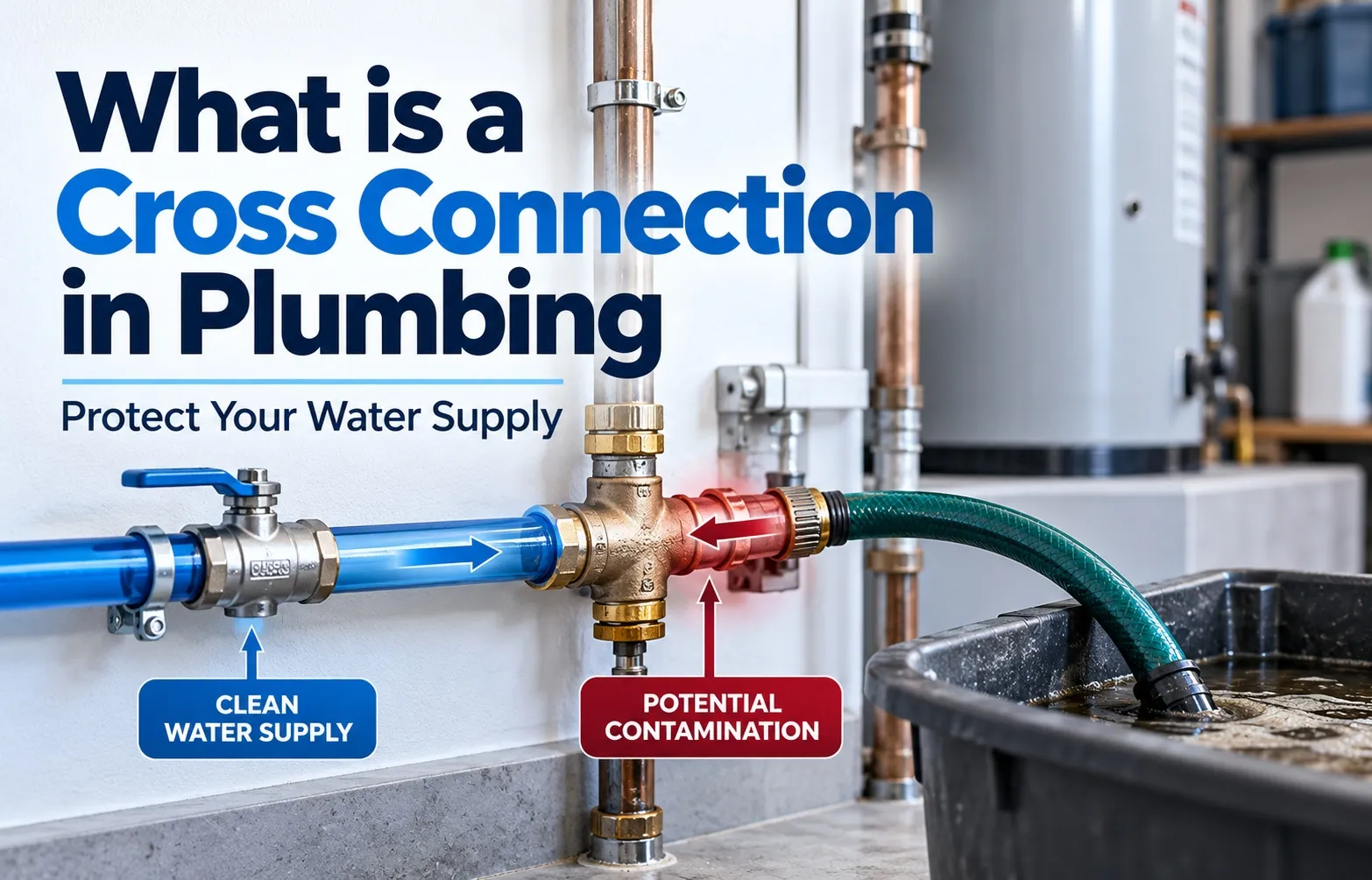
A cross-connection in plumbing is any actual or potential physical link between a safe drinking water supply and a non-potable source of water, chemicals, or sewage. This connection creates a dangerous pathway where pollutants can reverse direction and compromise the purity of an entire water system.
The Core Definition: Potable vs. Non-Potable Water
Understanding a cross-connection requires distinguishing between the two primary types of water streams found in residential and commercial buildings. Keeping these channels permanently separated is essential for maintaining drinking water safety and protecting public health.
- Potable Water Supply: This refers strictly to treated, clean water that meets municipal health standards and is completely safe for human consumption, cooking, and personal hygiene.
- Non-Potable Water: This category includes untreated water, wastewater, chemical solutions, or runoff sourced from lawn sprinklers, swimming pools, heating boilers, and industrial equipment.
Why Cross-Connections Pose a Serious Public Health Risk
When an unprotected cross-connection allows unconditioned elements to merge with clean lines, severe contamination occurs instantly. This invisible threat introduces immediate health hazards to everyday water usage without warning occupants.
- Pathogen Transmission: Harmful bacteria, viruses, and parasites from stagnant or wastewater sources can infiltrate daily drinking taps and kitchen sinks.
- Chemical Poisoning: Toxic fertilizers, pesticides, and cleaning detergents from connected hoses or sprayers can backfeed directly into indoor plumbing networks.
- Widespread Exposure: Unchecked backflow events can push hazardous materials deep into municipal utility mains, affecting multiple properties in a neighborhood.
How Cross-Connections Work: Understanding the Mechanics
Clean water normally flows in a single direction from the municipal supply to household taps under steady pressure. However, sudden shifts in pressure dynamics can trigger backflow, reversing the flow direction and pulling contaminants directly into clean plumbing lines.
What Is Backflow and How Does It Happen?
Backflow is the undesirable reversal of water flow from a non-potable source back into the clean public water supply system. This critical failure occurs whenever an abnormal pressure differential develops between the incoming utility main and a private connected system.
- Normal Flow Direction: Higher pressure in the municipal supply forces clean water forward to all residential and commercial service connections.
- Pressure Reversal: When downstream or private system pressure overrides supply pressure, water moves backward, carrying potential hazards along with it.
Backsiphonage: The Sudden Pressure Drop (Vacuum Effect)
Backsiphonage happens when a sudden loss of pressure in the municipal supply creates a powerful vacuum effect within the piping network. This negative pressure gradient pulls water backward from connected fixtures, garden hoses, and private plumbing loops directly into the clean drinking pipes.
- Water Main Break: A ruptured utility pipe or heavy firefighting operations drawing large volumes of water can cause an instant drop in system pressure.
- Vacuum Action: The resulting drop acts like a straw, sucking non-potable fluids from submerged hoses or utility sinks backward into home lines.
Backpressure: When External Pressure Overpowers the Main Supply
Backpressure occurs when the operating pressure in a private system exceeds the incoming pressure of the municipal supply. When this mechanical or thermal pressure overcomes the utility mains, it forcefully pushes non-potable fluids forward into clean distribution lines.
- Booster Pumps: High-powered pumps used in multi-story residential buildings or industrial properties can generate operating pressures higher than the city feed.
- Boilers and Heating Systems: Thermal expansion and closed-loop pressure systems can build up forces that overpower standard incoming water lines.
Real-World Examples of Cross-Connections in Homes and Buildings
Cross-connections frequently occur through everyday household fixtures, appliances, and outdoor hookups when proper backflow prevention devices are missing. Recognizing these everyday scenarios helps homeowners identify hidden risks and prevent dangerous water contamination before it impacts their property.
Garden Hoses and Outdoor Spigots (The Most Common Household Hazard)
Garden hoses connected to outdoor hose-bibs represent the most frequent source of residential cross-contamination. Leaving an active hose submerged or attached to chemical applicators creates an immediate pathway for pollutants during a pressure drop.
- Swimming Pools: Submerging a running garden hose into a pool to fill it allows treated pool water and chemicals to be siphoned back into household pipes.
- Chemical Sprayers: Attaching fertilizer or pesticide sprayers directly to a hose-bib can force toxic solutions into clean tap water if backsiphonage occurs.
- Buckets and Basins: Placing an open hose end into a bucket filled with soapy or dirty water creates an easy vector for gray water infiltration.
In-Ground Lawn Irrigation and Sprinkler Systems
Underground lawn irrigation and sprinkler systems maintain direct connections to residential water lines while lying at or below ground level. Because these networks sit outdoors exposed to fertilizers, animal waste, and standing puddles, they pose significant contamination risks.
- Subsurface Exposure: Sprinkler heads often sit directly in soil and turf where they accumulate dirt, pesticides, and stagnant outdoor water.
- Pressure Dynamics: Without approved backflow preventers, lawn chemicals and ground water can be pushed directly into home drinking lines during pressure shifts.
Residential Appliances, Boilers, and Water Softeners
Various indoor appliances and mechanical systems integrate directly with clean water lines, introducing complex internal cross-connection points. Proper air gaps and check valves are mandatory to keep these working fluids separated from potable supplies.
- Heating Boilers: Closed-loop boilers utilize rust inhibitors and chemical additives that can backfeed into potable pipes if system pressure spikes.
- Water Softeners: Direct connections to brine tanks and drain lines can introduce stagnant water and regeneration chemicals if left un-air-gapped.
- Washing Machines: Placing a washing machine drain hose below the flood level of a laundry tub creates a potential siphon point for wastewater.
The Hidden Danger: Hot and Cold Water Line Cross-Connections
Internal plumbing cross-connections occur when hot and cold water lines become inadvertently bridged inside a home’s walls or fixtures. This hidden plumbing fixture failure allows hot water to backfeed into cold water lines, resulting in unexpected temperature shifts and pressure imbalances throughout the building.
What Is an Internal Cross-Connection?
An internal cross-connection is a localized plumbing defect where treated hot and cold water streams merge before reaching the tap. Unlike municipal backflow, this cross-feed happens completely within residential supply piping, creating chronic performance issues, fixture wear, and unnecessary energy loss.
- Pressure Equalization Failure: When cold water mains and hot water heater pressures fluctuate unevenly, water seeks the path of least resistance, bridging the separate supply lines.
- Thermal Expansion Effects: Unchecked heating tank expansion forces high-temperature water backward into cold supply branches, raising baseline pipe temperatures across the home.
Common Causes: Faulty Mixing Valves, Bidets, and Single-Handle Faucets
Modern plumbing relies heavily on multi-port fixtures and integrated valves that can fail mechanically over time. When internal seals degrade, hot and cold paths bridge internally, creating an unwanted cross-feed loop that compromises normal fixture performance and safety.
- Single-Handle Faucet Cartridges: Worn or degraded ceramic cartridges inside kitchen or shower mixers allow water to bleed across ports when the handle is closed.
- Bidet Connections: Improperly installed bidet attachments lacking proper check valves can cross-feed warm water directly into cold water mains.
- Thermostatic Mixing Valves: Malfunctioning commercial or residential mixing valves fail to block pressure differentials between incoming hot and cold inlets.
How to Test If Your Hot and Cold Lines Are Crossing (Warm Cold-Water Symptom)
Homeowners can easily detect an internal cross-connection by performing a simple temperature audit across household fixtures. If your cold water taps consistently run warm or hot during initial activation, an internal cross-feed is actively occurring within your plumbing network.
- The Touch Test: Turn off your water heater completely, wait for lines to cool, open a cold tap elsewhere in the home, and check if water supply lines near the heater begin warming up.
- Fixture Isolation: Systematically shut off supply isolation valves to individual appliances like bidets or washing machines to determine which fixture is causing the internal cross-feed.
Homeowner’s Visual Diagnostic Checklist: How to Inspect Your Property
Conduct a systematic visual audit of your plumbing system to catch hazardous cross-connections before they cause water contamination. Performing routine checks on visible fixtures and outdoor connections ensures your household drinking water remains safe and fully compliant with plumbing standards.
Step-by-Step Visual Inspection Guide for DIYers
A thorough backflow inspection check starts at your main water entry point and moves outward to every accessible water source. Reviewing pipe alignment, valve conditions, and physical barriers allows homeowners to spot irregularities early without needing advanced plumbing tools.
- Main Line Assessment: Examine incoming supply lines and check valves for visible corrosion, rust, leaks, or missing atmospheric vacuum breakers.
- Hose Bib Inspection: Check all outdoor faucets to ensure they feature anti-siphon devices and are free from attached chemical sprayers or submerged hoses.
- Air Gap Verification: Conduct an air gap inspection around sinks, tubs, and laundry basins to confirm a minimum one-inch physical separation between the faucet spout and flood rim.
Red Flag Areas to Check Around Your Yard and Laundry Room
High-risk zones like laundry utility areas and outdoor irrigation hookups require close monitoring due to frequent contact with gray water and chemical additives. Spotting subtle warning signs in these spaces prevents major contamination events before they impact your health.
- Washing Machine Setup: Inspect washing machine drain hoses to confirm they hang securely above the flood rim of the laundry tub rather than resting inside standing wastewater.
- Sprinkler Connections: Check in-ground lawn irrigation systems to ensure backflow prevention assemblies are properly installed, unburied, and free from physical damage.
- Pipe Alignment Checks: Look for misaligned or makeshift pipe configurations connecting auxiliary water systems directly to standard household copper or PEX lines.
How to Stop Water Contamination
Protecting public health and maintaining a safe drinking water supply requires strict adherence to standardized safety protocols. Following official EPA Cross-Connection Control Guidelines ensures that residential and commercial plumbing systems remain fully shielded against dangerous backflow events.
Air Gaps: The Simplest and Most Effective Physical Barrier
An air gap is the absolute simplest, most reliable method for preventing backflow because it requires no mechanical parts. By maintaining an unobstructed vertical space between a water supply outlet and the flood rim of a receiving vessel, contamination becomes physically impossible.
- The 1-Inch Rule: Standard plumbing codes require an air gap spacing of at least twice the diameter of the supply pipe, typically a minimum of one inch for standard fixtures.
- Complete Separation: Because air cannot transmit pollutants backward, this physical break completely eliminates the risk of backsiphonage or backpressure.
Backflow Prevention Devices (Vacuum Breakers & RPZ Assemblies)
When physical air gaps are impractical due to pressurized equipment or direct line connections, mechanical backflow preventers must be installed. These specialized valves automatically close or vent water to the atmosphere when pressure differentials occur.
- Hose-Bib Vacuum Breaker: A screw-on device attached to outdoor spigots that prevents garden hoses from siphoning standing water back into household pipes.
- Double Check Valve: A mechanical assembly containing two spring-loaded check valves designed for moderate-hazard applications like standard irrigation or fire lines.
- Reduced-Pressure Zone (RPZ) Assembly: The gold standard for high-hazard environments, featuring an independent chamber that automatically opens to discharge water if pressure drops.
When to Hire a Certified Specialist for Annual Testing
Mechanical backflow preventer assemblies contain internal seals, springs, and moving parts that degrade over time. Routine maintenance and yearly evaluations by a certified backflow specialist are mandatory to guarantee proper valve performance.
- Annual Certification: Municipal utilities and local health codes require commercial and complex residential assemblies to be tested every year.
- Professional Repairs: Certified technicians utilize calibrated test kits to diagnose pressure drops, replace worn internal components, and certify system safety.
Is a cross-connection the same thing as backflow?
No, a cross-connection and backflow are two distinct plumbing concepts, though they are closely related. A cross-connection is the actual or potential physical link between a clean water supply and a contaminated source, whereas backflow is the physical event or movement of water flowing backward through that connection.
- The Link: The physical bridge between potable and non-potable piping systems.
- The Event: The actual reversal of water flow driven by pressure differentials.
What happens when a cross-connection occurs?
When an unprotected cross-connection combines with a pressure reversal, a severe contamination hazard is instantly created. Non-potable water, dangerous chemicals, biological pathogens, or sewage are sucked or pushed directly into clean drinking water lines, posing immediate health risks to residents.
- Systemic Contamination: Unfiltered pollutants spread through household taps, showers, and kitchen appliances.
- Regulatory Breaches: Such events violate established water safety regulations and risk public health safety.
What is the purpose of a cross-connection control program?
A cross-connection control program is a municipal regulatory initiative designed to safeguard public drinking water supplies from contamination hazards. These structured programs mandate the identification, installation, and annual testing of backflow prevention devices across properties.
- Utility Protection: Preventing local industrial or residential pollutants from backing up into municipal water mains.
- Mandatory Compliance: Ensuring property owners follow strict testing schedules and plumbing safety laws.

Oscar Vance | Master Plumber & Drainage Expert
Meet Oscar Vance, a licensed master plumber sharing practical solutions on residential repairs, preventive maintenance, and thoughtful home upkeep.