Is Metal Roofing More Expensive Than Shingles?
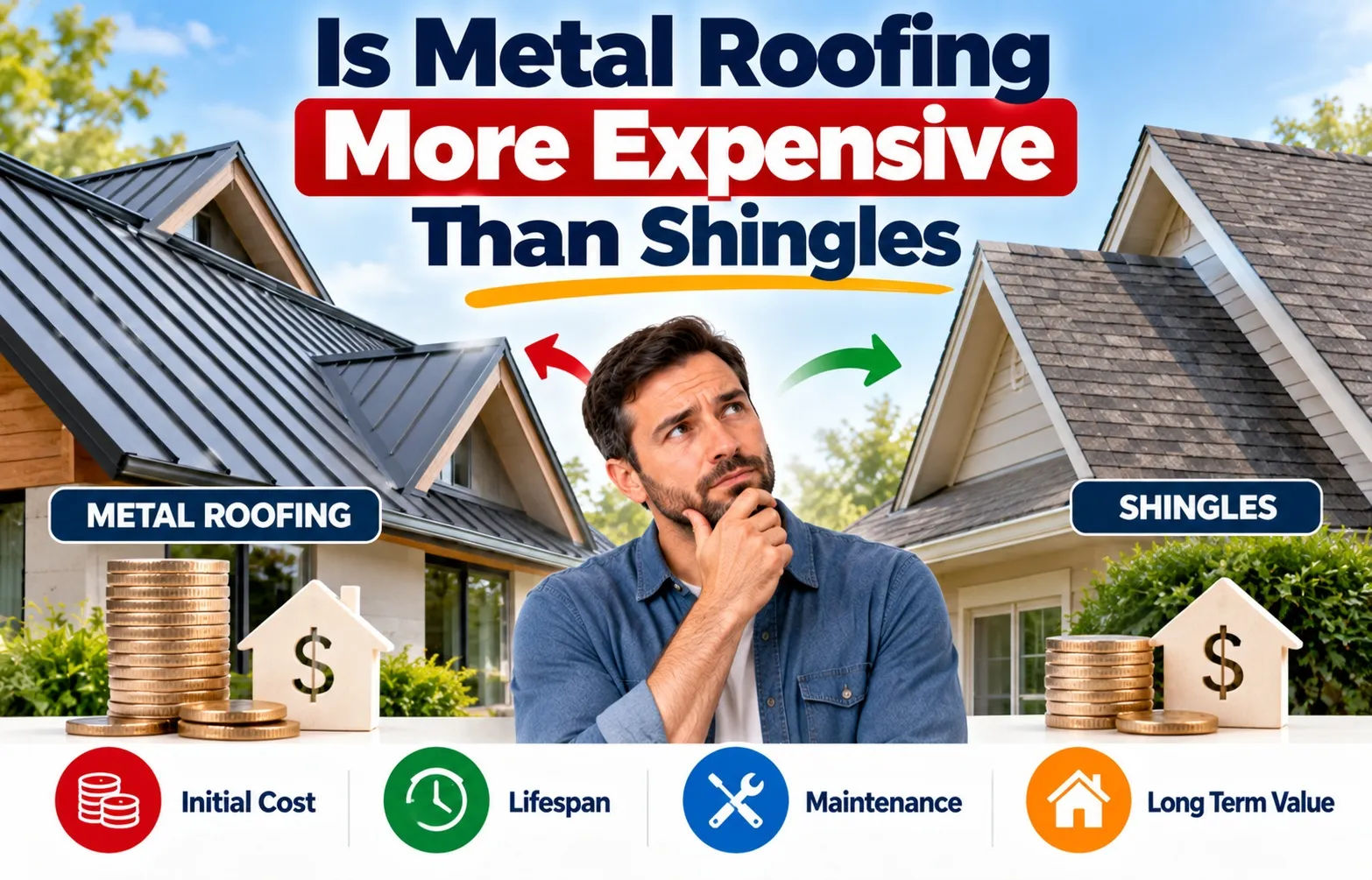 Metal roofing costs significantly more upfront than traditional asphalt shingles, requiring two to three times the initial investment for materials and installation. However, metal roofs offer a far longer operational lifespan, superior weather durability, and lower long-term maintenance expenses, which frequently makes them the more cost-effective option over a 50-year period.
Metal vs. Asphalt Shingles Cost Difference
The upfront price difference between metal and asphalt shingle roofing comes down to material composition, manufacturing complexity, and specialized labor requirements.
- Metal Roofing Investment: Expect to pay between $9.00 and $16.00 per square foot installed for standard standing seam or corrugated metal systems.
- Asphalt Shingle Investment: Traditional 3-tab and architectural asphalt shingles cost between $3.50 and $6.00 per square foot installed.
- Upfront Premium: Installing a new metal roof requires roughly 150% to 200% more capital upfront compared to a standard asphalt shingle replacement.
- Lifespan Parity: While an asphalt shingle roof typically lasts 15 to 25 years before needing a complete tear-off, a professionally installed metal roof lasts 40 to 70 years.
Because asphalt roofs require multiple costly replacements across a typical homeowner’s tenure, the long-term return on investment (ROI) for metal roofing offsets its higher initial barrier to entry.
Upfront Cost Breakdown: Metal vs. Asphalt Shingles
Initial installation expenses represent the biggest hurdle for homeowners comparing metal roofs to traditional asphalt options. Understanding exact cost per square foot helps eliminate vague estimates and allows for precise budgeting before hiring a contractor.
Material and Labor Cost Comparison Per Square Foot
Roofing prices are measured in squares (where one square equals 100 square feet of roof area). Material choice directly dictates both material overhead and specialized labor requirements.
- 3-Tab Shingles: The most economical choice, averaging $3.50 to $4.50 per square foot installed ($350 to $450 per square).
- Architectural Shingles: Upgraded laminated shingles cost $4.00 to $6.00 per square foot, providing enhanced durability and a dimensional appearance.
- Corrugated Metal Panels: Exposed fastener metal panels range from $5.00 to $9.00 per square foot, serving as an affordable entry-point into metal roofing.
- Standing Seam Metal: Premium concealed-fastener standing seam systems range from $11.00 to $16.00+ per square foot due to complex fabrication and installation.
- Underlayment and Decking: High-temperature synthetic underlayment adds $0.50 to $1.50 per square foot, which is critical for preventing moisture buildup under metal panels.
Cost Breakdown for Common House Sizes (1,500 sq ft vs. 2,000 sq ft)
Total project costs depend heavily on the total sloped roof surface area, which is typically 20% to 40% larger than the home’s ground footprint due to roof pitch and overhangs.
- 1,500 Sq Ft Footprint Home (Roof Area ~1,800 Sq Ft): Asphalt shingle installation ranges from $6,300 to $10,800. In contrast, a standing seam metal roof ranges from $19,800 to $28,800.
- 2,000 Sq Ft Footprint Home (Roof Area ~2,400 Sq Ft): Standard architectural shingle installation totals $9,600 to $14,400. A complete metal roof installation scales between $26,400 and $38,400 depending on complexity.
- Tear-Off Fees: Removing an existing layer of old shingles adds $1.00 to $3.00 per square foot to overall labor quotes regardless of the new material chosen.
Why Metal Roof Installation Labor Costs More
Roofing labor rates for metal systems are substantially higher than those for asphalt because installing metal requires specialized skills, heavy-duty equipment, and precise execution.
- Specialized Technical Skill: Contractors must manually cut, bend, and seam panels to fit valleys, ridges, and penetrations without compromising weatherproofing.
- Safety and Equipment: Handling large metal sheets requires specialized lifting gear, safety harnesses, and specialized panel-rolling machinery brought directly to the job site.
- Labor Duration: Installing standing seam metal takes two to three times longer than laying down standard asphalt shingle bundles, directly inflating total labor overhead.
Types of Metal Roofing vs. Shingle Varieties
Comparing roofing costs accurately requires evaluating specific material tiers rather than comparing entry-level products to premium systems. Both metal roofing and asphalt shingles encompass distinct performance classes that significantly influence upfront price and service life.
Corrugated Metal vs. Standing Seam vs. Metal Shingles
Metal systems vary in fastener design, panel thickness, and aesthetic styling, which directly dictates material overhead and installation complexity.
- Corrugated Metal Panels: Exposed fastener systems utilize visible screws with rubber washers to secure galvalume or steel sheets. Costing $5.00 to $9.00 per square foot installed, they provide an economical option but require screw maintenance every 10 to 15 years as washers degrade.
- Standing Seam Metal Roof: Featuring concealed fasteners, standing seam panels lock together over hidden clips. Ranging from $11.00 to $18.00 per square foot installed, this system allows panel expansion and contraction without exposing hardware to weather, providing maximum lifespan.
- Metal Shingles: Engineered to mimic slate, tile, or wood shakes using stamped aluminum, zinc, or copper roofing, metal shingle roof cost averages $9.00 to $15.00 per square foot ($900 to $1,500 per square). Metal shingles combine traditional aesthetics with the long-term weather resistance of metal.
3-Tab Shingles vs. Architectural vs. Luxury Shingles
Asphalt shingles are categorized into three primary structural grades that scale in wind resistance, weight, and price.
- 3-Tab Shingles: The single-layer entry tier costs $3.50 to $4.50 per square foot installed. They offer a flat appearance, carry lower wind resistance ratings (up to 60 mph), and typically last 15 to 20 years.
- Architectural Shingles: Multi-layered laminated shingles cost $4.50 to $6.50 per square foot installed. Featuring a dimensional look, thicker mat, and wind ratings up to 130 mph, they carry an expected lifespan of 22 to 30 years.
- Luxury Shingles: Heavyweight asphalt shingles designed to replicate natural slate cost $7.00 to $10.00 per square foot installed. They offer maximum impact resistance and enhanced curb appeal, overlapping the pricing of basic metal roofing.
Price-to-Performance Tier List
Evaluating material selection by square footage price alongside long-term durability highlights how different tiers align across both roofing categories.
Long-Term ROI & Total Cost of Ownership (TCO)
Evaluating roofing expenditures based solely on upfront quotes ignores the true long-term total cost of ownership. Over a multi-decade timeline, initial savings on cheaper materials are eroded by repeat replacement labor, rising inflation, and frequent maintenance expenses.
The 50-Year Cost Timeline: 1 Metal Roof vs. 2-3 Shingle Roofs
While an asphalt roof requires lower capital upfront, its limited lifespan forces homeowners to pay for multiple replacements, tear-offs, and landfill disposal fees across a 50-year timeframe.
- Initial Year Investment (2,000 Sq. Ft. Roof): Installing an architectural shingle roof costs approximately $12,000, whereas a standing seam metal roof costs roughly $28,000.
- Year 20 to 25 (First Shingle Replacement): As asphalt shingles reach end-of-life due to UV degradation and granule loss, a full tear-off and replacement costs roughly $18,000 to $22,000 (factoring in historical material inflation).
- Year 40 to 45 (Second Shingle Replacement): A third asphalt installation requires another full tear-off and deck repair, adding $26,000 to $32,000+ in lifetime costs.
- 50-Year Cumulative Expenditure: Total cumulative spend for asphalt shingles reaches $56,000 to $66,000+ compared to a single initial metal investment of $28,000 (plus minimal maintenance), making metal significantly cheaper over time.
Maintenance, Repairs, and Lifetime Upkeep Costs
Ongoing maintenance requirements differ radically between asphalt shingles and metal panels, directly impacting out-of-pocket ownership expenses over their operational lifespan.
- Shingle Vulnerabilities: Asphalt roofs require ongoing repairs for wind-blown shingles, hail damage, flashing breakdown, moss growth, and loss of protective protective granules.
- Metal Durability: Metal systems resist cracking, rotting, and insect damage. Upkeep is largely limited to clearing debris, checking sealants, and periodically inspecting fast lines.
- Repair Frequency: Asphalt shingle roofs average a service call every 3 to 5 years after the 10-year mark, whereas standing seam metal systems often go decades without requiring minor repair work.
Energy Efficiency Savings: Cooling Bills and Solar Reflectance
Metal roofs act as a thermal barrier, leveraging cool roof technology and high solar reflectance coatings to reduce attic heat gain during warm months.
- Solar Reflectance Index (SRI): Asphalt shingles absorb heat and radiate thermal energy down into the attic, increasing HVAC load. Painted metal panels reflect up to 70% of solar radiant heat.
- Cooling Expense Reductions: Homeowners switching to a reflective metal roof report reductions in summer cooling bills ranging from 10% to 25%.
- Long-Term Utility Savings: Over a 30-year operational period, energy efficiency performance from metal roofing can generate thousands of dollars in cumulative utility savings, enhancing overall roofing ROI.
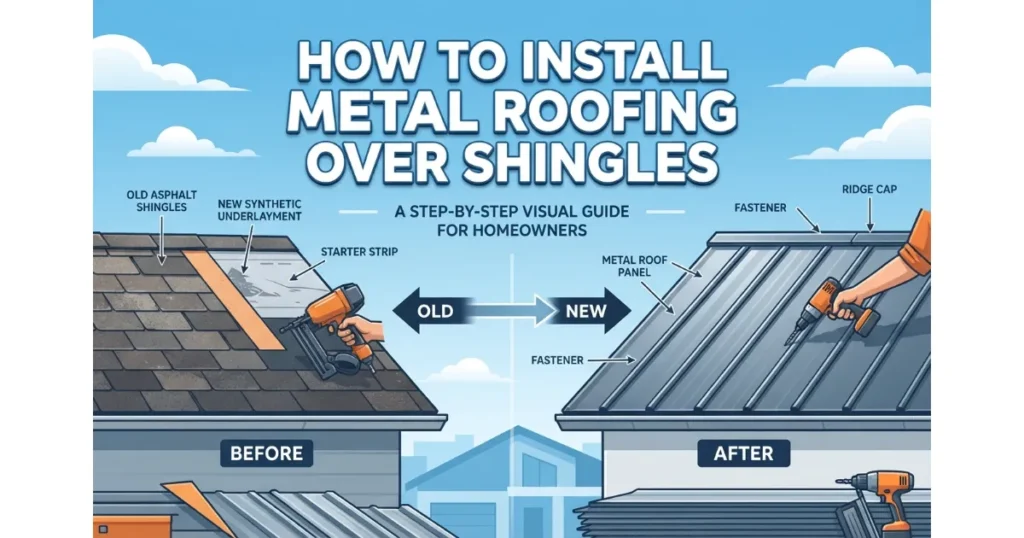
Can You Install a Metal Roof Over Existing Shingles?
Homeowners frequently consider installing metal panels directly over an existing asphalt shingle roof to save on project overhead and labor expenses. While municipal codes permit this practice under specific conditions, doing so introduces structural weight concerns and moisture management risks that require careful evaluation.
Pros and Cons of Overlaying Metal Over Shingles
Leaving old shingles in place alters the installation process, offering short-term financial savings while introducing long-term structural and performance compromises.
- Upfront Labor Savings: Skipping a complete roof tear-off eliminates intense manual labor and reduces overall project completion time.
- Reduced Dumpster Fees: Homeowners avoid heavy hauling fees and municipal disposal costs associated with discarding tons of old asphalt waste.
- Hidden Deck Damage: Overlaying metal conceals underlying roof deck rot, water leaks, and structural sagging that cannot be repaired without a complete tear-off.
- Uneven Thermal Expansion: Metal panels require a flat, smooth surface to expand and contract smoothly with temperature shifts; old curling shingles can create high spots that distort the metal.
Structural Weight, Moisture Trapping, and Building Codes
Engineering standards dictate strict limits regarding roof dead weight load and thermal insulation barriers when deciding to install metal roof over shingles.
- Dead Weight Load Limits: Asphalt shingles weigh roughly 2 to 3 pounds per square foot. Adding steel or aluminum panels on top can push structural dead weight loads past engineering limits on older framing systems.
- Furring Strips and Airspaces: Professional guidelines outlined by the Metal Construction Industry Guidelines recommend installing wood furring strips over old shingles to create a necessary ventilation airspace.
- Moisture Barrier Integration: A high-temperature synthetic underlayment or moisture barrier must be installed to prevent trapped condensation from rotting the wooden roof deck beneath.
- Municipal Building Codes: Most local building codes strictly prohibit exceeding two total roof layers. If a home already features two layers of asphalt shingles, complete removal is legally mandated.
Tear-off and Disposal Cost Savings vs. Risks
Evaluating whether to skip a tear-off requires balancing immediate financial relief against long-term warranty protection and structural security.
- Immediate Cost Reductions: Avoiding roof tear-off costs saves approximately $1.00 to $3.00 per square foot in labor and waste management fees.
- Warranty Validation: Many premier metal roofing manufacturers void their material warranties if their panels are installed directly over existing asphalt shingles rather than a clean deck.
- Long-Term Durability Risks: Trapped heat between the old shingle layer and new metal panels can accelerate thermal aging, reducing the overall lifespan of the metal system.
Insurance Discounts & Resale Value Boost
Beyond longevity and energy efficiency, installing a metal roof offers direct financial benefits through reduced property insurance premiums and increased home equity. Understanding insurance policy requirements and real estate valuation factors helps maximize these financial returns.
Class 4 Impact Resistance (UL 2218 Rating) and Insurance Savings
Homeowners insurance providers frequently offer significant premium discounts for properties equipped with impact-resistant roofing materials designed to withstand heavy hail and falling debris.
- UL 2218 Standard: The Underwriters Laboratories (UL) 2218 impact rating tests roofing materials by dropping steel balls from varying heights. Class 4 represents the highest level of hail resistance achievable.
- Homeowners Insurance Discount: Many national insurers offer premium discounts ranging from 5% to 35% on the wind and hail portion of a policy for Class 4 rated metal systems.
- Wind Resistance Rating: Premium metal panels feature wind uplift resistance ratings up to 140 mph, lowering risk profiles in severe weather and hurricane-prone regions.
- Policy Cosmetic Exclusions: Some insurance carriers require homeowners to sign cosmetic damage waivers to receive maximum premium discounts, meaning insurance will only cover denting if it breaches structural integrity or creates a leak.
Home Resale Value and Curb Appeal ROI
A metal roof upgrade serves as a powerful selling point during property appraisals, directly improving home resale value and buyer attraction.
- Appraisal Value Retention: According to national remodeling data, homeowners recoup approximately 60% to 85% of a metal roof installation cost in added home appraisal value upon sale.
- Buyer Appeal and Transferable Warranties: Modern metal roofing systems feature 30- to 50-year paint and material warranties that can be transferred to new buyers, offering long-term peace of mind that accelerates property sales.
- Architectural Styling Options: Standing seam systems and stamped metal shingles elevate modern exterior design, enhancing overall neighborhood curb appeal compared to traditional asphalt shingles.
Homeowner Concerns & Reddit Quora Insights
Community forums and roofing discussion boards frequently debate the real-world performance, noise levels, and aesthetic quirks of metal roofing. Addressing these common homeowner anxieties helps separate widespread myths from actual installation realities.
Is Metal Roofing Too Noisy During Heavy Rain?
A prevalent misconception among homeowners is that metal roofs act like a drum during storms, creating unbearable noise during heavy downpours.
- Proper Insulation & Decking: When installed over a solid plywood deck, high-temperature underlayment, and thick attic insulation, a metal roof is no noisier than a traditional asphalt shingle roof during heavy rain.
- The Sound Dampening Layer: Rain impact sound is absorbed by the underlying roof structure and insulation batts rather than echoing inside living spaces.
- Reddit Roofing Consensus: Online community discussions overwhelmingly confirm that homeowners rarely notice rain noise unless the metal is installed directly over open framing without attic insulation or sheathing.
Thermal Expansion Creaking and “Oil Canning” Issues
Metal expands when heated by the sun and contracts as temperatures drop, which can create distinct mechanical behaviors if panels lack proper fastening allowances.
- Thermal Expansion Creaking: Minor ticking or popping sounds can occur during rapid temperature shifts if fasteners are screwed down too tightly, preventing natural panel movement.
- Understanding “Oil Canning”: Oil canning refers to a perceived visual waviness or stress buckling across flat metal panel surfaces, which is primarily cosmetic rather than structural.
- Prevention Techniques: Using standing seam systems with concealed sliding clips, choosing heavier-gauge metal, and avoiding overly wide panels effectively minimizes oil canning and thermal stress noises.
Performance in Extreme Weather: Heavy Rain, Hail, and High Winds
Homeowners frequently upgrade to metal roofing specifically to combat severe weather events, making weather resilience a primary selling point across professional contractor reviews.
- Wind Uplift Resistance: Premium standing seam metal roofs feature interlocking panels capable of withstanding wind uplift resistance ratings up to 140 or 150 mph.
- Hail Damage Resistance: While large hail can dent softer metals like aluminum or copper, steel panels with Class 4 impact ratings resist puncturing and cracking far better than aging asphalt shingles.
- Fire and Ember Defense: Metal roofing carries a Class A fire rating, providing superior protection against wind-blown wildfire embers compared to wood or standard asphalt products.
Frequently Asked Questions
Addressing common homeowner questions provides clear, actionable answers to key financial and operational considerations when choosing between metal and asphalt shingle roofing.
What is the biggest problem with metal roofs?
The primary drawback of a metal roof is its high upfront installation cost, which typically ranges from two to three times that of standard asphalt shingles. Additional challenges include potential installation complexity requiring specialized contractors, risk of cosmetic denting during severe hail storms with soft metals like aluminum, and potential thermal expansion sounds if panels are improperly fastened.
What is the cheapest roof to put on a house?
Three-tab asphalt shingles remain the cheapest roofing material to purchase and install on a residential home, averaging $3.50 to $4.50 per square foot installed. While 3-tab shingles offer the lowest entry price, they carry the shortest operational lifespan (15 to 20 years) and lowest wind resistance ratings compared to architectural shingles or corrugated metal panels.
Why don’t more houses use metal roofs?
Higher initial material costs and a shortage of specialized metal roofing contractors prevent many homeowners from choosing metal. Additionally, homeowners who plan to move within 5 to 10 years often prefer asphalt shingles to minimize short-term capital outlay, reserving metal roof installations for long-term or forever homes.
What type of roof adds the most value to a home?
Standing seam metal roofing and heavy architectural or slate-look synthetic shingles deliver the highest roof value addition for residential properties. A standing seam metal roof can recoup 60% to 85% of its initial installation cost in home equity appraisal value while serving as a major selling point due to transferable warranties and long-term durability.
What are the worst shingle brands to avoid?
Rather than avoiding entire manufacturers, home builders recommend avoiding basic 3-tab shingle product lines from any brand for regions prone to high winds or hail. Always review third-party shingle quality ratings, focus on Class 4 impact resistance ratings, and ensure proper attic ventilation is installed to prevent premature granule loss and shingle blistering.

Oscar Vance | Master Plumber & Drainage Expert
Meet Oscar Vance, a licensed master plumber sharing practical solutions on residential repairs, preventive maintenance, and thoughtful home upkeep.