What Causes Pinhole Leaks in Copper Pipes?
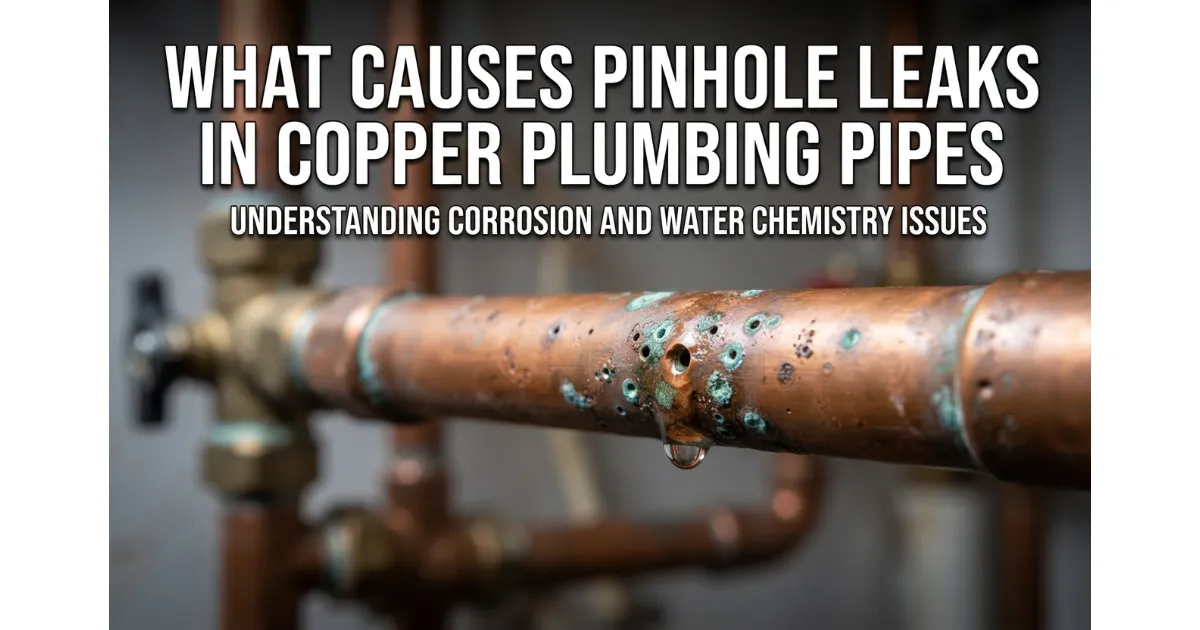 Pinhole leaks in copper pipes are primarily caused by chemical and physical reactions degrading the pipe wall from the inside out. Key culprits include aggressive water chemistry, electrochemical reactions like galvanic corrosion, high-velocity water causing erosion, and installation defects that weaken the copper structure over time.
- Water Chemistry: Low pH levels, dissolved oxygen, and aggressive mineral content trigger internal pitting corrosion that eats away at the copper.
- Erosion-Corrosion: Excessive water velocity or turbulent flow physically strips away the pipe’s protective internal oxide layer.
- Galvanic Corrosion: Direct physical contact between copper and dissimilar metals creates an active electrochemical cell when water is present.
- Stray Electrical Current: Ungrounded electrical systems discharging current through plumbing pipes, accelerating electrolysis and metal breakdown.
- Installation Defects: Unreamed pipe burrs, trapped corrosive flux residue, or structural micro-abrasions introduced during the initial plumbing setup.
- Pipe Aging: Natural material fatigue and prolonged wear and tear as copper pipes approach the end of their operational lifespan.
In this article, you will learn how to uncover the exact cause, spot early warning signs, apply proper fixes, and implement prevention strategies.
How a Pinhole Leak Forms Inside a Copper Pipe
Pinhole leaks develop entirely from the inside out through slow, localized electrochemical degradation. Understanding this inner breakdown explains why copper pipes eventually fail even when external conditions look pristine.
Copper ki protective layer patina oxide film kya hoti hai
Copper naturally forms a thin protective oxide layer on its inner walls when exposed to water. This film acts as a barrier, shielding the underlying metal from continuous corrosion.
- Natural Passivation: The inner surface oxidizes to form a stable cupric oxide coating under normal water chemistry conditions.
- Chemical Vulnerability: Aggressive water parameters like low pH or high chlorine can dissolve or weaken this protective layer prematurely.
Pitting corrosion: choti si jagah par damage kaise barhta hai
Once the protective layer breaches at a microscopic spot, pitting corrosion concentrates all electrochemical activity onto that single tiny point. The surrounding metal remains untouched while the pit bores straight through the pipe wall.
- Localized Anode Formation: A small break becomes an active anode while the vast surrounding area acts as a cathode.
- Deep Penetration: Accelerated metal loss drives a narrow channel deep into the pipe thickness until a microscopic hole breaches the exterior.
Kya copper pipes mein pinhole leaks common hain? PAA: How common are pinhole leaks
Pinhole leaks are relatively common in specific municipal water districts with aggressive, acidic, or heavily treated water chemistry. Homes with older copper plumbing or poorly flushed flux during installation experience them more frequently.
- Regional Hotspots: Municipalities utilizing chloramines or low-mineral water see significantly higher cluster rates of pinhole leaks.
- Hot Water Vulnerability: Hot water lines experience faster chemical reactions, making pinholes much more common on hot water distribution paths than cold lines.
Copper pipe ki average lifespan PAA aur umar ka role
Quality copper pipes typically boast an impressive lifespan of 50 to 70 years under ideal conditions. However, advanced age combined with thinning pipe walls drastically increases susceptibility to structural failure.
- Wall Thickness Factors: Copper Type K features the thickest wall, offering superior longevity, while Type M has thinner walls and fails sooner under aggressive water.
Water Chemistry Causes of Pinhole Leaks
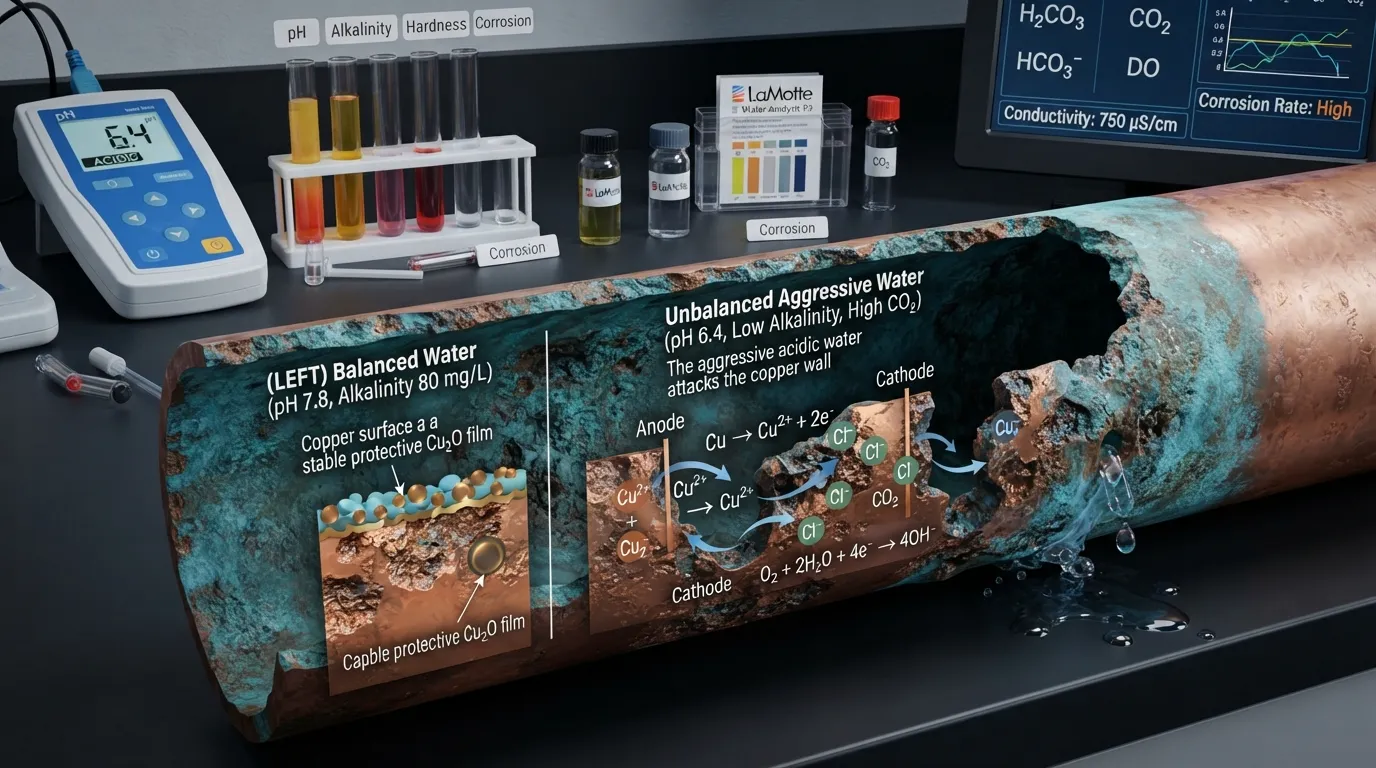 Water chemistry dictates the micro-environment inside your copper pipes, directly dictating whether protective coatings remain intact or break down. Understanding these specific chemical triggers explains why certain homes experience premature pitting while others do not.
Low pH acidic aur high pH alkaline water
The pH balance of your water supply plays a critical role in preserving or dissolving the inner copper oxide layer. Acidic water actively strips away protective barriers, accelerating metal fatigue.
- Acidic Water (Low pH): Water with a pH below 7.0 is corrosive and aggressively dissolves copper ions, thinning pipe walls over time.
- Alkaline Water (High pH): While generally safer, highly unbalanced water can sometimes cause irregular scaling or localized chemical reactions.
Chlorine aur chloramines: pitting kaise shuru hoti hai
Municipal water treatment additives like chlorine and chloramines are essential for disinfection but can be tough on metal plumbing. These oxidizers interact with the inner wall and create localized anode sites.
- Disinfectant Residuals: High levels of free chlorine or chloramines destabilize the passive oxide film inside the pipe.
- Localized Pitting: Oxidizers focus chemical attacks onto tiny microscopic flaws, rapidly boring a deep pit directly through the copper.
Hard water: calcium aur magnesium ka role
Mineral composition alters how water interacts with metal surfaces, providing a natural buffer against aggressive chemical corrosion. Soft water often lacks this crucial protective capability.
- Mineral Buffering: Calcium and magnesium carbonates help deposit a protective scale layer that shields the interior copper surface.
- Soft Water Vulnerability: Treated soft water lacks these beneficial minerals, leaving the bare metal exposed to aggressive chemical elements.
Dissolved oxygen aur dissolved CO₂
Gases trapped in pressurized water supply lines significantly enhance the electrochemical activity driving internal pipe wall corrosion. Higher gas saturation leads to faster metal oxidation.
- Oxygen-Driven Oxidation: Dissolved oxygen supplies the necessary reactant for continuous copper corrosion cell activity.
- Carbon Dioxide Impact: Dissolved carbon dioxide increases water acidity, lowering overall chemical stability and increasing pitting potential.
Well water vs municipal water: kis mein kya risk
The origin of your water supply introduces completely different chemical challenges that dictate your home’s vulnerability to pinhole leaks. Private wells and treated city grids react differently with copper.
- Well Water Risks: Unregulated private wells frequently contain fluctuating pH levels, high dissolved gases, and abrasive sediments.
- Municipal Water Risks: City water relies on heavy chemical disinfection schedules, which require precise balancing to prevent aggressive reactions.
Water utilities corrosion control kaise karti hain orthophosphate
Advanced water treatment facilities implement strict chemical adjustment protocols to protect distribution infrastructure and residential plumbing. Many utilities utilize specialized inhibitors monitored through a water utility pinhole leak guide to form a protective internal lining.
- Orthophosphate Dosing: Utilities add tiny amounts of orthophosphate to bind with metal ions and coat pipe walls.
- Regulatory Compliance: Operators continually balance alkalinity and pH to meet rigorous environmental standards for safe distribution.
Apne water report ko kaise parhein Langelier Saturation Index ka short introduction
Your local consumer confidence report provides vital data regarding your home’s water aggressiveness. The Langelier Saturation Index (LSI) is the primary metric used to predict whether water will precipitate or dissolve scale.
- LSI Index Basics: A balanced LSI score near zero indicates stable water, while negative values point toward corrosive tendencies.
- Actionable Metrics: Reviewing hardness, pH, and alkalinity scores helps homeowners determine if a specialized filtration or neutralizing system is necessary.
Mechanical and Installation Causes
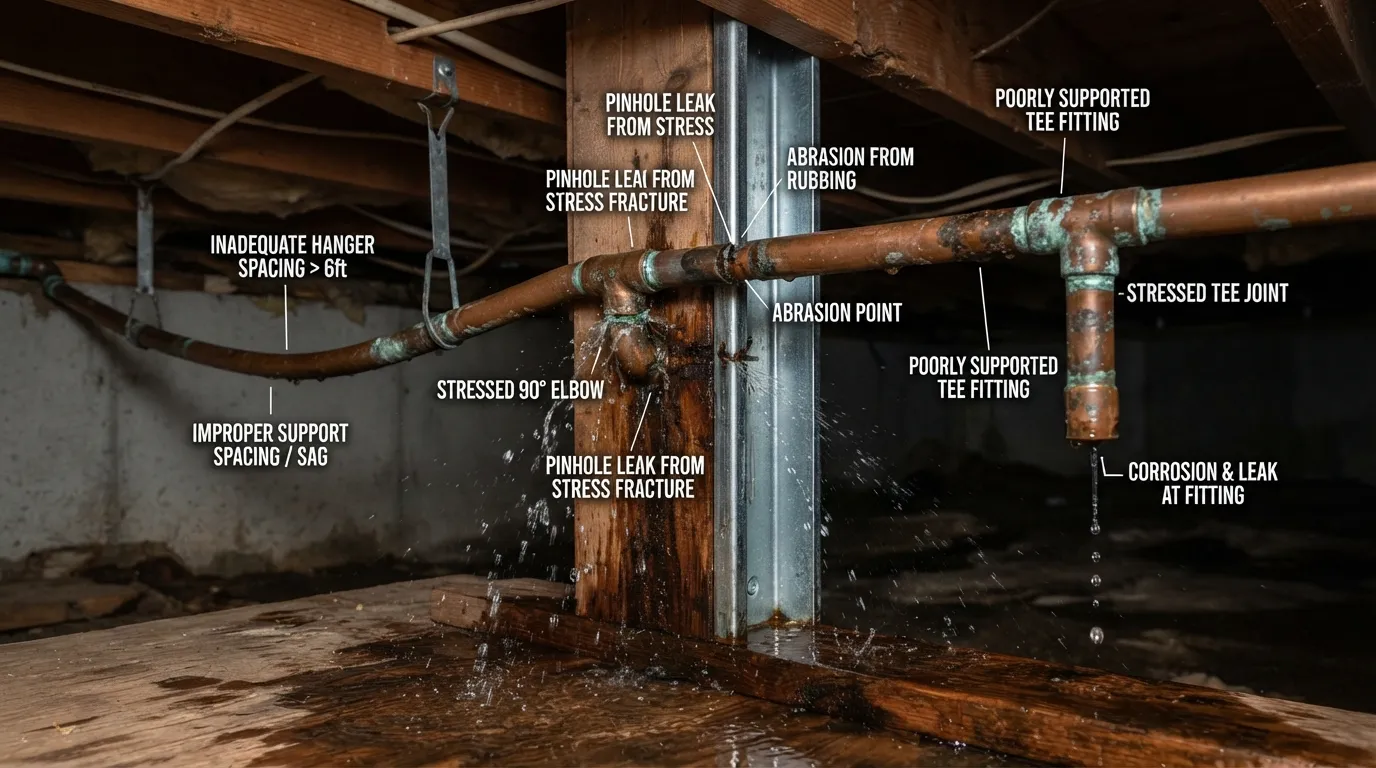 When water chemistry tests reveal a perfectly balanced supply, pinhole leaks are frequently driven by physical forces and installation errors. These mechanical triggers create localized turbulence and structural wear that compromise copper pipes from the inside out.
Erosion-corrosion: water velocity aur high pressure
Excessive water speed physically scours away the protective oxide film that naturally shields copper pipes. When paired with high water pressure, this mechanical abrasion rapidly thins the pipe wall.
- Velocity Thresholds: Water flowing above recommended speed limits creates continuous friction that wears down interior metal surfaces.
- Pressure Regulation: Installing a functioning Pressure Reducing Valve (PRV) helps keep incoming municipal pressure within safe operational limits.
Sediment aur grit: pipe ki andar ki lining ka ghiss jana
Abrasive suspended particles traveling through plumbing lines act like liquid sandpaper against copper walls. Over thousands of cycles, this grit erodes bends and straight runs alike.
- Suspended Debris: Fine sand or mineral sediment carried in the water stream continually bombards the inner pipe lining.
- Accelerated Wear: High-traffic flow areas experience rapid wall thinning wherever sediment repeatedly impacts the metal.
Excess soldering flux: joints ke andar acid ka residue
Acidic flux used during installation to clean copper joints can cause severe localized corrosion if not thoroughly flushed out. Trapped residue aggressively eats away at the metal underneath.
- Chemical Burn: Leftover acidic flux trapped inside a joint creates an intensely corrosive micro-environment.
- Joint Vulnerability: Leaks frequently appear right next to soldered connections due to this lingering installation byproduct.
Burrs aur unreamed cuts: turbulence kaise leak banati hai
Failing to deburr a copper pipe after cutting leaves jagged metal edges protruding directly into the water stream. These sharp burrs disrupt smooth flow and trigger severe localized turbulence.
- Flow Disruption: Rough interior edges catch passing debris and create swirling vortexes in the water current.
- Pitting Catalysts: The resulting turbulence strips away protective oxide layers, kickstarting rapid pitting corrosion right at the fitting.
Bends aur elbows par leaks zyada kyun hoti hain
Directional changes naturally force water to slam against the outer curve of a fitting, increasing physical and chemical stress. This makes elbows and tees prime locations for premature failure.
- Centrifugal Force: Fast-moving water concentrates its erosive energy directly onto the curved wall of elbows.
- Stress Concentration: Thermal expansion and fluid friction combine at bends, accelerating structural fatigue over time.
Plumber’s Practical Tip: Always use a proper reaming tool to smooth the inside edge of every pipe cut immediately after sawing, and thoroughly flush the lines to remove all metal shavings and residual flux.
Electrical and Galvanic Causes
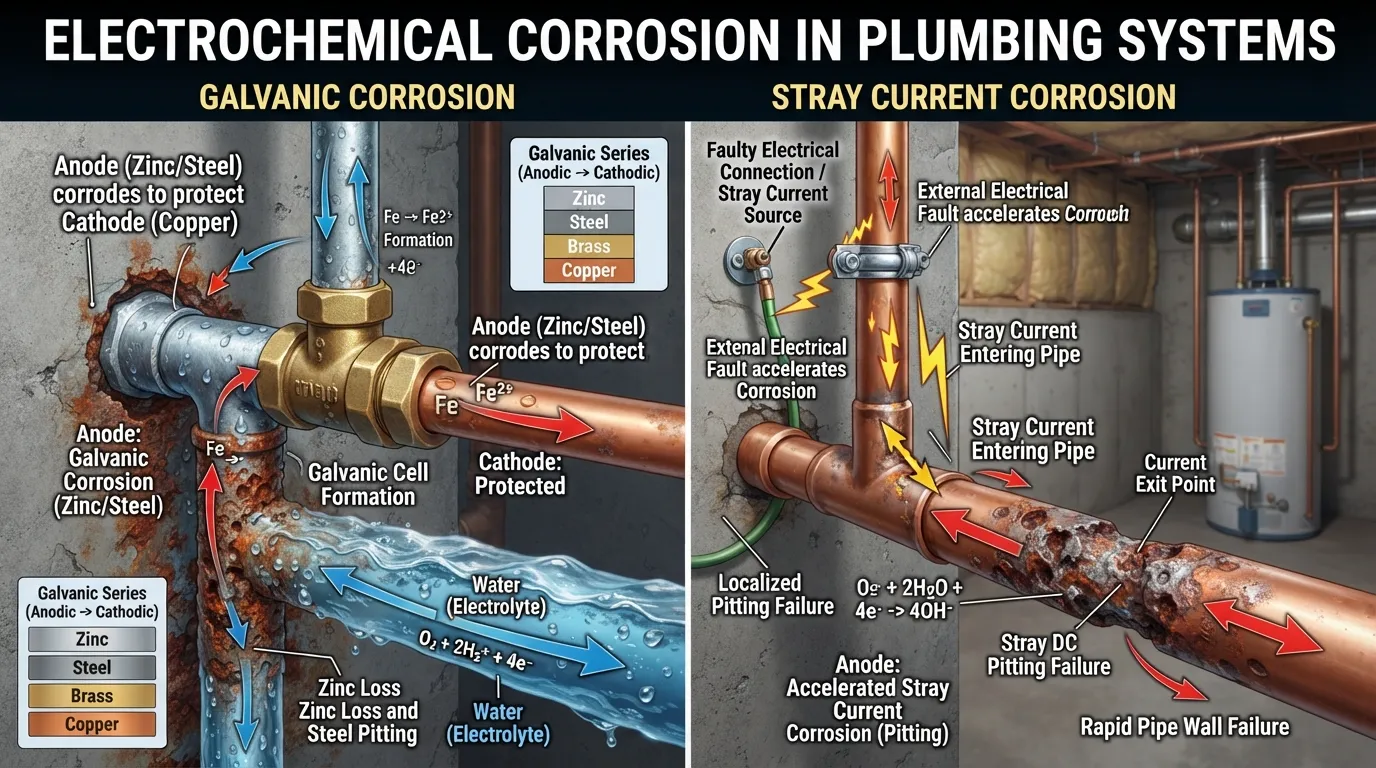 When chemical and mechanical assessments fail to explain a pinhole leak, electrical interactions are frequently the hidden culprit. Stray currents and dissimilar metal pairings can rapidly accelerate metal degradation through invisible electrochemical processes.
Electrolysis aur stray electrical current improper grounding
Unintended electrical currents traveling through household plumbing create an environment ripe for accelerated electrolysis. When electrical systems are improperly grounded to water pipes, direct current continuously strips metal ions from the interior walls.
- Stray Voltage: Faulty home appliances or loose electrical service panel grounds can route stray current directly into copper pipes.
- Electrolytic Breakdown: The continuous flow of electrical current through water causes rapid pitting and premature metal perforation.
Galvanic corrosion: copper aur steel galvanized pipes ka jorr
Connecting copper directly to dissimilar metals like steel or galvanized iron creates an active galvanic cell whenever moisture or water is present. The more reactive metal sacrifices itself, corroding at an accelerated rate.
- Metal Disparity: Copper and steel possess distinct electrochemical potentials that react violently when placed in direct physical contact.
- Rapid Deterioration: The metal with the lower electrochemical rating corrodes rapidly, forming destructive leaks right at the transition joint.
Dielectric union se galvanic corrosion se kaise bachein
Preventing galvanic reactions requires physically separating incompatible metals with a specialized non-conductive connector. Dielectric unions use an internal thermal-plastic barrier to block electrical continuity between joined pipes.
- Physical Isolation: Insulating gaskets prevent direct metal-to-metal contact, stopping electron transfer between dissimilar pipes.
- System Longevity: Properly installed dielectric fittings extend the service life of mixed-metal plumbing configurations significantly.
Green spots aur blue-green stains ka matlab
The appearance of powdery blue-green stains, known as verdigris, directly on or around copper pipes serves as a classic visual indicator of active corrosion. This residue forms when copper reacts with moisture and reactive environmental elements.
- Oxidation Signage: Surface discoloration points to ongoing chemical or galvanic breakdown at that specific spot.
- Early Warning: Spotting these green deposits allows homeowners to address localized corrosion before a full pinhole breach occurs.
Signs of a Pinhole Leak and How to Detect One
Detecting a pinhole leak early prevents costly structural damage and soaring utility bills. Because these micro-leaks often start inside walls or beneath floors, recognizing subtle physical and meter-based warning signs is essential.
Early warning signs: damp patch paint ka bubble hona pressure drop hissing awaaz buji hui ya mold wali deewar
Subtle physical indicators often appear long before water actively pools across your floors. Monitoring these changes helps locate hidden pipe failures quickly.
- Surface Blistering: Paint bubbling or drywall warping indicates trapped moisture accumulating behind the finished wall surface.
- Auditory Clues: Faint hissing sounds near plumbing lines often reveal pressurized water escaping through a microscopic pinhole.
Water meter test: step by step koi tap on na ho aur meter chal raha ho to leak hai
Conducting a quick water meter test provides definitive proof of an active, hidden leak within your home plumbing system. It requires no specialized tools.
- Turn Off All Fixtures: Ensure every indoor and outdoor faucet, toilet, and water-using appliance is completely turned off.
- Check the Leak Indicator: Observe the small dial or flow triangle on your water meter; if it is spinning, water is actively escaping somewhere in the home.
Pinhole leak se water bill kitna barh sakta hai aur leak theek hone ke baad kitna time lagta hai
Even a tiny pinhole leak can waste hundreds of gallons daily, causing monthly utility bills to jump by 20% to over 50%. Once repaired, your water bill typically normalizes immediately on the very next billing cycle.
- Cumulative Waste: Continuous micro-spraying adds up to thousands of gallons lost every month without anyone noticing.
- Billing Normalization: Utility costs return to baseline as soon as the plumbing line is sealed and metered flow stops.
Kab professional leak detection bulayein
When basic troubleshooting fails to pinpoint a damp wall or mysterious drop in pressure, professional intervention becomes necessary. Advanced diagnostic gear locates underground slab leaks without destructive demolition.
- Electronic Acoustic Tools: Specialists use high-sensitivity listening equipment to track the precise sound of escaping pressurized water.
- Thermal Imaging: Infrared cameras detect hidden moisture signatures and temperature variances behind tiled or concrete surfaces.
What to Do Right Now: Stop and Temporarily Fix a Pinhole Leak
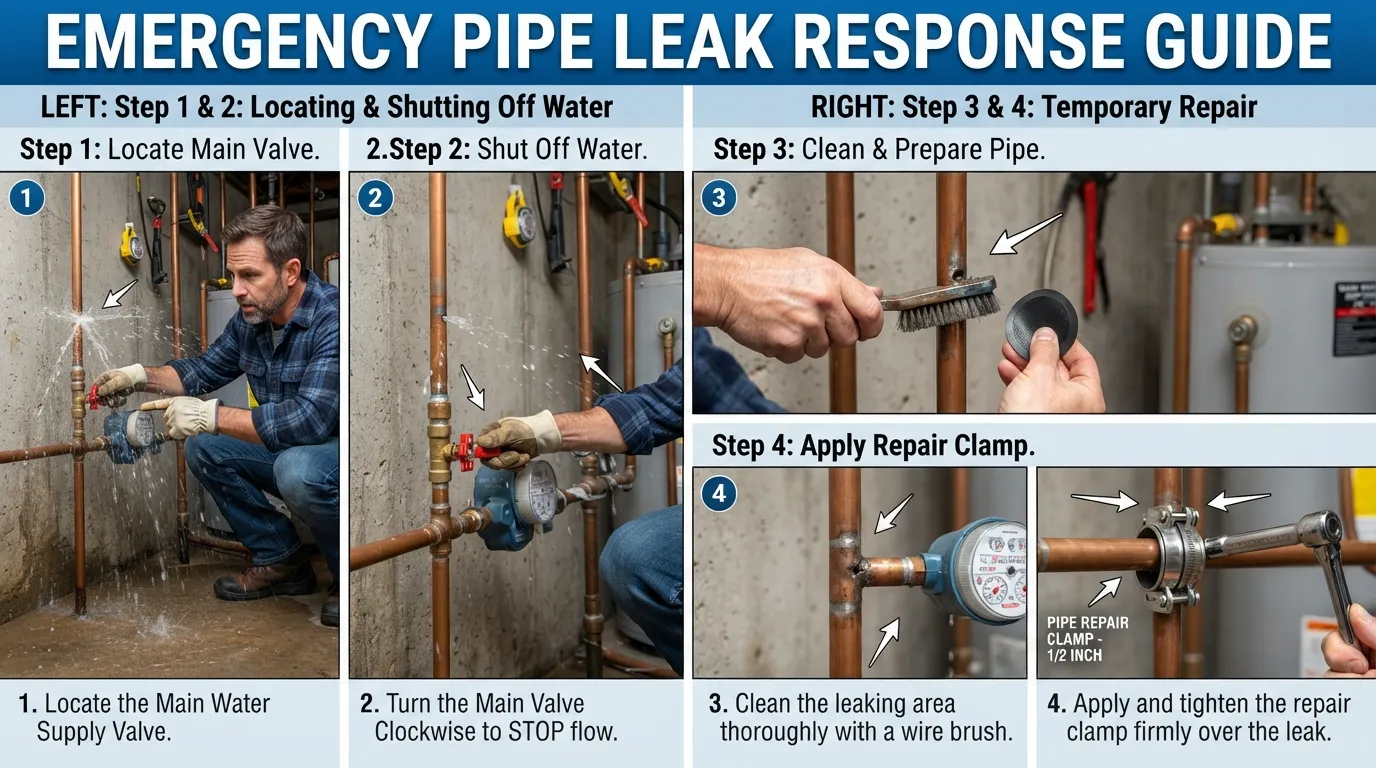 Discovering an active pinhole leak requires immediate emergency action to prevent major structural water damage in your home. Quick temporary containment buys you crucial time before scheduling a permanent plumbing repair.
Pehle 5 minute: main valve band karein aur pipe khaali karein
Shutting off the water supply immediately stops active spraying and minimizes structural saturation. Draining the remaining lines relieves internal pressure so you can apply a temporary fix safely.
- Main Shut-Off Valve: Locate and turn off your home’s main water supply valve to halt all incoming pressure instantly.
- Line Drainage: Open the lowest faucets in your house to drain residual water out of the affected plumbing lines.
Temporary fixes: repair clamp epoxy putty self-fusing tape
Several emergency products provide effective short-term seals to stop water leakage on pressurized copper lines. These items are readily available at any local hardware store.
- Repair Clamps: Rubber-lined mechanical bolt clamps wrap tightly around the pipe to seal localized pinhole breaches securely.
- Epoxy Putty & Silicone Tape: Kneadable waterproof epoxy or self-fusing silicone tape creates a resilient wrap when applied to clean, dry metal.
Push-to-connect coupling se soldering ke baghair repair
Push-to-connect fittings allow homeowners to repair a leaking copper section without dealing with open flames or messy soldering. Cutting out the damaged area and snapping in a new coupling provides reliable containment.
- Section Removal: Cut out the corroded pipe segment cleanly using a specialized copper tubing cutter.
- Tool-Free Installation: Push the connector firmly onto the prepared pipe ends for an instant, watertight grip.
Kya Flex Seal copper pipe ke leak ko theek karta hai? myth-busting honest jawab: temporary hai permanent nahi
While spray rubber coatings can slow down minor damp leaks in a pinch, they are never a reliable or permanent fix for pressurized copper pipes. High water pressure will eventually force water under the rubber seal.
- Adhesion Limitations: Spray or liquid rubber struggle to bond permanently to wet, pressurized metal surfaces over time.
- Temporary Band-Aid: Treat rubberized sprays only as an extreme emergency stopgap until a proper mechanical or soldered fix is installed.
Kya pinhole leak solder ki ja sakti hai?
Soldering a patch onto an active pinhole is rarely successful because residual interior moisture prevents solder from adhering properly. Attempting to heat a thin, corroded pipe often blows the hole even wider.
- Moisture Interference: Even a tiny drop of lingering water prevents solder from bonding to the copper wall.
- Preferred Alternative: Replacing the damaged section entirely or using a compression sleeve is much safer than torching thin metal.
Kab DIY na karein aur plumber bulayein
Certain situations demand professional intervention rather than a quick do-it-yourself fix to ensure safety and code compliance. Knowing your limits prevents turning a minor leak into a major plumbing disaster.
- Inaccessible Locations: Leaks hidden deep inside concrete slabs or finished structural walls require specialized detection and repair gear.
- Widespread Degradation: If multiple pinholes appear across your plumbing lines, spot repairs will fail, and a whole-house repipe is necessary.
Repair or Repipe? Cost Lifespan and Insurance
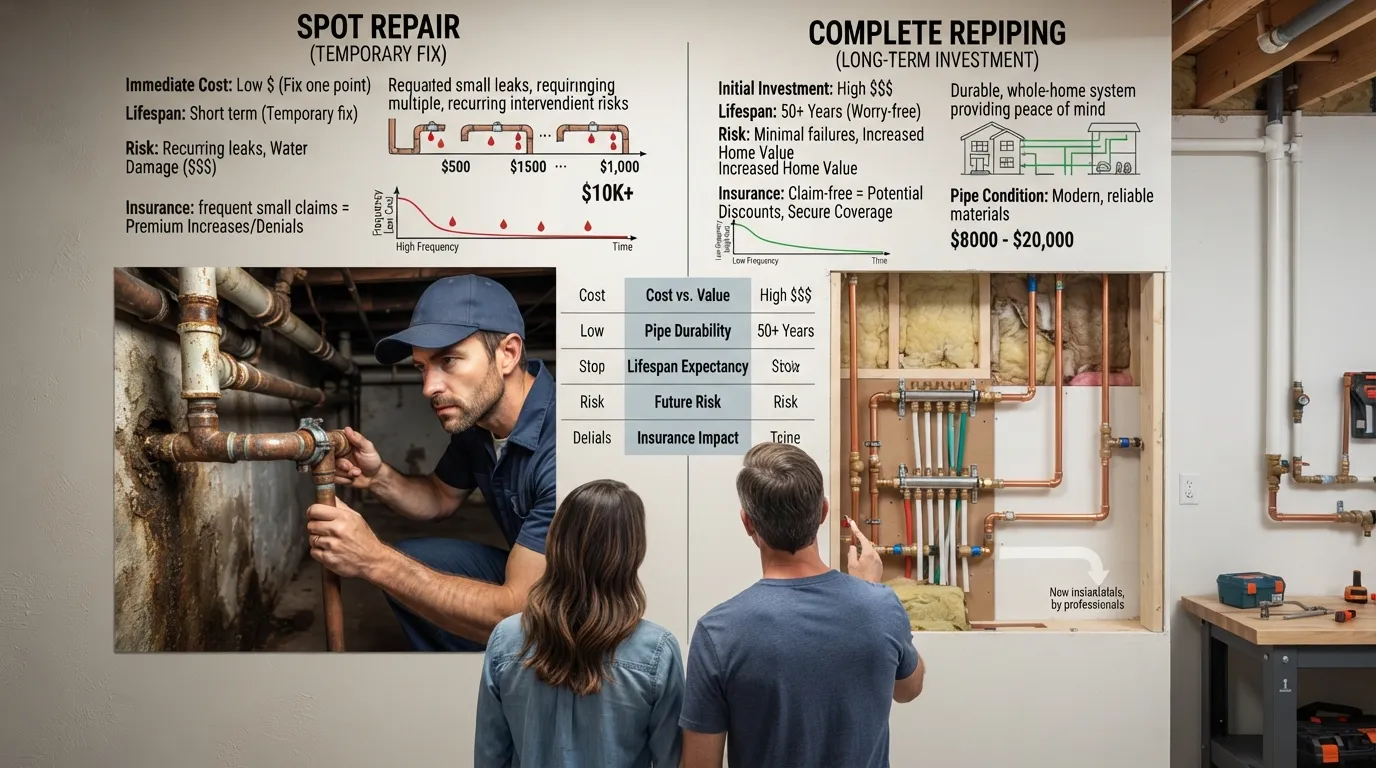 Deciding between a quick spot repair and a whole-house repipe is one of the biggest financial choices a homeowner faces. Evaluating the frequency of leaks, overall pipe age, and long-term costs helps determine the smartest path forward.
Pinhole leak repair ka cost kitna aata hai
Hiring a professional plumber for a single pinhole leak repair typically ranges from $150 to $450 depending on accessibility and wall demolition. Costs fluctuate regionally based on local labor rates and emergency call-out fees.
- Accessible Areas: Repairs in open basement ceilings or utility rooms sit at the lower end of the pricing spectrum.
- Hidden Access: Cutting through drywall, tile, or concrete to expose the leaking pipe increases overall project labor costs significantly.
2000 sq ft ghar ko repipe karne ka cost copper vs PEX
Replacing all plumbing lines in an average 2000 square foot home generally ranges from $4,000 to $10,000. Material choice heavily influences the final project estimate.
- PEX Repiping: Highly flexible, resistant to acidic water corrosion, and faster to install, making it the most cost-effective whole-house choice.
- Copper Repiping: Traditional, durable, and rigid, but carries significantly higher material and labor costs than modern plastic alternatives.
Kya pinhole leaks insurance mein cover hoti hain? general jawab, policy par depend karta hai
Homeowners insurance typically covers sudden, accidental water damage caused by a burst pipe, but rarely covers the cost of fixing the corroded pipe itself. Maintenance-related issues and slow, long-term pinhole leaks are frequently excluded from policies.
- Water Damage Protection: Resulting structural repairs, ruined drywall, and warped flooring are often eligible for claims.
- Wear and Tear Exclusion: Gradual pipe degradation due to age or water chemistry is viewed as normal home maintenance and is not covered.
Why don’t people use copper anymore? PEX aur alternatives ka honest comparison
While copper remains a premium, highly respected material, modern builders frequently choose PEX due to its lower cost, superior freeze resistance, and immunity to aggressive water pitting. Copper’s vulnerability to chemical breakdown in certain municipal water districts has driven this shift.
- Cost Efficiency: PEX requires fewer fittings and installs much faster, drastically reducing total labor expenses.
- Corrosion Resistance: Flexible cross-linked polyethylene does not react with acidic water or chloramines like metal pipes do.
Agar ek nicked copper pipe leak nahi kar raha to kya karein
Discovering a minor surface nick or scratch on a copper pipe during remodeling that isn’t currently leaking requires careful observation rather than immediate replacement. As long as the wall thickness remains structurally sound, it can often be monitored safely.
- Monitor Closely: Mark the spot and check it periodically for any signs of moisture, staining, or bubbling.
- Reinforce if Needed: Applying a light layer of epoxy putty over a suspicious surface gouge provides cheap preventative insurance.
How to Prevent Pinhole Leaks in Copper Pipes
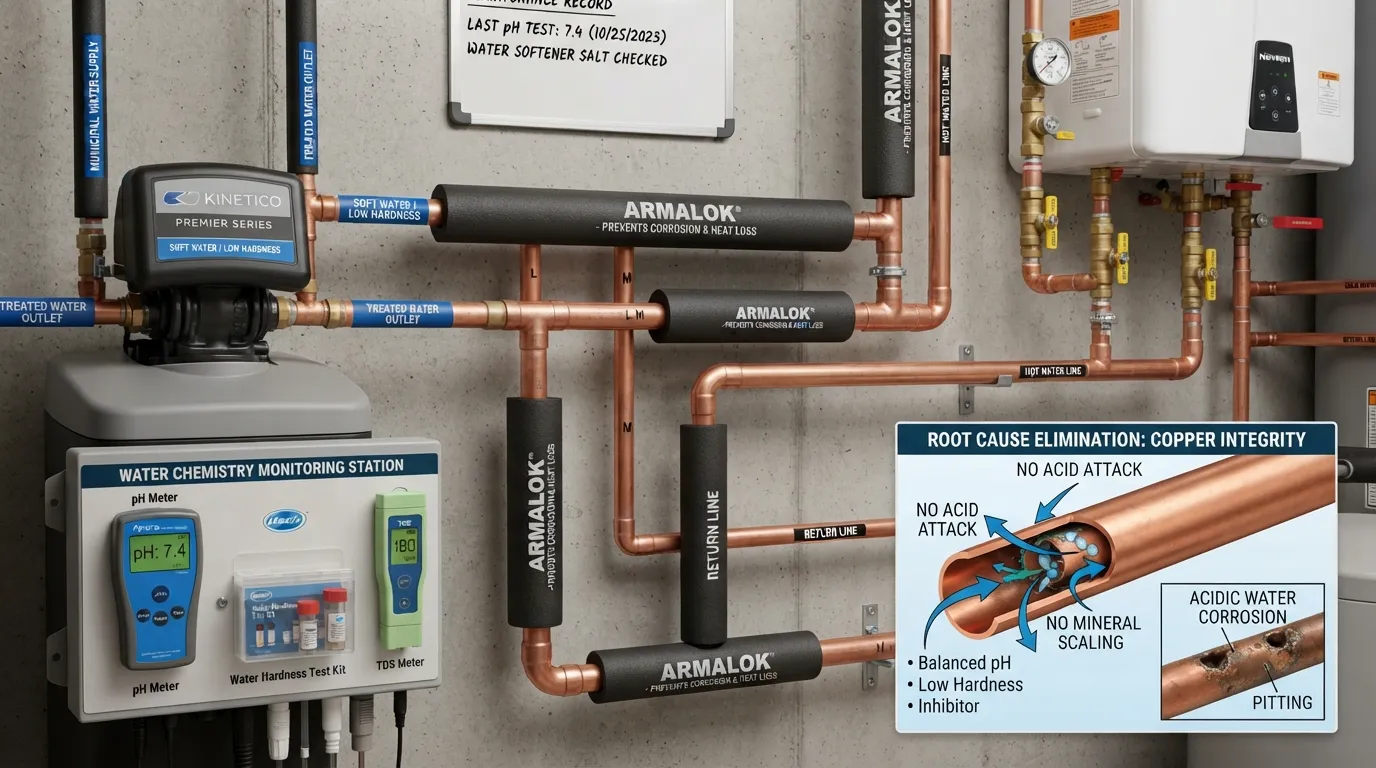 Preventing pinhole leaks before they start requires addressing the underlying chemical, mechanical, and electrical triggers that degrade copper plumbing over time. Implementing proactive safeguards dramatically extends the operational lifespan of your home’s water system.
Water test karwayein: kya test karein aur kaun si cheez danger signal hai
Routine water testing is the single most effective way to catch aggressive chemical parameters before they perforate your pipes. Identifying warning signs early allows you to correct imbalances before structural damage occurs.
- Key Parameters: Test regularly for pH levels, total dissolved solids (TDS), hardness, and disinfectant residuals like chloramines.
- Danger Signals: A pH reading below 7.0 coupled with high levels of dissolved oxygen indicates highly corrosive water that requires immediate intervention.
Water treatment: pH neutralizer filters softener ka sahi istemal
Installing targeted water treatment systems neutralizes the harsh chemical reactions responsible for internal pipe pitting. Tailoring treatment to your specific water profile protects the integrity of your copper network.
- pH Neutralizers: Calcite or soda ash neutralizers raise acidic water pH to a neutral, non-corrosive balance.
- Sediment & Carbon Filters: Whole-house filtration units remove abrasive grit and excessive chlorine additives before they reach your plumbing lines.
Pressure control: PRV lagana aur check karna
Excessive water pressure accelerates mechanical erosion and puts unnecessary strain on aging pipe walls. Installing and maintaining a Pressure Reducing Valve (PRV) ensures safe, steady flow velocities.
- Optimal Pressure: Keep household water pressure between 50 and 60 psi to prevent high-velocity scouring.
- Regular Testing: Check your home pressure annually with a simple hose-bib gauge to ensure the PRV hasn’t failed.
Water heater temperature aur recirculation pump ka dhyan
High water temperatures supercharge chemical corrosion rates and accelerate internal pipe degradation near the source. Managing heating settings and circulation patterns reduces thermal stress.
- Temperature Limits: Set your water heater no higher than 120°F to 130°F to slow down accelerated internal chemical activity.
- Recirculation Management: Ensure continuous-loop recirculation pumps are properly timed to minimize unnecessary pipe wear.
Grounding check aur dielectric unions
Eliminating stray electrical currents and galvanic reactions protects your metal plumbing from invisible electrolytic breakdown. Professional inspections ensure electrical safety across all utility connections.
- Electrical Grounding: Verify that your home electrical system is correctly grounded to independent rods rather than relying solely on plumbing pipes.
- Dielectric Separation: Use non-conductive dielectric unions wherever copper meets steel or galvanized piping to stop galvanic cell formation.
Naye installation mein sahi practices flux reaming sizing
Proper installation techniques during remodeling or new construction prevent the hidden flaws that cause future pinhole failures. Following strict trade standards ensures long-term plumbing reliability.
- Thorough Flushing: Wash out all residual acidic soldering flux immediately after completing joint connections.
- Deburring & Sizing: Always ream cut pipe edges smooth and size piping correctly to eliminate turbulence-inducing restrictions.
Frequently Asked Questions
Here are direct answers to the most common questions homeowners ask about pinhole leaks, copper pipe degradation, and emergency plumbing care.
Do copper pipes get pinhole leaks?
Yes, copper pipes frequently develop pinhole leaks. They are usually caused by internal pitting corrosion driven by aggressive water chemistry, low pH levels, chemical disinfectants like chloramines, or mechanical erosion-corrosion over decades of use.
Can a pinhole leak fix itself?
No, a pinhole leak cannot fix itself. While mineral buildup might temporarily clog the micro-opening, continuous water pressure will quickly blow the deposit away, worsening the damage and increasing water loss.
Why do my copper pipes keep leaking?
Repeated pinhole leaks usually point to systemic issues within your home, such as highly acidic water, aggressive municipal chloramine treatment, high water velocity, or improper electrical grounding causing stray current electrolysis.
How long can a pinhole leak go unnoticed before it damages a home?
A hidden pinhole leak can go unnoticed for weeks or months, slowly rotting drywall, warping flooring, and encouraging severe black mold growth before a damp patch or pressure drop reveals the issue.
Can I solder a pinhole leak in a copper pipe?
Soldering an active pinhole leak is rarely successful because residual interior moisture prevents solder from bonding. Heating thin, corroded pipe walls often melts the metal and makes the hole larger.
How do I know when my copper pipes need to be replaced?
You should consider replacing your copper pipes when multiple pinhole leaks occur in close succession, when extensive pitting weakens the entire network, or if your plumbing system exceeds 35 to 40 years of age.
Is a leaking overflow pipe dangerous?
A leaking overflow pipe is usually an indicator that a toilet tank flapper is faulty or a water heater temperature-pressure relief valve is discharging. While not immediately catastrophic, it wastes significant water and requires prompt repair.
Conclusion: Key Takeaways
Understanding the root causes of pinhole leaks in copper plumbing empowers you to protect your home from extensive water damage and costly structural repairs. Addressing chemical, mechanical, or electrical triggers early ensures long-term plumbing reliability.
- Top Causes: Aggressive water chemistry, low pH levels, chloramines, and high water velocity are the primary drivers of internal pitting and erosion-corrosion.
- Early Detection: Monitoring water bills, spotting damp wall patches, and conducting periodic water meter tests help catch hidden leaks before disaster strikes.
- Emergency Action: Shut off your main water valve immediately upon discovering a leak, and use temporary mechanical fixes or push-to-connect fittings until professional help arrives.
- Repair vs. Repipe: Isolated single leaks can be patched effectively, but frequent, recurring pinholes in aging systems signal the need for a whole-house repipe.
- Proactive Prevention: Regular water testing, pH neutralizers, and pressure control valves safeguard your copper pipes from premature failure.

Oscar Vance | Master Plumber & Drainage Expert
Meet Oscar Vance, a licensed master plumber sharing practical solutions on residential repairs, preventive maintenance, and thoughtful home upkeep.